Why Litter Box Odor Comes Back After You Clean
Don't buy another deodorizer. Litter box odor comes back because one of five things (litter, count, cadence, material, placement) quietly stopped working.

Alfredo RamsesFounder · August 22, 2026 · 27 min read

On this page11 sections
- 1What Actually Makes the Smell
- 2When the Smell Is a Vet Visit, Not a Cleaning Problem
- 3Why the Cleaning Routine That Worked Stopped Working
- 4The Litter Is Doing Most of the Work
- 5How Many Boxes the Smell Actually Needs
- 6Scooping Cadence Is the Variable People Get Wrong
- 7Where the Box Goes, and What That Costs You
- 8What Actually Helps Next to the Box
- 9Putting It in Order, and Keeping It There
- 10Conclusion
- 11Frequently Asked Questions
You scooped the box this morning. You wiped the rim. And by six in the evening the room announces itself before you get your shoes off. That gap between “I clean it every day” and “guests can still tell” is the whole problem, and it is not a cleaning problem.
Litter box odor is never one failure. It is five things at once, litter, box count, scoop cadence, box material and placement, and the smell comes back the moment any one of them quietly stops carrying its share. Below: what the smell physically is, why the routine that used to work stopped working, the one change in smell that belongs to a vet instead of to this site, and the five variables in the order worth touching them.
Quick Answer
Odor returns because the box is under-served, not because it is dirty. Fix it in this order:
- Scoop twice a day instead of once.
- Run one more box than you have cats.
- Keep litter at about three inches, changed fully instead of topped up.
- Replace a plastic box that still smells right after a deep clean.
- Put anything that adsorbs odor within a few feet of the box, not across the room.
What Actually Makes the Smell
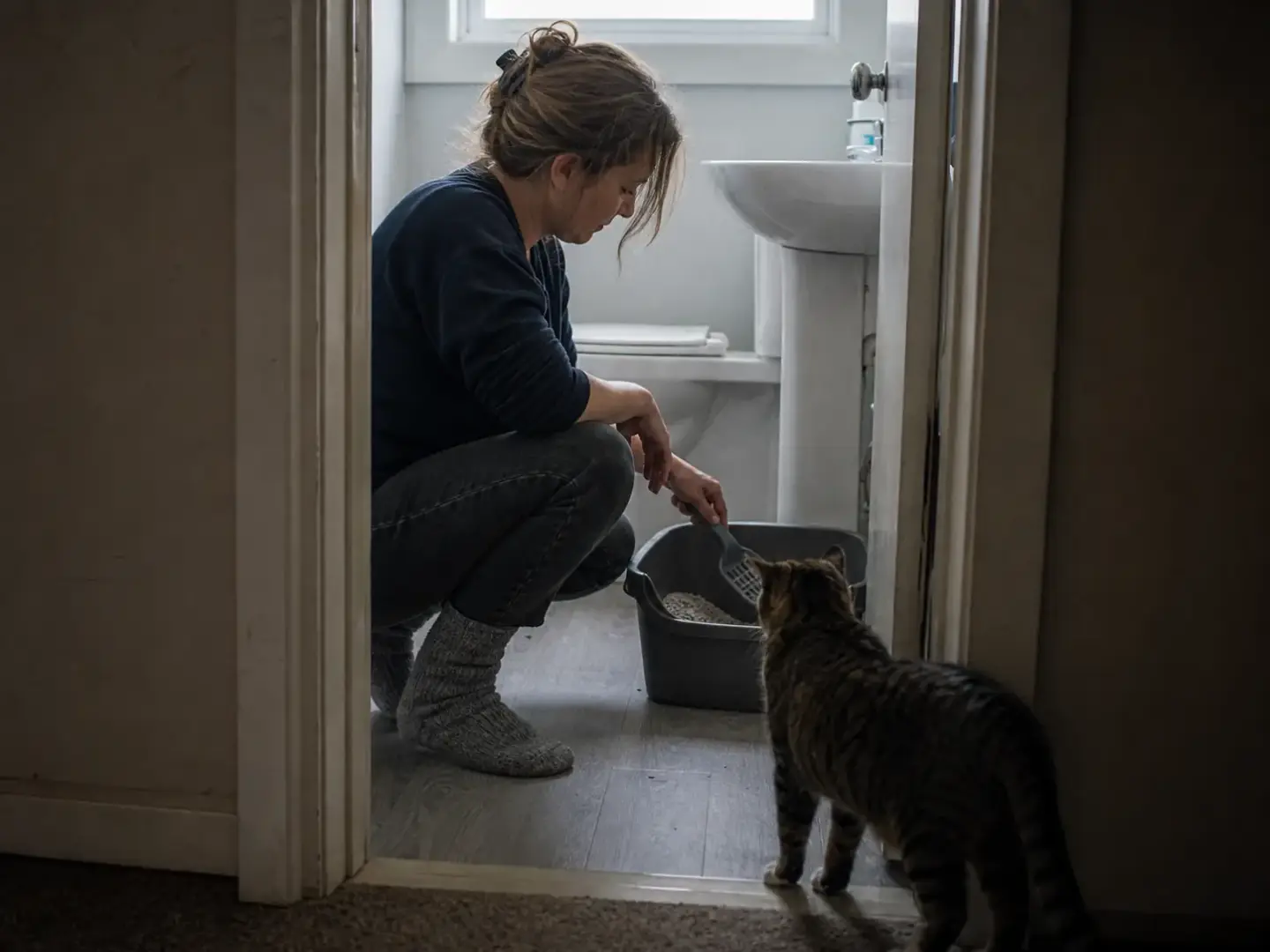
Most people are cleaning the wrong thing because they think the smell is waste. It isn’t. Waste on its own smells like waste, which is bad for about four minutes and then fades under three inches of litter. What fills an apartment is ammonia, and ammonia is not in the box when the cat walks away from it.
It arrives later, on a schedule, and that single reframe is the reason timing beats scrubbing every time.
Why Ammonia Is a Timer, Not a Quantity
Urine contains urea, which has almost no smell of its own. Ammonia forms only after bacteria break down urea that has been sitting in the litter bed, which means the box is running a clock from the moment it gets used. Nothing you buy pauses that clock. You can only get to the urine before the bacteria finish with it.
Once you see it as a timer, some things that felt random stop being random. A box with two clumps in it can smell far worse than a box with six, if the two have been there since yesterday morning and the six went in an hour ago. Volume is not the variable. Age is.
This is also why the smell does not creep up on you the way people describe it: it is absent, absent, absent, and then one Tuesday it is the first thing you notice in your own hallway. If you want the full breakdown of how long a box should go before it starts announcing itself, that timeline gets its own piece.
Where the Smell Actually Lives When the Box Looks Clean
Solid waste and urine are two different problems wearing the same uniform. Solids you can see, and a scoop removes them completely. Urine soaks down through the litter, and unless it has clumped hard enough to lift out in one piece, part of it stays behind in the bed and keeps working. That is the residue doing the smelling while the box looks spotless from above.
The floor of the box is where it collects. Urine finds the lowest point it can reach, so a shallow litter bed puts a wet layer directly against plastic where nothing lifts it out and no amount of surface scooping touches it. You can scoop a box perfectly every day for a month and still be building a saturated bottom layer you never see.
What Humidity Does to the Same Box in Two Different Rooms
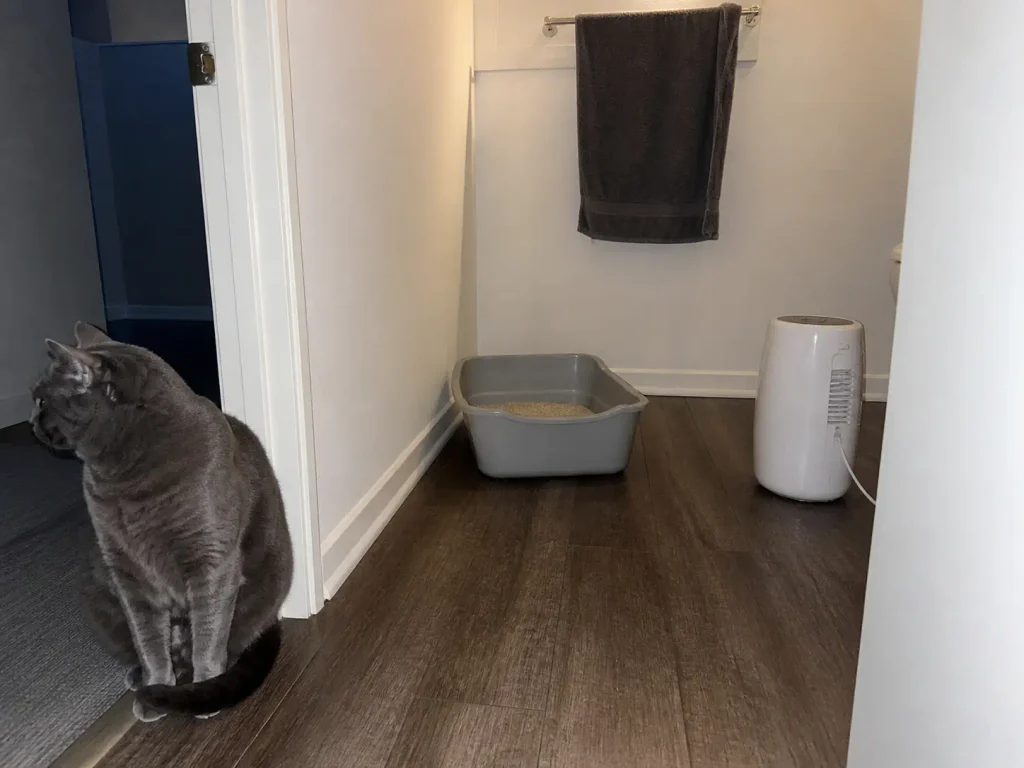
Move that identical box from a hallway with moving air into a windowless bathroom and it reads as a different box entirely. Damp air holds odor and hands it back to you; the ammonia has nowhere to go and stays at breathing height instead of dispersing. Cat forums are full of people who assumed they had a litter problem and actually had an air problem, and the tell is always the same: the smell is worse right after a shower.
And this is the cheapest section in the article, because nothing in it costs money. It changes when you scoop, not what you buy.
If the box lives in a windowless bathroom, a small dehumidifier running near it does more for the smell than a second deodorizer ever will. It is the fix renters keep landing on in forum threads because it needs no drilling, no permission from anyone, and no dedicated room you do not have.
When the Smell Is a Vet Visit, Not a Cleaning Problem
Everyone writing about odor treats the answer as a product. Sometimes it isn’t, and saying so up front is the difference between a site you can trust and one you can’t. So this section comes early, before the litter and the boxes and the carbon, because there is one version of this problem that no article should be handling.
The One Change Worth a Phone Call
The signal is not that the smell is there. The signal is that the smell has changed character: it has turned sharp, bleach-like or unmistakably ammoniac when it never used to read that way. The second version of the same signal is timing, a smell that comes back within hours of a genuine full clean rather than within days.
If that is what you are describing, a smell that has turned sharply ammoniac is a conversation to have with a vet before it is a conversation about litter brands. Make the call. Everything below assumes that call has already happened.
What This Article Will Not Try to Answer
This site does not interpret that signal, name a condition, or suggest anything at all to give the cat. That is a veterinary job and it is not a close call. Anything that hurts goes to a vet; everything else is furniture, litter, smell, noise and territory, and that part we can help with.
One thing worth saying plainly before moving on: a cat whose box smells different is not being dirty and is not misbehaving. He is doing exactly what he has always done in exactly the same place. The rest of this article is about the box, the room and the litter, which is where the answer usually sits and where a site like this one is actually useful.
Why the Cleaning Routine That Worked Stopped Working
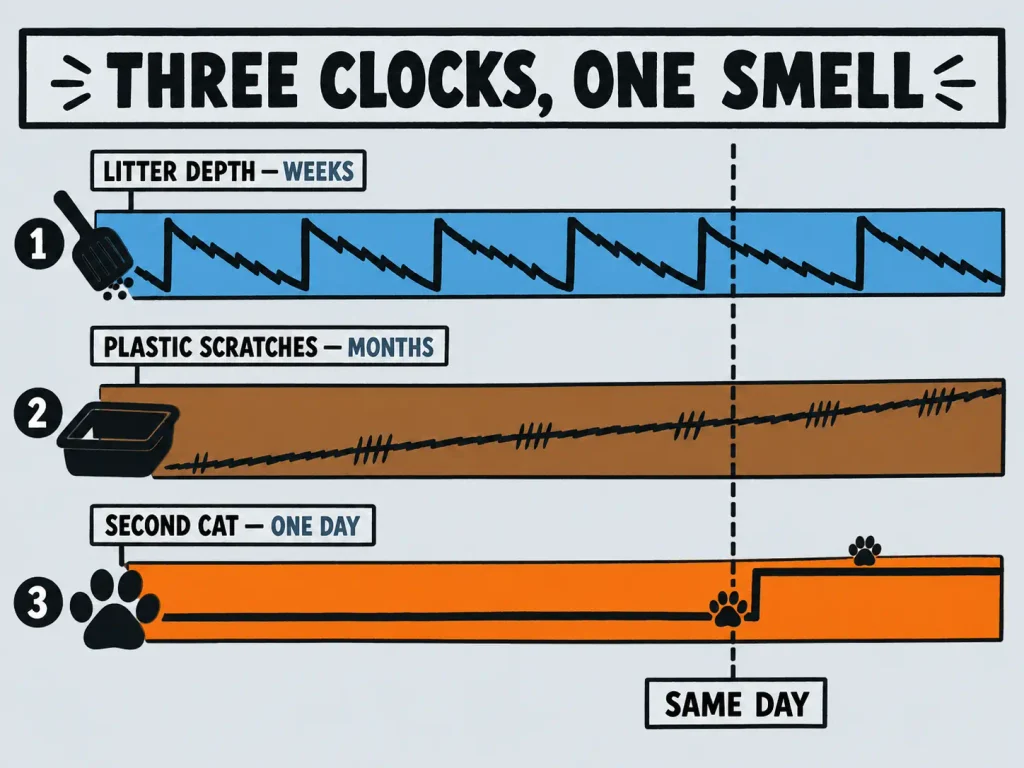
Here is the part almost nobody writes, and it is the reason the failure feels so strange: nothing broke. There was no day the routine stopped working. You did not get lazier. The routine stayed exactly where it was while the load underneath it grew, and three separate clocks ran out at three different speeds until the sum crossed the line where you can smell it.
The Ghost Smell in Scratched Plastic
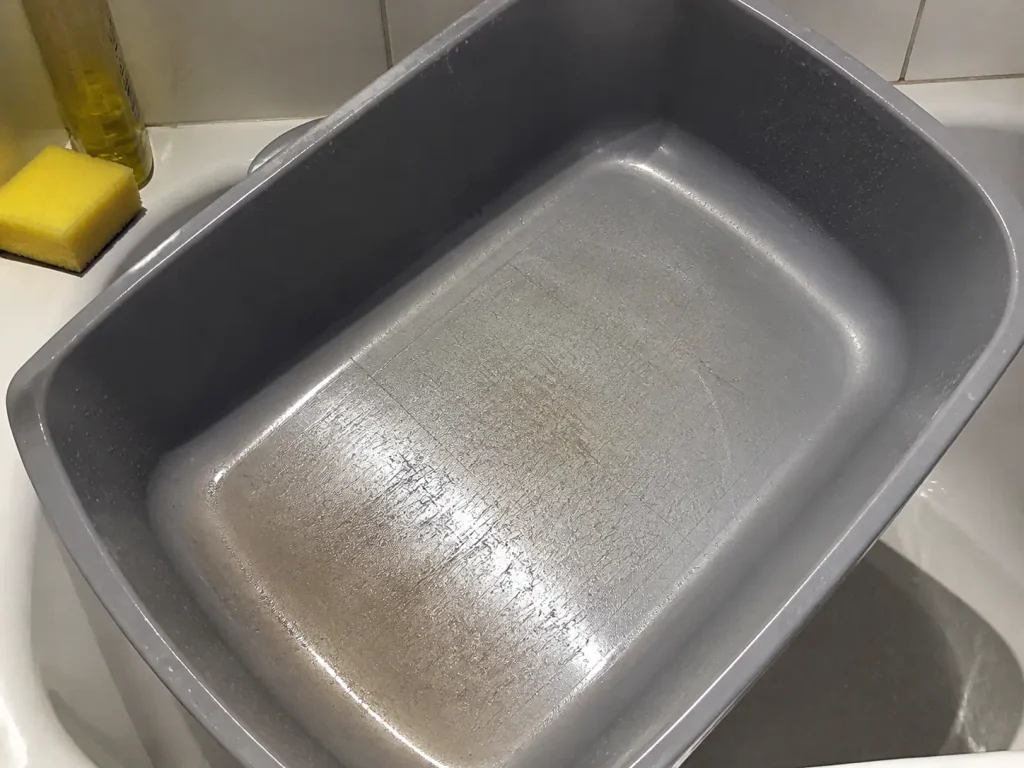
Every scoop and every round of digging leaves microscopic scratches in the box floor. Micro-scratches let bacteria settle beneath the surface of the plastic, below the level any cleaner reaches, and once that layer is colonized there is no scrubbing it back out. The box is not dirty at that point. The box is the source.
The community name for this is better than anything the industry uses: the ghost smell. It is the box that smells within an hour of a full deep clean, with fresh litter in it, and makes you feel like you are losing your mind. You are not.
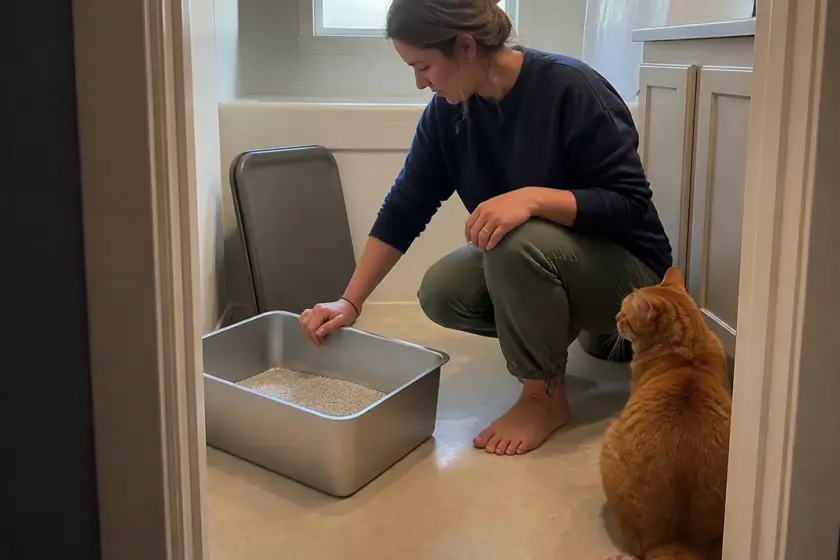
You are smelling something that lives inside the material rather than on it, and the practical marker is roughly twelve months on a plastic box in daily use. Past that, a box that still smells right after a genuine deep clean has told you what it needs, and it is not a stronger cleaner. Whether a metal box actually solves this or just moves the cost is a separate decision worth making on its own terms.
Topping Up Is Not Changing
The second clock runs faster and hides better. Scooping removes clumps, and clumps take litter with them, so the bed gets shallower every day. Most people top it up. Topping up adds clean litter to the surface of a bed whose bottom layer has been there since whenever the last full change was, which means the most saturated litter in the box is permanently parked at the bottom, permanently damp, permanently working.
Six weeks of that and the bed is stratified: clean on top, old at the floor. You are scooping through fresh litter into a layer that has not been out of the box in months. A full change empties the box completely, which is a different job from scooping and a different job from topping up.
The Routine That Was Built for One Cat
The third clock is not a clock at all. It is a step change, and it happens the day the household gains a cat and keeps the same number of boxes. The routine was built around one cat’s output and one cat’s schedule, and it now serves two. Nobody connects those two facts, because the routine did not change and so it does not feel like the variable.
The most repeated version of this story in cat forums always arrives the same way: the smell got dramatically worse after cat number two, the owner switched litter brands twice looking for the culprit, and the actual answer was arithmetic. It gets its own section below, because the numbers are not what most people assume.
The Litter Is Doing Most of the Work
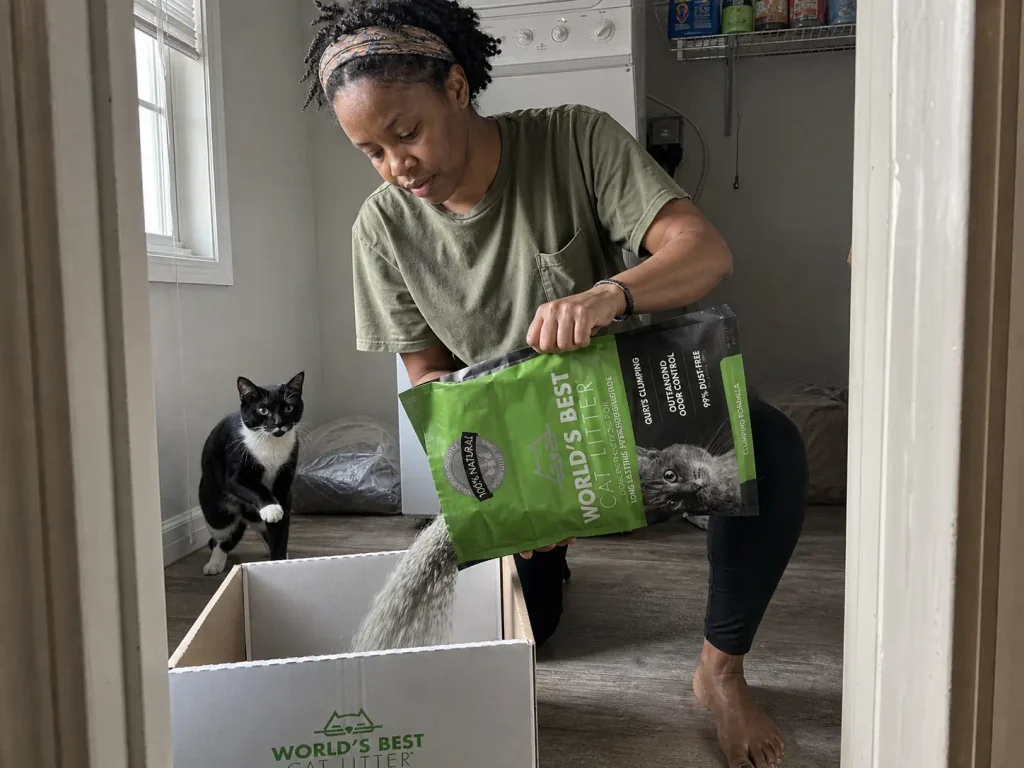
People layer deodorizers on top of a base litter that was never going to hold, and then blame the deodorizer when the room still smells by evening. The litter is not a preference or a texture question. It is the thing deciding how much everything else in this article has to compensate for.
Clumping Is a Mechanism, Not a Preference
Hard-clumping litter binds urine into a solid mass that comes out of the box whole. Non-clumping litter absorbs it and holds it in the bed, where the bacteria carry on with the job uninterrupted.
That is the entire difference, and it is mechanical rather than aesthetic. One removes the odor source from the apartment; the other stores decomposing waste under a fresh-looking surface. The distinction cuts across materials rather than following them: traditional clay litter comes in both forms, crystal litter and silica litter absorb and hold rather than clump, and most bags marketed as odor-control litter are simply a clumping base with something added. What stops urine pooling at the bottom of the bed is the clumping, not the label on the front.
Non-clumping still has real uses, and there are cats with strong opinions about texture who will settle the question for you regardless of what the bag claims. When non-clumping still makes sense is worth reading before switching on principle. But if the complaint is odor specifically, hard clumping is the mechanism that addresses it, and no additive substitutes for getting the urine out of the room.

Three Inches, Measured Against the Box
Nobody publishes this number, which is strange given how much it decides. Litter depth wants to be about three inches. Under that, clumps reach the plastic floor and break apart on the way out of the scoop, leaving fragments behind that go on smelling. Over that, the cat digs to the bottom anyway and you have simply bought more litter to throw away at the next full change.
Before you buy a different bag, measure what you already have. Hold a ruler against the outside wall of the box, or mark three inches on the inside with a strip of tape and stop guessing forever. A surprising share of odor complaints are a bed that has quietly dropped to an inch and a half over three weeks of scooping and topping up. That is a free fix and it takes about thirty seconds. Depth also changes what the scoop can physically lift, and how depth changes what the scoop can actually lift is worth understanding before you blame the litter brand.
Why the Switch Has to Be Slow
Scented litter is the trap in this section. It masks the smell for you, at the exact height where you notice it, and it puts a strong fragrance directly under the nose of the animal standing in it. The forums call the outcome boycotting the box, and it is the worst possible result: a cat who has decided the box is unacceptable will find somewhere else, and urine in a rug is a far harder smell problem than the one you were trying to solve. Fragrance-free is not a compromise here. It is the requirement.
And whatever you switch to, do not switch in a day. A gradual transition over five to seven days, mixing an increasing proportion of the new litter into the old, is what keeps the cat’s vote out of the equation. I used to think a slow transition was fussiness for cats who are fussy anyway. Enough boycott threads later, all describing the same overnight swap and the same puddle beside the box on day two, and it is clearly the cheapest insurance in the article.
How Many Boxes the Smell Actually Needs
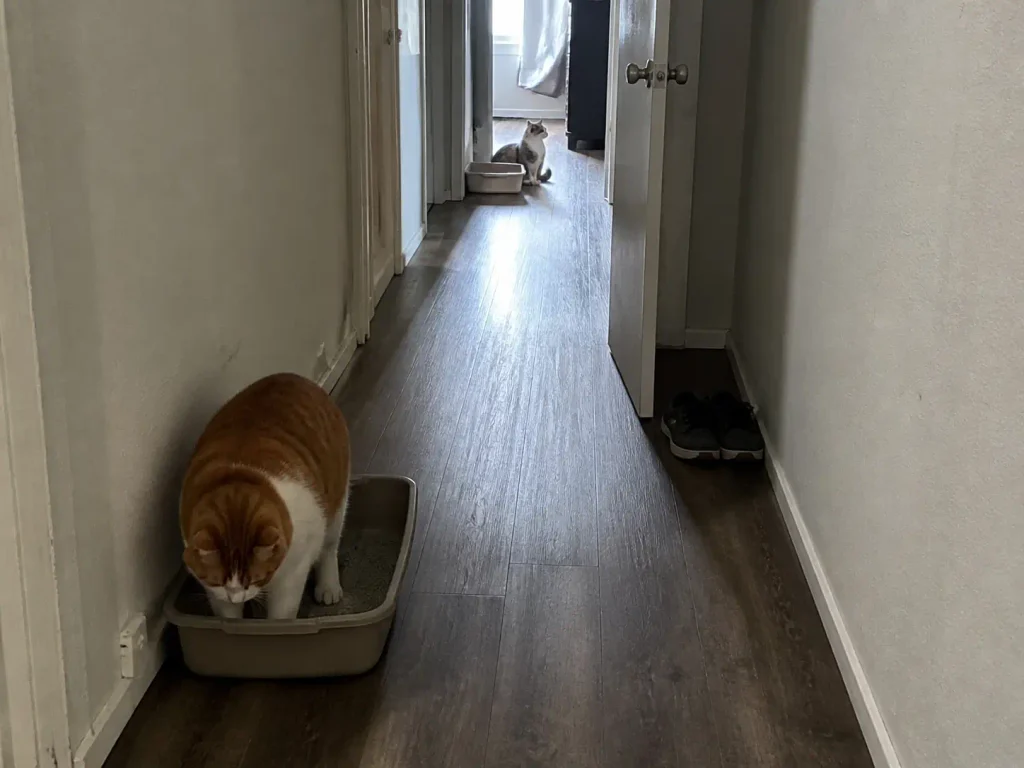
The smell tripled when the second cat arrived and everybody blames the litter. It was never the litter. It was arithmetic, and this is the cheapest fix in the entire article to get right and the most expensive one to keep getting wrong.
One Per Cat, Plus One
The rule is one box per cat, plus one spare, and it is not a blog consensus invented to sell boxes. The AAHA/AAFP Feline Life Stage Guidelines recommend one litter box per cat, plus one, which puts two cats at three boxes and three cats at four. The reason is not capacity. It is territory access: a box that only one cat can reach without negotiating is a box that gets used at the time the cat needs it rather than held for later.
For odor specifically, the arithmetic is simple. More boxes means less urine per box, which means fewer hours of anything sitting anywhere. Same household, same cats, same litter, and the ammonia clock is running slower in every single box at once.
Why a Shared Box Is Worse Than the Math Suggests
Two cats and one box does not double the odor load. It lands closer to triple, and there are two reasons stacked on each other. The waste goes into a single bed rather than being spread, so that bed passes saturation far sooner than a doubled scoop schedule accounts for. And a cat who has to share territory with another cat’s scent in an enclosed resource often responds by marking, which adds urine that was never in the arithmetic to begin with.
Then there is the blocking. A more assertive cat can park near a shared box, and the other one starts holding it or going elsewhere. From your side of the apartment nothing looks wrong: there are two cats, there is a box, everyone seems fine. From the box’s side, one cat is now depositing a full day’s worth in one visit and the smell is concentrated into fewer boxes than you believe you have. If your household is exactly two, the rule and the exception for two cats covers when three is genuinely necessary and when two placed well will hold.
Here is where the cat and the human disagree, and it is worth naming because the disagreement runs through this whole topic. You want one box, out of sight, ideally in a room nobody uses. He needs to reach a box without passing the other cat and to leave it in more than one direction. That is not a preference on his side. It is the constraint, and yours is the one that can move.
A second box costs less than a year of deodorizer bottles and usually ends the problem outright, which is why it goes before anything else you might buy.
The Size the Label Will Not Tell You
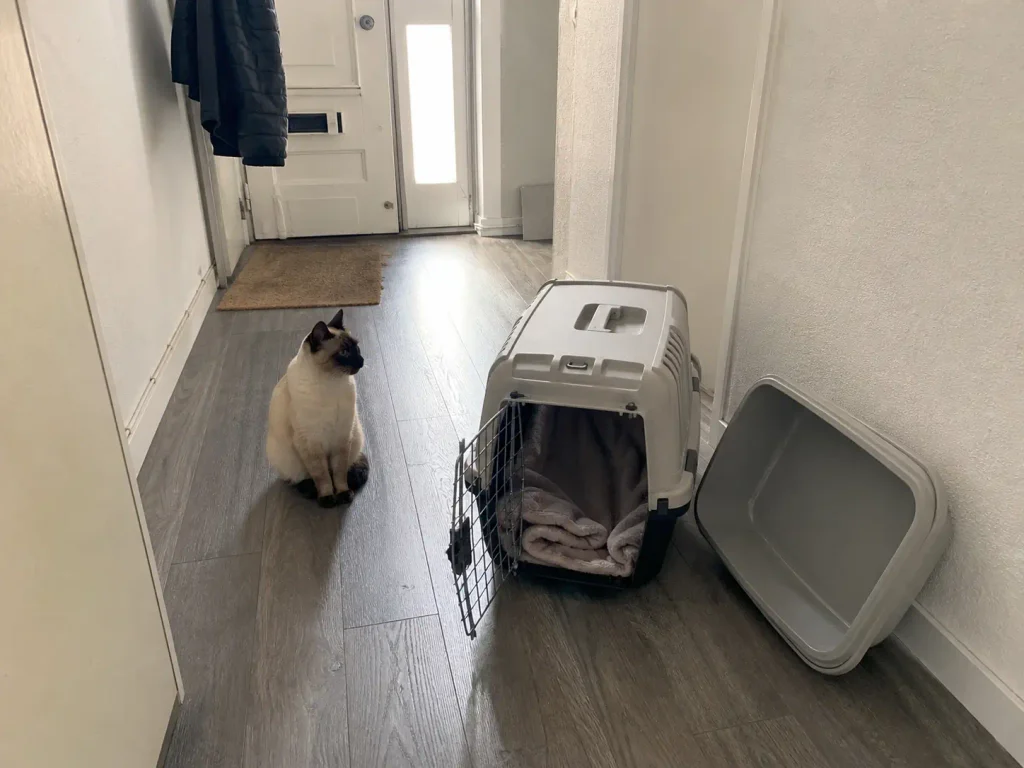
“Jumbo” is a marketing word. The measurement that matters is at least one and a half times the cat’s length from nose to the tip of the tail, and a lot of boxes sold as large fail that outright for a big cat. A large Maine Coon at full stretch is longer than most of what is on the shelf, and once he has to stand in the middle of the box because there is nowhere else to stand, the waste sits close to where his head is. That is a smell problem for him before it is one for you.
Measure the cat, not the box. Nose to tail tip while he is stretched out, then add half again, and take that number shopping with you. Most boxes sold as large fail on the length, and a storage tote from the hardware aisle clears the measurement for a fraction of what a box marked jumbo costs.
Scooping Cadence Is the Variable People Get Wrong
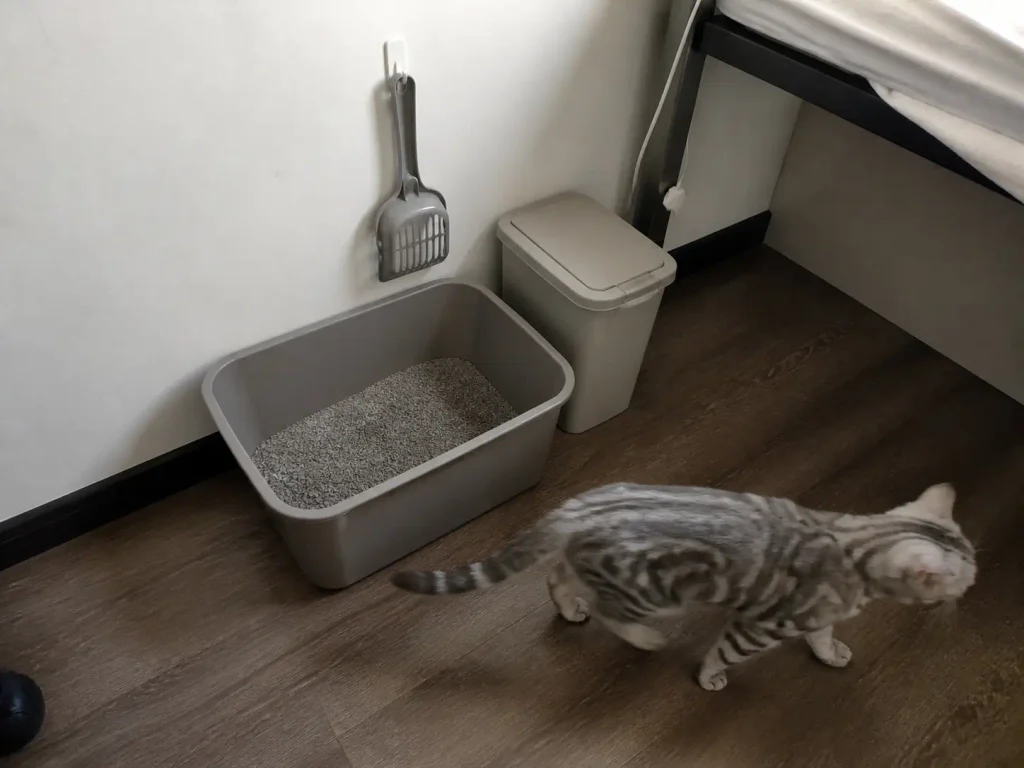
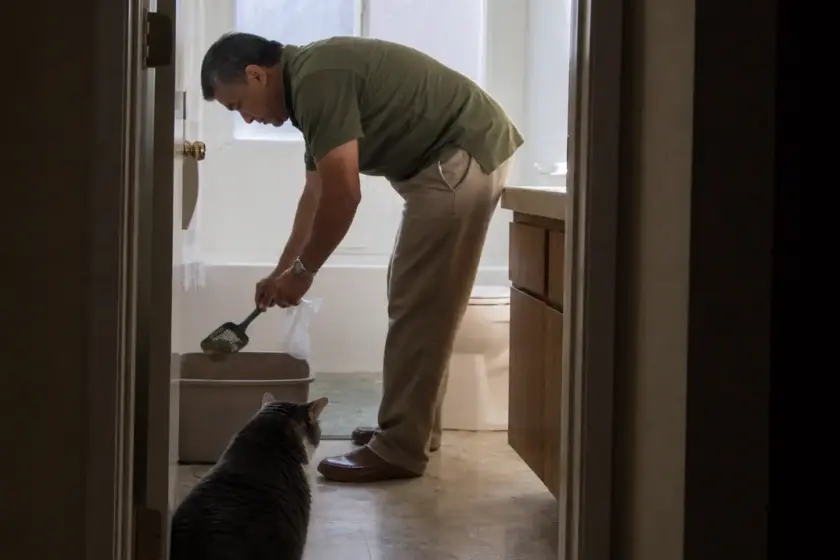
“I scoop every single day” gets said with real frustration, and it is usually true, and it is still the routine leaving the door open. Once a day is not a small shortfall from twice a day. It is the difference between staying ahead of the clock and losing to it every afternoon.
Twice a Day, and Why the Second One Matters More
Twice a day is the line where ammonia stops showing up in the room. The reason is the gap, not the total: how often the box actually needs scooping comes down to never leaving urine in the bed long enough for the bacteria to finish their work. Scoop at eight in the morning and the box is clean at eight in the morning. The cat uses it at ten, and that clump now sits for twenty-two hours. Half the day it is producing ammonia into your apartment and you are not there to notice it building.
The evening scoop is the one that matters, and it is the one people skip because the box was done this morning and it feels done. It is also the one that takes forty seconds. Keep the scoop and a small bin beside the box rather than under a sink in another room; the routine that requires walking somewhere to fetch a tool is the routine that stops happening by week three. That is the whole renter version of this section, and it costs nothing.
What a Full Change Actually Involves
A full change is a different job. Everything comes out, the box gets washed with plain unscented soap and hot water and dried completely before refilling, and it goes back with a fresh three inches. Every one to two weeks for a clumping litter, sooner if the box serves more than one cat. Scooping does not extend that interval and topping up does not either, because neither one gets the bottom layer out.
Dry it properly. A box refilled while still damp puts moisture at the base of the bed on day one, which is the same problem as a saturated bottom layer, arriving early.
Where the Box Goes, and What That Costs You
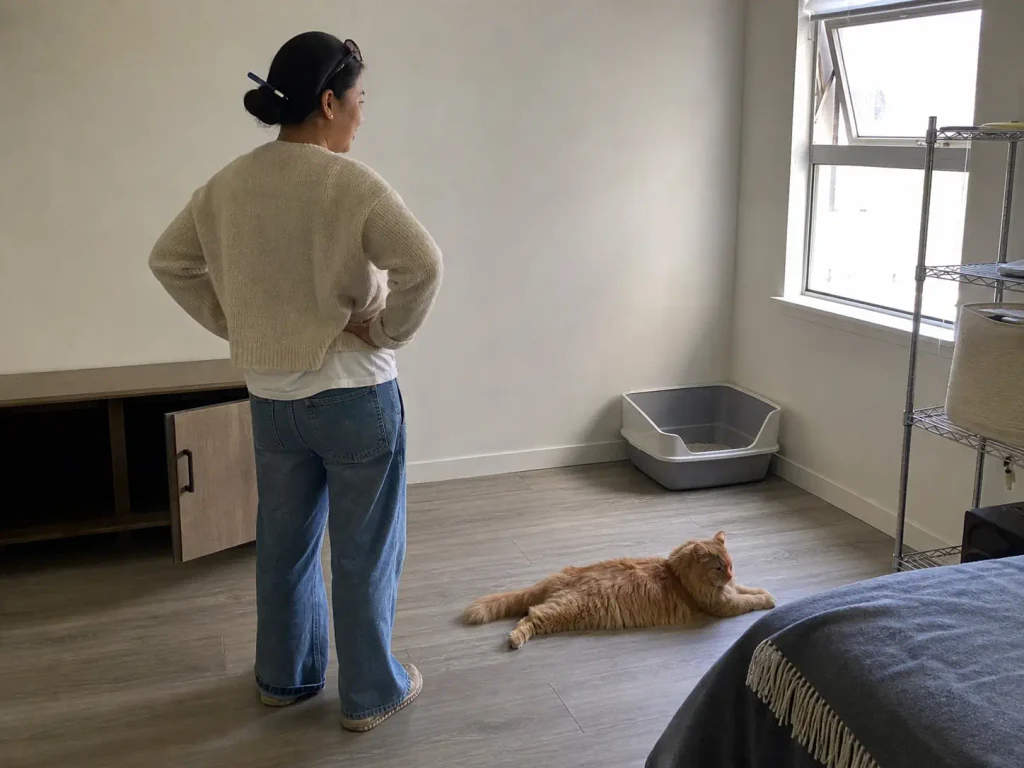
The community has a name for the box next to the front door, and the name is the litter box of shame. It exists because in a one-bedroom there is no laundry room, no basement, no mudroom, and no ventilated corner that also happens to be out of sight. Every article about placement assumes a house. This section assumes an apartment, because that is where most of these boxes actually live.
Ventilated Beats Hidden
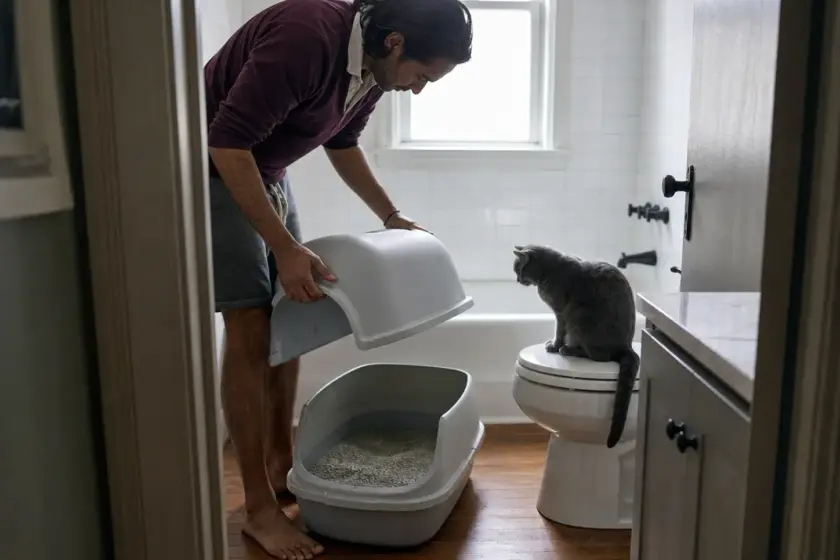
Concealment and odor control pull in opposite directions and the concealment usually wins the argument, which is why so many people end up with a cabinet that smells. An enclosed box, a covered box, or a box inside furniture built to hide it all do the same thing: they trap ammonia in a small volume of still air, which is precisely how you get a concentrated dose of it at the exact height where the cat has to put his head.
The pattern in cat forums is consistent enough to be worth acting on. Someone adds a lid to help with the smell, the smell in the room improves for a week, and then the cat starts going beside the box instead of in it. The lid comes off and the complaint drops immediately. He was not protesting. He was telling you the inside of that box had become unusable, and he was the only one in the apartment in a position to know.
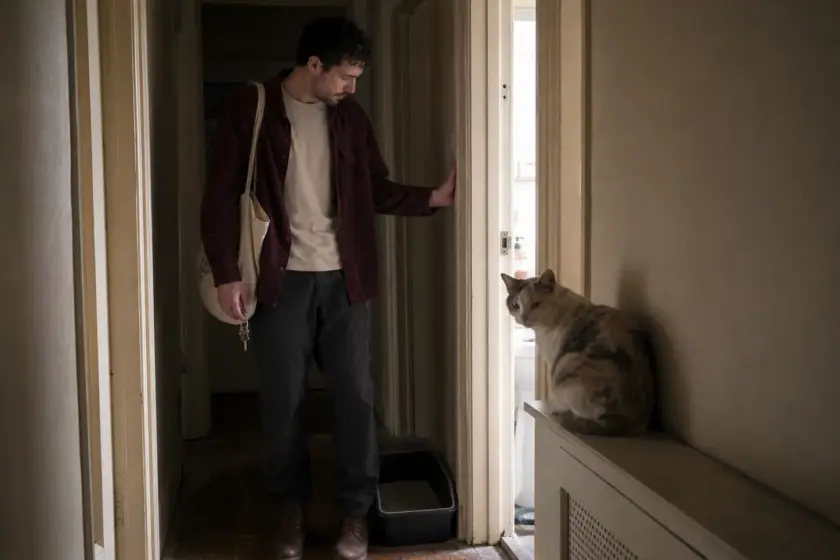
Before buying anything else in this article, move the box to the most ventilated spot you can live with and leave it there for two weeks. If the smell drops, the problem was airflow the whole time and you just saved the cost of every product below. Test it the honest way: go out for two hours and judge the room in the first three seconds after you open the door, because your nose stops reporting on a room you are sitting in.
The Bathroom Trade-Off
The bathroom is the default answer in an apartment and it is a real answer, with a real cost attached. Tile cleans easily, there is usually floor space beside the toilet, and it keeps the box out of the room where you eat. Against that: it is often the most humid room in the apartment, and humidity is the multiplier from the first section of this article. A box in a windowless bathroom with a shower running twice a day is being asked to perform in the worst possible conditions.
It still works if you handle the air. Run the extractor fan for a while after showering rather than switching it off with the light, leave the door open when the room is not in use, and keep the box away from the shower rather than tucked beside it. Whether the bathroom is a real answer for your specific layout depends mostly on whether the room has any air movement at all.
The Version That Works in One Room
If the apartment is a studio, or a one-bedroom where the only options are the bathroom and the entryway, the goal changes. You are not looking for a hidden spot, because there isn’t one. You are looking for the spot with the most air movement that is furthest from where you sit and sleep, and it usually is not the corner you first thought of.
Three things move the needle in a small space and none of them require a landlord’s permission. Distance from the door, because the first thing a guest meets should not be the box and because entryways are dead air. Distance from where you sleep, since eight hours in a closed bedroom concentrates whatever is in there. And a window cracked a couple of inches in the room with the box, which changes more than any product mentioned in this article. The layout that works when there is no spare room goes further into the specific corners worth trying. Moving the box two rooms costs nothing and frequently outperforms everything below.
What Actually Helps Next to the Box
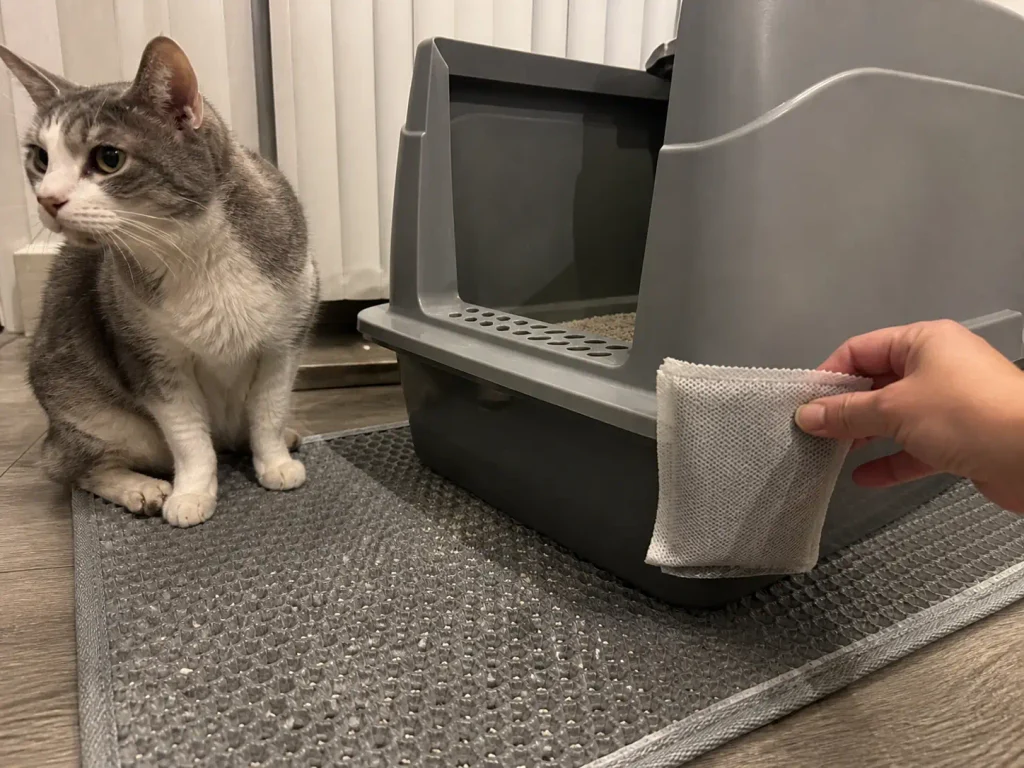
This is where most people start and where they should be finishing. Nothing you set beside the box compensates for a box that is under-served by the five variables above, and the order in this section is deliberate: free first, cheap second, expensive last and only as an upgrade.
Carbon Works, HEPA Alone Does Not
Activated carbon adsorbs ammonia gas, holding the molecules in its pore structure rather than filtering particles out of the air. A HEPA filter does not, because ammonia is a gas and passes straight through a filter designed to catch particulates. That mismatch is the reason so many people buy a well-reviewed purifier for allergies, point it at the litter area, and find it does nothing for the smell at all.
If you go the purifier route, the spec that matters is carbon weight, not the HEPA rating on the box. At least one pound of activated carbon, and two or more if the room is busy. The airflow figure to look for on a litter area is roughly 200 to 300 CFM, enough to actually turn the air over near the box rather than sampling the room average. That is an upgrade path, not a recommendation. The material does the work at a fraction of the cost when it sits right next to the box.

Close to the Box, Not Across the Room
Proximity is the specification nobody publishes and it decides whether any of this works. Whatever is doing the adsorbing needs to sit within about three to five feet of the box, close enough to be pulling air straight off it rather than averaging the whole room. A purifier in the far corner of a studio is technically in the same room and functionally in a different apartment.
This is also where loose baking soda falls down, and it is the fix every article recommends first. It does adsorb, and it costs almost nothing, and a cat digging in it kicks it out onto the floor where it does nothing and gets tracked through the apartment on damp paws. The community moved on to zeolite and sealed pouches for exactly that reason: same job, stays where you put it. If you are running several boxes or working through pouches quickly, Kitty’s Odor Stopper sells the same activated charcoal as a 4 lb bulk supply, which lets you set a shallow open dish beside each box instead of buying pouches per box. It needs a container the cat cannot tip, which is the trade you make for the lower cost per pound.
Sprays are the other half of this aisle and they deserve a plain sentence. They treat the air, not the source, and the effect ends roughly when the bottle does. There is nothing wrong with using one before guests arrive. There is something wrong with using one instead of the second scoop. For the full breakdown of what belongs next to the box and what makes it worse, that comparison gets its own piece.
What Leaves the Box Travels With the Smell
Litter that gets carried out of the box does not stay neutral. Granules that have been in contact with urine end up on the floor, in the rug, and against fabric, which spreads a small amount of the odor source into surfaces you cannot scoop. People chase this smell around the apartment with cleaners and never trace it back to the ten feet of floor outside the box.
A mat catches it, and mat size is the entire difference between catching litter and decorating around it. The Gorilla Grip Cat Litter Box Mat runs 35 by 23 inches, which is wide enough that the cat lands on mat rather than beside it on the second or third step out. Anything much smaller than that is a decoration. The coiled mesh needs shaking out over a trash can every few days or it just becomes a litter reservoir with a nicer shape, and in a tight bathroom you may have to trim the placement rather than the mat.
Putting It in Order, and Keeping It There
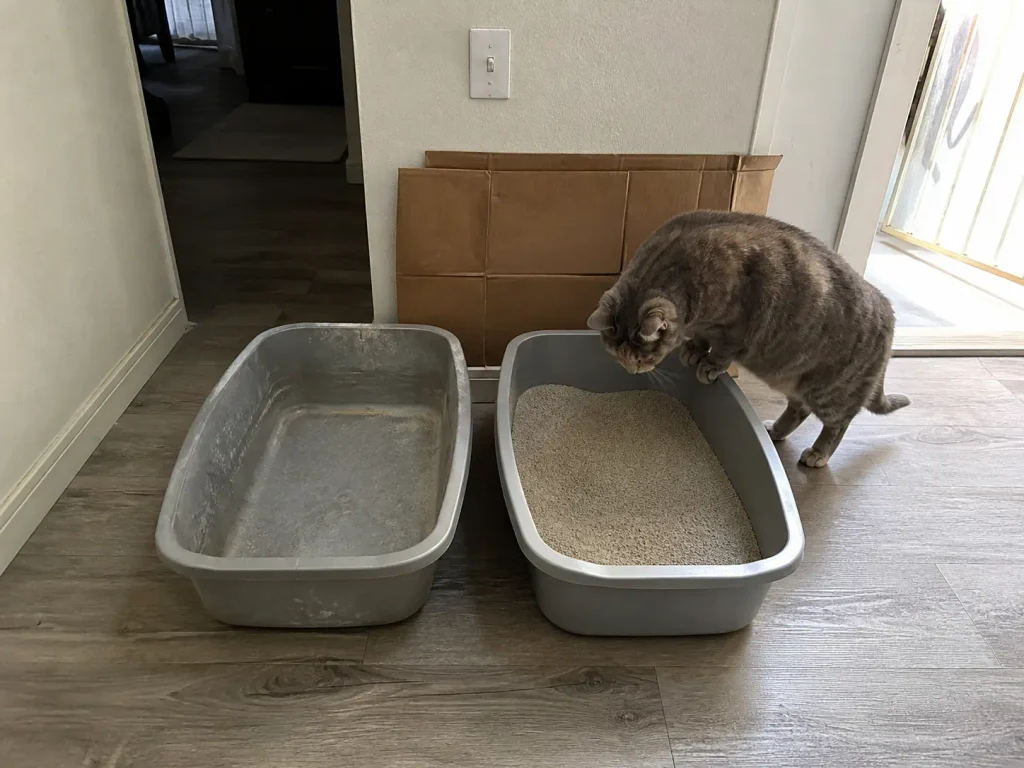
Everything above is true and none of it helps if it arrives as six simultaneous changes on a Saturday. There is also an honest part nobody writes down: a new routine holds for about three weeks and then starts to loosen at exactly the point you have stopped thinking about it.
The Order Worth Changing Things In
Cheapest and most reversible first. Work down this list and stop when the room stops announcing itself, because there is a good chance you never reach the bottom of it.
- Cadence. Add the second scoop. Free, immediate, and the highest return in the article.
- Count. One box per cat plus one. If you are short a box, nothing below matters much.
- Depth. Measure to three inches, then do a full change instead of a top-up.
- Placement. Move it toward air and away from enclosure. Free.
- Material. Switch to a hard-clumping unscented litter over five to seven days.
- Additions. Carbon within a few feet of the box. Last, not first.
That order is also the order of the fixes ranked in the order worth trying them if you want the ranked version with the reasoning behind each position.
One Variable at a Time
Change one thing, give it a few days, and judge it before changing the next. This feels slower and it is not, because the alternative is a room that improved for reasons you cannot identify, which means that when the smell returns in four months you are back at the beginning with no information.
The conventional advice here is to overhaul everything at once and enjoy the result. In practice, the overhaul is also the version most likely to trigger a boycott: new litter, new box, new location and a lid all in one weekend is a lot of change for an animal who did not ask for any of it. One variable at a time is not patience. It is the only way to end up knowing something.
What Slips First
The evening scoop. Every time. It is the one that mattered most and the one that feels most optional, because the box was done this morning and nothing looks urgent at nine at night. Put the scoop physically beside the box and the slip rate drops on its own.
The second thing that slips is the full change, which quietly reverts to topping up because topping up is faster and the box looks fine afterward. And the third is not a slip at all: a plastic box past a year that still smells right after a genuine deep clean is not a discipline problem, it is a materials problem, and no routine reverses it. If you are replacing it anyway, which box designs hold odor worst by construction is worth reading before you buy the same one again.
Notice what is not on the list of six: anything the cat has to do differently. All six variables belong to the household. He has been using the same box in the same way the entire time.
Conclusion
Three things worth keeping if you keep nothing else. The smell is a timer rather than a mess, which is why scooping twice beats scrubbing harder and why the evening scoop outranks every product in this article. Most returning odor is a system that quietly got smaller than the household it serves: one more cat, one less inch of litter, one more year on the same plastic. And you change one variable at a time, starting with the ones that cost nothing, or you learn nothing you can use the next time it comes back.
Put a note in your phone three weeks out. Three weeks is when a routine that felt automatic has started slipping, and the thing that will have slipped is the second daily scoop. The box will tell you before you remember, and by then you will have spent a week wondering what changed.
Start with two moves and no money: shift the box to the most ventilated spot you can live with, and add the evening scoop. Give it a week. If the room stops announcing itself when you walk in from outside, everything else in this article was optional.
Amazon’s Audible — free for 30 days
Your cat won’t let you read. Let someone read to you.
Audible is Amazon’s audiobook library — thousands of titles, read out loud, on your phone. Free for a month, plus one audiobook to keep forever.
Frequently Asked Questions
01How can I eliminate the bad smell from my cat litter box?
Scoop twice a day rather than once, keep litter at about three inches, and change it fully instead of topping it up. If the box is over a year old and still smells right after a deep clean, the odor is embedded in the plastic and no cleaner will reach it.
02Why does my cat’s litter box smell so bad all of a sudden?
A sudden change usually traces to something in the household that changed first: a new litter, a box that got moved or covered, or a second cat sharing a box sized for one. If the smell itself has changed character rather than just intensity, that is a conversation for a vet, not a cleaning problem.
03How do I stop my house from smelling like cat litter?
Ventilation beats concealment, so move the box somewhere air actually passes rather than into a cabinet. Litter carried out on paws spreads the smell into floors and fabric, which is why a mat wide enough to catch it does more than any spray.
04Does an air purifier help with litter box smell?
Only if it holds a meaningful amount of activated carbon, at least a pound of it, because ammonia is a gas and passes straight through a HEPA filter on its own. Placement matters as much as the spec: within three to five feet of the box, not across the room.
05Do covered litter boxes help with odor?
They help the person in the room and rarely help the cat, because a lid concentrates the smell exactly where the cat has to put his head. Owners who remove the lid often report the complaint drops rather than rises.
Leave a comment