Self-Cleaning Litter Boxes and Who Actually Needs One
Don't buy an automatic litter box until you run the free 4-day scoop test [it tells you whether a motor fixes your problem or inherits it whole]

Alfredo RamsesFounder · August 25, 2026 · 28 min read

On this page14 sections
- 1What Actually Failed Was the Schedule, Not the Box
- 2The Three Mechanisms, and What Each One Is Bad At
- 3Measure the Cat Against the Opening, Not the Box
- 4How the Sensors Decide the Rake Stops
- 5The Litter You Own May Not Be the Litter It Takes
- 6Odor Moves to a Drawer, Which Is Better and Not Solved
- 7Where It Goes Is Decided by the Outlet
- 8One Machine Does Not Replace Two Boxes
- 9The Work That Does Not Go Away
- 10The Transition That Fails, and the One That Works
- 11What the App Can and Cannot Tell You
- 12The Households Where the Answer Is No
- 13What to Do This Week
- 14Frequently Asked Questions
You scooped the box this morning. You scooped it again before work, honestly. And by seven in the evening the room has still made its announcement, and somewhere between the door and the kitchen you have decided the answer is a machine.
That decision gets made in about four seconds and it costs several hundred dollars, and the two loudest voices in this category are the company selling the machine and the person who already bought one. Neither is neutral. What follows is the arithmetic that belongs before the purchase: what these things actually do, whether your cat physically fits inside one, what they cost you in attention rather than money, and the specific households where the honest answer is no.
Quick Answer
A self-cleaning litter box does not clean the box. It moves the scooping from you to a motor, and moves your work to a waste drawer, a set of sensors and a litter you are now locked into. It is worth it when the failure is cadence, meaning nobody is home to scoop twice a day. It is not worth it when the failure is size, count or placement, because a motor inherits those at full price.
What Actually Failed Was the Schedule, Not the Box
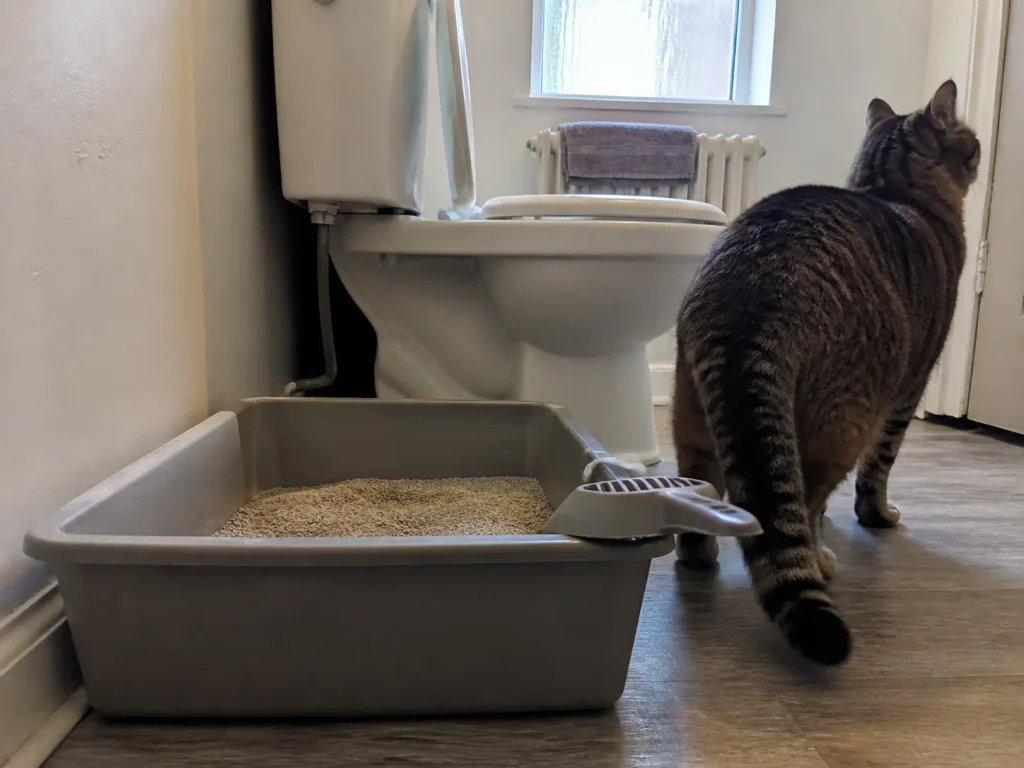
Almost nobody arrives at this article calm. People get here after a bad week, usually one where they did everything right and the apartment smelled anyway, and at that point a machine feels less like a purchase and more like the thing that ends the argument. Which is fair. It is also the moment worth slowing down, because the smell was reporting something specific and it is worth reading before you spend.
Ammonia is a clock, not a verdict. Urine has very little smell of its own until bacteria have had hours with it, which means a box announces itself based on time since the last removal rather than on how much is in there. Two clumps from yesterday morning beat six from an hour ago every time. A box scooped every thirty-six hours will smell no matter what the box cost, and if you want the full version of that argument, how litter box odor actually behaves after you clean is the piece it comes from. This one borrows the conclusion and moves on.
Which matters here because four different failures look completely identical from the doorway, and only one of them is a motor’s job.
- Cadence. The box is fine, the count is fine, but the second removal of the day is theoretical. This is the one a machine genuinely solves.
- Size. The box is too small for the cat, so he uses it badly, buries nothing, and stands with his back end over the rim. A motor does not make a box bigger. Most automatic units make it smaller.
- Count. Two cats, one box. Motorized or not, that is still one box.
- Placement. The box is in a spot the cat only half accepts, so he uses it as briefly as possible. Adding a motor to that spot adds noise to a location that was already marginal.
The test that separates them is free, and it is the only diagnostic in this article that costs nothing. Scoop twice a day, morning and night, for four consecutive days. Not three.
Four, because the first two days clear the reservoir that is already in there and can smell worse before better. If the room goes quiet by day four, the failure was cadence and a machine buys back real time. If the room does not go quiet, you have just learned that the machine would have inherited the problem and charged you for the privilege.
That second outcome is the recurring story in litter threads, and it always reads the same way: the expensive unit arrived, the cat used it, the smell stayed. Then, forty comments down, it turns out there were two cats sharing one unit, or the cat is a large one and the globe interior is tighter than the old pan. The machine changed the labor. It never touched the cause.
Run the four-day double-scoop test before you spend anything. It is free, it takes four days, and it tells you which of the four failures you actually have. Buying first and diagnosing after is how people end up owning an expensive box and the same smell.
And there is a version of the cadence failure that is nobody’s fault at all. Twelve-hour shifts. A commute that puts you out of the apartment from seven to seven.
Travel that eats two nights a week. In those houses the second scoop was never going to happen, and no amount of discipline was going to conjure it. That is the household this category was actually built for, and it deserves saying plainly instead of being buried under a pile of features.
The Three Mechanisms, and What Each One Is Bad At
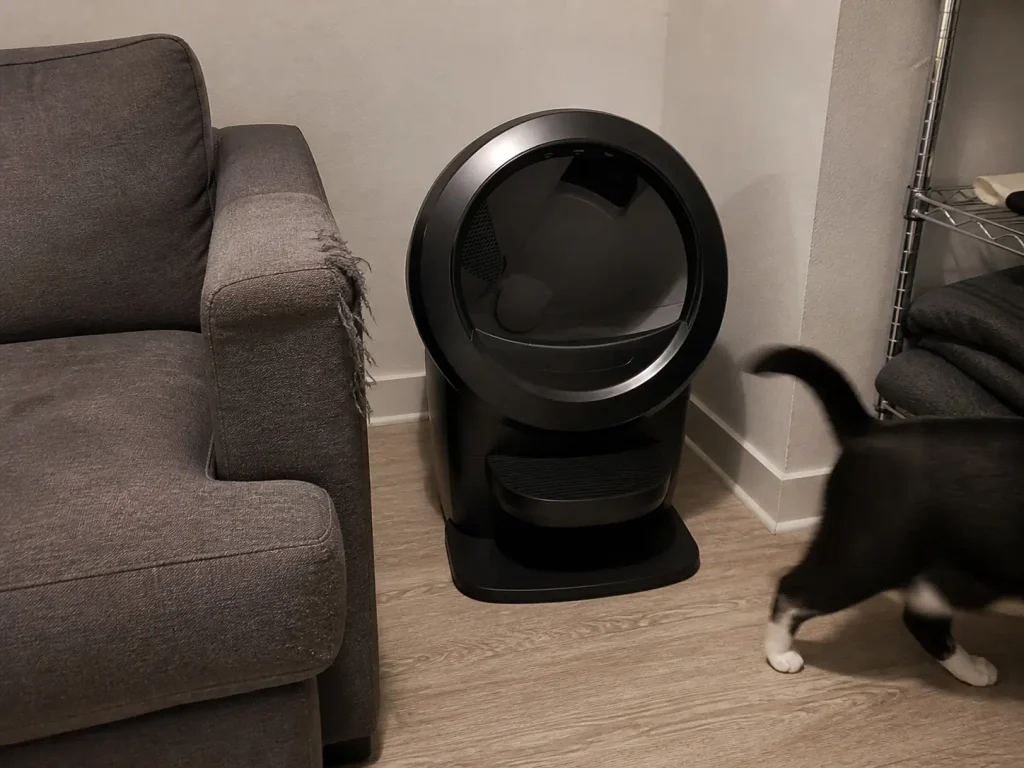
Every listing says self-cleaning and every listing shows the same tidy result. Underneath there are three different bets being placed, and the price does not track which one you are getting.
The rake design is the oldest. A comb sweeps across the litter bed on a timer and drags the clumps into a covered tray at one end. The shape is the advantage: a rake unit is usually an open pan, so a big cat has headroom and a normal turning arc, and the entry is a step-over rather than a hole. The tradeoff is that the mechanism lives in the litter. More moving parts in contact with waste means more places for a clump to snag and more surfaces you eventually scrub by hand.
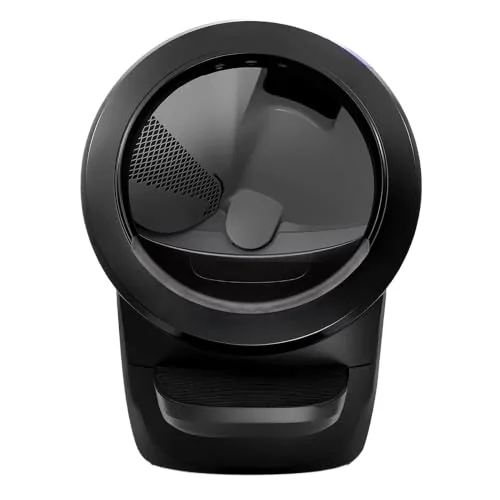
The rotating globe is the one most people picture. The whole chamber turns, gravity sifts the clumps through a screen, and the waste lands in a sealed drawer underneath. It has the best odor isolation of the three by a clear margin, because the waste physically leaves the room’s air within minutes instead of sitting in an open bed until you get home. The constraint is not the shell, which is enormous. It is the entry opening, and that number is the one worth chasing before you buy anything.
The third design is the conveyor or sifting bed, where the floor of the box itself moves and carries clumps toward a collection area. It has the fewest pinch geometries of the three, which is a real point in its favor, and it tends to be the most sensitive to litter type, because the whole system depends on clumps holding their shape as they travel.
What all three share is more interesting than what separates them. Self-cleaning is a category name, not a promise. Every one of the three still needs the drawer emptied on a schedule you own, the sensors wiped so they keep reporting accurately, and the unit stripped down and washed periodically. And all three depend on clumps that have set properly before the cycle runs, which is why the litter question two sections down is not a footnote. It is the constraint that decides whether the machine works at all.
Measure the Cat Against the Opening, Not the Box
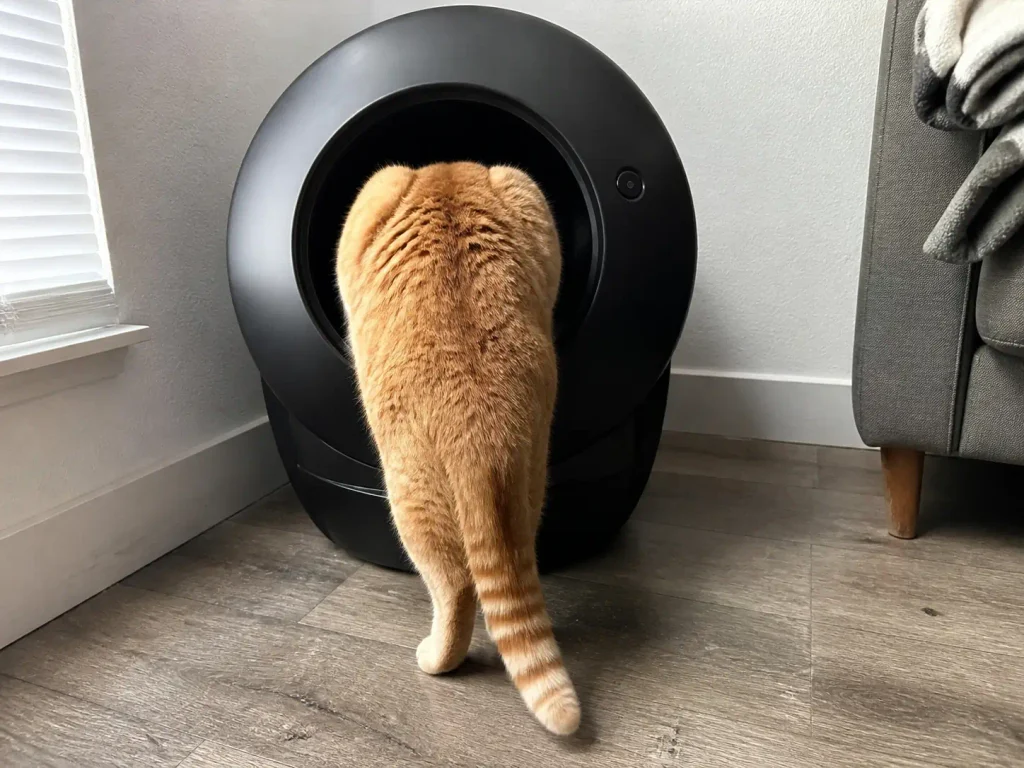
If you have bought a litter box before, you already know the rule: usable interior length should be at least 1.5 times your cat’s body length, measured nose to the base of the tail. For a cat of average body length, around 16 inches, that lands at about 24 inches of usable interior. It is the single most useful number in litter box shopping and almost nobody publishes it.
Here is the trap specific to this category, and it is the reason this section exists. Manufacturers publish the exterior footprint. That 27-by-22-by-29.5-inch figure describes a piece of furniture in your apartment. It does not describe the space your cat stands in. On a globe unit, a large share of that volume is motor, waste drawer and shell. The numbers that decide whether your cat fits are the entry opening diameter and the chamber depth, and those are usually not in the listing at all.
Width is the half of this that gets forgotten. A cat needs roughly 15 to 18 inches of interior width to complete a turning arc and dig properly, and a unit can be perfectly long enough front to back while being too narrow for him to turn around without dragging his side along a wall. A cat who cannot turn will still use the box. He will just use it in the fastest, shallowest way available, which usually means burying nothing, which brings the smell straight back.
And the arithmetic gets harder fast at the top of the size range. A large cat with a Maine Coon build runs around 18 inches of body length, which puts the minimum usable interior at roughly 27 inches. That is a bar most automatic boxes neither clear nor publish, and it is the honest reason a very large cat is sometimes just not a candidate for this category no matter the budget. He is not being difficult about it. He is doing geometry with the space you gave him.
This is what most of the “he just won’t use it” reports resolve into once someone in the thread asks for measurements. Not a preference, not stubbornness, not a training problem. A cat standing at an opening that is smaller than the pan he used yesterday, making the only decision available to him.
Measure your cat first, stretched out, nose to the base of the tail. Then email the seller and ask for two numbers: the interior entry diameter and the chamber depth. If they will not give you a figure, treat that as the figure.
If you want the full derivation of where the 1.5x rule comes from and how it applies to ordinary pans, the measurement this rule comes from is worked out in inches there. Everything in this section is that rule pointed at a machine that hides its own numbers.
How the Sensors Decide the Rake Stops
This is the fear that stops most people from buying, and it deserves a mechanical answer rather than a reassuring one.
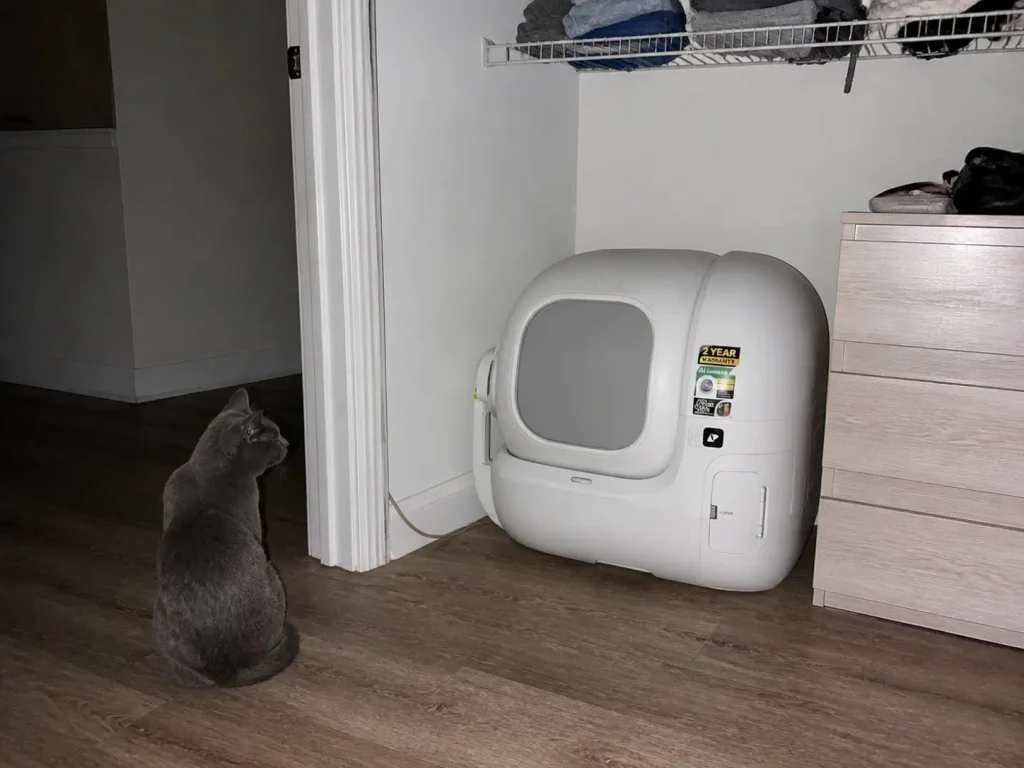
The live check is weight, motion, or both, sampled continuously rather than calibrated once at setup. The important design detail is that a cycle is built to abort, not to pause. A cat stepping back in mid-rotation should stop the mechanism outright and reset it, not slow it down and continue. That distinction is the whole safety argument, and it is worth confirming in the manual rather than assuming.
Typical hold thresholds sit at roughly 2 to 3 pounds, meaning the unit treats anything above that weight inside the chamber as occupied and refuses to run. Which is fine for an adult cat and is exactly why kittens are a genuinely different conversation rather than a footnote to this one: a small kitten can weigh less than the threshold that is supposed to protect her.
The buying question that actually separates models is whether the unit uses two independent detection methods or one. Sensor engineering write-ups on this hardware say the same thing in plainer words: look for at least two independent detection methods, a weight sensor and a separate motion sensor. One system can then fail while the other still catches the cat. In listings the second method is usually described as an infrared sensor, and the pair of them together is what an anti-pinch claim actually rests on.
A single-sensor design means exactly one thing stands between the mechanism and the animal, and single points of failure are only theoretical until they are not. The PETKIT Purobot Max Pro 2 is worth naming here for what it discloses rather than where it ranks: it publishes its detection approach and its cycle noise range, and a listing that volunteers those numbers is answering the question a listing that stays vague is dodging. Its own limitation is that the app-and-camera feature set is doing a lot of the work in its pitch, and cameras are not what makes a box safe.
There is one more thing about sensors that never makes the marketing copy: they are a maintenance item, not a fixture. A sensor with dried litter dust on it reports wrong, and it reports wrong quietly. That is the honest mechanical reason this machine still needs your hands on it every week, and it flows directly into the maintenance section below.
The recurring regret in owner threads is not a brand people have heard of. It is the no-name unit bought on price, and the specification those listings omit is this exact one.
The Litter You Own May Not Be the Litter It Takes
Nobody expects the machine to have opinions about the bag already in the closet. It does, and it expresses them as a jam rather than as a warning.
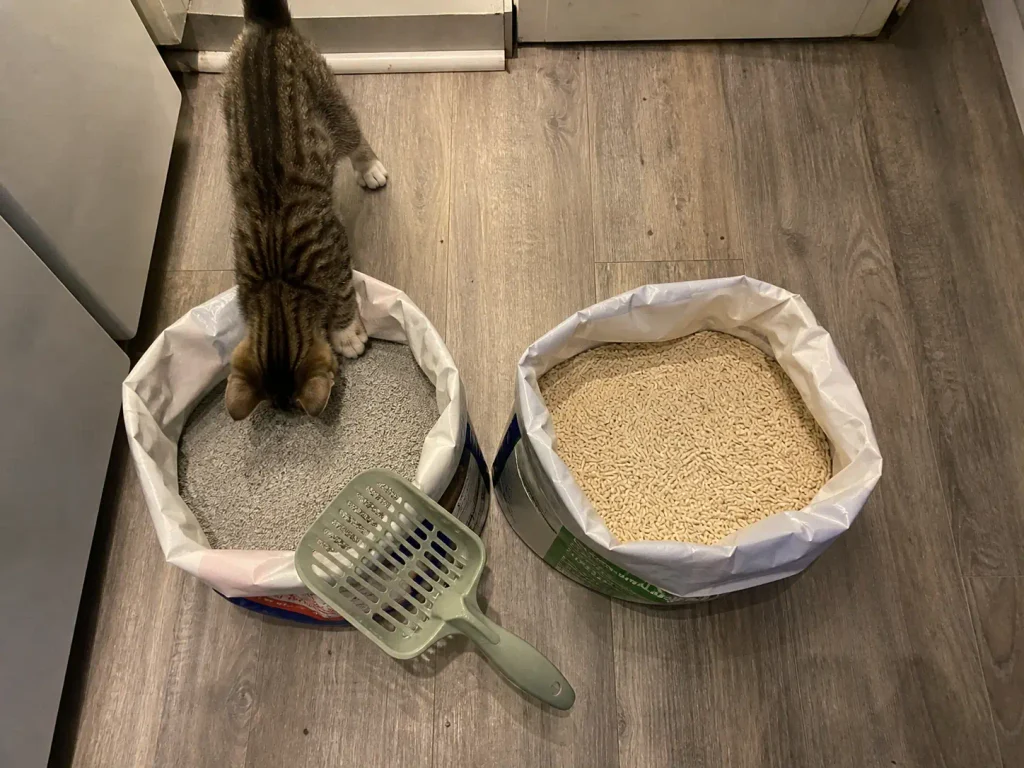
These mechanisms are built around hard-clumping clay or silica crystal that sets in under about 15 minutes. That window is the design assumption underneath the whole category. The cycle timer waits for the clump to harden; if the litter has not set by the time the rake or the globe moves, the clump smears instead of lifting, and smeared litter is what coats a sifting screen and eventually stalls a motor.
The one that catches people out is tofu litter, because the name covers two different products. Standard cylindrical tofu pellets jam sifter screens on most rotary and rake machines, since the pellets are the wrong shape to fall through a screen sized for clumps. Crushed tofu litter behaves like clay and generally works fine.
Same shelf, same word on the bag, opposite outcome. Pine pellets and non-clumping crystal litter are usually incompatible outright unless the model says otherwise in writing, and in writing is the operative phrase. If you are not sure which category the bag in your closet falls into, the seven litter types and who each one is for sorts them by how they behave rather than by how they are marketed.
Now the part that is genuinely expensive and never appears in a review. If your cat has a settled texture preference and your machine demands a different litter, you are about to change the litter and the box on the same afternoon. That is two variables at once, presented to an animal who did not agree to either, and refusal is a completely reasonable response to it. This is one of those places where the cat is not being awkward. He is being asked to accept two simultaneous changes to the one part of the apartment he has no alternative for.
Switch the litter first, in the old box, and let it settle for two weeks before the machine arrives. Then change the box. One variable at a time is the entire trick, and it costs you nothing but patience. The staged way to switch a litter without losing the box works the same here.
The ongoing cost people actually report, once the novelty is over, is not the electricity. It is being locked into a heavier and pricier litter for as long as they own the machine, bought in the format the machine tolerates rather than the one on offer.
Odor Moves to a Drawer, Which Is Better and Not Solved
The promise on the box is no more smell. The accurate version is that the smell is now somewhere else, on a schedule you still own.
Start with the part that genuinely works, because it does. A sealed-drawer design outperforms an open pan for a straightforward physical reason: waste leaves the room’s airflow within minutes of being deposited rather than sitting in an open bed until someone gets home to lift it out. Given that ammonia is a function of time, cutting the exposure window from ten hours to ten minutes is not marketing. It is the mechanism doing exactly what it says.
Now the part that is not solved. That drawer is a sealed container of accumulated waste sitting in your apartment, and it announces itself the moment you open it. You have not removed the smell from your home.
You have consolidated it, scheduled it, and handed yourself one concentrated encounter with it instead of several mild ones. For most people that is a straight upgrade. It is still worth knowing that it is what you bought. If you want the design-level comparison of which shapes hold odor best, which box designs hold odor best works through the sealed-versus-open-pan tradeoff on its own terms.
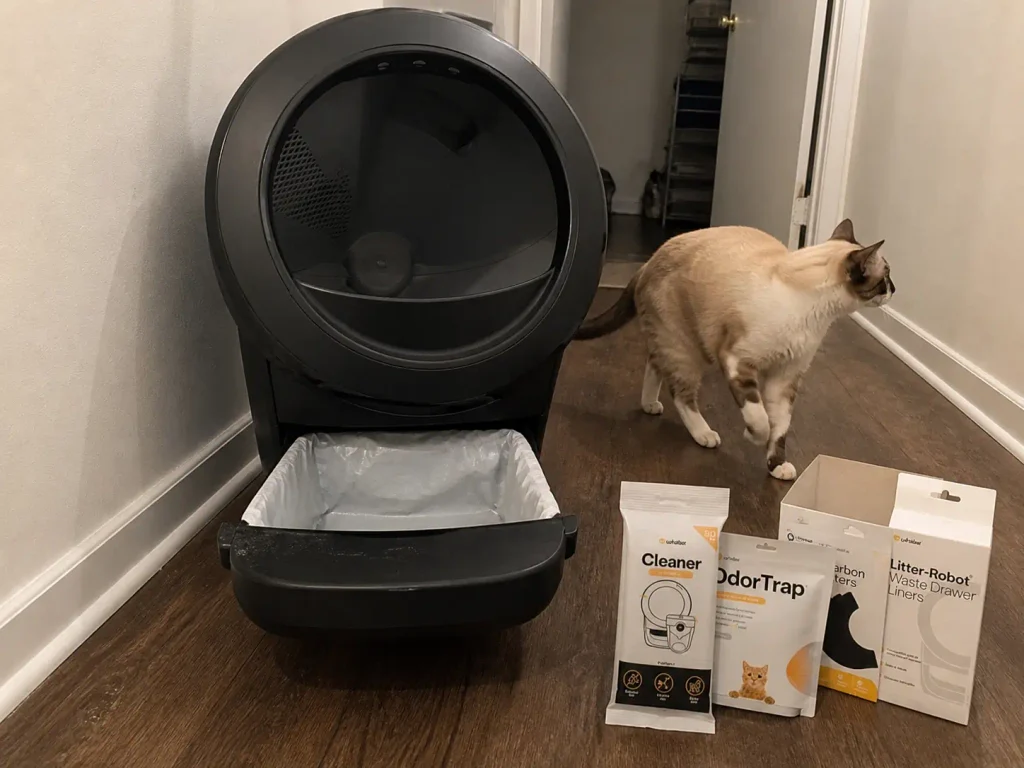
Carbon filters are the other half, and they are consumables with a service life. An expired carbon filter is visually identical to a working one, which means the failure mode is that you find out by smell, several weeks after it stopped doing anything. Same for drawer liners. These are a recurring line item rather than a one-time purchase, which is precisely why a bundle like the Whisker Litter-Robot 4 Supply Bundle exists at all: the sticker price of the unit is the cost of entry, not the cost of ownership. Buying supplies bundled is not an upgrade and it is not a better machine, it is simply the running cost made visible up front, which is more useful than discovering it in month two.
As for cadence, a single-cat drawer commonly runs about two weeks. Households with more than one cat divide that number, and it divides faster than people plan for, because two cats do not produce twice the waste on a neat schedule, they produce it in overlapping bursts. Which leads to the honest observation that survives almost every purchase in this category: when someone still has a smell problem after buying an automatic box, the cause is drawer cadence far more often than box performance. The machine did its job. The drawer sat for nineteen days.
Where It Goes Is Decided by the Outlet
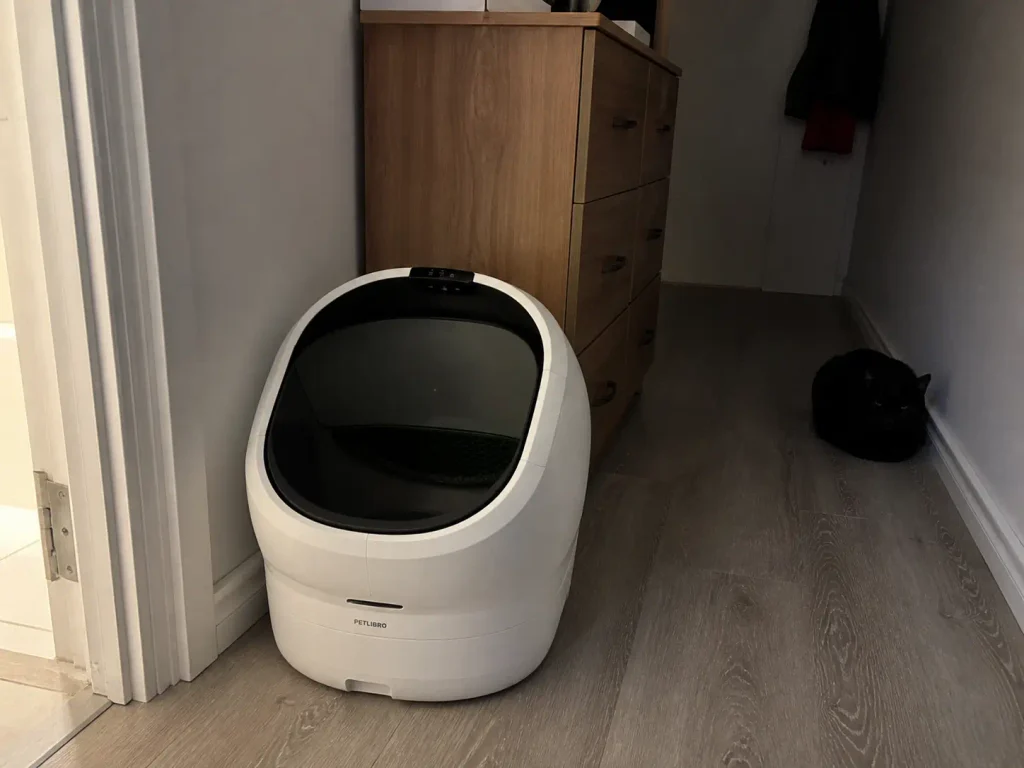
You have spent years learning where a litter box belongs. Somewhere quiet, out of the traffic path, nowhere near the food, with a sightline to an exit so the cat is never cornered while using it. All of that still applies, every word of it.
Then this one adds a new constraint that overrules the rest: it is an appliance. It needs a nearby outlet. And running a cord across a doorway is not a solution, it is a trip hazard you will resent within a week. In a small apartment, the set of spots that are quiet, low-traffic, away from food and near a socket is often smaller than one, and the unit’s floor space competes with everything else in the room.
Noise level is the constraint under the constraint, and it has two separate bars that people collapse into one. There is quiet enough for the room during the day, which nearly everything clears. And there is quiet enough at two in the morning through a shared wall, which is a much higher bar. Cycle noise is why the standing advice is to keep these units out of the bedroom specifically, and it is why sub-40 dB models are marketed the way they are: that number exists because the 2 a.m. complaint is real and repeated, not hypothetical. For reference, the PETKIT mentioned earlier publishes a 35 to 45 dB cycle range, which is a quiet-appliance hum in the room and still audible through a thin wall at night when there is nothing else to hear.
Form factor matters here more than the spec sheets suggest. An open-top unit like the PETLIBRO Luma takes up meaningfully less visual and physical space in a small room than an enclosed globe, and its 2.9-gallon sealed drawer still holds about a week for two cats. The tradeoff is written into the shape: open-top means less odor isolation than a sealed globe, because the bed is exposed to the room between cycles. In a studio, that is a real trade and not an obvious one either way.
The renter compromise nobody mentions in a buying guide is the one that actually happens. The only free outlet is in the room where the box should not go, so the box ends up in the bathroom behind a door that now has to stay ajar, or in a corner of the bedroom with the cycle delay pushed as long as it will go. Both of those are workable. Neither is what the product photography showed.
One Machine Does Not Replace Two Boxes
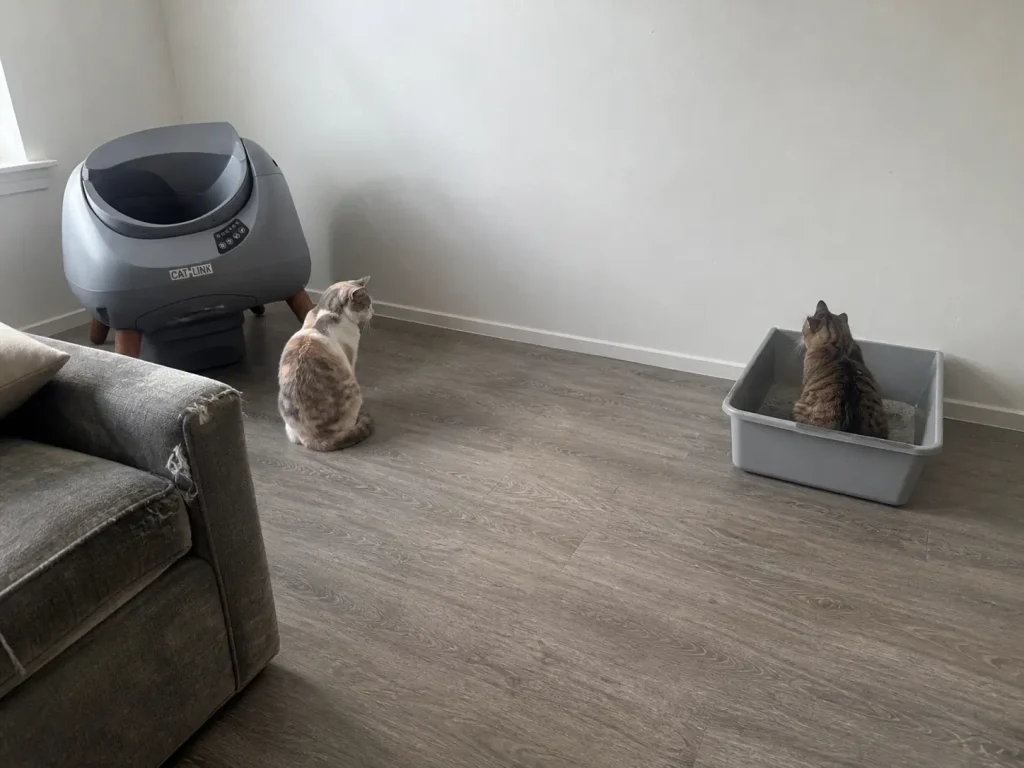
The machine is expensive, so it feels like it ought to count for more than one box. Cats do not price things.
The rule has not changed and the motor does not amend it: one box per cat, plus one. That rule was never about hygiene or volume. It is about simultaneous access and about territory, the two things International Cat Care puts at the center of resource provision in multi-cat homes, and a motorized unit provides exactly one of each. Two cats and one automatic box means one cat waits, and the cat who waits is the one who finds the rug. He is not making a point. He needed the box, the box was occupied, and he solved it.
The cycle makes this one specific thing worse than a manual box, which is worth knowing before you buy. After a cat uses the unit, the cycle runs on a delay, commonly adjustable somewhere between three and fifteen minutes, and during that window the box is unavailable. On a manual pan, back-to-back use is possible. On an automatic one, peak-time contention is a designed-in feature of the machine. In a two-cat household with a shared morning routine, that window lands exactly where you least want it.
Per-cat recognition is genuinely useful and consistently oversold. A unit like the CATLINK Open-X will separate visits by cat and report trends per animal, which is real information you could not previously get. The limitation is written into what it is: recognition is a reporting feature, not a capacity increase. Knowing precisely which cat used the single box does not make it two boxes. It is also rated for a single cat, which is the manufacturer being honest about the same thing.
For the arithmetic on how many boxes a two-cat apartment actually needs, how many boxes two cats actually need has the full version. The short answer for this article: the multi-cat households that report the automatic box working run it alongside manual boxes, not instead of them. Every success story in that shape has a plain pan in another room, quietly doing the part the machine cannot.
The Work That Does Not Go Away
The name of the category is doing a lot of lifting, and this is where it strains.
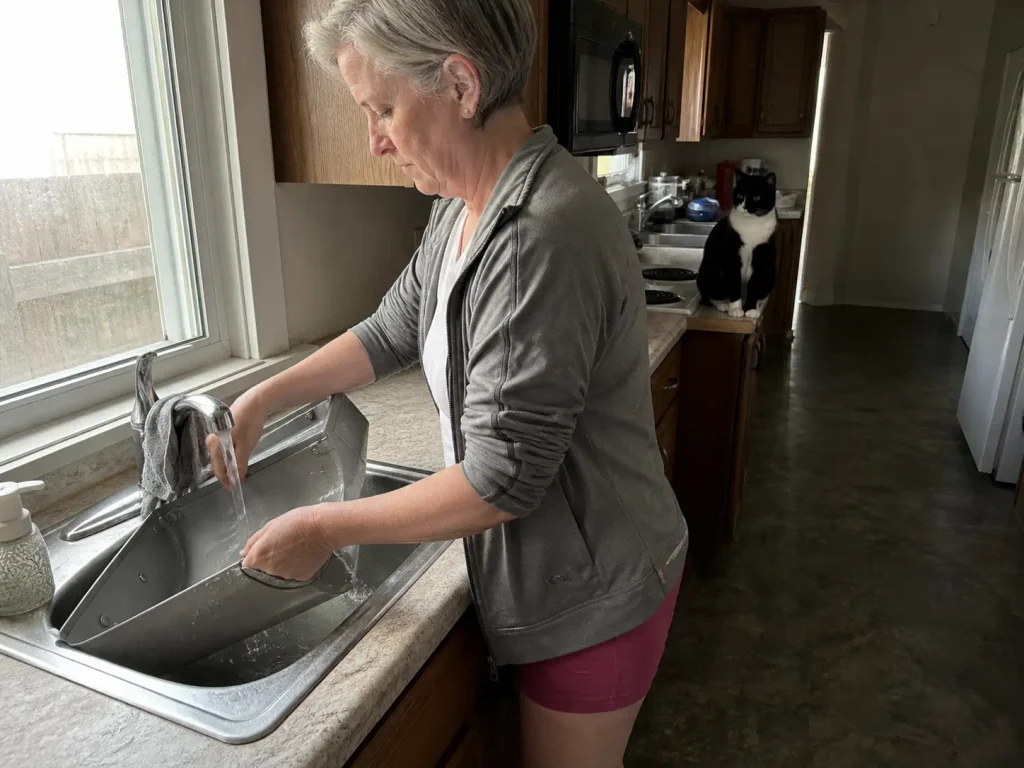
The weekly beat is real and it is short: empty the drawer, wipe the sensors, check the filter. Fifteen minutes, once a week, and none of it is unpleasant. The periodic beat is the one people underestimate.
A full strip-down and wash, and a motor housing simply has more geometry for waste to lodge in than a smooth plastic pan does. A manual box gets fully clean in a bathtub in five minutes. A machine takes longer, has parts, and has places you cannot reach with a sponge. Budget a deep clean roughly monthly, and expect replacement parts such as filters and liners to be an ongoing line item rather than a one-time cost.
The failure that catches nearly everyone once is the drawer. When it fills and nobody empties it, the unit does not stop. It keeps cycling waste toward a container that has no room, and the smell arrives before the error light does. That is a genuinely frustrating discovery, because the whole reason you bought the machine was to stop thinking about this, and you are now thinking about it in the worst possible way.
Which is why the honest framing is not zero work. It is that you touch it weekly instead of twice daily. And that is still an excellent trade, provided it is the trade you were actually offered.
But it is worth being precise about what does disappear, because it is the single most underrated benefit and nobody writes it down properly. What goes away is not the labor. It is the daily decision. The small recurring calculation of whether it needs doing now or can wait until after dinner, the low-grade guilt of walking past it, the negotiation with yourself at eleven at night. That evaporates completely, and for a lot of people that is worth more than the fifteen minutes. It should be named plainly instead of hidden behind a promise the machine cannot keep.
Still, “you have to clean it anyway” is the most common disappointment in the highest-ranking community thread on this topic, and it is not because those owners were unreasonable. It is because they were sold the wrong sentence.
Put the drawer on a fixed day, not on a smell. Sunday morning, every Sunday, whether it seems full or not. The point of the machine was removing the daily judgment call, so do not reintroduce the same judgment call one layer down at the drawer.
The Transition That Fails, and the One That Works
You have just spent real money and the instinct is immediate: remove the old box, so he has to use the new one. That instinct is the single most common cause of the whole purchase failing.
The documented trigger is the machine’s own motion and sound. A cat who was using the unit fine can go on a potty strike, refusing it outright, after one cycle runs while he is still nearby. It is independent of the litter and independent of the location.
The box moved and made a noise in the one place he cannot afford surprises, and he has updated his opinion accordingly. That is not a training failure. That is an animal correctly noting that a thing which used to be inert now has a motor in it.
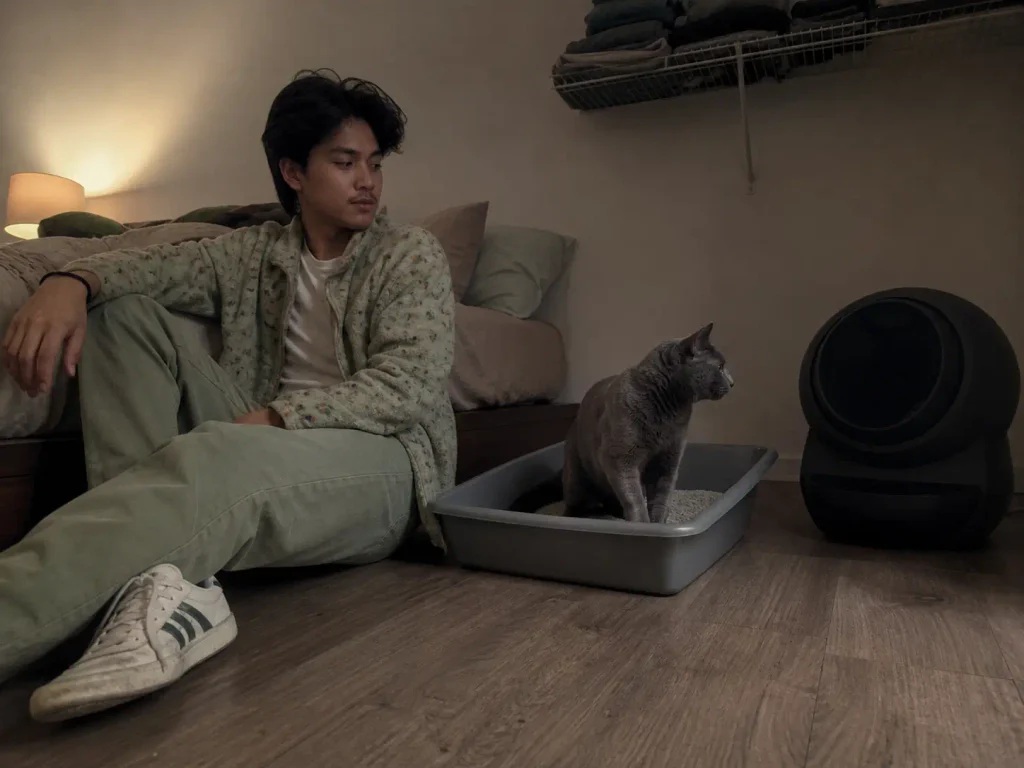
The version that fails is the one-step swap: unit arrives, old box goes out the same day, cleaning enabled from hour one. The version that works is staged, and PetSafe publishes essentially this same sequence in the staged transition recommended for a cat that will not approach the machine:
- Put a plain manual pan right next to the unit and leave it there for the entire transition. It is the fallback that keeps a refusal from becoming an accident on the rug.
- Run the automatic box with cleaning switched off first. For now it is just a new box with an odd shape, which is a much smaller ask than a new box that moves.
- Re-enable the cycle only once he is using it reliably, and ideally run the first few cycles while you are home and he is in another room.
- Keep the manual pan available throughout, and remove it last, well after the machine has been fully accepted.
This is not indulgence and it is not spoiling him. Aversions are sticky in a way that is genuinely inconvenient: a cat who forms a negative association with a location or a texture tends to keep it long after the thing that caused it was fixed, which means a bad week one can cost you a bad quarter. Returns in this category cluster in the first week, and the first week is exactly where the staged transition lives.
What the App Can and Cannot Tell You
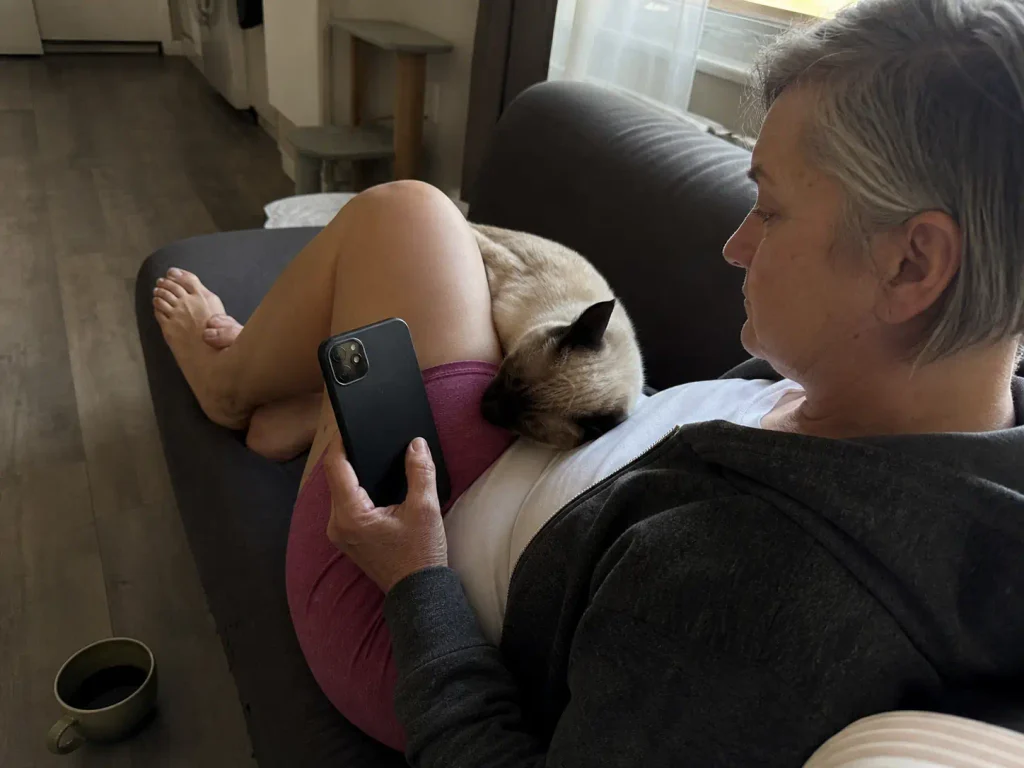
The usage tracking is the most genuinely interesting thing these machines do, and it is also the feature most likely to be oversold to you.
What it actually records is narrow and useful: visit frequency, visit duration, and per-cat weight trend over time. That is a real dataset that did not exist for the average household five years ago, and it is worth something specific. A trend shifts in data before it shows up as behavior you would consciously notice from across the apartment, and that difference buys you time.
Here is where this article stops, and the stop is deliberate. The app flags a trend. It does not diagnose anything, and neither does this site. More frequent visits, fewer visits, a sudden change in weight: those are reasons to call your vet. They are not numbers to interpret at the kitchen table, and no reading on a phone screen means anything on its own. That is a phone call, and a vet visit is where it gets answered. The vet is the one who gets to say what it means.
In a household with several cats, the per-cat data is only as good as the unit’s ability to reliably tell the cats apart, which mostly depends on their weights being distinct enough. Two cats within a pound of each other will produce data that looks confident and is not, and confident wrong data is worse than no data.
The genuinely useful version of this feature is much less dramatic than the marketing. It is noticing that a pattern has shifted, writing it down, and mentioning it at an appointment that was already on the calendar. That is the whole benefit, and it is a good one.
The Households Where the Answer Is No
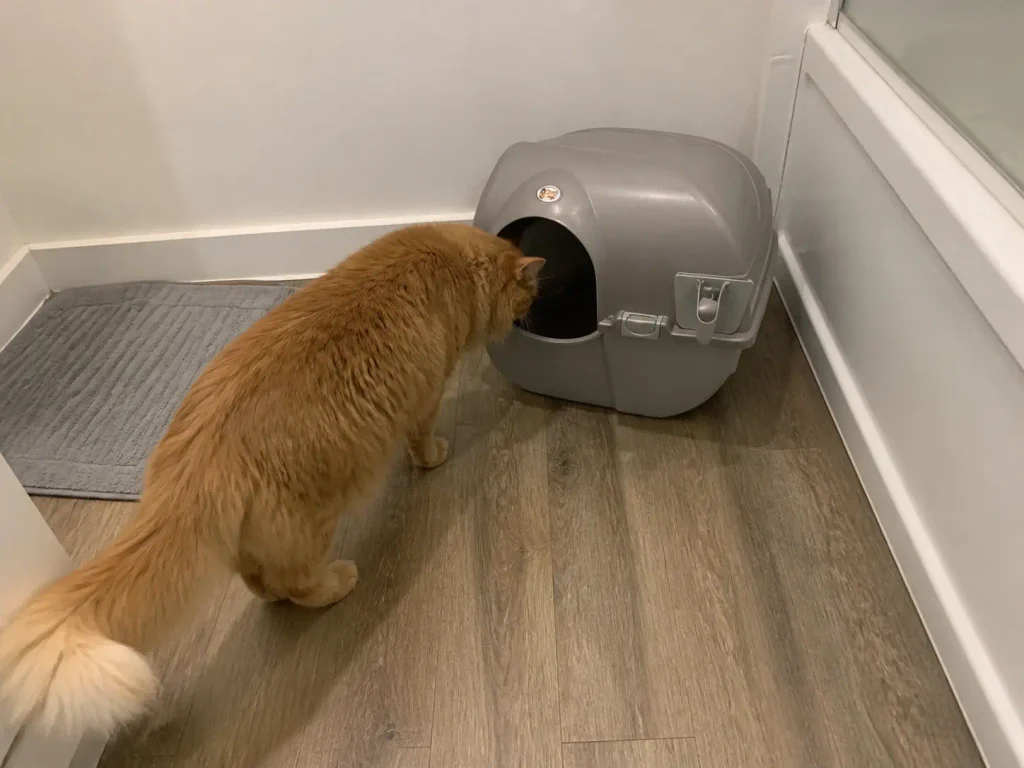
Every other page ranking for this search is written to convert. This is the section that says not you, and it is the reason to trust the rest of it.
- Your cat is too large for any published interior. If he needs 27 inches of usable interior and no manufacturer will confirm they provide it, no amount of money changes the geometry. The answer is a large manual pan and a better scooping routine.
- You have a kitten under the sensor threshold. A hold threshold of 2 to 3 pounds does not protect an animal lighter than that. The answer here is later, not never.
- The four-day test says your failure was count, size or placement. The machine will inherit that problem intact and charge you full price for the privilege. Fix the free thing first, then reassess.
- Your cat already has an established box aversion. Adding a moving, humming machine to an existing refusal adds a variable to a situation that needs fewer of them.
- There is no outlet where the box belongs. The constraint wins. It always wins, and pretending otherwise just means the box ends up somewhere the cat half-accepts.
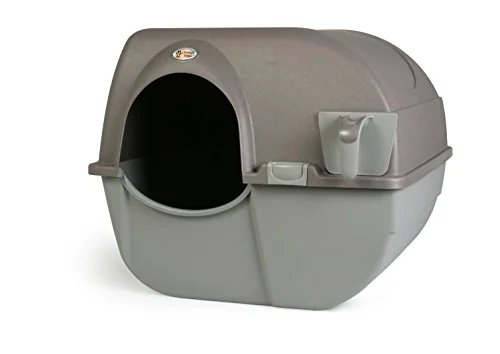
None of that means hand-scooping forever, though, and this is where the category has a genuinely good middle tier that gets ignored because it does not have an app. A manual sifting box removes the scooping motion without a motor, a sensor, a carbon filter or a firmware update. For the full range of low-effort boxes that are not self-cleaning, the easy-to-clean boxes that are not self-cleaning covers the shapes worth considering.
What to Do This Week
Run the four-day test before you spend anything. Scoop twice a day for four consecutive days and read the result honestly. If the room goes quiet, the failure was cadence and a machine buys back genuine hours of your life. If the room does not go quiet, you just saved yourself the price of a machine that would have inherited the problem.
Measure your cat, then ask for the interior number. The published footprint describes a piece of furniture, not the space your cat stands in. Get his nose-to-tail-base length, multiply by 1.5, and make the seller give you the entry diameter and chamber depth. A seller who will not supply that figure has already answered you.
Budget the drawer, not just the box. The purchase converts a daily decision into a weekly one, which is a genuinely good trade. It is only a good trade if you actually make the weekly one, on a fixed day, whether or not it seems necessary.
Set a reminder for three months out, because this is slow wear on an appliance rather than something the cat has to accept. Three questions when it fires: is the drawer still happening on a fixed day or has it drifted back to “when it smells”? Is the carbon filter past its service life? And has the usage pattern shifted from what it looked like in week one?
Start with the four days. It costs nothing, it happens this week, and whichever way it comes out you will know something you cannot currently buy.
Amazon’s Audible — free for 30 days
Your cat won’t let you read. Let someone read to you.
Audible is Amazon’s audiobook library — thousands of titles, read out loud, on your phone. Free for a month, plus one audiobook to keep forever.
Frequently Asked Questions
01Are self-cleaning litter boxes safe for cats?
The mechanism is a live weight and motion check run on every cycle, designed to abort the instant a cat is detected rather than slow down. The specification worth checking before buying is whether a model uses two independent detection methods or only one, because a single sensor is a single point of failure.
02Do You Still Have to Clean a Self-Cleaning Litter Box?
Yes. The waste drawer gets emptied, the sensors get wiped, and the unit gets stripped down and washed periodically. What disappears is the twice-daily decision rather than the task itself, and for most owners that daily decision is the thing they were actually buying their way out of.
03Can You Use Any Litter in an Automatic Litter Box?
No. These mechanisms are built around hard-clumping clay or silica crystal that sets in under about 15 minutes. Standard cylindrical tofu pellets jam sifter screens on most units, while crushed tofu works, and pine pellets and non-clumping crystal are generally incompatible unless the model states otherwise.
04Will an Automatic Litter Box Stop the Smell?
It moves waste out of the room’s air within minutes instead of hours, which genuinely helps, then concentrates it in a sealed drawer that is now your responsibility on a schedule. If the smell came from a box that was too small or from one box shared by two cats, the machine will not change it.
05Is One Automatic Litter Box Enough for Two Cats?
No. Box count is about simultaneous access and territory, and a motor changes neither of those. Households with several cats that report success run the automatic unit alongside manual boxes rather than instead of them, especially since the unit is briefly unavailable during each cleaning cycle.
Leave a comment