Litter Tracking Has Three Fixes, and One Order
Don't buy another litter mat first. Litter tracking has three fixes (granule, wall height, mat placement) and pulling them out of order wastes money.

Alfredo RamsesFounder · August 23, 2026 · 29 min read

On this page12 sections
- 1Why Litter Tracking Happens at All
- 2Fix One: Granule Size Does Most of the Work
- 3Fix Two: Box Height and What It Contains
- 4Fix Three: Where the Mat Goes, Not Whether You Own One
- 5Litter Depth Is a Lever People Pull the Wrong Way
- 6Two Cats Change the Whole Answer
- 7The Renter's Version, When You Cannot Pick the Room
- 8Placement, Flooring and the Path the Cat Takes
- 9The Grooming Lever, for Long-Haired Cats
- 10What Holds After Three Weeks
- 11The Fix, in the Order That Works
- 12Frequently Asked Questions
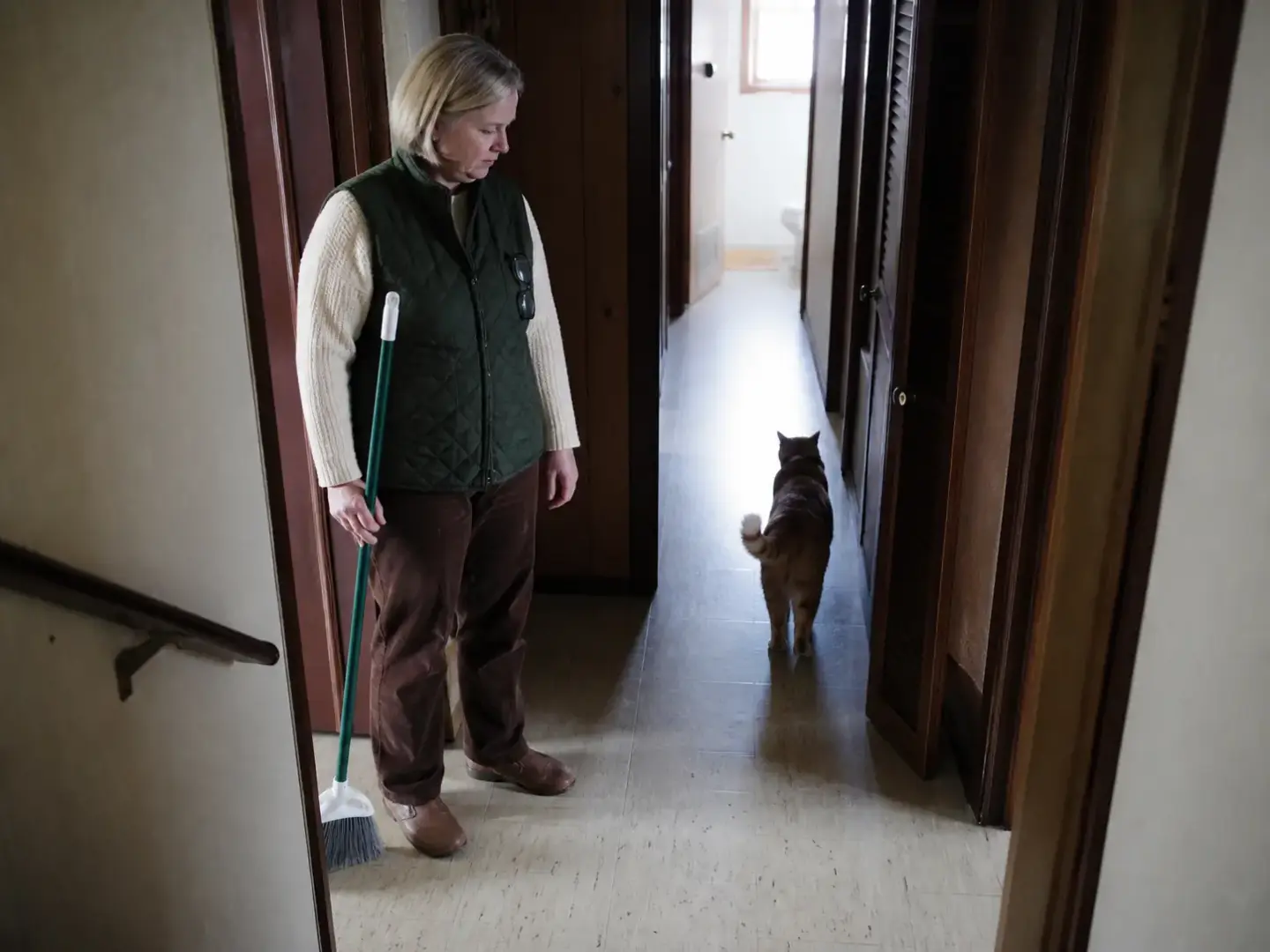
There are granules on the bathmat, granules in the hallway, and a gritty patch two rooms from the box that you have swept every morning for three weeks without the pile getting any smaller. Your cat is not being messy. He is burying waste to hide his scent from a predator that stopped hunting his ancestors thousands of years ago, and he is doing it correctly, which is the one part of this you are never going to change. Litter tracking is what happens around that dig, and there are exactly three things you can move: the litter, the box, and the mat. Most articles hand you all three as equals on a numbered list. They are not equals, and pulling them in the wrong order is why you own a mat that does nothing.
Quick Answer
Fix the three levers in this order, and stop after the one that works.
- Change the litter first. Bigger, heavier granules track least, and testing costs nothing.
- Raise the walls next. High sides contain what the cat kicks sideways.
- Place the mat at the exit, not under the box. Two full strides of length.
Why Litter Tracking Happens at All
Every conversation about tracking starts in the wrong place, which is trying to get the cat to dig less. Nobody has ever managed it. Covering waste is inherited scent-hiding behavior, it runs deeper than any training you could attempt, and a cat who feels the need to be thorough about it will be thorough about it in whatever substrate you provide. The vigorous digging is the fixed variable. Everything you can actually adjust sits around it.
So what leaves the box, and how?
Two separate things are happening, and almost nobody separates them.
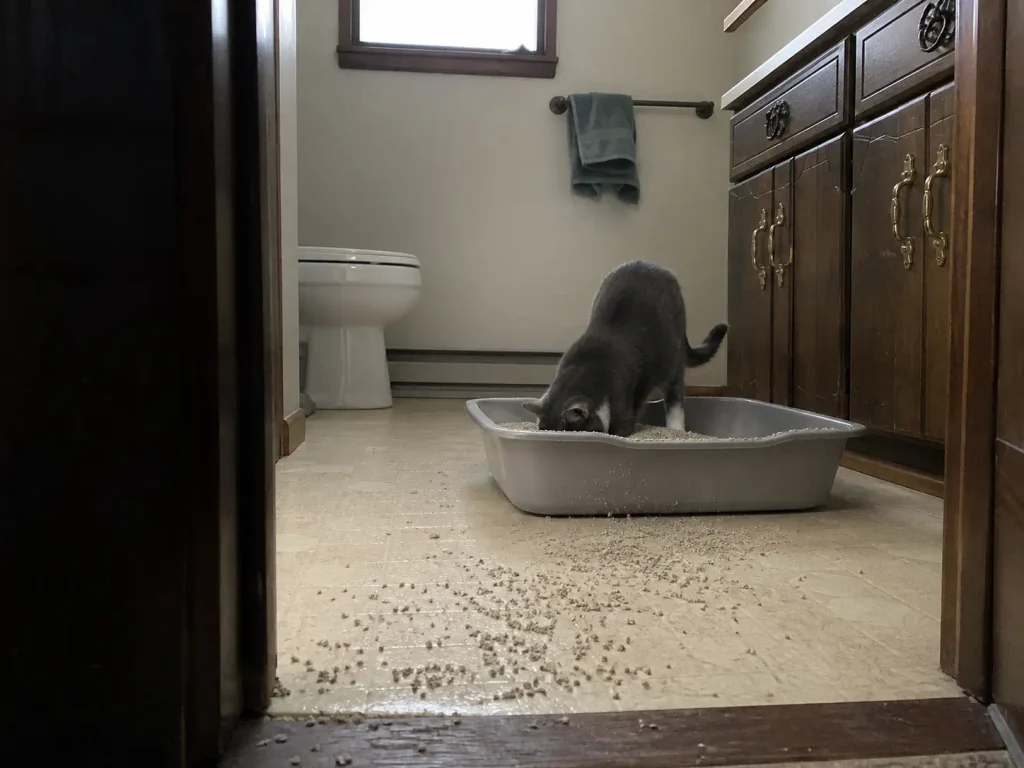
The first is kicked litter: granules thrown sideways and backward during the dig itself, which clear the rim if the rim is low and land in a rough arc around the box. The second is carried litter: granules that lodge between the paw pads and ride out on the cat, then drop off wherever the cat happens to be walking when they work loose. The first one is a containment problem. The second one is a granule problem. They have different causes and different fixes, and this is exactly why a single purchase never solves the whole thing.
The distance is the tell. Litter within a couple of feet of the box got kicked there. Litter on the bathmat, in the bed, or two rooms down the hall did not get kicked that far by anything, and if that describes your apartment, you have a carried-litter problem that no amount of box modification will touch. People describe finding granules in places the cat barely visits, which is what happens when a paw holds four or five grains for thirty seconds of walking and then releases them one at a time.
And there is a third carrier that only some households have. Long fur between the toes acts like a small brush, collecting granules that a bare pad would have shed at the box and holding them through the entire apartment. Maine Coons, Persians, Ragdolls and their mixes all come with it as standard. It closes a gap that litter and mats together never fully close, which is why it gets its own section near the end rather than a place in the ordered fix list.
Before you change anything, spend a week following the granules backwards. Sweep one room completely, leave the others, and see where the trail restarts each morning. In a home with more than one box the trail almost always names a single guilty exit, and fixing that one exit does more than upgrading all of them.
On the containment half of the problem, box geometry is doing more work than most people assume. Cornell’s Feline Health Center notes that box size and side height are what most homes get wrong, and a box that is too small for its occupant turns every dig into a launch. There is no way to bury tidily in a tray you cannot turn around in, which makes litter box size a tracking variable and not just a comfort one.
Both mechanisms get worse in a small apartment, because the same granule count is spread across a third of the floor and the paths all cross. If that is your situation, the small-apartment version of this whole sequence runs the same three levers under tighter constraints and is worth reading alongside this one.
Fix One: Granule Size Does Most of the Work
You almost certainly bought a mat before you changed the litter. Everyone does, because every article implies that order by putting the mat somewhere near the top of a flat list. It is backwards. The litter is the only variable in this entire article that changes what leaves the box in the first place. A mat is a filter you install downstream of a problem you have not reduced yet.
The mechanism is not complicated. A granule tracks because it fits in the gap between the paw pads and weighs little enough to stay there through a few steps. Make the granule too big to fit, or too heavy to stay, and the carrying stops at the source.
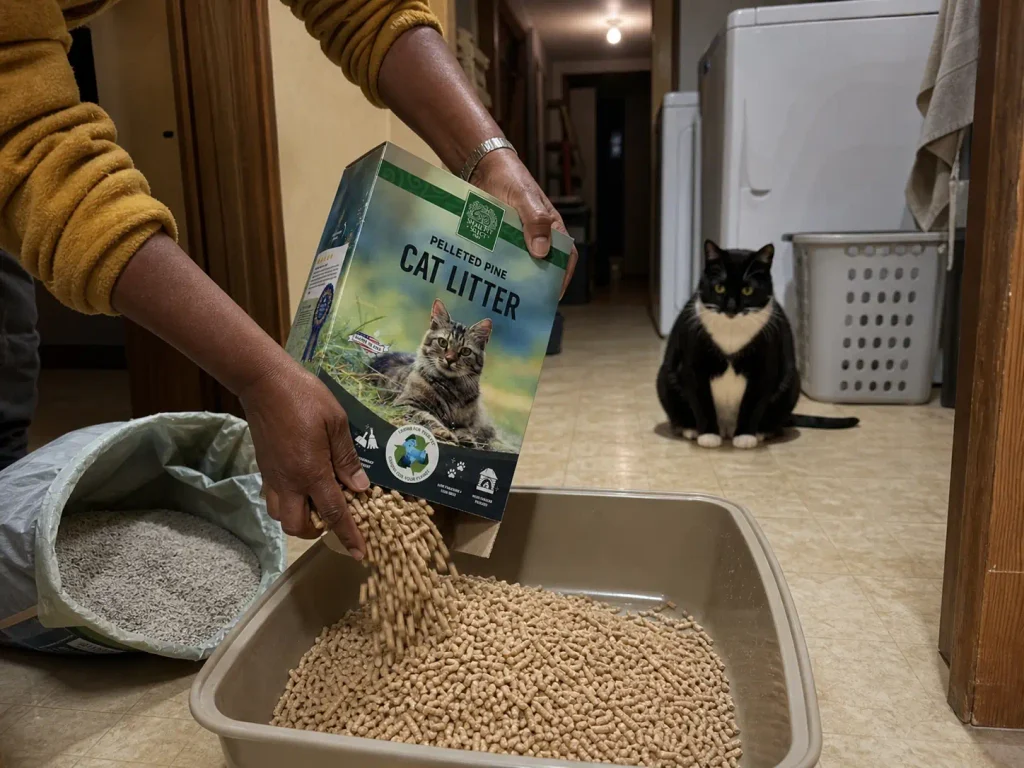
Pellet litter, larger clumping litter and crystal formulas all land on the right side of that line. Fine lightweight litters, which means most corn, wheat, tofu and paper products, land on the wrong side and land there badly. Tofu litter in particular gets recommended as the low-dust option and rarely gets flagged as a tracker, which it is. Fine clay litter is worst of all when it is even slightly damp, because the property that makes it grab moisture and form a solid clump is the same property that makes it grab a paw.
Here is the part that costs nothing, and it is the reason this lever goes first. You are going to buy litter again anyway. Same money, different bag.
That is the whole test, and you will know inside a week whether the granule size was the thing carrying your problem around the apartment. Nothing else in this article can be tested without either buying something new or rearranging your home.
I used to put box height first in this sequence, because a high wall is a visible, physical fix and it feels like it should dominate. Enough forum threads describing the same arc changed my mind: person buys the tall box, tracking drops maybe a third, granules still show up in the bedroom, person concludes tracking is unsolvable. It was never a containment problem for them. It was a carrying problem, and the litter was the answer sitting in plain sight.
The trade-off deserves saying out loud, because most sites recommending pellets quietly skip it. Non-clumping litter does not bind the way fine clay does, so scooping is a different job: you are removing solids and raking out sawdust rather than lifting neat clumps. Some cats also reject the texture outright, and that verdict comes fast. A cat who steps in, feels large hard pieces under the pads and steps out has told you something you cannot argue with.

If you want to run the same test for less, So Phresh by Petco Pine Pellet Non-Clumping Cat Litter comes in a 20 lb bag and works on exactly the same physics, which makes it the sensible bag to fail with if your cat turns out to want nothing to do with pellets. And pellets are not the only large-granule option. If pine specifically is not what you want, the crystal family sits in the same territory, with Litter Pearls Tracksless being the one that comes up most often by name in low-tracking threads. Crystals bring their own trade-off, which is a distinctive crunch underfoot that some cats dislike as much as some people do.
Do not swap litters in one day. Mix the new one into the old across about a week, starting at roughly a quarter new and finishing at all new, so the texture change arrives gradually. A cat who walks in to find the entire floor of his box replaced overnight has a fair reason to boycott it, and a boycott costs you far more than a slow transition does.
Granule size is deep enough to carry a whole article on its own, and it has one: grain size is the whole story takes this lever down to the specific families, textures and failure points. Start here, go there when you want the detail.
Fix Two: Box Height and What It Contains
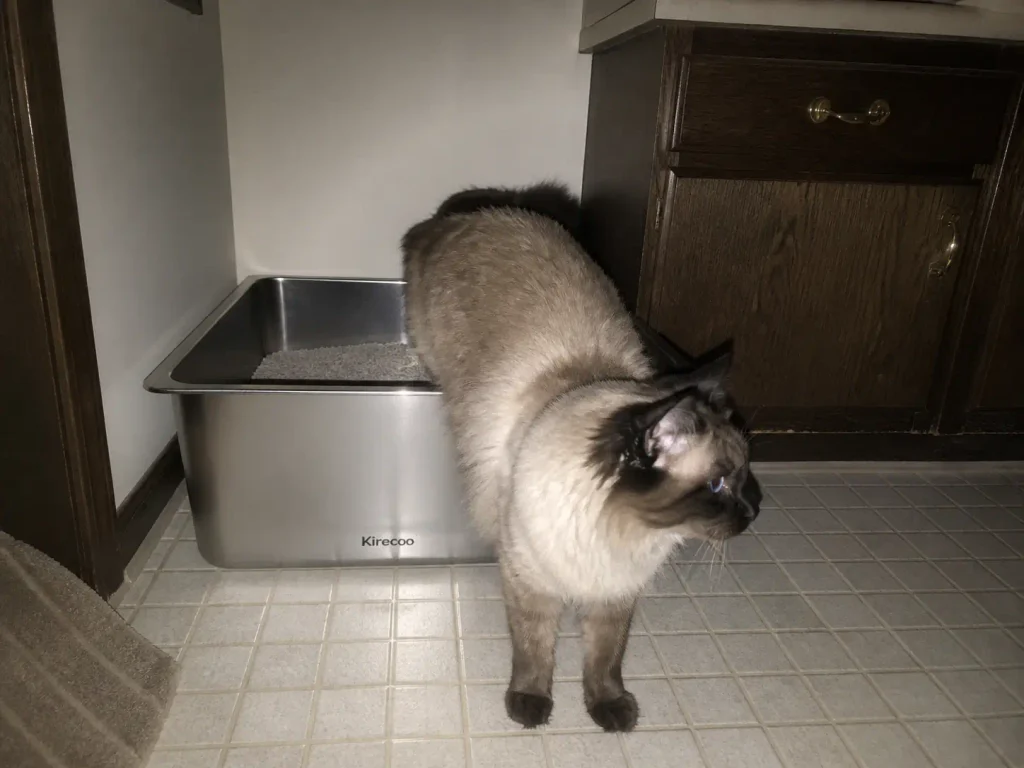
Look at your box as a wall rather than a container, and the second lever becomes obvious. A standard open tray has sides roughly as tall as the litter inside it is deep. Which means anything the cat throws sideways during a serious dig clears the rim with room to spare, and lands on your floor by design. You did not buy a container. You bought a slightly recessed launch pad.
High sides fix this by simple geometry, but only if the wall is meaningfully taller than the litter is deep. A couple of inches of freeboard does nothing. What you want is a side that stands several inches above the litter surface, so the arc of a kicked granule hits the wall and drops back inside instead of clearing it. This is the whole trick, and it is why a tall box with deep litter in it performs about as badly as a shallow tray.
Top-entry boxes work by a completely different mechanism, and it is worth understanding because it targets the other carrier. The cat climbs out over a lip and drops down, and that climb-and-drop knocks loose granules off the paw pads before the pads ever touch your floor. The Modkat Top-Entry Cat Litter Box is the design that made this style common, with a lid that doubles as the shake-off surface. The caveat is real, though: a cat who has to jump to get out is a cat who has been given an entry test, and older cats, heavy cats and short-legged cats can quietly stop using a box that asks too much.
Covered boxes sit somewhere between the two.
The hood contains the kick to the front opening, so on paper they should be the best containment available. In practice they only help when the box stays genuinely well ventilated, because a stuffy hood is something the cat wants out of quickly. A rushed exit is a fast exit, and a fast exit flings more litter than a calm one. You can end up worse off than the open box you replaced.
Which brings up the disagreement in the room. You want a lid because you would rather not look at a litter box. A lot of cats want sightlines and air, and a covered box takes away both. When a cat refuses the hood, that is not fussiness: he is describing a constraint you cannot see from outside. Your preference is negotiable. His is not, and the negotiation always ends the same way.
Size is the other half of this lever, and there is a real number for it.
The box should run about 1.5 times the cat’s length, measured nose to the base of the tail, which is the rule cat behavior expert Pam Johnson-Bennett is most often cited for. Most boxes sold as large fall short of it for an adult cat of any size, and dramatically short for a big one. In a cramped box the cat cannot turn, cannot square up, and cannot dig without pushing litter over the nearest edge, which is why box size shows up as a tracking variable and not just a comfort one. If you want to check yours properly, what size box a cat actually needs has the measuring method.
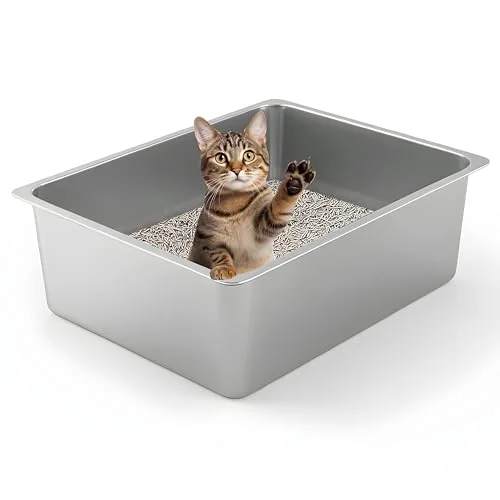
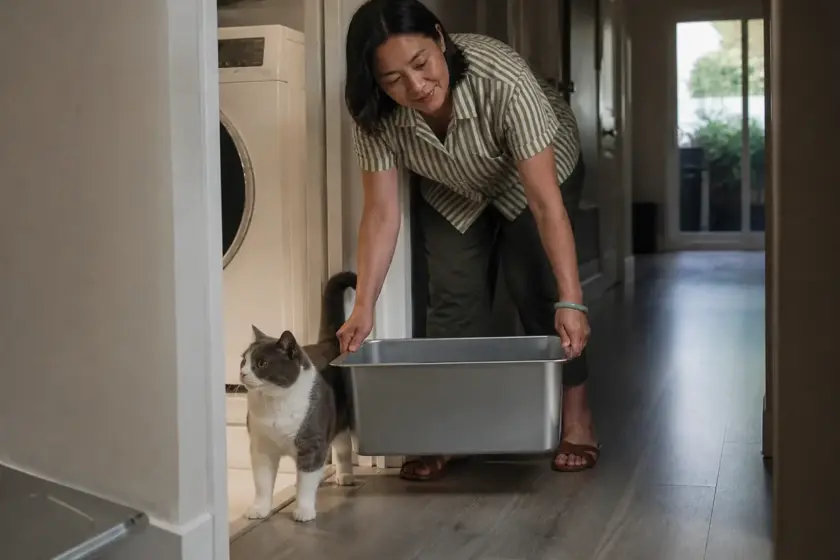
Steel is a preference, not a requirement. The wall height is the requirement, and you can have it for a lot less.
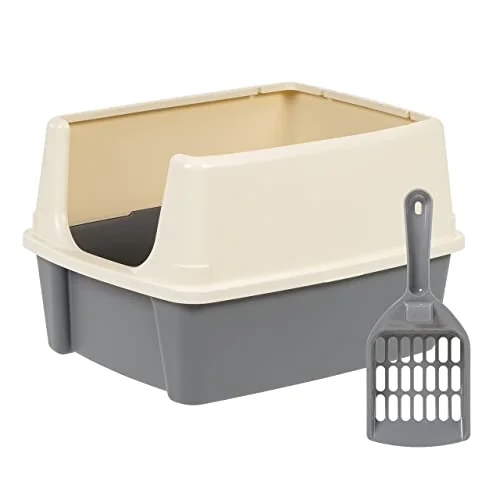
Choosing between the two containment mechanisms is a longer argument than this section can hold, and it has its own piece: high-sided against top-entry, compared properly.
Fix Three: Where the Mat Goes, Not Whether You Own One
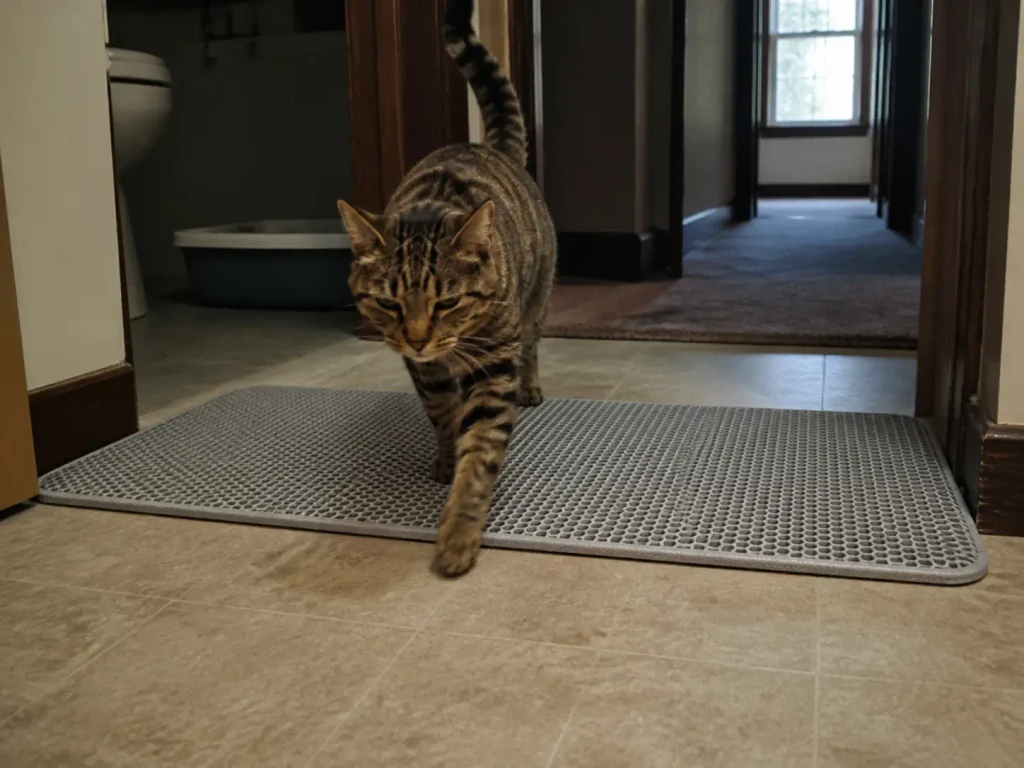
You probably already own a mat, and you are probably annoyed that it changed nothing. That experience is common enough that whether litter mats work at all is a question people type into Google in those words. They do work. Yours is in the wrong place.
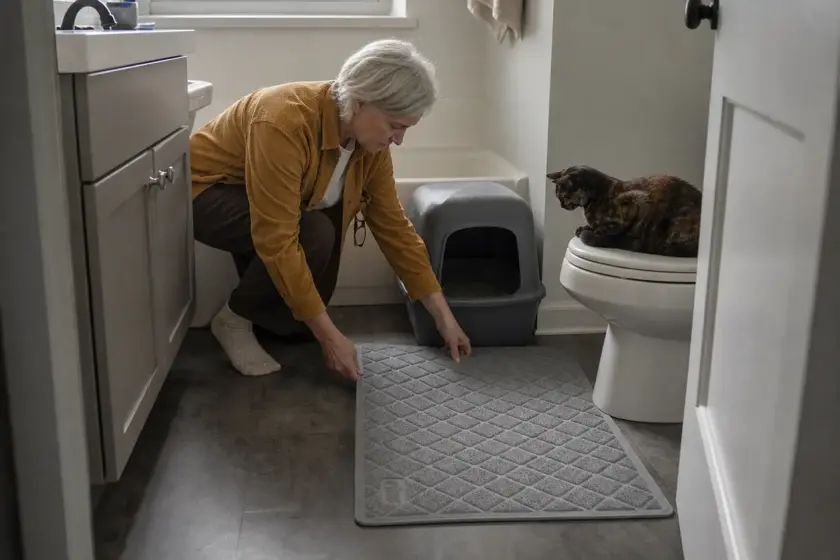
A mat cleans a paw by friction over distance. Not by existing, not by sitting nearby: by being walked across long enough for the surface to pull granules out from between the pads. The working number is roughly two full strides on the mat before the cat reaches bare floor. Anything shorter and the paw leaves with most of its cargo, which is the difference between a mat that catches litter and a mat that is a small rug you now have to clean.
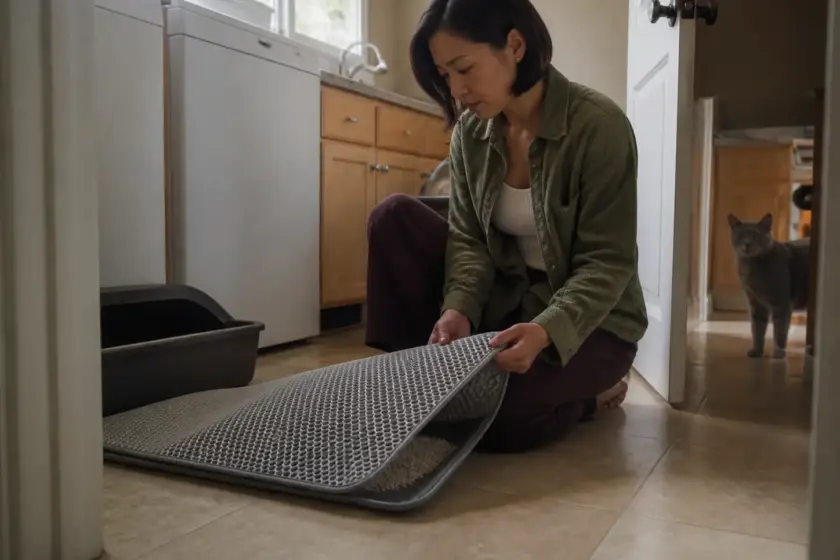
That gives you the sizing rule almost nobody puts up front, and it is a real measurement rather than “bigger is better.” The mat should run about twice the length of your cat, and the length has to lie along the direction he actually walks when leaving. Then comes the placement half, which matters more than the size: the largest portion of the mat belongs at the exit, not centered under the tray. A mat tucked under the box catches what falls off a cat standing still, and a cat standing still is the smallest share of this entire problem.
Cats also learn the edges. A mat that is undersized or offset to one side stops being an obstacle within a couple of weeks, and posters in litter threads describe exactly this: the cat figures out the geometry and steps around or over the whole thing on the way out. If your mat gets crossed in a single stride, it is decorative.
Two mats in sequence is the setup that closes the gap, and it is what layered containment means in practice. Primary mat directly at the exit, then a runner a few feet along the route the cat takes afterward. The first one takes the bulk, the second one takes whatever survived, and the reason it works is that the granules held longest in the pads are exactly the ones that come loose several steps later. One checkpoint cannot catch those by definition.
Shake the mat out over the open box, not over the trash. The granules go back where they came from, you are not throwing away litter you paid for, and the job takes ten seconds instead of a trip to the bin. That is the difference between a habit you keep and one you skip on a Tuesday.
The last thing to know is that mats come in two mechanisms, and they are two different jobs rather than two versions of the same product. Honeycomb mats trap by volume: the top layer is perforated, granules fall through into a sealed lower layer, and the walking surface stays clear between shake-outs. Brush and loop mats trap by friction: soft fibers or coiled mesh comb the pads as the cat crosses. Volume versus contact. Which one you want depends on how much litter is actually leaving your box.
| Mat type | How it traps | What it misses | Where it belongs |
|---|---|---|---|
| Honeycomb, double layer | Granules drop through the top layer into a sealed tray below | Nothing once the tray fills, and a full tray is just a flat surface | Directly at the exit of a heavy-digging cat’s box |
| Coiled mesh or loop | Fibers comb granules out of the pads on contact | Fine dust, and litter pressed deep into a damp pad | The exit, or as the second mat in a layered run |
| Ridged plastic or rubber | Raised ribs knock granules loose as the paw crosses | Anything carried in long fur rather than on the pads | Under the box itself, protecting the floor |
| Cut astroturf | Stiff bristles snag granules the same way loop mats do | Not for a cat who chews plastic backing | The budget stand-in while you fix the first two levers |
On the friction side, the Gorilla Grip Cat Litter Box Mat is the coiled-mesh version most people end up with, and at 35 by 23 inches it clears the two-stride requirement for an average adult cat as long as you lay the 35-inch dimension along the exit path rather than across it. Turn it the wrong way and you have bought a 23-inch mat. Its limitation is the one all loop mats share: it holds less before it needs shaking out than a trapper design does, so it wants attention every few days rather than every couple of weeks.
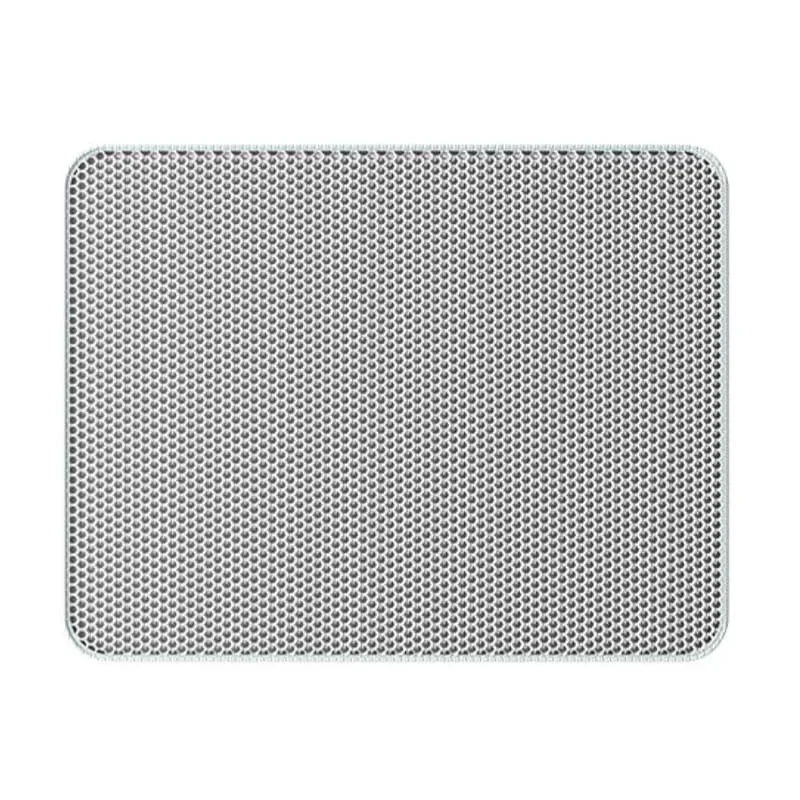
Before you buy either one, move the mat you already own to the exit and give it a week. That costs nothing, and it settles the question of whether you had a placement problem or a product problem. Where the mat has to sit to catch anything goes through the placement cases in detail, including the awkward ones where the box is in a corner and the exit path is diagonal.
Litter Depth Is a Lever People Pull the Wrong Way
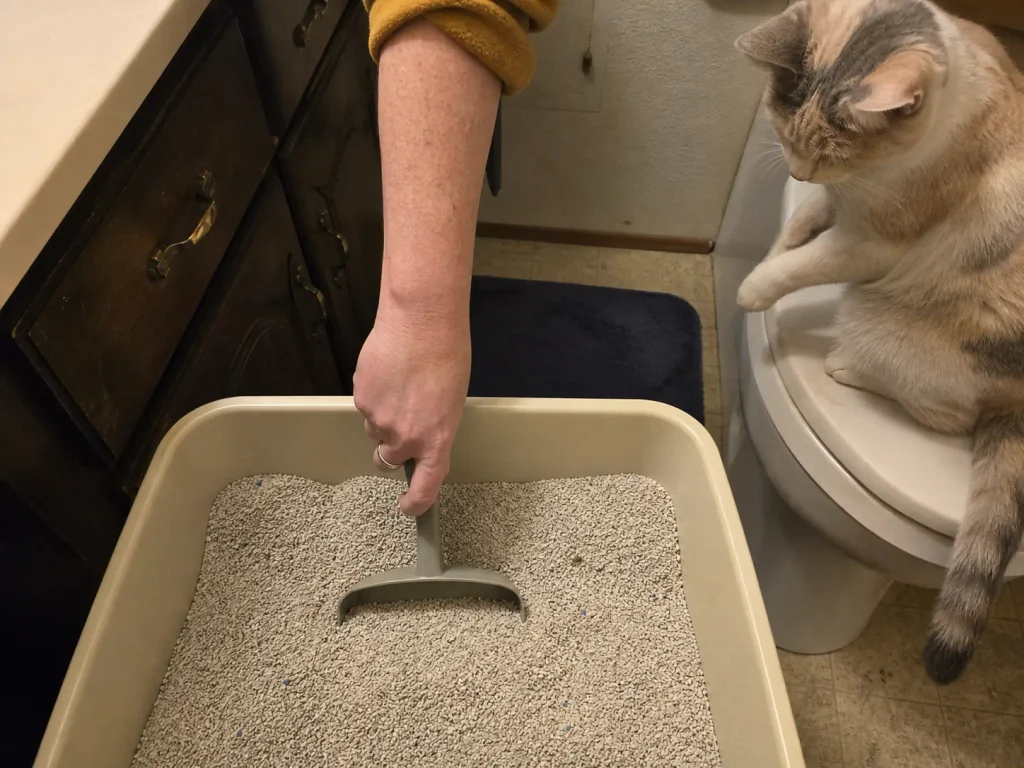
Filling the box generously feels responsible. More litter, more absorption, fewer trips to the bag. It is also the one adjustment in this article that makes your tracking problem worse at no cost, which is a rare kind of own goal.
The balance point is roughly two to three inches. Below that, clumps reach the floor of the tray, break apart when you lift them and leave wet fragments behind that never come out cleanly. Above it, you have not made the box more absorbent in any way that matters, you have simply given the cat more material to move. A dig displaces a volume, and a deeper bed means more of that volume goes over the side. Extra depth is just more of it waiting to be thrown.
It also compounds with the wall-height lever in the ugliest possible way. Deep litter in a low-sided tray is the worst combination described anywhere in this article, because the effective wall height, meaning the distance from the litter surface to the rim, drops toward zero. If you are reading this with a tracking problem, there is a good chance that is what you have: a shallow box filled high, which is precisely backwards. The fix is free and takes about a minute.
Depth creep is the mechanism that gets you there, and it is worth naming because almost nobody decides to do it. You scoop, the level drops a little, you top it up. Next week the same, except the top-up is a bit more generous than the scoop was. Nobody ever thinks “I will now run four inches of litter.” The level just rises, a quarter inch at a time, until one day the box is full and the hallway is worse and the two facts do not seem connected.
Scoop to a depth, not to a look. Stand the scoop handle upright in the litter, mark the two-to-three-inch point on it once with a piece of tape, and check against that mark instead of judging by eye. Eyes are how depth creep happens; a mark on a handle is how it stops.
Depth is also the lever most tangled up with which litter you chose, since pellets and fine clay behave differently at the same measured depth. How much litter to actually use works through that by litter type.
Two Cats Change the Whole Answer
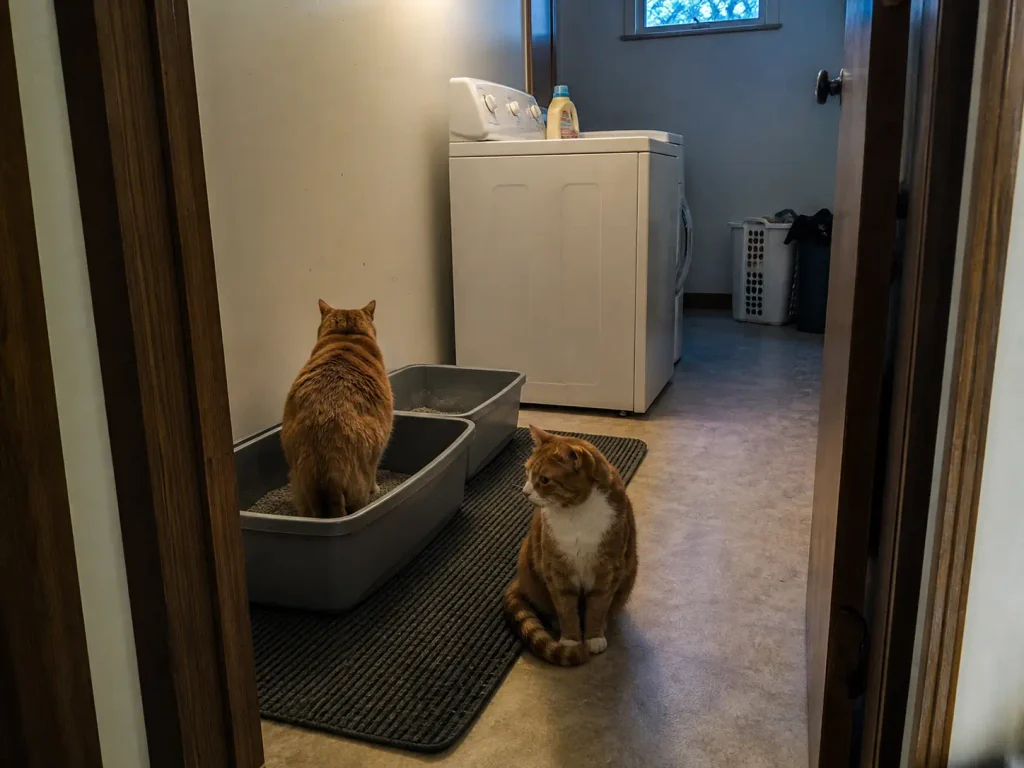
Every article about tracking is written as though there is one cat in the apartment. Most of them are wrong about your home, and the correction is not a footnote. Tracking load does not scale with the number of cats. It scales with the number of exits.
That distinction matters because of the 1+1 rule, which says one box per cat plus a spare. Two cats means three boxes, and three boxes means three exit points, three arcs of kicked litter and three separate paths of carried granules across your floor. You do not have a slightly bigger version of a one-cat problem. You have three of them, in three places, and buying one very good mat for one of those exits solves a third of it. If you are still working out the box count itself, how many boxes two cats actually need covers the rule and the situations where it bends.
Multi-cat homes also tend to see more digging per visit, not less. A box another cat has just used gets covered more thoroughly, because the scent that the burying instinct is responding to is stronger and it belongs to somebody else. More thorough burying means more granules airborne per visit, which is why two cats sharing a space can produce noticeably more than double the mess of one.
Layered mats earn their place here in a way they do not always in a single-cat home. One checkpoint cannot handle several animals moving at different speeds and leaving at different angles, and the fast one will clear it. Two mats in sequence at the busiest exit is the setup that holds.
The cheapest multi-cat fix is not a product at all, though, and it goes against the standard advice about spreading boxes around the home. Boxes in three separate rooms means granules traveling three separate routes through your apartment, and every route is one you now have to sweep. Grouping two of those exits onto a single hard-floored run, so their paths overlap and one containment setup covers both, cuts the sweeping area before you have spent anything. It is a trade-off against the territorial reason for spreading boxes out, so it works better for cats who get along than for cats who do not.
The Renter’s Version, When You Cannot Pick the Room
Every competitor on this topic solves it with a room you do not have. Put the box in the basement. Put it in a spare room. Put it in a closet and cut a cat door in it. In a one-bedroom rental with one bathroom, you have maybe two viable spots and no permission to modify either, and the advice that assumes otherwise is not advice, it is a description of somebody else’s house.
Start with the flooring, because it is the single biggest environmental variable and the one people give up on first. On tile or vinyl, tracked granules stay on the surface and a broom removes them completely. On carpet, they work down into the weave immediately, stop being sweepable at all, and clay granules in particular grind against the fibers every time somebody walks over them. Same cat, same litter, same mat: the room decides whether cleanup takes thirty seconds or never quite finishes.
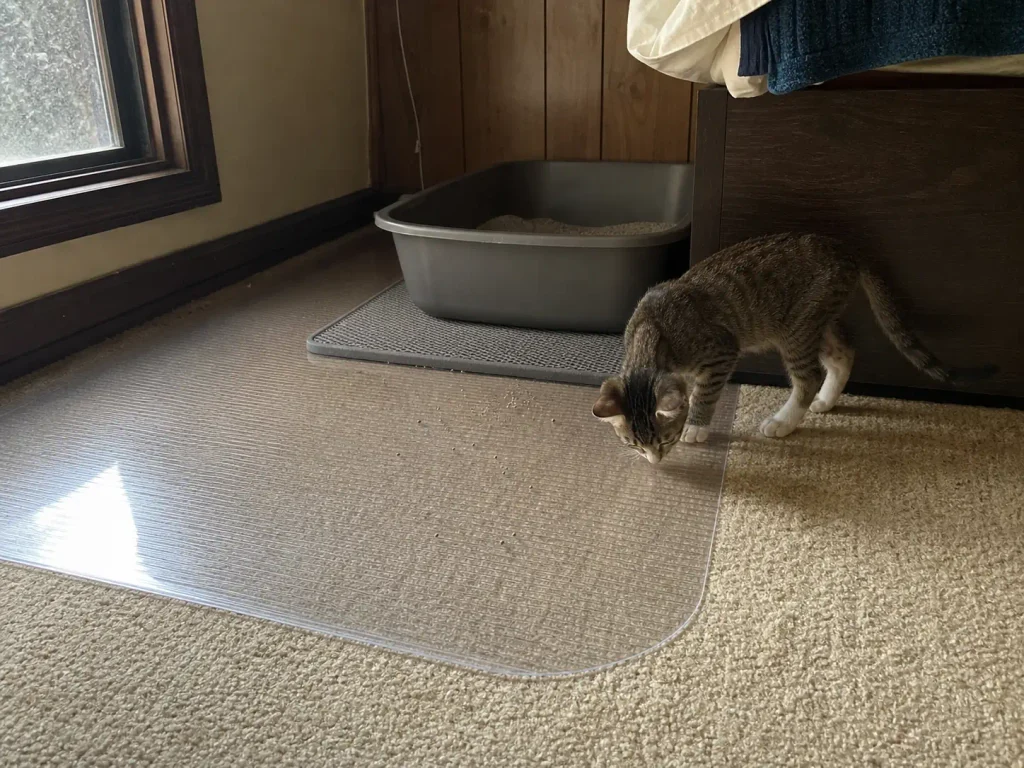
When every available room is carpeted, the move is to bring the hard surface with you rather than hunting for one you do not have. A wipeable plastic runner, the kind sold to protect hallways, laid under the entire box-and-mat assembly, turns a carpeted corner into a sweepable one for less than the price of a second mat. Renters describe this combination constantly: runner underneath to protect the carpet, mat on top of it at the exit to catch the paws. Cut astroturf gets used the same way, with the caveat that it is a poor choice for a cat who chews at plastic backing.
If you are choosing between a second mat and a wipeable runner for the floor underneath, buy the runner. A second mat catches a bit more of what escapes; the runner changes what happens to everything that escapes, including the granules that get past both mats. It also comes up off the carpet in one piece on moving day, which is its own argument in a rental.
The bathroom and the utility closet are usually the only hard-floored, low-traffic options an apartment offers, and they come with a trade-off worth stating plainly: a small room concentrates odor in a way an open hallway does not. You are trading one problem for another, and whether that trade is worth it depends on ventilation more than anything else. The small-apartment layout that works goes through the actual floor plans, and if the visual side of it is what you are stuck on, furniture that hides the box in a small apartment covers the containment-plus-concealment options that do not need a drill.
Doorway thresholds are the underused trick in a rental, and they cost nothing. A doorway is a choke point: every path out of the room narrows to the same three feet of floor, which means a mat placed there gets stepped on by every cat every time, in a way that the same mat in an open room does not. If your box is in the bathroom, the mat belongs in the doorway rather than in the middle of the floor, and the difference is measurable within a week.
One more thing, and it is deliberate: nothing in this entire article requires attaching anything to a wall or a floor. No brackets, no adhesive, no cat door cut into anything. Every fix here comes up in one piece when your lease ends.
Placement, Flooring and the Path the Cat Takes
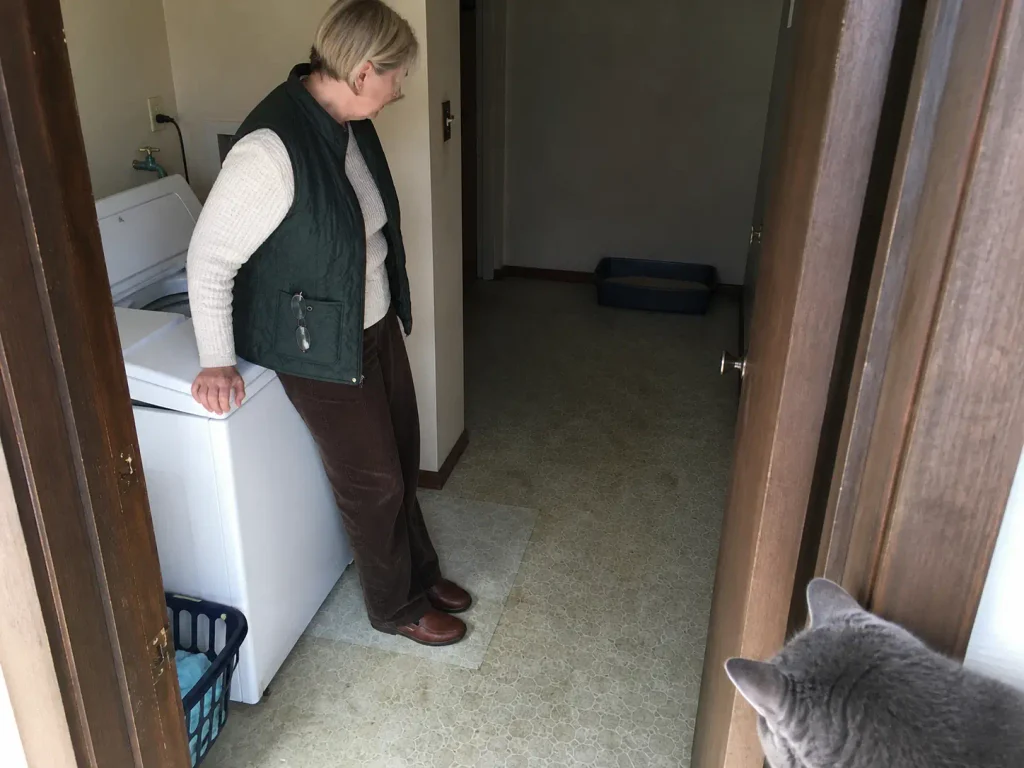
If you do have a choice of rooms, spend it carefully, because most people spend it on the wrong criterion. The box goes wherever it is least visible, and then the granules turn up everywhere, and the two decisions look unrelated. They are not. The box sits at one end of a path, and the path is the thing you are actually designing.
A high-traffic area matters as much as the hard flooring underneath, and it matters for a reason that has nothing to do with the cat. Granules that land in a hallway everybody walks through get picked up by human feet and socks and redistributed across the entire apartment, which is how litter ends up in a bedroom no cat has entered that day. A box out of the high-traffic area produces the same amount of tracked litter and spreads it a fraction of the distance. Where the litter box goes, and the three places it shouldn’t covers the room-by-room version of this decision.
Then there is the state the cat is in when he leaves, which is the variable nobody measures. A cat who is startled or hurrying digs faster and exits faster, and both of those throw more litter than the same cat doing the same thing calmly. There is a well-traveled forum story about an owner who traced a sudden tracking problem to a washing machine that had been moved next to the box: the cat was leaving at speed every time the spin cycle started, and the fix was moving the box, not buying anything. Appliances, doors that slam, and the route the dog takes all belong on that list.
Which is the free fix, and it goes before everything else in this section. Moving the box costs nothing, takes five minutes, and beats the mat upgrade you were about to buy often enough that it is worth doing first every single time. Corners and alcoves help for the same geometric reason high sides do: fewer open directions for a kicked granule to travel, and a wall to stop it if it does.
The Grooming Lever, for Long-Haired Cats
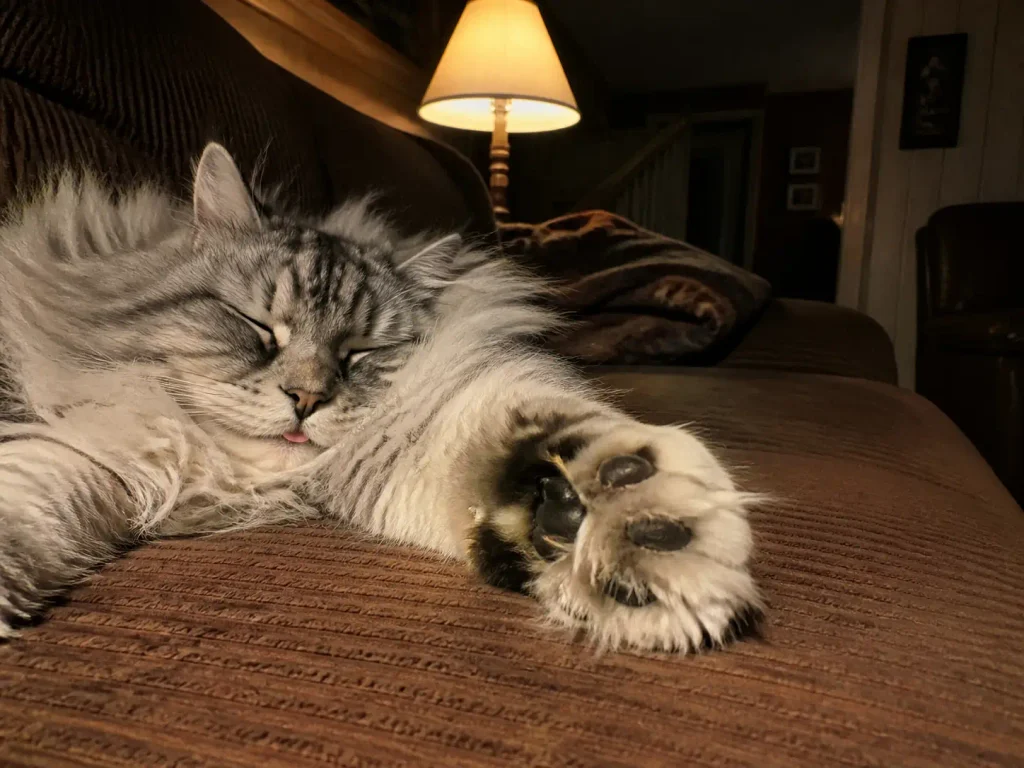
If you have a long-haired cat, you have probably done the litter, done the box, done the mat, and watched the problem get better without going away. The remaining half is riding out between the toes, and no mat is ever going to catch it, because the fur holds granules above the surface the mat is trying to clean.
Long paw fur works like a brush that never gets emptied. It picks up granules during the dig, holds them past the mat and past the doorway, and releases them wherever the cat settles, which is why long-haired households find litter in the bed and on the sofa specifically. Maine Coons, Persians, Ragdolls and their mixes all come with it. A very large long-haired cat is carrying more of it, over a longer stride, than anything a mat manufacturer designed for.
The fix is trimming the fur between the paw pads back level with the pads themselves, which is maintenance rather than a one-time job: it grows back, so this is a habit on a schedule, not a task you complete. A weekly brush-out of the coat helps on the same axis, since granules ride in the fur of the legs and belly as well as on the feet, and a cat who grooms after using the box relocates some of them himself.
This one stays firmly on the environment side of the line, and it stops there. Trimming fur is grooming. A paw that looks sore, swollen or tender, or a cat who suddenly objects to having his feet touched when he never did before, is a conversation with a vet rather than a grooming problem, and this article has nothing useful to say past that point.
Short-haired cats mostly skip this lever entirely, which is exactly why it sits at the end rather than in the ordered fix list at the top. It is not a fourth fix everyone needs. It is the fix that closes the last gap for the households that have this particular carrier.
What Holds After Three Weeks
Every system in this article works on day one. That is not the test. The test is which parts are still working a month later, when the new box is no longer new and nobody is paying attention to any of it anymore.
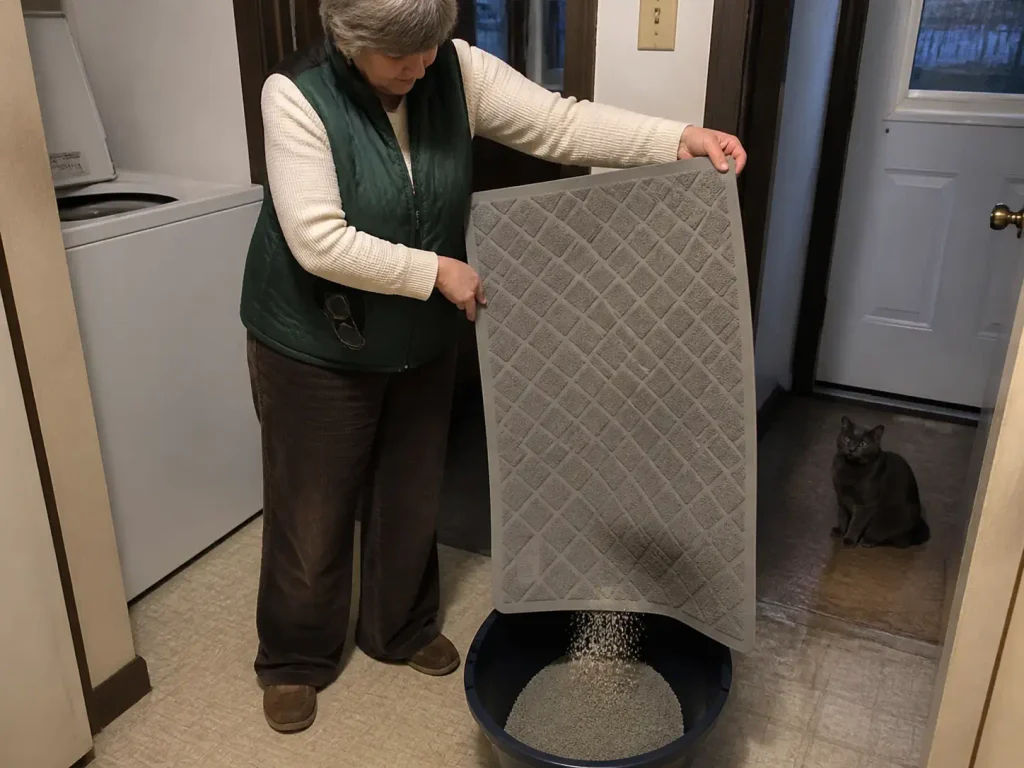
Mats fail first, and they fail quietly. A honeycomb trapper stops trapping the moment its lower layer is full, and because the top surface still looks clean, nothing about it announces the problem. What you have then is a flat mat the cat walks straight across, doing the job of a bath towel. Loop mats fail the same way faster, since they hold less to begin with. If your mat worked for a month and then stopped, it did not stop. It filled.
Depth creep comes back next, on the schedule described earlier, and for the same reason: topping up is easier than measuring. The litter change is the fix most likely to get reversed outright, and usually not by decision. The first bag runs out, the old brand is on sale, one bag of the old stuff goes in as a stopgap, and six weeks later you are back where you started wondering why the hallway is gritty again.
Set the expectation correctly while you are at it. The realistic target is containment, not zero. A home with cats has some granules in it, and any article promising you a litter-free floor is either selling something or has never lived with the animal. What you are aiming for is a floor that a broom fixes in thirty seconds instead of a problem that follows you into the bedroom.
Empty the mat on the same day you do a full litter change. One habit, two jobs, and neither one gets forgotten on its own. Two separate maintenance schedules is how you end up with a full trapper mat and a clean box, which is half a system.
Three weeks is the right window to check all of it. It is long enough for your cat to have delivered a verdict on a new litter or a new box, and short enough that a slipping routine has not fully reset to what it was before you started.
The Fix, in the Order That Works
Change the granule before you buy anything. It is the only lever that reduces what leaves the box at all rather than catching it afterward, and it costs you the price of a bag you were going to buy regardless. If tracking drops off after one bag of pellets, you are done and you have spent nothing extra.
Raise the wall, then place the mat at the exit. Height contains the kick, length along the exit path cleans the paw, and they are not interchangeable jobs. A tall box does nothing about carried litter and a long mat does nothing about a low rim, which is why the order matters and why owning one of them has left you where you are.
A low tracking litter, a taller wall and correct mat placement are the three levers; two cats and a carpeted rental change how you apply them, and neither one is a reason to buy more. Two cats means more exits, so group them onto one run instead of scattering them into three sweeping jobs. A carpeted rental means bringing a hard surface rather than hunting for a room that already has one.
Check back in three weeks. Look at three things and nothing else: whether the mat is still being emptied, whether the litter level has crept back up past the mark on your scoop handle, and whether the litter in the box is still the one you switched to.
Start tonight by moving the box off the carpet and onto the bathroom floor. If the hallway clears up by the weekend, you just answered the whole question without spending anything at all.
Amazon’s Audible — free for 30 days
Your cat won’t let you read. Let someone read to you.
Audible is Amazon’s audiobook library — thousands of titles, read out loud, on your phone. Free for a month, plus one audiobook to keep forever.
Frequently Asked Questions
01Why does my cat track so much litter everywhere?
Two separate things are happening at once: granules kicked over the rim while your cat buries, and granules carried out lodged between the paw pads. Fine lightweight litter and a low-sided box make both worse, which is why changing the litter and raising the walls do more than adding another mat.
02What litter tracks the least?
Heavier, larger granules track least: pine pellets, larger clumping clay and crystal litters. A granule too big to lodge between the paw pads cannot ride out of the box. Fine corn, wheat and paper litters track most, and fine clumping clay clings worst of all when it is damp.
03Do litter mats actually work?
They work when they are long enough and in the right place. A mat cleans a paw by friction over distance, so your cat needs about two full strides on it before reaching bare floor, and the largest part of the mat has to sit at the exit rather than under the tray.
04Does a covered litter box help with tracking?
It contains what your cat kicks to the front opening, so yes, up to a point. The catch is ventilation. A cat who rushes out of a stuffy hooded box moves faster and scatters more, so a covered box he dislikes can end up performing worse than the open one it replaced.
05How do I stop litter tracking in an apartment with carpet?
Bring a hard surface instead of hunting for a room that already has one. A wipeable runner or tray under the whole box-and-mat setup turns a carpeted corner into a sweepable one. Granules that reach carpet fibers stop being sweepable at all, which is why the surface matters more than the mat.
Leave a comment