Whisker Fatigue and the Bowl Study Nobody Quotes
Whisker fatigue, measured: 38 cats, no difference in how much they ate (P 0.7-0.9), yet 24 chose the wide dish + the 5.5-inch bowl rule.

Alfredo RamsesFounder · August 31, 2026 · 22 min read

On this page8 sections
- 1What Whisker Fatigue Actually Is
- 2Is It Real? What the Only Real Study Found
- 3The Signs, and What They Also Look Like When It's Not the Bowl
- 4When This Is a Vet Visit, Not a Bowl Problem
- 5The Fix: What a Whisker-Friendly Bowl Actually Measures
- 6One Cat or Several: Why the Bowl Isn't Always the Problem
- 7Conclusion
- 8Frequently Asked Questions
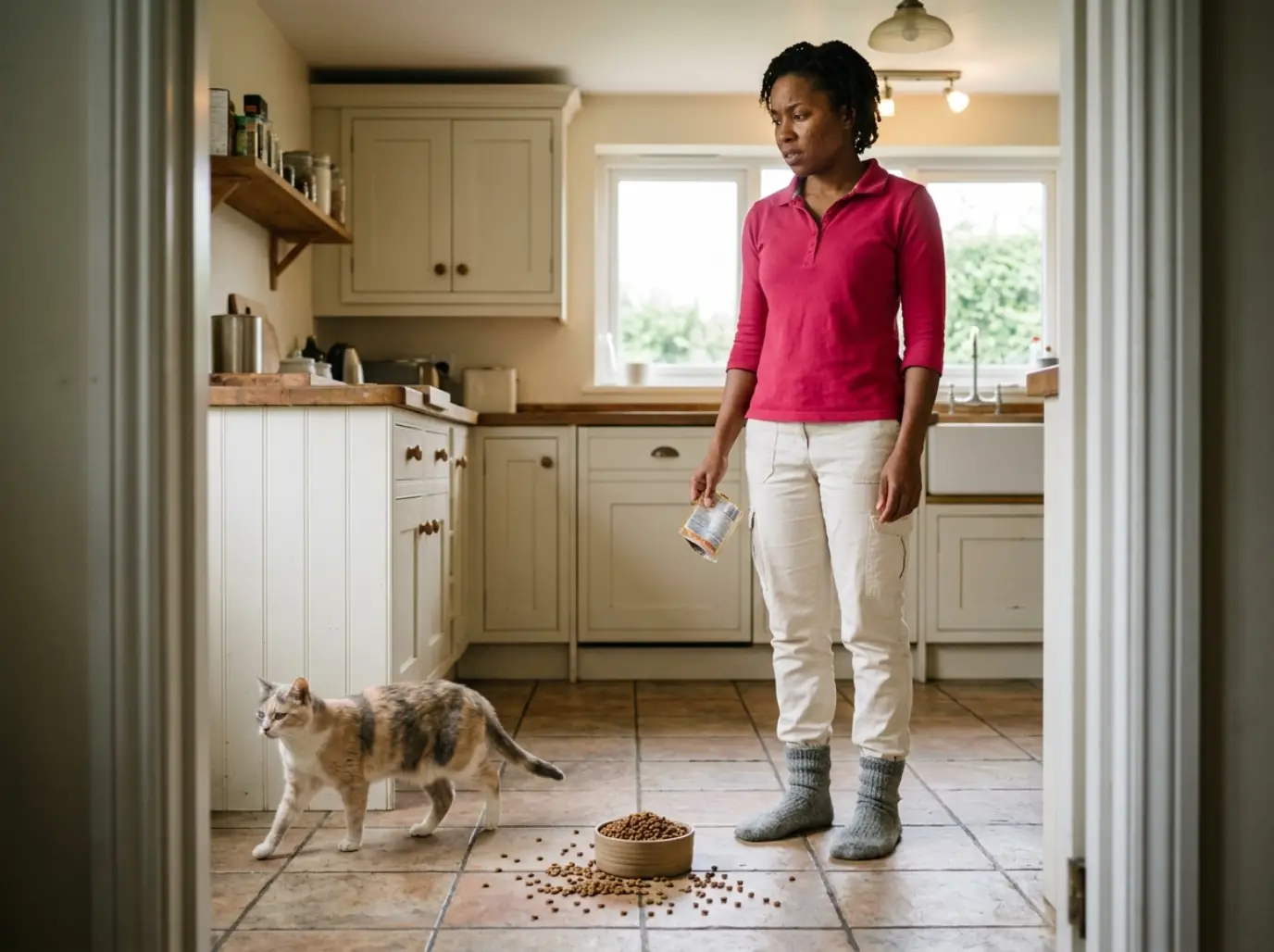
The bowl is still half full. The food is shoved up against one wall, a few pieces are on the floor beside it, and the cat who was yelling at you ten minutes ago has walked off. Somewhere in the search results you found the phrase whisker fatigue, and underneath it, a bowl for sale. What nobody showed you is whether this is a real thing or just a tidy name for a fussy cat.
There is exactly one controlled study on it, and the interesting part is not the yes or no. Here is what whisker fatigue is, what the study actually found, how to tell the bowl apart from everything else that looks like it, and when this stops being a furniture problem.
Quick Answer
Whisker fatigue is the idea that whiskers brushing the walls of a narrow, deep bowl bothers a cat. The one controlled study found no difference in how much cats ate or dropped, but 24 of 38 cats picked the wide dish anyway. Not medical. Still a cheap swap most cats seem to prefer.
What Whisker Fatigue Actually Is
Nobody handed you this term at a clinic. It arrived from a search bar, usually attached to something you can add to a cart, and it is worth knowing which half of it is settled anatomy and which half is a theory somebody is selling. The two halves are not the same, and the gap between them is where every article on the first page goes quiet.
What a Whisker Actually Is (And Why It Isn’t a Hair)
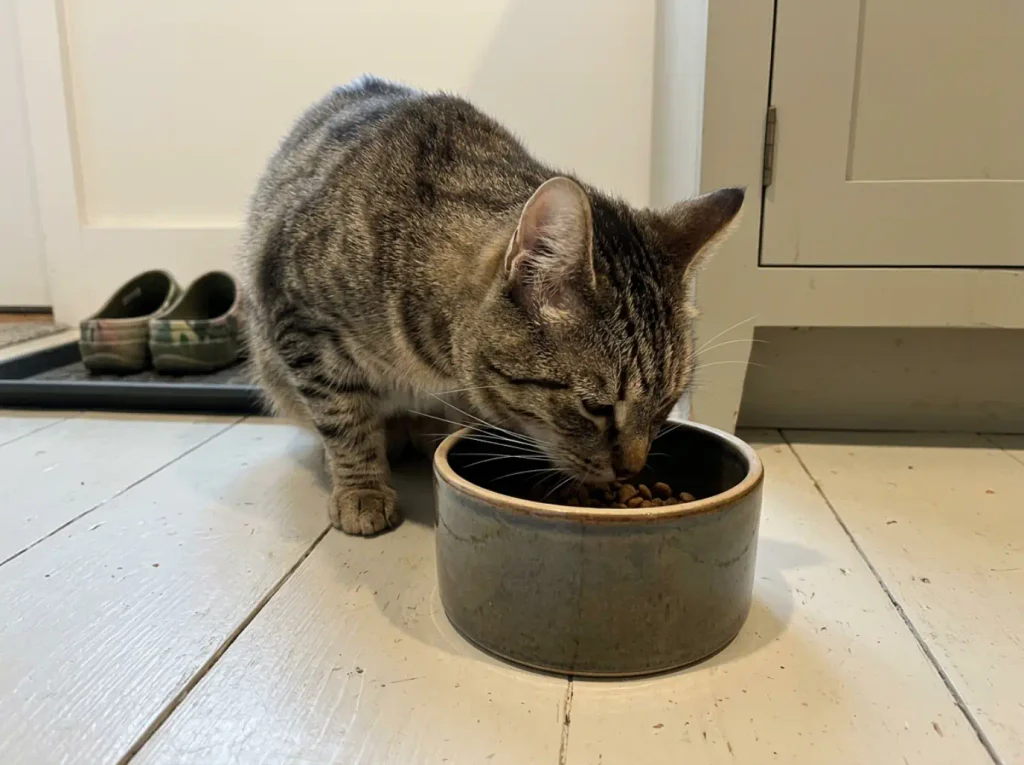
A whisker is not a stiff hair. The technical name is a vibrissa, and each one sits in a follicle-sinus complex, a structure with its own blood supply and its own dense bundle of nerve endings, and the signal it carries runs to the trigeminal interpolar nucleus with the rest of the face’s sensory traffic. Cats can push their whiskers forward and pull them back to read a space. That is the equipment, and none of it is in dispute.
What the equipment is for is spatial reading. A cat uses whiskers to judge gaps and to navigate a dark hallway without touching anything. So the raw material of the theory is sound: this is a genuinely sensitive instrument, wired into the same nerve that handles the rest of the face.
The Proposed Mechanism, in Plain Terms
The theory is one step past the anatomy, and this is the step that is not proven. It says that if a bowl is narrow enough and deep enough, the whiskers drag against the walls at every mouthful, and that repeated contact is unpleasant enough to change how the cat eats. Deep narrow bowl, whiskers on the wall, cat eats from the middle, paws the food out, or leaves.
The study authors put it carefully: because whiskers are wired the way they are, it is plausible that unwanted stimulation causes stress. Plausible is doing real work in that sentence. Plausible is not demonstrated, and the only controlled study to test the idea is a small one that came back with a split answer. Everything else about bowl width and depth, including which material holds up and which one quietly causes a different problem, sits in the wider question of bowl material and shape.
Where the Term Came From, and Why It Usually Arrives With a Bowl Attached
The phrase did not come out of the veterinary literature. The study’s authors went looking and reported that the term appears only in commentary and opinion writing, not in clinical research — which is why the paper itself is titled around whisker stress rather than fatigue, and why some sources call the same idea sensory overload. It grew on the commercial side, which is why the words and the product tend to show up in the same paragraph.
That is not automatically a strike against it. Plenty of real problems got named by the people selling the fix. But it explains something you have probably noticed: every explainer ends at a bowl, and none of them end at a number.
Is It Real? What the Only Real Study Found
You have now read four pages saying it is real and here is the bowl, and two saying it is marketing. Not one of them showed you a result. There is one controlled trial, it has a name, and it has numbers, so here they are, including the number that does not flatter either side of the argument.
What the Study Measured, and What It Found
Slovak and Foster, published in the Journal of Feline Medicine and Surgery, ran the trial at Washington State University. Forty indoor cats enrolled and 38 finished. Owners fasted each cat for 12 hours, fed it from its own normal dish, and filmed it for up to five minutes while counting how much it ate and how many pieces hit the floor. Then a whisker-friendly dish replaced the old one for a seven-day transition, and the whole measurement ran again.
The results are flat. No significant difference in time spent at the bowl, none in food eaten, none in food dropped. The P values landed at 0.8, 0.7 and 0.9, which is not a near miss. That is the trial finding nothing at all on the things it set out to measure, and it is the half of the story the bowl listings leave out.
One detail makes the comparison fair rather than rigged. Every single one of the 38 cats’ own bowls was narrower and deeper than the test dish. The study was not a good bowl against a random bowl. It was 38 real kitchen bowls against a shape chosen to be the opposite of them.
The Number Nobody Quotes: 24 Out of 38
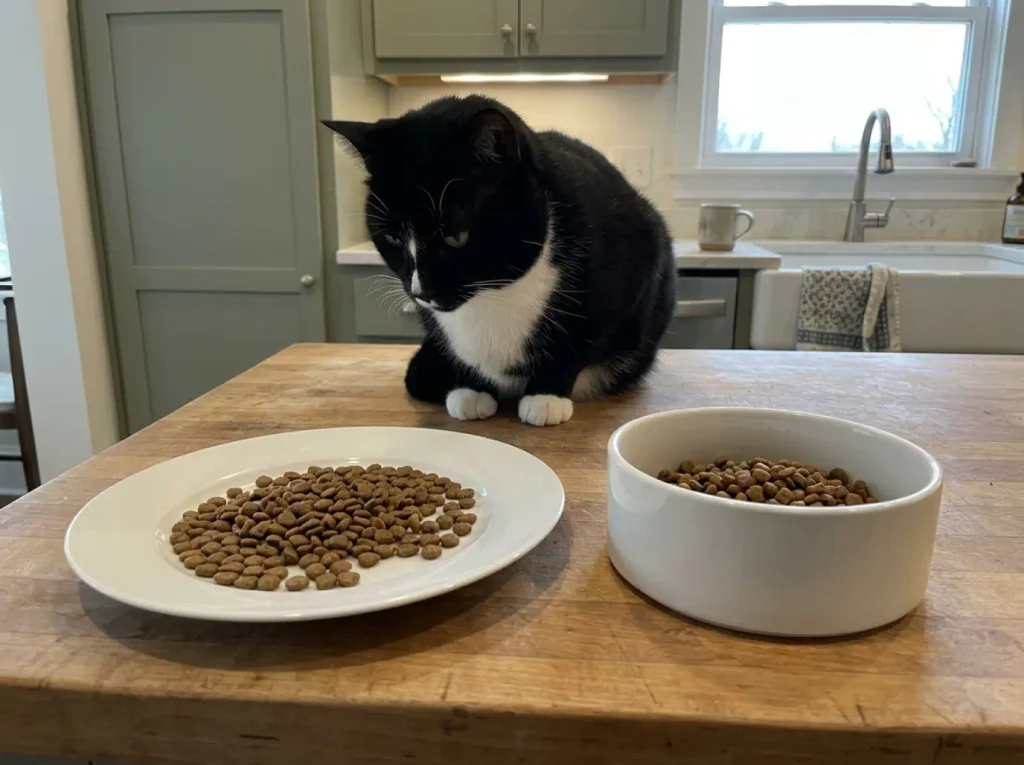
Then the owners put both dishes down side by side, same food in each, and let the cat choose. 24 of the 38 cats picked the wide, shallow dish. Nine went back to their normal bowl and five had no opinion either way. That is 63% choosing the new shape after a week of eating from it.
So the trial produced two findings that point in different directions, and almost every article you will find quotes one of them. Nothing measurable changed about how these cats ate. Most of them preferred the new dish anyway. Both are true.
The honest reading is not complicated. This is not a health problem and there is nothing to treat. It is a preference held by a majority of cats, and it happens to be a preference that costs almost nothing to satisfy. That is a much weaker claim than the product pages make and a much stronger one than the debunkers allow.
You can run the only part of this study that found anything, in your own kitchen, tonight, for nothing. Put a flat plate you already own next to the usual bowl, same food in both, and watch which one he goes to three days running. That is the preference test, and it is the one measurement the trial got a result on.
What One Small Study Can and Can’t Settle
The authors were blunt about the limits, and repeating them is not hedging. Owners could see which bowl was which, so nobody was blinded. The window was five minutes, and cats eat in small meals all day.
The cats were fasted 12 hours first, and a hungry cat may push through a sensation it would otherwise avoid. Only dry food was tested.
The preference result carries its own asterisk, put there by the authors. The dishes were not swapped left and right between trials, so some of that 63% could be the cat picking the nearer plate, or simply the new one. Novelty is a real explanation and they said so.
What that adds up to is one small study, not a verdict. It does not turn the theory into fact and it does not bury it either. It leaves whisker fatigue roughly where it started: probably a comfort preference, definitely not a diagnosis. If that reasoning feels familiar, it is the same shape as the water side, where the same pattern shows up in a fountain study that also found no measurable difference and a clear preference anyway.
The Signs, and What They Also Look Like When It’s Not the Bowl
Every article on page one gives you the same list of signs. Not one of them mentions that the identical list belongs to about five different causes, three of which a new bowl cannot touch. A reader who takes the list at face value buys a dish for a problem that was never the dish, and the real cause gets a few more weeks of head start.
What It Looks Like When the Bowl Is the Problem
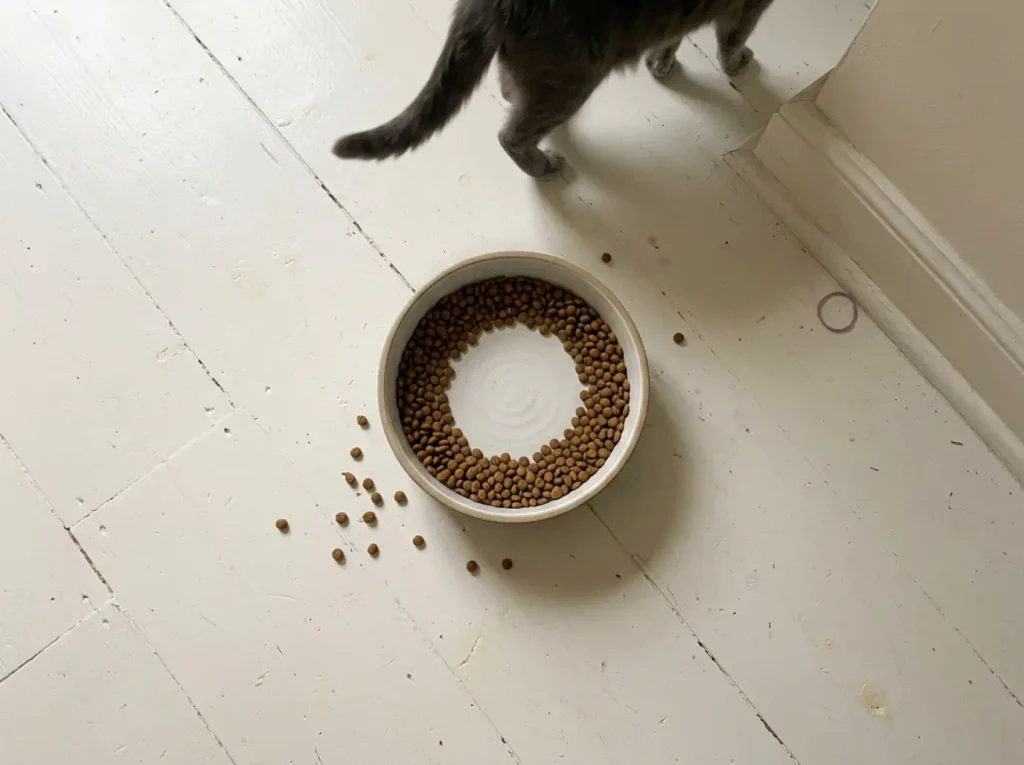
The behaviors people attribute to bowl shape are specific: pawing food out of the bowl onto the floor and eating it there, eating from the center of the bowl and leaving a ring of food against the wall, pacing at the bowl without starting, and starting, stopping, then coming back hungry.
This is also the point where the label finicky eater stops helping. It gets applied to every cat who leaves food, whatever the reason, and a cat filed under it stops getting looked at.
Here is the distinction that does the actual work, and it is one word. He eats. He eats badly, in the wrong place, in two shifts, off the floor. But food goes in.
A cat who is working around the bowl is telling you something about the bowl. A cat who is not eating is telling you something else entirely, and that is the next section.
The ring is the best single clue on that list. If the middle is clear and there is food banked against the walls, he ate to exactly the point where his face stopped fitting comfortably and then quit. That is geometry, not fussiness.
What It Looks Like When the Bowl Is Not the Problem
- Not eating at all, or a loss of appetite that lasts more than a day
- Eating noticeably less than last week
- Weight loss
- Eating and then something being wrong afterward
- Pain or difficulty while chewing
None of that belongs to bowl shape, and none of it is answered by buying anything. That is Section 4 and it comes next for a reason.
Then there are the two that mimic bowl trouble closely enough to fool anyone. The first is another cat: in a multi-cat household, resource competition explains this far more often than anything to do with whiskers, and that is Section 6. The second is a cat who is simply a messy eater, where food ends up on the floor by dragging and flinging rather than by deliberate pawing. Same debris field, different cause, and food ending up on the floor has three different patterns worth telling apart before you change anything.
In cat forums all of this collapses into one phrase: picky eater. It is a useful phrase for venting and a terrible one for sorting, because it covers bowl shape, competition, a food he has gone off, and illness in a single shrug. The whole job of this section is to break that shrug into parts.
The Three-Day Test That Costs Nothing
Put a flat plate beside the current bowl. Same food, both down at once, three days. If he moves to the plate and stays there, the shape was the issue and you have already solved it. If he treats both the same, it was not the shape, and the next place to look is the other cat or the vet, not the store.
Three days is enough because the study’s own preference test ran on cats who had been eating from the new dish for a week. Give it a fair run rather than judging the first meal, when everything is new and interesting.
Look at the bowl the moment he walks away, not when you clear up at night. A clean center with food pushed against the walls is the single most useful thing you will see all day, and it is gone as soon as anyone tips the bowl out or tops it up.
When This Is a Vet Visit, Not a Bowl Problem
Anyone searching this term has already decided the problem has a fix at home. Often that is right. Sometimes the label is doing something less helpful: giving a comfortable explanation to a cat who needs to be seen.
What This Article Will Not Answer
This article cannot tell you why your particular cat has stopped eating. Not the shape of the bowl, not the brand, not the placement. That question does not get answered by reading and it does not get answered by buying a dish. It gets answered by someone with their hands on the cat.
That is not a disclaimer bolted onto the end. It is the reason this section sits here, ahead of every recommendation below it, instead of in the small print underneath them.
The Changes That Mean You Call, Not Shop
Call the vet if a cat stops eating, eats noticeably less than a week ago, loses weight, drops food from his mouth or seems to hurt while chewing, or if any eating habit changes suddenly. A habit that changes overnight is a visit before it is a furniture problem. Cornell’s Feline Health Center puts it without hedging: a cat that refuses to eat and is losing weight should be examined by a veterinarian. Dental disease, kidney disease and gastrointestinal illness all produce the same behavior at the bowl, and none of them is settled by a wider dish.
The order matters more than the list does. Rule out what hurts, then look at the shape of the dish. Doing it the other way around buys a bowl that changes nothing and quietly spends two weeks proving it, and those are two weeks nobody gets back.
Once that call is made and the cat is cleared, the rest of it comes back to this house: how wide the dish is, how deep, where it sits, and how many there are. Nothing recommended in this article treats anything. These are dishes. They are furniture for a face.
The Fix: What a Whisker-Friendly Bowl Actually Measures
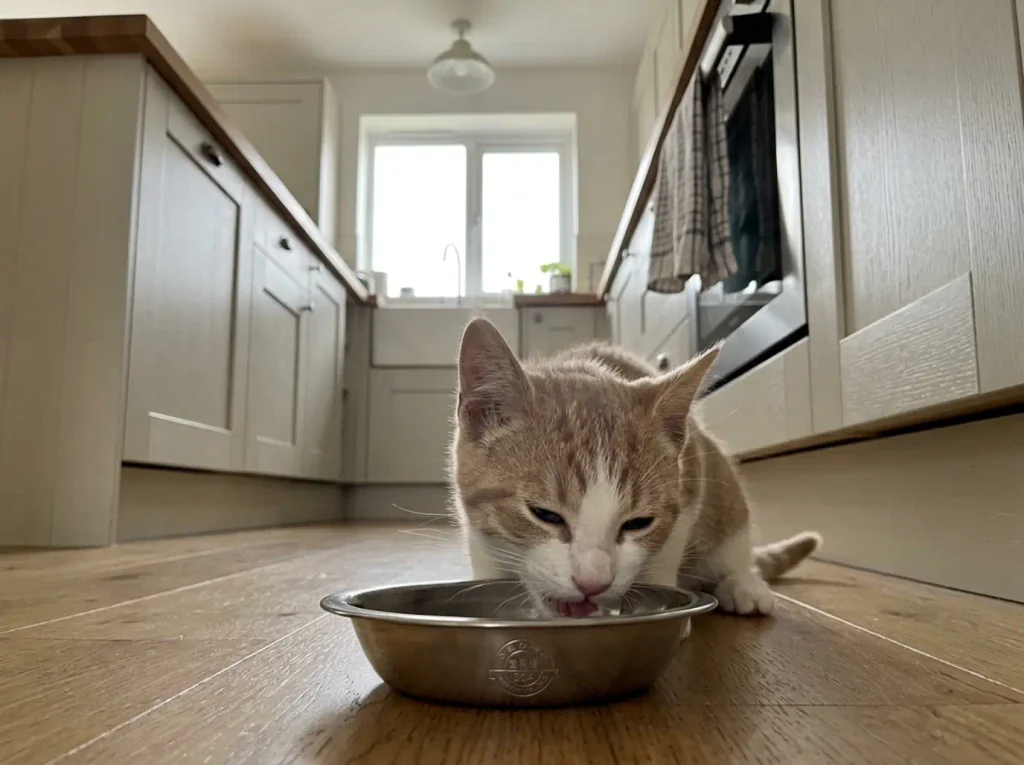
“Use a wide, shallow bowl” appears in all five articles on the first page. Not one of them says how wide, or how shallow. Which means a reader can finish every one of them, look down at the bowl on the kitchen floor, and still have no way to judge it. So here are numbers.
Try the Plate You Already Own First
Before anything gets bought: a side plate or a flat saucer from your own cabinet already has the shape. Wide, low walls, nothing for a whisker to catch on. Put food on it for three days and watch.
If that works you are finished, and it cost nothing. Splitting one deep bowl’s worth of food across two shallow saucers is the version budget threads reach for most often, and it doubles as a portion check. The reason to buy something later is that you want a dish that is his and goes in the dishwasher with everything else. Not because a plate cannot do the job.
The Measurements: The Study’s Dishes, and the Rule
The two dishes in the trial were commercial products, and their dimensions are published in the paper itself, which is more than any competitor bothers to relay. The ThinkPet Shallow Wide Cat Dish measured 14 by 15 by 3.5 cm. The Jackson Galaxy Eclipse Stainless Steel Bowl measured 10 by 19 by 1 cm, which is barely a lip. Set against those, all 38 cats’ normal bowls were narrower and deeper without exception.
Convert that and the pattern is clear: roughly 6 to 7.5 inches across, with a wall somewhere between almost nothing and an inch and a half. The rule this blog publishes lands in the same place. At least 5.5 inches across, under 2 inches deep. Width is what gives the whiskers room. Depth is what forces his face down into a container instead of onto a surface, and depth is the one most people get wrong, because a deep bowl looks generous.
Measure the bowl you own before you judge it. If it is under 5.5 inches wide or over 2 deep, you now know which. There is a full sizing rule, and the water bowl doesn’t follow it, because water gets sized by how much it holds rather than by how wide it opens.
One thing that is never the answer: whisker trimming. The whiskers are the measuring instrument, not the obstacle, and a cat without them misjudges gaps and moves badly in the dark. If the dish and the face do not fit, the dish is the part that changes.
Take a tape measure to the bowl before you buy another one. A standard side plate runs about 6 to 7 inches across with under an inch of rise, which means most kitchens already own the shape the study tested. Buying is for when you want something that is his and washes with the rest. It is not how you get the shape.
Once the shape is right, a dish that already comes at 5.5 inches with a low wall saves the measuring, and stainless steel is the easy material to keep genuinely clean.
Material, and What It Does and Doesn’t Fix
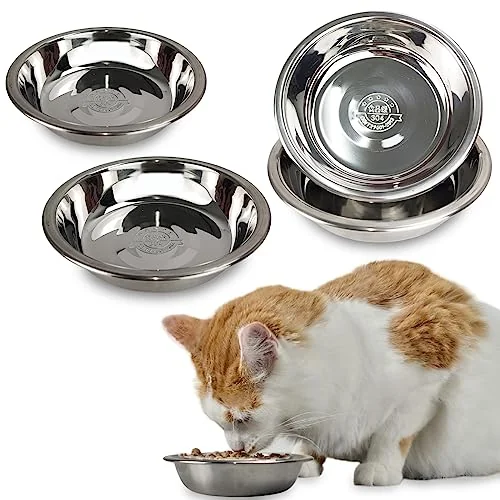
Material does not fix shape. A deep ceramic bowl and a deep steel bowl are the same problem in two finishes. What material decides is everything after that: how easily the dish gets properly clean, and whether it holds a smell.
Steel and glazed ceramic are both non-porous and both go in the dishwasher. Ceramic is the answer for the cat who will not eat off metal, and it has the weight steel lacks, so it stays where you put it.
Plastic is the one to think about separately. It scratches, the scratches hold bacteria and old grease, and it gets tangled up with chin trouble in a way that has nothing to do with whiskers. Scratched plastic is a separate problem with its own answer, and swapping to a wide plastic dish solves one thing while carrying the other along.
What Looks Wide and Isn’t
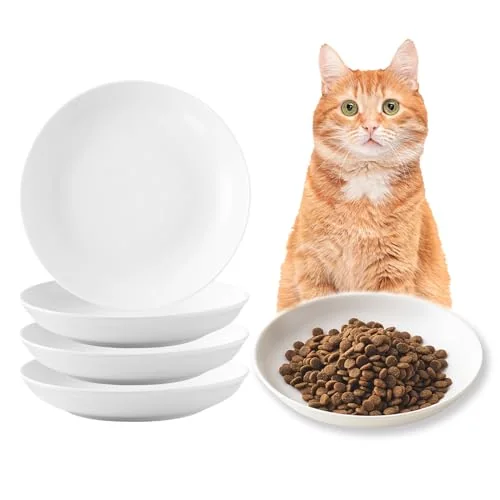
Three things fail this test while appearing to pass it. A dog bowl is wide and also deep, which is the wrong half of the specification. A designer bowl with high sides is a container, not a plate, no matter how open the top looks. And the matched two-bowl feeder, food on one side and water on the other, is almost always narrow in both wells, because the width went into the frame instead of the dishes.
A scratched plastic bowl is its own separate problem and does not get fixed by width. Wet food shifts the math slightly, since a spread-out portion needs surface area more than it needs walls, and the depth that suits wet food is shallower still.
There is a fourth, and it is the one worth saying out loud. The deep ceramic bowl chosen because it matched the kitchen is the exact shape the study classified as the “normal” dish, in all 38 homes. It is a human decision about how the corner of a room looks, made about an object only the cat has to put his face into.
He is not being difficult about it. He is the one using it.
One Cat or Several: Why the Bowl Isn’t Always the Problem
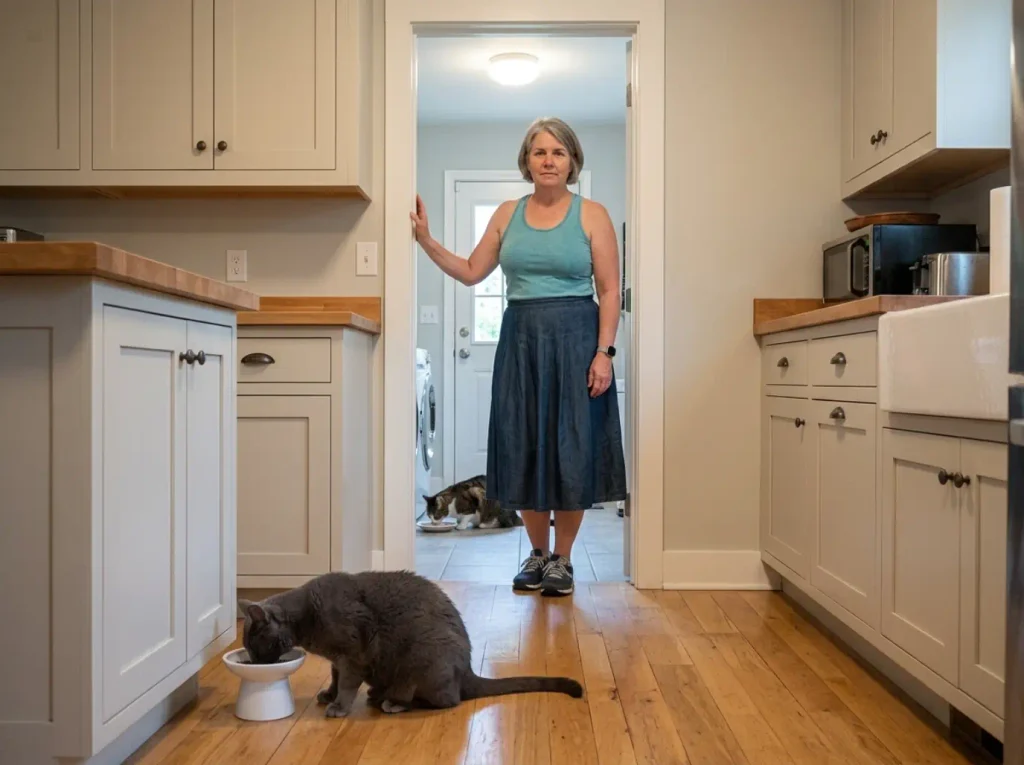
In a house with two cats, “eats from the middle, walks off hungry, comes back later” has a far more common explanation than the width of the dish, and it is standing three feet away pretending not to watch. Nobody on the first page connects these two things, and it is the cheapest miss in the whole subject.
The Signs That Two Cats Produce
Line them up and they overlap almost exactly: eating fast then abandoning it, eating only from the center, leaving and returning repeatedly, and pawing food out to carry it somewhere else. Every one of those is on the whisker fatigue list. Not one of them is fixed by a wider dish if the cause is the other cat.
There is one more that gives it away, and PetMD lists it as its own cause rather than a symptom of whisker trouble: tension at the bowl between cats who are otherwise fine with each other. Cats can push each other around at a feeding station, and that alone changes how one of them eats. Food is the one resource where being interrupted has a cost.
The two-day version of the three-day test sorts it. Feed him in a separate room with the door shut. If he settles and eats normally, the dish was never the problem, and you have just saved yourself a purchase.
Separating the Bowls, Which Costs Nothing
The free fix comes first here too, and it is not the one most people try. Two bowls lined up against the same wall is not two feeding stations. It is one station with two dishes in it, and from the cat’s side of the room that is a single contested spot.
Real separation means different places, ideally where one cat cannot watch the other eat. Different corners, different sides of the room, different rooms if there are rooms to spare. The second free change is timing: feed them at the same moment in those separate places, rather than leaving one shared bowl down all day for whoever gets there first.
While you are moving things, check the litter box proximity to food as well. Cornell lists nearby litter boxes, heavy traffic and noise among the things that put a cat off eating, so food bowl placement can be doing quiet damage that no dish shape will undo.
The arithmetic is the same one that governs litter boxes. One feeding station per cat, plus one. And it is for the same reason, which is not hygiene but the ability to eat without meeting anyone. Two cats, two bowls, and the plus one is worth reading before you rearrange anything, because the placement matters more than the count.
When There Is No Room to Separate
In a small apartment there often is no second corner. The kitchen is the kitchen, and the only free floor is the run beside the counter, which is exactly where both bowls already are. This is where elevation earns its place: a raised stand puts more distance between two dishes than lining them up on the floor can, and it buys separation out of height when the floor plan will not give you any.
The CEEFU Extra Wide Elevated Ceramic 6.2″ Shallow Cat Food Bowl is 6.2 inches across with a low wall on a stand, so it clears the width rule and adds the height at the same time. Two of them at opposite ends of a counter run do more for a tense pair of cats than any bowl shape will. The caveat is that raised feeding is not automatically right for every cat, and the full comparison of elevated dishes belongs in its own article rather than here.
And if the room genuinely allows nothing, stagger the meals instead. Same spot, ten minutes apart, one cat at a time. It is free, and it removes the audience, which was the actual problem.
Conclusion
Whisker fatigue is not an illness and there is nothing to cure. The one controlled study found no difference in how much these cats ate, how long they spent eating, or how much they dropped. It also found 24 of 38 choosing the wide dish when offered both. That is a preference, and a preference this cheap is worth honoring.
Before buying anything, use the plate already in your cabinet: at least 5.5 inches wide, under 2 inches deep, set beside the usual bowl for three days. If he switches, the question is answered and it cost nothing. If he does not, look at the other cat before you look at the store.
And if he has stopped eating, is eating less, or has lost weight, the shape of the bowl is not the conversation. That is a phone call, and it comes before any purchase.
Check back in three weeks. This depends on a cat accepting a change and on you keeping a new habit, not on anything wearing out, so three weeks is where you find out whether it held. Look for whether he is still eating off the new dish or has gone back to pawing food onto the floor. When these changes come undone, the reason is almost always the same: the old deep bowl came back out while the new one was in the dishwasher, and then it simply stayed.
Put a side plate down next to the bowl tonight. If he eats off it three days running, you just answered the question for free.
Amazon’s Audible — free for 30 days
Your cat won’t let you read. Let someone read to you.
Audible is Amazon’s audiobook library — thousands of titles, read out loud, on your phone. Free for a month, plus one audiobook to keep forever.
Frequently Asked Questions
01How do I tell if my cat has whisker fatigue?
Start with whether he is eating badly or not eating at all. Pawing food onto the floor and clearing the center while leaving a ring against the wall point at bowl shape. Refusing food, eating less than last week or losing weight point somewhere else, and that one is a vet call.
02Can whisker fatigue be fixed?
There is nothing to fix in a medical sense. The one controlled study found no difference in how much cats ate or dropped. What it did find is that most cats chose the wide dish anyway, so swapping to a shallow plate is a cheap change a majority of cats seem to prefer.
03What does whisker fatigue mean?
It is the idea that whiskers brushing the walls of a narrow, deep bowl at every mouthful is unpleasant enough to change how a cat eats. The anatomy is real, since whiskers are heavily innervated sensory organs. Whether the discomfort part holds up is what the study looked at, and the answer was mixed.
04Should I trim my cat’s whiskers if they are too long for the bowl?
No. Whiskers are sensory equipment, not grooming, and a cat uses them to judge gaps and move around in low light. Vets are direct about this one. If the bowl is the problem, the bowl is what changes.
05My cat eats fine from the same bowl he has always had. Should I switch anyway?
No reason to. Whisker fatigue is a hypothesis about cats showing a problem, not a condition every cat has quietly. A cat clearing his bowl without fuss has already told you the bowl works for him.

Leave a comment