Cat Out of the Bedroom for Allergies? Clean the Room First
Keep a cat out of the bedroom for allergies without losing the night: wash the room, bed outside the door, nobody opens at 3 a.m. (weeks, not nights).

Alfredo RamsesFounder · Updated October 30, 2026 · 12 min read

On this page6 sections
Shut the bedroom door tonight and the cat has a fair complaint: the spot he has slept in, with his person in it, just stopped opening for him. By the second night a cat scratching at the door at night can get loud enough that the house gives in, and then the room is neither quiet nor clean. Keeping a cat out of the bedroom for allergies works, and both Ohio State’s veterinary college and the VCA hospital network back the closed bedroom door, but it works in a particular order and most households start in the middle of it. This guide follows the order the night actually runs: wash the room before the door closes, find out which cats see the vet first, set up the hallway side of the door, and handle two cats with one rule.
Quick Answer
Clean the room first, then close the door, in this order.
- Wash the bedding and vacuum the carpet and mattress before the door closes.
- Ask the vet first if he is older or his habits just changed.
- Put his bed outside the door, across the strip in front of it.
- Play, feed a small meal, let him groom, then close the door.
- Keep the door shut when he cries; one exception restarts the weeks.
The Bedroom Holds Allergen Before the Door Ever Closes
A bedroom the cat has used already holds what he left there. The door doesn’t clear it; it shuts it in with you, so the room gets cleared first and shut second.
What a Bedroom the Cat Used Holds Before the First Night
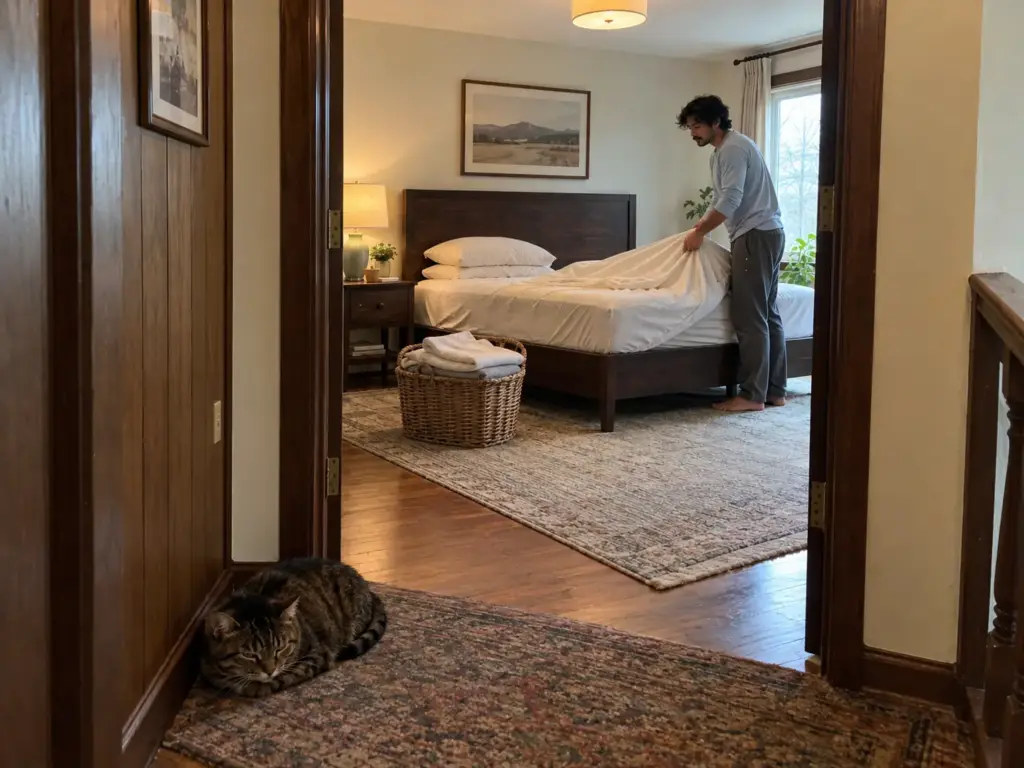
Picture the room as it stands tonight, with the cat’s years in it: the quilt he sleeps on, the rug where he stretches before he jumps up, the pillow he has claimed since the first week. The door removes none of that.
According to Ohio State’s guide to cat allergy at home, “Airborne cat allergen levels have been found to be much higher in rooms where cats are physically present.” The same handout gives bedrooms as its example of rooms to keep a cat out of, and none of this is the cat’s fault. The room is simply where he lived.
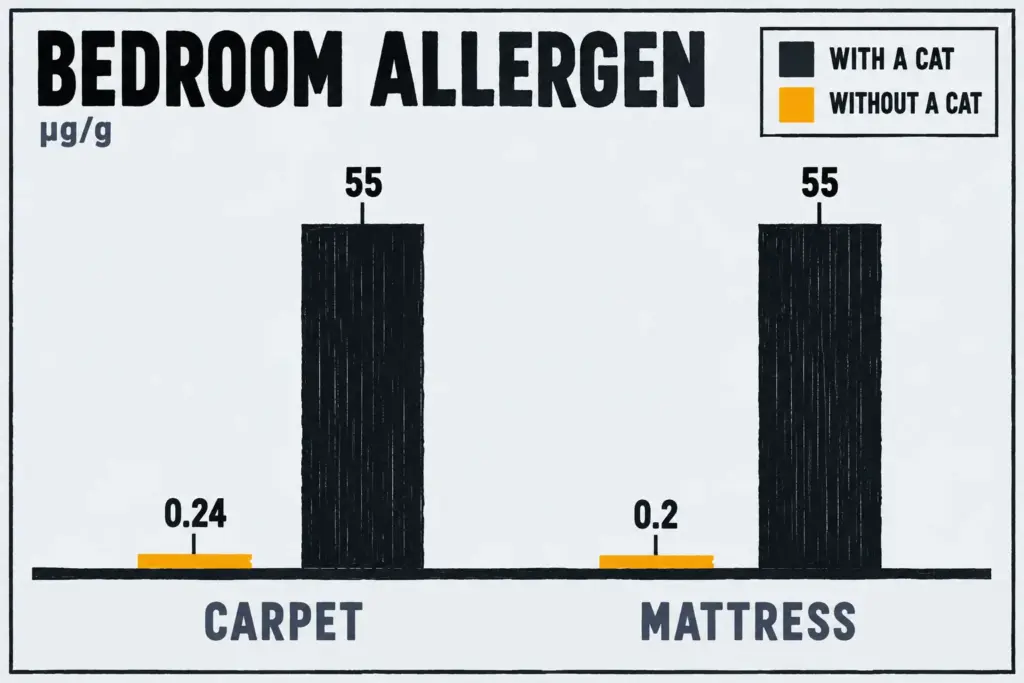
The surfaces tell the story in numbers. In a 1998 study of cat allergen in British homes, bedroom carpets in homes without a cat held 0.24 micrograms of cat allergen per gram of dust, against 55 in homes with one. Mattresses went from 0.2 to 55. That gap is between homes, not between nights, but the carpet and the mattress are the two surfaces nearest your face for as long as you sleep, and pet dander in the bedroom settles on both.
A HEPA purifier running in the room helped in the same study: airborne allergen at the 8-hour mark measured 0.88 ng/m³ with one running against 1.56 without, across seven homes with cats. It helps. It doesn’t replace washing the room, and it doesn’t stand in for the door.
How long a house takes to give the allergen up once the cat’s rooms change is a longer story, told in cat allergies take 4 to 6 months to clear from a home. For tonight only the sequence matters.
Strip, Wash and Vacuum the Room, Then Close the Door
Close first and clean later feels like the urgent order, because the door is the visible step. It puts the work where it hurts: you spend the first night, and the ones after, sealed in with whatever the cat left. The cleaner order starts with things already in the house.
- Pull everything washable off the bed and out of the room, including the cat’s own blankets.
- Wash it hot, as hot as the care labels allow, with detergent. Ohio State’s guide says high temperatures remove more allergen from bedding and washables, and it names cat beds.
- Vacuum the carpet and the mattress with a HEPA-filter vacuum, slowly.
- Put the clean bedding back on, then close the door.
Hair that survives a wash has its own diagnosis in cat hair in bedding after a wash, and why vacuuming fails in three predictable places is covered in vacuuming cat hair fails in three places. Here they matter for one reason: a pass on the mattress and carpet is the cheapest way to start the night with less in the room. The cost is an afternoon and some laundry. The cat’s blankets are the part people skip.
Start the laundry with the cat’s blankets, not the sheets. They are the pieces of the old bedroom he will lie on outside the door, and they are the first thing dropped when you are tired of laundry and the bed looks finished.
If the Door Won’t Latch, What a Gate Does and Doesn’t Do
A bedroom door that swings open on its own is often a loose latch or a warped frame, and fixing that costs a screwdriver before it costs anything else. If the door really can’t be made to catch, a pet gate looks like the obvious plan B. It has one limit worth saying first: a gate stops the cat, not the air. Dust and allergen cross bars as easily as they cross an open doorway, so washing the room still comes first, and a gate also leaves him in sight of the bed he was sent out of.
If you want one anyway, the Carlson 36 inch Extra Tall Walk-Thru Dog Gate with Small Pet Door stands 36 inches tall and spans 29 to 36.5 inches of opening. The small door built into it is 8 by 8 inches, which is a pet door, so check on the listing that it can be shut before you count on it to keep a cat out.
The flaw that decides it for a bedroom: a buyer review of the same extra-tall Carlson family reports that in a doorway the handle of the room’s door hits the gate, so the door can’t close to the latch. It is a gate or a door, not both. If you rent, read how the gate mounts on the listing before you decide it fits your frame.
Which Cats See the Vet Before the First Night Behind the Door
For some cats the door can wait a day. VCA Animal Hospitals’ guide to nighttime cat vocalization recommends a veterinary exam for some cats, especially middle-aged and elderly ones, to rule out medical causes of crying at night. An older cat who has started calling after dark is not arguing with your rule. The question is for the person who knows him, and the door can wait a day.
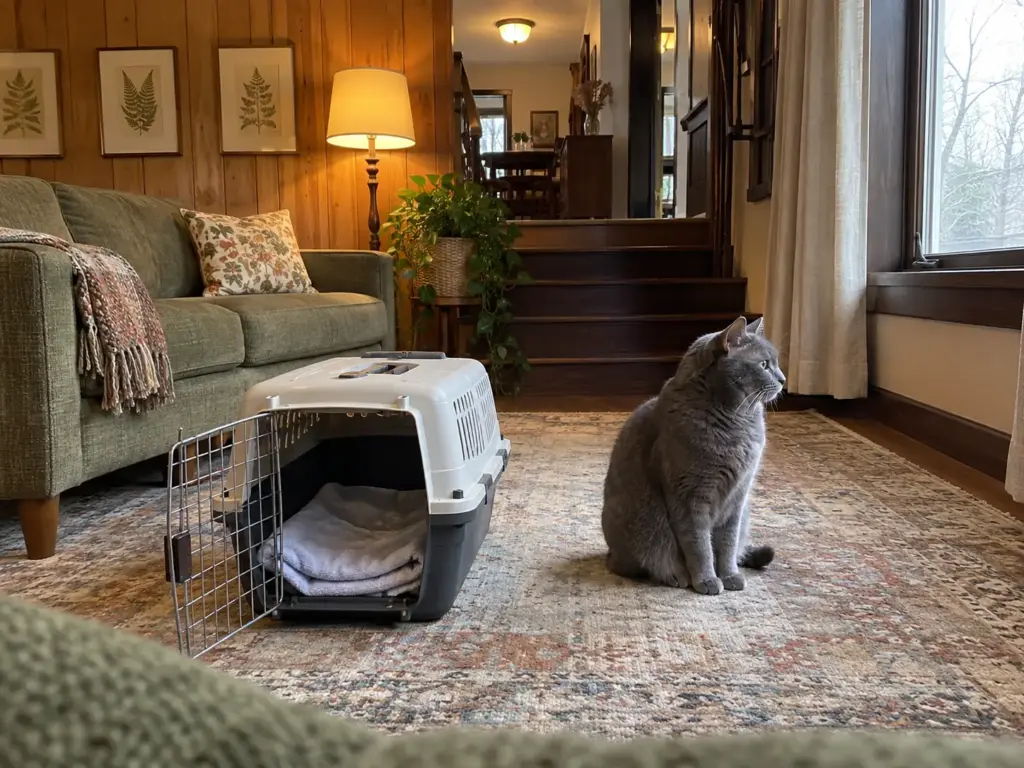
The same goes for any cat whose habits changed in a few days: eating differently, skipping the box, over-grooming until the fur thins. Call the vet before the next night. What those changes mean is the vet’s to say, and nothing on this page can answer it.
Whether you can live with a cat at all with this allergy is your doctor’s call. Once the vet has seen him, the rest of this page is about the hallway side of the door.
The First Weeks at Night, From the Cat’s Side of the Door
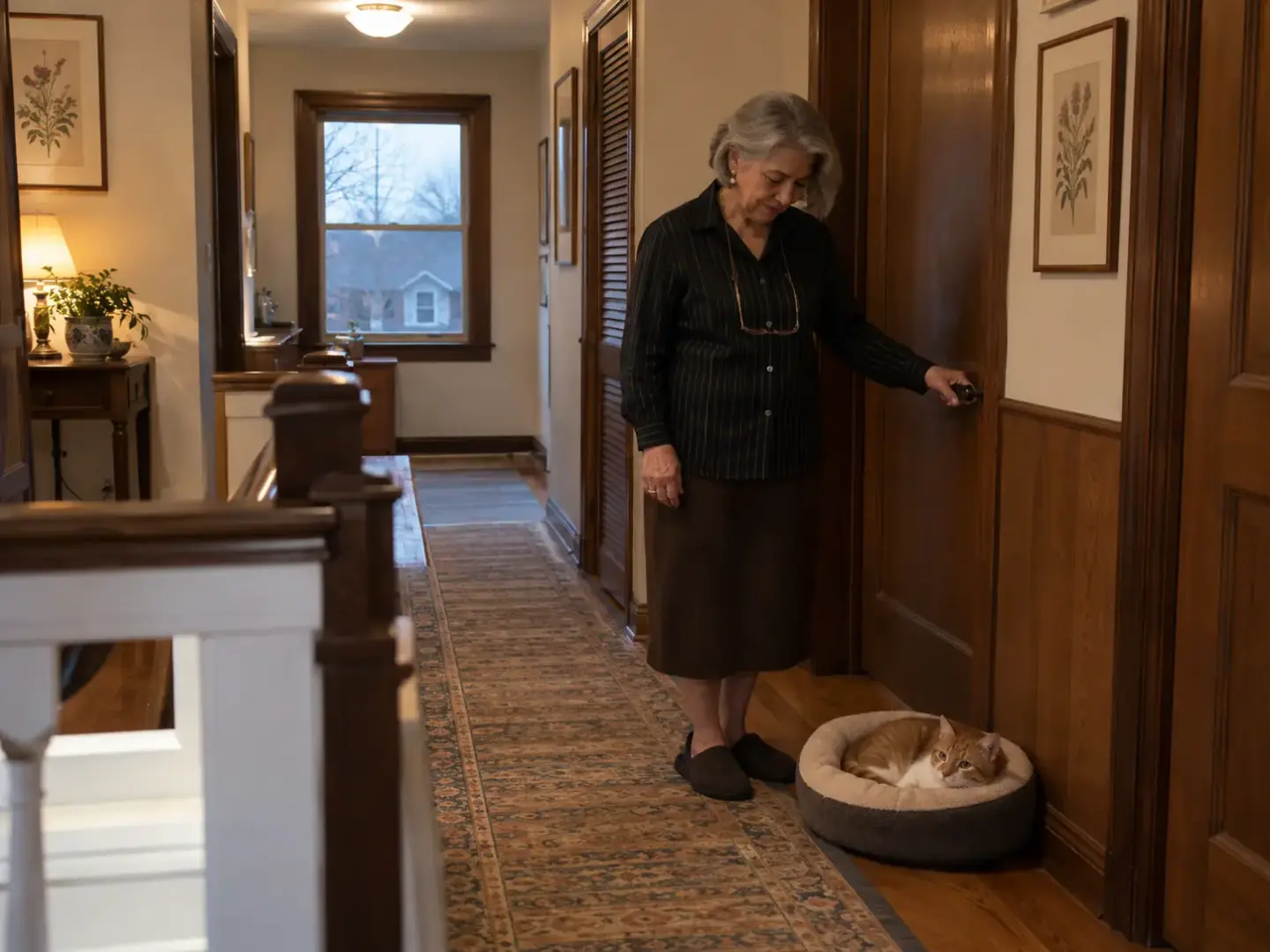
A cat shut out of the bedroom for an allergy often really does not like it and keeps meowing and scratching at the door at night. The cat is reporting a constraint. The weeks that follow are loud because of how he learned, and the order below is built around that.
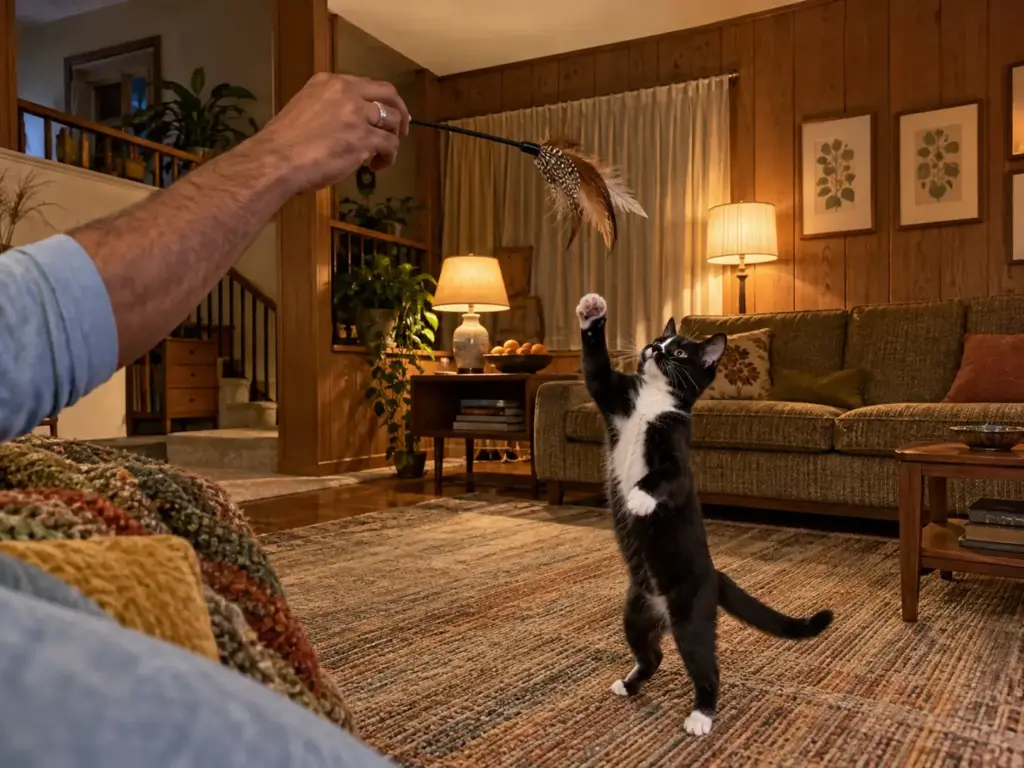
What the Cat Is Asking For at the Door
If he has slept on that bed for years, the door used to open when he called, so calling is the tool with a record. Scratching under the door is the same tool, used harder. What he is asking for is the old arrangement: warmth, a familiar spot and you nearby. The house changed the arrangement, so making the new one worth his while is the house’s job.
A plastic rug under the door keeps her from scratching up the carpet. Measure the door gap under your bedroom door with a ruler before you buy or cut anything, because the height of that gap decides what fits there, and no number holds for every door. And a rug protects the floor only; it does nothing for the crying.
A Bed and a Routine Outside the Door Before the First Night
The bed goes outside the door before the first night, not after the first night’s scratching. Putting the bed and pillows physically in the way of the door can work, because cats tend not to meow for long when they like the pillows and settle down. That is anecdote, not a study. What it describes is a barrier that is also a place to be.
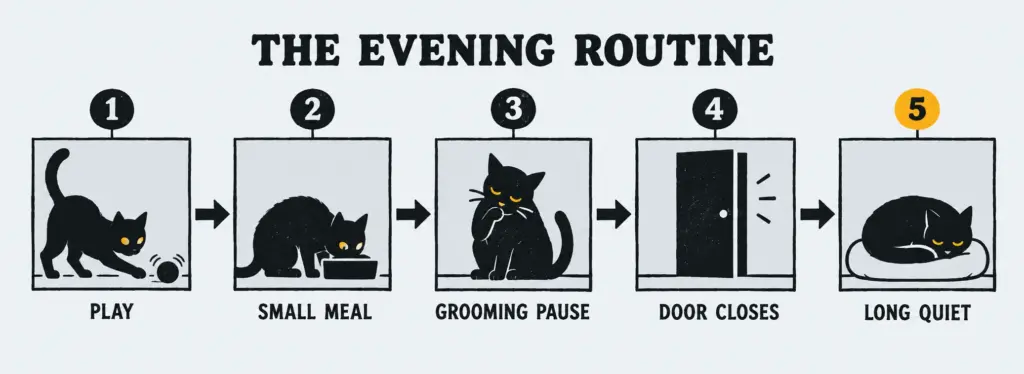
This bedtime order is a routine that works for many households rather than a study: after a good 20 minutes of play, feed a treat or spoonful of food. Then he will be ready to groom and sleep. The day’s cleaning and cat time have their own page, living with a cat when allergic, so this is only the night.
- Play for about 20 minutes, and make it the last loud thing of the evening.
- Give a treat or a spoonful of food.
- Let him groom; that is the wind-down.
- Close the door with his bed and pillows already in place outside it.
Measure the strip of floor in front of the door and pick a bed or a stack of folded blankets that fills it. A bed that leaves a gap beside it is a bed he can walk around, and it only works while it blocks the door. His own washed blanket from the bedroom is the free version.
Where the hair lands on his new spot is its own subject, covered in how to reduce cat shedding by fixing where the hair lands.
Why One Open Door at Three in the Morning Costs Weeks
Most of the work in these weeks is one rule: the door does not open for the crying. According to the VCA hospital guide to night crying, “Under no situation should the owner go to the cat if it vocalizes.”
There are two reasons behind it. First, the crying can get more intense before it eases, because the cat is trying harder for a reward that has always arrived; vets call this an extinction burst, and it is the stretch where giving in feels most reasonable.
Second, rewarding even a very few of the outbursts keeps the behavior going. One open door at that hour doesn’t cost one night. It restarts the weeks you’ve already put in.
This applies to the cat the vet has seen, or whose habits haven’t changed. For him, the door has to be boring.
Settle before the first night who is allowed to open the door and when, and make the answer nobody until the alarm. In a two-person house the more tired person sets the length of every night for both, so agree out loud while you are both awake and calm.
What the Threads Say About How Long It Takes
No study gives a timeline for this, so the numbers that exist are anecdotes. Some cats keep complaining at the door for about 2 weeks before adjusting, and others take about two months to stop meowing and scratching.
Two weeks or two months: the spread is wide, and the mechanism in the last section suggests why. A house where the door never opens at night should sit near the short end, and one that gave in a few times near the long end. That is an inference, not a measurement (and earplugs, the least glamorous tool in the plan, are the one that keeps the door shut). Plan on weeks, not nights.
Two Cats, One Rule
The rule belongs to the room, not to a cat. Shut one cat out and let the other sleep on the bed, and the bedroom is a cat room again. Both stay on the hallway side of the door, with one bed wide enough for both to stretch out on and the same evening order for each. No one has published a figure for how much a second cat adds to a bedroom’s allergen, so there is no number here to tell you the room is clean enough.
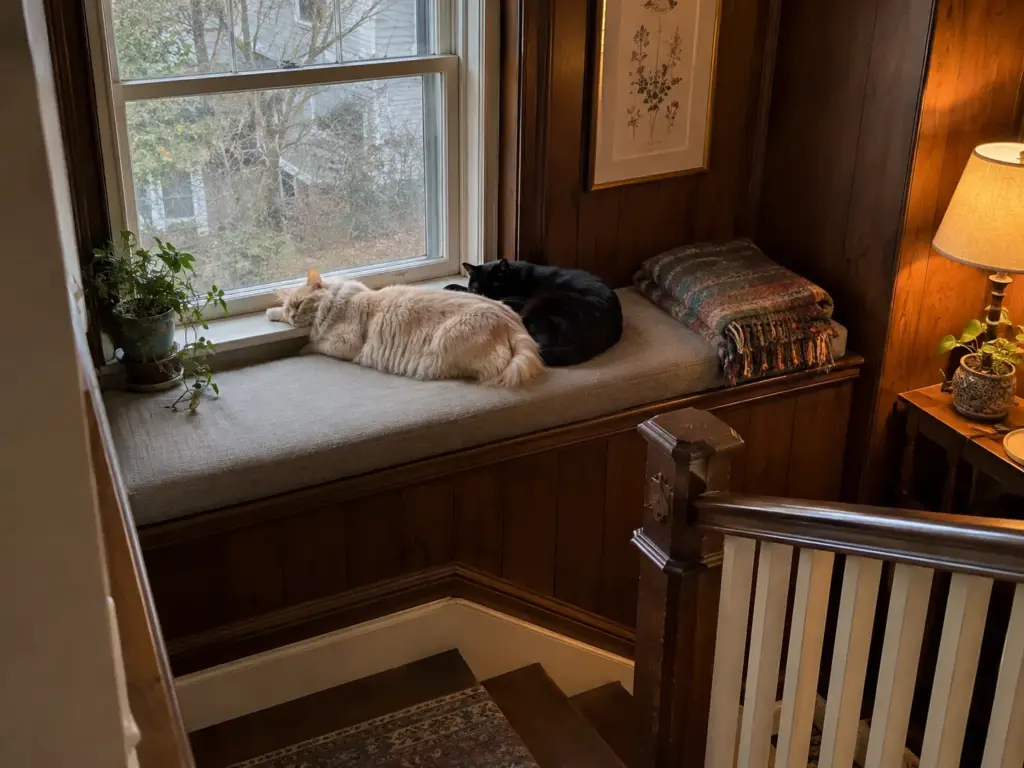
What the setup does give you is one routine at one door instead of two. If one of them is the one who calls, the other hears it either way. And if your apartment has no bedroom door to close at all, reducing cat dander in a small apartment with no door to close covers that house.
Wash First, Hold the Door, Look Again in Three Weeks
Three things carry this. Clear the room before it closes: strip the bed, wash hot, vacuum the carpet and mattress, and run the cat’s blankets through the same wash. Build the hallway side before night one: his bed across the strip in front of the door, the same evening order every night, and one rule for the whole house about who opens the door, which is nobody. And put a cat whose habits just shifted, or an older one who has started calling at night, in front of the vet before the door does anything.
Three weeks from the first night, sit with how the nights went. A quiet night means the routine held. If the nights are still loud, put it to the vet before you add anything to the door, and remember that the slowest accounts run to about two months. Today’s step needs no purchase: pull the cat’s blanket out of the bedroom and put it in the wash with your sheets, and when it’s dry, lay it outside the door and notice whether he settles there that evening.
Frequently Asked Questions
01Can I give my cat Zyrtec for allergies?
Whether a cat can take Zyrtec, or any medication, is a question for your vet, and this guide gives no medication or dose for cats or people. For your own symptoms, ask your doctor.
02What are the symptoms of a pet dander allergy?
Telling an allergy from anything else is a doctor’s job, so this page doesn’t list cat allergy symptoms; it covers the room and the door. What the house can do is lower what is in the bedroom before you close it.
03How do I live with a cat if I’m allergic?
Living with a cat while allergic comes down to two schedules: the day’s cleaning and contact, and the night behind a closed door. The day has its own guide; this one is the night.
04How long will my cat cry at the bedroom door?
Accounts run from about two weeks to about two months, and they are anecdotes, not a study; no research gives a number. VCA adds that the crying can get worse at first.
05Should I let the cat in just this once?
No, because VCA says rewarding even a very few outbursts keeps the behavior going, so one exception can undo weeks of keeping the cat out of the bedroom. If his habits changed suddenly, call the vet first.
Leave a comment