Living With a Cat When Allergic, Hour by Hour
A plan for living with a cat when allergic: when to clean, who does it, and the fixed hour that keeps the cat's day whole (+ what to do if it slips).

Alfredo RamsesFounder · Updated October 31, 2026 · 12 min read


On this page6 sections
- 1Living With a Cat When Allergic Starts With When the Cleaning Happens
- 2Moving the Chores Off the Allergic Person's List
- 3The Cat Keeps His Day, on a Timetable He Can Count On
- 4When the Timetable Can't Hold, the Order of Calls
- 5Morning for the Floors, Evening for the Cat, and a Check Three Weeks In
- 6Frequently Asked Questions
You run the vacuum at seven because the apartment looks tired, and at eight the cat is on your lap, right where the dust you lifted is still settling. That is the usual shape of living with a cat when allergic: two honest efforts, cleaning and contact, that undo each other because neither one has an hour. The cat did what he does every evening; the room was the part that wasn’t ready. Whether this arrangement works for you is a question for your doctor, so this page sticks to what the house can set: when the cleaning happens, who does it, when the cat gets his time with you, and what to do when the schedule won’t hold.
Quick Answer
Run the house on a timetable, in this order.
- Ask your doctor whether this arrangement works for you.
- Clean early in the day, well before the cat’s time with you.
- Hand the cleaning to someone who isn’t allergic.
- Give the cat his contact at a fixed hour in a fixed place.
- Call family, then your doctor, then your vet, if the timetable fails.
Living With a Cat When Allergic Starts With When the Cleaning Happens
The doctor’s call, and the house’s job
Start with who decides what. Your doctor decides whether this arrangement is workable for you, and the Ohio State University College of Veterinary Medicine handout says as much: it tells you to see a doctor to be certain any allergy plan is aimed at the right cause.
The house’s job is smaller and more mechanical. It puts hours on things. What the allergen is and how it settles into floors and fabric has its own guide, how the allergen sits in an apartment, so this one only handles the clock.
Two calls belong to no timetable. If breathing is ever the problem, that is a same-day medical visit and nothing on this page comes before it. And if the cat is scratching hard or his coat is thinning, the person to ask is his vet, with the schedule waiting for the answer.
What a cleaning does to the room for the next few hours
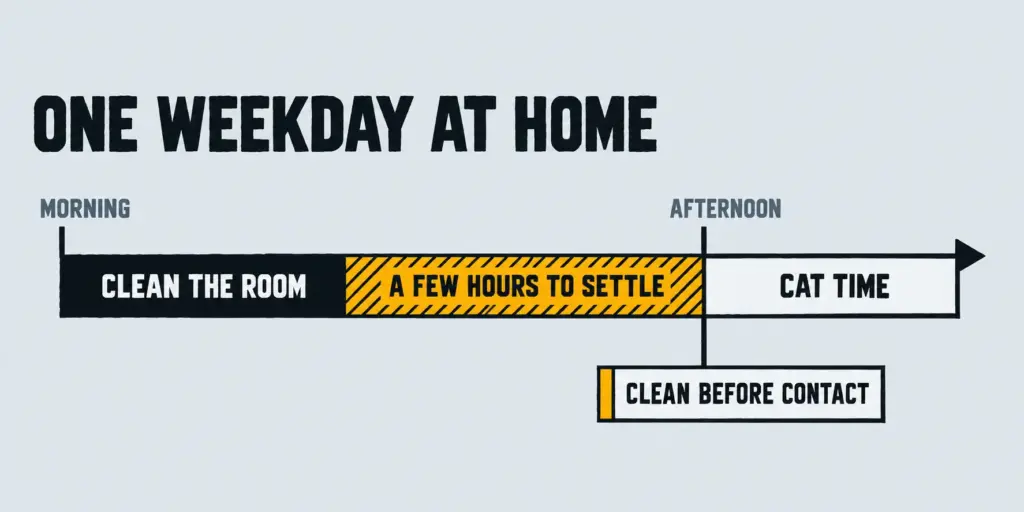
Cleaning doesn’t only take allergen out of a room; it also lifts some of it into the air first. According to the Ohio State University College of Veterinary Medicine handout, “After cleaning, it will take a few hours for allergens released into the air to settle back onto the surfaces.” The source gives no exact number, so neither does this page. What it gives is an order: the hours to settle have to be over before the cat’s time with you begins.
The usual instinct runs the other way. People freshen the room right before the evening sit-down, so the living room is ready for the cat and the cat is ready for the couch.
For someone with this allergy that gets the order backward, because the settling hours are still running when he jumps up. The cat isn’t late and he isn’t in the way; he turns up for his time at the hour he always has. The room is what has to be ready for him.
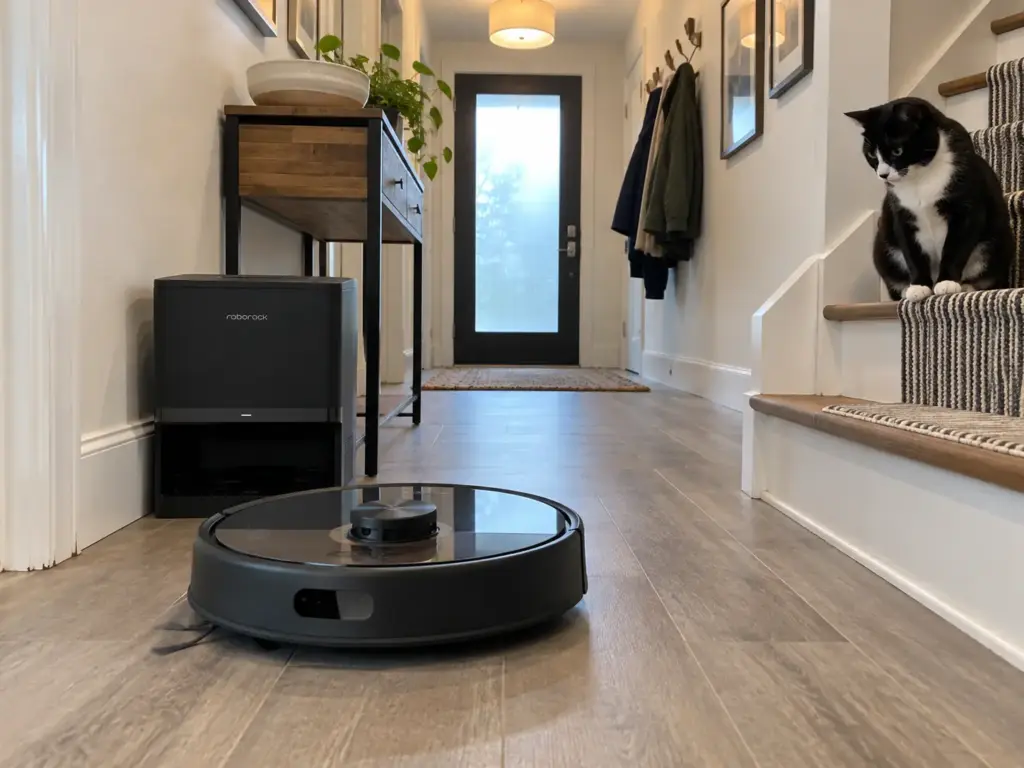
So the cleaning moves. A second robot vacuum can run in the bedroom during the day when you are not in the bedroom. The machine is the least interesting part of that setup. The useful part is the clock: the cleaning happens on a schedule, while the person is somewhere else.
Cleaning early in the day and contact late in it
The free version comes first, and it needs no purchase. Set the cleaning schedule so the floor pass you already do falls at the start of the day, as close to walking out the door as you can manage, so the settling happens while you’re at work. Since the only figure the source offers is “a few hours,” build the gap well past it instead of trimming it close. How often to run the vacuum is its own question, and how often to vacuum with a cat answers it; here only the hour changes.
Then the evening is the cat’s. By the time you’re home and sitting down, the few hours should be behind you, not running with both of you in the room.
If nobody is home at that hour, a scheduled robot is the one purchase that fits this plan. The roborock Q7 M5+ Robot Vacuum and Mop lists a schedule setting, 10000 Pa of suction and a self-emptying base rated at 7 to 9 weeks hands-free, so the pass can run after the door closes behind you with no one pushing a vacuum. What a robot vacuum handles and what it leaves covers its limits: it takes the daily drop on hard floor, not the corners or the couch.
The flaws are plain. The self-emptying can be loud (an empty apartment makes that matter less), you keep buying the bags, and buyers mention the app deleting the whole map. The mop function plays no part in this plan.
Tie the cleaning to something that already happens at a fixed hour, and the door closing behind you in the morning is the best one. A timetable pinned to a clock slips by the third week; one pinned to leaving the house keeps itself.
Moving the Chores Off the Allergic Person’s List
Which chores go to someone else
Many allergic cat owners settle into the same arrangement: more cleaning around the house, the litter scooped every day and the cat brushed almost daily. “Fur in the garbage is better than fur in the air,” she writes.
Her instinct about the hair is right. But the household chores sit on the wrong person. On who cleans, the Ohio State handout says allergic people should avoid cleaning and vacuuming themselves.
A split that keeps the broom out of the allergic person’s hands, for a home with a non-allergic family member to take over:
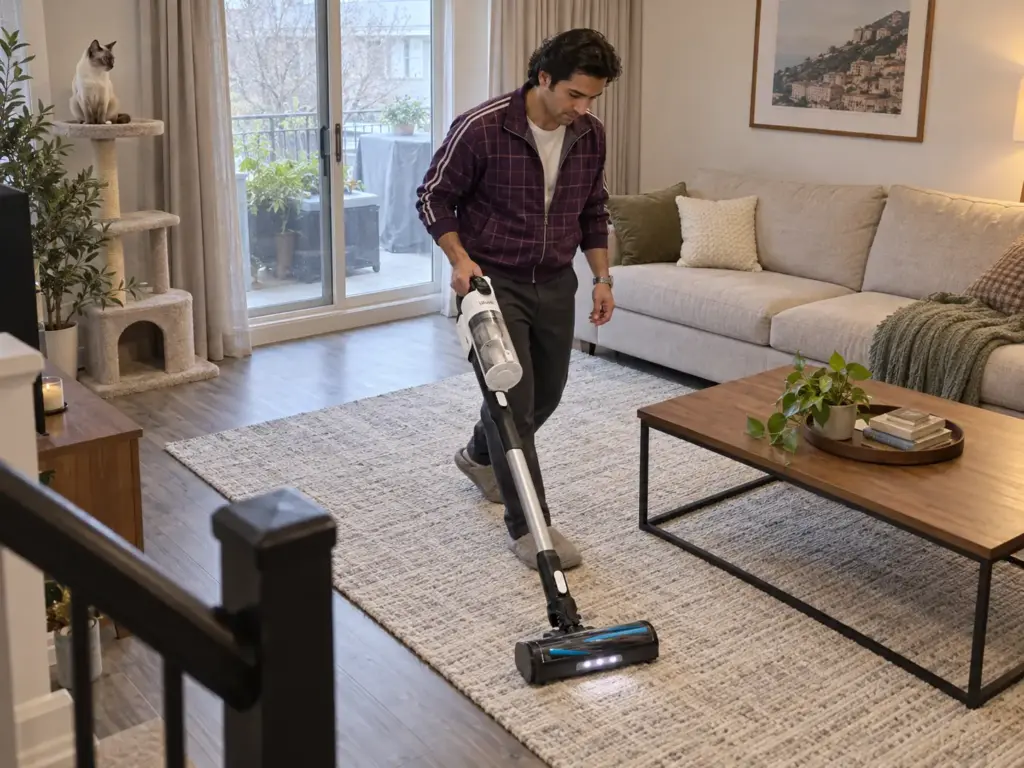
- Early each day, the housemate who isn’t allergic does the floors while the allergic person is out of the room, so the room has the rest of the day to settle.
- On brushing days, the same housemate brushes the cat and tidies his spot, again with the allergic person elsewhere.
- In the evening, the allergic person gets the cat: the fixed hour, the fixed chair, and nothing with a handle.
- Whenever the cleaning runs, the allergic person stays out of the room, and out of it through the few hours afterward.
Look at what the plan hands the allergic person: the cat. The chores that stir the allergen up go to someone else, and the part of the day that makes the arrangement worth having stays put.
When you live alone, move the hours instead
No one to hand the broom to? Then the task stays and the hour moves. The same few hours of settling follow every pass, so the pass goes to the start of the day, just before you leave, and the hours run while you’re at work or the gym.
If you work from home, schedule it for a block when you’d be out of the apartment anyway, such as a lunch walk or an errand (this is where the scheduled robot from the first section earns its place). In a one-room apartment there is no second room to wait in, which is why the clock has to do the job a door can’t.
The brush and the quick pass
Brushing is the chore closest to petting, with a tool in your hand, so it follows the same rule as the vacuum: it goes to the person who isn’t allergic. The frequency depends on his coat, and how often to brush your cat sets it; this page only decides whose hand holds the brush and when.
The quick pass over the cat’s own spot, the cushion and the strip of floor under his perch, is the same housemate’s job. Use the vacuum you already own first. A second, lighter machine only earns its place if yours lives in a closet two rooms away and the pass keeps getting skipped.
For that job, the Levoit Cordless Vacuum Cleaner LVAC-200 offers up to 50 minutes of battery and an anti-tangle design sold for pet hair, and it can sit next to the cat’s spot. What to look for in a cat hair vacuum goes through the features that matter.
Buyers say it is weak on pet hair in standard carpet, and the hand attachments draw the sharpest complaints. If the cat’s spot is carpet, keep using the heavier vacuum you have.
Agree in advance on what happens when the housemate skips a day: the pass moves to the next morning, and the allergic person doesn’t pick up the vacuum. That quiet urge to just do it yourself is where this plan usually breaks.
The Cat Keeps His Day, on a Timetable He Can Count On
A fixed hour for the lap, a fixed place for the rest
Picture the other way people handle it. After learning of an allergy, some people panic and start going straight to their room with the door closed, and it breaks their heart to keep rejecting the cats. The cat’s side of that door is simple: his evening used to include you, and now it doesn’t, with no hour that tells him when it will again.
The AAFP and ISFM Feline Environmental Needs Guidelines put his side in one line: “Predictability, familiarity and routine enhance the cat’s coping ability.” Staying away from him entirely is the common reflex, and it looks safe from your side and random from his. A lap hour that comes at the same time, in the same chair, and ends the same way gives him something to count on, even if it’s shorter than the old open-ended evenings. The habit to wash hands after petting, and what to do with them once the lap ends, is covered in why the hands matter after a lap.
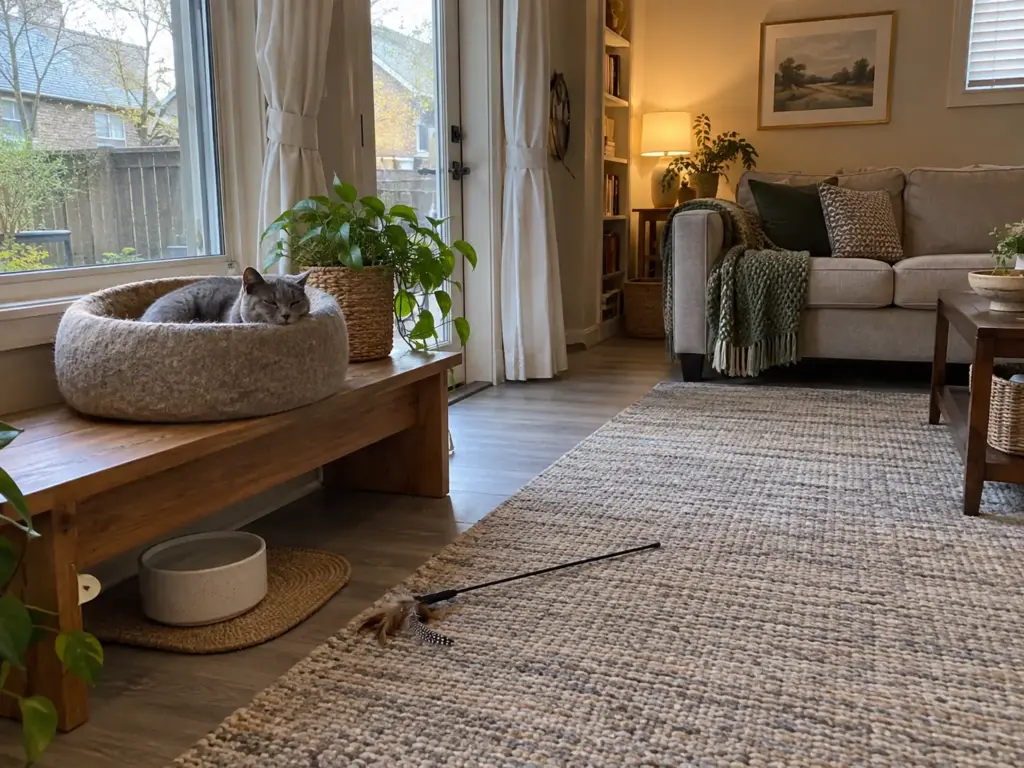
Pick the chair before the hour. A cat reads a place long before he reads a clock, so a chair that is only ever the lap chair does half the scheduling for you.
His home base stays where he is, out of sight of yours
His cat bed, water, perch and scratching post are the cat’s home base. The same guidelines call for resources spread out of view of one another, which gives a cat a sense of control, and they describe a cat’s safe place as a private, secure spot, often up high. That is the case for leaving his base where it is, rather than moving it onto the sofa you sit on or into a room that’s closed to him. A raised spot out of the way is also where he can wait out a cleaning.
If a closed bedroom door is part of your plan, the bedding the cat sleeps on has a guide of its own, and this page doesn’t repeat the rule. And for a cat who starts scratching harder or whose coat is thinning, the call goes to his vet before the schedule changes anything.
With two cats, the bases stay apart
Two cats mean two bases, each with its own bed, water and perch out of sight of the other’s, and the lap time takes turns: one cat, then the other, never both at once. Feeding two cats in a small apartment works through how to keep those resources separate on a small floor plan.
When the Timetable Can’t Hold, the Order of Calls
How to tell the timetable is failing the cat
Some weeks the timetable doesn’t fit. Work swallows the evenings, a move scrambles the routine, someone in the house gets sick.
The test is the cat’s day, not anyone’s willpower. If his fixed hour has been skipped for weeks, the door is shut more often than it’s open, or the cleaning keeps sliding because nobody is home at the right hour, the schedule is failing him. That is information, not a mark against anyone in the house.
The limit is plain: when you can’t give your animals the attention they deserve, it may be time to rehome them to someone who can. It’s hard to read. The question underneath it is the same one this page has asked all along: does he still get his day? This page doesn’t answer that for you.
Family first, then your doctor, your vet, and a shelter last
The order matters because each call answers a different question. Family and friends come first: someone who can take over the brushing and the floors, share the cat’s evenings, or take him in. Ohio State’s handout says to ask family and friends about placement options before contacting a local animal shelter, which is why family placement comes first and the shelter sits last.
Your doctor is the second call, for anything about you: whether the arrangement is still workable and how you’re doing. Trouble breathing is a same-day medical visit, not a scheduling problem. The cat’s vet is third, and only for his side: scratching, a thinning coat, a change in his habits. Nothing here tells you where that order ends.
Morning for the Floors, Evening for the Cat, and a Check Three Weeks In
Three things carry the plan. The cleaning goes first in the day and the cat’s time with you comes after the settling hours. Someone who isn’t allergic does the cleaning, or, if you live alone, the hour moves instead of the chore. And the cat gets a fixed hour, a fixed chair and a base of his own, with family, your doctor and his vet called in that order before anything bigger is decided.
A routine like this tends to loosen around the third week, so pick a day then and look at two things: whether the floors still get done at their hour, and whether the cat still gets his time with you at his.
Today, choose the hour for the next cleaning, say who is doing it, and write both where everyone in the house will see them.
Frequently Asked Questions
01Is it possible to live with a cat if you are allergic?
Whether living with a cat works for you is a question for your doctor, because no house routine can answer it for you. What a routine can do is set the hours: cleaning early in the day, someone else doing it, and the cat’s time with you at a fixed hour.
02Can I stop cat allergies when living with a cat?
No house routine switches an allergy off; a timetable only changes what is in the room and when you are in it. What happens to you after that is for your doctor. The order that matters is cleaning first, contact later.
03How can I live with a cat when I’m allergic?
Start with the clock: clean early in the day, let the few hours of settling pass, then give the cat his time with you. Hand the chores to someone else, keep his bed and perch in his own spot, and talk to your doctor about the rest.
04How do you handle being around a cat with a cat allergy?
Plan the contact instead of leaving it to chance: a set hour, a set chair, and the cat’s own spots kept away from yours. Hands after a lap are covered in the guide on why cat hair makes you itch.
Leave a comment