Cat Hair Out of Clothes? Fix the Order, Not the Roller
Get cat hair out of clothes before the wash sets it: the first move by fabric, one dryer step and a no-dryer route for renters [free moves first].

Alfredo RamsesFounder · October 13, 2026 · 15 min read

On this page8 sections
- 1The Hair Gets Into Clothes Where the Cat Chose to Sleep
- 2Why the Wash Leaves Cat Hair Behind, and Can Make It Worse
- 3The Free First Move, Matched to the Weave
- 4When the Free Moves Stall: Tape and a Sticky Roller
- 5The No-Heat Dryer Pass, and the Branch for No Dryer at All
- 6How Coat Length and Cat Count Change the Number of Passes
- 7Start With the Pile, Finish With the Wash, and Look Again in Three Weeks
- 8Frequently Asked Questions
Your sleeve catches the light in the hallway mirror, and there it is: a pale line of cat hair on clothes you pulled on a minute ago, down one sleeve. The wash did not put it there, and it will not take it out either, because a washing cycle moves cat hair around instead of dissolving it. Getting cat hair out of clothes comes down to the order of a few small moves, and most of that order is settled before the machine is switched on, because the hair rides in on the pile of clothes the cat picked as a bed. Below is the sequence: where the hair gets in, why the wash leaves it behind, the first move for each fabric, what to do when the free moves run out, and what changes with a long coat or more than one cat.
Quick Answer
Hair comes out in an order, and the water goes last. Treat the first steps as a working rule built on how each fabric holds hair, not a tested result.
- Keep worn clothes off the chair, basket and bed your cat sleeps on.
- Run a damp hand or rubber glove over thin woven cotton, dry.
- Tumble knits and fleece in the dryer on no heat first.
- Empty the lint trap, then wash what is headed for the drum.
- Use tape or a sticky roller on what you are about to wear.
The Hair Gets Into Clothes Where the Cat Chose to Sleep
One commenter in a laundry-hack thread spent years buying clothes and furniture in the same orange as the household’s pets, so the hair vanished into the cloth. Then a calico moved in, and the camouflage failed in a week.
Color hides the hair, but it never keeps it off the garment, so the work starts earlier, at the place where the hair boards the clothes. That place is rarely the cat. It is wherever the clothes were sitting while he was.
What a Chair Back or Basket Offers a Cat
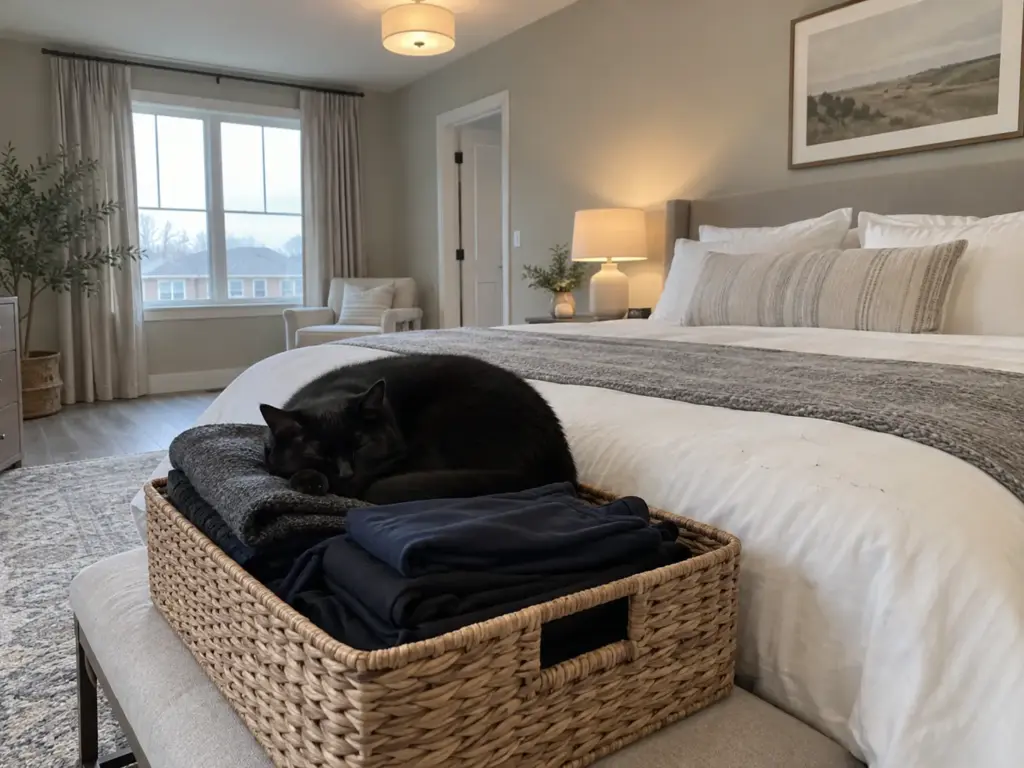
A heap of worn clothes on a chair, a basket beside the bed, a jacket dropped on the bench by the door: to a cat, each one is a bed. It is soft, it keeps the warmth of whoever wore it, and it smells like the person he lives with. The cat is picking the best spot in the room, and your laundry happens to be it. One answer in a Stack Exchange laundry thread puts the consequence plainly: a cat sleeping on clothes will “literally rub the hair in,” so the hair is pressed into the weave by a sleeping animal before you ever touch the garment.
That is why the pile matters more than the roller. The rest of the apartment is a different job, and it has its own page on clearing the rest of the house without pushing the hair around; here the question is only why clothes come first.
The Habit at the Door
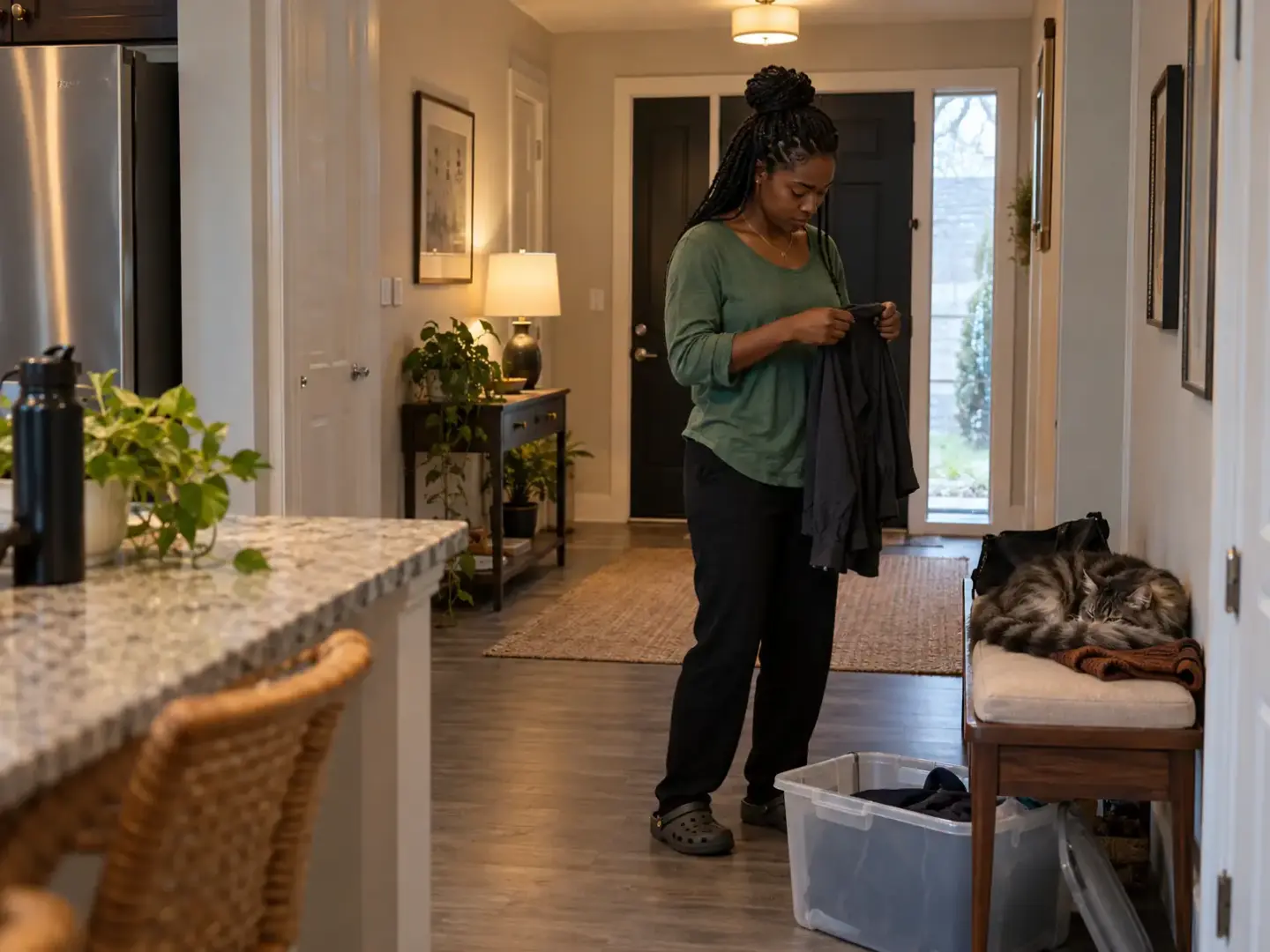
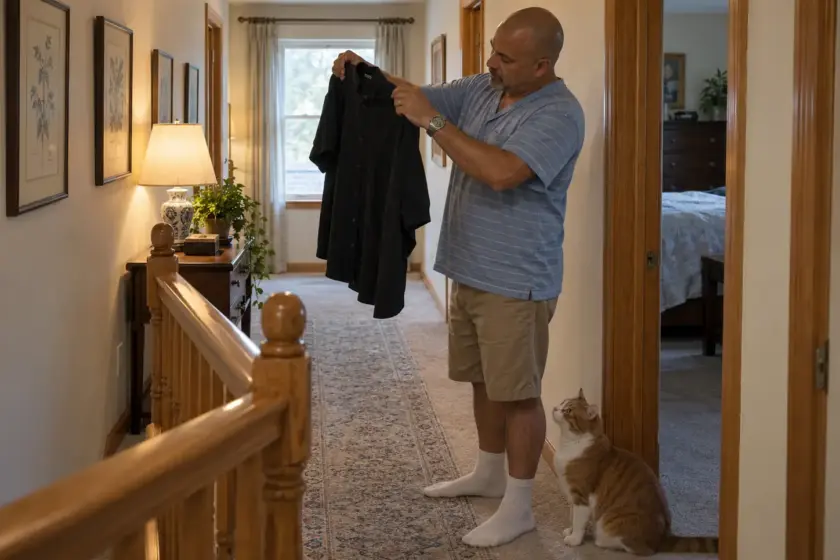
The clothes that carry the most hair are the ones you wore on the sofa, so the fix is a routine at the door, not a better product. Commenters who fight pet hair on clothes describe the same one: change clothes at the door as soon as you come home, into house clothes, and put the day’s clothes away inside out, on a hanger or a hook, in a room where the cat does not nap. Inside out means the outer face is not the side that touches the room, and away from the nap spots means the garment is not rebuilt into a bed overnight.
Decide where the day’s clothes land before you walk in. A hook inside the door beats a chair, because a hook cannot be slept on.
A Closet Without a Door, and What to Do Instead
The usual answer, “keep the clothes in the closet,” fails in a rental where the closet has no door or the door will not close. The cat is not the problem there; the apartment is, and a rental often does not let you swap the door.
People in that spot keep clothes in clear plastic tubs with lids, which needs no drilling and no landlord’s permission, and the ones who describe them describe months of use rather than a week.
One commenter with three dogs in a 700-square-foot apartment, tired of arriving everywhere looking like a “dust bunny,” took the whole wardrobe to a laundromat once a month as a reset. A lidded tub is the cheaper version of that idea, and it works every day instead of monthly.
Why the Wash Leaves Cat Hair Behind, and Can Make It Worse
The tempting move is to throw the garment in the machine with something rubbery and hope the drum does the work. It does not, and the reason is mechanical.
Nothing in the Drum Dissolves It
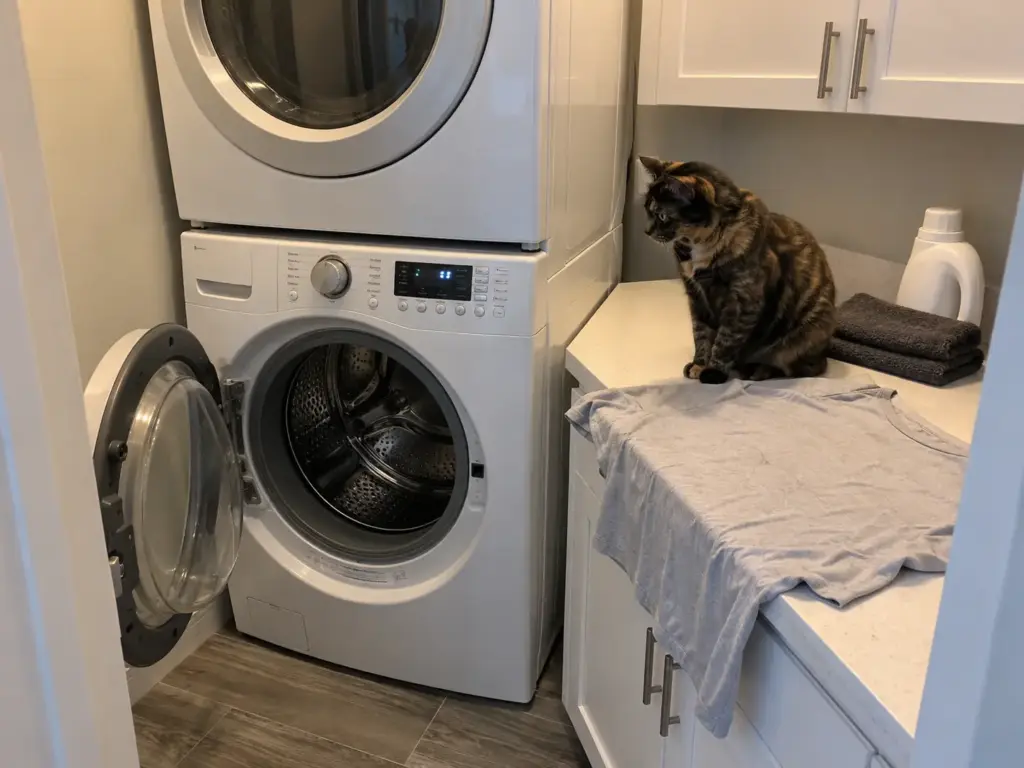
Nothing in a washing machine dissolves cat hair. Water and agitation move it, tangle it into the load and drop it on the next garment, so what helps has to happen before the water arrives. The renter in a laundry thread tried the rubber paws sold as “fur removers” first and the vinegar second, and the report is short:
- Rubber pet-hair balls in the drum: “did nothing.”
- White vinegar in the wash: “also did nothing.”
- Lint rollers as the whole plan: “going through them so fast and it’s SOOO TEDIOUS.”
- Giving up: “you may just have to learn to live with it,” said one reply.
The last line is the one this article answers with steps. Learning to live with it is what you do when the order is wrong.
What the Wash Does to Thin Cotton Versus a Knit
Cat hair fails the wash in two different ways, and the fabric decides which one you get. On thin cotton the hair sinks into the weave, and the water and tumbling push it deeper; the asker in that Stack Exchange thread had a thin cotton T-shirt and a long-haired cat, and the wet-hand pass worked where the machine made what was left worse. On a knit or a fleece the hair does not sink, it clings. A pet-supply retailer’s fabric guide puts the cause on static: polyester and microfiber can cling, and what clings attracts cat hair.
Sinking and clinging need different first moves, which is why one recipe for every shirt in the basket keeps disappointing people.
Vinegar, Softener and the Claims Nobody Tested
The sources do not agree on vinegar. Speed Queen, which sells dryers, and a veterinary referral service both suggest about half a cup of white vinegar in the rinse cycle; the renter above said it did nothing. That is not mine to settle for you. If you want to try it, use one load and judge the garment, not the label.
Fabric softener, dryer sheets and static spray on partly synthetic blends are on shakier ground. The reasoning has support, since static is the mechanism and softener is the common answer to static. The claim that it frees cat hair from polyester is one answer’s opinion, and one commenter says “hair-repelling” sheets now exist. Neither has been checked, so treat it as a claim worth testing on one load, not a result to build a routine on.
The Free First Move, Matched to the Weave
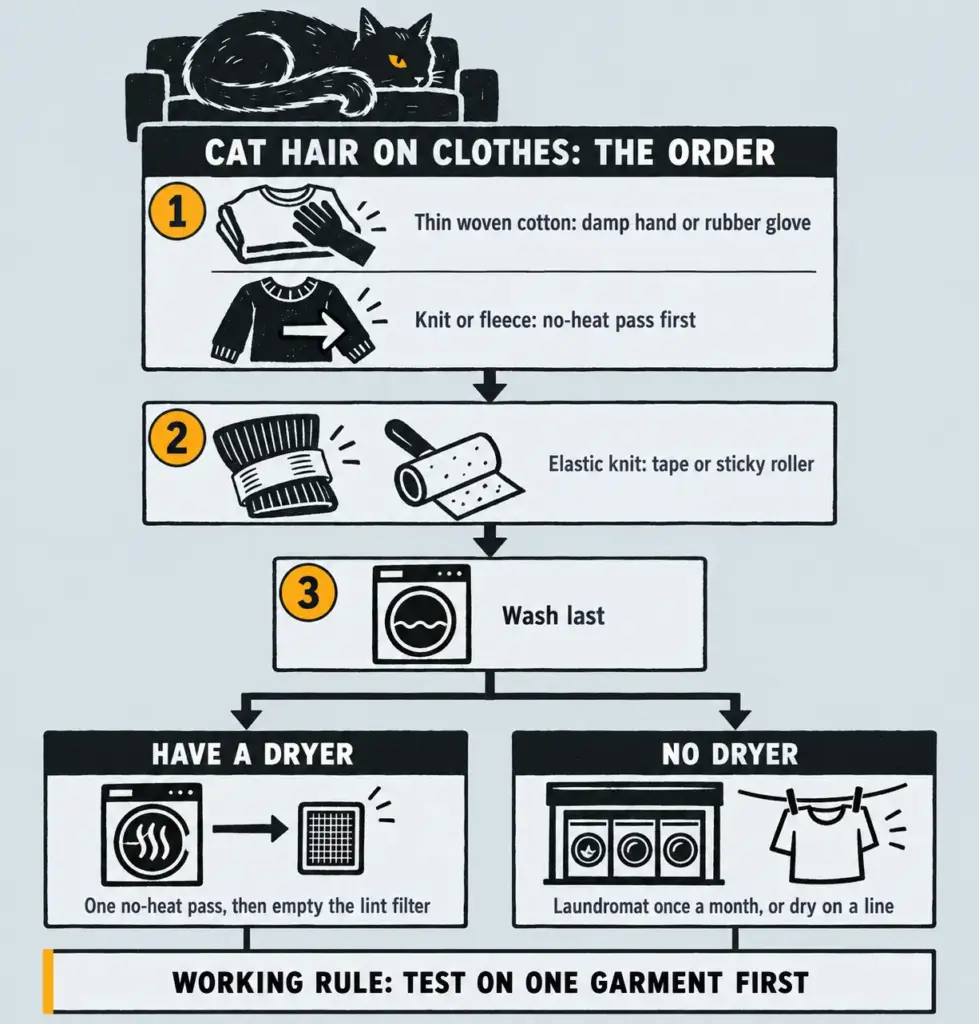
Every way to remove cat hair from clothes in this section uses what is already in the apartment. What changes is which move goes first, and the order below is a working rule: it is built from the sinking-versus-clinging reasoning above, not from a test anyone has run. One garment will tell you whether it holds in your machine.
A Damp Hand or Rubber Glove on Thin Woven Cotton
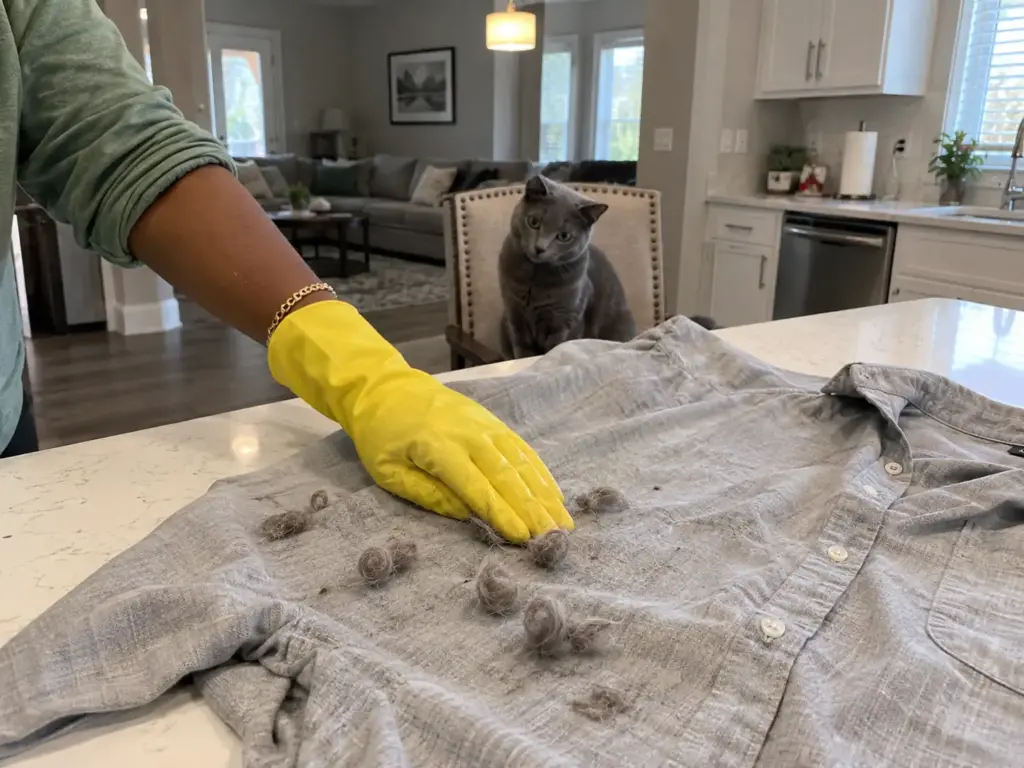
Lay the garment flat while it is still dry. Run a slightly damp hand, or a damp rubber glove, across it in short strokes in one direction, and the hair rolls into small tufts you can lift off. Damp, not wet: the hand should feel cool, not drip. Thin woven cotton goes first here because it is the fabric the wash punishes, so the hair has to leave before the water and not after it.
Why Knits and Fleece Get the Dry Pass First
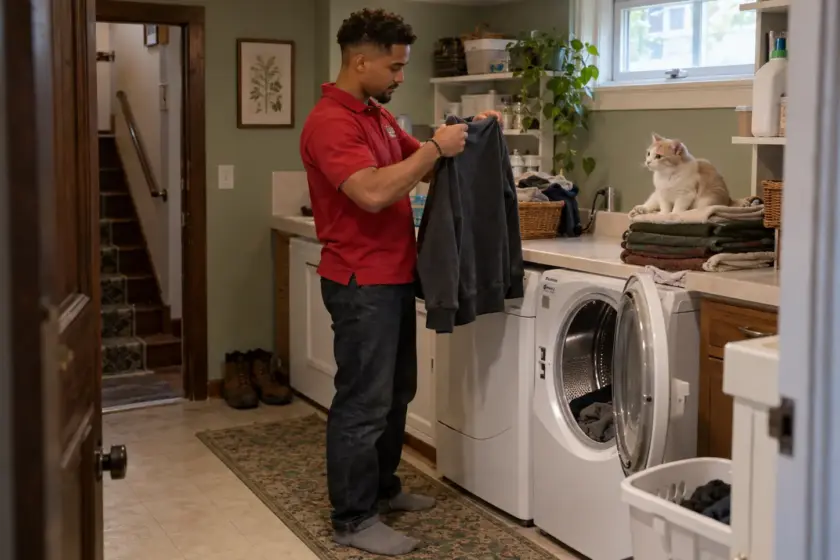
The glove is the move most people name first, and on a knit it is not the best one. A hand can snag the loops, a roller can drag the whole garment out of shape (the Stack Exchange answer says a roller does not work well on T-shirt fabric), and a fleece holds its hair by static, which a wet hand barely touches. So for knits and fleece the dry pass goes first: a ten-minute no-heat dryer cycle, then the lint trap. The tumble loosens what sits on top of the loops, and the trap collects it.
The two sources that give an order disagree, a dryer maker saying dry tumble first and the Stack Exchange answer saying wet hand first for a thin tee, and splitting by fabric is the way to reconcile them.
Weaves That Hold Hair, and Weaves That Let Go
Tightly woven and smooth fabrics let go of cat hair most easily: denim, canvas and leather shed what you brush off. Knits and napped fabrics hold it, and a veterinary referral service’s laundry tips name velvet and corduroy in particular. That ranking is the best-supported part of this section, and it also answers what fabric cat hair will not stick to: a dense, smooth surface.
| Fabric | Holds hair? | Why | First move (working rule) |
|---|---|---|---|
| Thin woven cotton | Yes, and the wash sinks it | Hair presses into the weave | Damp hand or glove, garment dry |
| Knit sweater | Yes | Hair sits in the loops, and a roller can pull the knit out of shape | No-heat dryer pass, then tape |
| Fleece | Yes | Static pulls hair onto the pile | No-heat dryer pass first |
| Denim or canvas | Mostly lets go | Tight, smooth weave | Shake it out, one pass of the glove |
| Velvet or corduroy | Yes | Napped surface traps hair | Treat like a knit: dry pass first |
Run the order on one thin tee and one knit before you rebuild your laundry day around it. Whatever is left on each garment is the answer for your cat’s coat.
When the Free Moves Stall: Tape and a Sticky Roller
Some garments beat every free move. A stretch-knit shirt is the usual case: the hand skips over it, the dry pass loosens the hair but leaves a film, and the next step costs a little money, tape first and then a roller.
Packing Tape Around Your Hand
Wrap a few turns of packing tape around your hand, sticky side out, and press and lift along the fabric. It is the roller without the purchase, and it works on small areas such as a cuff or a collar. It is weakest on elastic knits for the same reason a roller is: pulling the tape away can stretch the cloth.
A Sticky Roller With Its Own Handle
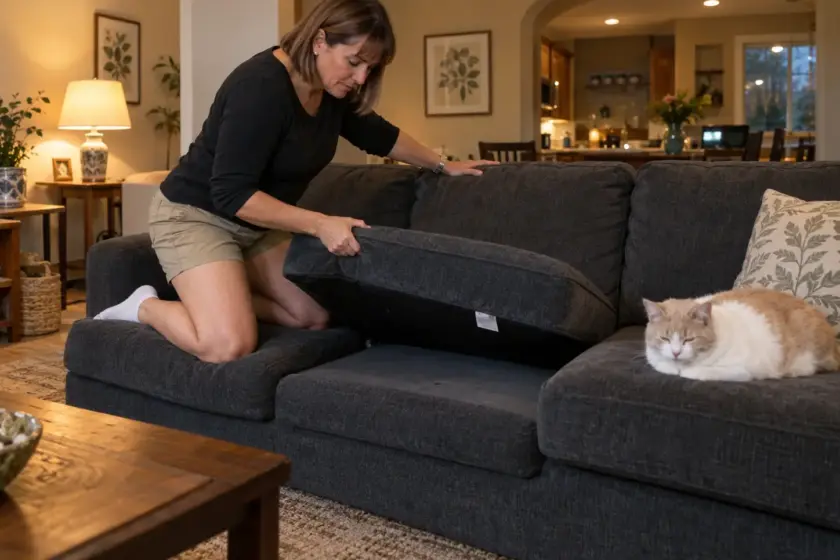
A roller is for the clothes you are about to put on, never for the pile headed to the washer, where it only tears off the top layer and leaves the rest to be set in by the water. If the clothes spent the day near the sofa, do the sofa before the clothes: a commenter who ran a roller over the furniture first and over the wardrobe second gave the same order, and the sibling page on the couch is where that surface is covered.
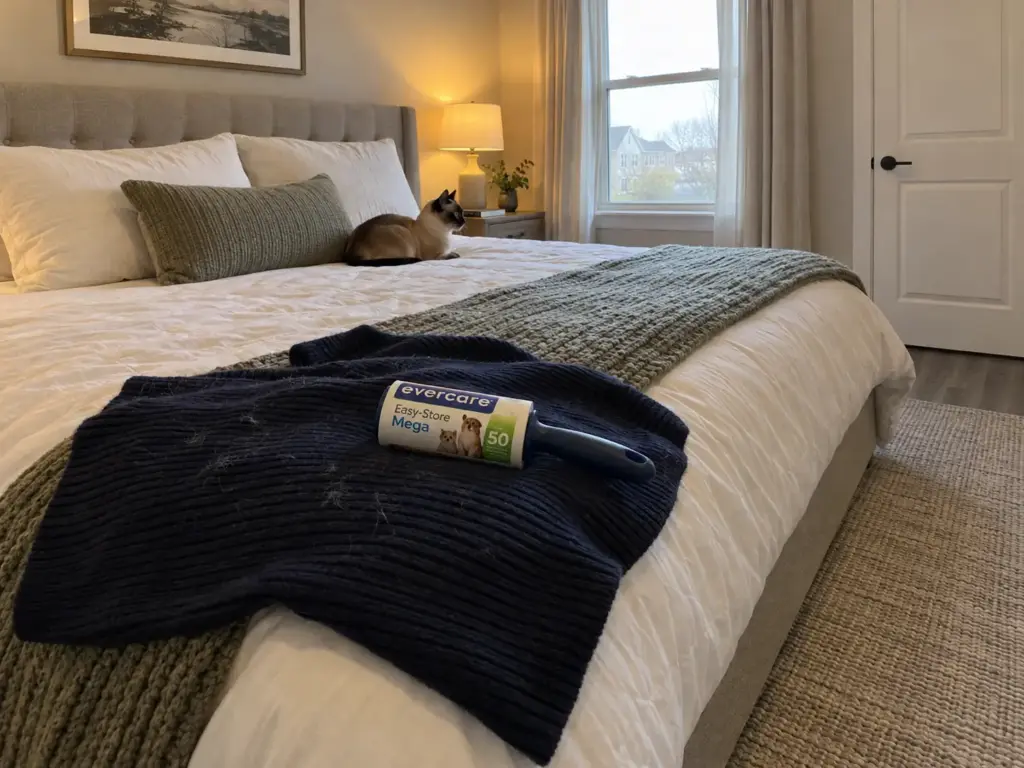
For the stretch knit that tape and a glove cannot finish, the Evercare Easy-Store Mega 50 Layer Handheld Pet Lint Roller is a 10-inch head with 50 sheets and a design that folds down for storage, which is the reason it suits a small apartment.
The width is what matters on clothes: a reviewer on the listing notes it covers large surfaces quickly, and a sleeve is a wide surface. The sheets are the running cost of any sticky roller, and one commenter’s “SOOO TEDIOUS” about rollers in general is the cost people mean. The reviewers on this listing report no problem specific to this model, so the limit is the one they all share: you will keep buying sheets, and tape and a damp glove should have gone first.
The No-Heat Dryer Pass, and the Branch for No Dryer at All
The dryer has one job in this routine: a single no-heat step, with one maintenance task attached to it.
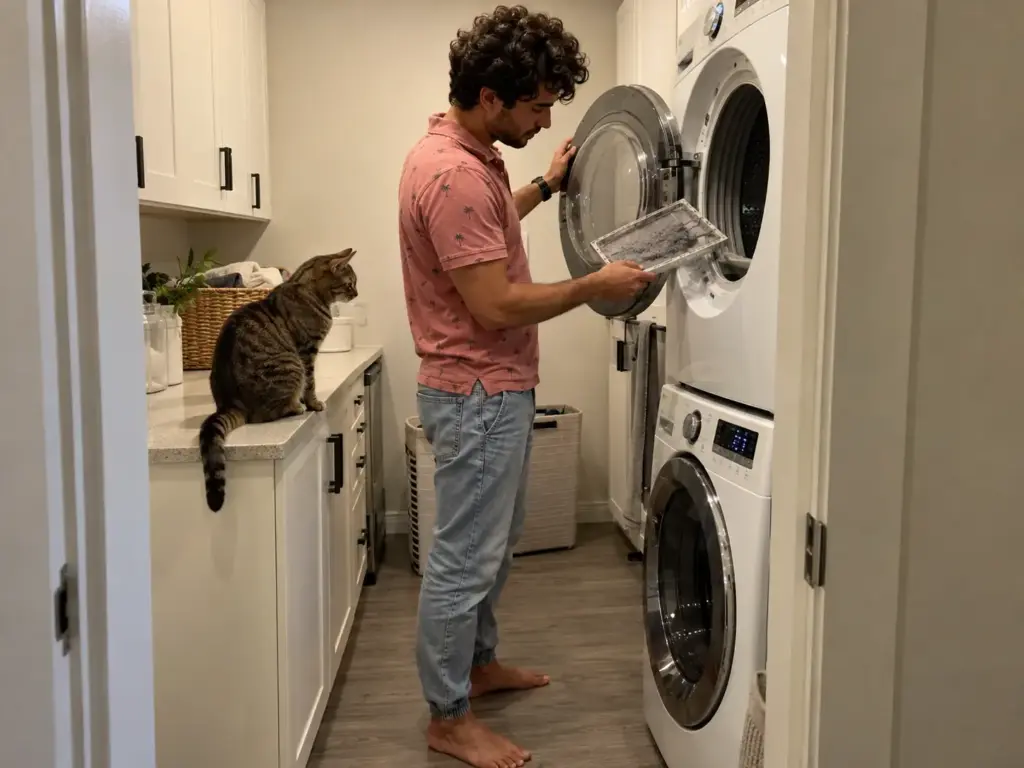
One No-Heat Pass, Then the Lint Trap
Run the garments on no heat for about ten minutes before they go in the washer. That figure is the dryer maker’s own, from Speed Queen, which sells dryers, so take it as a number to start from rather than a measured result. The tumble shakes hair loose and sends it to the trap.
Then empty the trap. According to the New Jersey Division of Fire Safety’s dryer safety sheet, “Not only is it wise to clean the screen of lint after each use, but to use a brush to remove buildup of fiber.” The same sheet says more than 13,000 fires a year start in laundry rooms and nearly 4,000 of them come from lint buildup in the dryer or the vent pipe. A trap stuffed with cat hair is the one lint risk you control at home.
Empty the trap the moment the no-heat tumble ends, before the clothes go in the washer. The hair is sitting there loose, and the next thing to run through that dryer will be a hot cycle.
No Dryer: The Laundromat and the Line
A routine that opens with the dryer fails the renter who has none. The person who started the laundry thread lives in a renovated camper with a portable washer and a spin dryer, and hangs her clothes outside, or indoors when it freezes. For that apartment the damp glove takes over the first move, because it needs no machine at all, and the lidded tubs from earlier do more of the work.
Two of the replies describe a workaround: take clothes to a laundromat once a month and run them through the dryer, or take every washable fabric there for a deep reset. Whether a laundromat tumble or a portable spin dryer does what ten minutes of no heat does in a home dryer, nobody has measured. No minute count exists for that case, so the time is yours to test on one load.
How Coat Length and Cat Count Change the Number of Passes
One answer does not fit every household. The same garment comes out of two apartments with two different amounts of hair on it, and the cat is not at fault in either.

A Long Coat Goes Deeper Into the Cloth
In that Stack Exchange thread, which had one short-haired cat and one long-haired one, the long hair went “deeply inside the cloth.” A long coat means longer hairs, and a longer hair has more length to thread through a weave. Picture a Maine Coon’s coat: that much hair, all of it available to push into every garment.
So the count of passes is not a number to memorize. Repeat the damp-glove or dry pass until the garment stops producing tufts, and treat that as your number for that cat and that fabric.
One Cat Versus Several
With several cats the hair arrives from more directions, and there are more places to sleep on clothes. A pass that clears one coat can leave another behind, so judge the garment in front of you, not the number of cats in the house. The same reasoning is why why hair count misleads in a multi-cat home is worth reading before you commit to a routine. And if the amount coming off the cat changes suddenly, that is a question for the vet, not for the laundry basket.
The Brushing That Keeps It Off the Clothes
The cheapest pass is the one the clothes never need, which happens at the cat. Brushing takes loose hair before it reaches the pile, and how often depends on the coat, covered in how often to brush a cat, by coat. The tool depends on the coat layer too, which is the decision in a deshedding tool or a brush, decided by coat layer.
Brush before you do the pass, not after. Brushing after leaves the freshly loosened hair on the very spot you just cleaned.
Start With the Pile, Finish With the Wash, and Look Again in Three Weeks
Three things carry most of the weight. Start where the clothes sleep, and move the habit to the door, because the pile is the cat’s choice and the hook is yours. Put the order ahead of the roller: the first move follows the fabric, and the hair leaves before the water touches it. And empty the lint trap, or work out the no-dryer branch, so the routine does not depend on a machine you do not have.
Routines like this slip around the third week, so put a date on it. Three weeks from the day you start, pull out the sweater you wore three days earlier and look at the sleeve. A fine coat on it means the pile has crept back to the chair, not that the method failed.
Today, change into house clothes when you come in, and put the day’s clothes inside out on a hook the cat cannot sleep on. Then notice how much less there is to remove. For the rest of the apartment, living with cat shedding in a rented apartment is where the wider routine starts.
Frequently Asked Questions
01How can I get cat hair off my clothes?
Take it off dry, before any water touches the garment: a damp hand or rubber glove on thin woven cotton, a no-heat dryer pass first on knits and fleece. Tape or a sticky roller finishes clothes you are about to wear. The order is a working rule, so test it on one garment.
02Why is there still cat hair on my clothes after washing?
The wash moves cat hair around and presses it into the weave instead of removing it, and thin cotton holds it most. Catch the hair dry, before the water, and empty the dryer’s lint trap before the next load.
03What dissolves cat hair in the washing machine?
Nothing in a washing machine dissolves cat hair; water and agitation only move it, tangle it and spread it across the rest of the load. What helps happens before the wash. Vinegar in the rinse is a claim worth testing on one load.
04What fabric will cat hair not stick to?
Tightly woven, smooth fabrics such as denim, canvas and leather let go of cat hair most easily, while knits, fleece, velvet and corduroy hold it. Static on polyester is why fleece grabs hair; whether softener fixes that is untested.
Leave a comment