How Often to Scoop a Litter Box, Per Cat Per Day
Once daily per cat is the floor [not the target]. Top back up to 3-4 inches every 2-3 days, and a covered box pushes one cat to twice a day.

Alfredo RamsesFounder · August 26, 2026 · 16 min read

On this page7 sections
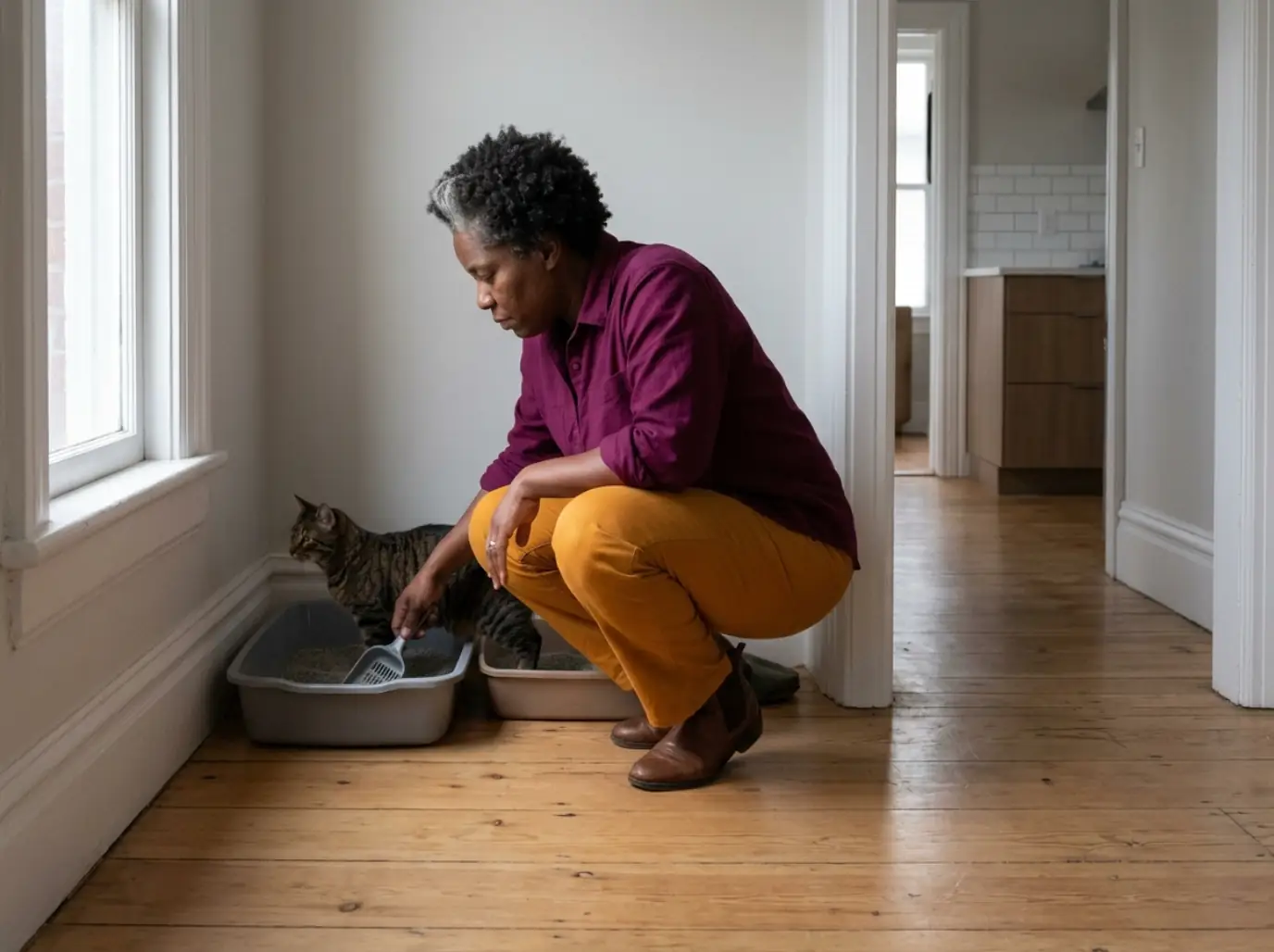
Your cat stepped out of the box and went right beside it, on the floor you clean, in the room you sit in. He is not being difficult and he is not making a point about the new job or the new sofa. He is reporting that the box crossed a line, and that line is countable.
The honest answer to how often to scoop a litter box is a number, but it is a number that moves depending on how many cats you have and what shape the box is, which is why most of the top results for this question are people in forum threads arguing with each other about it. Here is the baseline, what pushes it higher, where the waste actually goes, and the visible sign that you are already behind.
Quick Answer
Once a day per cat is the floor, not the target. One cat in an open box: once daily works, if it is genuinely daily. Two cats or more: twice daily, and that means each box gets a pass, not one box twice. A covered box pushes a solo cat toward twice daily too.
Once a Day Is the Floor, Not the Target
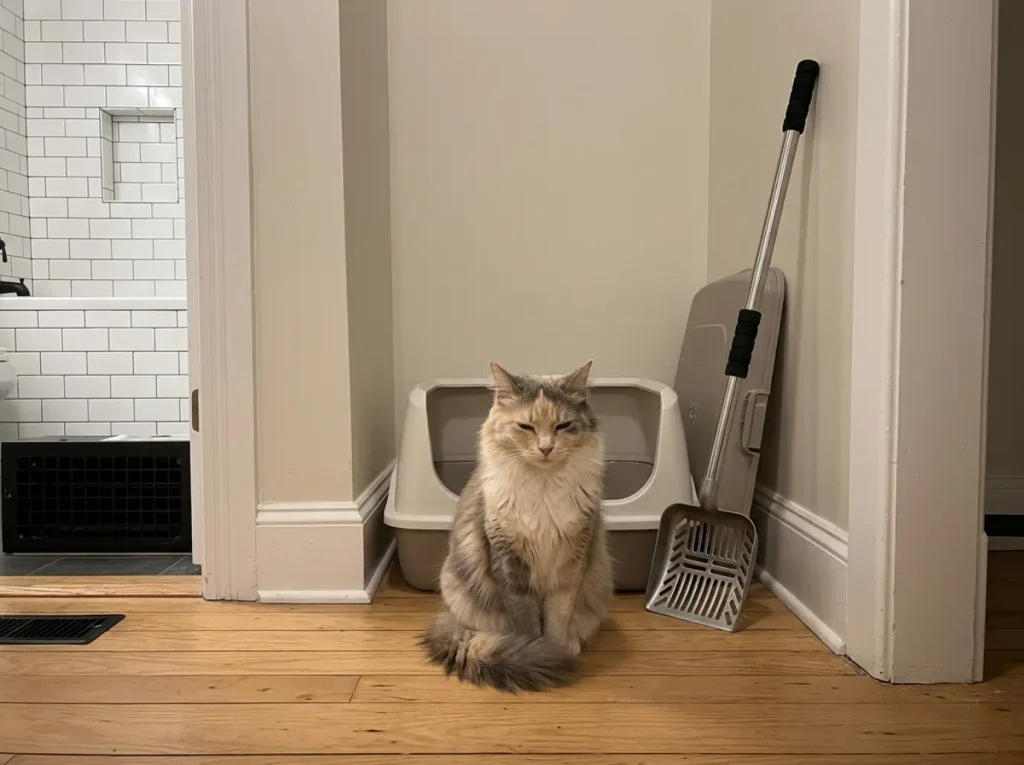
Everybody nods at “scoop daily.” Then they scoop when they notice, which is a completely different schedule wearing the same name. The gap between daily and roughly daily is where the smell lives, and it is also where the cadence question meets where the box sits in the first place — two halves of the same routine, and getting one right does not rescue the other.
What “Once a Day” Actually Has to Mean
One cat, open box, clumping litter: once daily is the minimum. Boxiecat is explicit that it is a floor rather than a goal, and that framing matters more than the number does. A box scooped every morning at eight is on a 24-hour cycle. A box scooped Monday morning and Tuesday evening is on a 36-hour cycle wearing the label of a daily habit, and the cat is standing in the difference.
The trap is that nobody skips a day on purpose. You get home late, the box is in the other room, and the thought arrives at the exact moment you are least willing to act on it. That is not a discipline problem, it is a design problem, and the rest of this article is mostly about fixing the design.
The Depth You Top Back Up To, and Why Clumps Stop Working Below It
Here is the part almost nobody states: scooping removes waste and it also removes litter depth. Every clump you lift takes granules with it. Do that for four or five days without adding any back and the bed drops below the depth where clumps form cleanly, and now the urine reaches the pan floor and welds itself there.
For clumping litter, top back up to 3 to 4 inches every two or three days. Non-clumping litter sits shallower, 1 to 1.5 inches, because it works by absorption rather than by encapsulation and a deep bed just means more litter to throw away. Two different depths for two different litters, and the articles ranking for this question tend to give one number or the other, never both.
Below that 3-inch mark on clumping clay litter, three things go wrong at once. The clump touches the pan and sticks. The scoop breaks it lifting it. And the fragment that stays behind keeps releasing what the clump was supposed to hold, which is why ammonia starts building about thirty minutes after the pee even in a box you swear you cleaned.
Skipping a day does not only cost you a smell today. Broken clumps push odor back into the bed and force an earlier full change, so the bag runs out sooner. Skipping costs money.
Where the Scoop Lives, and Why That Decides Whether You Do It
Before you buy anything: go get the scoop you already own out of the cabinet under the sink and put it beside the box. That is the whole fix, it takes ten seconds, and long-time owners in litter threads keep crediting that one placement change with restoring a daily habit they had lost for months. A scoop stored away turns a thirty-second job into a small errand, and small errands are exactly what “I’ll do it later” is made of.
If the friction is bending rather than fetching, the Yangbaga Metal Cat Litter Scoop has a detachable handle that runs from 16.4 to 32.8 inches, so you can sift standing up instead of crouching over the pan twice a day. The slotted stainless head sifts rather than dumping, and it does not hold onto damp litter the way a plastic one does. The limitation is real though: a long handle is clumsy in a tight corner or inside a cabinet, and if your box lives in a narrow spot you will end up collapsing the handle every time, which puts you right back where you started.
Tie the scoop pass to something you already do at a fixed point in the day: the coffee, letting the blinds up, brushing your teeth before bed. A routine anchored to a clock drifts by fifteen minutes a day until it has moved into tomorrow. A routine anchored to another habit does not, because the habit drags it along.
Two Cats Doesn’t Mean Twice. It Means Every Box, Twice.
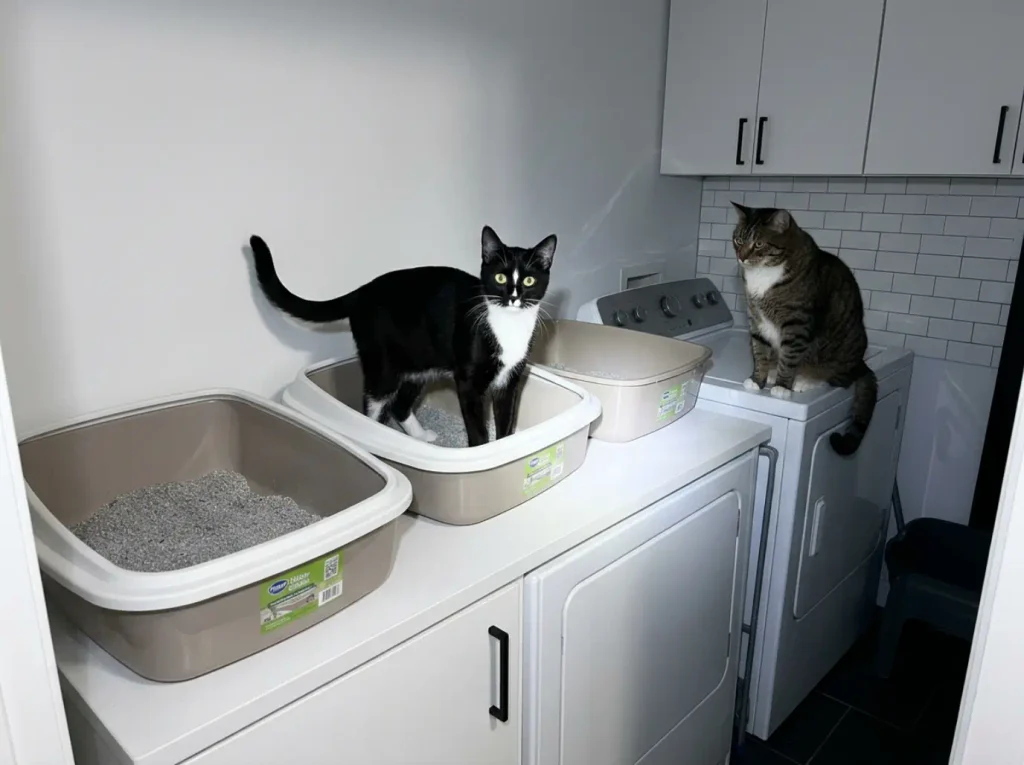
Two cats or more, twice daily. Every source agrees on that number, and every source stops there, which is where the arithmetic quietly breaks.
Why the Number Scales With Boxes, Not With Cats
The 1+1 rule says one box per cat plus one spare, so two cats want three boxes and three cats want four. Now run twice daily against that. Three cats is not two passes a day. It is eight — four boxes, morning and night, each one checked on its own.
Adding boxes does not reduce the work. It spreads it, which is genuinely better for the cats and completely neutral for your evening. Nobody says this out loud, and it is the single most useful number in this article, because it is the one that tells you whether the setup you are planning is a setup you can actually run.
The Routine You Built for One Cat, Still Running
The most common version of this is not neglect. It is a household that got a second cat and kept the routine from when there was one, because nothing announced that the routine needed to change.
The cat count doubled. The box count maybe went to two. The scooping stayed exactly where it was.
Then comes the complaint that the box “never looks clean no matter what litter I buy,” and three bags of premium clumping litter later it still never looks clean. That is a cadence problem wearing a product costume. Switching brands cannot fix a frequency problem, and the litter aisle will happily sell you four attempts at proving that.
And here is where the human and the cat genuinely disagree. You want one box, because one box is one chore. Your cats want distance between where one of them goes and where the other one goes.
On this one the cat is right, because you are describing a preference and he is describing a constraint. Preferences negotiate. Constraints do not.
The Cat That Quits First, and What That Tells You
In a two-cat home the more fastidious of the pair abandons a shared box first, and quietly. There is no protest and no warning. You just find the evidence beside the box one morning and assume something has gone wrong with the cat.
Nothing has gone wrong with the cat. He used the box for as long as the box was usable and then solved the problem himself, which is what a cat does when the thing you provided stops working. He is the early warning system, not the fault.
If two passes a day across four boxes sounds like something that will not survive the month, that is useful information about the setup, not a verdict on your discipline. Fewer boxes in better places, both cats using them, beats a box count you cannot service.
A Lid Doesn’t Slow the Mess, It Just Hides It From You
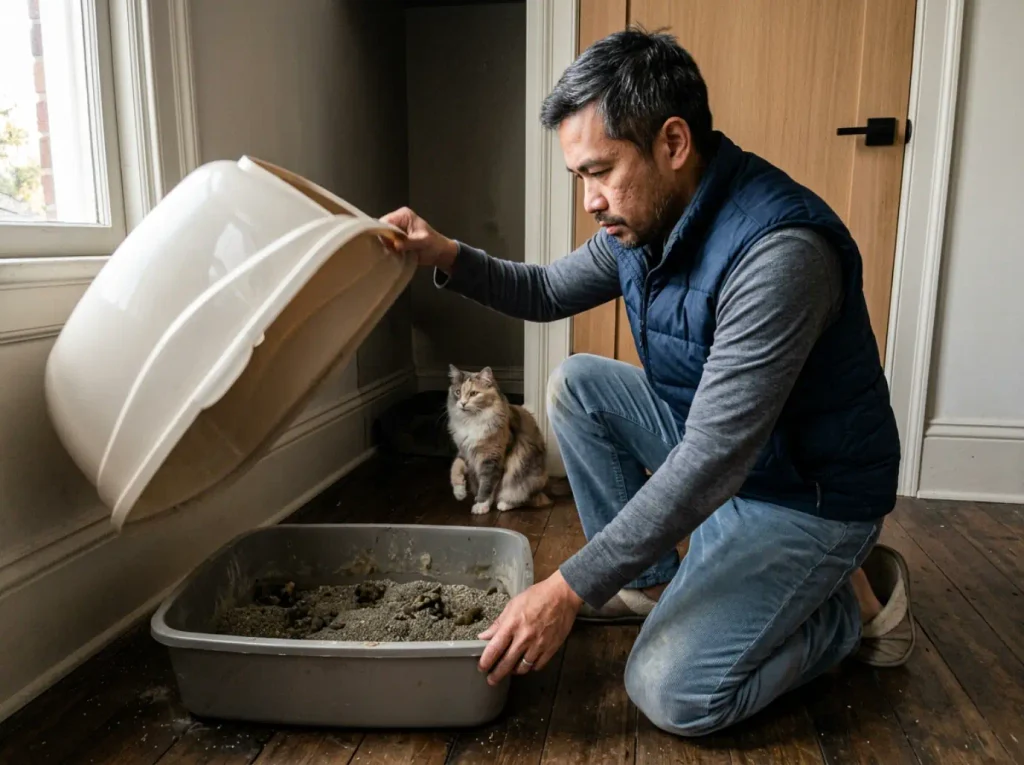
You bought the covered box for the smell. It does work on the smell reaching you, which happens to be the exact signal that used to tell you it was time to scoop.
What the Lid Actually Contains, and What It Doesn’t
Pam Johnson-Bennett, a certified cat behaviorist, puts it plainly: a covered box “may not get scooped often enough,” because you cannot see the waste without lifting the lid. Out of sight, out of mind, except the mess is still fully in sight of the animal standing in it.
The lid is sold as odor control and it is not. The odor does not leave under a lid. It concentrates in a small enclosed volume at cat-nose height, in the one place the cat has to stand still and do something that takes a minute.
You solved your problem and made his worse, and he has no way to tell you that except by going somewhere else. If reading that makes you question the box rather than the schedule, that is a fair reaction, and the covered-versus-open decision, by the numbers is a bigger argument than this article needs to relitigate.
The Number for a Covered Box With One Cat
So a single cat in a covered litter box lands closer to twice daily than once, on design alone. Not because the cat produces more, but because the box removed the feedback loop that made once daily reliable in the first place.
That is the practical rule, and it is the connection none of the articles ranking for this keyword make. They give you a frequency for cats and a separate section on box types, and never notice the two are the same variable. An open box tells you it needs scooping. A covered box requires you to remember, and memory is worse than a visual cue every single time.
Two Cats and One Doorway
Add a second cat and the lid stops being only an odor problem. One entrance and one exit means a covered box can turn into an ambush spot for the cat who goes second, and a cat who gets cornered in there once will pick a different spot in the apartment rather than risk it twice. That decision is permanent long before you notice it was made.
Furniture enclosures push this one layer further. They hide the box from the room entirely, so “did I scoop today” becomes a question you cannot answer without opening a door and looking — and you will not open the door, because the whole point of the enclosure was not having to. An enclosure hides the box from the room, not the smell from the cat, and the ventilation and clearance rules that make one workable are their own conversation.
Where the Waste Goes Decides Whether You Scoop at All
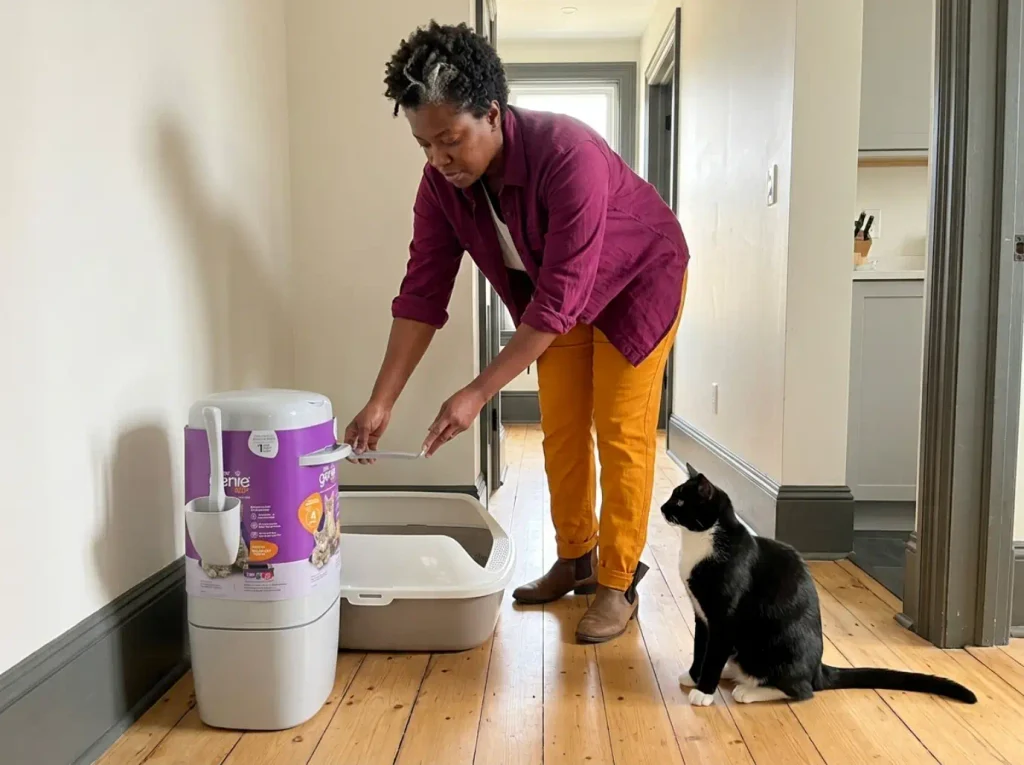
The scoop takes thirty seconds. The walk to the chute takes four minutes and requires shoes. That asymmetry is the entire reason a day gets skipped, and nobody writing about scoop frequency has noticed it.
The Distance Between the Box and the Bin
In a house, disposal is invisible. There is a garage bin ten feet from the back door and the question never comes up. In an apartment the nearest trash is down a hallway, on another floor, or through a building door that locks behind you, and now the thirty-second job has a four-minute tail attached to it.
That is the real bottleneck, and it explains something that otherwise looks like laziness: people who genuinely intend to scoop twice a day end up scooping once, because they are not budgeting for the scoop, they are budgeting for the trip. In an apartment the box, the litter and the bin all have to fit in the same square meter, or the routine loses to the building’s floor plan.
The free version first, and it works: any lidded container that seals, kept beside the box, emptied on a trip you were already making. A coffee tin, a small bin with a foot pedal, whatever is already in the cabinet. No spend required. What you must not do is scoop into the open kitchen trash, because that reopens the room’s air twice a day and is why some people who scoop faithfully still have a smell complaint they cannot explain.
What a Sealed Pail Actually Solves
If the lidded tin is not sealing well enough, or you are on four boxes and the tin is a joke, a purpose-built pail is the upgrade. The Litter Genie XL+ Pail with 24 ft Jumbo Refill uses a multi-layer odor-locking bag behind a trap door, so waste goes in without the room getting a vote, and the jumbo refill is sized for multi-cat volume rather than needing a cartridge change every ten days. For one cat, the Litter Genie Standard Pail is the same sealed mechanism at lower capacity.
The caveat matters more than the pitch. A pail buys you slack on disposal, not on cadence. It does not let you scoop less often, and if you treat it as permission to skip a day you have spent money to make the box worse. The refill cartridges are also an ongoing cost that reviews tend to mention only after the first one runs out.
One more note, and it gets one sentence because that is all this article is qualified to give it: same-day scooping is also the toxoplasmosis margin, since oocysts need roughly one to five days after being shed to become infectious, so anyone pregnant or immunocompromised should raise litter box duties with their own doctor rather than with a blog.
Whatever the waste goes into, it lives within arm’s reach of the box. Every step between the box and the container is a step you will eventually decide not to take, and you will decide it on the night you are most tired, which is also the night the box most needs you.
The Countable Sign You’re Already Behind
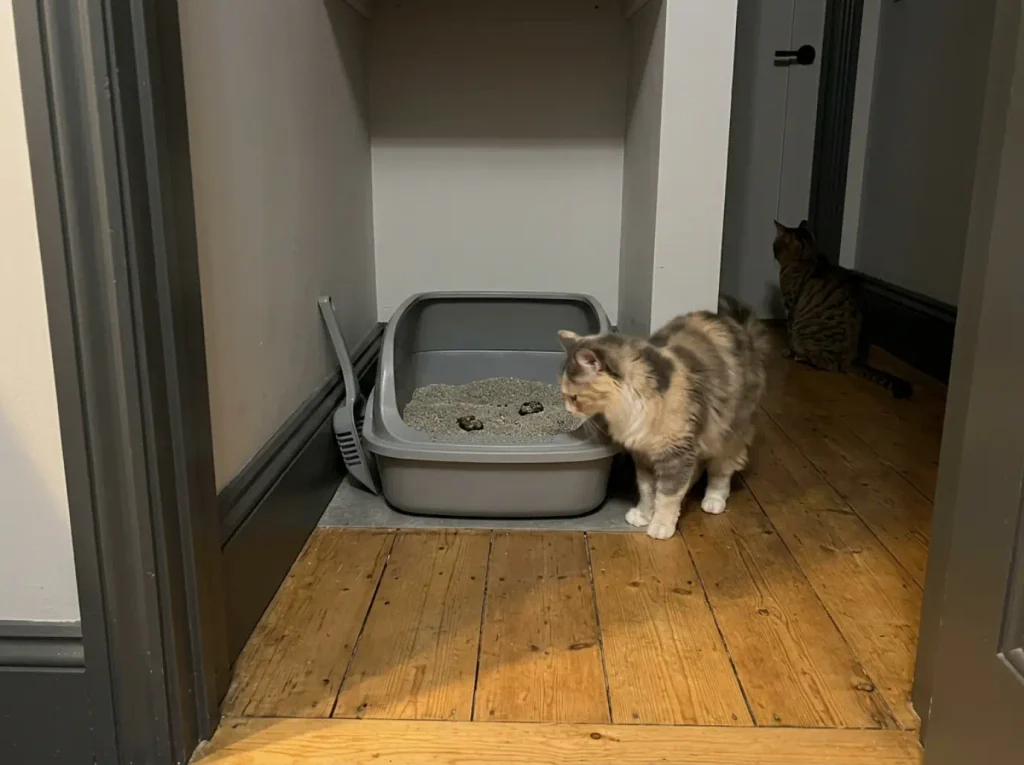
Smell is a late signal. By the time the room tells you, the cat has known for hours and may have already made other arrangements. You want something you can check in two seconds from the doorway.
Two Clumps, and What Happens at Three
Here is the number nobody publishes: more than roughly two stray clumps sitting in the box is where a fastidious cat starts eliminating outside the box instead of in it. It shows up consistently across long-time-owner threads, always in the same shape, and it is the closest thing this question has to a hard trigger.
What makes it useful is that it is a threshold rather than a stopwatch. A schedule assumes your days repeat. They do not.
But two clumps is two clumps whether it is Tuesday or a holiday, whether the cat had a quiet day or an eventful one, and it self-corrects for the big cat who fills a scoop in one go and the small one who does not. Count, then decide.
Check the box from the doorway, not from beside it. If you can count clumps at a glance from three steps away, the box is telling you it is behind before the room does, and that is several hours of warning you would not otherwise get.
When the Litter, Not the Schedule, Is the Problem
The other tells are visual and slower. Litter going gray and sticky throughout rather than in patches means the bed is spent. Clumps that fall apart when the scoop lifts them mean the same thing.
Neither is telling you to buy a better brand. They are telling you the bed is past its useful life and needs replacing, which is a different job on a different clock.
And a box that gets scooped genuinely daily and still fails is almost never a litter problem. What you are looking at is litter box aversion, and it has three usual causes that have nothing to do with the brand on the bag.
Run three checks before you buy anything: depth (are you at 3 to 4 inches, or have you scooped your way down to two?), litter box size (can he turn around without touching a wall?), and box count (one per cat plus one?). Cadence is one of five variables that decide whether a box smells, and it is worth seeing the full picture before spending anything.
What This Article Deliberately Doesn’t Cover
A full litter change — the box emptied, washed and refilled — runs on a separate clock, roughly two to six weeks depending on litter and cat count, and it is not this article’s job. Litter box maintenance is two chores, not one. They share a piece of furniture and nothing else.
If you have read this far and concluded the habit is not going to hold, that is worth taking seriously rather than pushing through. A self-cleaning box solves cadence and only cadence — it does not solve box count, box size, placement or litter depth, and it introduces a cycle noise you will hear from the bedroom in a small apartment. It is a real answer to one specific failure, and it is the wrong answer to the other four.
Conclusion
One cat, open box: once a day, and genuinely daily rather than roughly daily. Two cats or more: twice a day, with every box getting its own pass, which on four boxes is eight passes and not two.
A lid or an enclosure raises the number even for a single cat, because it takes away your reminder without taking away the mess. And two clumps is the line. Past that, the cat has already made his decision and you are reading about it afterward.
Check back in three weeks, and check yourself rather than the box. Three weeks is where a new routine either holds or quietly reverts to the old one, and the box will tell you which happened before you notice you stopped.
Tonight, move the scoop to beside the box and add one evening pass. If the complaint goes away inside a week, you just learned the problem was never the litter you were about to replace.
Amazon’s Audible — free for 30 days
Your cat won’t let you read. Let someone read to you.
Audible is Amazon’s audiobook library — thousands of titles, read out loud, on your phone. Free for a month, plus one audiobook to keep forever.
Frequently Asked Questions
01What happens if you don’t scoop a litter box?
The cat starts going beside the box, usually once more than about two clumps are sitting in there. The second cost is slower to notice: urine clumps break apart and push trapped odor back into the litter, so the whole bed needs replacing sooner than it otherwise would.
02Is it okay to clean a litter box once a week?
No, and the cat will tell you long before the week is out. Weekly is closer to the cadence for emptying and washing the box, which is a different job from the daily scoop and runs on its own clock of roughly two to six weeks.
03How long does a 20 pound bag of cat litter last?
For one cat scooped daily, most of a month. For two cats it is closer to two weeks. Skipping scoop days shortens it in both cases, because clumping litter breaks down faster once clumps are left sitting in the bed.
04Are cats happier with a clean litter box?
Cats are more willing to use one, which is the part you can actually measure. A cat that starts eliminating just outside a box he used fine last month is almost always reporting a maintenance change rather than a mood.
05Do I need to scoop more often with a covered box?
Usually yes, even with one cat. The lid hides the waste from you without removing it from the cat, so the visual cue that used to prompt the scoop is gone while the odor sits right where the cat’s nose is.

Leave a comment