Covered vs Uncovered Litter Box, by the Numbers
The covered vs uncovered study used a 32.5-inch box. Your "large" is just 19.5 + the 1.5x sizing rule that decides which one your cat gets.

Alfredo RamsesFounder · August 24, 2026 · 18 min read

On this page9 sections
- 1What the 2013 Study Actually Measured
- 2The Size Math Nobody Runs
- 3The Four Conditions the Study Quietly Assumed
- 4Why the Lid Fails When It Fails
- 5What the Open Box Costs You, Honestly
- 6One Cat and Several Cats Are Not the Same Question
- 7The Two-Week Test That Settles It for Your Cat
- 8Conclusion
- 9Frequently Asked Questions
Every site telling you that science settled this is citing the same paper, and none of them mention that the cats in it were using a box the size of a large storage tote. Yours almost certainly isn’t. The study is real, it’s still the only one of its kind on this question, and the interesting numbers in it are not the percentages everybody quotes but the box dimensions buried in the method section. Here’s what the researchers actually measured, the four conditions their result quietly assumed, how the box size in your apartment compares, and a fourteen-day test that answers the covered vs uncovered litter box question for your cat instead of for twenty-seven cats in a research colony.
Quick Answer
Most cats show no strong preference between a covered and an uncovered box. But that finding came from a box roughly twice the volume of what stores sell as large, scooped every single day, with each cat tested alone. Miss any of those three conditions and the lid starts costing the cat something. Measure the box you own before you trust the study.
What the 2013 Study Actually Measured
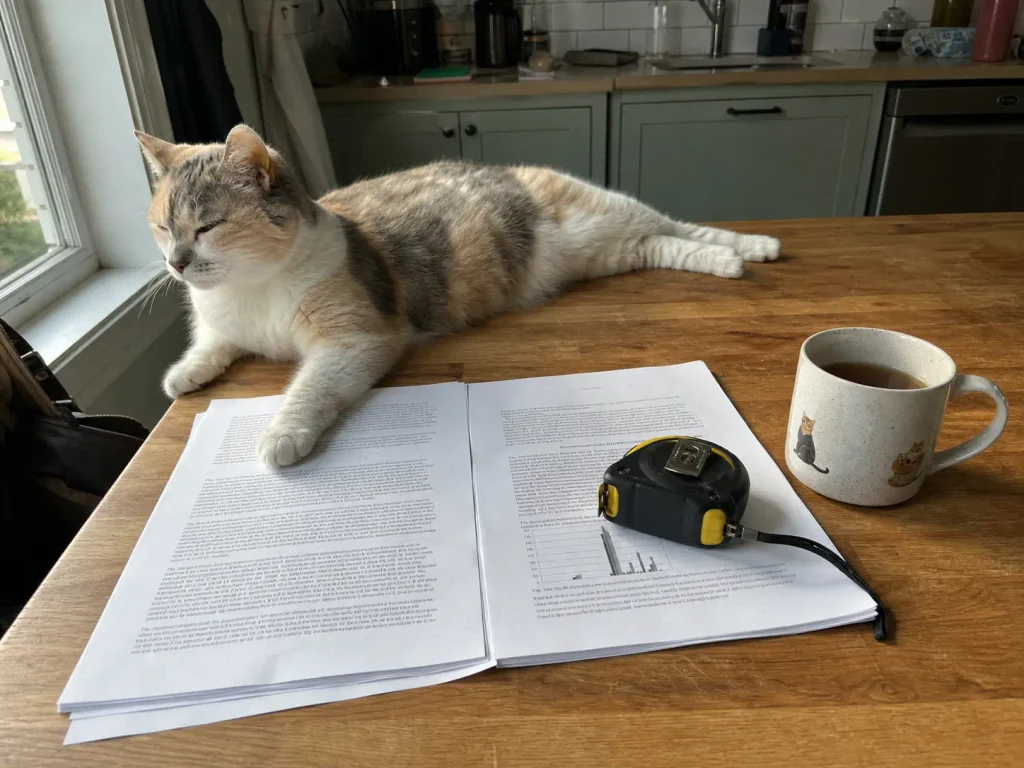
You have probably read “science says cats don’t care” on six different sites this week. All six are citing one paper, from 2013, and not one of them told you that litter box study ran for fourteen days with twenty-seven cats. That’s the entire evidence base for the most confident sentence in this corner of the internet.
The study is Grigg and colleagues, published in the Journal of Feline Medicine and Surgery. Twenty-seven healthy cats got a hooded litter box and an open litter box placed side by side in the same room, same litter in both, and the researchers recorded which one each cat used across two weeks. The headline result is the one that traveled: no statistically significant preference at the group level. Roughly 70% of the cats used both about equally.
The part that makes it a good study rather than a survey is the swap. On day eight, the researchers moved the boxes, putting the covered one where the uncovered one had been. That single step is what separates a real preference from a cat who simply likes that corner of the room, and it is exactly the step missing from every home comparison anybody has ever run. If you put two boxes down and never move them, you have measured the floor plan.
And then there’s the number that didn’t travel. Eight of those twenty-seven cats did show a clear individual litter box preference: four for covered, four for open. That’s close to one cat in three with an actual opinion, which is not a rounding error and is not what “cats don’t care” implies.
“Seventy percent don’t care” spread because it’s the most quotable sentence in the paper. It’s also a population number, and you do not own a population. You own a specific cat with a specific set of feelings about a specific box.
That distinction sits inside a bigger framework, and if you’re picking a box from scratch rather than second-guessing one you already own, how to choose a litter box by size, sides and entry covers the ground this article assumes you’ve already crossed. For the version of this argument written by a behaviorist rather than a blogger, the breakdown of what the study did and did not show is worth the ten minutes.
If you only read one number out of that paper, read the box dimensions in the method section, not the percentage in the abstract. The dimensions tell you whether the result applies to your house. The percentage tells you nothing about your cat.
The Size Math Nobody Runs
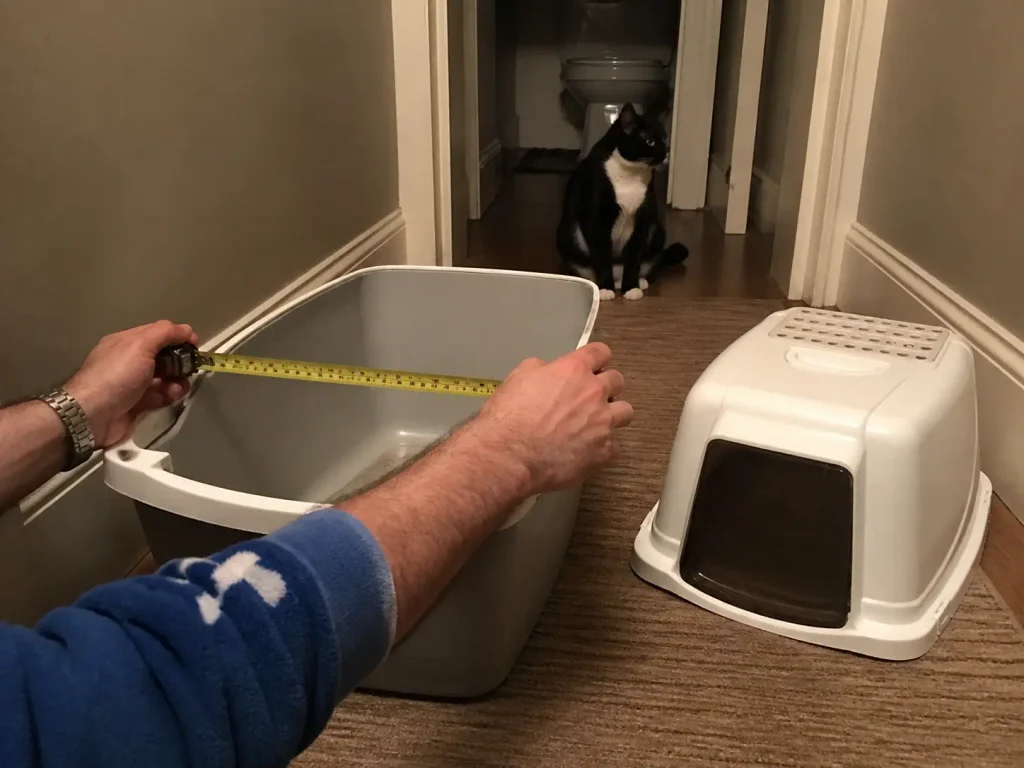
Here’s where the whole thing turns. You bought the box labeled large, and you reasonably assumed that was the same category of object the researchers used. It’s about half of it.
The study didn’t use retail boxes at all. The researchers built theirs out of modified plastic storage tubs measuring 82.5 by 50.2 by 47.3 centimeters, which is 32.5 by 19.75 by roughly 19 inches, with a six-inch entry hole cut into the covered one. That is a large storage-tote footprint. Stand it next to a pet-store box and the comparison stops being close.
A commercial covered box marketed as large commonly runs about 19.5 by 15.25 by 17 inches. Run the volume and it lands near half the study box. Same word on the label, half the room inside.
Now put the veterinary sizing rule next to those two numbers. The 2021 AAHA/AAFP Feline Life Stage Guidelines say a litter box should be at least 1.5 times the cat’s length, measured nose to the base of the tail, tail not included. Call it the 1.5x body length rule, because that is how it gets repeated.
Their own guideline text notes that most manufactured boxes don’t clear it. So a cat measuring 16 inches nose to tail base needs 24 inches of interior length, and the retail large gives him 19.5 on the outside, less once you account for wall thickness and the hood’s overhang.
What that does to the finding is the part that matters. The cats voting “I don’t mind the lid” were voting on a lid with room underneath it. They could walk in, turn around, dig, and reposition without touching a wall or the roof.
That is not the vote your cat is being asked to cast. Yours is being asked whether he minds a lid on a box that is already claustrophobic for him, one he can’t turn around in properly, and those are different questions wearing the same wording.
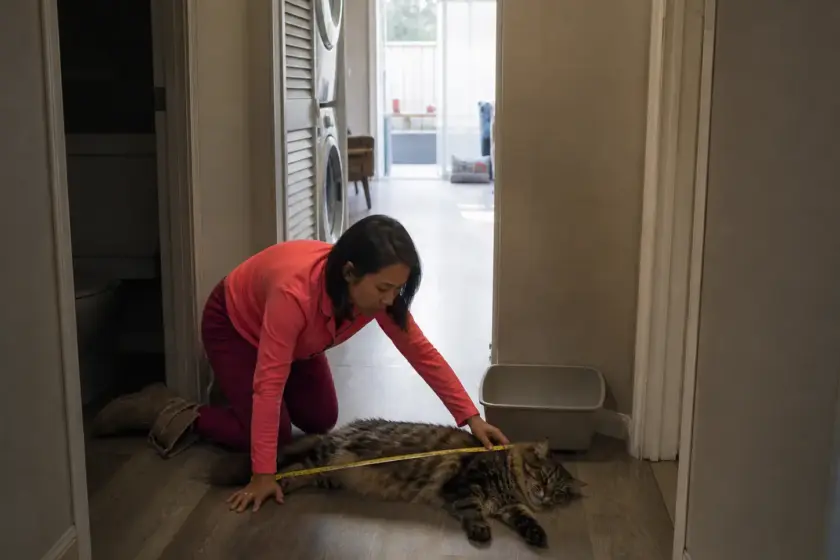
Before you buy anything, go measure. Stretch the cat out, note nose to tail base, multiply by 1.5, then take a tape to the inside of the box you already own. If it already clears, the lid may genuinely not be your problem and you’ve spent nothing finding out. The same rule shows up again in material choice, and whether metal litter boxes actually smell less runs the identical measurement against stainless steel.
If it doesn’t clear and you still want the hood, the thing you’re shopping for is interior volume, not features. The Extra-Large Covered Cat Litter Box with Door, Hooded Enclosed Litter Pan runs 21.75 by 17.75 by 18.125 inches, which puts it meaningfully above the typical retail large and clears 1.5x for a cat up to roughly 14 inches nose to tail base. Honest caveat, and it’s the whole reason this section exists: it is still well short of the study box.
Nothing sold as a household covered box gets you to 32.5 inches. You are choosing the least-compromised option in a compromised category, and a large ginger Maine Coon at full length will run out of box long before the tape measure agrees with the packaging.
The Four Conditions the Study Quietly Assumed
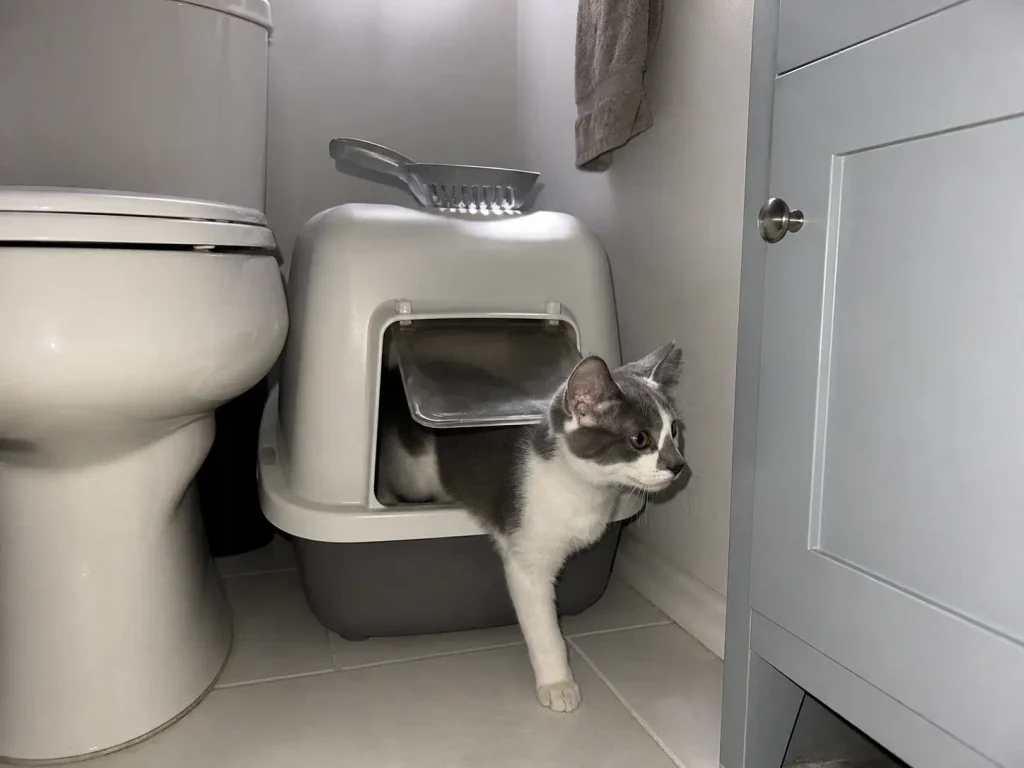
The study isn’t wrong. It’s describing a house, and the house it describes may not be yours. It says so in the paper if you keep reading past the abstract, which is where the four caveats live and where almost nobody goes.
- One, individual preference exists. No group effect is not the same thing as no effect for your cat. Eight of twenty-seven had a clear opinion, and the researchers said so plainly. If yours is one of those eight, the population average is cold comfort.
- Two, the box was oversized. Roughly double the interior volume of a retail large, as above. The result was produced under conditions your box probably doesn’t reproduce.
- Three, every cat was tested alone. Multi-cat households had their cats separated for the trial. No cat in that study ever had to check whether a housemate was waiting outside the opening.
- Four, the boxes were scooped daily. Every day, without fail, for fourteen days. Separate research suggests covered boxes in real homes get scooped closer to once every five days, and the lid is precisely what allows that to happen without anyone noticing.
Three of those four are free to fix, which is the useful thing about the list. Only one of them involves buying anything, and even that one starts with a tape measure rather than a checkout page.
The fourth is the one worth sitting with, because it’s the sneakiest. “Out of sight, out of mind” is how people in litter threads describe it themselves, and it’s not laziness so much as a missing signal.
An open box tells you it needs scooping every time you walk past it. A covered box tells you nothing until it tells you loudly. You didn’t decide to scoop less.
The hood decided for you by removing the reminder, and by the time the smell reaches you at standing height, it has been reaching him at nose height for a couple of days already. If you want the actual clock on that, ammonia starts forming about thirty minutes after the pee, not the following morning.
If you fix exactly one of the four, fix the scoop cadence. It’s free, it’s the condition the study depended on most heavily, and it’s the one the lid actively hides from you. Set a phone alarm for it if you have to. Nobody’s judging.
Why the Lid Fails When It Fails
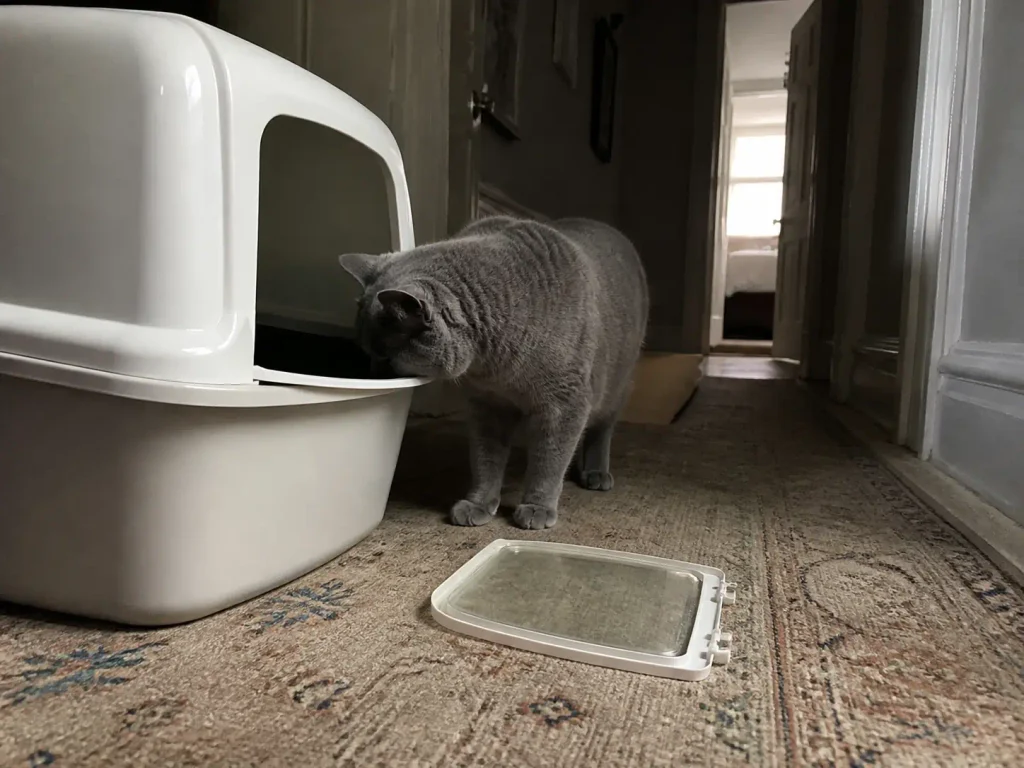
The box looks clean to you. That’s genuinely the problem, and it’s not a figure of speech. It is not clean at the height where he has to put his face, and the gap between those two facts is where covered boxes go wrong.
A hood traps ammonia inside the enclosure and concentrates it at his nose height, which happens to be the one spot in the room where the smell was never bothering you in the first place. The privacy a hood is sold on is real, but it arrives bundled with the air.
The trade is directional, and naming it plainly is the fairest summary of most covered-box purchases: you moved the smell out of your sightline and into his breathing space. He didn’t get a vote on that. The mechanism itself, argued properly with the ventilation physics, lives in which litter box smells the least by design, because that’s a different article’s job. What matters here is what he does about it.
And what he does about it is quiet, which is the second half of the problem.
Nobody watches a cat decide against a box. There’s no protest and no scene. What you see is litter box avoidance showing up as a spot on the rug three weeks later with no obvious cause, and by then the box has been “fine” the entire time, so it never makes your list of suspects. House-soiling almost always gets read as a cat behavior problem when it started as an air problem.
That delay is why the connection gets missed so consistently in the stories people post afterward.
Before you replace anything, take the flap off. The hinged door is the single most-rejected component on a covered box, it usually comes off without tools, and removing it changes the airflow situation immediately. Airflow is the actual variable here, not the lid as an abstract concept. A big hooded box with the flap removed and a small one with the flap on are not the same product, they just get sold under the same category name.
One boundary worth stating and then leaving alone: a cat who suddenly stops using a box he has used reliably for years is telling you something a vet should hear first. Everything in this article assumes that conversation has already happened.
Take the flap off before you take anything else off. It costs nothing, it reverses in ten seconds if you dislike the result, and it’s the single change most likely to fix a covered box a cat has gone lukewarm on.
What the Open Box Costs You, Honestly
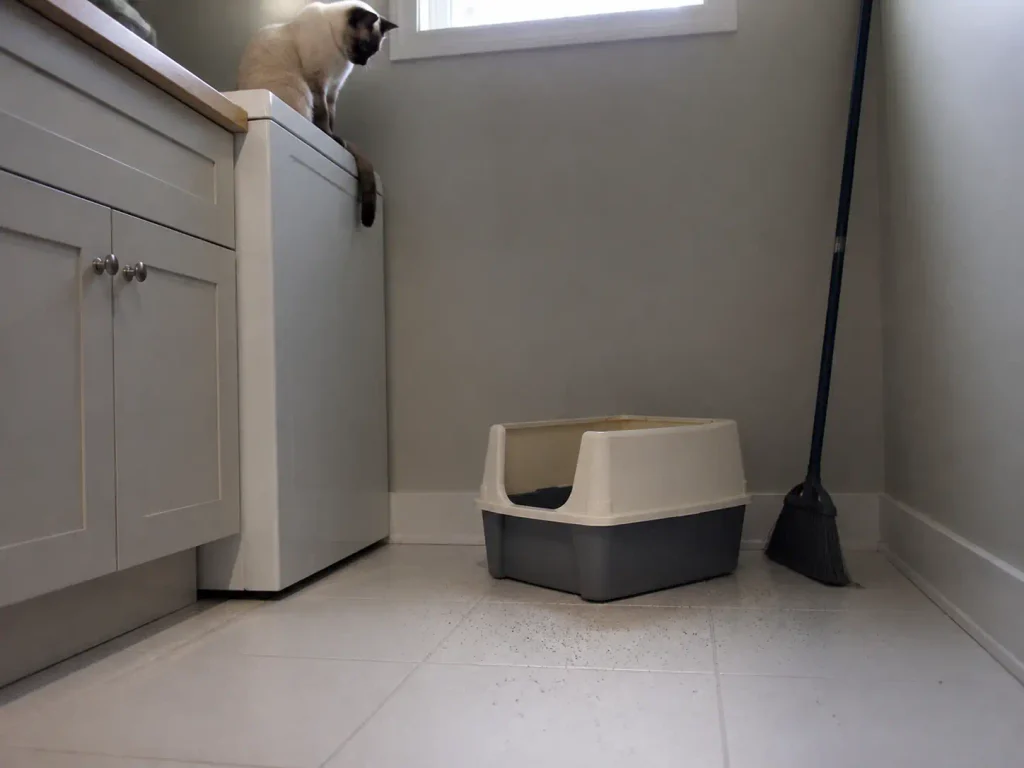
Half the internet says “just use an open box” and then goes quiet about what your living room looks like a month later. That’s not an argument, it’s an omission, and this article’s credibility depends on not making it.
Scatter is real. It is the open box’s genuine, non-negotiable cost, and anyone who tells you otherwise has a different floor than you do. Litter comes out on paws, it comes out on the back-kick after a thorough dig, and it ends up in a halo around the box that a covered box would have caught. High walls cut it down considerably.
They do not eliminate it. The halo just gets smaller and travels less far.
Sightline is a legitimate want too, and pretending it isn’t gets the recommendation wrong. Here’s the practical version of that argument: a box the human resents gets moved, and it gets moved somewhere worse. Usually a closet, or a bathroom with the door mostly shut, both of which are worse for the cat than any lid ever was.
In a small apartment there is often exactly one viable spot, and “put it somewhere quieter” isn’t advice, it’s a description of a house you don’t have. Litter box placement in a one-bathroom rental has one or two legal answers, not twelve.
If the honest alternative is no box in that room at all, a hood that clears the size rule beats a principle. That’s the renter-friendly call, and it’s arithmetic rather than compromise.
The lever that recovers most of the odor containment and the mess without the lid is wall height, not enclosure.
A high-sided open pan catches the back-kick, which is where most of the litter scatter is generated, while leaving the airflow and the sightlines alone. The Amazon Basics Large Cat Litter Box with High Sides runs 19 by 15 by 11.75 inches and is the plain version of that idea, budget-friendly and easy to scoop because you can see the whole surface at once. Say the limitation out loud, though: at 19 inches it does not clear 1.5x for a large cat either. It clears comfortably for a cat around 12 inches nose to tail base and gets tight above that.
One thing worth pairing with an open pan: unscented litter. Without a hood holding the air still, you lose the argument for masking anything, and scented litter in an open box just puts the perfume at nose height instead of the ammonia.
Try raising the walls you already have first. A cardboard or acrylic panel taped along the back and the two sides of your current pan tests the theory for free, and if the scatter drops you’ve learned that height was the variable and you can buy accordingly. If it doesn’t, you’ve saved yourself a box. Wall height trades against entry height in ways that matter for kittens and older cats, and the tracking comparison by wall height works through where that line falls.
One Cat and Several Cats Are Not the Same Question
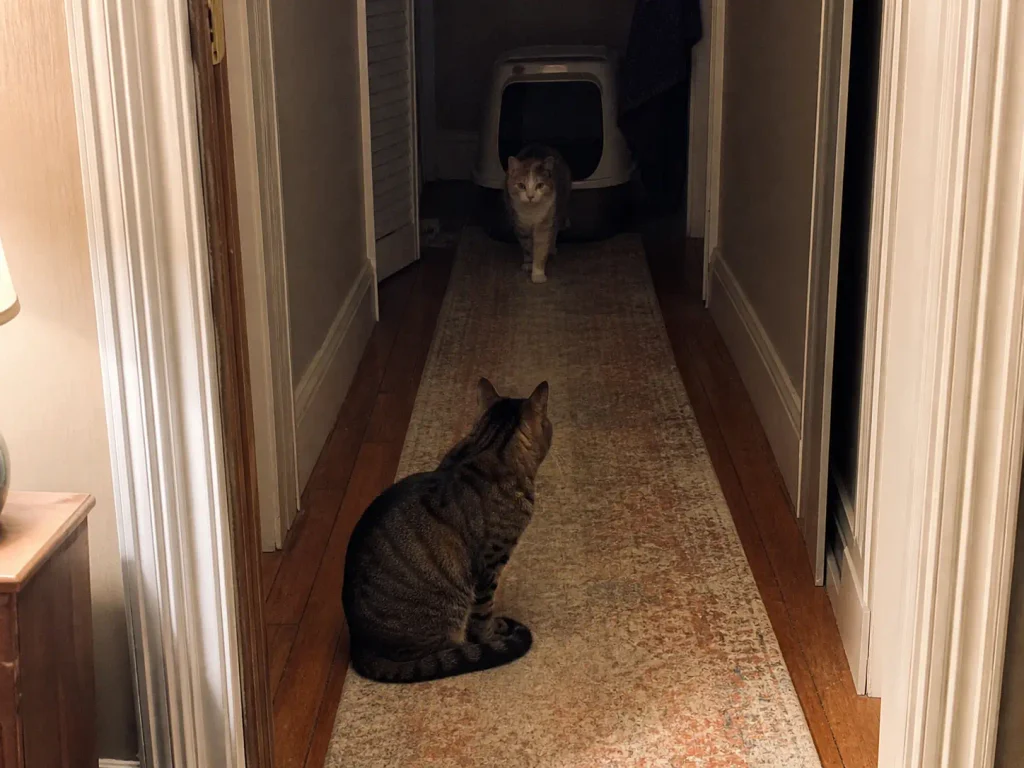
Every article on this topic answers it as though you have one cat. The moment there are two, the lid stops being a style choice and starts being a floor plan decision.
Go back to caveat three, because it’s doing more work than it looks like. Every cat in that study was tested solo, with multi-cat households deliberately separated for the trial. So the “no preference” finding never once faced a house with a second cat in it. That’s not a finding about multi-cat homes being fine.
It’s a limit on what the evidence can tell you, and those two things get confused constantly by people quoting the 70%.
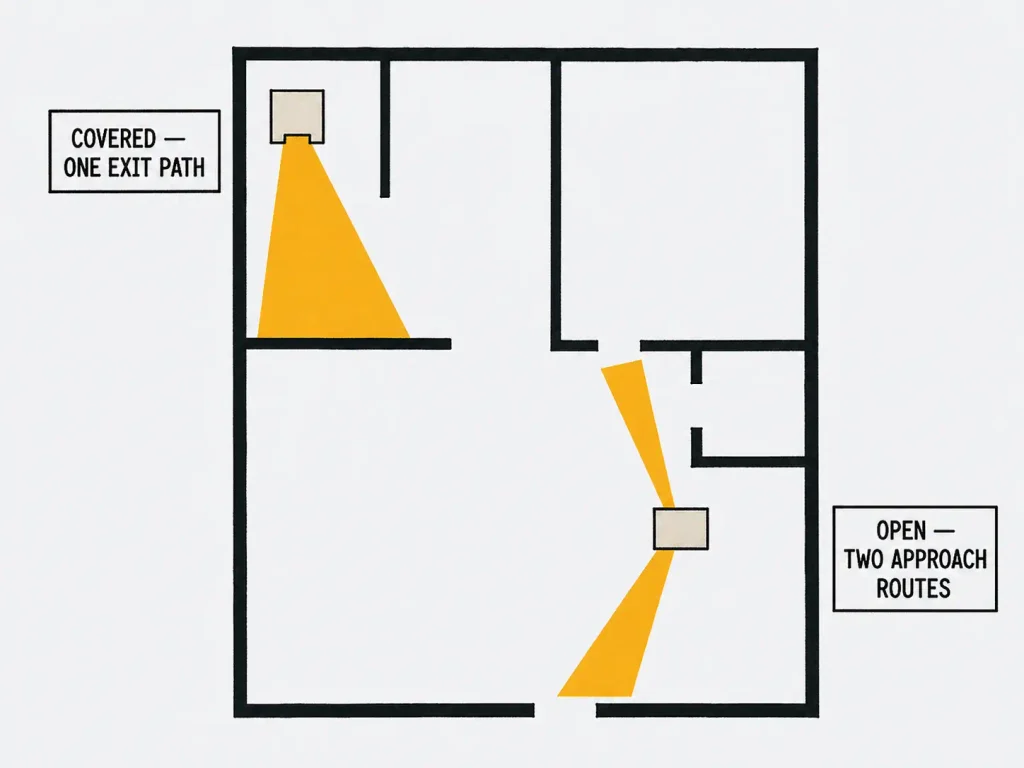
Here’s what the enclosure does structurally. A hood reduces the exit to one opening, and a single opening is a thing that can be guarded. That is the ambush risk, and it doesn’t take hostility to create it.
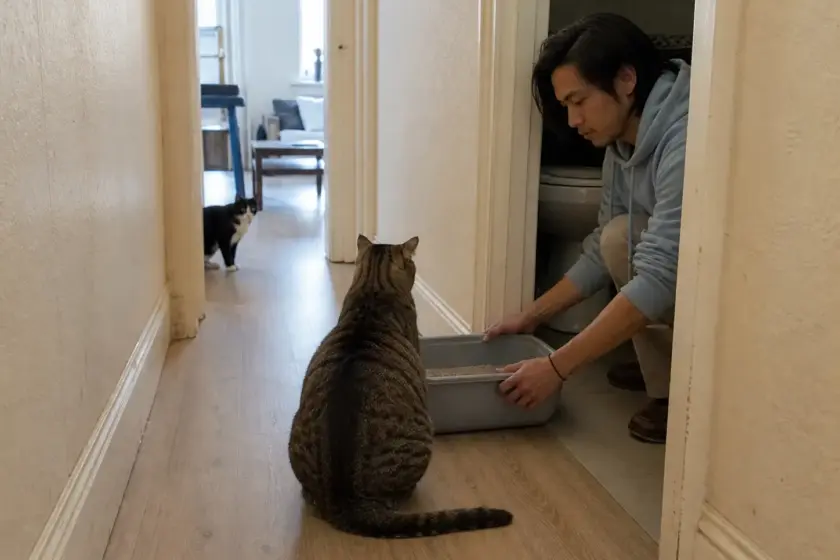
The cat doing the guarding is very often just playing, sitting near the entrance because that’s where the interesting thing is happening, and to the human watching it’s genuinely charming. To the cat inside a box with one way out, in the most vulnerable posture he adopts all day, it reads differently. A top-entry litter box takes the same geometry and concentrates it into a single hole in a roof, which is why it belongs in this conversation rather than a separate one. Why a single exit changes the calculation in a house with more than one cat is worth reading if you have two cats who seem to get along fine, because “seems fine” is exactly the state this problem hides inside.
And the fix is boring, which is why it gets skipped. The n+1 rule — one box per cat, plus one — matters far more in a two-cat house than the lid does. Two cats means three boxes, in separate locations, ideally with more than one route out of each. People skip it because three boxes in an apartment is a real imposition on floor space, and then they spend money on a fancier single box instead of the thing that would have worked.
The failure mode here is the same quiet one as before, only slower. Nobody witnesses the ambush. You find out months later, from a corner of the room, and the box has been “fine” the whole time because the cat who stopped using it never announced the decision.
The Two-Week Test That Settles It for Your Cat
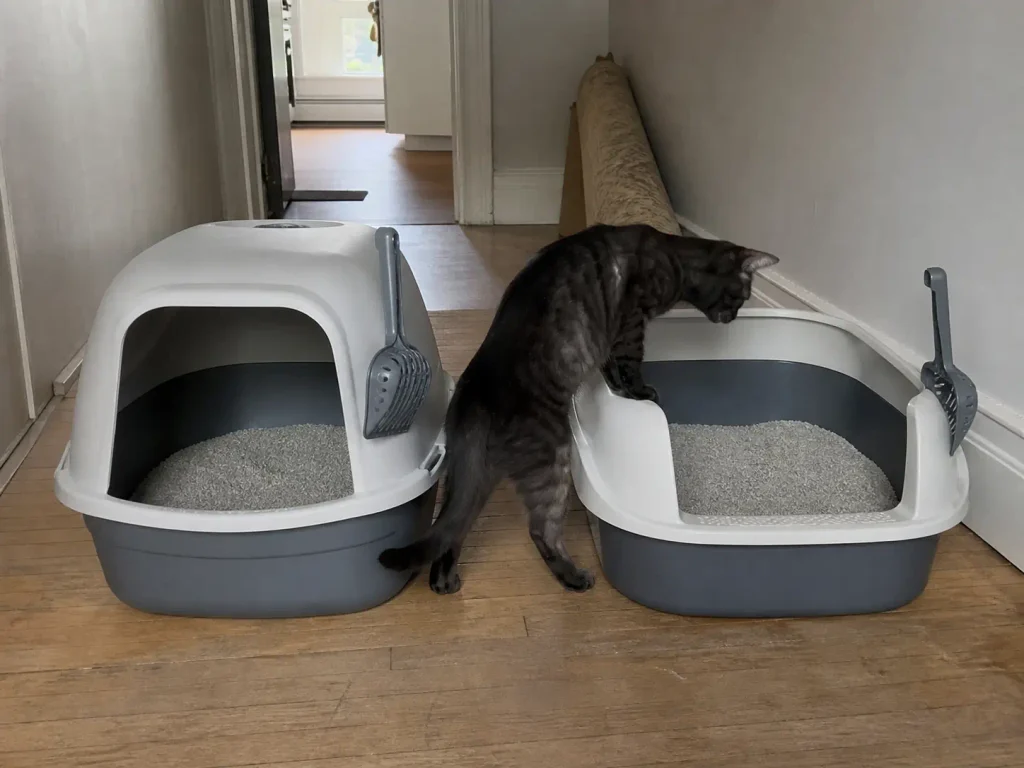
You don’t need to know what twenty-seven cats preferred. You need to know what one cat prefers, and he’ll tell you in fourteen days if you ask the question properly. The method has a name that comes straight out of the behavior world: the litter box cafeteria. Put both options down, change nothing else, and let him vote.
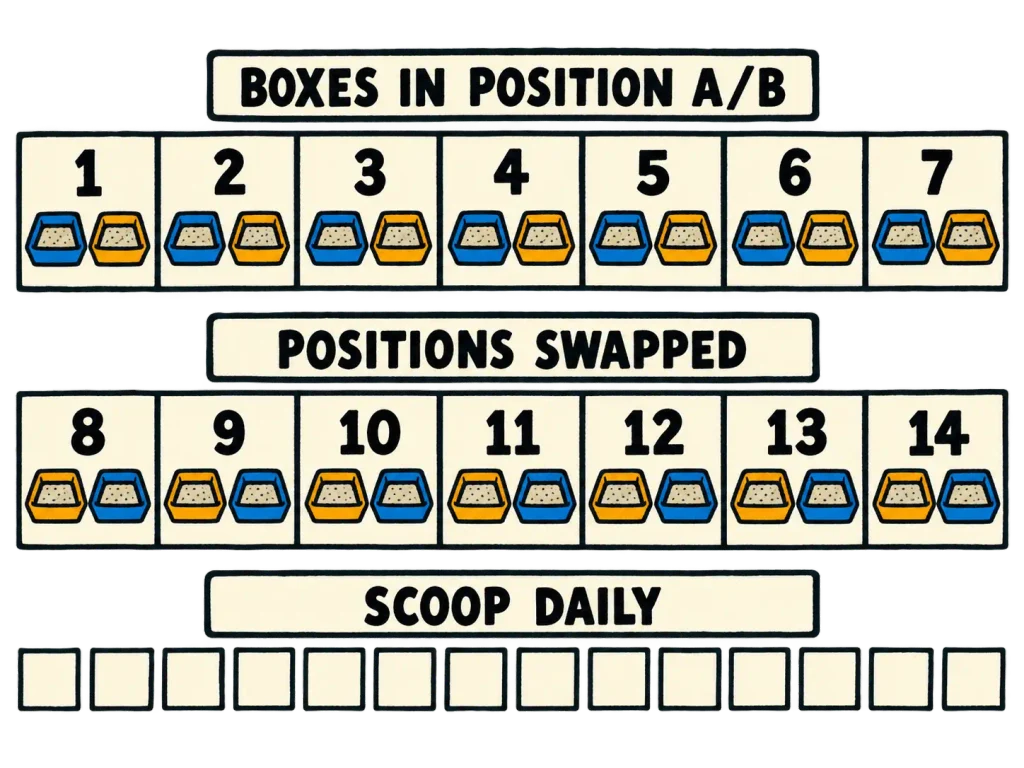
The setup is deliberately unglamorous. Both boxes side by side in the same room, the same litter in both, the same depth in both, both scooped daily. Same litter is non-negotiable and it’s where most home tests fall apart. Two variables means no answer, and if one box has the clumping litter he’s used for years and the other has something new, you’ve tested the litter and learned nothing about the lid.
Then do the thing the researchers did, because it’s the entire test: swap the positions on day eight. Move the covered box to where the open one was and vice versa. If he keeps using the same box after the swap, that’s a preference for the box. If he keeps using the same spot, that’s a preference for the corner of the room, and you were about to buy furniture to solve a geography problem.
Without the swap, the side-by-side test measures the floor plan and nothing else, which is what almost every anecdote online is actually reporting.
What counts as a result: consistent use of one over the other across the second week, after the swap. Not one day. Not a dramatic first afternoon, because a new object in his territory gets investigated on day one regardless of what he thinks of it long-term.
Watch how he approaches, too, not just where he goes. A cat who pauses at the entrance, or who goes in and comes straight back out, is giving you data that use-counts alone will miss.
The cost of all this is one second box, and if you already own two you’re running it for free tonight. Which is the anti-sell version of this entire article: the test that answers the question costs less than the box you were about to buy to guess at it.
The day-eight swap is the whole test. Skip it and you have measured which corner of the room he likes, which you already knew.
Conclusion
Measure the inside of the box you own against 1.5 times your cat’s length. That number decides more about whether he’s happy in there than the presence or absence of a lid does, and it’s the number the study’s own method was quietly resting on.
If you’re keeping the hood, take the flap off and scoop daily. Those two changes, both free, fix most of what the lid costs him and reproduce two of the four conditions that made the “no preference” finding possible in the first place.
With more than one cat, the single exit is a structural risk rather than a preference question, and the calculation stops being close. Three boxes in separate rooms beats one better box, every time.
Check back in three weeks. What you’re looking for is whether he’s walking in without pausing at the entrance, and whether anything has appeared outside the box. Three weeks is long enough for the novelty to wear off and short enough that you haven’t lived with a bad setup for a season.
Start tonight by taking the flap off the box you already own and scooping it every day for two weeks. If that fixes it, you just saved yourself the price of a box and settled the question with evidence from the only cat whose opinion counts.
Amazon’s Audible — free for 30 days
Your cat won’t let you read. Let someone read to you.
Audible is Amazon’s audiobook library — thousands of titles, read out loud, on your phone. Free for a month, plus one audiobook to keep forever.
Frequently Asked Questions
01Do cats prefer covered or uncovered litter boxes?
As a group, most show no strong preference. That finding comes from one study using a box about twice the size of a retail large, scooped daily, with each cat tested alone. About one cat in three did show a clear individual preference, so the group average may not describe yours.
02Why are covered litter boxes bad?
They are not automatically bad. They fail on three specific counts: too small inside, scooped too rarely, and a single exit in a house with other cats. A large covered box, scooped daily, in a single-cat household is a defensible choice.
03Are enclosed litter boxes bad for cats?
The enclosure itself is neutral. What matters is interior room and airflow. A hood concentrates ammonia at the cat’s nose height inside the box, so the scoop interval matters more with a lid on than without one.
04How often should you clean a covered litter box compared with an open one?
Daily either way. The difference is that a lid hides the state of the box from you, so covered boxes drift toward being scooped less often in practice. That drift is the exact condition the no-preference study did not test.
05What is the difference between a covered, an uncovered and an enclosed litter box?
Uncovered is an open pan. Covered is that pan with a removable hood, usually with an optional flap door. Enclosed usually describes furniture built around a box, which raises the same airflow question with a bigger footprint.
Leave a comment