Why Indoor Cats Shed Year Round, and the Season They Lost
Know why your indoor cat sheds year round, what normal looks like instead of two peaks, and when hair is a vet question (+ rental-friendly fixes).

Alfredo RamsesFounder · October 6, 2026 · 18 min read

On this page7 sections
- 1Why Indoor Cats Shed Year Round Starts With Daylight, Not the Calendar
- 2A Steady Trickle Is Normal; These Changes Are a Vet Call
- 3What an Apartment Does to the Daylight Clock, Piece by Piece
- 4What You See Instead of Two Shedding Peaks
- 5Year-Round Hair in a Rental Has No Quiet Month
- 6Stop Waiting for the Season and Set Up the Spot Where He Sleeps
- 7Frequently Asked Questions
You ran the brush through his coat in January, again in July, and once more this month, and it came back full all three times. You read somewhere that cats shed in spring and fall, so you have been waiting for the season to end, and it keeps not ending. Your cat is following the rule his coat has always followed; the rule simply needs a daylight signal that your apartment barely sends.
That gap is why indoor cats shed year round, and the calendar is the wrong instrument for reading it: the coat answers to light and to temperature, which is where VCA Animal Hospitals and Indiana University’s science desk both point. Below you will find what the coat measures, the changes that belong to a vet, what each part of an apartment does to that clock, what shows up in place of two neat peaks, and how a rental lives with hair that never takes a month off.
Quick Answer
Indoor cats shed year round because the signal that times a heavy shed, changing daylight, barely reaches an apartment with lamps and a steady thermostat. So the spring and fall sheds spread into a long, low trickle with softer bumps. Light is the likely main cause, not a proven switch. Bald patches or irritated skin go to a vet.
Why Indoor Cats Shed Year Round Starts With Daylight, Not the Calendar
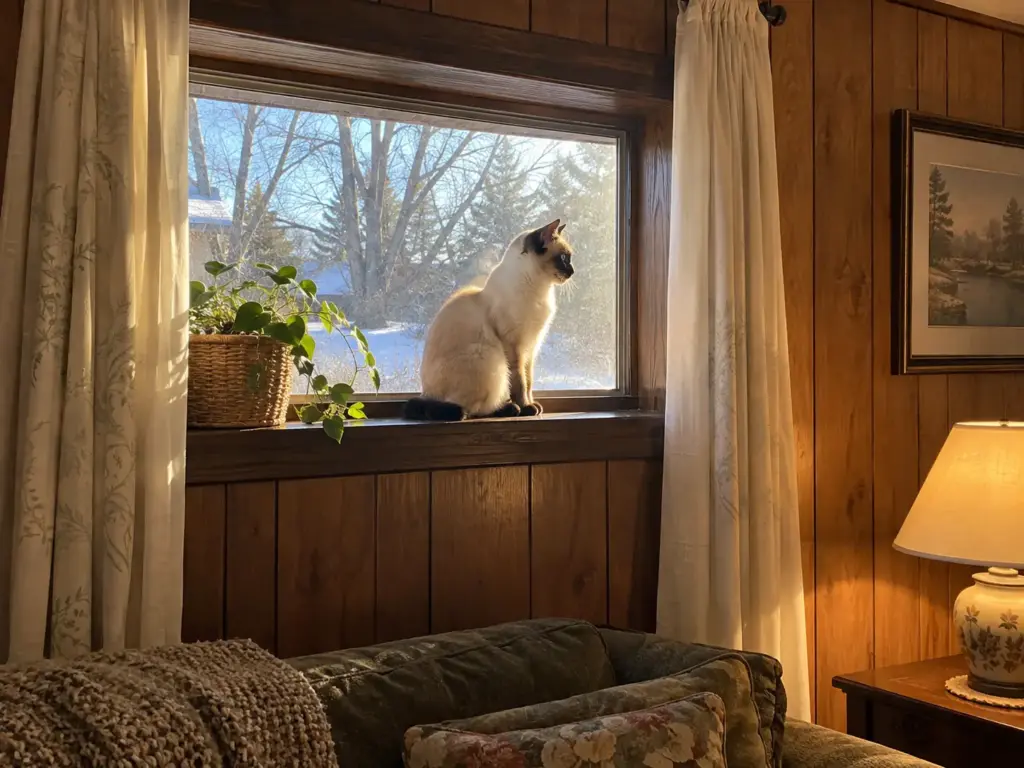
A cat does not know what month it is. What his coat can register is how long the day lasts and how cold the nights get, and an apartment answers both of those questions badly.
What the coat actually listens to
The coat keeps time by the sky. According to Indiana University’s A Moment of Science, “research has shown that the main factor that determines when a cat sheds is the amount of sunlight outside.” The brain passes that reading on to the hair follicles.
As the days get shorter, short, fluffy secondary hairs grow in, the undercoat that holds warmth close to the skin; as the days stretch out again, that undercoat lets go. The longer guard hair on top sheds too, but it is the undercoat of a double coat that fills a brush in spring.
Underneath the seasonal swing there is a quieter process that never stops. Shedding is a natural part of the hair growth cycle, as Cats Protection puts it, so old hairs keep falling out whatever the season. That alone guarantees some hair on the sofa every day of the year, in any home, for any cat.
Indiana’s segment is careful on one point, and it deserves the same care here: light is named as the main factor, not the only one. Genetics, nutrition and the temperature around the cat all have a say. The commenters on an r/answers thread about exactly this question split along the same line, some insisting that day length settles it and others listing temperature, food and stress. Both camps are partly right, and that disagreement comes back later in this article.
Outdoors, that means two big sheds a year
Picture a cat in a cool climate who goes outside. His daylight swings by hours between December and June, and his nights go from cold to mild and back. Both signals point the same way at the same time, so his coat gets a clear order twice a year. VCA Animal Hospitals’ guide to a healthy cat’s coat describes the result: two heavy periods of seasonal shedding, in late spring and late fall, with much of the undercoat coming out in clumps.
One commenter in that r/answers thread described her cat starting to sleep outdoors under the house and turning, in her words, into “a fluffy cotton ball.” A single story proves nothing on its own. But its shape is familiar: once the cat spends his nights where the real temperature and the real dark reach him, his coat starts behaving like the outdoor cat’s.
So the spring-and-fall rule you read is correct, for that cat. For a cat who has never felt a November night on his fur, it describes a timetable his coat was never handed, and expecting it to arrive sets you up to think something is wrong when nothing is.
Indoors, two cues go quiet at once
Cats Protection, the UK cat charity, makes the point in one breath: indoor cats get less of the natural light cycle and less of the seasonal temperature swing, so they tend to shed more steadily through the year instead of in seasons. Notice that it is two cues, not one. That is why the thermostat sits next to the lamps in this article.
VCA, right after describing the outdoor cat’s two heavy sheds, adds: “However, many indoor cats shed at low levels all year-round.” Low and steady is the baseline for a cat who lives inside, not a defect in your cat, and living with that baseline in a rental is what the guide to living with cat shedding in a rented apartment covers from end to end.
Quiet does not mean off, though. The clock inside an indoor cat is blurred, not erased, and that difference decides what you will see on the brush (more on that two sections down).
A Steady Trickle Is Normal; These Changes Are a Vet Call
A cat who leaves roughly the same amount of hair this week as he did last week is doing what an indoor coat does. What turns hair into a question for your vet is a change, not a quantity.
Cats Protection names bald patches or thinning fur, red, irritated or flaky skin (any sign of skin irritation), and excessive grooming or scratching. Add to that list scabs, dandruff, a greasy or smelly coat, a sudden jump in hair from one week to the next, overgrooming or a cat who stops grooming himself, and any shift in appetite, energy or litter box habits. Any of those goes to the vet before anything in this article, and this article does not try to explain them.
The yardstick is your own cat, last week. PDSA, the UK veterinary charity, tells owners to learn what normal looks like for their own animal, which rules out comparing him with a friend’s cat or with a month on the calendar. The full threshold has its own article, when cat shedding is a problem. From here on, the subject is the apartment.
What an Apartment Does to the Daylight Clock, Piece by Piece
Most people have never thought of their home as a clock, but the coat reads one: daylight hours, what biologists call photoperiod. Picture the living room in December: the sun is gone before dinner, the floor lamp goes on around five and stays on until you go to bed near eleven.
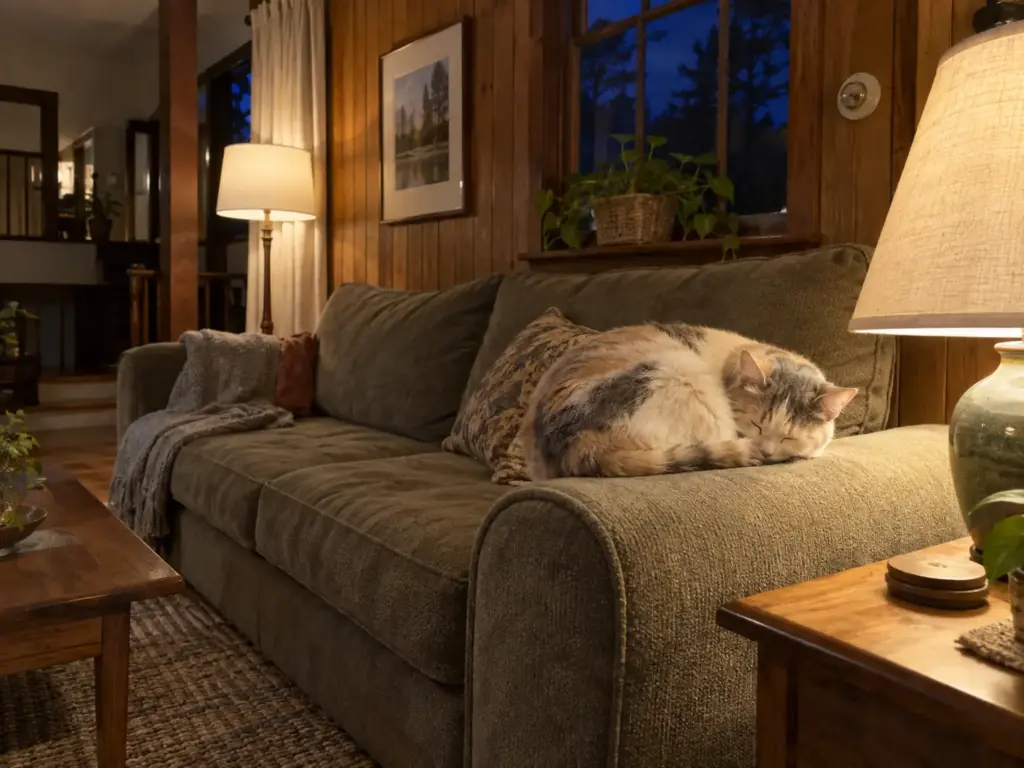
In June the sun is still up at eight, and the same lamp goes off at the same hour. Outside, those two days differ by hours of light. On the sofa, where the cat sleeps, they end up much closer than the sky intended.
Lamps, screens and night lights after dark
A coat that reads day length has no way to tell the sun from a ceiling fixture. Every hour a room stays bright after sunset is, most likely, an hour the coat counts as day. The evening lighting in a typical apartment is not one source but several: the lamp beside the sofa, the TV a few feet from where the cat curls up, a laptop on your knees with the cat pressed against your leg, and the night light in the hallway that keeps the dark from ever being complete.
No study has measured how much each of these adds, or whether a dim night light counts at all. So read this as a description of what is probably happening in your living room, not as a reading on a meter. What can be said with some confidence is the direction: the more of the evening the cat spends in a lit room close to you, the less his December looks like December.
For one week, write down when the first lamp goes on in the room where your cat spends the evening and when the last one goes off. Compare that span with the sunset time on your phone’s weather app. You are not going to change anything; you are finding out how long your cat’s day really is, which explains more about the hair on the sofa than any calendar.
A thermostat that never changes the season
The second cue goes quiet in a less obvious way. In winter the heating holds the living room at one number; in summer the air conditioning holds it at nearly the same number. Holding a controlled temperature is the whole job of that machinery, and it is what takes the second cue away.
The outdoor cat’s coat gets cold nights as a second confirmation that winter is coming. Your cat gets a room that feels like late spring for most of the year.
One owner answering a Quora thread about an indoor cat who never stops shedding put it in plain words: air conditioning in the summer, heaters in the winter and artificial light can confuse the cat’s system into “relatively constant shedding.” That is an owner’s explanation, not a measurement, and it lines up with what Cats Protection says about the two cues.
Steady is a slight exaggeration, though, because an apartment leaks.
The window is the one cue still getting in
A commenter on r/answers made the point that even a fairly consistent indoor temperature is not that consistent: leave a window open and you can tell the next morning that it got cold overnight. The window is where the real season still reaches the cat. A cat who naps on a sunny sill gets a slice of actual daylight, real brightness that rises and fades with the sky, and in winter he feels the cold coming off the glass.
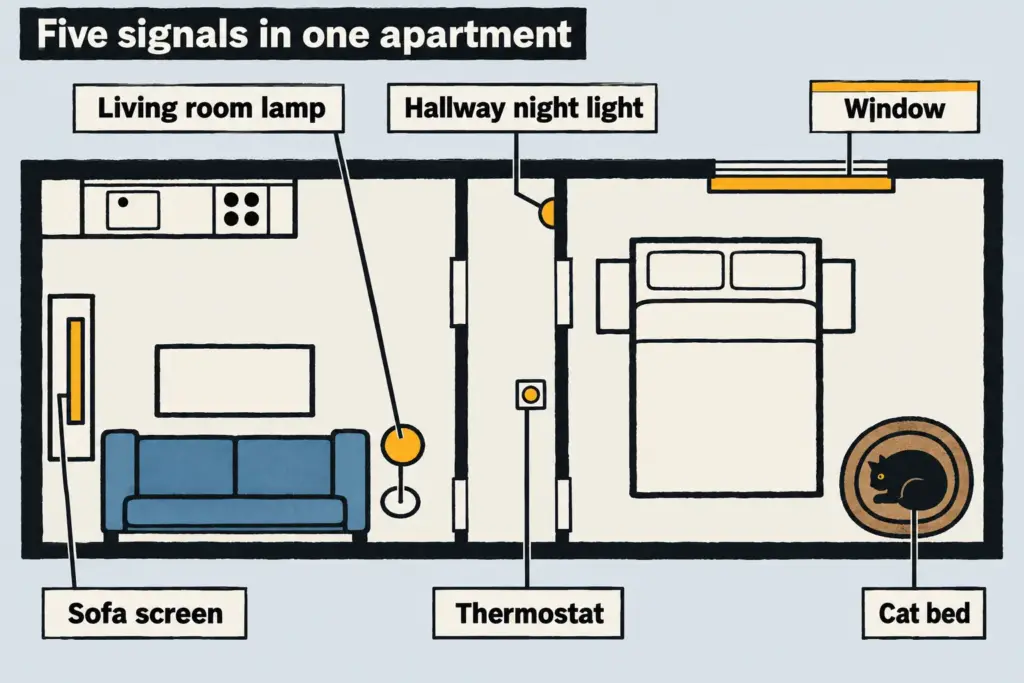
That makes the layout of your home part of the answer. A cat who spends his afternoons on the window perch and one who sleeps in an interior bedroom with the blinds down live in the same apartment on very different amounts of outside. Neither is doing anything wrong; they are reading different clocks.
Summer adds its own twist, with windows open in the evening and the air conditioning running in the afternoon, and the seasonal calendar that comes with it lives in the guide to whether cats shed more in summer.
Why light is a likely cause, not a proven switch
The tempting conclusion goes like this: if evening lamps blur the clock, switch them off at sunset and the cat will get his clean spring shed back. It does not follow, and this article does not suggest it. Light is the lead factor in the explanation vets give, not the only one; genetics, nutrition and temperature are in the same sentence. And a cat who lives with you lives in your evenings, which is part of the deal of living indoors.
The evidence is also thinner than the tidy one-line explanation makes it sound. The sources behind this article describe the mechanism, but none of them cites a cat study that ties daylight to the hair cycle, and none measures what lamps, screens or a thermostat do to it. What veterinary organizations describe is a mechanism that very likely applies, which is a different thing from a dial.
One voter in that r/answers thread asked the right awkward question: what about cats near the equator, where day length barely changes all year? Nobody in the thread had a clean answer. That uncertainty is real, and it is also why a cat who sheds a bit more or a bit less than the next indoor cat is behaving normally.
What You See Instead of Two Shedding Peaks
If two peaks are off the table, the question becomes what the hair actually looks like across a year in your apartment, and how to read it without starting a project.
A long, low trickle with softer bumps
An owner on r/CATHELP described the moment most readers will recognize: in the middle of the year, five strokes of the brush and then, in her words, “boom! it’s full!” She was looking for the shedding season. What she was holding was the trickle.
The expectation the sources back up is steadiness: more consistent shedding through the year rather than seasonal (Cats Protection) and shedding at low levels all year-round (VCA). The picture this article uses, a long, low trickle with softer bumps, is our way of drawing that line, not their wording. Another commenter in the same thread, brushing short-haired cats every day, said the brush seemed to pull out loose hair forever, and wondered whether the brushing was speeding up the turnover.
It is not a pile you can finish. A year-round shedding coat has no bottom to reach, because new hairs keep moving into the falling-out phase behind the ones you just removed. Brushing harder or longer does not end the trickle; it moves it from the sofa into the brush, which is still worth doing.
Winter can still give a small bump
Steady does not mean flat. An admin of a cat owners’ group on Facebook, in March 2025, told members that even strictly indoor cats grow a winter coat, and tied it to the lack of sunlight in winter. A Ragdoll owner in another group described the same thing from the other end: her cat was losing his winter coat, she called it normal, and she kept brushing out chunks of fur.
So the description that fits most indoor cats is a long line with small rises. Some cats show a noticeable bump when the winter coat gives way to the summer coat; others barely wobble. If someone tells you an indoor cat has no seasons at all, they have overcorrected.
Read it off one spot, not off the whole apartment
The hair on the sofa tells you where the cat sleeps. It says very little about how much he sheds, because a cat who moves from the bedroom to the sofa arm in October will look like he doubled his output overnight. To read the coat, read one spot: the same brush, the same patch of coat, a few weeks apart. The weekly version of that reading, with the log, is in how long cat shedding lasts, measured week by week, and there is no need to duplicate it here.
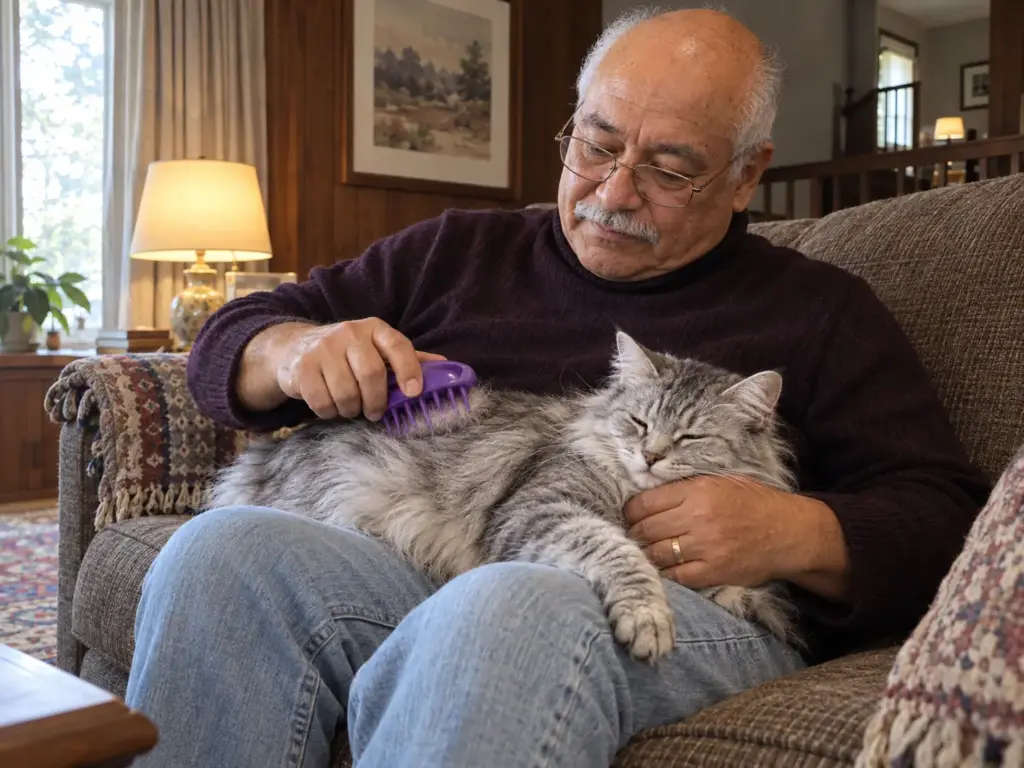
Start with your hands. A slightly damp rubber dish glove, run from the shoulders toward the tail, pulls a surprising amount of loose hair and costs you a glove you probably already own. If you want something that lives where the cat lies, the Cat Brush with Soft Rubber Pins is 8 by 4.5 inches and weighs a couple of ounces, small enough to leave on the sofa arm, and it is washable. Amazon reviewers point out what it does not do: it loosens hair without holding it, so some lands on the cat, the cushion or the bed, and hair packs between the pins (one reviewer resorted to a pencil to clear them).
Which brush suits which coat, long or short, is a different question, and it belongs to how to reduce cat shedding.
Keep the rubber brush on the arm of the sofa where your cat actually lies, not in a drawer. A brush within reach gets used for thirty seconds while he is already settled next to you; a brush in a drawer waits for a grooming session that rarely happens.
Year-Round Hair in a Rental Has No Quiet Month
The sofa belongs to the landlord, the cat belongs to you, and the hair does not wait for spring. One owner on r/CATHELP said she runs a Swiffer over her floors every three to five days, and that rhythm is closer to the truth for an indoor cat than any seasonal deep clean. In a small apartment the hair also has fewer places to settle, so it shows faster. Once you stop waiting for the quiet month, the cleaning turns into a small routine instead of an event.
Free things first
Before buying anything, use what is in the apartment. The damp rubber glove works on upholstery as well as on the cat: a few passes across the sofa cushion and the hair rolls into strips you can pick off. The vacuum you already own, a pet-hair vacuum or an ordinary one, handles the floor and the base of the sofa. And one Quora owner described wiping her cat over with a damp towel after each brushing so the loose hair the brush missed does not end up on the furniture, a small habit that keeps the brushing from just relocating the hair.
If the glove (or a store-bought grooming glove) still leaves you fighting the bedding and the upholstery every few days, a roller earns its place over a disposable lint roller you keep buying refills for. The ChomChom Roller Pet Hair Remover is reusable, with no sticky sheets or refills, about 7.5 inches across, and it pulls hair out of upholstery and bedding into a chamber you empty into the trash. A review summary from iHeartDogs lists its weak points: on some fabrics it pushes hair around instead of collecting it, the release button can get pressed mid-stroke and pop the chamber open, and some owners found it did little on short hair.
Give the damp rubber glove a full week on the sofa before you order a roller. If it lifts what you need from the cushions in a couple of minutes, the roller would only duplicate it. If the hair is woven deep into the fabric and the glove just skims the top, that is the sign a roller will pay off.
A washable layer where the cat actually sleeps
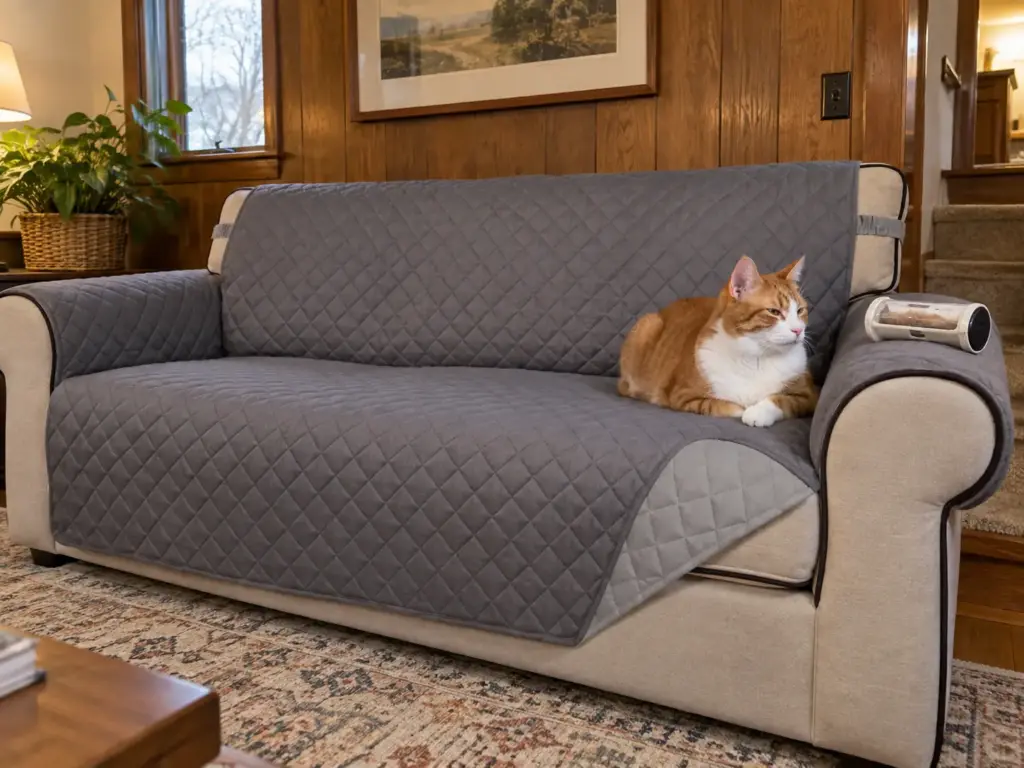
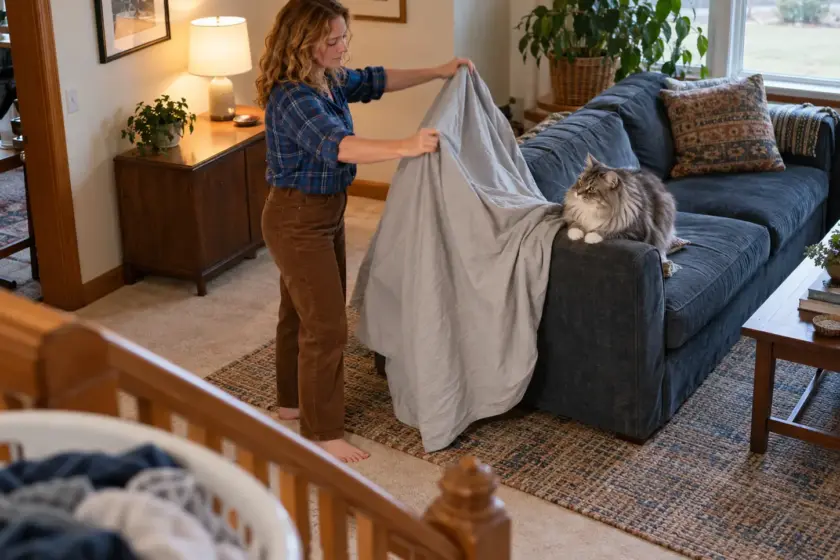
The cat has already chosen his spot, and that is where the hair goes. Instead of fighting it, give the spot a layer that comes off. An old bedsheet or a washable throw, folded where he lies and washed once a week, catches most of what he leaves behind and protects a sofa you will one day hand back to a landlord.
If he sleeps along the whole seat or the sofa gets full use from people too, the PureFit Reversible Quilted Sofa Cover fits sofas up to 66 inches of seat width, is a reversible quilted slipcover, goes in the washing machine at 86°F or below, and holds its place with non-slip foam anchors and elastic straps. Amazon reviewers say it does not stay tucked in however far you push the foam pieces down, and some report it sliding as soon as they sit. For a cat’s sleeping spot that matters less than for a family sofa, but plan on straightening it.
Neither option asks anything of the lease. Nothing gets drilled, nothing gets glued or permanently covered, and both come off in a minute when the landlord visits.
One cat or two, on different cycles
PDSA puts how often a cat sheds down to the individual animal, and a cat show judge answering on Quora went further: many short-haired cats shed copious amounts of fur all year round, and a deep, plush coat will always be that way. In a multi-cat home, then, two cats means two baselines, not one shared shedding rhythm.
Put a long-haired Maine Coon and a short, dense-coated British Shorthair in one apartment and the same brush will not suit both coats, which is the plainest version of the point. Add the window effect from earlier: if one cat owns the sunny sill and the other sleeps in the bedroom, they are on different amounts of outside as well as different coats. Read each cat off his own spot, give each sleeping place its own washable layer, and expect one of them to look like he is shedding more at a time when the other seems to have eased off. Neither one is out of step.
Stop Waiting for the Season and Set Up the Spot Where He Sleeps
Three things to keep:
- Year-round hair is the baseline of an indoor cat, not a fault and not a season that went missing.
- The apartment blurs both cues the coat reads, light and temperature, and the window is the only one that still gets through.
- What you change is the washable layer and the brush within reach, never the cat’s light or his evenings.
In about three weeks, run the same brush over the same patch of coat and compare it with your first reading: if it looks like that week, the routine is holding, and if the hair jumped all at once or a thin patch appeared, that goes to your vet.
Today, fold a sheet you already own on the spot where he sleeps and run a damp rubber glove over the sofa arm next to it. Over the next few days, watch where the hair ends up: on the sheet, where it goes into the wash, or still on the cushion.
Frequently Asked Questions
01Why do indoor cats shed all year?
Indoor cats shed all year because changing daylight and seasonal temperature, the two cues that time a heavy shed, barely reach an apartment with lamps and a thermostat. The big sheds spread into a steady trickle. Light is the likely main cause, not a proven switch.
02What time of year do indoor cats shed the most?
Most sources name spring and fall as the heavy seasons, but an indoor cat usually shows only soft bumps around those months instead of two sharp peaks. The month-by-month calendar is in the guide to whether cats shed more in summer.
03Do indoor cats still get a winter coat?
Many indoor cats still grow a little extra coat in winter, usually linked to the shorter days, and drop it again as the light returns. The bump tends to be softer than an outdoor cat's, which is why indoor shedding has softer rises rather than no seasons at all.
04Can I reduce my cat's shedding?
You cannot switch off normal shedding, but you can cut how much hair ends up in the apartment with a brush within reach and a washable layer where he sleeps. Tools by coat type have their own article on reducing shedding; a sudden change in hair goes to your vet.
05Is it normal for an indoor cat to shed every day?
Yes, a small amount of hair every day is the normal baseline for an indoor cat, because each hair falls out on its own cycle. What is not normal is a change: bald or thin patches, irritated skin or a sudden jump, and those go to your vet.


Leave a comment