Best Easy to Clean Cat Bowl That Won’t Trap Hair or Slime
Don't buy a bowl with a glued rubber ring or an inner sticker. The best easy to clean cat bowl is one smooth piece (steel, glass or glazed ceramic).

Alfredo RamsesFounder · October 6, 2026 · 23 min read


On this page8 sections
- 1A Bowl You Can't Get Clean Is a Design Problem, Not a Scrubbing Problem
- 2The Four Places Dirt Hides in a Bowl, and How to Check Before You Buy
- 3What the Sponge Wants and What the Cat Wants Are Not the Same Bowl
- 4One Pick for Each Cleaning Problem
- 5No Dishwasher, One Small Sink: Making Easy Real in a Rental
- 6The First-Week Test That Tells You If a Bowl Is Easy to Clean
- 7The Bowl Worth Keeping Is the One Your Fingertip Clears
- 8Frequently Asked Questions
You rinse the bowl, it looks spotless, and then your thumb slides under the rim, or across the patch where the label used to sit, and comes back with a faint slick film. Your cat did his part: he pushes wet food out toward the edge and licks the same curve of the bowl at every meal, and the bowl was never shaped for a sponge to follow him there. The best easy to clean cat bowl is not a material with “dishwasher-safe” printed next to it; it is a shape with no seam, no glued ring and no corner a sponge rides over. Below you’ll find where dirt hides in a bowl, what your sponge wants against what your cat wants, one pick for each cleaning problem, and a one-week test that tells you whether you chose right.
Quick Answer
A cat bowl is easy to clean when its design leaves your sponge nothing to skip:
- Choose one smooth piece, with no seams or stands to take apart.
- Skip any rubber or silicone base that is glued on for good.
- Peel the inner sticker before the first meal, or skip bowls with one.
- Look for a rounded inside corner and a wall your sponge clears.
- Buy steel or glass in one piece; ceramic only when it is fully glazed.
A Bowl You Can’t Get Clean Is a Design Problem, Not a Scrubbing Problem
Most people who go looking for an easier bowl have already blamed one of two suspects: the cat, for the mess, or themselves, for washing badly. Neither is usually the cause. Placement and contents matter too (there’s a whole guide to where the bowls go and what quietly ruins them), but this article stays on the bowl itself and on one claim: two bowls made of the same steel can wash completely differently, because the difference was built into their shape at the factory.
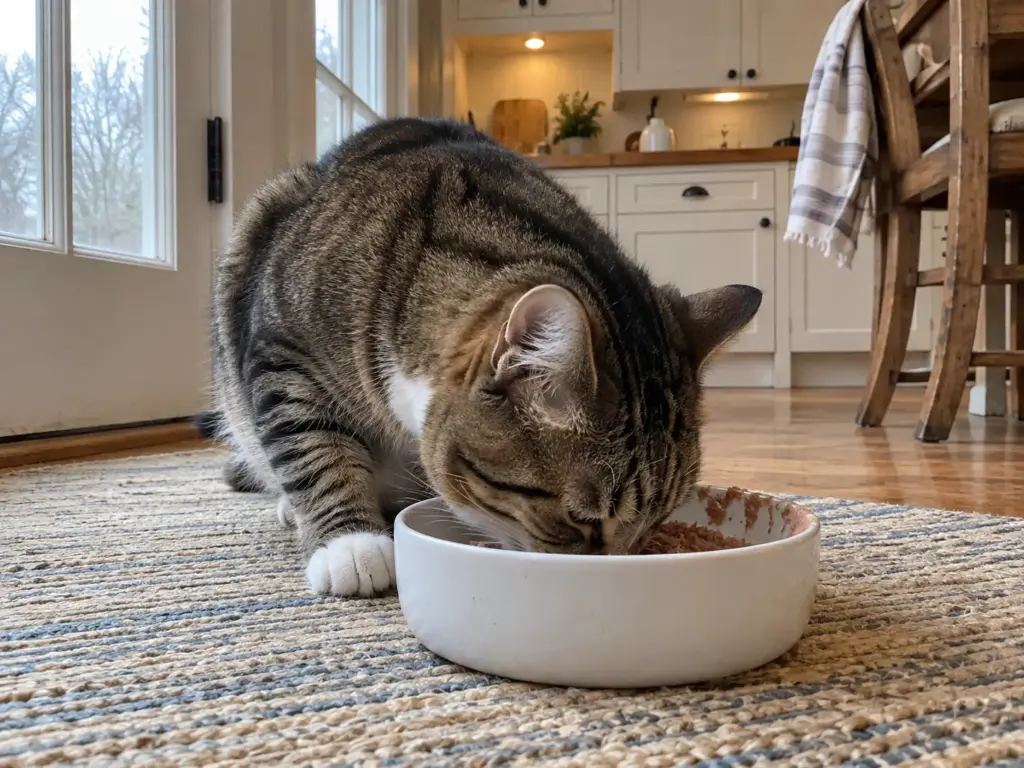
Why steel, glass and glazed ceramic rinse alike and still don’t wash alike
The material question gets settled quickly. The testers at cats.com put it plainly: stainless steel, ceramic and glass are nonporous, so they don’t trap bacteria, and they are generally dishwasher-safe. Once plastic and unglazed clay are off the list, all three surfaces shed food the same way under a running faucet.
So the standard advice, buy stainless and you’re done, holds right up until the stainless bowl has a rubber ring bonded to its base and a product label glued to its floor. That bowl will wash worse than a plain glazed dinner plate from your own cabinet. The better rule is to judge the bowl by what your sponge meets, and only then by what it’s made of. Three things decide every wash:
- Whether the sponge reaches every inch of the inside in one pass, including the corner where the floor meets the wall
- Whether anything is attached that can’t come off: a ring, a stand, a label
- Whether the surface stays smooth everywhere his tongue goes, with no print, ridge or rolled lip
Get those three right and the material barely matters. Get one wrong and no dish soap fixes it.
Where the film settles: the rim, the corner and the spot a sponge skips
Watch a cat eat wet food and you’ll see the route the mess takes. He doesn’t eat from the middle out. He presses the food against the wall with his tongue, works it up toward the edge, and licks the same arc of the bowl over and over.
One owner on r/CatAdvice described changing bowls after getting fed up with her cats “pushing the wet food to the rims of the bowls and then off of them.” The rim gets a thin coat at every meal, and the coat dries before anyone picks up a sponge.
That is why the shape of the inside counts. cats.com found that compared with flat-bottomed bowls with sharp angles, round bowls limit food buildup, which makes both eating and cleaning easier.
A hard square corner where the floor meets the wall is the one place a flat sponge bridges instead of touching. Food packs in there, dries into a ring the color of the bowl, and survives the rinse. A rolled lip does the same thing one level up: the curl that makes a bowl look finished can hold a bead of water and grease underneath it, out of sight and out of reach.
The film you feel with your thumb on clean-looking steel is a separate story, and the science of it lives in the article on why rinsing never removes the slime. What matters here is the practical side: film forms everywhere, but it only survives a wash where the sponge can’t follow. A bowl with a rounded inside and a plain rim gives it nowhere to hide.
When the problem isn’t the bowl
One clause of the cleaning question belongs to someone else. If you’ve noticed anything on his chin or around his mouth, or he has suddenly changed how he eats or drinks, take that to your vet before you change a single bowl, and let the vet decide what it means.
According to a University of Illinois veterinary dermatologist, “Owners can help prevent acne by keeping bowls used for eating and drinking clean by washing them regularly.” The same page notes that the cause of pet acne isn’t known, so a clean bowl is a reason to wash, not a treatment. Whether plastic plays any part is a separate question, and plastic and chin acne are handled in their own article.
The Four Places Dirt Hides in a Bowl, and How to Check Before You Buy
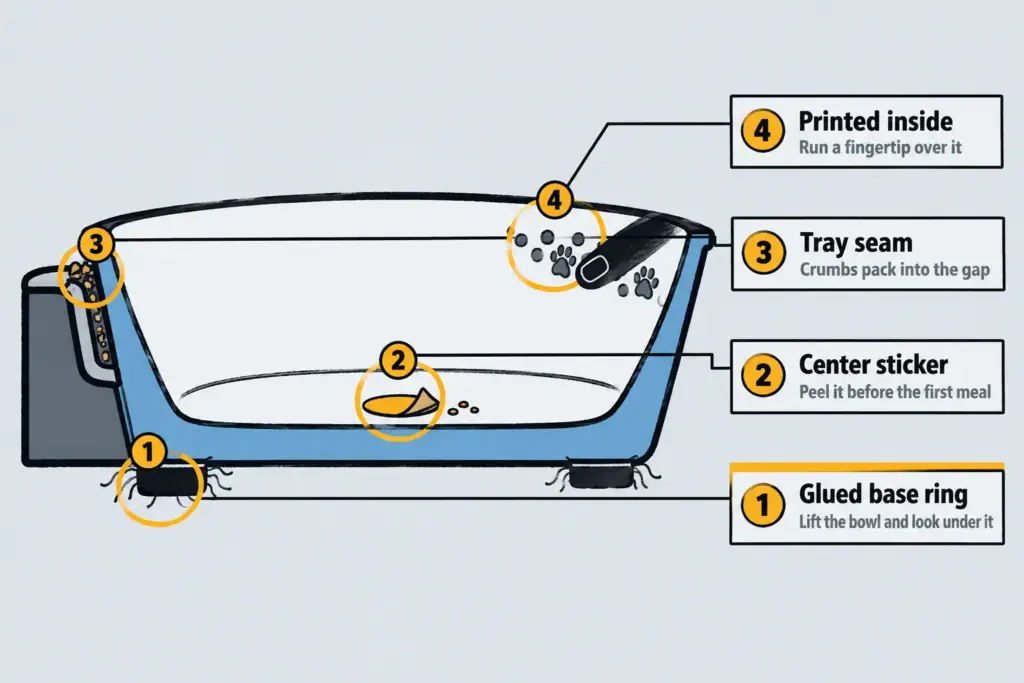
You can spot almost every hard-to-clean bowl on the shelf, or on the product photos, before it ever reaches your kitchen. Dirt collects in four places: a non-slip base glued to the underside, a product sticker in the middle of the floor, the seams where a bowl meets a tray or stand, and an inside surface that isn’t smooth. None of them shows up as a spec. Each one shows up within the first week of washing.
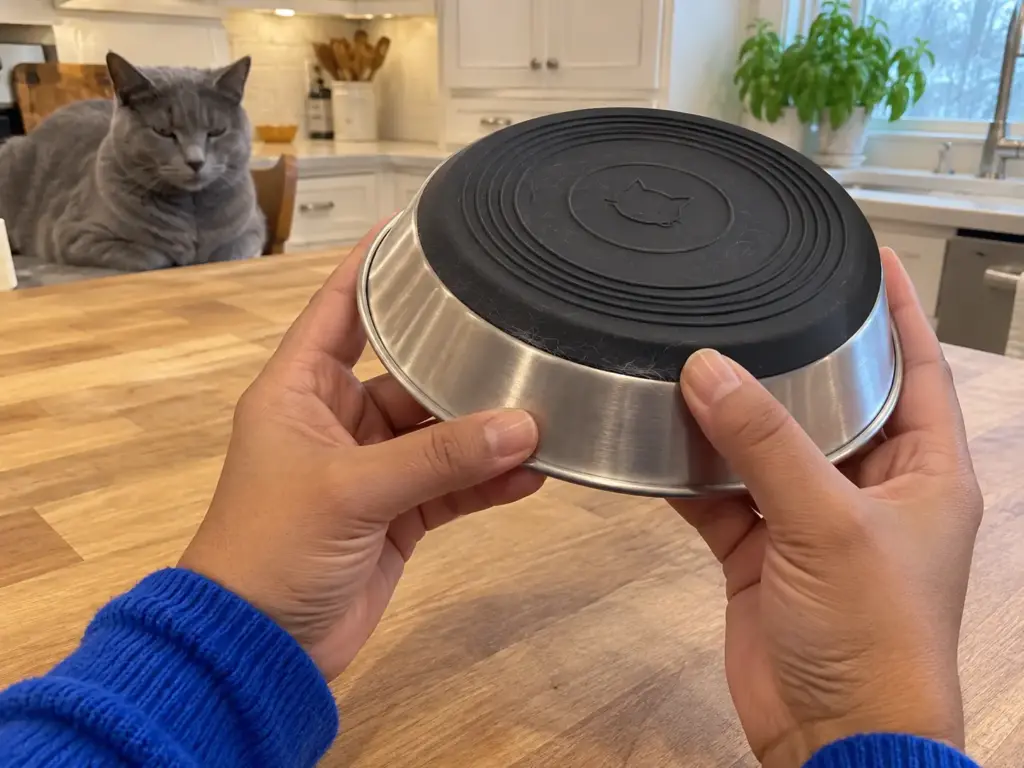
The base that never comes off
You bought the bowl with the silicone ring because the old one kept sliding across the floor (the game r/CatAdvice calls paw hockey), and the ring did stop the sliding. What it also did was create a gap between rubber and steel that you can’t reach, can’t see and can’t take apart. When The Spruce Pets tested the OurPets DuraPet, its non-slip silicone bottom seemed to attract cat hair over time, and because the base is non-removable there was no way to wash underneath it.
In a house with a long-haired cat, this matters twice as much. A Maine Coon’s coat ends up on everything at floor level, and a rubber ring at floor level is a lint roller nobody empties. Whatever water gets into the same gap keeps that hair damp.
There’s a quick test, and you can run it in the store or on the photos. Lift the bowl and look at the join between the ring and the metal. If you can slide a fingernail into it, water can get in too.
If the listing says the ring can’t be removed, believe it. A removable base is the only version of a grip ring you can wash properly.
The WROSWT Stainless Steel Cat Bowls say so outright: the rubber base is bonded in a “no degumming” process, meaning it is glued on for good. At 5.98 inches wide, 1.22 inches deep and 13 ounces, the bowl itself is a sensible shallow shape that stays clear of his whiskers, which makes it the honest pick if your cat plays paw hockey and you’d rather check a ring than chase a bowl. Just go in knowing the ring is the part you’ll be inspecting.
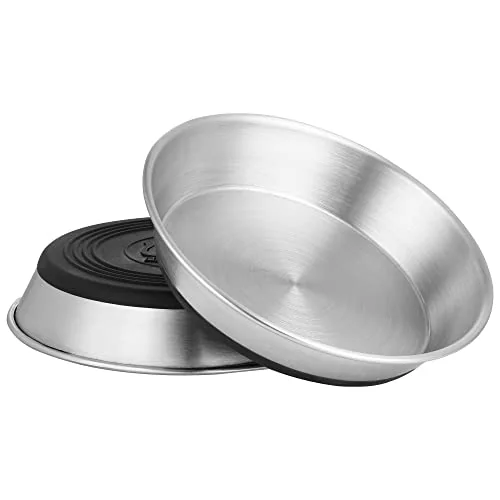
The sticker glue in the middle of the bowl
Two separate sets of testers landed on the same complaint. The Spruce Pets found that the adhesive from the manufacturer’s sticker in the center of the DuraPet can be difficult to remove completely, and cats.com flagged another bowl with a large sticker right in the middle that leaves a sticky residue. Sticker residue on the inside floor is the first thing your sponge hits, so on day one the sponge turns tacky and brown, and from then on it drags a trace of glue around the rest of the bowl.
The glue matters more than it looks. A tacky patch on the floor of a food bowl holds onto every scrap of wet food, and it sits exactly where his tongue goes first.
Deal with the label before the bowl ever holds food. Soak it under warm water until the paper lifts, rub the leftover glue with a drop of cooking oil on a paper towel, then wash the oil off with dish soap. Done on day one, it takes a minute. Done after a week of wet food, the glue has bonded with everything that landed on it.
Seams, trays and hard inner corners
Any bowl that sits inside something else has a seam, and seams are where water collects. Two-bowl stands, raised frames and spill trays all leave a gap between the bowl and its holder, and kibble dust plus a little drinking water in that gap turns into paste. cats.com is blunt about the soft versions: rubber and silicone tend to get pretty grimy pretty quickly, and for a double feeder its testers preferred a hard plastic tray because it was easier to clean than silicone. A seamless bowl, one piece from rim to floor, gives water nothing to settle in.
Hard inner corners belong in the same group. A bowl with a flat floor and a sharp angle to the wall behaves like a tray with a seam molded into it. It’s the same seam logic we use for litter boxes, where the box that stays clean is the one with smooth, rounded inside corners and no joints, not the one with the most features.
Insides that aren’t smooth
Ceramic bowls often come painted or printed on the inside: fish, paw prints, a bright pattern on the floor. That isn’t automatically a problem, but it is a question to put to the bowl before you buy. Run a fingertip across the design. If you can feel the edge of the print, or a ridge where one color meets another, food has an edge to grip.
Check the rim too, and the ring where the glaze stops on the underside. A smooth inside you can’t feel any texture on washes like glass; anything you can catch with a fingernail will hold film the way a scratch does.
What the Sponge Wants and What the Cat Wants Are Not the Same Bowl
You want a bowl you can wipe in twenty seconds. He wants a bowl wide enough that his face fits without his whiskers dragging the sides. Those two wishes overlap, but not completely, and where they split is the part that decides which bowl you should buy.
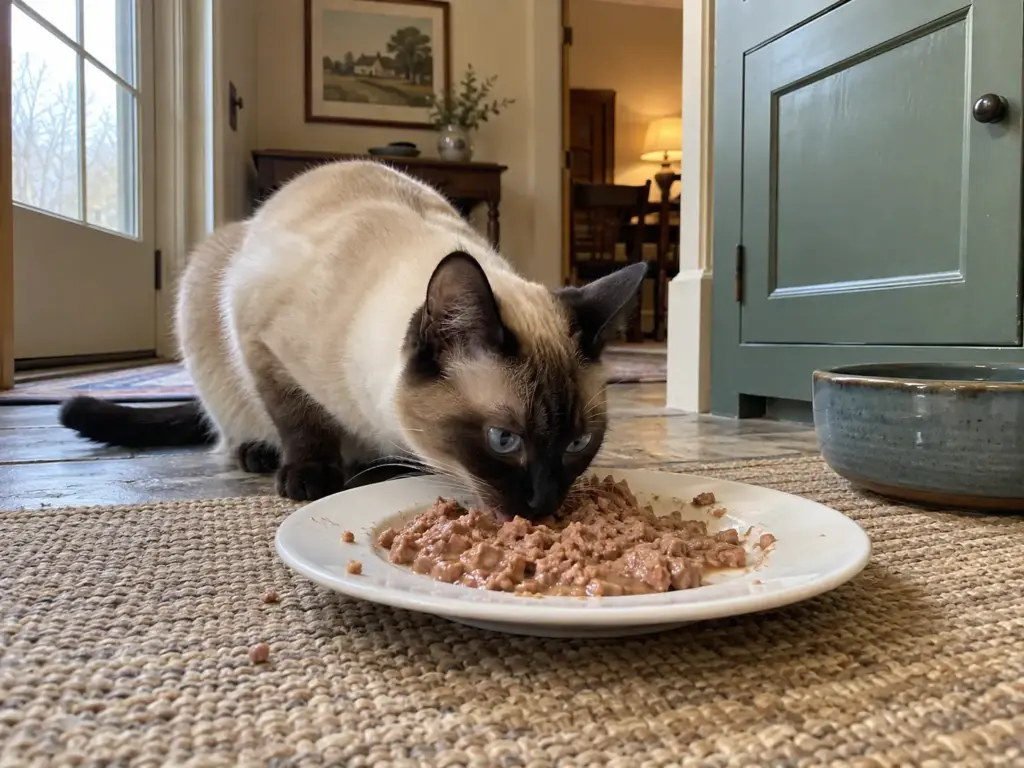
Wide and shallow wipes clean and lets wet food escape
The cat’s side of the deal is a width. The Spruce Pets recommends a bowl at least 5 inches in diameter with low sides, and if you want the number fitted to your own cat, there’s a guide to bowls measured against his face. Whisker fatigue itself is still unproven (cats.com says as much), so treat width as comfort rather than a cure. The good news is that a wide, shallow bowl is also the easiest shape to wash: the two bowls here with a listed depth are 1 and 1.22 inches deep, which a sponge in a cupped hand clears in a single sweep.
The obvious pick, then, is the widest, flattest dish you can find. That works perfectly for dry food, which never dries onto anything.
But a shallow bowl with a wall of about an inch and a wide base isn’t great for containing food, as cats.com found, and the shallow Dr. Catsby’s bowl could get a little messy with a vigorous eater. With wet food and an enthusiastic cat, the flattest bowl sends dinner over the edge and onto the floor, and now you’re cleaning the floor as well as the bowl. For that cat, the better call is a bowl with a real wall of around an inch and a rounded inside, not the flattest plate in the store.
Higher walls hold the mess and keep the residue
Go deeper and the mess stays in the bowl, which sounds like a win until you wash it. A deep bowl collects residue low in the curve, right where a sponge has to bend to follow it, and a hand-washed one is the likeliest to keep a ring there. It also puts his whiskers back against the sides.
So the wall height is a trade-off, and the food decides it. Dry kibble belongs in the widest, shallowest bowl you own. Wet food does best with a wall near one inch: high enough to stop the push toward the edge, low enough that your sponge reaches the floor without bending.
And a messy eater who scatters food no matter what doesn’t need a taller bowl at all, he needs something under it (more on that in the rental section). The picks for each kind of mess are decided in a separate guide to the three kinds of mess; here, the only question is what each one costs you at the sink.
The free fix to try before you buy anything: a plain glazed dinner plate
Before you order a bowl, look in your cabinet. Several commenters on r/CatAdvice feed their cats from a regular dinner plate or a small dish from a thrift store, and the logic holds up. A glazed plate is one smooth piece, has no ring, no seam and no label, goes in the dishwasher, and is wider than almost any bowl sold for cats.
It has one real limit: no wall. Dry food stays put, but wet food gets pushed to the edge and over, which is exactly the rim problem from earlier, only now the rim is the floor. A plate with a shallow raised edge, like a pasta plate or a dessert dish, is the version to try for wet food.
Pick the heaviest glazed plate you have. Weight does the job a rubber ring does, keeping the dish in place when he pushes it, and a plate with no ring underneath leaves you nothing to pry apart or inspect when you wash it.
One Pick for Each Cleaning Problem
If the free plate isn’t enough, buy for the problem you actually have at the sink. Here are the picks side by side, with what each one costs you in convenience:
| Bowl | What keeps it easy, and what it costs you | Best for |
|---|---|---|
| 4 Pcs Stainless Steel Cat Bowls, 5.5 Inch | One piece, 5.5 in wide, nothing glued or printed; no grip of its own | The nightly wash, dry food |
| Welloyed Ceramic Cat Food Bowl Set (4-pack) | Flat glazed plate, 5.8 in wide with a 1 in wall; four to rotate | Wet food, if you wash all four |
| Catit Style 2-Bowl Glass Diner Set | Glass bowls lift out of the stand; breakable, and the bowls run small | Seeing the film before you feel it |
| WROSWT Stainless Steel Cat Bowls, 2-Pack | 5.98 in wide, 1.22 in deep; silicone base glued on for good | Paw hockey, if you check the ring |
When the problem is the daily wash: one-piece steel
If what you want is a bowl you wash every night in the time it takes the kettle to boil, plain one-piece steel is the answer. The heavy-gauge Americat set is the textbook version of this style, but it was down to its last few when we checked, so it gets a name here and no link. The 4 Pcs Stainless Steel Cat Bowls do the washing part of its job: 5.5 inches wide, shallow, one piece of 304 steel with no ring, no print and nothing glued anywhere.
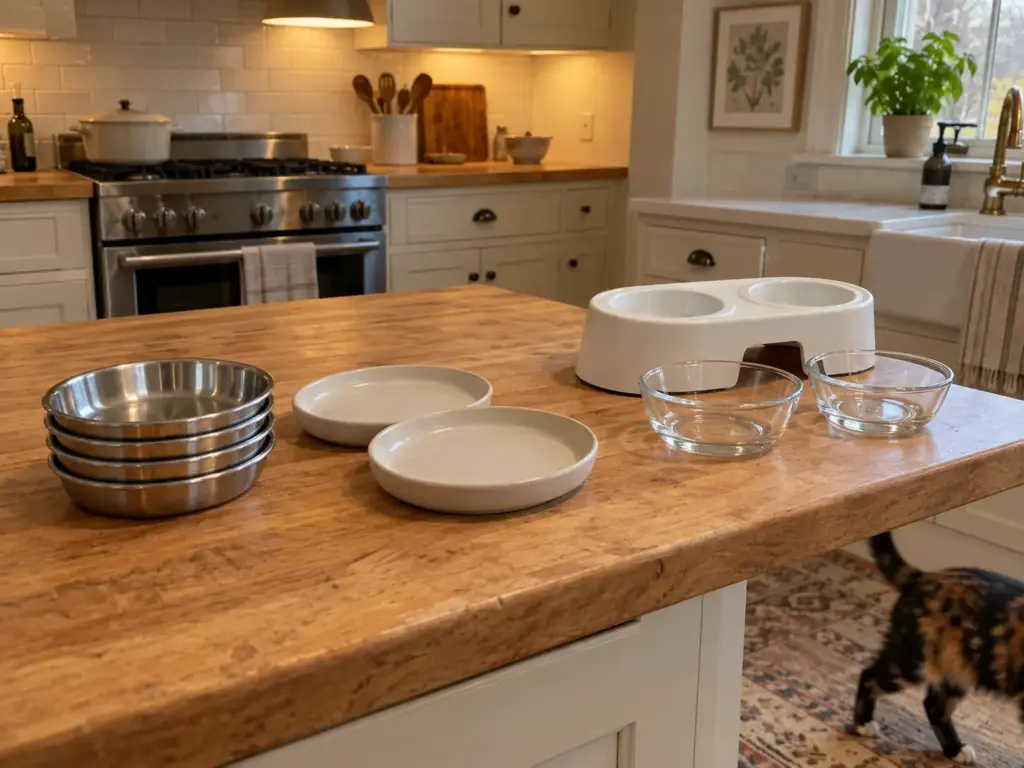
Four of them is the real advantage. They stack, so one clean bowl is always waiting while the others ride in the dishwasher, and steel is among the materials that handle the machine without trouble (still, check the material before the dishwasher for anything else you own). The weak point is grip. A light steel bowl with nothing underneath slides, and the listing itself suggests pairing it with silicone pads.
When the problem is wet food drying into a ring: a flat glazed plate
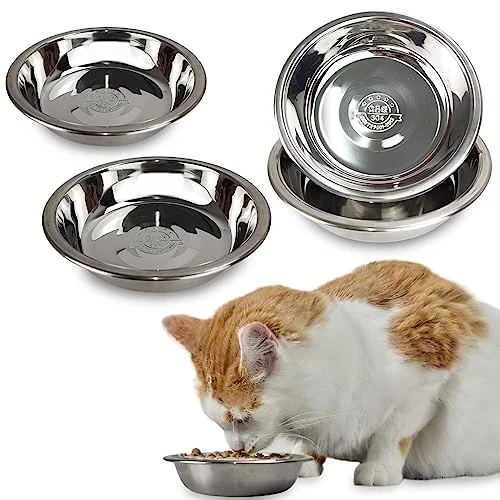
If he eats wet food and you keep finding a hard ring where the meal dried, you want the dinner-plate idea with a wall added. The Welloyed Ceramic Cat Food Bowl Set is close to exactly that: 5.8 inches across with a 1-inch wall, 6.8 ounces, in matte-glazed ceramic that goes in the dishwasher. The wall is low enough that your sponge reaches the floor without bending, and high enough to stop most of the push toward the edge.
Buy it as a set of four and use it like one. Feed from a clean plate at every meal and wash the lot after dinner, so no plate sits long enough for wet food to set. Nothing in its listing points to one repeated complaint, but it does sit a little lower in buyer ratings than the other picks here, so read its recent reviews before you order.
When you want bowls that lift out of the stand: glass
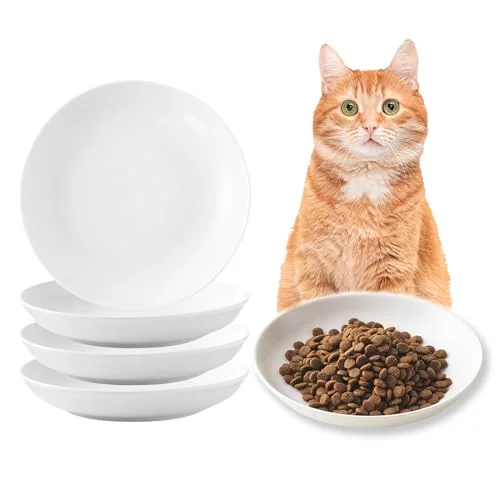
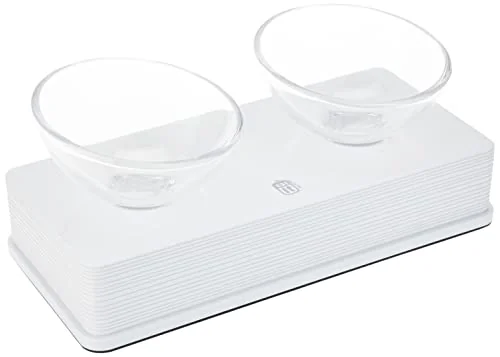
Glass has one advantage nothing else on this list does: you can see the film. On steel you find the slick layer with your thumb; on clear glass you can spot it on the wall against the light, which makes it hard to pretend the bowl is clean. The Catit Style 2-Bowl Glass Diner Set holds two 6.8-ounce glass bowls in a stand that measures 11.3 by 3.5 by 5.5 inches, and the bowls lift straight out and go in the dishwasher, so nothing is glued to anything.
It comes with three trade-offs. Glass breaks, and buyers warn that it will shatter if dropped in a sink. Most buyers who mention size call the bowls small, so check the capacity against your cat’s meal. And the stand puts food and water right next to each other, which is its own problem (keep food and water not on the same tray if you can, and use the stand for food only).
Lift the bowls out to wash the stand too, since crumbs settle in the holes.
No Dishwasher, One Small Sink: Making Easy Real in a Rental
Almost every bowl sold as easy to clean means one thing: it can go in the dishwasher. That works if you have one. In plenty of rental kitchens there is no dishwasher, the kitchen sink fits one pot at a time, and the dish rack is already full of your own mugs.
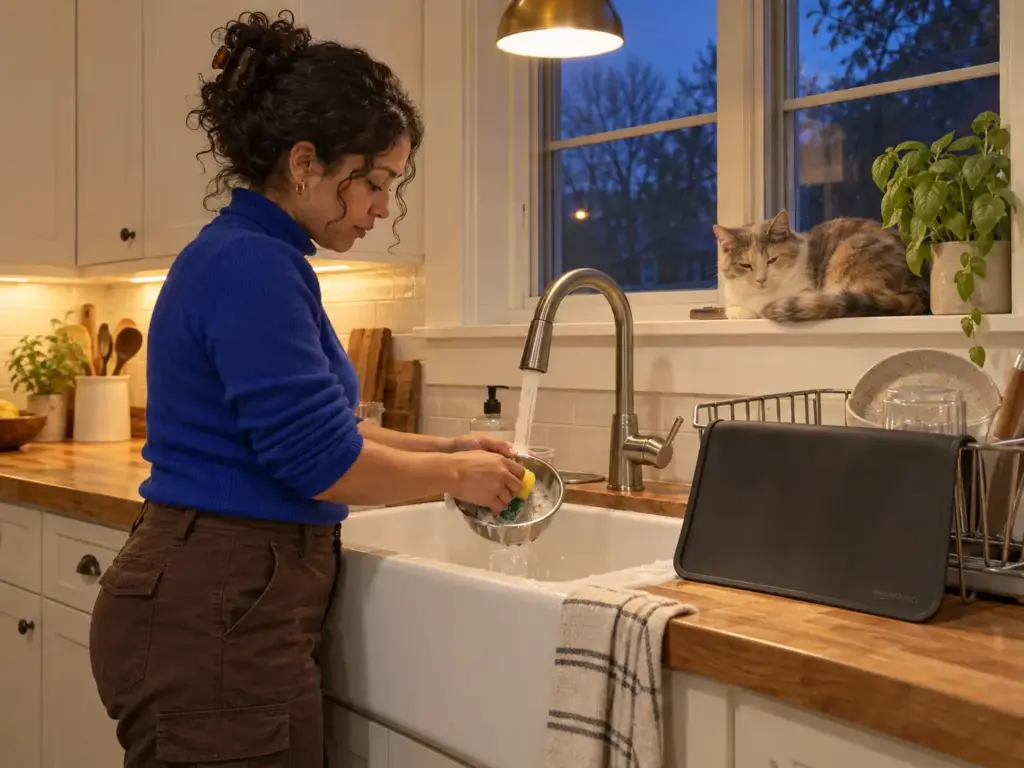
In that kitchen, “dishwasher-safe” tells you nothing about how easy a bowl is. What matters is whether it fits in one hand under the faucet, dries upright on a crowded rack, and has no ring holding water after you set it down.
Hand-washing one small bowl each night
One owner on r/CATHELP, after giving up on a plastic fountain that went slimy overnight, put it in a way that sticks: it’s easier to scrub out a small bowl each night than a fountain with wires and filters. That is the dishwasher-free version of easy. A small, one-piece bowl you wash alongside your own dinner plate becomes part of a habit you already have, instead of a separate chore that slips by the end of the week.
Stackable sets suit this kitchen best. The 5.5-inch steel bowls and the 5.8-inch ceramic plates both nest, take up about the footprint of a saucer on the rack, and dry fast because there’s nothing underneath to trap water. Wash the dirty one, set it upside down on the rack, take a clean one from the stack. Nobody has measured your sink, but a small bowl fits under almost any faucet.
Wash the bowl and the mat under it in the same trip to the sink, every night. A mat washed once a week holds a week of drips, and when you set a freshly washed bowl back on it, the bowl picks the film right back up.
If there’s a water fountain in the house too, keep in mind that the fountain filter is its own cleaning job, on a different schedule from the bowls.
Grip without gluing a ring to the bowl
The glued ring from earlier exists because bowls slide. You can keep the grip and lose the trap by putting the grip somewhere you can wash separately. The cheapest version is a heavy base: a heavy glazed plate, or a heavy ceramic piece, stays in place against a push without anything stuck to it.
When a light steel bowl is the one you like, set it on a removable mat instead. The Amazon Basics Waterproof Non-Slip Silicone Pet Feeding Mat with Raised Edges holds a bowl in place and catches the wet food that goes over the edge, and because it lies flat and comes apart from the bowl, you can scrub every part of it.
But silicone is silicone. cats.com’s warning that rubber and silicone get grimy quickly applies to a mat just as much as to a glued ring, so the mat goes in the sink with the bowl, not once a week. The difference is that you can reach all of it.
One cat or two: a spare set changes the routine
With one cat, a single bowl and a nightly wash work fine. With two, each cat needs a bowl of his own (the 1+1 idea that runs through everything else in a multi-cat home), and the nightly wash doubles, or slips. A spare set fixes that: two bowls in use, two clean on the rack, and you swap rather than wash under pressure at mealtime. It’s one more reason the four-packs make sense for small kitchens.
If space is the real constraint, the guide to feeding two cats in a small apartment works out where two feeding stations fit.
The First-Week Test That Tells You If a Bowl Is Easy to Clean
You’ve bought the bowl, or pulled a plate from the cabinet. Waiting for a smell to tell you whether you chose well is a slow way to find out. There’s a faster way, and it takes a fingertip.
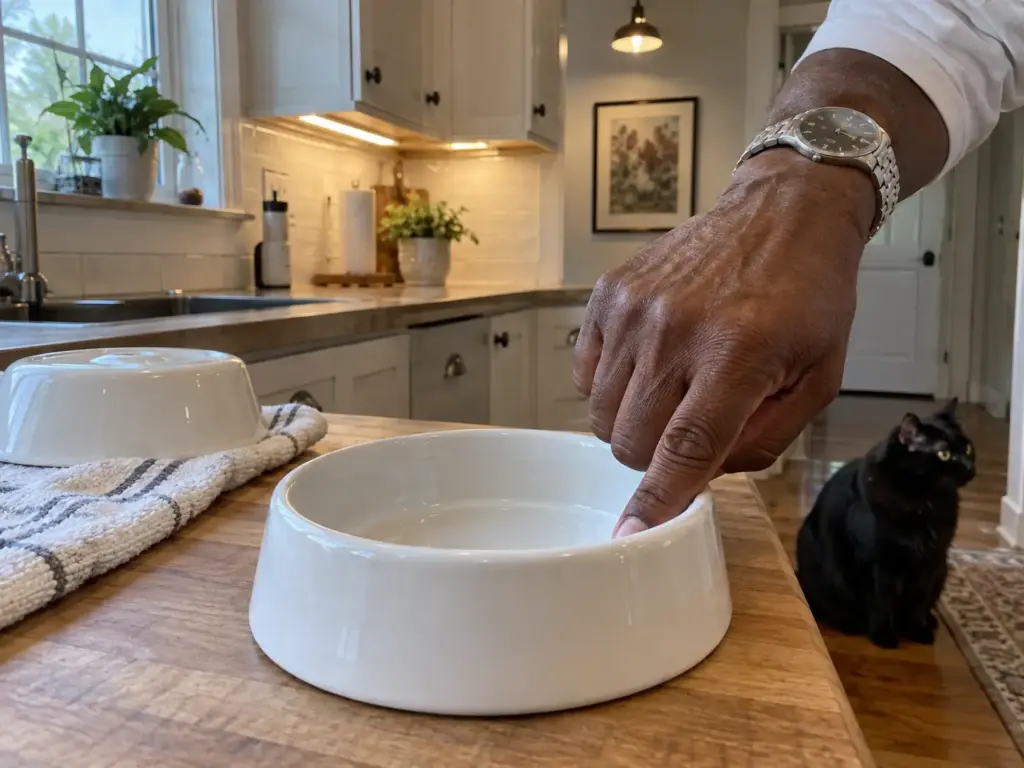
The ten-second finger wipe
After a normal wash, let the bowl dry and run a clean fingertip along four places: the corner where the floor meets the wall, the underside of the rim, the spot where the label was, and, if there is one, the join between the base and the ring. On a bowl that’s easy to clean, your finger squeaks the whole way around. Where it slides or drags, film survived the wash, and that’s the spot to change your sponge stroke or to rethink the bowl.
A failed spot doesn’t condemn the bowl on the first try. Wash it again and go after that one place on purpose: fold the sponge so a corner of it gets into the angle, or use the edge of a bottle brush under the rim. If the spot passes now, the bowl is fine and your usual stroke was skipping it; change the stroke and keep the bowl.
If the same spot drags twice after you went at it deliberately, the shape is beating your sponge, and it will beat you every night. Make a note of which spot it was. The corner means a flat floor with a hard angle, the rim means a rolled lip, and the label patch means glue. Each one points to a different fix in the four places above.
We use this test because it checks the one thing a product page can’t promise: what’s left after your sponge, in your sink, with your cat’s food. Run it after the first wash, then again once the bowl has done a week and a half of meals. If both pass, how often to wash becomes a matter of routine, and that is covered in how often to clean, by what’s in them.
Do the finger wipe twice: once after the very first wash and again on day ten. The first run catches label glue and rough glaze. The second catches the ring that only builds up once wet food has dried on the same spot a few dozen times.
What to retire and when
Some bowls fail the finger test no matter how you wash them, and those go. A silicone or rubber part that still feels grimy straight out of the soap goes first. So does a label patch that stays tacky after oil and soap, and a glued base you can fit a fingernail under, especially once you see hair in the gap. Unglazed ceramic and wood belong on the same list: a groomer quoted by The Spruce Pets called them porous and a pain to clean properly, and the finger test usually agrees within days.
Chips count too. A chipped glaze or a nicked glass rim leaves an edge that holds film and a rough patch right where his tongue goes, so a chipped bowl is a retired bowl, however good it looks from across the room.
The Bowl Worth Keeping Is the One Your Fingertip Clears
Three things to carry out of this. Shape decides how clean a bowl gets, once you’re choosing between steel, glass and glazed ceramic. The bowl that stays clean is one piece, with no glued base, no label and no seam where your sponge can’t follow. And the right pick depends on your actual cleaning problem: one-piece steel for the nightly wash, a flat glazed plate for wet food that dries into a ring, glass if you want to see the film.
Three weeks after the new bowl moves in, run the finger wipe again on the one he’s been eating from, and retire anything that drags.
Tonight, before you buy anything, peel the label off the bowl you already have, clear the glue with a drop of oil, and run your finger around the inside corner. If it still drags, try his dinner on a plain glazed plate from your cabinet and see which one comes out of the sink cleaner.
Frequently Asked Questions
01What type of cat bowl is the most hygienic?
The most hygienic cat bowl is a single piece of stainless steel, glass or glazed ceramic with no glued base, no inner label and a rounded inside corner. All three materials are non-porous, so after that the shape decides how clean each wash really gets.
02What material is considered the healthiest for a cat bowl?
Stainless steel, glass and glazed ceramic are the safest everyday choices, because none of them is porous or holds film the way scratched plastic does. Anything you notice on his chin, or a change in how he eats, belongs with your vet rather than with a new bowl.
03Do cats prefer ceramic or stainless steel bowls?
A cat notices the width of the bowl and the height of its wall far more than whether it is ceramic or steel. The material mostly changes your side of the deal: how heavy the bowl is, whether it chips, and how fast it washes.
04Is a dinner plate okay as a cat bowl?
A smooth, glazed dinner plate makes a good cat bowl: it is wide, heavy, dishwasher-safe and has no seams, which is why plenty of owners already use one. It has no wall, though, so wet food tends to get pushed off the edge.
05What’s the best water bowl for cats that won’t tip over?
The water bowl that stays upright is a heavy one-piece bowl, in glazed ceramic or thick steel, rather than a light bowl held down by a glued rubber ring. Weight does the gripping, and a heavy bowl has no ring underneath to collect hair and film.




Leave a comment