Are Plastic Bowls Bad for Cats? Two Answers, Not One
Don't replace the bowl over the chin acne claim (Cornell calls it unproven) + the 50-micron scratch reason that actually holds up, and how to check

Alfredo RamsesFounder · August 31, 2026 · 17 min read

On this page8 sections
- 1What Plastic Actually Does That Steel and Glass Don't
- 2When the Chin Is the Vet's Problem, Not the Bowl's
- 3The Thirty-Second Test That Tells You Whether to Replace It
- 4What to Replace It With, and What the Grade Number Means
- 5Two Cats Change the Arithmetic
- 6The Routine That Survives Week Three
- 7Conclusion
- 8Frequently Asked Questions
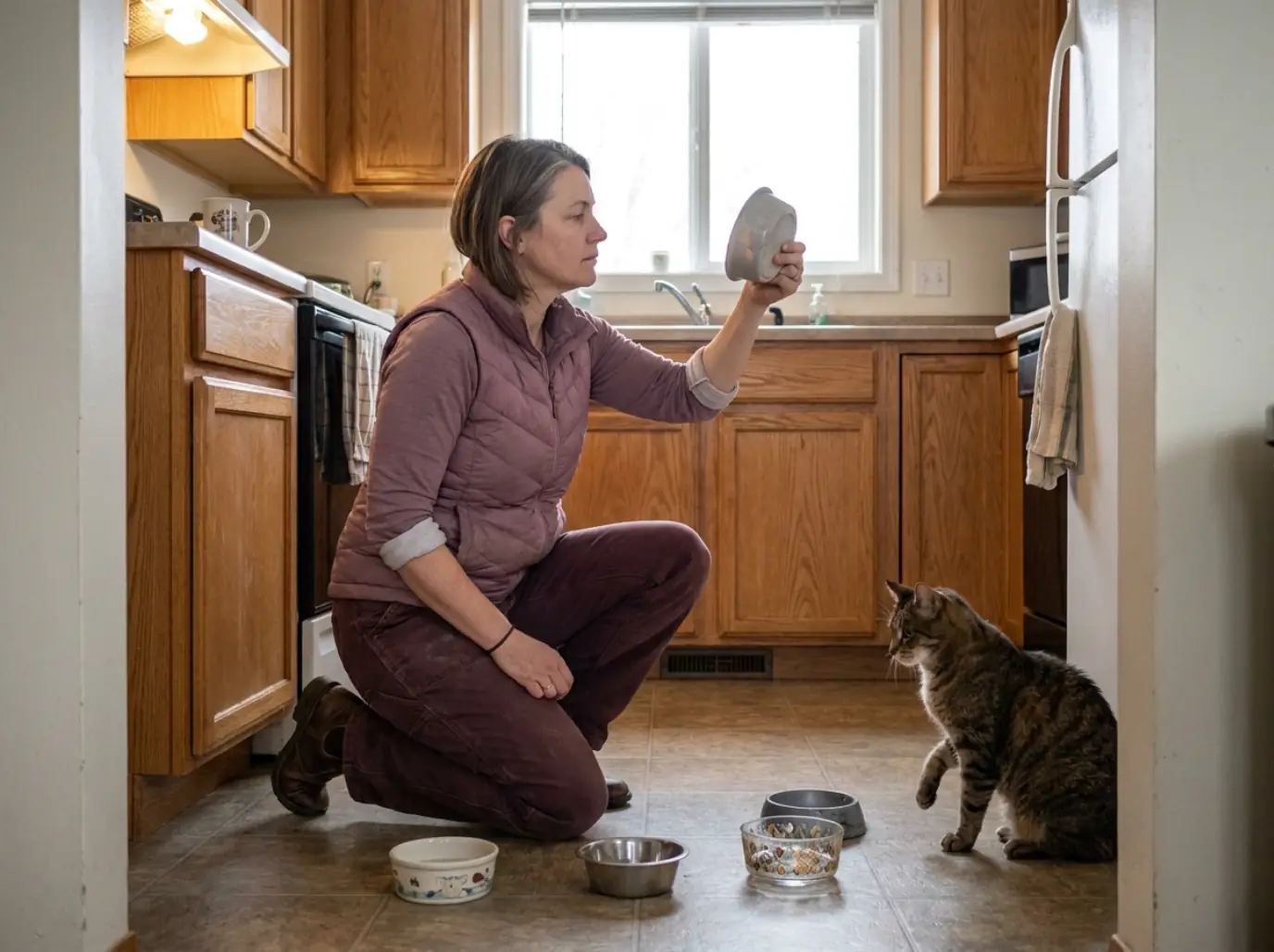
You have probably read the same sentence three or four times today on three or four different sites: plastic bowls cause chin acne in cats. Every one of those pages traces the claim back to the same veterinary school, and the dermatologist at that veterinary school has been on record for years saying something almost exactly opposite. That gap is why this article exists. So the honest answer to are plastic bowls bad for cats comes in two pieces that point in different directions: one about bacteria, which is settled, physical and checkable in about thirty seconds, and one about skin, which genuinely is not settled by anyone.
Quick Answer
Yes and no, and the split is the whole answer. The hygiene half is yes: plastic scratches, scratches hold bacteria that soap cannot reach, and a scratched bowl is measurably worse than steel or glass. The medical half is honestly unknown, because the vet school everyone quotes says the chin acne link is unproven. Replace a scratched bowl for the bacteria, not for the acne.
What Plastic Actually Does That Steel and Glass Don’t
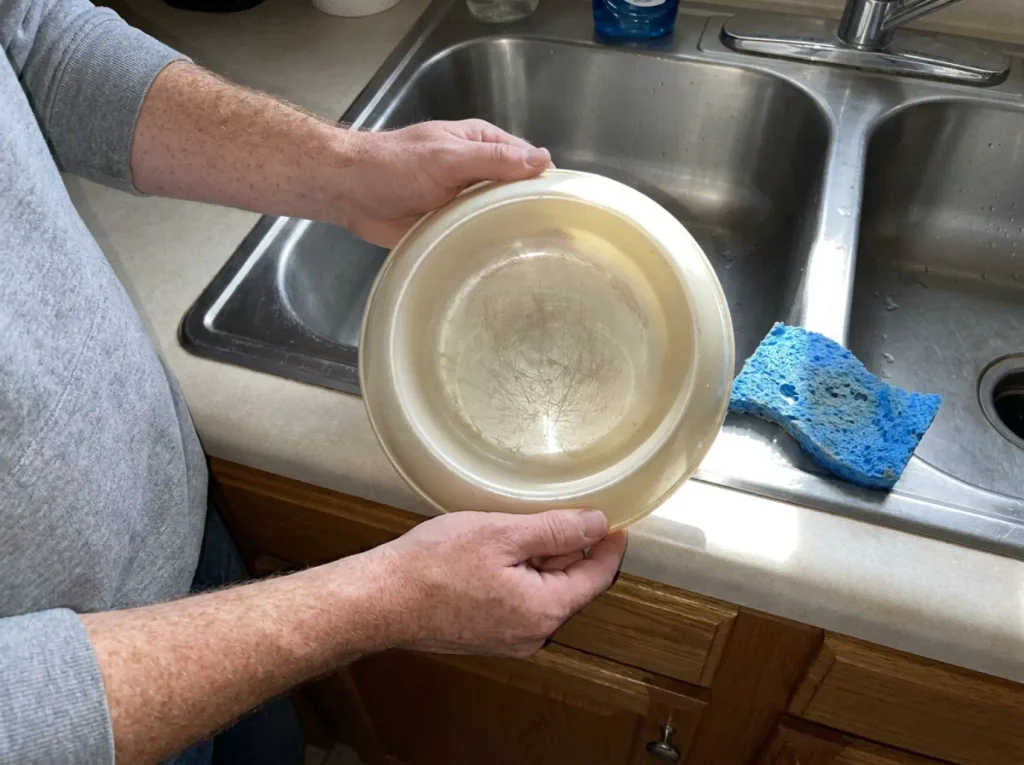
You wash the bowl. Every day, sometimes twice a day, with hot water and dish soap like a reasonable person. And the old one still develops a faint slick film two days later, while the newer one across the kitchen does not.
That is not a washing problem. The thing holding the bacteria is smaller than anything a sponge can reach into, and the sponge is what put it there.
The Sponge Is What Starts It
Normal cleaning cuts scratches into plastic. Not gouges you can see, but scoring across the surface, and the abrasive side of a kitchen sponge is the most efficient tool for the job in the entire house. Those scratches are commonly under 50 microns wide, which is narrower than soap and water can reliably flush out and roughly the right size for a bacterial colony to lodge in and stay.
That number is the part nobody prints. Fifty microns is about half the width of a human hair. You cannot see it, you cannot feel it with a fingertip, and a bowl that has crossed that line looks completely fine sitting in the drying rack.
The chemical side has the same shape, which surprises people who thought it worked the other way around. A Texas Tech study found that plastic bowl bumpers leach chemicals into simulated saliva, including DEHP, a phthalate classified as an endocrine disruptor, and BHA. The finding that matters for your kitchen is the direction: simulated chewing increased what came out.
A gnawed, five-year-old bowl edge sheds more than a fresh one. The old bowl is the risk, not the new one, and BPA-free on the packaging never claimed otherwise.
Why a Wash Doesn’t Undo a Scratch
Once a scratch is seeded, what grows in it is biofilm, a self-protecting slime layer that shields the colony underneath from detergent. It can establish inside those scratches within days of normal use. This is the reason the pink or orange film in an old bowl comes back so fast: you are not washing a dirty surface, you are washing the roof of something that lives below the surface.
And the crevices can harbor E. coli and Salmonella specifically. Not vague household germs, but the same families that show up in food safety recalls.
So the film reappearing days after a real scrub is not laziness and it is not imagination. It is a colony re-forming faster than your wash cycle removes it, which is a race you cannot win by scrubbing harder. Scrubbing harder is what cut the scratch.
Retire the abrasive sponge for the cat’s bowls specifically. Keep a soft cloth or use the soft side, which does the same job on a smooth bowl without cutting the surface that starts the whole chain. It costs nothing and it is the only step here that prevents the problem instead of managing it.
What Non-Porous Actually Means
Stainless steel and glass are non-porous, and under normal washing they do not develop the same scratch pattern plastic does. That is the actual mechanism behind every “just get a stainless steel bowl” line you have read this week. It is not a preference and it is not marketing. It is material hardness: steel resists the scratch that starts the chain, so there is nothing for a biofilm to hide inside.
That is the entire argument for steel, stated honestly. Not that steel is clean, but that steel stays smooth, and smooth is what soap can finish. If you want the three materials laid out against each other rather than the verdict on plastic alone, the full material comparison puts ceramic, steel and plastic side by side.
When the Chin Is the Vet’s Problem, Not the Bowl’s
A lot of people arrive at this question in the wrong order. They saw something on the cat’s chin, searched for a cause, found four articles blaming plastic, and are now standing in the kitchen holding a bowl. That order needs reversing before anything else in this article is useful.
A bump, a scab, redness, a lesion, or any skin change already present on your cat’s chin is a vet visit. This article does not identify it, does not explain what it means, and does not treat it. The bowl is a material decision about your kitchen. The chin is not.
What Cornell Actually Said
Here is the part that got buried. Dr. William H. Miller Jr., the Cornell dermatologist whose work is behind the source nearly every page on this topic quotes, calls the plastic-to-acne link “an old wives’ tale.” His research found no direct causal link and no identified trigger, and he says plainly that “we just don’t know what causes this condition.”
That is not a hedge someone added for legal cover. That is a Cornell dermatologist who has studied feline acne for years calling the plastic-bowl link an old wives’ tale, in a newsletter published by the same veterinary school every competing article cites as its authority.
I used to repeat the plastic-causes-acne line myself, because it appears everywhere and it sounds mechanically plausible. Reading the actual source changed that. The claim did not survive contact with the person it was attributed to.
Contact Dermatitis Is a Different Thing
There is a narrower claim in the same source that is supported, and it deserves to be stated on its own rather than smuggled in as evidence for the broad one. Certain sensitive cats can develop contact dermatitis from plastic, a skin irritation that is a different condition from chin acne, and those individual cats do benefit from glass or steel. Owner accounts of a cat with an itchy chin that got worse the more the cat scratched at it are real, and they belong here as an illustration that some cats have genuine contact reactions.
They are not proof of the acne mechanism, and this article will not let them drift into one. A real thing that happens to some cats is not the same as the thing four websites told you happens to all of them.
What that changes for you is small and practical. Swapping a bowl is cheap, easy and reasonable, and there is a good bacteria-shaped reason to do it. It is not a treatment. If something is already on the chin, the swap happens alongside the vet visit, not instead of it.
The Thirty-Second Test That Tells You Whether to Replace It
Every other article on this search lands on the same instruction: switch to stainless steel. None of them tell you whether the bowl currently in your kitchen is actually a problem yet. Most homes have four or five mismatched bowls accumulated over years, and nobody wants to bin four working bowls on principle. You want to know which ones have crossed the line.
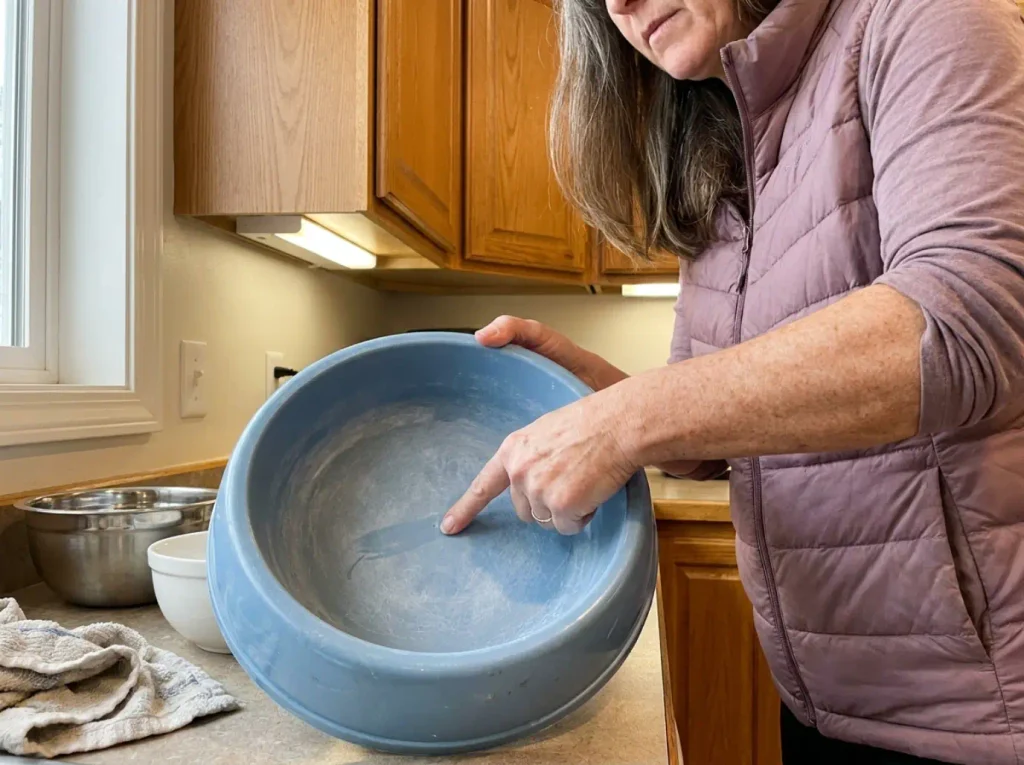
Run a Fingernail Across the Inside
Call it the fingernail-catch test. Drag a fingernail slowly across the inside of the bowl, across the bottom and up the sides where the food sits. If it glides the whole way, the surface is intact. If it catches, drags or ticks even slightly, there are scratches deep enough to hold everything the first section described.
That is it. No authority publishes a formal threshold for this and I am not going to pretend one exists, so treat it as a practical sorting test rather than a clinical measurement. It just happens to be the only way to feel a 50-micron scratch with equipment you already own.
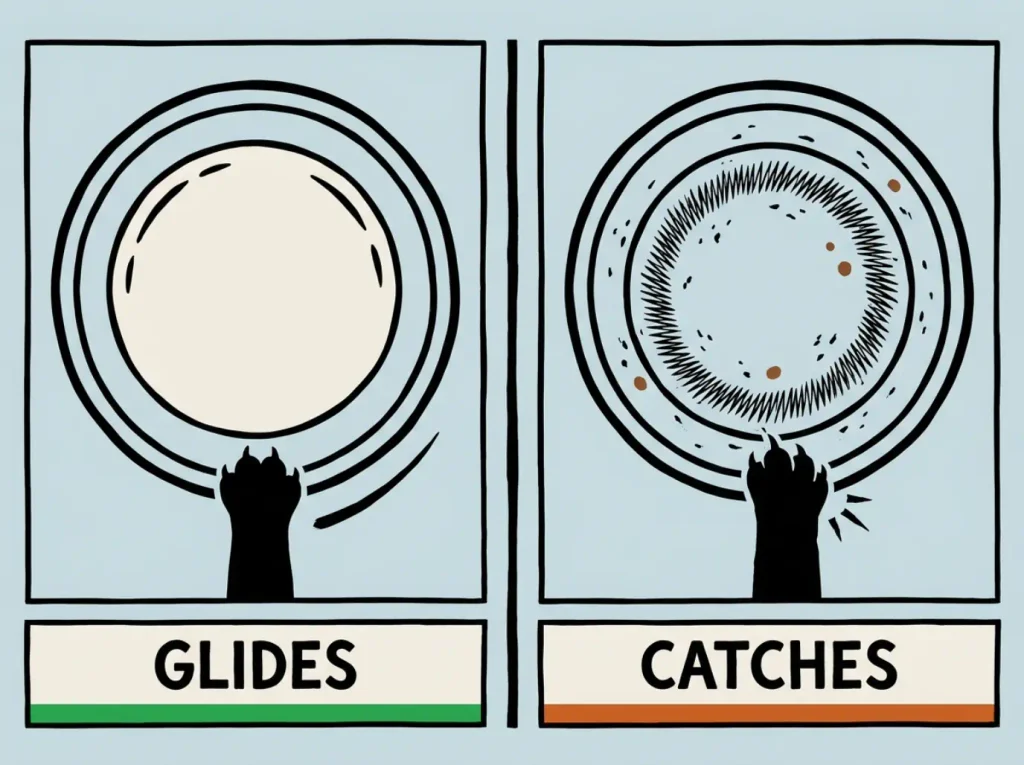
Run the test on the water bowl first. It sits full and standing between washes while a food bowl gets licked clean within minutes, so the water bowl is the one where a scratch has the most hours to do something with itself.
What a Hazed Surface Means
Three things you can see back up what the fingernail found. A cloudy, hazed or chalky interior where it used to be glossy. A permanent scuff ring where the food sits, the one that does not wash out. Any patch that stays dull after a proper wash while the rest of the bowl shines.
Then there is the smell check, which is the one people skip because it feels unhygienic to do. Wash the bowl properly, dry it, and put your nose in it. A bowl that still smells faintly of old food after a real wash has something living in it that the wash did not reach.
Age and Chewing Move the Risk, Not the Label
Here is where the standard framing gets it backwards. The risk goes up with age and chewing, not down, which means “all plastic is bad” is the wrong shape for the advice. A brand-new plastic bowl is a much smaller concern than a five-year-old chewed one, and that is true even though they are made of the same material and carry the same label.
Test what you own. Some of your bowls will pass, and the ones that pass are fine to keep using. That is money you did not spend, and it comes before any product in this article on purpose.
What to Replace It With, and What the Grade Number Means
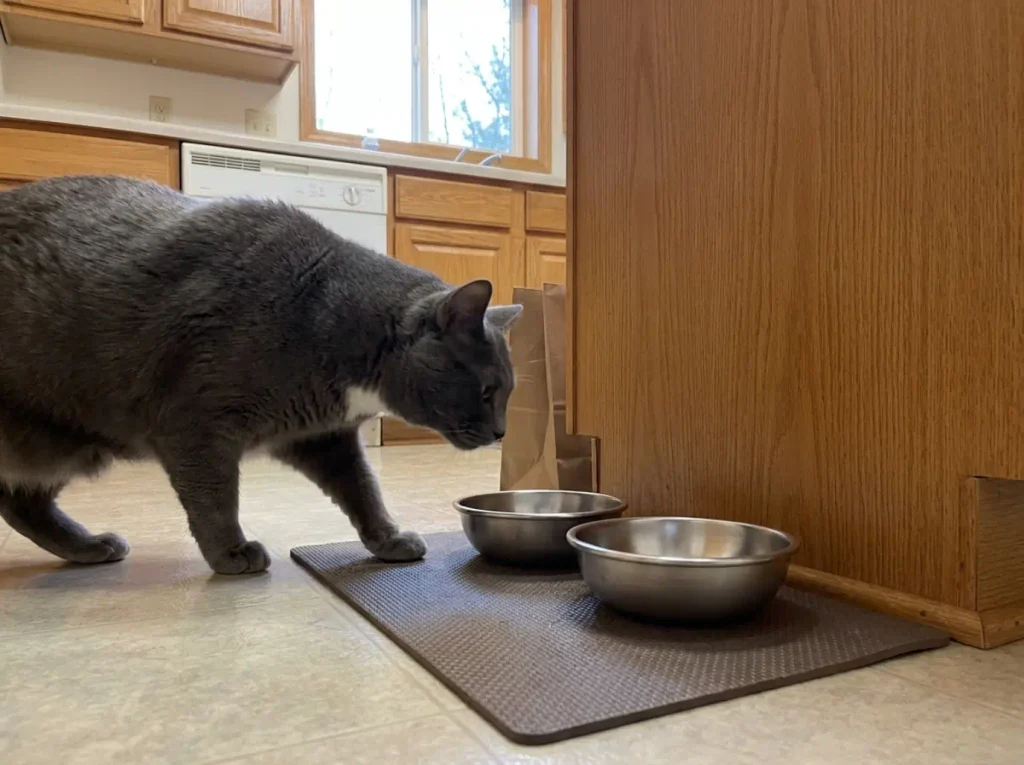
“Stainless steel” on a product listing means remarkably little on its own. There is a number that separates the steel that resists corrosion and pitting from the steel that doesn’t, and almost nobody in this niche prints it.
18/8 and 304 Are the Same Number
The number is 18/8, also written as 304-grade. It describes the composition, 18% chromium and 8% nickel, and it is what makes the surface actually resist the corrosion and pitting that would eventually create the same scratch pockets you just spent a section learning to avoid. A listing that says only “stainless” is not telling you this, and the silence is usually meaningful. The same evasion runs through the whole category, which is why finding a fountain that is genuinely all steel takes reading past the word stainless as well.
The Americat Company Stainless Steel Cat Bowls come as a two-pack and state the grade outright, 18/8 304, which is precisely the thing this section just told you to look for. Made in the USA, which matters more for steel than most claims on a pet listing do, because grade specification is a manufacturing disclosure and not a marketing one. The drawback is the one every two-pack has: if you have one cat and one feeding station, you are buying a spare you may not want.
Why a Steel Bowl Skates, and the Fix
Steel has one honest, unglamorous failure and it is worth saying out loud, because it is the reason plenty of people try steel and go back to plastic within a month. A light steel bowl skates. The cat pushes into the food, the bowl slides, and by the end of a meal it has traveled halfway across the kitchen floor with a noise like a small metal sled.
That is not the cat being difficult. A bowl that moves while you eat out of it is a bad bowl, and he is right about that.
The fix is weight or a rubber ring on the base. The OurPets DuraPet Stainless Steel Non-Slip Cat Bowl is the single-bowl version, one cup of capacity with a bonded rubber base, and it solves exactly the complaint just described. One cup is generous for most cats and too generous for some, so if your cat is a slow grazer you will be washing a mostly empty bowl.
Glass and Ceramic, With Their Caveats
A glass bowl is a genuinely good third option that gets left out of most of these articles. It is non-porous, made of silica, calcium oxide and sodium carbonate, it does not react with acids, and it is dishwasher-safe and sterilizable. The caveat is sourcing rather than material: some imported glass has tested with detectable lead where US-made brands have not, so this is a buy-from-a-known-name category.
Ceramic is where the assumption gets risky, because most people file a ceramic bowl under “safe, natural, heavy” and stop thinking. A lead glaze is not a hypothetical: some ceramic glazes can leach lead or cadmium if they are improperly formulated, applied or fired.
Food-grade or lead-free labeling matters specifically for ceramic in a way it does not for steel, where the grade number does that job. The Ceramic Cat Food Bowl Set is explicitly food-grade-labeled, which is the exact box this caveat says to tick, and it comes in a four-pack of wide, shallow bowls. Wide and shallow is a secondary benefit that belongs to a different conversation entirely. Ceramic’s real cost is that it chips, and a chipped rim is a scratch you can see.
Which brings up dishwasher-safe, and it is not a convenience feature in this context. A dishwasher on its highest heat setting reaches at least 150°F, which is hot enough to sanitize the surface, and hand-washing does not come close. Since vet-reviewed guidance recommends washing food bowls after every meal, a material that tolerates that heat cycle twice a day is doing real work for you rather than being a nice bullet on a box.
Two Cats Change the Arithmetic
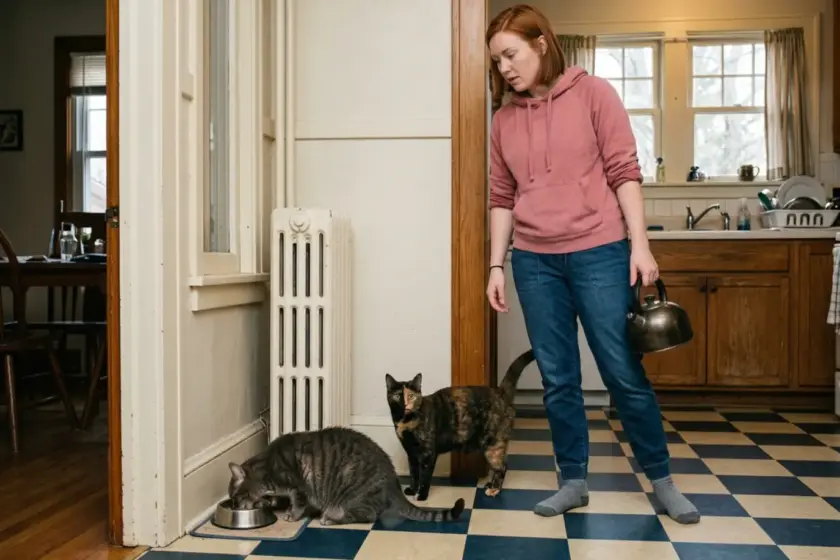
“Wash the food bowl after every meal” is a manageable instruction with one cat. With three, it is a different chore entirely, and the honest version of this advice says so instead of pretending the answer scales for free.
More cats means more meals, more washes, and faster surface wear on any given bowl. The fingernail test from the last section simply comes due sooner in a multi-cat house, and that is not a discipline failure. It is more surface spending more hours wet.
The Water Bowl Carries the Longer Wet Window
The split between the food bowl and the water bowl is real and almost nobody separates them. A food bowl gets licked clean within minutes and washed on a meal schedule. A water bowl sits full and standing all day, gets topped up rather than emptied, and typically gets washed when someone notices it. That standing-wet window is the whole difference, and it is why the scratched water bowl is the more urgent swap of the two even though the food bowl looks dirtier.
Water bowls need washing at least daily, more with more cats. If you have moved from bowls to a fountain, the water side of this has its own clock, and it isn’t the same one.
Why a Pack Beats a Bowl
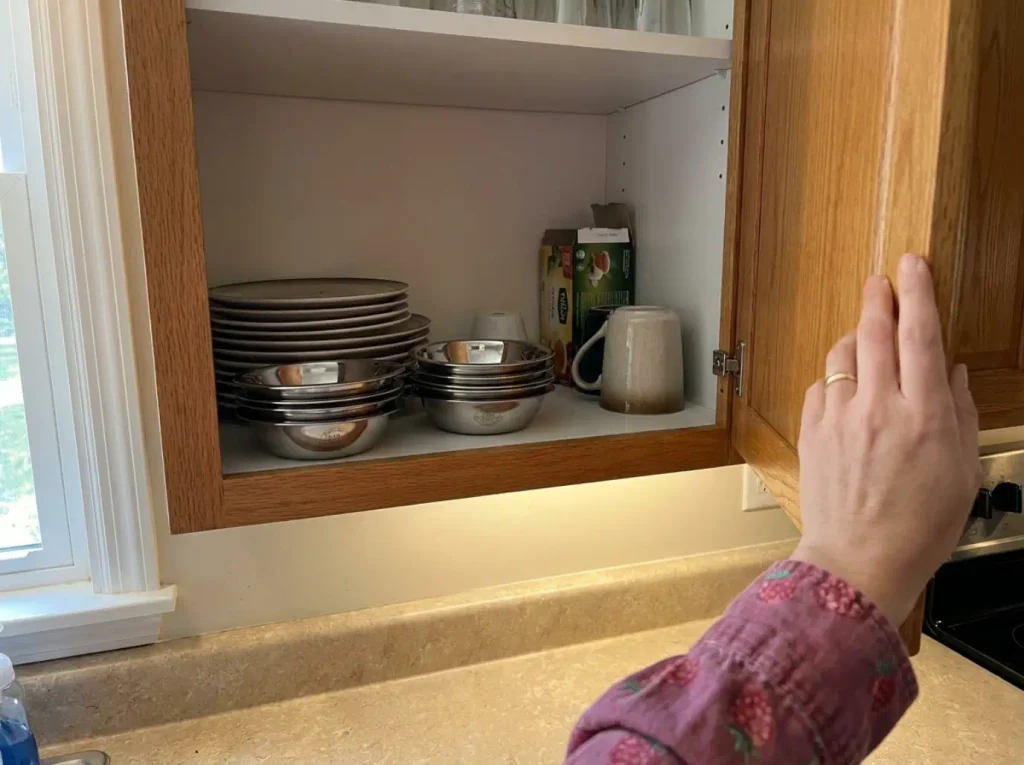
Multi-cat households tend to buy steel in four and six packs rather than one bowl at a time, and it is not only about the per-bowl cost dropping. Spares are what make “wash it now” actually happen. The dirty bowl goes to the sink and a clean one goes down immediately, which turns the routine into a swap instead of a task you have to complete before the cat can eat.
That is a systems fix rather than a discipline fix, and systems are the ones that survive. The 4 Pcs Stainless Steel Cat Bowls are the budget-friendly version of this, four shallow bowls at 5.5 inches across, which is a diameter you can measure against the space you actually have. Four small steel bowls will not hold a large portion of wet food without spreading it thin, so they suit dry feeding and small wet portions better than a full can.
- Keep enough bowls in the cabinet that a dirty one goes straight to the sink and a clean one goes straight down. Two per cat is the point where this stops requiring willpower.
- Wash the water bowl daily regardless of how clean the water looks, because water looking clean is exactly the trap.
- Run the fingernail test more often with more cats. More meals and more washes means the surface gets there faster.
The Routine That Survives Week Three
Swapping the bowls is the easy part. It takes an afternoon, it feels productive, and then it is done. What actually decides whether any of this mattered a month from now is whether the washing routine is still happening, and most routines built on good intentions do not make it past the third week.
The Daily Version, and What It Actually Costs You
The baseline is food bowls after each meal and water bowls at least once a day. That is not an aspirational target, it is the cadence that all the material assumptions in this article quietly rest on. A 304-grade steel bowl washed weekly is not doing better than a plastic one washed twice a day.
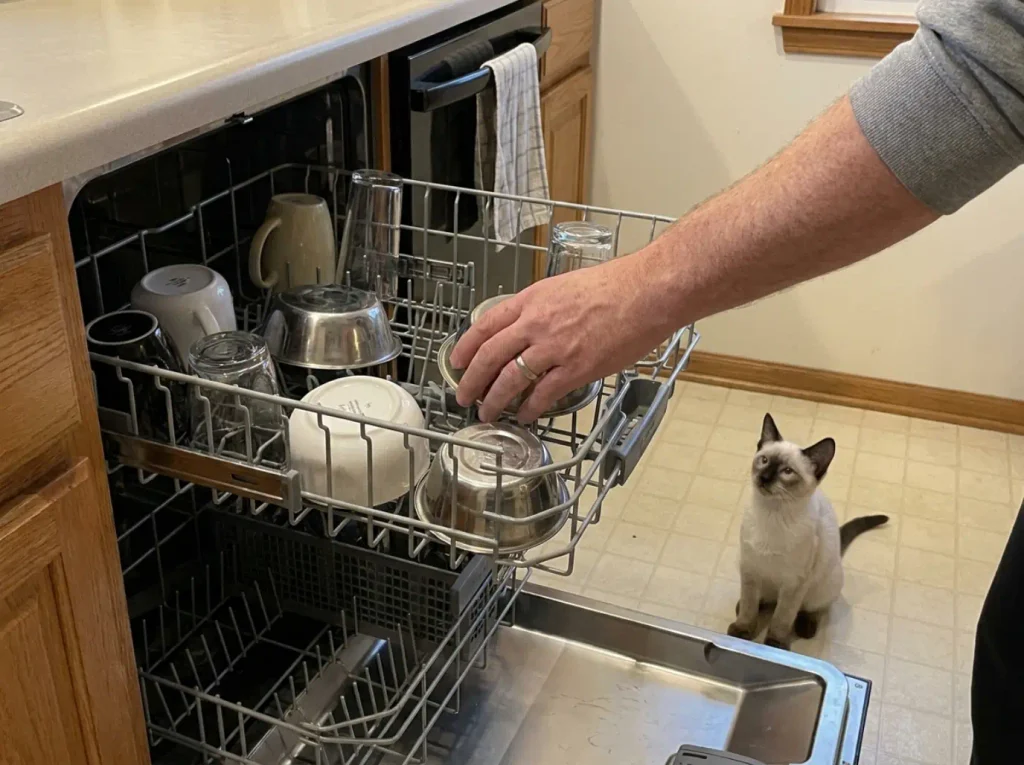
Two things make it survive. The dishwasher, if your bowls tolerate it, because 150°F on the highest setting does what your hands and a sink cannot. And enough bowls that the routine is a swap rather than a chore. That is genuinely the whole method.
The Water Bowl Is the One That Gets Skipped
It gets skipped because water looks clean. There is nothing visible in it, nothing crusted on the rim, nothing to trigger the impulse that sends a food bowl to the sink. So it gets topped up for four days and washed on the fifth, and it is the bowl with the longest standing-wet window in the house.
Biofilm re-forms in days, not weeks. That is why it surprises people. A routine built on “wash it when it looks dirty” is permanently running behind the thing it is trying to prevent, and the same biofilm-on-a-cleaning-clock problem shows up in a fountain with more moving parts to hide in.
The fingernail test is not a one-time thing either. Steel and glass hold up far longer than plastic, but nothing is permanent, and a bowl that starts catching gets retired whatever it is made of.
Attach the water bowl wash to something that already happens rather than to intention. It goes in the sink when the coffee goes on, or when the evening dishes do. A routine hooked onto an existing habit survives week three; a routine that needs remembering does not.
Conclusion
The bacteria answer is settled and it is the one to act on. A scratched plastic bowl holds what a wash cannot reach, the scratches are too narrow to see, and the biofilm inside them comes back faster than your cleaning schedule. Run a fingernail around every bowl in the house tonight and retire the ones that catch.
The acne answer is not settled, and refusing to pretend otherwise is the point of this article. Cornell’s own dermatologist calls the link an old wives’ tale and says the cause is unknown. Swap the bowl because of what the surface is doing, not because of a claim nobody has demonstrated.
And if something is already on your cat’s chin, that is a vet visit, and it stays a vet visit whatever the bowl turns out to be made of.
Check back in three weeks, but not at the bowls. Look at the routine. If the water bowl is still getting washed daily, the material choice will do its job on its own; if it isn’t, more bowls in the cabinet will fix that faster than more resolve will.
Start with the fingernail. Some of your bowls will pass, and the ones that pass are fine.
Amazon’s Audible — free for 30 days
Your cat won’t let you read. Let someone read to you.
Audible is Amazon’s audiobook library — thousands of titles, read out loud, on your phone. Free for a month, plus one audiobook to keep forever.
Frequently Asked Questions
01What is the safest material for a cat bowl?
Stainless steel is the usual answer, because it is non-porous and does not develop the microscopic scratches that hold bacteria. Glass and food-grade ceramic work too: glass from a known-quality source, and ceramic specifically labeled food-grade or lead-free, since some glazes can leach.
02Do Cats Prefer Ceramic or Plastic Bowls?
Preference between those two materials is not well established, and any site telling you cats have a strong opinion about it is guessing. What does affect whether a cat eats comfortably is the bowl’s shape and depth rather than the material, since a wide, shallow bowl keeps whiskers clear of the sides.
03Can I Use Dawn Dish Soap to Wash My Cat’s Food Bowl?
Yes, ordinary dish soap and hot water is the standard advice, rinsed well. What soap cannot do is reach into a scratch, so once a surface is scored the wash gets the surface clean and leaves what is living below it. The bowl’s condition matters more than the soap you pick.
04What Bowls Are Not Good for Cats?
Any bowl whose interior has gone scratched, hazed or cloudy. That is the condition, not the material label. Plastic gets there fastest, and an older, chewed plastic bowl is a bigger concern than a new one, because chewed plastic sheds more of what it contains.
05Why Is There Slime in My Cat’s Water Bowl?
That film is biofilm, a bacterial layer that protects itself from soap, and it forms fastest in a scratched surface with a long wet window, which is exactly what a water bowl is. It coming back days after a thorough wash means the surface is scored, not that you washed it badly.
Leave a comment