Best Whisker Fatigue Bowls, Measured Against His Face
The best whisker fatigue bowls run 5.5-6.5 inches of usable flat width, under 2 inches deep + measured inside the rim, not the listing.

Alfredo RamsesFounder · September 7, 2026 · 22 min read

On this page8 sections
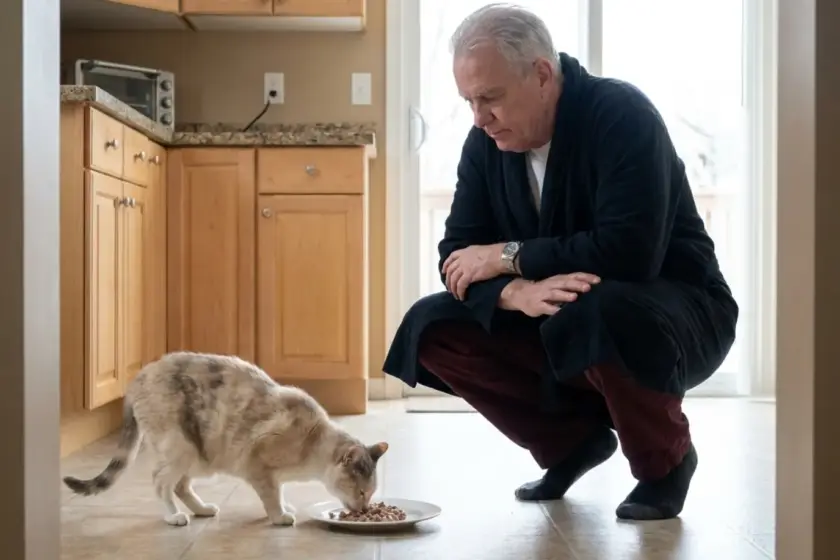
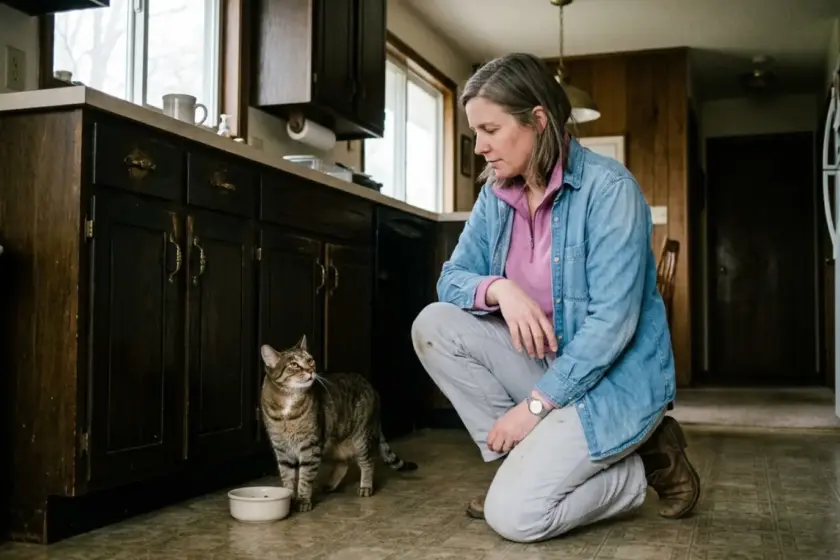
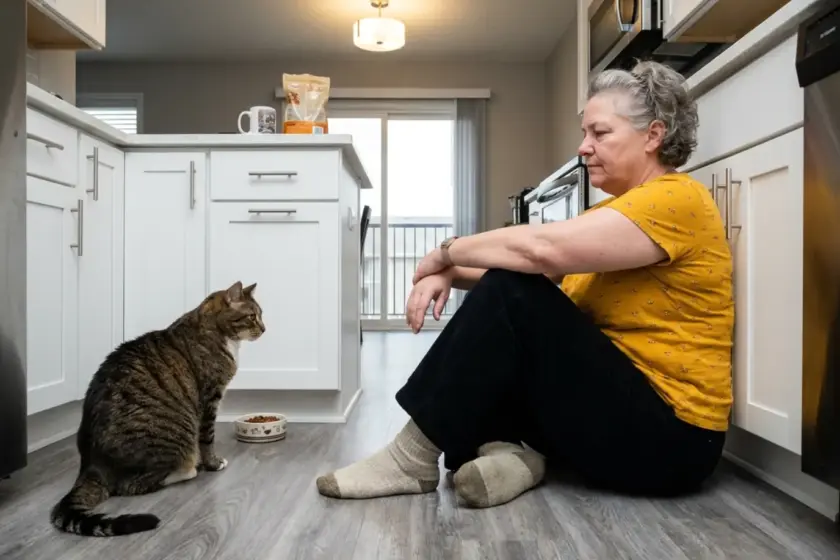
The bowl arrived, the box said whisker-friendly, and the whiskers still brushed the sides on the second bite. He isn’t being fussy about his dinner. A cat who backs off a bowl mid-meal is reporting a shape, and a shape is a number you can measure.
The honest starting point is that the only controlled trial anyone has run on this found no measurable difference in how much or how fast cats ate from a wide dish versus a normal one, and that most of the cats in it still picked the wide dish when they were allowed to choose. Both halves of that are true, and the best whisker fatigue bowls are the ones chosen against the width of your own cat’s face rather than the width a brand decided to print on a box. Here is the number to look for, how to test it tonight for free, which flat bowls are worth buying by material, and why the water bowl is the half that gets forgotten.
Quick Answer
There is no single winning bowl. The measurement decides, not the brand. What to look for:
- 5.5 to 6.5 inches of usable flat width, measured inside the rim
- Under 1.5 inches deep, with a flat floor rather than a well
- Sides that flare outward instead of rising straight up
- Stainless steel or glazed ceramic before plastic
- A non-slip base, or a mat under it
- Your cat’s cheek-to-cheek span plus about two inches sets the target
What “Whisker-Friendly” on a Box Actually Promises
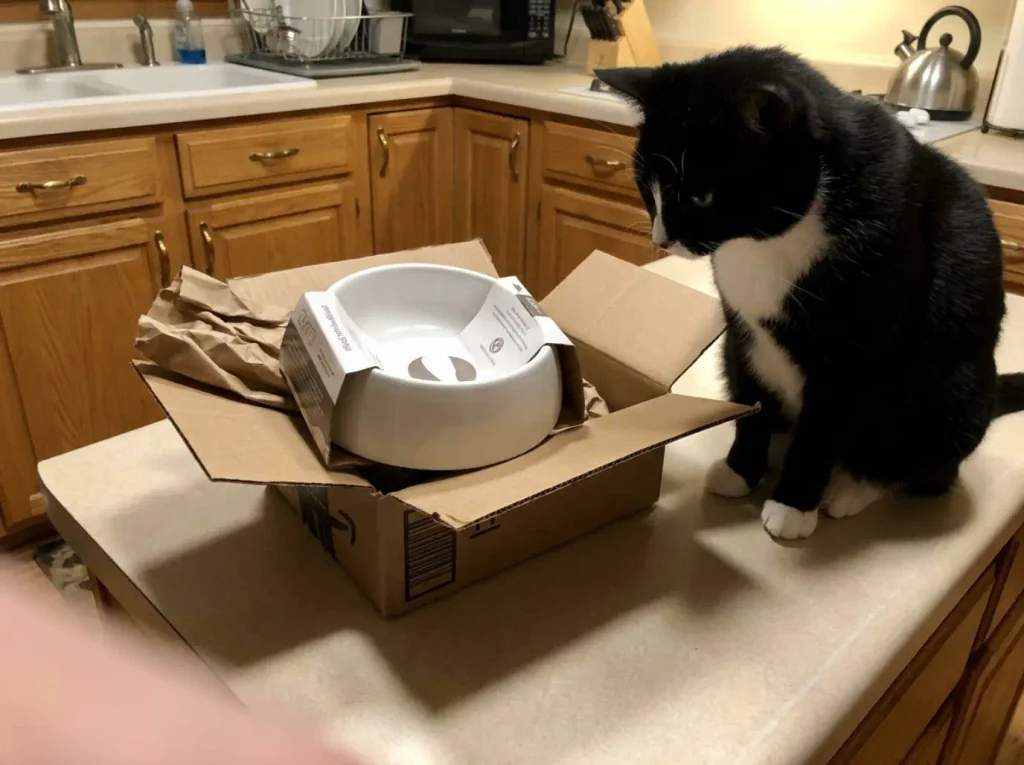
Nothing. There is no width behind the phrase, no depth, no test, and no standards group that certifies it. A manufacturer can print whisker-friendly on a dish that measures four inches across the floor and nobody will stop them, because the phrase describes an intention rather than a specification. That matters more than it sounds, because most readers arriving at this article have already bought one bowl on the strength of that label and watched it fail.
If you want the full background on what whisker fatigue is and what the evidence actually supports, the pillar covers it properly. This section is about the gap between the label and any measurable standard.
The commercial floor is lower than most people assume. Bowls sold under the whisker-friendly banner cluster around 12 to 13 centimeters of minimum width, roughly 4.7 to 5.1 inches, and plenty of the ones built more generously still land near six inches at the outside rim rather than the inside floor. For an average adult cat that is workable. For a broad-faced adult it is not, and the label gives you no way to tell the two apart before the box arrives.
Then there is the study, which is where this gets uncomfortable and interesting at the same time. In 2021, the only controlled trial on whisker stress found no measurable eating difference across 38 cats: no change in how long they took to eat, no change in how much food ended up on the floor, no change in how much they finished. That is the honest headline and any article that hides it is selling you something.
It is also not a reason to close the tab, because the same trial found that 24 of those 38 cats had a clear preference for the wide dish when they were given a free choice between the two. Performance and preference came back as two different findings, and both of them are real.
I used to treat that null result as the end of the argument, and I’d have told you the whole category was a marketing invention. What changed my mind was the preference half. Twenty-four out of thirty-eight cats is not noise, and a cat expressing a preference about the object his face goes into every day is a cat describing something. If you want that argument run out in full, the sibling article covers how far the evidence goes, and where it stops so this one can stay on shopping.
A bowl that says whisker-friendly and gives no width anywhere in the listing is telling you it has no width worth quoting. Brands that build wide print the number, because the number is the selling point. Silence is a spec.
There is a detail in that study almost nobody repeats, and it undercuts the label harder than the null result does. The two commercial dishes the researchers used were ordinary products bought off the shelf, sold with exactly the same vague width language as everything else in the category. The gold-standard test of whisker-friendly bowls was run on bowls whose whisker-friendliness nobody had verified either. Nothing in that chain forces a manufacturer to hit a number, which is why measuring your own cat outranks reading any box.
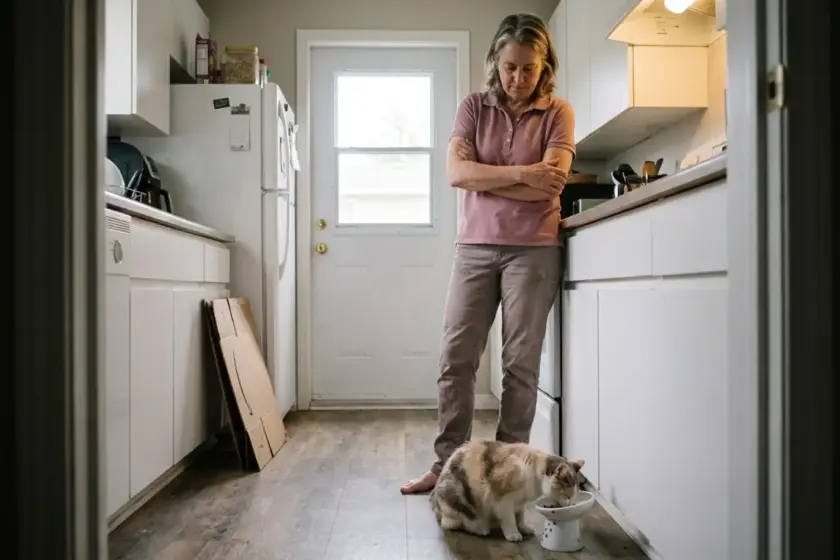
The failure this causes is depressingly repeatable. The most useful thing in the whole research pile for this article was an owner who bought a ceramic bowl marketed specifically as an anti-whisker-fatigue product, put it down, and watched the whiskers keep touching the sides. She had done everything the category asked of her. She bought the right kind of thing from the right kind of brand, and the dish was still too narrow for her particular cat, because the brand had never met her cat.
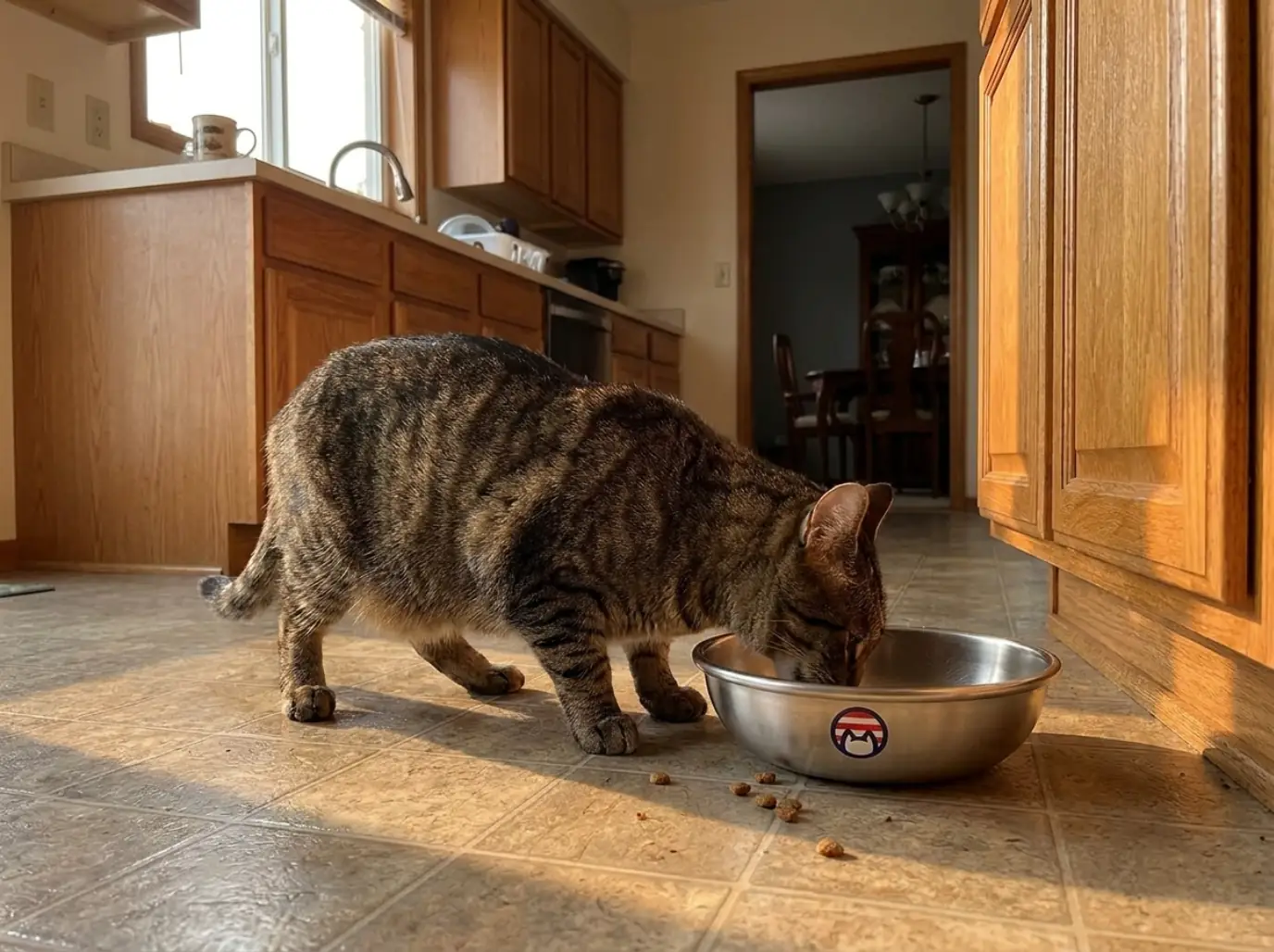
One line before the shopping, and then it stays there: a cat who suddenly stops eating, or who eats noticeably less for more than a day, needs a vet rather than a different dish. That is a visit, not a purchase. Everything below assumes you are dealing with a cat who eats but leaves food, backs off partway through, or pulls dinner onto the floor.
Measure the Cat Before You Measure the Bowl
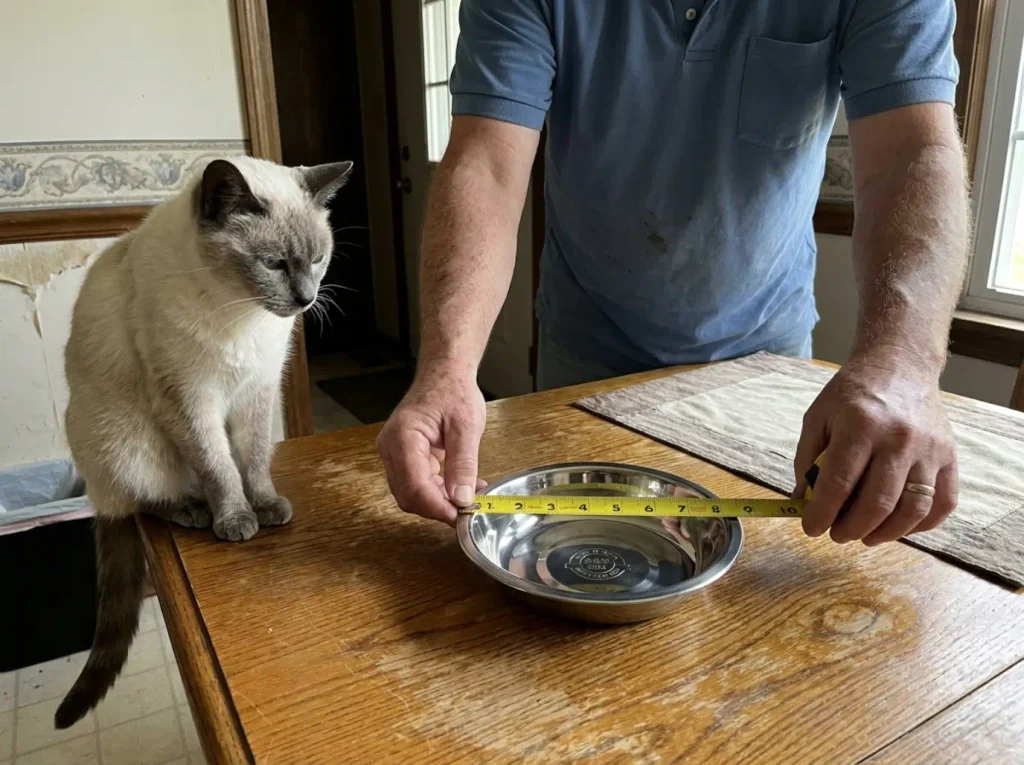
Every competing article in this space says wide and shallow. Not one of them says wide compared to what. The cat carries the specification on his face and it takes about thirty seconds to read it, which makes this the single most useful thing on this page.
Wait until he is relaxed, ideally sitting or loafed rather than hunting something. Measure straight across his face at the widest point, cheek to cheek, whiskers included. That figure is his whisker span, and it is the only number in this article that belongs to your cat rather than to a manufacturer.
Do not do this while he is alert and fanning them forward, because forward whiskers give you a different and larger number that describes a mood rather than a resting face. What you want is the span he actually carries into a bowl at dinnertime. Most adult cats land somewhere between three and four and a half inches across; a broad-faced cat, or a large one, sits at the upper end of that.
Then add roughly two inches. That total is the usable flat width the dish needs, and the word doing all the work in that sentence is usable. It is the width of the flat floor inside the rim, not the outside diameter printed on the listing.
This is where published cat bowl dimensions stop being useful. A bowl advertised at six inches with thick ceramic walls and a curve that starts early can leave you under five inches of actual flat floor, which is how a technically-six-inch bowl fails a cat whose span is three and a half. Read every listed number as the outside measurement unless the seller explicitly says otherwise, because that is what it usually is.
Cheek-to-cheek span, plus two inches, equals the usable flat width, measured inside the rim. That is the whole rule. Write the number on your phone before you open a single product page.
The working range this blog publishes is 5.5 to 6.5 inches of usable flat width and under 1.5 to 2 inches of depth. An average adult clears the bottom of that comfortably. A broad-faced or large cat needs the top of it, and the difference between the two ends of that range is exactly the difference between a bowl that works and a bowl that gets returned. Food and water do not land on the same answer either, and the full food-and-water sizing, which are not the same number is where that framework lives in full.
Depth gets ignored and it should not. A dish can be gloriously wide at the mouth and still funnel the whole meal into a narrow well at the bottom, which puts the face down into the sides at exactly the moment the food is hardest to reach. By the last third of dinner your cat is eating out of a cone. Width without a flat floor is a half-solved problem, and it is the half most listings photograph from an angle that hides.
If you are not yet sure this is even your cat’s problem, the food ring on the floor and the four other signs is a faster read than any purchase. The bowl that tends to fail is the one that was wide by brand standard instead of wide for that particular animal, and the way you skip that whole category of mistake is by owning a number before you own an opinion.
Try the Plate You Already Own First
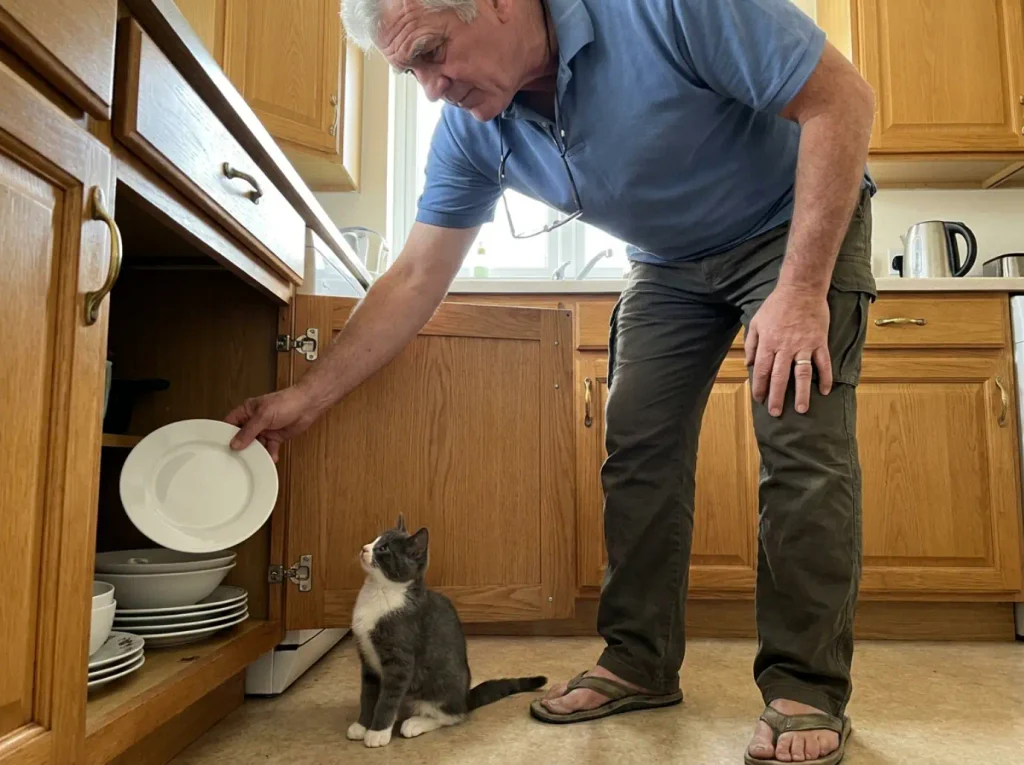
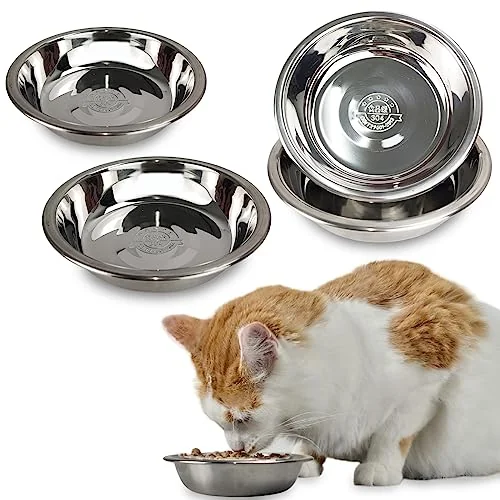
Before anything gets bought, go open the cabinet. A plain stainless steel side plate or a ceramic dessert plate is already flat, already wide, already food-safe and already in your kitchen, and it is functionally closer to the wide dish used in that study than half the bowls on sale. This is not a consolation prize for people who don’t want to spend money. It is the fastest experiment available and it runs tonight.
Give it two or three meals and watch three specific things. Does the ring of dropped food on the floor get smaller, the one that comes from pawing food out of the bowl rather than eating it out of it. Does the bowl avoidance ease off, meaning he stops stepping back from the dish partway through and then returning to it.
And does he finish in one sitting instead of coming back to the same bowl three times over an hour. Those three are the observable signals, and none of them require you to interpret anything about the cat beyond what he visibly does.
If the plate fixes it, you have converted a gamble into a known quantity. You are no longer buying a bowl and hoping; you are buying a plate with a rim and a non-slip base, in a material you prefer, at the width you have now confirmed works. That is a completely different purchase, and the failure rate on it is close to zero.
And if the plate changes nothing at all, that is worth just as much. It tells you the shape was probably never the problem, which saves you from buying three bowls in sequence looking for the one that fixes something a bowl cannot fix. At that point the useful move is to go look at what to try before buying anything at all, which covers placement, height and the rest of the non-purchase routes.
Run the plate test on the meal he cares about least, not his favorite. If he walks away from a plate of the food he’d normally inhale, the shape was never the issue and you have just saved yourself a purchase.
Two places the plate genuinely falls short, because pretending otherwise would be dishonest. A flat plate has no rim, so wet food gets pushed clean off the edge onto the floor, and a cat who eats enthusiastically will redecorate the area around it. And a smooth plate on tile or laminate slides, which produces the exact backing-off behavior you were trying to fix. So the plate is the test rather than the permanent answer for most kitchens, and its two failure modes are precisely the two features worth paying for in a real bowl: a low rim and a base that grips.
Steel, Ceramic, and the Plastic Question
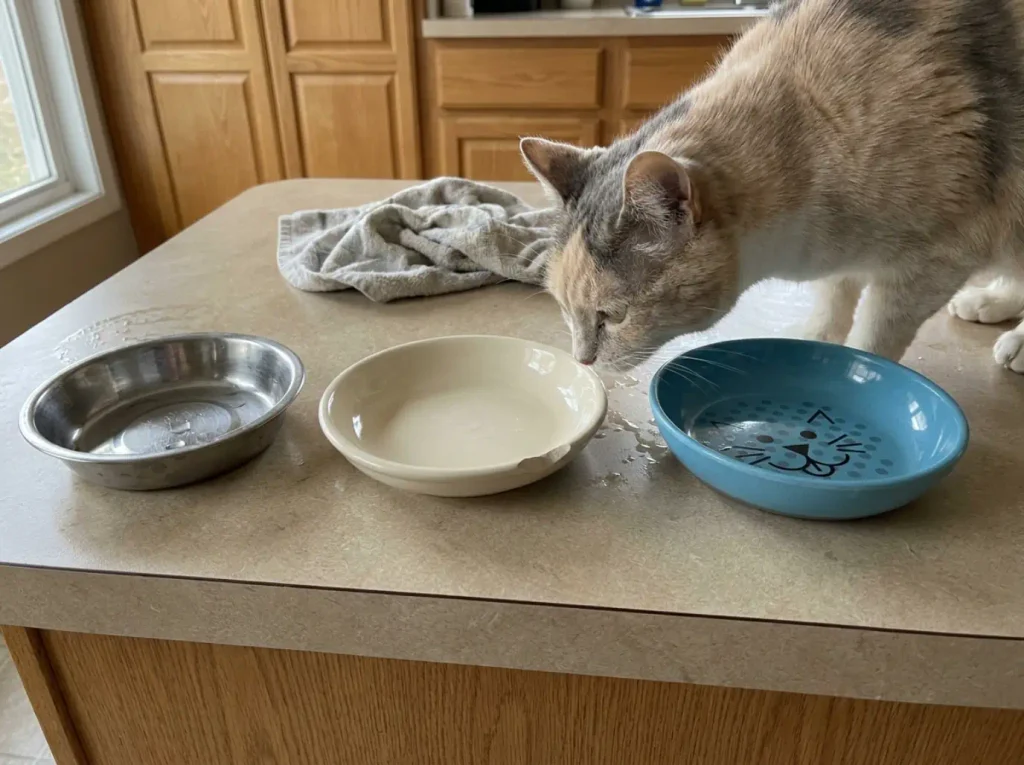
Almost every cat blog on the internet tells you plastic bowls cause chin acne. Cornell calls that an unproven old wives’ tale, and it is worth knowing because the actual argument for steel and ceramic is duller, less dramatic, and considerably more useful.
The real objection to plastic is mechanical. Soft plastic scratches, scratches hold residue, and residue does not come out in a normal wash. A bowl that has been scrubbed daily for a year has a surface topography you cannot see and cannot clean, and that is a hygiene issue rather than a skin diagnosis. The two answers do not lead to the same advice, and the two separate answers on plastic bowls has the whole correction if you want the reasoning rather than the verdict.
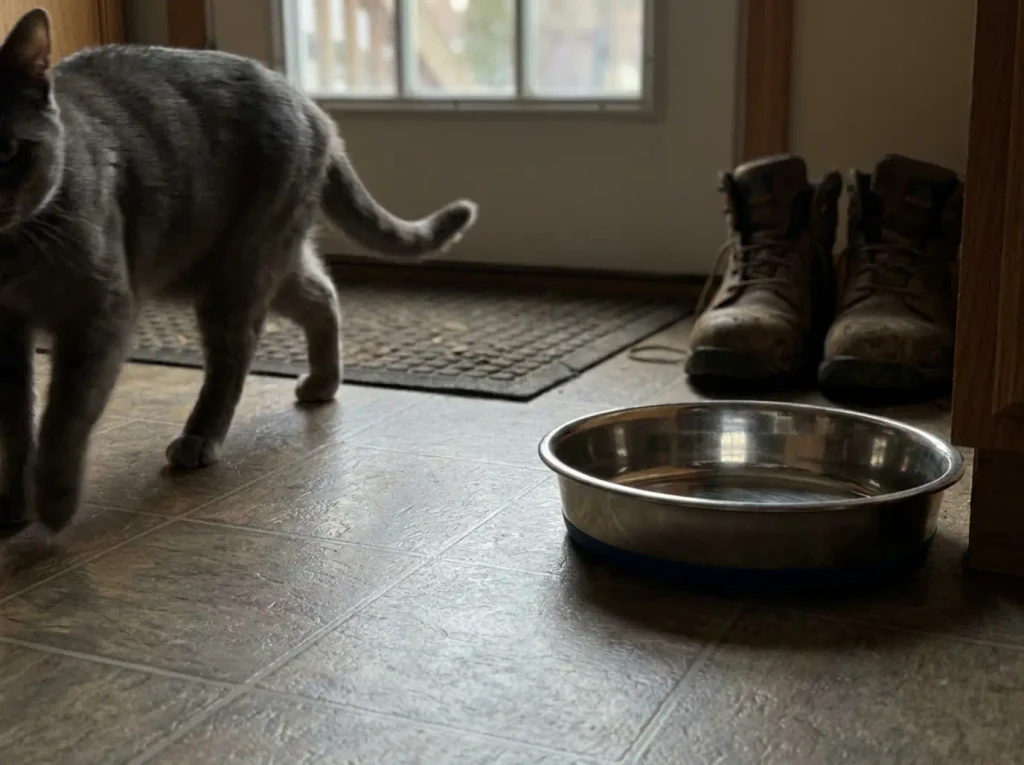
Stainless steel is the default for a reason. The spec worth reading in a listing is 18/8, also written as 304-grade: it resists scratching, it goes in the dishwasher without degrading, and it will outlast the cat. Its one real weakness is weight. Steel is the lightest of the three materials here, and a light bowl on a hard floor travels while the cat eats, which is why a non-slip base or a mat matters more with steel than with anything else.
Ceramic solves that by being heavy. It stays where you put it, it holds temperature, and glazed food-grade ceramic is as easy to clean as steel. The trade is fragility with a specific retirement rule: the moment the glaze chips, the bowl is done. A chipped glaze exposes porous material underneath, and porous material is the same residue-holding problem that made worn plastic a bad idea. Not later, not when it gets worse. The day you notice the chip.
Bamboo-composite is the third option and it exists for people who have ruled out both. It’s plant-based, BPA-free, lighter than ceramic and warmer to the touch than steel, usually with a silicone non-skid base molded in. Honestly, it’s a narrower recommendation than the other two, but it is a real answer for someone who doesn’t want metal in the kitchen and doesn’t want something that shatters.
| Material | How It Handles Width | Stays Put | Care |
|---|---|---|---|
| Stainless steel (18/8) | Thin walls, so the outside number is close to the usable floor | Lightest of the three, wants a mat | Dishwasher, scratch-resistant, lasts years |
| Glazed ceramic | Thick walls eat width, check the inside floor not the diameter | Heavy enough to hold on its own | Dishwasher, but retire it the day the glaze chips |
| Bamboo-composite | Usually built shallow and wide, but small in overall diameter | Silicone base molded in | Hand wash, and it wears faster than the other two |
Weight and grip are not a separate feature from the material choice; they are part of it. A bowl that skates across the floor while a cat is eating produces backing-off, pausing and food on the floor, which is the identical behavior people read as whisker fatigue and try to solve with a wider dish. Fix the sliding first if the bowl slides, because a wider bowl that also slides just gives you a bigger moving target.
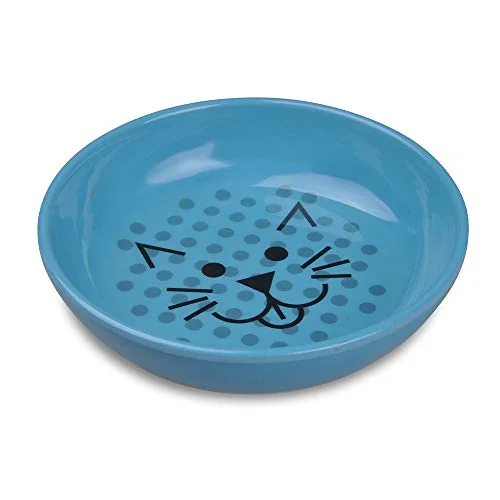
The Flat Bowls Worth Buying
You have a number now, so these are organized by situation rather than ranked one to five. Every one of them gets its downside in writing, because a pick without a stated limit is an advertisement.
One thing to settle before the picks: buy for food and water separately. A matching pair looks tidy and is not automatically the right pair, because the water bowl usually needs to be the wider of the two. If you want the reasoning behind the material claims rather than just the verdicts, the full ceramic, steel and plastic comparison holds the whole argument.
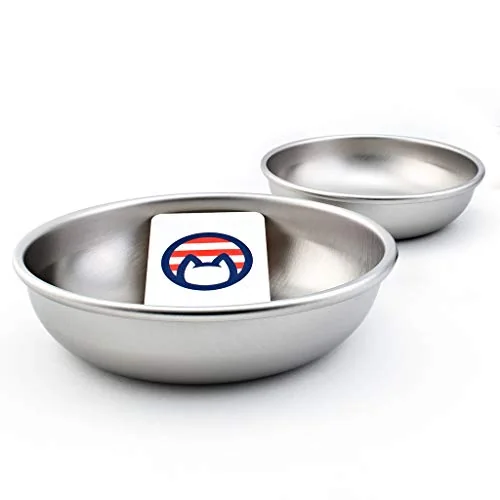
If you only need one dish, or the sliding is the specific thing driving you up the wall, the answer is different and cheaper.
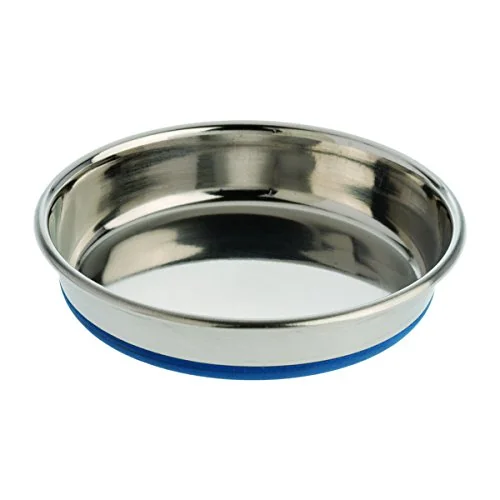
For the ceramic route, the version worth having is the one that ships with the mat, because otherwise you buy the bowl in week one and the mat in week three anyway.
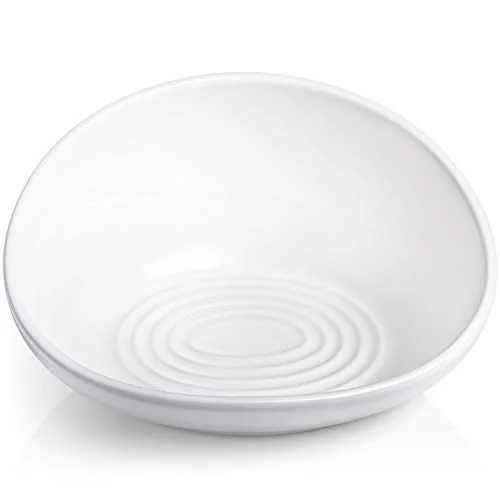
Capacity is the trade-off nobody states out loud, and it catches people out about a week in. Flat and shallow means less volume for the same footprint, full stop. A one-cup shallow dish holds noticeably less than a deep bowl of the same diameter, so a food-motivated cat or a household that free-feeds needs to solve that by going wider rather than deeper. Going deeper undoes the entire point.
Age pulls the number in both directions. Senior cat feeding tends to want the wider end of the range because a stiff neck makes leaning into a dish harder, while kitten bowl size runs smaller for the obvious reason and then stops being right about eight months later, which is a bowl most people never think to replace. Wet food shifts the answer again, and the depth a wet-food eater actually needs is where those numbers diverge.
There is also a cost that is not money. A wide flat dish takes up more floor or counter than a deep one holding the same amount, and in a small apartment kitchen that is a real constraint rather than a footnote. A multi-cat feeding station at correct spacing means two of these footprints, in different places, which is a floorplan decision. Worth knowing before you order four bowls.
Buy one bowl before you buy the set. A four-pack of the wrong width is four wrong bowls, and sets are exactly where the width mistake gets multiplied instead of caught.
Two Cats, and the Water Bowl Nobody Plans For
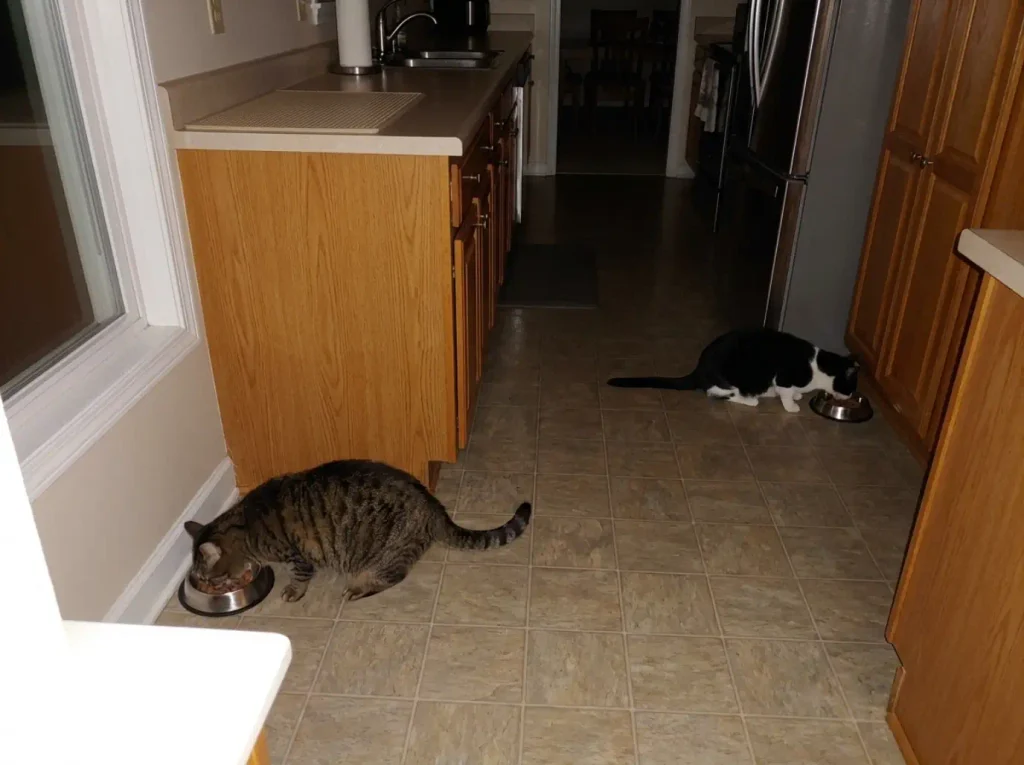
The right shape in the wrong place still fails, and there are two situations that undo a perfectly measured bowl. One of them is a second cat. The other is water, which almost everyone treats as an afterthought and which is the half where the stakes actually sit.
Start with the second cat, because the rule is simple and gets broken constantly: one bowl per cat, and then one more. A shared dish turns dinner into a queue, and a queue is a negotiation the smaller or more cautious cat loses every single evening. He is not being timid about it, he is reading the room correctly. The full version of that arithmetic, and why two cats need two bowls plus one, sits with the article that owns it.
Spacing is the part people skip, and it quietly cancels everything above. Two wide bowls pushed side by side on the same mat are functionally one station. The cats are still eating shoulder to shoulder, one of them is still eating under a stare, and a cat eating under a stare eats fast and leaves food behind, which looks identical to a whisker problem and isn’t one.
That stare has a name in the behavior literature, resource guarding at the feeding station, and it rarely looks like a fight. It looks like one cat sitting a few feet away, not moving, until the other one is done. You did not buy the wrong bowl. You built the right bowl into the wrong station.
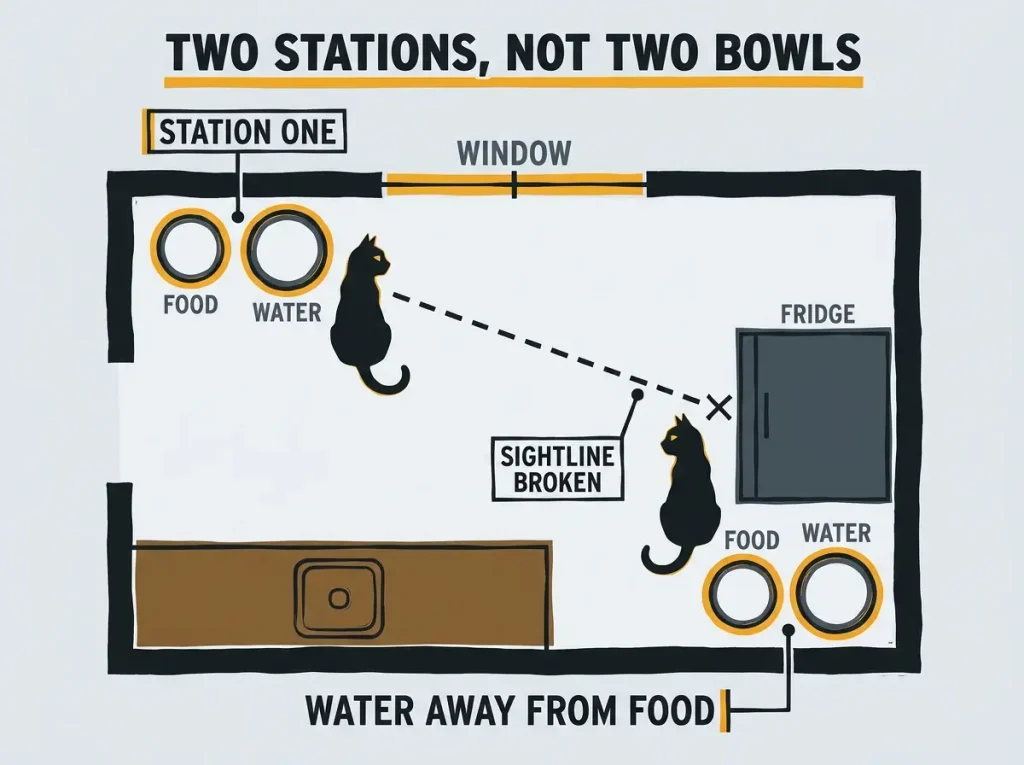
In a small apartment this is a floorplan problem rather than a shopping problem, and it is solvable without more square footage. A renter-friendly feeding setup helps here for the same reason: nothing about spacing two stations apart involves mounting, drilling or asking anyone’s permission. Under the window and beside the refrigerator beats two bowls in a row on one mat, every time, in the same kitchen. You are not looking for distance in feet so much as broken sightlines: a corner, an appliance, a table leg, anything that means one cat is not eating inside the other one’s field of view.
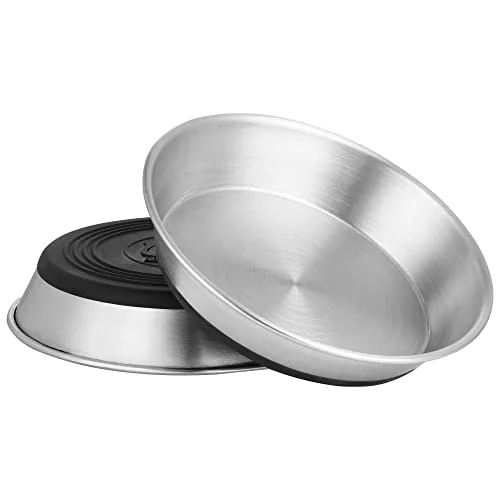
Once water stops being an afterthought, the real requirement for two cats is four dishes rather than two: a food bowl and a water bowl each, in at least two locations.
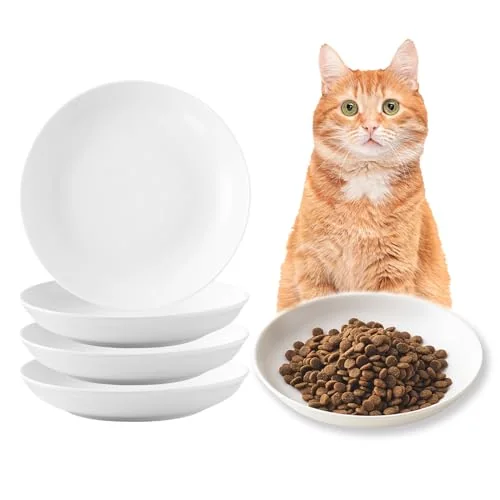
The water bowl is the harder half, and it deserves more than the sentence it usually gets at the end of these articles. Cats resist a wide water dish more than a wide food dish, which is inconvenient, because water is where the consequences live if intake quietly drops. A cat who eats a little slower is a cat who eats a little slower. A cat who drinks less over weeks is a different conversation, and dehydration in cats is one you would rather not be having.
The reflex at this point is to buy a fountain, and I’d hold off on that until the shape is right. The 2018 controlled trial on water intake found no measurable difference across still water, circulating water and free-falling water, though roughly one cat in five did show a personal preference. That is the same shape of finding as the bowl study: no population-level effect, real individual preferences. So what the fountain trial actually measured is worth reading before you spend, and the sequence is bowl width first, fountain second and only if this particular cat votes for it.
Put the water bowl somewhere the food bowl is not. A cat who drinks in the same spot he eats usually drinks less, and moving the water two rooms over costs nothing and takes ten seconds.
Then check it at three weeks, because that is roughly how long it takes for a change to either hold or quietly unravel. Is the ring of food back on the floor. Is he finishing in one sitting or has he gone back to three visits. Has the bolder cat quietly annexed both stations while you weren’t watching, which is the most common way a correct two-bowl setup collapses back into a one-bowl setup.
And is the non-slip base still gripping, because rubber rings lose their bite on a floor that gets mopped, and a bowl that has started sliding again brings the original problem back with it.
Conclusion
Measure the cat, not the marketing. Cheek to cheek plus about two inches, read as the usable flat width inside the rim rather than the diameter on the listing, and you can evaluate any bowl on any site in about four seconds.
Test with a plate you already own before you spend anything. It answers the question in one evening, and if it works it converts your next purchase from a gamble into a specification.
Buy for the household you actually have. Two cats need two stations in two places, not two bowls on one mat, and the water bowl needs its own width and its own location rather than inheriting both from the food bowl.
Check back in three weeks. That is long enough for the cat to have accepted or rejected the change and long enough for the human routine to have slipped, and the four things to look at are the food ring, whether he finishes in one sitting, whether one cat has taken over both stations, and whether the base still grips.
Take the flattest plate in the cabinet down tonight. If he finishes off it, you have your answer and you haven’t spent anything yet.
Amazon’s Audible — free for 30 days
Your cat won’t let you read. Let someone read to you.
Audible is Amazon’s audiobook library — thousands of titles, read out loud, on your phone. Free for a month, plus one audiobook to keep forever.
Frequently Asked Questions
01What type of bowl is best for cats with whisker fatigue?
A wide, shallow, flat-bottomed dish in stainless steel or glazed ceramic, with roughly 5.5 to 6.5 inches of usable flat width and under two inches of depth. The exact number is your cat’s cheek-to-cheek span plus about two inches. Measure that before you read any listing.
02Do cats prefer deep or shallow bowls?
Shallow, when they are given the choice. In the only controlled trial on this, 24 of 38 cats picked the wide dish over the standard one, even though the study found no measurable difference in how much or how fast they ate. Preference and performance are two separate findings and both are real.
03Do bowls bother cat whiskers?
They can. Whiskers are dense with nerve endings, and a bowl whose sides rise around the face keeps brushing them through the meal. That has not been shown to change how much a cat eats, but plenty of cats behave as though they would rather it stopped.
04Will a wider bowl fix a cat who has stopped eating?
No, and this is the important one. A cat who suddenly stops eating, or who eats much less for more than a day, needs a vet rather than a different dish. Bowl shape is worth fixing when a cat eats but leaves food, backs off mid-meal, or pulls food onto the floor.
Leave a comment