How Often to Clean Cat Bowls, by What’s In Them
Wet food after every meal, dry & water daily, fountain weekly [4 clocks, one per bowl] + the no-dishwasher swap that makes the routine stick.

Alfredo RamsesFounder · September 28, 2026 · 16 min read
On this page7 sections
- 1How Often to Clean Cat Bowls, One Clock at a Time
- 2Why the Wet Bowl Is on a Faster Clock Than the Dry One
- 3What Actually Happens When You Skip a Day
- 4The Version That Works Without a Dishwasher
- 5Two Cats, Three Bowls, and How the Math Changes
- 6The Clock Comes From the Bowl, Not the Calendar
- 7Frequently Asked Questions
The bowl looked fine when he walked away from it last night. This morning you run a finger round the inside curve and it drags, faintly, in a way clean ceramic does not. He noticed before you did, which is why he ate half of it and left. A cat who walks away from a bowl he emptied last week is not being difficult, he is reporting on the dish, and that bowl avoidance is the earliest signal you get.
How often to clean cat bowls is not one number, because the thing setting the clock is what you put in them: researchers who counted the bacteria on real owners’ bowls found the numbers split by what was served, not by how nice the bowl was. Below is one clock per bowl type, the reason those clocks differ, and the renter friendly version that survives a small apartment kitchen with no dishwasher and more than one cat.
Quick Answer
There is no single frequency. Each bowl runs on its own clock, set by what goes in it.
- Wet or raw food: wash as soon as the meal is over, every meal.
- Dry food: wash once a day, even though it looks clean.
- Water: empty it, wipe the inside curve, refill. Daily.
- Fountain: full strip-down weekly, filter on the maker’s schedule.
How Often to Clean Cat Bowls, One Clock at a Time
Every cat bowl cleaning schedule you have already been given is one blended rule: daily, with a deep clean weekly. That answer is useless in a real kitchen, because a real kitchen has a dry food bowl holding kibble since 7am, a wet food bowl that held its meal for eleven minutes, and one bowl of water nobody has ever seen the cat drink from. Three different jobs. One rule cannot cover them. Cleaning is only half of bowl care anyway, and the other half is where the bowls sit in the first place, which decides whether the cleaning ever happens.
The schedule only starts making sense once you split it by contents:
- Wet and canned food: wash it when the meal ends, not when the day ends. Moisture and protein set this clock, not how dirty it looks. A wet bowl waiting for the evening pass has been a growth medium on your floor since lunchtime.
- Dry food: once a day, minimum. Kibble residue is comparatively inert, but the bowl still collects oils that go stale and a film you will feel before you see it. Once a day is the floor, not the goal.
- Water: emptied, wiped and refilled daily. Water that still looks clear is not the same as water that is clean, because the film grows on the bowl, not in the water.
- Raw diet: raw diet bowl hygiene is its own category. Not “the same bowl, washed more” but the same handling you would give a board that touched raw chicken, after every single use.
The wet-food rule is the one that gets quietly dropped. Roughly one cat owner in five actually washes after every meal; most default to once a day, which is the dry-food clock applied to a wet bowl. And a deep, steep-sided wet-food dish makes that worse in a way nobody warns you about, because the part you can reach with a sponge is not the part that holds the residue. A shallow wet-food bowl is easier for the cat and about twice as fast to wash properly, which matters more than it sounds when you are doing it twice a day forever.
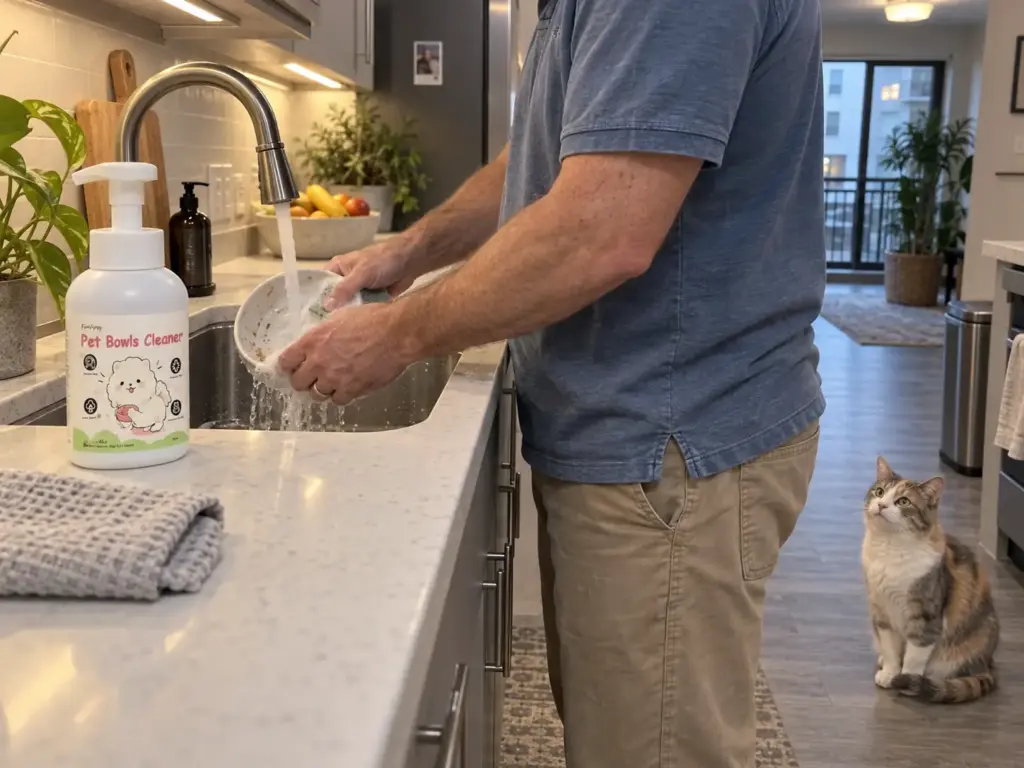
Then there is what you wash it with, which is the question people actually mean when they ask about Dawn. A plain hand wash with dish soap, hot water and thirty seconds of friction handles all four clocks above. That is the free answer, and it covers almost everybody. The one situation where it stops being enough is a cat who starts leaving a bowl you know is clean: at that point the scent is the suspect, and a fragrance-free option like the Furrtripsy Pet Bowl Cleaner Mousse is pH-balanced and leaves nothing behind for him to object to. The caveat is honest: it does nothing your dish soap does not, unless detergent scent was the problem, in which case it does the one thing your dish soap cannot.
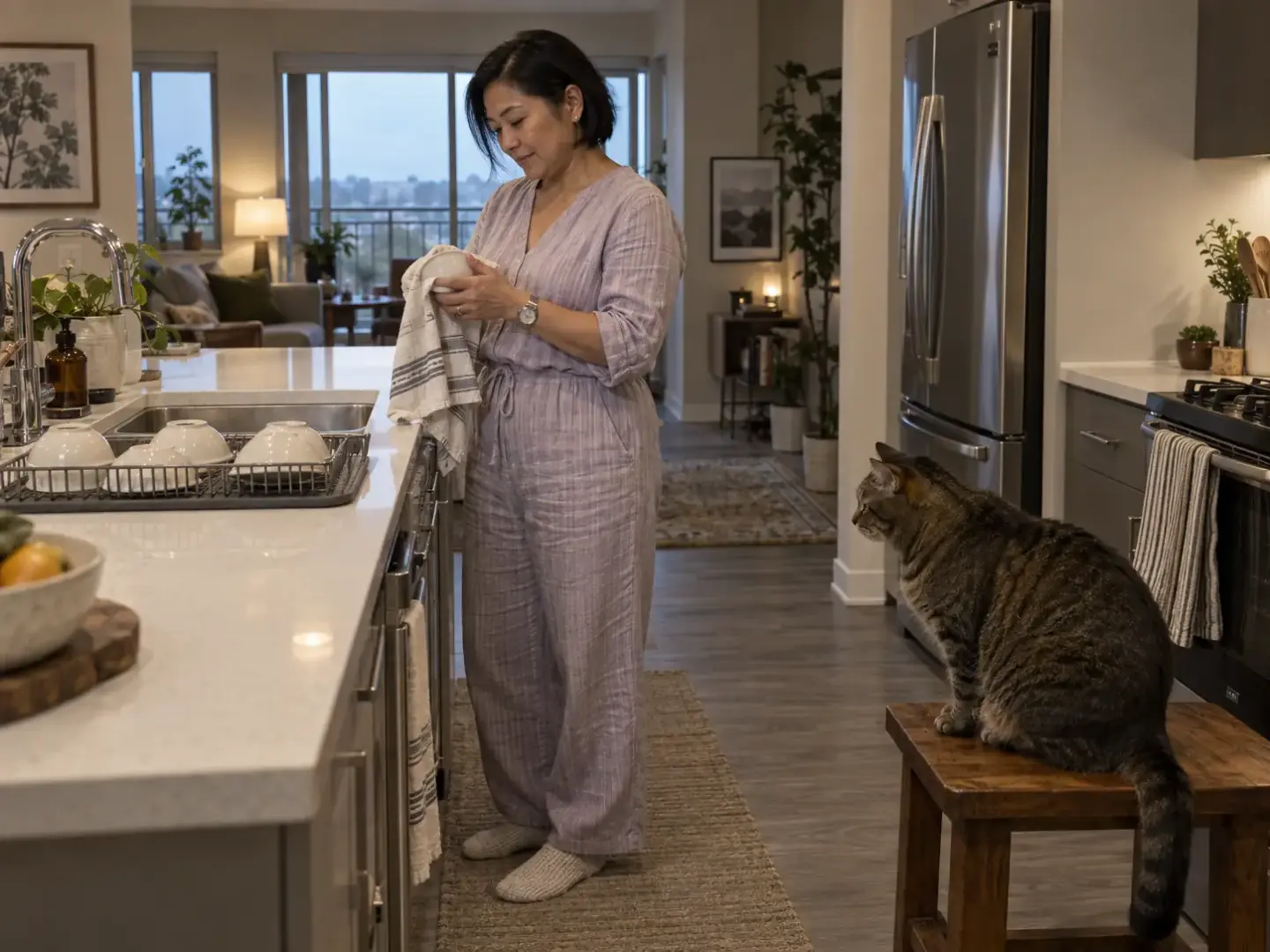
Attach the wash to a thing that already happens, never to a time of day. The bowl gets washed when the empty can goes in the trash, or when the kettle goes on. “Every evening” is not a routine, it is an intention, and intentions are the first thing to go on a bad week.
Why the Wet Bowl Is on a Faster Clock Than the Dry One
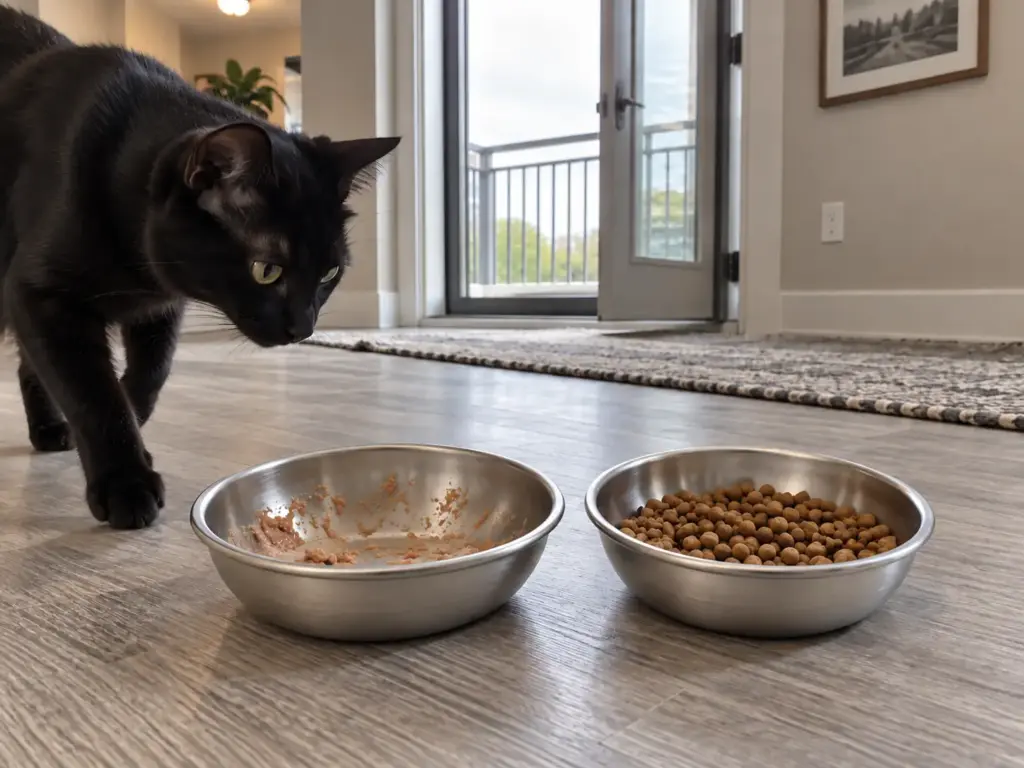
The reason nobody keeps the schedule is that nobody ever explained it. “Wash it more often” is an instruction, and instructions last about eleven days. Bacteria need three things: moisture, food and time. A wet-food bowl hands over all three at room temperature. A dry bowl hands over one and a half, because kibble residue sits there fairly inert until something makes it damp.
That difference has been measured, not just asserted.
According to a 2023 study in BMC Veterinary Research, “Significantly higher TMABc were observed in dog food bowls in which wet food was provided compared with dry food.” That sentence is about dog bowls, and it is worth being straight about it: the bowl-by-bowl counts in that paper came out of dog households, while its survey of who actually washes what covered cat households too. The mechanism does not care which animal is eating. Same homes, same owners, same sinks, and the only variable was what went in the dish.
The same study turned up something worth saying out loud, because it cuts straight against the advice everyone gives, including the advice I used to give. Stainless steel bowls in that sample carried higher bacterial counts than plastic ones. Not because steel is a worse material, since its non-porous surface is genuinely easier to get clean. Because a bowl that is easy to clean and a bowl that gets cleaned are two different bowls, and the owners in that study appear to have been coasting on the material.
Steel buys you a faster wash. It does not buy you a longer interval between washes. The two-sided version of whether plastic bowls are actually the problem is worth a read on its own, but for the schedule it changes nothing.
What you are fighting in all of this is biofilm, which is the thing you have already met without having a word for it: the slick, faintly slippery layer on the inside curve that water slides straight over. It is not loose food. Nobody has published an honest biofilm formation time for a pet dish, which is why this article does not give you one. It is a structure that anchors itself to the surface, and it starts forming well before a bowl looks or smells like anything is wrong.
That is the whole reason a rinse feels like it worked and then Thursday smells like it did not. Water does not remove biofilm. Soap and friction remove biofilm.
And here is where the cat gets the credit he is owed. His sense of smell runs at a scale yours does not, so a bowl that reads as neutral to you can read as spoiled to him. A cat eating with less enthusiasm from a dish he used to finish is giving you a hygiene report, not an opinion about the food.
Two honest caveats on that: chin irritation where the jaw rests on the rim, what a vet would look at for chin acne, and an appetite change that outlasts a genuinely clean bowl, are both a vet visit rather than a cleaning problem. Get that cleared first, then come back to the dish.
The squeak test settles the argument in four seconds. Run a dry fingertip round the inside curve of a bowl you have just washed. If it squeaks and catches, it is clean. If it glides, the film is still on there and no amount of extra rinsing will change that. Soap, friction, try again.
Where the material does earn its keep is in the speed of the daily pass, and speed is what decides whether a daily habit survives. The Americat Company Stainless Steel Cat Bowls are 304-grade 18/8 steel, which means no scratch grooves for the film to hide in and dishwasher safe through repeated sanitize cycles without hazing. A bowl you can wash in fifteen seconds is a bowl you will wash. Just do not read that as permission to stretch the interval, which is precisely the mistake the study caught.
What Actually Happens When You Skip a Day
Everybody skips. The useful thing is knowing which skip costs you nothing and which one you will be smelling on Thursday, so here is the honest ranking.
Skipping the dry bowl for a day is the cheapest miss on the list. You get a film and some stale oil, and soap plus friction takes it back to zero. Nothing compounds. Skipping the wet bowl until evening is a different category entirely: that is the one that earns a smell in the room, and your cat reacts to it first, usually by eating less of the next meal you serve in it.
The water bowl is the sneaky one, because the failure is disguised as maintenance. That slick ring at the waterline is the visible edge of the film, and topping the bowl up instead of emptying it grows the ring rather than diluting it. Topping up is the single most common version of “I clean it every day,” and it is not cleaning, it is feeding.
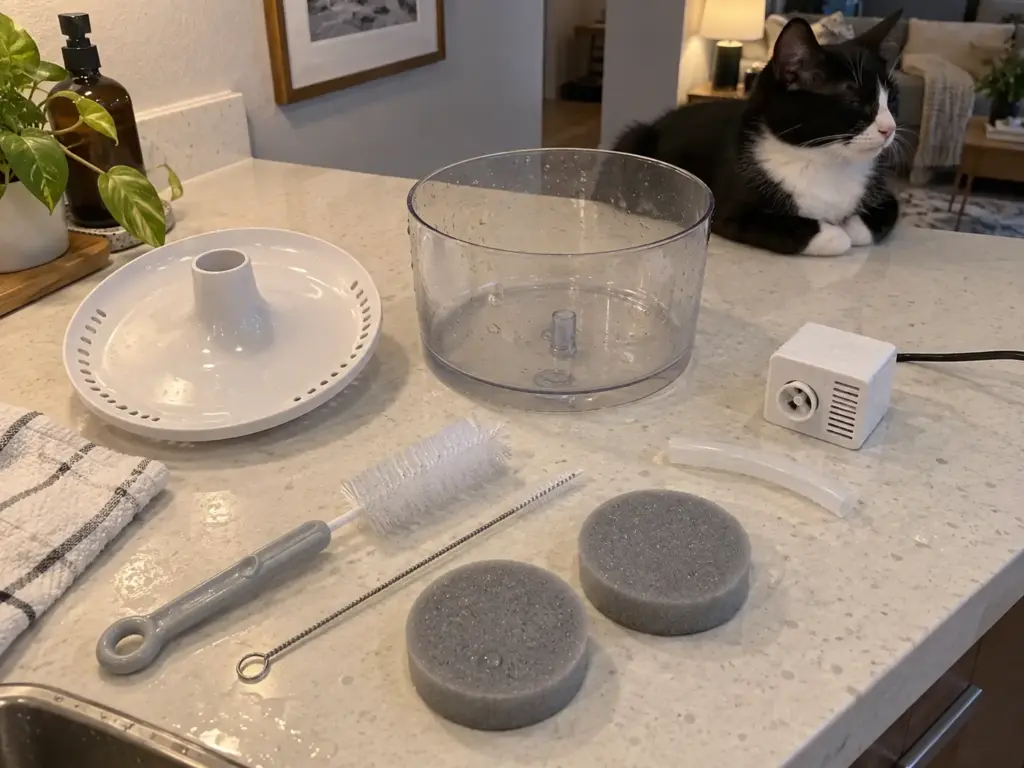
Fountains fail in slow motion, which makes them worse rather than better. More water, more surfaces, and several places a cloth physically cannot go: the pump housing, the tubing, the underside of the top plate. A fountain skipped for a week is not a bowl skipped for a day, it is four hidden surfaces growing the same layer where you cannot see it.
Start free: most fountain tops come apart further than people assume, and a genuine strip-down with a sponge you already own beats any accessory. When the pump housing is the part defeating you, a COLLBATH fountain cleaning brush set has the long, narrow handles that reach into the tubing and the impeller well. The limitation is that it is a tool for one job, so if your fountain fully disassembles you do not need it.
Worth knowing separately: cleaning the cat fountain filter itself is a different task on a different schedule from washing the housing, and the fountain runs on three clocks of its own once you count water, housing and filter separately.
One thing that changes the math without changing the schedule: a bowl in a warm corner of the kitchen runs a faster clock than one on cool tile. Same bowl, same contents, warmer air, shorter window.
When you have skipped and you honestly cannot remember how far behind you are, stop counting and reset. Run the whole set through a sanitize cycle, or a hot hand-wash with soap and real friction on every inside curve, and start the clock today. Trying to catch up on a schedule you have lost track of is how people give up on it altogether.
The Version That Works Without a Dishwasher
Almost every version of this advice quietly assumes an appliance. The standard answer to the frequency problem is “put it in the dishwasher,” which works beautifully if you have one and can run it daily.
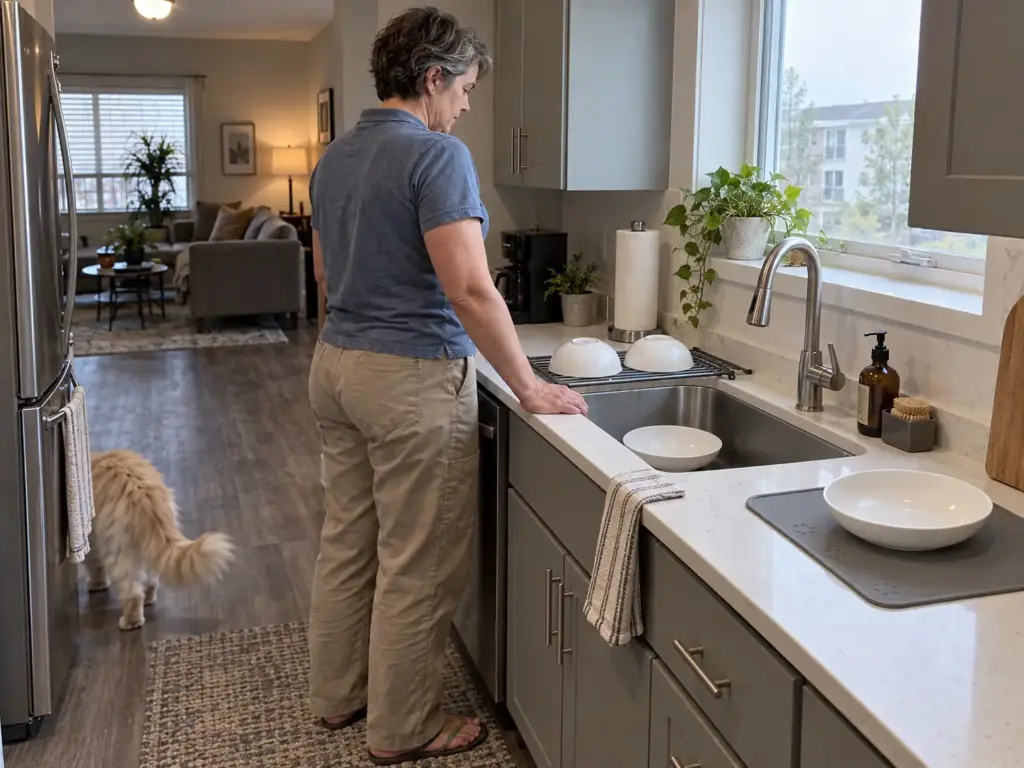
In a rental with one sink and a foot and a half of counter, the wet-food rule means standing at that sink four separate times a day. Nobody does that for a month. It is not a willpower failure, it is a badly designed chore.
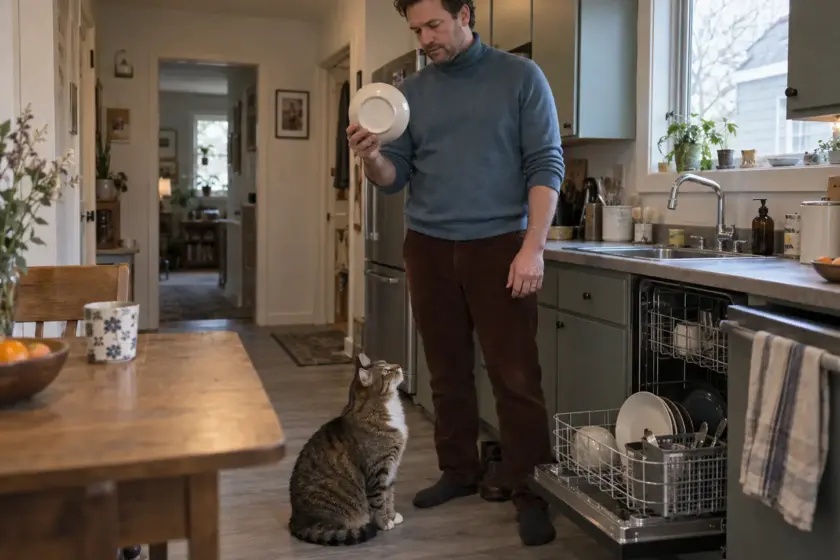
So stop washing after every meal and start swapping after every meal. That is the entire idea, and a bowl rotation turns a frequency problem into a bowl-count problem, which is a much easier problem to solve. A second and third bowl mean the dirty one goes in the sink and a clean one goes down in the same motion.
The bowl still gets cleaned after every meal in every sense that matters bacterially. It just gets cleaned in a batch, once, at a time you choose. Multi-cat households have been doing this informally for years, which is exactly why stackable bowl sets are what people with four or more cats buy.
Four bowls is the number that makes it work for one cat with real spares, or two cats with no spares. A Ceramic Cat Food Bowl Set gives you four of the same wide, shallow ceramic bowl, so you get the rotation and the bowl geometry in one purchase. Free version first, though, and it is worth trying for a week: you almost certainly already own a second bowl, and a shallow side plate does the job while you find out whether the rotation actually sticks in your kitchen. Whatever you rotate, get the shape right, because how wide and how shallow the bowl needs to be is a separate decision that a rotation will multiply by four rather than fix.
The hand-washing itself is less mysterious than it sounds, but one part of it is not negotiable. Hot tap water, dish soap, and friction on the inside curve, in that order. The friction is what does the work. Your faucet does not reach the temperature that sanitizes on its own, which is the real reason a dishwasher’s sanitize cycle is a different thing rather than just a convenient one.
Then rinse it out completely. Detergent residue is the most common reason a cat starts leaving a bowl he used to empty, and from the owner’s side it looks exactly like fussiness.
Drying matters more than people expect, which is unfortunate, because it is the step everyone skips. A bowl put away damp is a head start for the next film, so stand them upside down on a rack and let the air do it.
On a rental counter or a small stretch of floor, a swap station spreads and drips, which is the practical objection to running a rotation in a small apartment at all. An Amazon Basics silicone feeding mat with a raised edge keeps the whole operation inside one wipeable rectangle. It is a nice-to-have, not a requirement, and a rimmed baking tray does the same job if you have one going spare.
Two Cats, Three Bowls, and How the Math Changes
With more than one cat it is not twice the washing. It is a different problem, and the schedule you were keeping quietly stops applying without telling you. Bowls get shared, grazed at, and finished by the wrong cat, which means you have lost track of what has been in each one.
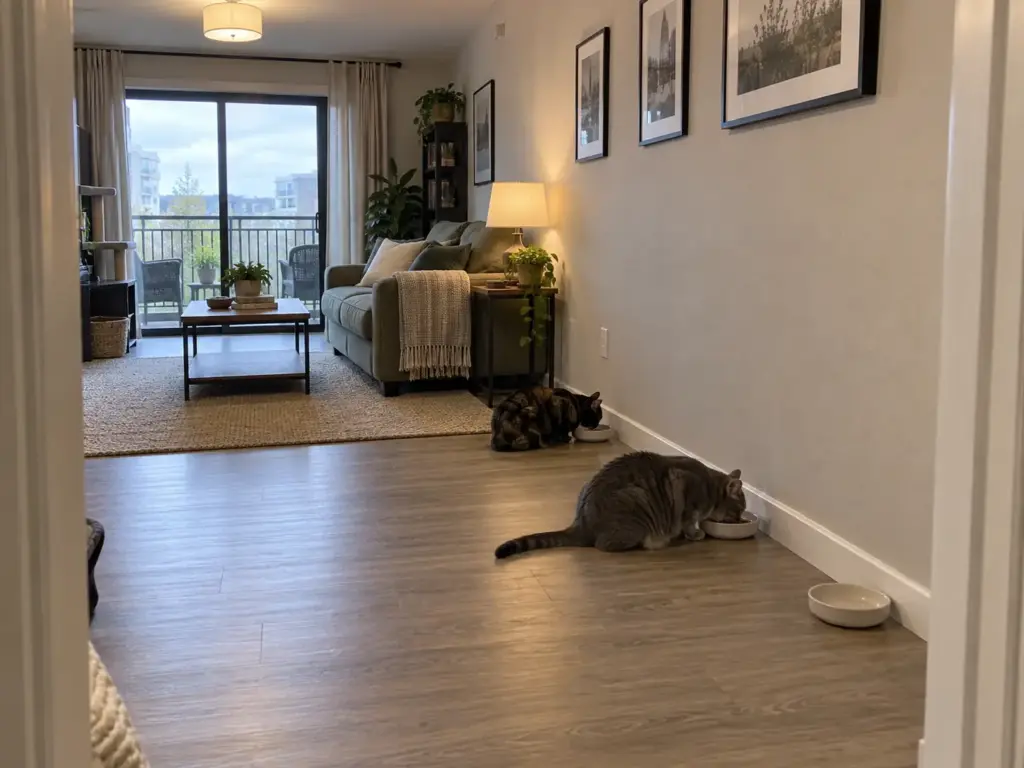
Start with the count, because it decides everything after multi-cat feeding gets involved: one bowl per cat, a full set each, plus a spare. Same logic as the litter box rule and it exists for the same reason, which is that a resource with no alternative is a resource under pressure. Whether cats will share a bowl at all has a longer answer than this section needs, but the short one is that they will tolerate it and you will pay for the tolerance somewhere else.
Free-feeding is what actually breaks the clock, and it explains most of the under-cleaning out there. I used to read those two-or-three-times-a-week answers as people cutting corners. They are not. There was simply never a moment that said now.
Around four in ten cat households leave food out all day, and a bowl that is never empty never feels due for a wash. That is how households that graze end up washing two or three times a week while sincerely believing they have not skipped anything. There was nothing to trigger the wash.
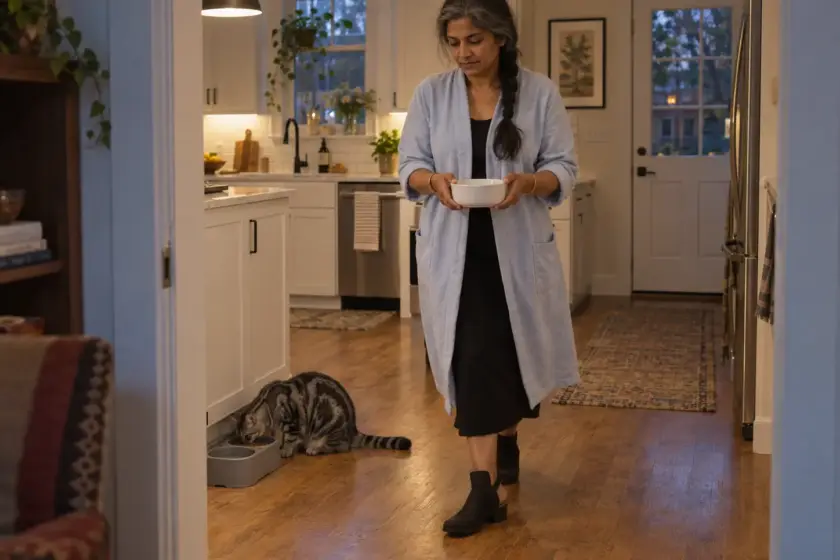
Set meals fix this for free, which is why they come before any purchase in this section. The bowl is empty, the meal is over, the wash is obviously due. The routine enforces itself instead of relying on you to remember a rule about a dish.
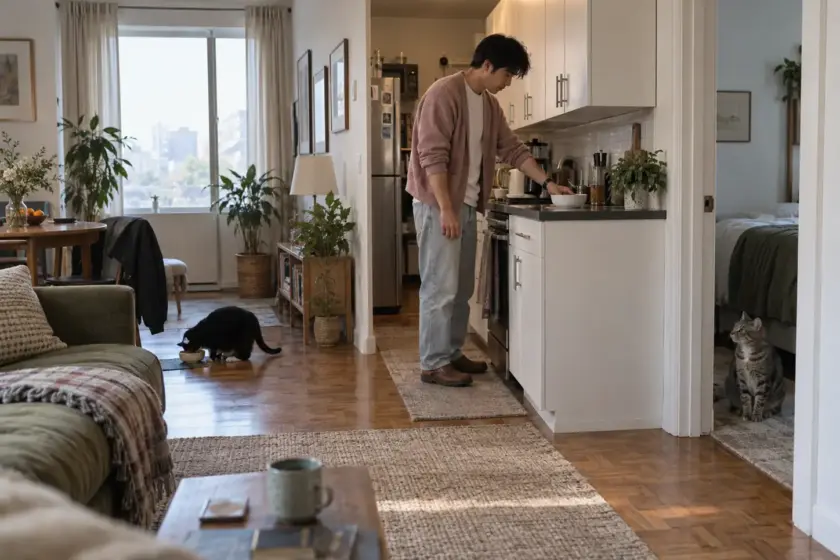
Batching is the multi-cat version of the rotation: two cats on wet food is four bowl-washes a day done one at a time and resented, or one wash session done properly with the radio on. Same bowls, same soap, a fraction of the standing.
One corner you cannot cut, though, and unhelpfully it looks like the most cuttable one on the list. Skipping a cat’s own bowl because his housemate’s looks fine is the one shortcut that does not work, because those two bowls are not on the same clock. The cat who eats fast and cleanly and the cat who leaves half of it and comes back at midnight are running entirely different schedules in the same apartment.
And when the cats disagree with your setup, they are right about the constraint. A cat who waits for the other one to finish before approaching is not being polite, and a cat who walks away from a shared bowl is not being difficult. Both of them are telling you there are not enough bowls, and adding one is cheaper than negotiating. If this is the point where you start suspecting the bowls themselves are the next decision rather than the schedule, the full rundown on bowls is where that starts.
The Clock Comes From the Bowl, Not the Calendar
Three things to take with you. The clock is set by what is in the bowl, so wet food gets washed after every meal, dry food and water get washed daily, and the fountain gets stripped weekly. If the schedule keeps slipping, add a bowl instead of adding willpower, because swapping after every meal and washing the batch once a day is the same hygiene with a tenth of the friction. And friction plus a full rinse is what actually cleans a bowl: hot water alone slides over the film, and detergent left behind is why a cat starts refusing a dish that is technically spotless.
Check back in three weeks. That is long enough for the new routine to have either grown a cue attached to it or quietly stopped, and it is short enough that you have not spent a season feeding a film. The check itself takes four seconds per bowl: dry fingertip round the inside curve, squeak or glide.
Today’s move costs nothing. Put a second bowl in the cabinet beside the first one, where you will see it when you reach for the clean one. If the rotation holds for three weeks, that was the entire fix.
Amazon’s Audible — free for 30 days
Your cat won’t let you read. Let someone read to you.
Audible is Amazon’s audiobook library — thousands of titles, read out loud, on your phone. Free for a month, plus one audiobook to keep forever.
Frequently Asked Questions
01How Often Should I Wash My Cat Bowls?
Wet-food bowls after every meal, dry-food and water bowls once a day, and a fountain stripped down weekly. The split matters more than the frequency: one blended rule leaves the wet bowl sitting dirty for hours, which is the bowl that needed washing soonest.
02Can I Use Dawn Dish Soap to Wash My Cat’s Food Bowl?
Yes, with hot water and a full rinse. Plain dish soap plus friction is what removes the film, and nothing gentler will. The thing to watch is residue: a bowl that still smells faintly of detergent is a common reason a cat starts leaving food he used to finish.
03Should I Leave Food in My Cat Bowl All Day?
If you want the cleaning schedule to hold, no. A bowl that is never empty never feels due for a wash, which is why free-feeding households often clean two or three times a week without ever noticing they drifted off daily.
04Do Cats Prefer Deep or Shallow Bowls?
Shallow and wide, for most cats, because it keeps the whiskers clear of the sides. It also makes the bowl faster to wash properly: the inside curve is where the film clings, and a shallow bowl has far less of it sitting out of reach of a sponge.

Leave a comment