What to Look for in a Cat Hair Vacuum for a Rented Apartment
What to look for in a vacuum for cat hair starts with 17 minutes on carpet, not the 60 on the box, plus a rug test (and a closet check).

Alfredo RamsesFounder · October 20, 2026 · 14 min read

On this page7 sections
- 1What to Look for on a Cat Hair Vacuum's Spec Sheet, and What Each Number Promises
- 2The Rug Test You Can Run Before the Return Window Closes
- 3Will It Fit the Hall Closet and Go Up the Stairs? The Renter's Fit Check
- 4Clear the Cat Tree and the Bed by Hand Before the Vacuum Starts
- 5What This Page Skips on Purpose, and Where the Rest Lives
- 6Mark the Patch, Run One Pass, Measure the Closet
- 7Frequently Asked Questions
The rug where your cat sleeps is the real test, and no vacuum box mentions it, because every number on the packaging was measured on a floor that is not yours. He picked that spot for his own reasons and keeps leaving hair in it. So what to look for in a vacuum for cat hair comes down to checks you can run in your own apartment: the spec sheet read as claims, one pass over the sleeping rug, the closet and the stairs, and a hand tool that goes first. Consumer Reports and Which? both publish how they measure these machines, and this page borrows their logic.
Quick Answer
The vacuum for cat hair is the one that passes four checks in your own apartment.
- Read every number on the box as the maker’s claim, not a result.
- Run one pass over the rug where the cat sleeps, then inspect the cloth, bin and brush.
- Measure the closet and the stairs with the machine out of its box.
- Clear the cat’s bed and tree by hand before any machine starts.
What to Look for on a Cat Hair Vacuum’s Spec Sheet, and What Each Number Promises
You have three tabs open, three cordless sticks, and three spec sheets that disagree in three different units. One leads with suction, one with minutes, one with a weight in pounds, and none of them says a word about the corner of the rug where your cat leaves the most hair. Each number answers a narrower question than the one you are asking, so it helps to know which question it does answer. The table sets the four numbers you will meet on the left and what each one leaves out on the right.
| Number on the box | What it actually measures | What it does not tell you | The home check |
|---|---|---|---|
| Suction (Pa) | Static pressure with the air path sealed, by one maker’s own account | How much hair a rug gives up, since a rug never seals the hose | The marked-patch pass |
| Run time (minutes) | Often the low-power, hard-floor figure | Minutes at full power on carpet | Time your first room on your own rug |
| Weight | The machine on a shelf | The machine in your hand on the way to the rug | Carry it from the closet to the rug |
| Noise (dB) | A person’s ear at full power | How the room sounds to the cat | Run it where you will use it |
Suction numbers are a maker’s claim, not a cat-hair result
Suction arrives as a Pa rating, in pascals, and the figures printed on spec sheets run into the tens of thousands. One robot-vacuum maker explains the unit plainly: pascals are static pressure, measured with the air path sealed, which is the motor pulling against a blocked hose.
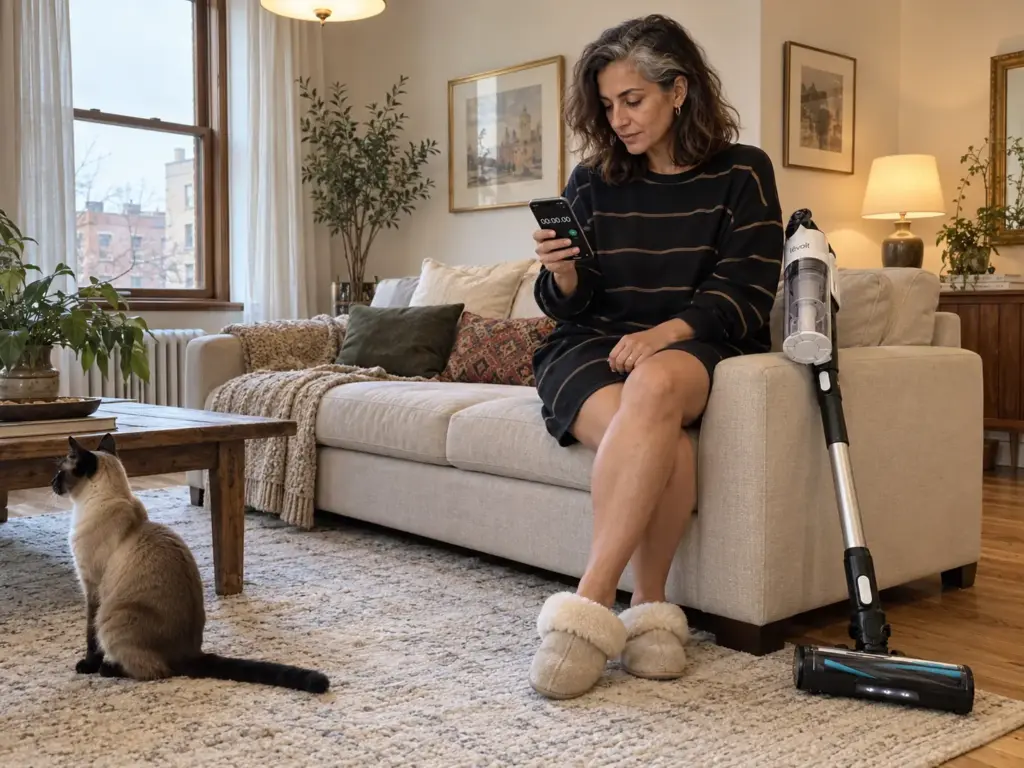
A rug never blocks the hose. Air keeps moving through the pile, so the pressure on the box describes a situation your living room never creates. That explanation comes from a maker, not from an independent lab, which makes it one claim about another claim.
What it does explain is why the biggest number does not settle the rug. Why a strong figure still leaves hair pressed into the carpet, along with the brush roll, the filters, the surfaces and the type of machine, is laid out in the vacuuming guide for cat hair, so this page does not repeat it.
Run time: the minutes on the box are not the minutes on your rug
Battery run time is where the box and the rug part ways the furthest, and Which? put numbers on the gap. In its cordless battery tests, published in December 2025, the average across brands was 17 minutes at maximum power on carpet, against 60 minutes at minimum power on hard floor. By brand, the carpet averages ran from 12 minutes for Dyson and 13 for Shark up to 19 for Samsung and 29 for Gtech.
The 60 and the 17 describe the same batteries doing two different jobs.
Charging stretches the gap. The same tests put charge times between 140 minutes for Vax and 229 for Shark, so a single battery means a wait of two to four hours before the next room.
A longer number looks like the safe pick, and in a studio with a hard floor it is. In an apartment with one large rug and a long-haired cat, you need the figure measured at the power that rug demands, not the longest one on the shelf. Add a second cat and the job gets longer while the battery stays the same size.
The Levoit LVAC-200 listing says “Up to 50 Min,” and “up to” names the best case on the best floor. How many of those minutes survive your rug is a number you only get by running it; the pass in the next section is where you get it. Until you have timed it yourself, that figure belongs to the listing.
Weight and noise: the two numbers that decide whether the machine gets used
A machine that is a chore to lift stays in the closet, and a clean rug needs a machine that actually comes out. The listed weight is the machine at rest. What you feel is the carry from the closet to the rug, then to the next room, then back, and a pound more or less changes the answer on the third trip. Consumer Reports makes the same point for multi-level homes, and it comes up again with the stairs below.
Noise has a method behind it too. Consumer Reports measures it with a decibel meter at ear level with the vacuum on its maximum power setting, so the figure is the worst case at a person’s ear. It is a number for you. What it says about your cat’s room is nothing, which is why the home check is to run the machine where you will use it, at the setting you will use.
Find the minutes figure for the floor and power setting you will actually use. If the box gives only one number, treat it as the best case and time your first room before you trust it.
The Rug Test You Can Run Before the Return Window Closes
A box is open in the hallway and the return window is already counting. The most useful pet hair test published is a lab procedure you cannot repeat, but its logic travels well: put a known amount of cat fur into a rug, run the machine, and see where the fur ended up.
Mark one patch of the rug where the cat sleeps
Consumer Reports presses 5 grams of long Maine Coon fur into medium-pile carpet, makes several passes, and weighs the machine before and after to see how much reached the bin. According to Consumer Reports’ pet hair test, “Vacuums that rate an Excellent collect all the fur in the bag or bin.” The failures it looks for sit in two places: visible patches left in the carpet, and fur tangled in the brush. Those are also the two places you will look at home.
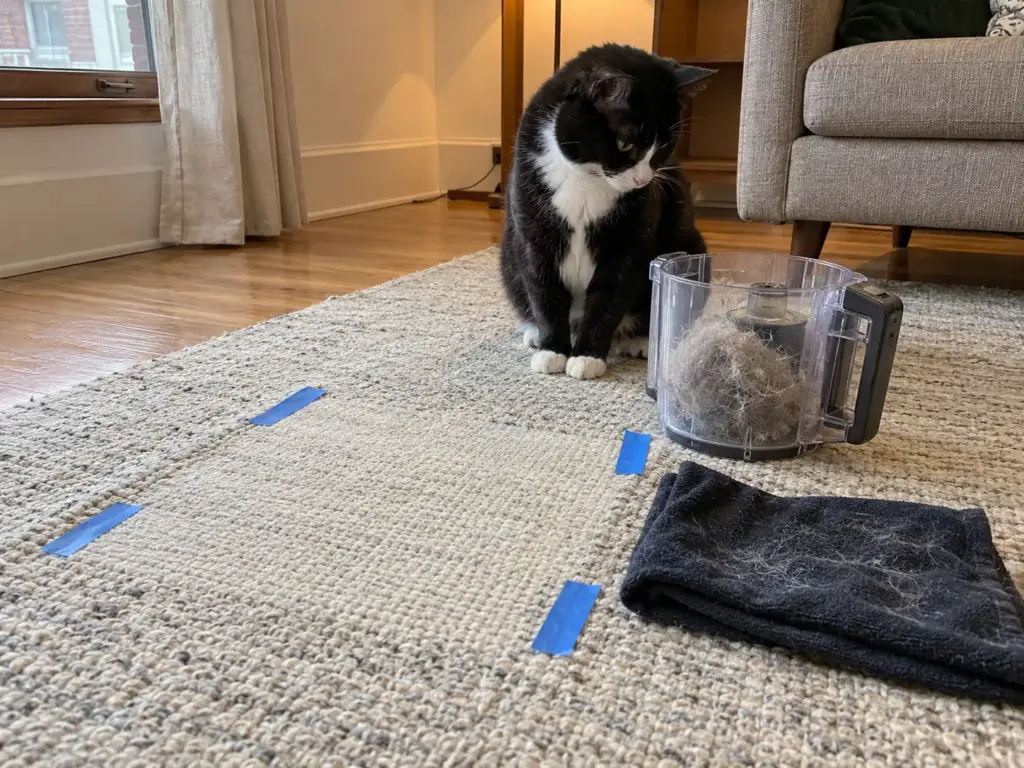
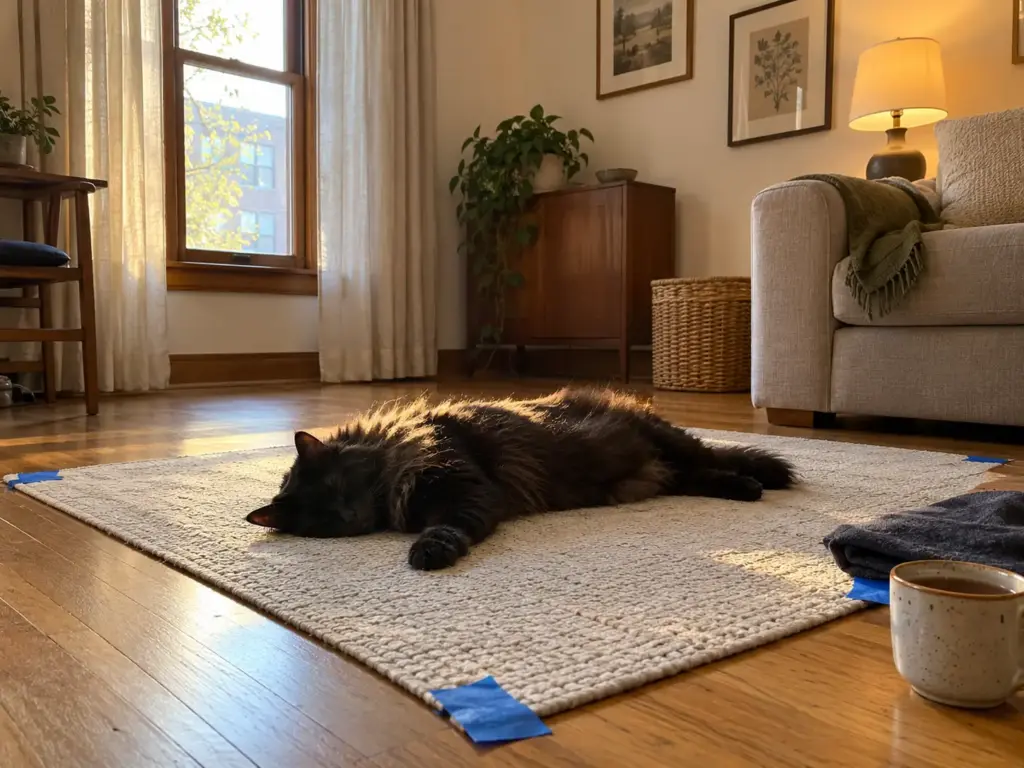
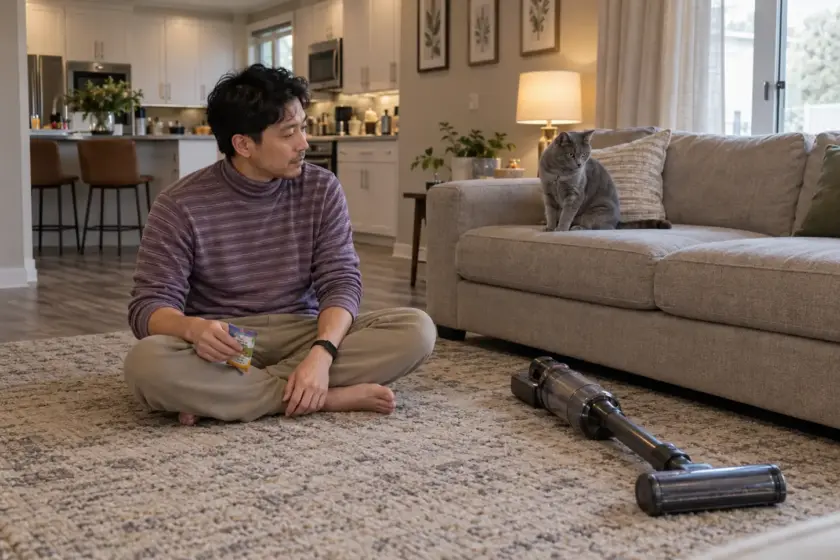
Pick the patch where your cat already sleeps, because his own hair is already pressed into it, which makes the load honest. Mark the corners with strips of painter’s tape, or a folded towel at each corner if the rug is delicate, and take a photo for the comparison. Then choose a contrast cloth: dark if your cat is pale, pale if he is dark.
One note before you compare machines on paper: in the same lab, stick vacuums were tested with 2.5 grams of fur and a hand vacuum with 1 gram, so scores across types are not one ranking.
One slow pass, then count what the machine left behind
Run one slow pass over the marked patch with the machine exactly as it arrived, in the room as it is, at the setting you would use on an ordinary day. That is the machine you are going to live with, so do not swap the brush or raise the power to flatter it.
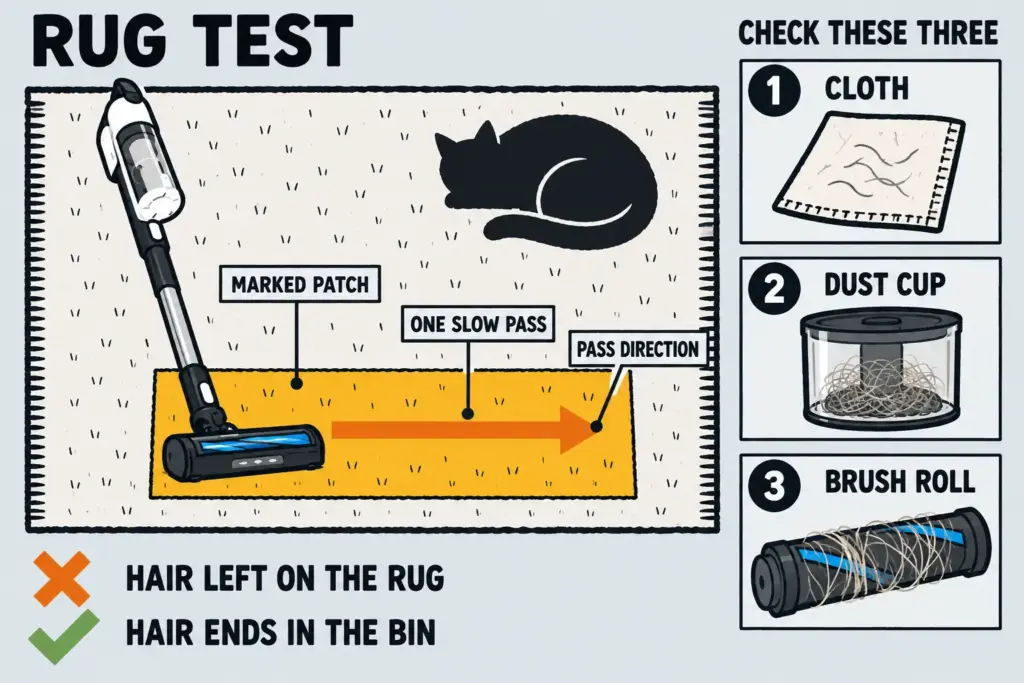
Afterward, press the cloth flat on the patch and lift it. Whatever clings to it is what the machine left in the pile. A few strands is a result you can live with; a visible fringe along the cloth means the pass did not finish the job. If your cat watches from the doorway or leaves the room when the machine starts, note which, because that is his verdict on the machine in your apartment.
A pass only means something while the box can still go back. Read the seller’s return policy on the day you order rather than the day it arrives, and run the pass in the first days.
Make the first pass with the machine as it was shipped, with the same brush and the same height setting. The version you tuned to look good on test day is not the one that will be in your hallway next month.
What the brush roll and the bin tell you after the pass
Turn the machine over and look at the brush. Hair wrap, fur wound around the roll in a mat, is the second failure the lab watches for, and it tells you the machine will need cutting free at the end of every job. Then open the dust bin. The hair in it should look like the hair that left the patch; if the cloth was loaded and the bin is nearly empty, the fur went somewhere else.
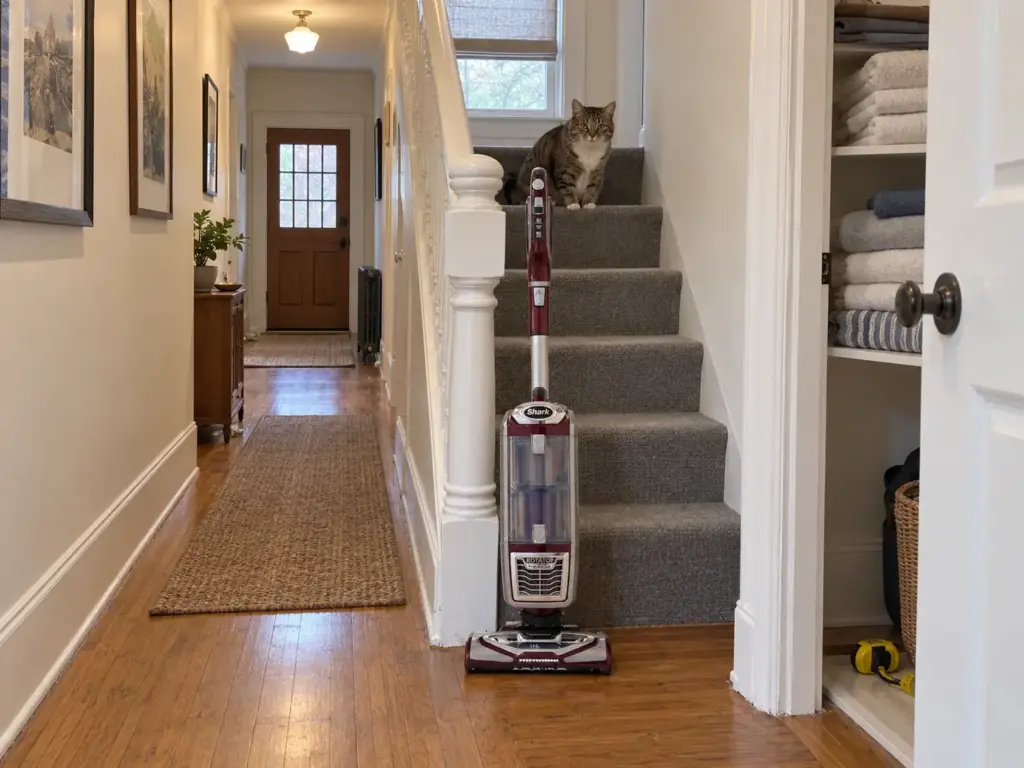
The Shark ZU102 Rotator Pet Upright has a 2.9-liter dust cup by its listing, and one patch of rug will never fill it, so the cup is not what this pass measures. It is where you confirm the hair arrived: in the cup, not wound on the brush or pressed back into the pile. A cup that size is also a heavy thing to hold over the trash can, and the machine’s height and footprint are measurements you take with your own tape.
The pass tests the machine, not how much hair falls. That is a different job, and cutting down how much hair lands on the rug in the first place changes what any machine has to do, most of all in shedding season.
Will It Fit the Hall Closet and Go Up the Stairs? The Renter’s Fit Check
The strongest machine in the apartment is the weakest one if getting it out means moving a mop, a winter coat and a bag of cat litter first. A lease does not let you widen the closet or shorten the staircase, so the thing you can change is the machine.
Measure the closet before the box arrives
You need three of your own numbers: the width of the closet door, the usable height under the shelf, and the real depth of floor you have left once everything else is in. Then compare them with the spec sheet’s dimensions for the machine in its stored position, with the head lowered or the handle folded, not the assembled one in the product photo. Treat every dimension as the listing’s claim until you have held a tape measure to the actual unit.
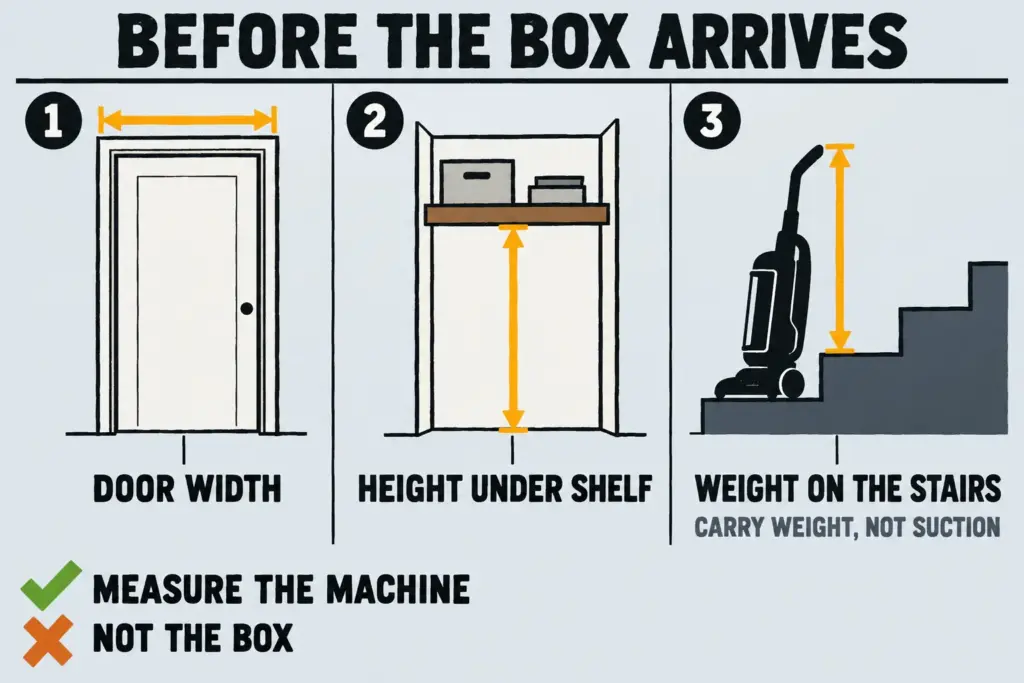
A lease that bans drilling also rules out a charger screwed to the wall, so ask where the charging spot would be before the box arrives. With two cats there is also twice the fur to move, so the machine will be out more often and the closet matters more.
Measure the closet with the machine out of the box, handle folded and head lowered, never with the box. The box has foam and cardboard that the closet will not.
Stairs: weight carried, not suction
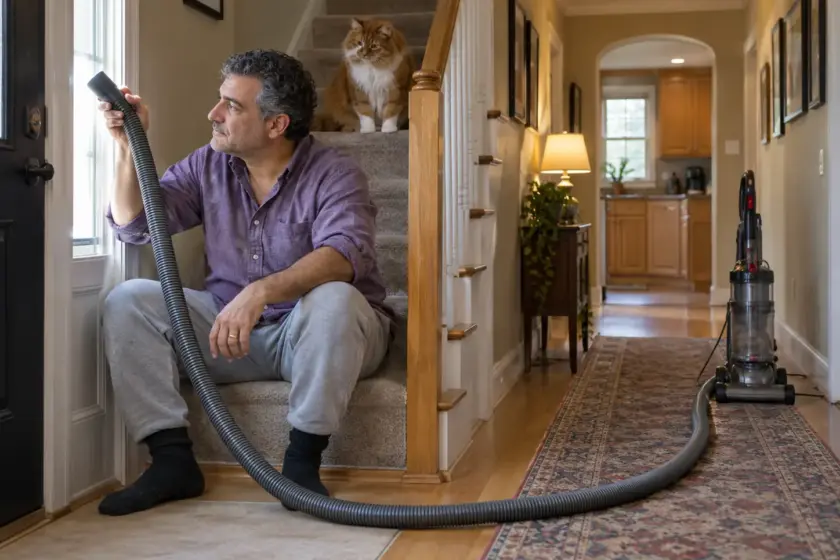
On stairs the question changes. The motor never pulls on a step; the question is how much has to be lifted. For multi-level homes, Consumer Reports recommends a canister because you do not drag the full weight of the machine up and down. That is the usual answer.
In a one-floor apartment the stairs problem does not exist, and a canister’s hose and housing can be a bigger fight in a small closet than a stick would be.
If you do have steps, the Shark NV752 Rotator Powered Lift-Away TruePet is the stair case its own product line names. The maker says the upper part lifts away; weigh that part before you count on it. What decides the stairs is the weight of what you carry up, so find that figure on the listing, and if it is missing, ask the seller before the return window starts counting. Carpeted stairs, which are a different problem, are covered in the vacuuming guide mentioned earlier.
Warranty as a check, not a price
Treat the warranty as a short list of questions. Which parts does it cover, the motor, the battery, or both? Who handles a claim, the maker or the seller? Does it ask you to register the machine before it counts?
The battery is the part that wears, so that line is the one worth reading twice. No amount or length of coverage is the point here; what matters is that the answers exist on paper before you need them.
Clear the Cat Tree and the Bed by Hand Before the Vacuum Starts
The densest hair in the apartment is not on the rug. It is in the cat tree and the bed, where he sleeps and climbs, and a full-size machine neither fits there nor needs to. Starting with the vacuum means loading the bin and the brush with hair you could have lifted off in a minute.
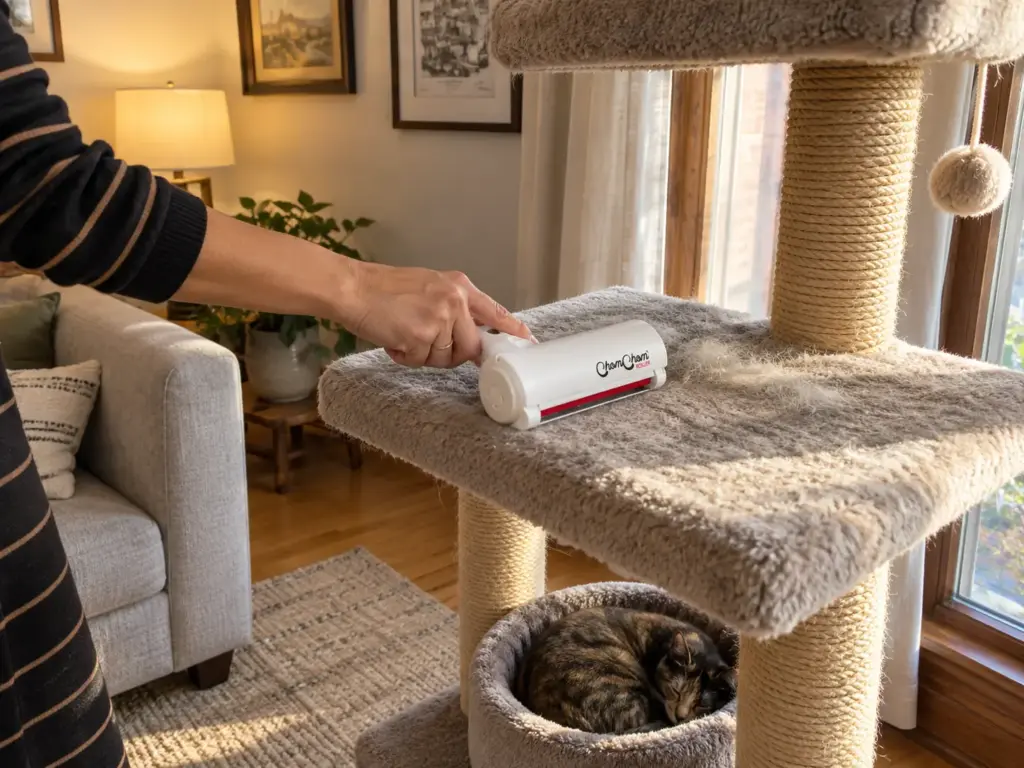
Start with what you already own. Shake the blanket outside, then run a rubber kitchen glove over the fabric of the bed and the tree’s platforms; the hair gathers into rolls under your palm. That alone often moves most of it, and it costs a trip outdoors.
If the glove is not enough, the hand tool goes next. The ChomChom Roller measures 2.5 by 7.5 by 7.5 inches (about 6.4 by 19 by 19 cm) and needs no batteries or outlet. It works one patch of fabric at a time, so a whole rug stays the machine’s job.
Used in that order, less hair reaches the bin and less winds onto the brush on the next pass. With two cats the tree fills faster than any one bed, so it gets its own turn.
Upholstered furniture works the same way. Cat hair on a couch you cannot reupholster has its own order of attack, and the same hand-first logic applies. For the tool itself, when a hand tool is worth buying and when the free fix is enough is the place to decide.
With two cats, start at the tree. It collects hair from both of them, and everything below it on the floor is easier once it is clear.
What This Page Skips on Purpose, and Where the Rest Lives
This page has one test for a machine: if it clears the marked patch, fits the closet and gets to the top of the stairs, everything else is preference. The preferences are real, and they live in the vacuuming guide: the anti-tangle brush, the filters and sealing, the type of machine and the size of the bin. A robot vacuum is a separate decision with its own failures, so it is not folded into this list.
If the reason you are shopping is an allergy, that is a conversation with a doctor, and nothing in this page claims what a filter does for a person. The hair is not only on the rug, either; clearing cat hair around the rest of the house covers the rooms this page leaves out, and living with shedding in a rented apartment covers the long game.
Mark the Patch, Run One Pass, Measure the Closet
Three things carry over from this page. Read each number on the box as a claim until your own rug confirms it. Run the marked-patch pass while the return window is open. Measure the closet and the stairs with the machine out of the box.
Three weeks on, lay the same cloth over the same patch and compare what clings, what sits in the bin and what wound onto the brush with what you saw the first time; a routine that slipped will show up there before it shows up in the hallway.
The step for today needs no purchase: take the glove to the cat’s bed and the tree and clear them by hand, then run the first pass on the machine you already own. The result is a baseline to compare any new machine against.
Frequently Asked Questions
01What kind of vacuum is best for picking up cat hair?
No single model wins: the best vacuum for cat hair is the one that clears your own marked patch of rug, fits your closet and gets up your stairs. Brush, filters and machine type are covered in the vacuuming guide.
02Does higher suction mean a vacuum picks up more cat hair?
Not reliably, because the suction number is a maker’s pressure figure taken with the air path sealed, and a rug never seals it. That is the maker’s own explanation, with no independent test behind it. How well embedded hair comes out depends mostly on the brush.
03How long should a cordless vacuum run for a house with a cat?
Plan on less than a third of the hard-floor minutes on the box, because Which? measured an average of 17 minutes at maximum power on carpet against 60 minutes at minimum power on hard floors. Time your first room on your own rug.
04What if the vacuum does not pick up cat hair after I buy it?
Run the marked-patch pass in the first days, and read the seller’s return policy on the day you order. If the cloth, the bin or the brush shows hair left behind, send the machine back while you still can.
Leave a comment