How Often to Vacuum With a Cat, by Spot and by Floor
Find how often to vacuum with a cat in one week: clear his sleeping spot, count the days until the hair layer returns & set your own pace

Alfredo RamsesFounder · Updated November 1, 2026 · 15 min read

On this page7 sections
- 1How Often to Vacuum With a Cat Starts With the Spot He Chose
- 2The Rest of the Floor Runs on a Slower Clock
- 3One Cat, Two Cats or a Long Coat Moves the Number
- 4The Litter Side Keeps Its Own Schedule
- 5The One-Week Test That Replaces the Guess
- 6Zero the Spot Tonight, Then Write Down the Date
- 7Frequently Asked Questions
You vacuum the apartment on Sunday, and by Monday evening the rug by the patio door already has a cat-shaped patch of hair on it again. How often to vacuum with a cat looks like a question with one answer, and the advice shows it has several: it runs from once a week, to four days a week, to a robot every other day, all for the same hair. The numbers disagree because each one belongs to a different surface, and none of them accounts for the square of floor your cat keeps returning to. Below you get the spot he chose and its own pace, the rest of the floor by surface, what changes when you vacuum with cats instead of one cat, or with a long coat, the litter side, and a one-week test that gives you your number instead of someone else’s.
The table sorts the answer by place, because each place in the apartment runs at its own pace.
| Where | How often | What sets it |
|---|---|---|
| The spot he sleeps on | Whatever your one-week test says, often daily | He returns every day, so it gets a fresh layer every day |
| Hard floor, the rest of the apartment | Weekly at minimum, every other day in the rooms he uses | The surface, and how many animals cross it |
| Carpet and carpeted stairs | Daily with a cat loose in the house | Carpet hides the hair while it keeps building |
| Rugs | At least twice a week | Rug hair buildup sits between carpet and bare floor |
| Beside the litter box | After each scoop, on its own schedule | Scatter follows the scoop, not the shedding |
| Two cats, a long coat, summer | Shorter gaps than the rows above | Each cat adds a spot, and coat changes where hair lands |
How Often to Vacuum With a Cat Starts With the Spot He Chose
Most schedules treat the floor as one surface that collects hair at one speed. A cat does not work that way. The cat sleeping spot he picked gets new hair on a different clock from the hallway, because he goes back to it every day. But the machine is a separate question, answered in vacuuming cat hair fails in three places; this article is about how often, and about where the hair is actually falling.
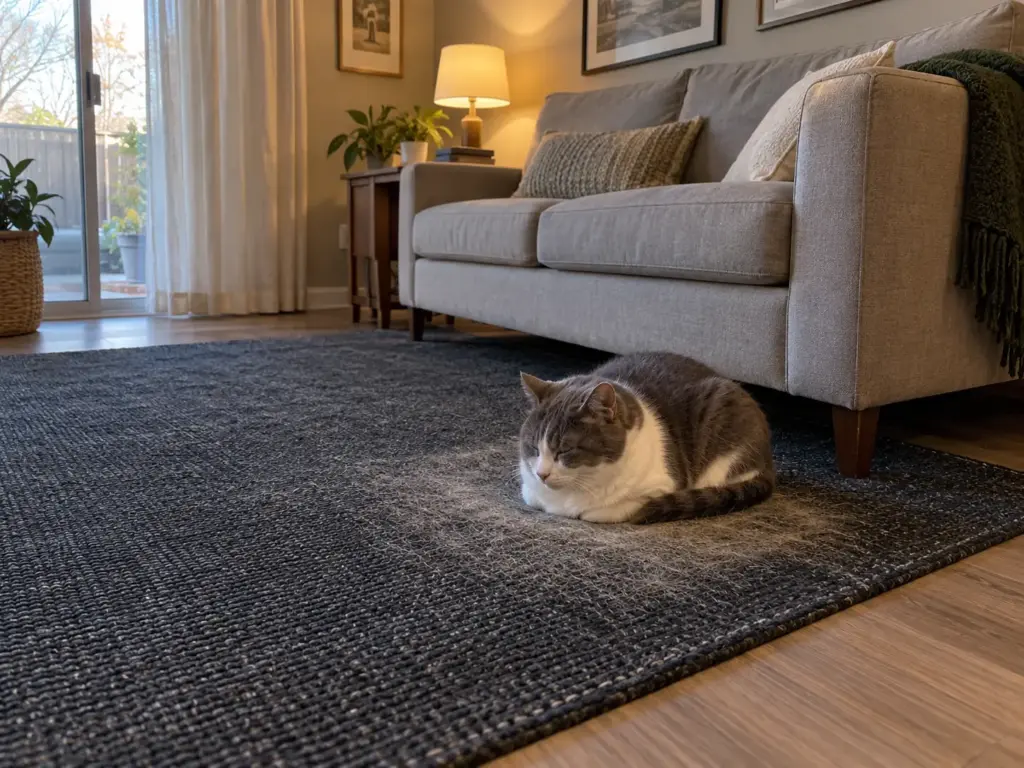
He goes back to the same square of floor
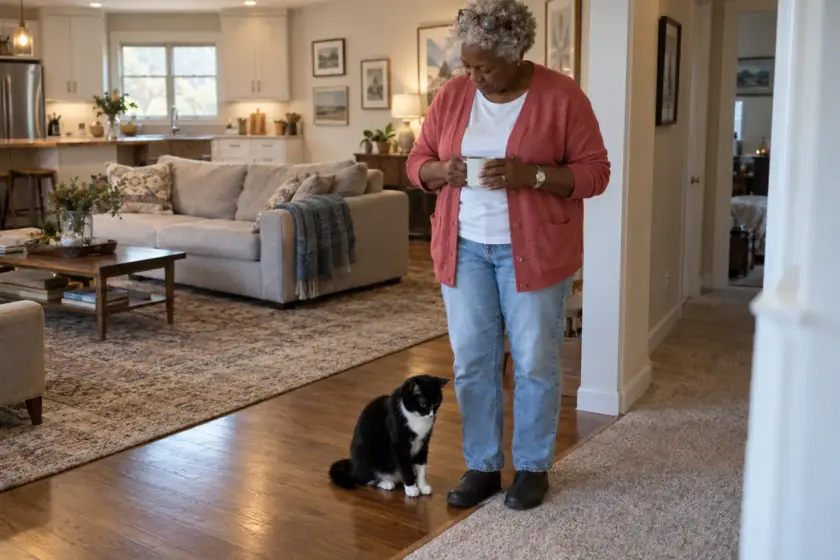
Watch where he lies for a day and the floor stops looking uniform. There is the warm patch by the patio door, the rug at the foot of the bed, the strip along the couch where the sun lands, and he is on one of them most days. He picked it for reasons that make sense from down there (warmth, and the feel of the surface under him), while your preference is an even floor, and the hair follows his preference. So the spot is where hair arrives every day, and the hallway is where it arrives when he walks through.
Before touching the schedule, move what he already lies on. A blanket or cushion shifted onto the exact square means the hair lands on a washable layer on the spot he already uses, and a shake outside or a wash replaces a vacuum pass. It fails with some cats: put a blanket on the bed and he just doesn’t stay, so the layer only works where he already is, never where you would like him to be.
What a fresh layer looks like in a day
How the cat hair layer looks depends on the floor. Cat hair on hardwood or tile shows quickly, a gray haze that gathers where he lay and along the nearest baseboard. Cat hair on carpet sinks in and stops showing while it keeps building, which is why a carpeted spot can look fine one day and still feel thick underfoot a few days later.
Picture a household whose complaint has the arithmetic inside it. Think of a house with carpet on the stairs and in the bedrooms, a cat that sheds constantly, and a Sunday-only routine, where the canister fills before the bedrooms are even done.
One pass a week is collecting seven days of layers at once. The vacuum is working. The gap is the problem.
Run a damp glove or a lint roller over his spot the moment he gets up. The layer is new and loose then, and a quick roll takes off what a vacuum would have to pull out of the fabric on Sunday.
Why a weekly pass misses the spot
A weekly pass is the right size for the hallway and the wrong size for the spot. By Friday the hair on the spot has been lain on, trodden and carried around, and the next pass has to drag it out of the weave instead of lifting it off the surface.
The result is that there is always more hair the next time, a never-ending cycle. Read that as a measurement. If every pass finds a lot, the gap before it was too long at the place where the hair falls.
Family Handyman gives one pointer here: when daily vacuuming is not possible, put the effort into the rooms and furniture where the pets spend the most time. It names rooms, not a pace. The pace of the spot is a number you take yourself, and the last section of this article shows how.
The Rest of the Floor Runs on a Slower Clock
In a rental you usually have one machine and floors you cannot swap, so the useful question is which surface gets which pace. The hallway, the kitchen and the stretch between sofa and door collect hair at the rate he walks through, and that rate is much slower than the rate at which his bed collects it.
Why the numbers you find online disagree
Real Homes puts hard floors at a minimum of one pass a week, and says pet owners should ideally vacuum daily. Family Handyman moves hard floors from weekly to every other day in the rooms a pet uses, asks for daily carpet vacuuming when cats or dogs run loose, and splits a busy room into two jobs: the traffic lanes daily, the whole area twice a week. Real Homes asks for rugs at least twice a week. Five numbers, from once a week to daily, and it looks like a fight.
Read side by side, it is the same advice sorted by floor and by the number of animals. Quoted alone, each number loses its floor, and a reader who skims averages them into a schedule that fits no surface. Real homes show the same spread: once a week for some, Monday, Wednesday, Friday and Sunday on hardwood and tile for others, twice a week or once if time is short for a third group, and a robot every other day for a fourth. Each person is right for their own floor.
Hard floor, carpet and rugs, one at a time
Hard floor is the forgiving one: weekly is the floor of the advice, and every other day covers the rooms he uses. And it is the surface where you see what you missed. Hardwood shows the hair you missed while carpet keeps what you cannot see, and that difference is why bare floor can sit on a lower pace without looking bad.
Carpet is the demanding one. With a cat loose in the house, daily is the advice, and the stairs are where it hurts: carpeted stairs and upstairs bedrooms are exactly where cats love to stay. That reply’s workaround is a shower squeegee pulled across once a month, which “gets the clumps of their fur off,” a rubber edge instead of a brush bar. Rugs land between the two, at twice a week or more, and a rug under his spot goes straight to the spot’s schedule.
On carpeted stairs, drag a rubber shower squeegee across each step before the vacuum comes out. Pulled across once a month, it lifts the clumps of fur off the carpet.
The light pass between full passes
A full pass twice a week and a short one between is a rhythm a one-machine rental can keep, and the thread backs the idea from the other side. One reply vacuums every other day with a cordless machine because you do not overburden it that way and “you don’t have to be as thorough,” and reports fifteen to thirty minutes for the whole apartment. The short pass covers his rooms and the lanes he walks, not every corner.
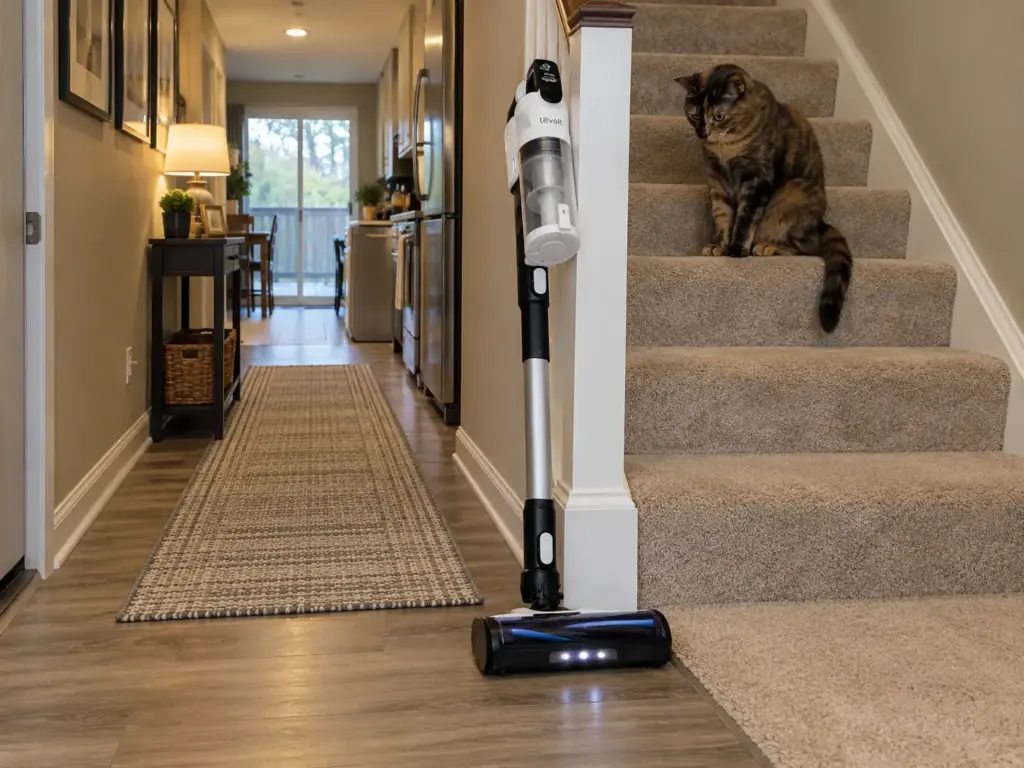
The Levoit LVAC-200 fits that job on paper: the manufacturer lists it at 43.3 inches long and 3.2 pounds without attachments, light enough to carry up a carpeted staircase, which is what you want a cordless machine for after dragging a heavy corded one around. It has limits. It struggles with pet hair on standard carpets, and the battery can barely make it through one pass of the house. That makes it a between-passes tool for hard floor, and a poor only machine for a carpeted home.
The one case where a robot makes it daily
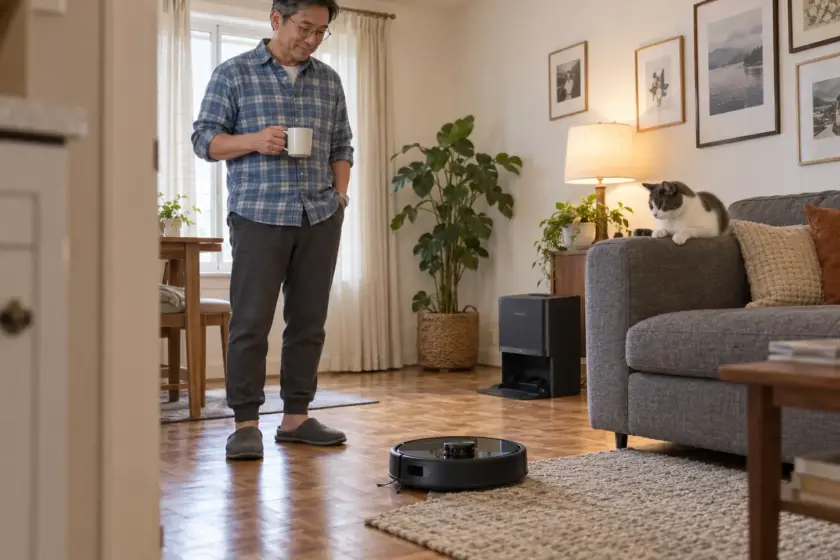
A robot that runs every other day while you do other things is the case where the interval really moves: robot vacuums take the daily drop on hard floors because a machine that runs while you are out costs you no effort, so the pace stops depending on your week. The Shark AV2501AE stands about 4.1 inches tall according to Rtings, and its self-empty base means a daily run does not mean a daily bin to empty.
It comes with its own failures, in the reviews. Buyers mention bins filling with hair mid-run, and maps that can be lost even after a factory reset. A robot buys a daily pass on hard floor; it does not buy a spot you can ignore, and it does not replace the carpet.
One Cat, Two Cats or a Long Coat Moves the Number
You probably cannot tell from a chart whether your home is a weekly case or an every-other-day case, and it rarely depends on the machine. It depends on how many cats shed onto the same floor, and what kind of hair they have. A multi-cat household runs on a different schedule from a one-cat apartment of the same size.
One cat against two or three
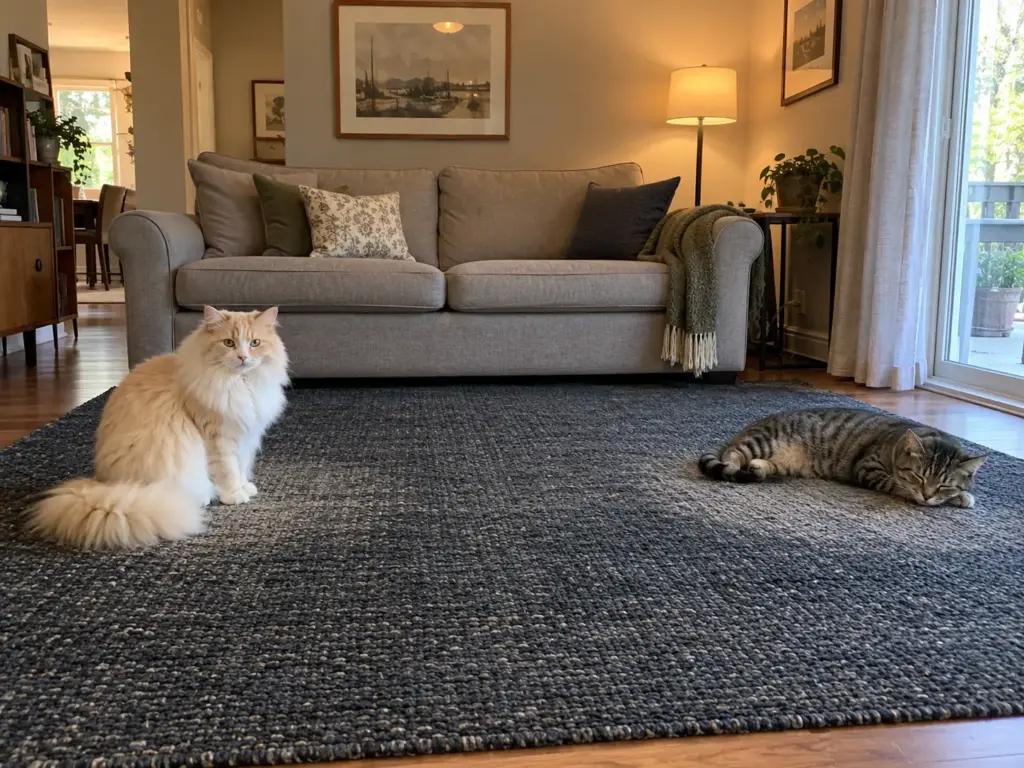
The common answer is that more animals means vacuuming more often, and the common answer misses the mechanism. Each cat has his own spot. Two cats in a studio apartment are not one cat’s hair doubled; they are two short clocks running side by side, and a third cat adds a third square. The total amount of hair rises with the count, but the number of places that refill daily rises with it too, which is why a two-cat home can feel like it needs a different schedule instead of a longer one.
There is no per-cat number worth trusting, and this is our own reasoning, not a published figure. Real homes fit it loosely. The owner of one cat on carpet fights the canister once a week. The one with two cats on hardwood and tile has moved to four short passes a week.
Short coat, long coat and the shedding season
Coat changes where the hair ends up. A long-haired cat’s coat drifts and shows, so it gathers along baseboards and under furniture and looks worse sooner. A short, dense coat works into carpet and fabric and looks fine until it does not. If one cat has each, you have two kinds of hair on two kinds of schedule.
A brush moves hair off the cat before it reaches the floor, which is why coat sets a brushing floor of its own, weekly at minimum, by coat. Brushing the cat every day or every few days, depending on her grooming needs, makes the same point: the vacuum has less to do. Season moves the number as well, because the hair moves in summer, but it moves it without handing you a figure. Run the one-week test again when the season turns.
What a sudden change in the hair means
If he starts dropping far more hair than usual, or you see bare patches, that is a question for the vet and not for the vacuum; when shedding is a problem and why hair count misleads draws that line. Everything else in this article is floor, and the floor comes next.
The Litter Side Keeps Its Own Schedule
Hair is not the only thing that collects near a cat. Litter granules leave the box on paws and with every scoop, so the strip of floor beside it fills with litter scatter on the box’s schedule, and that schedule is set by how often to scoop, per cat per day, not by how much he sheds. A dog household vacuums for hair; a cat household vacuums for hair and for grit, and the two pile up at different speeds.
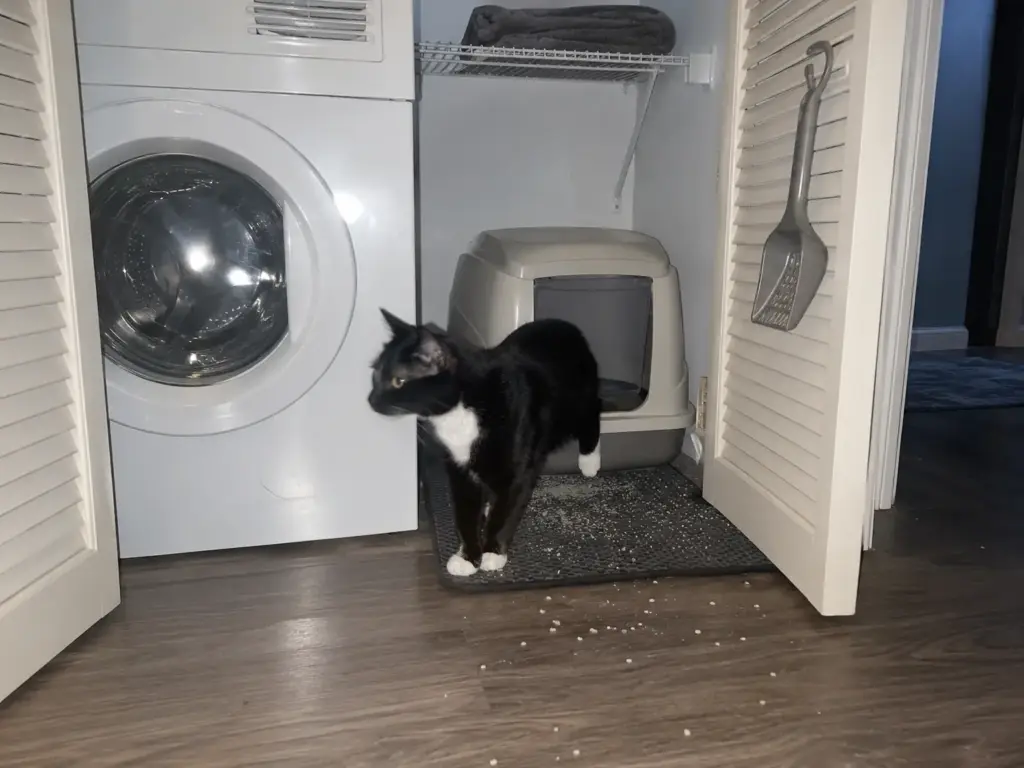
The order matters more than the frequency: scoop first, then pass the rim. Vacuum before the scoop and the scoop puts a new line of granules back on the floor you just cleared.
Shake the mat outside before you vacuum around it, because the mat holds a few days of what he carried out. Litter on the floor downstairs is a separate job, since a gravel floor is not fun to sweep. The reader with grit on the floor already exists, and the grit does not follow a cat’s coat.
Scoop the box first, shake the mat outside, then vacuum the rim last. Done in that order, the strip beside the box stays clear until the next scoop instead of getting a fresh line of grit right after you finish.
If the grit keeps leaving from the same side, the box is not the problem, the exit is: litter tracking from one spot explains why it leaves from one place, and that one place is where your vacuum pass belongs.
The One-Week Test That Replaces the Guess
By now you have five numbers from other people’s floors and none from yours. Yours is set by your cat and your floor, and a week of counting finds it. This measures the spot, not the machine.
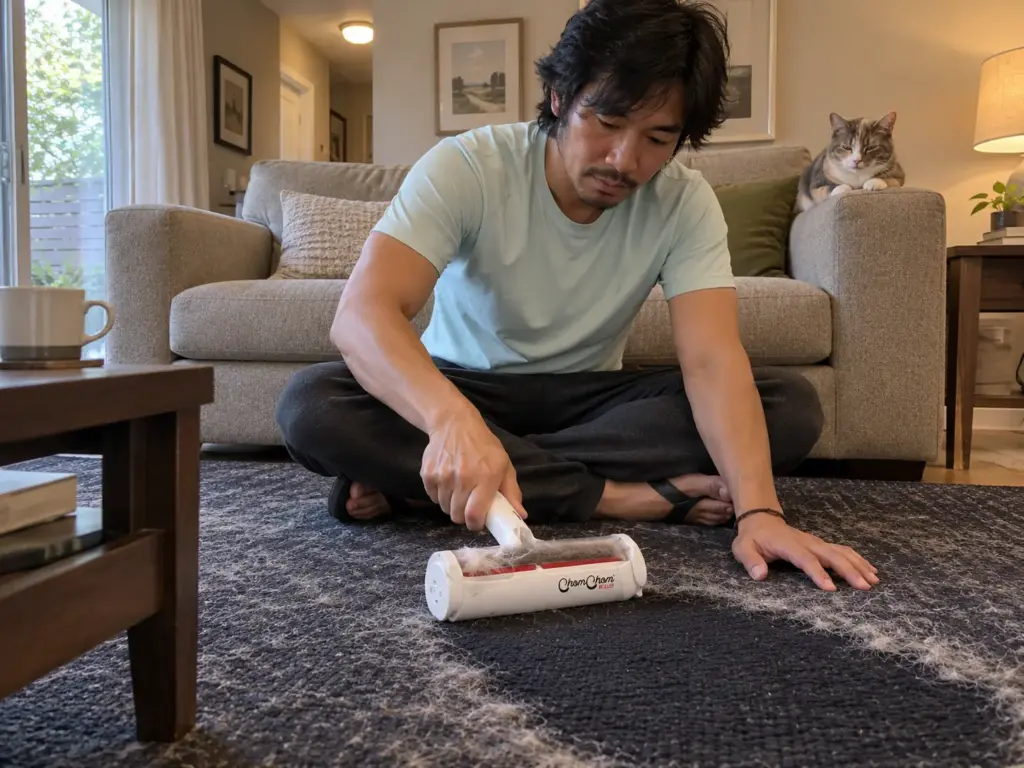
Start from zero on the spot
Zero means nothing visible. The free way to get there is a damp glove: take a yellow dishwashing glove, get it a little wet, and rub it on the fabric. For carpet and fabric spots where the glove runs out of grip, the ChomChom roller measures 2.5 x 7.5 x 7.5 inches, reuses itself, and needs no sticky sheets. It does not take everything and can leave dust markings on the sheet, so check the spot by eye after the roller and go again.
Any patch still visible after the pass is a failed pass. Consumer Reports’ pet-hair carpet testing runs on the same idea, with the visible patches left behind marking where a machine fell short, and the spot test borrows it: repeat the pass until nothing shows, then start counting.
Count the days until the layer is back
From that day, leave the spot alone: no vacuum, no roller, no glove. Look once a day in the same light, and count the days until a visible layer returns. The count is the interval. The method is counting a routine week by week: write one date, write the next date, read the gap between them.
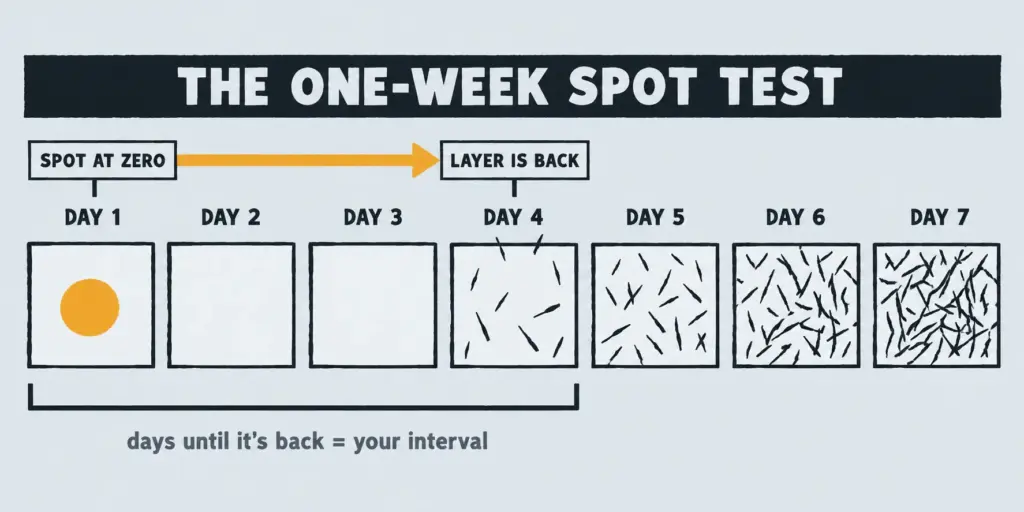
The test does not have to be exact. A reviewer with two cats runs a robot twice a week “to be sure the cat hair gets cleaned out,” which is not a measurement, only a pace somebody chose and could keep. Yours will be a better pace because it starts from your cat.
Type two dates into a note on your phone: the day you zeroed the spot, and the day the layer came back. The gap between them is the whole test, and two lines are easier to keep than a log.
Read the number
A pass every day sounds like the safe answer, until you remember nobody keeps it up, and the number you can keep beats the number that is right on paper. So read yours straight.
If the layer is back in a day, that spot is a daily pass, and a roller takes a minute. If it takes four days, the spot is every four days, and a weekly pass was leaving it dirty for three of them. If it takes a week or more, a weekly vacuum fits him and the stricter numbers belong to someone else’s cat. Then apply the surface numbers from the second section to everything else in the apartment.
One last read. If the spot takes far longer than the rest of the floor does, he has probably moved. Find the new square, zero it, and count again.
Zero the Spot Tonight, Then Write Down the Date
Three things carry out of this article. The spot he chose runs on its own clock, and a weekly pass is too slow for it. The rest of the apartment follows its surface: bare floor at least weekly or every other day in his rooms, carpet daily, rugs twice a week. And your number comes from a week of counting, not from anyone’s list.
And tonight’s job is small: wipe his spot with a damp glove until nothing shows, and type today’s date into your phone. Three weeks from now, count the days again on the same square, because cats move and a square that took five days in week one may be abandoned by week three. If the new count matches the old one, the schedule is holding. If it does not, you have just found where he lives now.
Frequently Asked Questions
01How often should I vacuum if I have a cat?
Two clocks run at once: the spot where your cat sleeps refills on its own schedule, and the rest of the floor follows its surface. The one-week test gives you the first number, and the table near the top gives the rest.
02How often should I vacuum carpet if I have a cat?
With a cat loose in the house, carpet calls for daily vacuuming, according to Family Handyman, and rugs for at least twice a week, according to Real Homes. Carpeted stairs and the bedroom where he sleeps are where daily matters most.
03Do I need to vacuum every day with a cat?
In most homes, no: Real Homes calls daily vacuuming ideal for pet owners, but the daily part usually belongs to the spot he lies on, plus carpet if you have it. The one-week test shows whether his spot needs it.
04Can a better vacuum keep me on a weekly schedule?
A stronger machine changes what each pass picks up, not where the hair lands, so his spot still refills on its own clock. If the test says it takes a week to come back, weekly holds with any machine.
05Does brushing my cat change how often I vacuum?
Brushing moves hair off the cat and into the brush before it reaches the floor, so it can stretch the gap between passes without replacing them.

Leave a comment