Do Cats Share Food Bowls? Two Cats, Two Bowls, Plus One
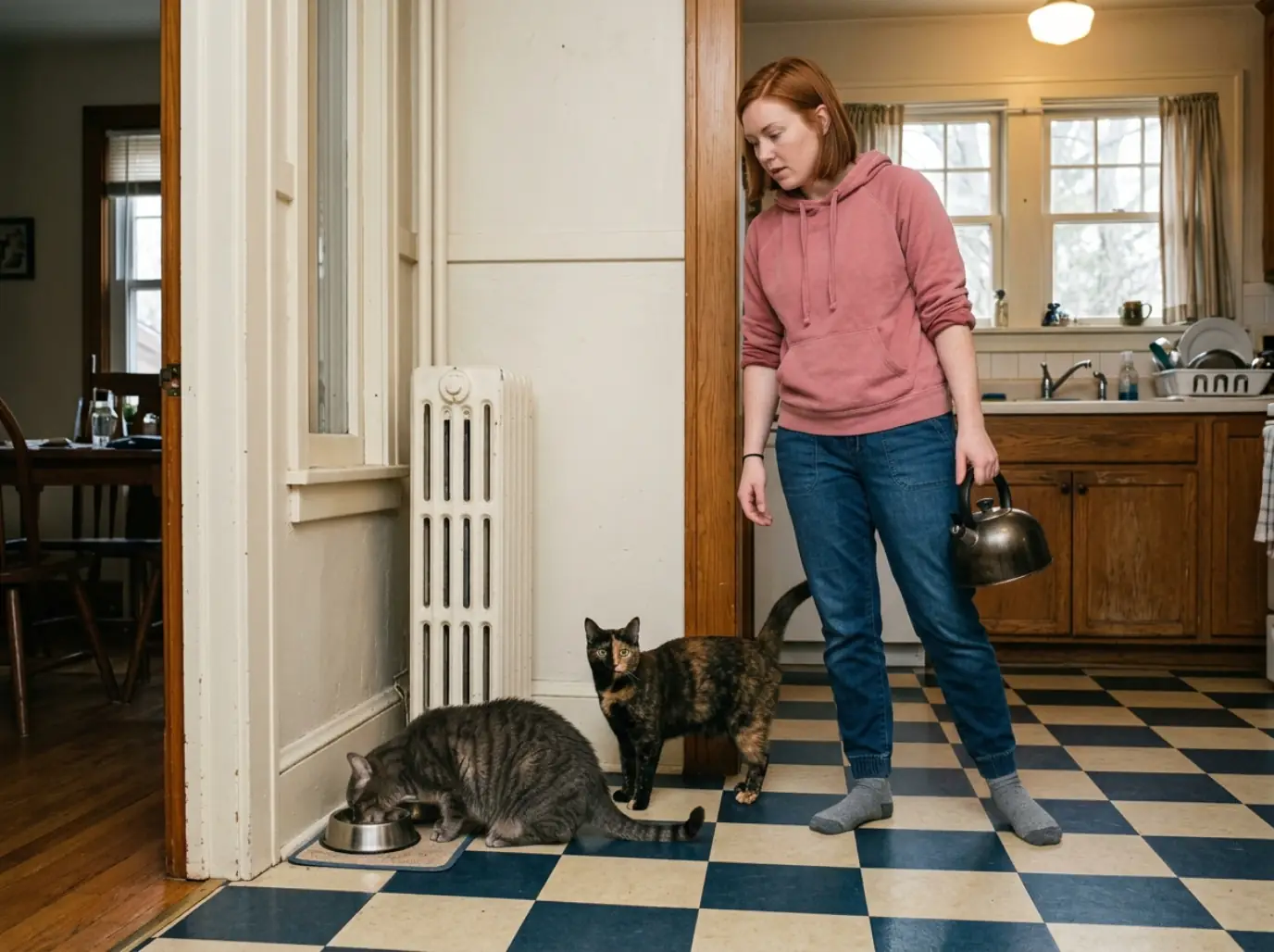
Do cats share food bowls? One station per cat plus one spare, 5 feet apart & in different corners (a twin tray on one mat counts as just one).

Alfredo RamsesFounder · August 31, 2026 · 17 min read

On this page8 sections
- 1Cats Can Share a Bowl, and That Is Not the Same as It Working
- 2The Number Nobody Publishes — One Bowl Per Cat, Plus One
- 3What a Shared Bowl Hides — the Cat Who Is Quietly Losing
- 4Feeding Two Cats Separately Without a Spare Room
- 5When Spacing Is Not Enough
- 6The Water Bowl Is a Different Question
- 7The Short Version
- 8Frequently Asked Questions
Two cats have eaten out of the same dish for a year and nothing has gone wrong. No hissing, no swatting, no standoff in the kitchen. That is not proof the arrangement works, though. It is proof that nothing has tested it yet, and the question of whether cats share food bowls has a longer answer than the calm you have been watching.
The formula this site already uses for litter boxes, the one International Cat Care built for every resource in a multi-cat home, says one per cat plus one spare. Food is on that list. Below: what a shared bowl actually costs you, the spacing number nobody publishes, and the version that works in an apartment with no second room.
Quick Answer
Cats can share a food bowl and many do without visible trouble, but they are solitary eaters by design, and one dish removes your only way of seeing what each cat actually ate. The working setup is separate bowls at one feeding station per cat plus one spare, spaced far enough apart that each reads as a separate place.
Cats Can Share a Bowl, and That Is Not the Same as It Working
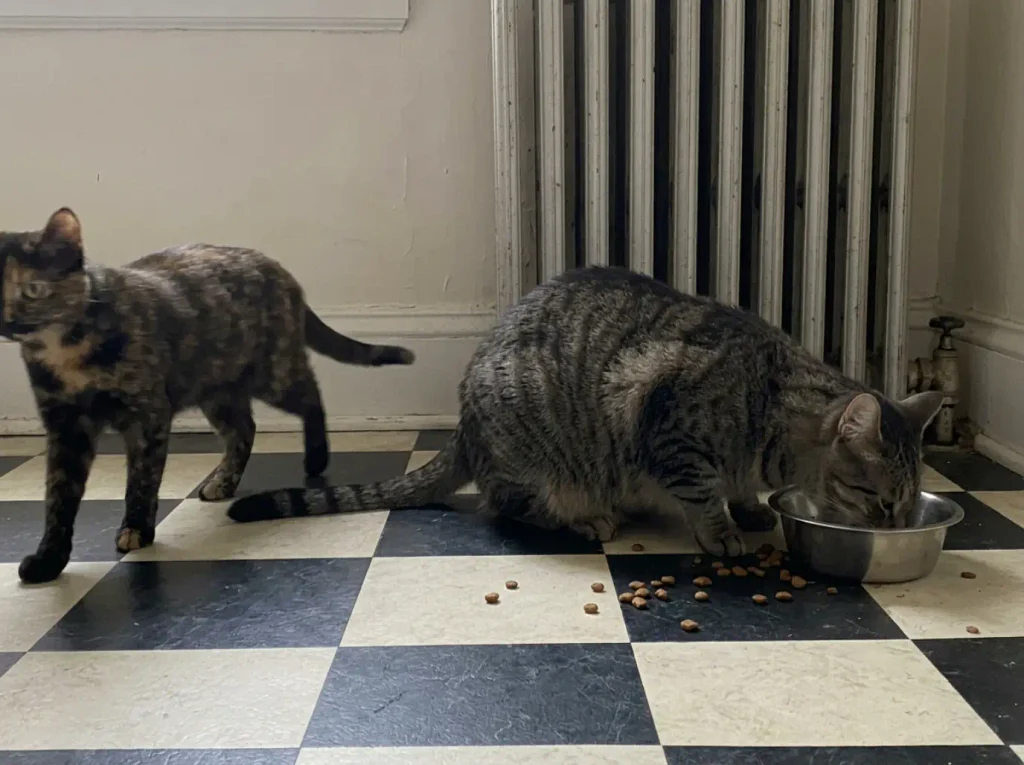
Yes, physically, two cats can eat from one dish. Most people asking this question have already watched it happen and are looking for permission to leave things alone. The honest answer is that the absence of a fight is the weakest evidence you could possibly collect, because cats do not argue over food the way people expect them to.
A cat in the wild eats a mouse alone. It does not bring it back to a shared carcass and take turns. Domestic cats descended from a solitary hunter, and eating is the most exposed thing a small predator does all day: head down, jaw busy, no view of the room.
Sharing a dish is a human arrangement they tolerate. It is not one they were built for. Territorial behavior around food is not aggression in the way people picture it, and it does not switch off because dinner arrives in a bowl.
The nuance most articles skip is that some cats genuinely do share, and it depends entirely on who they are to each other. According to International Cat Care’s guidance on multi-cat households, cats in a multi-cat home usually settle into sub-groups of two or three rather than one cohesive group, and cats within a sub-group will share resources willingly. Cats outside it will not. This is why “they seem fine” is so often half-true: your bonded pair is fine, and the third cat who arrived last spring is eating on somebody else’s terms.
Watch who leaves first, not who eats first. The cat that walks away while there is still food in the dish is the one paying for the arrangement, and that is the only tell most households ever get.
Here is the part that matters more than any of the behavior. Cat conflict over food is almost entirely postural.
One cat waits. One cat eats faster than it wants to. One cat drifts off and comes back when the kitchen is empty.
None of that looks like fighting, and all of it counts as competition for resources.
This is what resource guarding actually looks like in a normal home. Not food aggression, not a snarl over the dish, but one cat angled across a bowl and another deciding it is not worth it. You are not going to catch a fight, because there is not going to be one.
And a shared bowl takes something else away that has nothing to do with the cats getting along: your only view of what each individual animal ate. One dish produces one fact, and that fact is “the bowl is empty.” Two cats need two numbers.
So the argument for splitting them is not that cats are antisocial. It is that you cannot manage what you cannot see. That is also why which bowl material you settle on is a separate decision from how many of them you need.
The Number Nobody Publishes — One Bowl Per Cat, Plus One
Every article on this question lands in the same place: provide multiple bowls. Nobody says how many. Nobody says how far apart. So people buy a twin bowl on one molded tray, put it where the old dish was, and reasonably believe they have solved it.
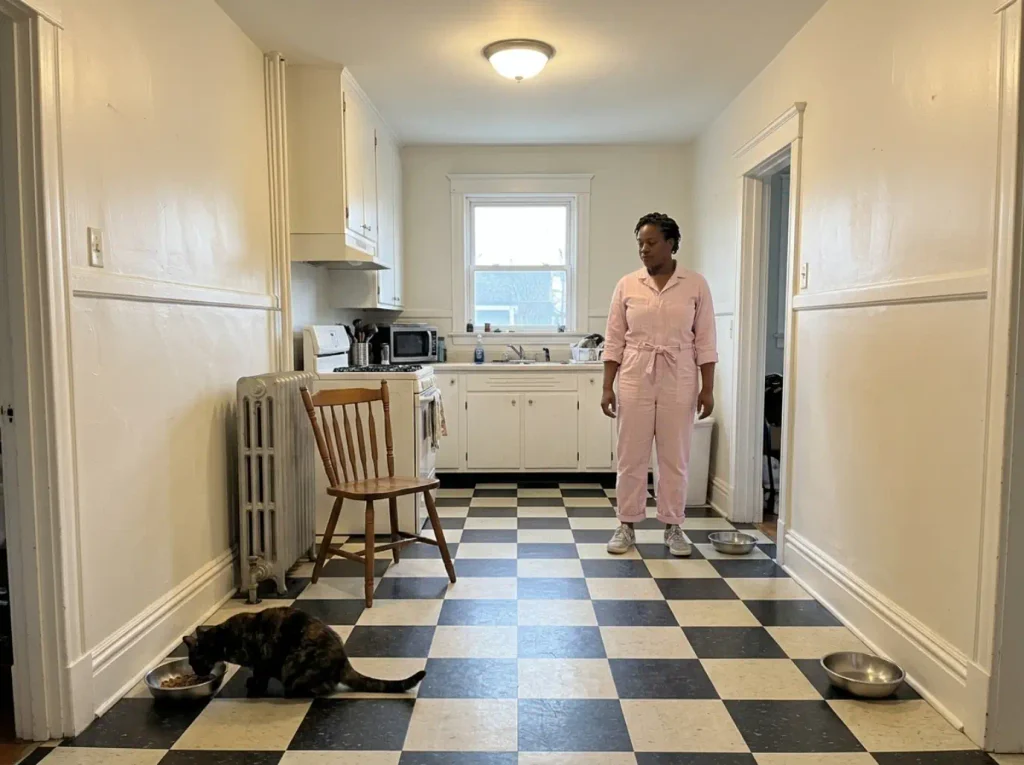
The formula is one feeding station per cat, plus one spare. Two cats, three stations. Three cats, four.
It is the same arithmetic behind how many litter boxes two cats need, from the same source, applied to a different resource. The spare is not padding. It is what makes it impossible for one cat to cut the other off from food simply by standing somewhere.
Then the distance, which is the part the whole SERP leaves out: at least five feet apart, in different corners of the room, with something solid between them if they have to share a room at all. Not five inches. Five feet.
This is where the tray fails, and it fails for a reason worth understanding. iCatCare is explicit that grouping resources in one location makes cats read them as one resource, not several. Two dishes six inches apart on the same mat is one feeding station wearing a costume. The molded twin tray is sold as the multi-cat solution and it is the single most common version of this mistake, because it looks exactly like the fix while changing nothing about the geometry the cat is reading.
Before buying a thing: any two dishes already in your cabinet, carried to opposite corners, satisfy the formula tonight. Cereal bowls work. Saucers work. Nobody needs to spend money to find out whether spacing is the problem, and if a week of opposite corners settles both cats, that was the whole fix.
If it works and you want dishes meant for it, the Americat Company Stainless Steel Cat Bowls (2-pack) are two separate, individually movable dishes, and a plain stainless steel bowl is the whole point when the goal is putting them in two different corners. They are heavier than plastic and they do not slide, though a determined pusher will still relocate one. For a three-cat household needing four stations at once, the 4 Pcs Stainless Steel Cat Bowls, 5.5 Inch cover the N+1 math in a single purchase, and the shallow 5.5-inch profile keeps the rim clear of the sides of a cat’s face while eating. Shallow also means a messy eater will fling more of it onto the floor, so if you are now buying two or three new dishes at once, it is worth settling what size each of those bowls should be at the same time.
The count, by household:
- One cat: two stations, in two different spots. Yes, still two.
- Two cats: three stations, at least five feet apart, in different corners.
- Three cats: four stations, and at that point a second room genuinely helps.
One more placement detail that costs nothing. Keep the dish off the wall and out of the corner, so a cat can face any direction while eating and watch the room. A bowl jammed into a corner backs a cat into a spot where its only view is the wall in front of it. That is the posture that keeps a solitary hunter on edge, and it stays true even when no other cat is anywhere near the kitchen.
Which brings up the trade nobody names out loud. One tray in one spot is tidy, easy to sweep under, and easy to fill in eight seconds. All three of those are your preferences. The cat’s version is a constraint, and constraints do not negotiate.
What a Shared Bowl Hides — the Cat Who Is Quietly Losing
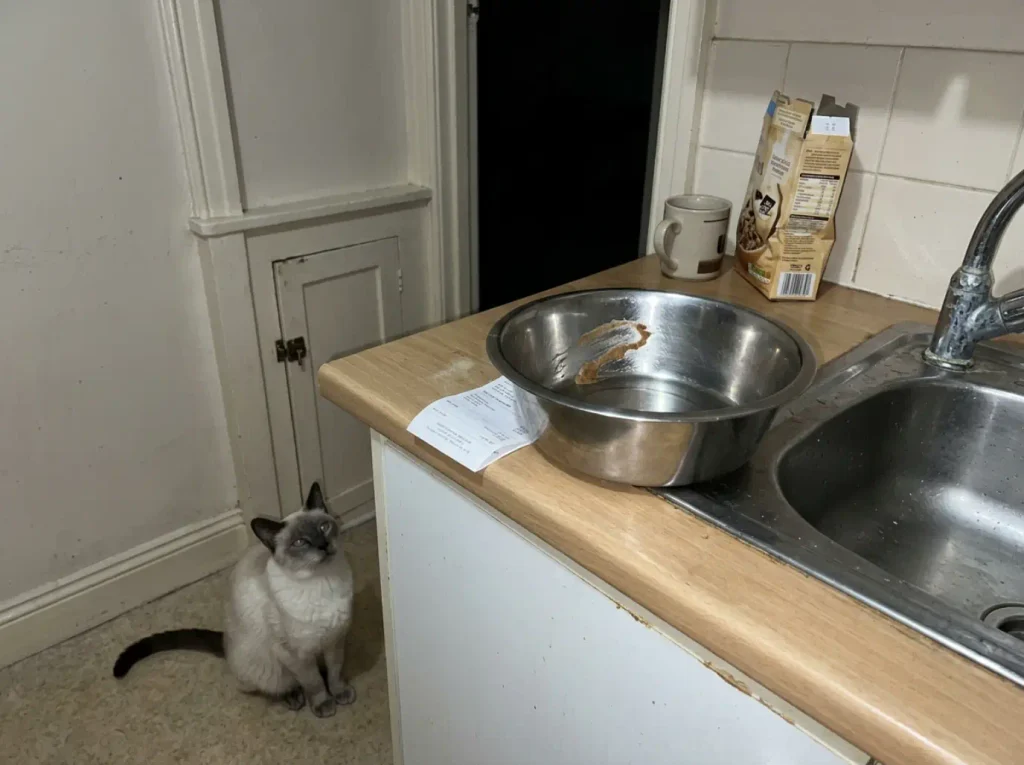
The scenario that actually drives people to this question is not a fight. It is a routine weigh-in where one cat has lost weight and the other has gained, and nobody can say when it started, because there has only ever been one dish and it has always been empty by evening.
One bowl produces one data point. The dish is empty. It cannot tell you the split, and the split is the entire thing you needed to know.
If you have only ever had one bowl, you do not need a scale to start. Feed the next four meals in two dishes in two corners and just watch which cat finishes and which cat drifts off. Four meals is enough to see it.
The reason this stays invisible for months is mechanical, not mysterious. The food-motivated cat finishes its own portion and moves to the second dish. The slower cat looks up, sees a cat already standing over the food, and steps back.
This is what food stealing looks like when nobody is watching for it, and it is why bullying at mealtime almost never gets reported by the people living with it. Nothing looks wrong at any single meal, so nothing gets flagged at any single meal, and the arithmetic runs quietly for weeks in the same direction. By the time it shows up on a scale, it has been happening at every meal since roughly whenever it started.
One boundary, and then this article goes back to the furniture. A real change in appetite in either cat is an early sign of a great many things, and that is a call to your vet, not a bowl adjustment. What separate stations do is let you notice it three weeks earlier than you otherwise would.
The noticing is the part this site can help with, and appetite monitoring is the entire practical reason to split the dishes. The rest is not ours. Weight loss in the quiet cat and weight gain in the fast one are the two numbers a shared dish will never give you, and they are the two your vet will ask about first.
A prescription diet or a life-stage food goes past opaque and into structurally impossible. If one cat is on a prescription formula, a kitten formula, or a senior formula, a shared dish means neither cat is on their diet. The one who needs the specific food is getting less of it than prescribed, and the other is eating something formulated for a problem it does not have. There is no version of one bowl that fixes that.
Free-feeding compounds all of it. Food out all day with two cats means the clock cannot tell you anything either. You lose the split and the timing in the same move, and you are left inferring the health of two animals from a dish that refills itself.
It also puts portion control out of reach entirely. One cat overeating while the other goes undernourished is the standard outcome of a bowl that is never empty, and neither half of that shows up until somebody weighs both cats.
Feeding Two Cats Separately Without a Spare Room
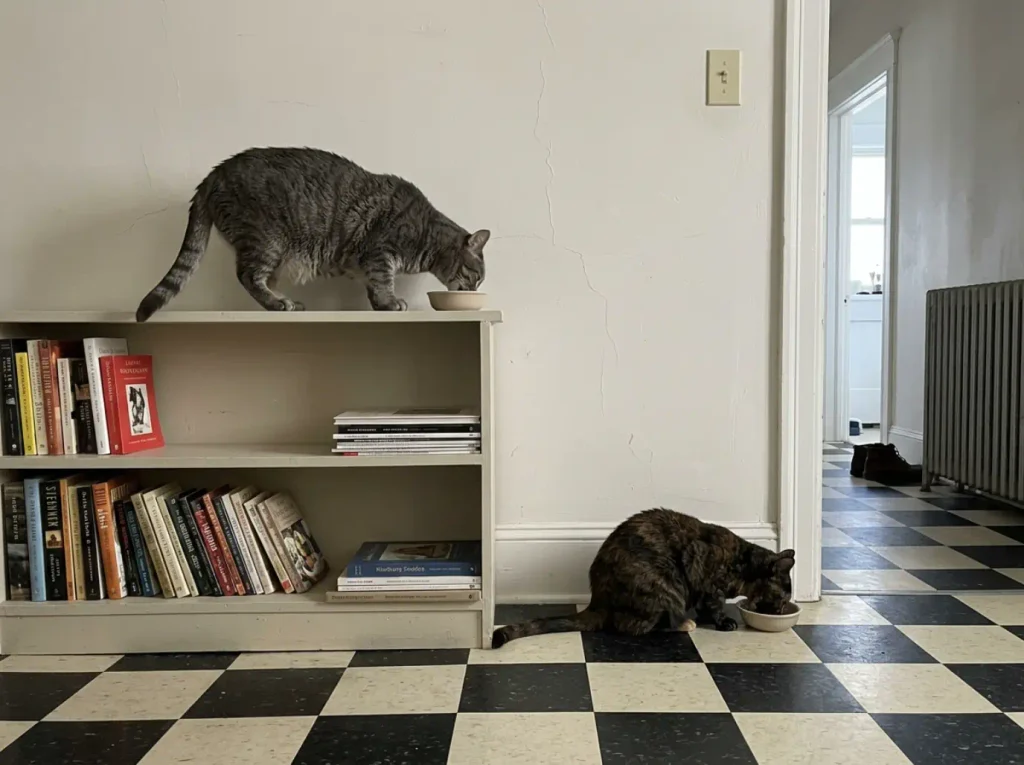
Every guide says feed them in separate rooms. In a one-bedroom with a galley kitchen there is no second room to feed anybody in, and the advice reads as though it was written for a house you do not live in.
Vertical separation is the fix nobody offers, and it is the best one for a small apartment. One cat eats on a stable shelf, a cat tree platform or a cleared section of counter. The other eats on the floor. The footprint is identical and the cats read it as two places, because vertical space is a location to a cat in a way it simply is not to us. No drilling, no lease violation, no furniture to buy if you already own a cat tree.
If you use vertical separation, feed the confident climber up high and the cautious cat on the floor, not the other way around. The cat who worries is the one who needs an exit route, and a shelf has exactly one.
Time substitutes for space just as well, and costs even less. Feed cat A, let them finish, remove the dish entirely, then feed cat B in the same spot. Adult cats should eat at least every eight hours, so staggered feeding has plenty of room inside a day. The only requirement is that you are home, and that you remove the first dish rather than leaving it out, because a dish left out is just free-feeding with extra steps.
A visual blocker costs nothing at all. A cat tree, a chair, an upturned laundry basket, the corner of a counter. Two bowls in the same room with something solid between them are two stations. Two bowls in a clear sightline are one station with a gap in the middle, no matter how many feet you measured.
That is the rule, and it is worth reading twice, because most people get the distance right and the sightline wrong.
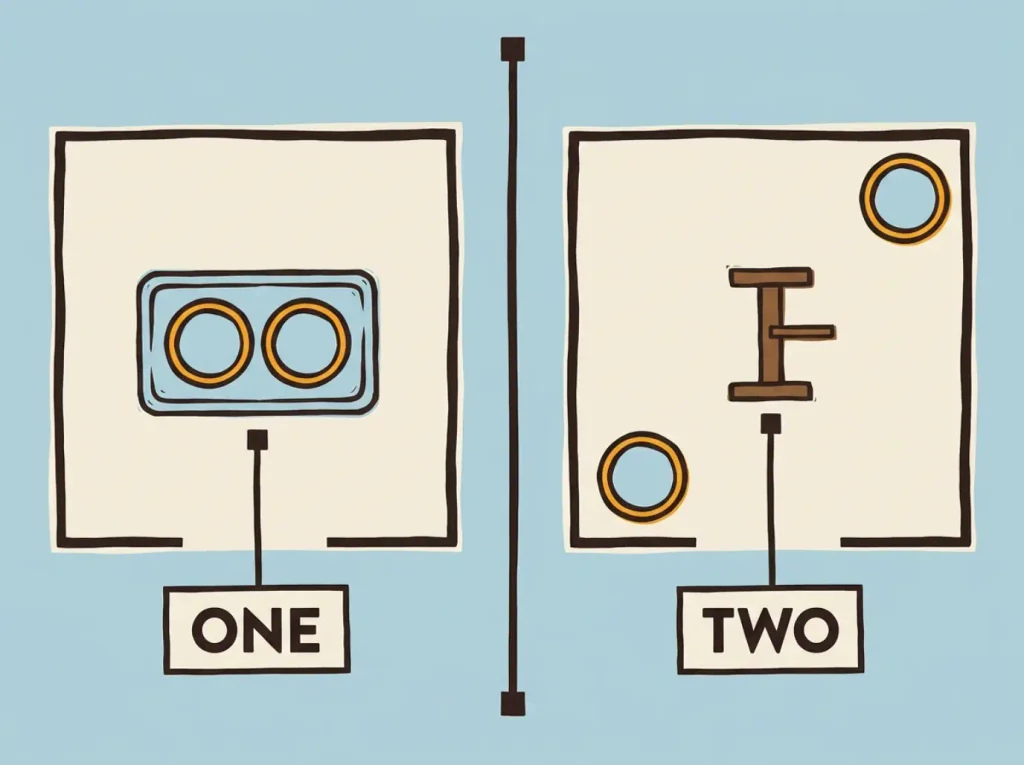
The renter’s ladder, cheapest first: distance, then a visual blocker, then staggered timing, then a door cracked open with a doorstop, then closed-door feeding, then a microchip feeder. The advice to feed in separate rooms sits near the bottom of that list, not at the top of it. Most households stop at step two or three and never need the rest of it. Work down the list in order and do not skip to the bottom because the bottom looks more decisive.
Two things that do not work, both of which get recommended anyway. A baby gate a cat can clear in one hop is a speed bump, not a barrier. And a “quiet corner” that is actually a dead end with a single exit reliably makes things worse, because you have handed the nervous cat a room with one door. A cat who drags the dish somewhere else before eating is often filing exactly that complaint about where you put it.
When Spacing Is Not Enough
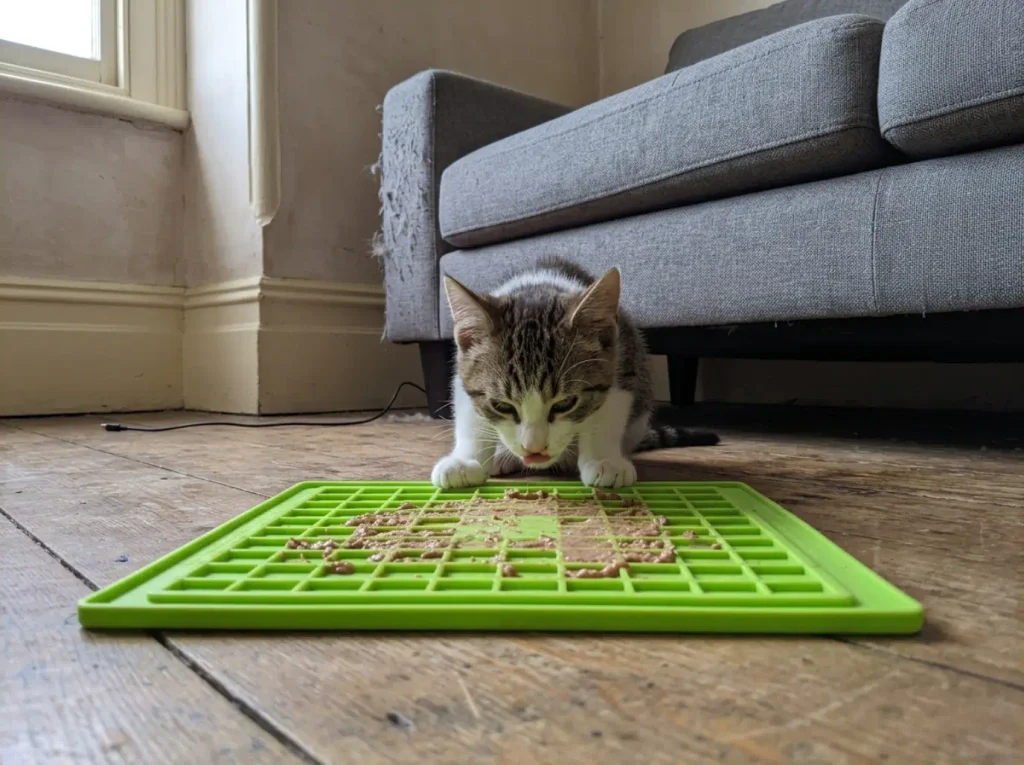
Some pairs will not settle no matter how you arrange the room. Before you buy anything to fix it, work out which of the two problems you actually have, because people routinely buy for the wrong one.
A cat who finishes fast and wanders over to the other dish has a pace problem. A cat who blocks, stares, or physically parks itself over the other’s bowl has a guarding problem. Same-looking outcome, completely different fixes, and the equipment that solves one does nothing at all for the other.
Before buying anything, time both cats for one meal. If the gap between first-finished and last-finished is under two minutes, you have a guarding problem and a slow feeder will not touch it.
For the pace problem, the answer is to make the two meals last the same length of time rather than to add more distance between them. Spreading wet food across a textured lick mat turns a two-minute meal into ten, which means the fast cat is still busy when the slow cat is only halfway through. The LickiMat Classic Playdate is a roughly 20 by 20 cm rubber mat that does this for the price of nothing much, and it changes nothing about the room. The catch is that it wants wet or soft food, so it is a poor fit for a dry-only household, and it needs rinsing after every use or it turns into a science project by Thursday.
The guarding problem is different, and no bowl solves it. The fix is a barrier, a door, or a feeder that will not open for the wrong cat. Start with the free ones. A closed door for the six minutes a meal takes is the most reliable tool in this entire article, and a door cracked two inches on a doorstop covers most of the cases where a full closed door is not practical.
Where free stops working is when nobody is home to referee. A microchip feeder, sometimes sold as an RFID feeder, reads the cat’s existing chip or a collar tag and opens the lid only for the registered animal. The Sure Petcare SureFeed Microchip Pet Feeder Connect also weighs what goes in and what is left, which turns “the dish is empty” into an actual per-cat number, which is the one thing nothing else on this list can do.
The honest limits, because they matter. It is the most expensive rung on the ladder by a distance, it takes one unit per cat to fully solve a two-cat home, and the app tracking needs a separate hub sold separately. Some cats also need a slow introduction to a lid that moves, which means propping it open for a week before you let it work as designed.
It solves a real problem well. It should not be the first thing anybody buys.
The Water Bowl Is a Different Question
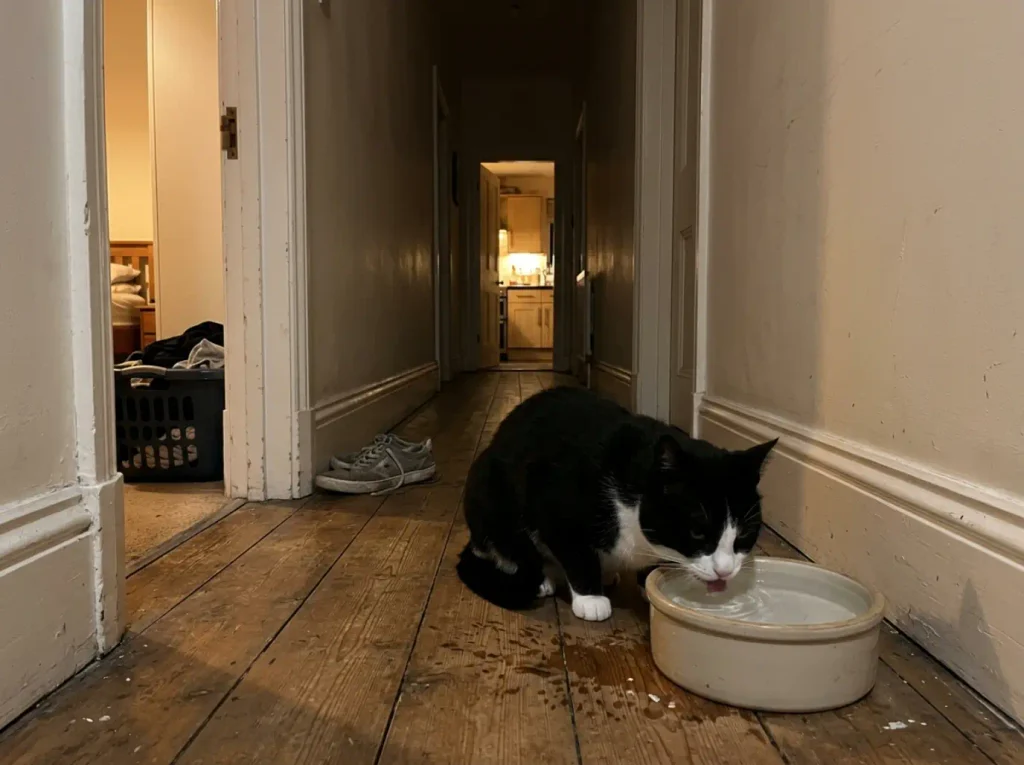
Having just been told to split the food, most people assume the water follows. It mostly does not, and saying so is what keeps the rest of this from being dogma.
Water is rarely guarded the way food is. There is no scarcity signal in a full dish that never runs out, and cats will queue for water in a way they will not queue for food. A shared water bowl is not the problem people worry about.
The formula still applies, for a completely different reason: coverage. More water sources in more rooms means more total drinking, and hydration is the actual goal here rather than fairness. Water bowl sharing is not about conflict at all, which is why it is easy. Put out more of them and stop thinking about it.
There is one real mistake, though, and nearly every household makes it. The water bowl next to the food bowl. A dish parked beside the food collects kibble dust and stray wet food, and plenty of cats will not drink beside where they eat regardless. Splitting the feeding stations is the natural moment to move the water somewhere else entirely, and since you are adding two or three new dishes this week anyway, it is the same moment to decide what the bowl itself is made of.
The practical version: food in two corners, water in a room neither of them is in. A hallway. A bedroom. Next to wherever the cat already sleeps, which is usually the best spot in the apartment and the last one anybody thinks of.
The Short Version
Cats can share a food bowl, and most of what it costs you is invisible. Not a fight. The fact that one dish cannot tell you what either cat ate.
The number is one station per cat plus one spare, at least five feet apart, in different corners, with something solid between them if they share a room. And two dishes on the same tray is one station, not two, no matter what the packaging says.
If you have no second room, height and timing do the same job as floor space. Both are free, and both work tonight.
Check back in three weeks. Two things to look at: whether both cats still go to their own station without being walked there, and whether the second bowl has quietly migrated back next to the first one, which is the usual way this comes undone. It moves six inches at a time, and nobody notices until it is a tray again.
Move the second bowl to the opposite corner tonight. If both cats settle within a week, that is the whole fix and it cost nothing.
Amazon’s Audible — free for 30 days
Your cat won’t let you read. Let someone read to you.
Audible is Amazon’s audiobook library — thousands of titles, read out loud, on your phone. Free for a month, plus one audiobook to keep forever.
Frequently Asked Questions
01Is it okay for two cats to share a food bowl?
It is not unsafe, and plenty of cats do it for years without an obvious problem. What it costs you is visibility: one bowl cannot show you what each cat ate, so an appetite change in either cat goes unnoticed until something else surfaces it.
02If I have two cats, how many food bowls should I use for each one?
One feeding station per cat plus one spare, so three for two cats. The spare matters more than it sounds: it means neither cat can be fully blocked from food by the other simply standing somewhere.
03What is the 3-3-3 rule for cats?
It describes a newly adopted cat settling in: roughly three days hiding, three weeks learning the routine, three months feeling at home. It is about adjustment rather than feeding, but a new cat introduction is one of the main things that turns a working shared bowl into a problem, and the three-week mark is exactly when a newcomer starts competing for resources it previously avoided.
04Can two cats share a water bowl?
Usually yes. Water is rarely guarded the way food is, so the reason to put out more than one is coverage rather than conflict: more sources in more rooms means more drinking. Just do not park it beside the food.
05My cats have shared one bowl for years with no problems. Do I need to change anything?
Not urgently, but the arrangement is untested rather than proven. Split the stations before the household changes, whether that is a new cat, a move or a diet change, because that is when a shared bowl stops working, and it stops working quickly.
Leave a comment