Do Water Fountains Work for Cats — The Study Says No
14 cats, 3 water setups, 2 weeks each: no measurable difference. Only 3 preferred one — each a different one. What that means for your cat.

Alfredo RamsesFounder · August 26, 2026 · 21 min read


On this page8 sections
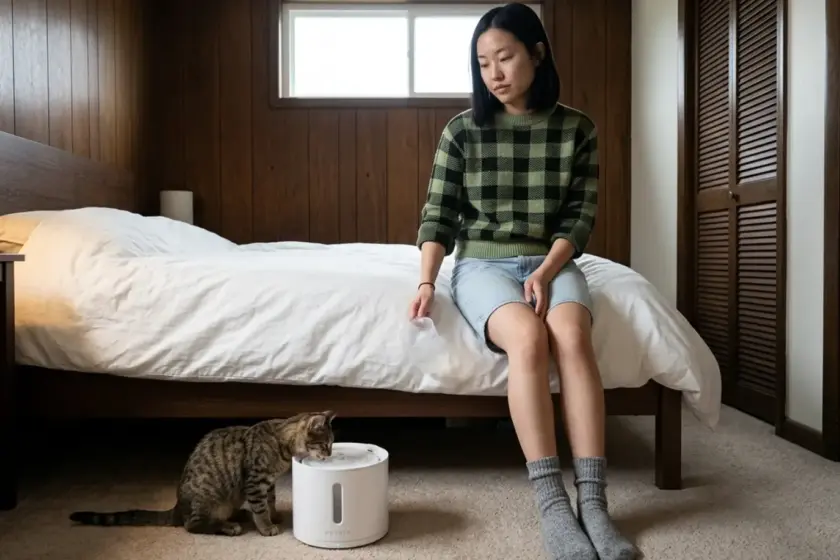
The fountain has been plugged in for three weeks. It hums, the water moves, you change the filter when the box tells you to, and your cat still walks past it to drink out of the glass on your nightstand.
He is not being strange about it, and he is not broken. Cats carry a famously low thirst drive, inherited from desert ancestors, and a pet water fountain is sold as the fix for it. There is a decent chance he simply does not care that the water is moving, and the reason we can say that with any confidence is that somebody sat down in 2018 and measured fourteen cats to find out. Below is what that study actually tested, what it found, and the four things it never looked at, which is where your house probably lives.
Quick Answer
For the average cat, no. The 2018 trial found no measurable difference in how much cats drank from still, circulating, or free-falling water. But one cat in five had a real personal preference, and there is no way to know in advance whether yours is one of them. What a fountain does reliably change is the supply, not the amount.
What the Study Actually Measured
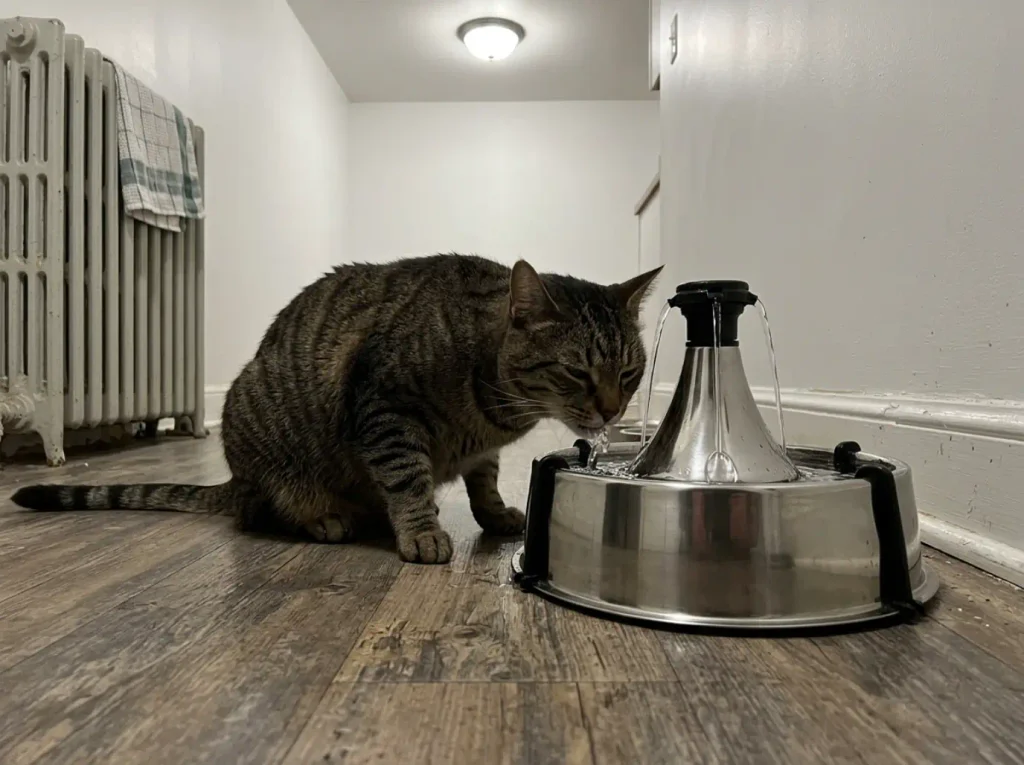
Every article about cat water fountains leans on the same sentence: cats prefer running water, because still water reads to them as stagnant water and therefore suspect. The boxes go further and promise oxygenated water, cooler and fresher-tasting than anything sitting in a bowl.
It is printed on the boxes, repeated in the listings, and passed around as if it were as settled as gravity. It has been tested exactly once in a way worth quoting, and almost nobody who repeats the slogan has read the result. This is the receipt, and it says something quieter than the slogan does. If you are still deciding whether to own one at all rather than why yours is being ignored, that is the wider question of which cat a fountain actually suits, and it is a bigger question than this page.
Three Bowls, Fourteen Cats, Six Weeks
Fourteen healthy cats. Three drinking setups: a still stainless bowl, a circulating plastic bowl, and a free-falling fountain, which in this case was a Drinkwell Platinum. Each setup ran for two weeks after a one-week adjustment period, so no cat was judged on its first startled encounter with a machine. That is a real design, not a survey of what owners thought they saw.
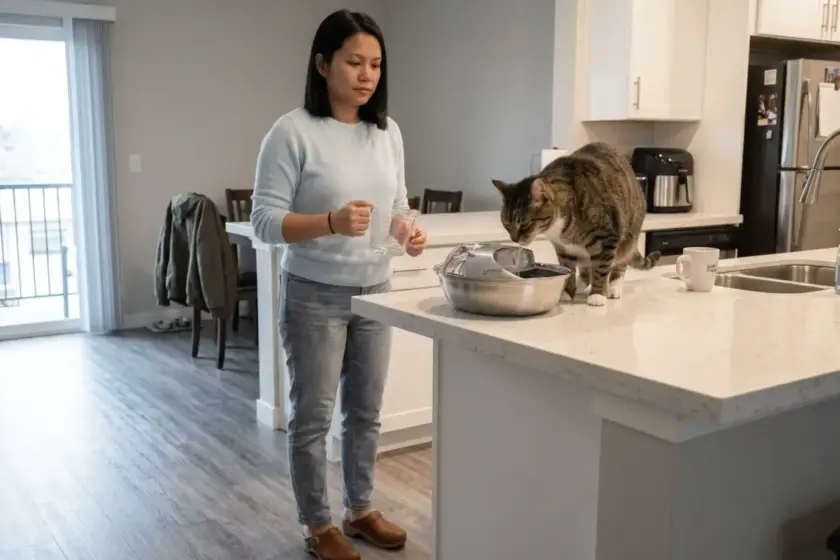
The free-falling type matters more than it sounds, because it is the kind most people picture when they picture a fountain: water pumped up and dropped through open air into a bowl, visibly and audibly moving. The PetSafe Drinkwell Stainless 360 Multi-Pet Fountain (Amazon) is that design in steel, with a 128 oz reservoir, five adjustable streams, and a footprint of about 14.3 inches square. It is here as an illustration of the category that got tested, not as a recommendation to fix anything. Its own honest limitation is the same one every free-fall design carries: more open water surface means more splash and more evaporation, and the tall shape takes real counter space in a small kitchen.
What Came Out the Other End, Literally
The trial did not ask anyone whether their cat seemed to be drinking more. It measured water intake, urine output, and urine concentration, which together are about as close to an honest answer as you can get without asking the cat. Concentration is the useful one: a cat taking in more water produces more dilute urine, and that number does not care about your impression.
That water-bowl preference study is the closest thing anyone has to an answer on whether a fountain makes a cat drink more water, and across all three setups the numbers came out statistically the same. A 2018 study that tracked 14 cats across still, circulating, and free-falling water for two weeks each found no meaningful difference in how much they drank.
Not a small difference, not a trend in the fountain’s favor. The same. Fourteen cats were handed a piece of running-water technology and, as a group, drank exactly what they had been drinking out of a bowl.
The One in Five That Did Care
Here is the part that keeps the fountain from being a useless object, and it is the part nobody quotes. Three of the fourteen cats, roughly one in five, showed a clear and consistent individual preference over their two-week stretch. Not a mild lean. A favorite.
And the three of them preferred three different setups.
One of those cats preferred the still bowl. So the honest statement is not that cats do not care about running water; it is that cats as a population do not care, while individual cats care a great deal and disagree with each other about it. Your cat may well have a strong opinion. The trial gives you no way whatsoever to guess which way it points before you buy.
Which lines up with something people say in fountain threads all the time without realizing it is data: the cat who keeps drinking out of your glass with a full fountain running three feet away. He is not ignoring moving water. He is choosing a specific water source for reasons that were never on the test.
When This Is a Vet Visit and Not a Fountain Question
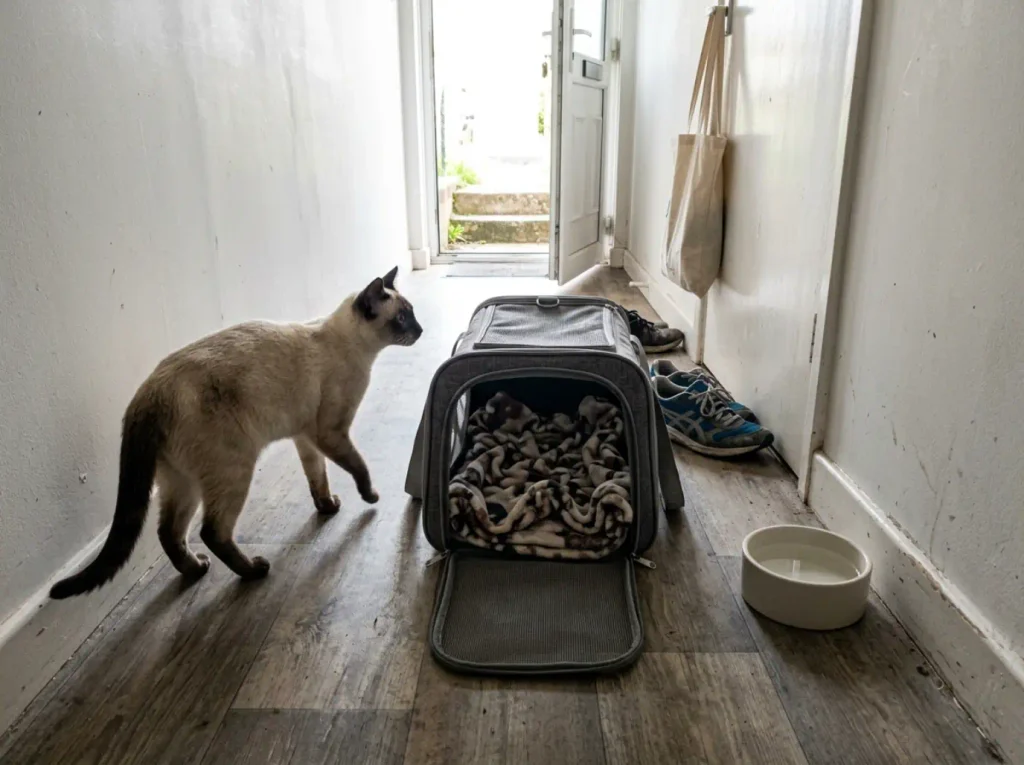
A lot of people buy the fountain because they are worried their cat drinks too little. If that is why you are here, this section is the most useful one on the page, and it is short: the fountain is the wrong tool for that worry. That is good news rather than bad, because it means there is a right one.
The Number That Changes, Not the Number Itself
The thing worth watching is not how much your cat drinks. It is whether that has changed.
A cat drinking noticeably more than usual, or noticeably less, or stopping, with the change arriving over a day or two rather than a season, is a vet appointment this week. Not a new appliance, not a different bowl material, not a better filter. This site is about furniture, litter, smell, noise and water bowls; that one is not ours, and we will not guess at it here.
For a baseline to compare against, the Cornell Feline Health Center puts a cat’s daily need at roughly four ounces of water for every five pounds of body weight. A 10-pound cat lands around a cup a day, and that figure counts the water that arrives in his food, not just what he laps out of a vessel. Most owners have never had a number to hold their guess against, which is how a perfectly normal cat gets a fountain bought for him.
Keep a plain bowl of water next to the fountain permanently. It costs nothing and it covers the one failure mode a fountain has that a bowl does not: it can stop without telling you. The story that circulates in fountain threads is always the same shape — the owner finds out the pump died because the cat had moved on to drinking from the toilet, sometimes a full day later. A bowl standing next to it turns a dead pump into an inconvenience instead of a dry day.
A Cat on Wet Food Is Not a Cat Drinking Too Little
Half the alarm about this disappears once you account for food. Wet food runs up to about 80% water, so a cat eating it is taking most of his daily requirement off a plate and will visibly drink less at any vessel you give him. That cat is not under-drinking. He is getting it somewhere you are not watching.
A cat on dry food is the opposite case, and he has to make up nearly all of it by drinking. That is the cat for whom the reliability of the water supply genuinely matters, and it is worth knowing which of the two you have before you spend a weekend worrying about a bowl. Neither situation is diagnostic, and neither replaces a vet if the pattern shifts.
Why a Running Fountain Still Gets Ignored
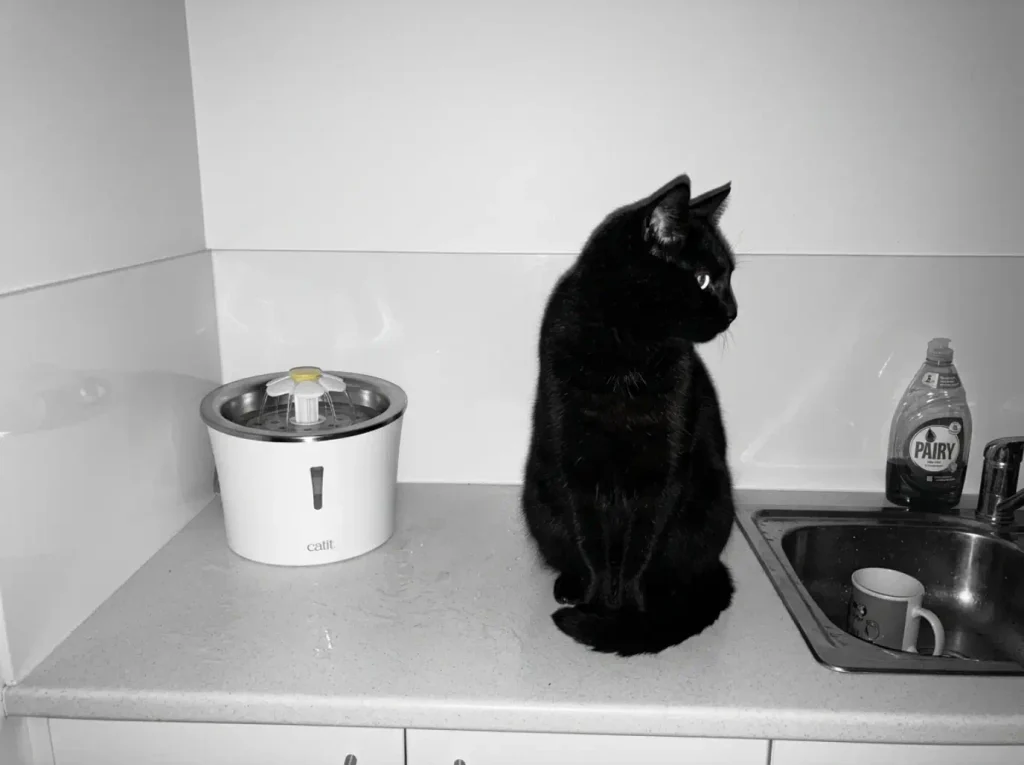
Your fountain works. You can hear it. You can see the water moving.
And the cat drinks somewhere else. There are four mechanical explanations worth checking before you conclude anything, and then a fifth possibility that is not a failure at all.
It Has Not Been Running Long Enough
The most common reason is also the most boring one. Accounts of new fountains converge on the same arc: a week or more of total indifference, then the cat starts testing it, and almost always in private. People report walking in on it, never watching it happen.
Two weeks is the honest minimum before you decide anything, and it happens to be the same adjustment window the 2018 trial built in before it started counting. A cat who has had a machine in his kitchen for four days has not rejected it. He has not evaluated it.
Before you move it, return it, or buy a different one: run it untouched for two full weeks and keep the reservoir filled to the top line the whole time. Half of the fountains declared broken are a low reservoir plus a cat who has not tried it yet. Moving it every three days resets the clock on both problems at once.
The Whiskers, and the Honest Caveat
Deep, narrow vessels make a cat push his face into a cup where his whiskers brush the sides on every approach. Wide, open trays do not. The informal name for the discomfort this is supposed to cause is whisker fatigue, and it deserves a caveat that most articles skip: the evidence for it is anecdotal, not settled. It is a plausible design explanation, not a proven mechanism, and this site is not going to sell it as more than that.
What is not in dispute is the shape difference.
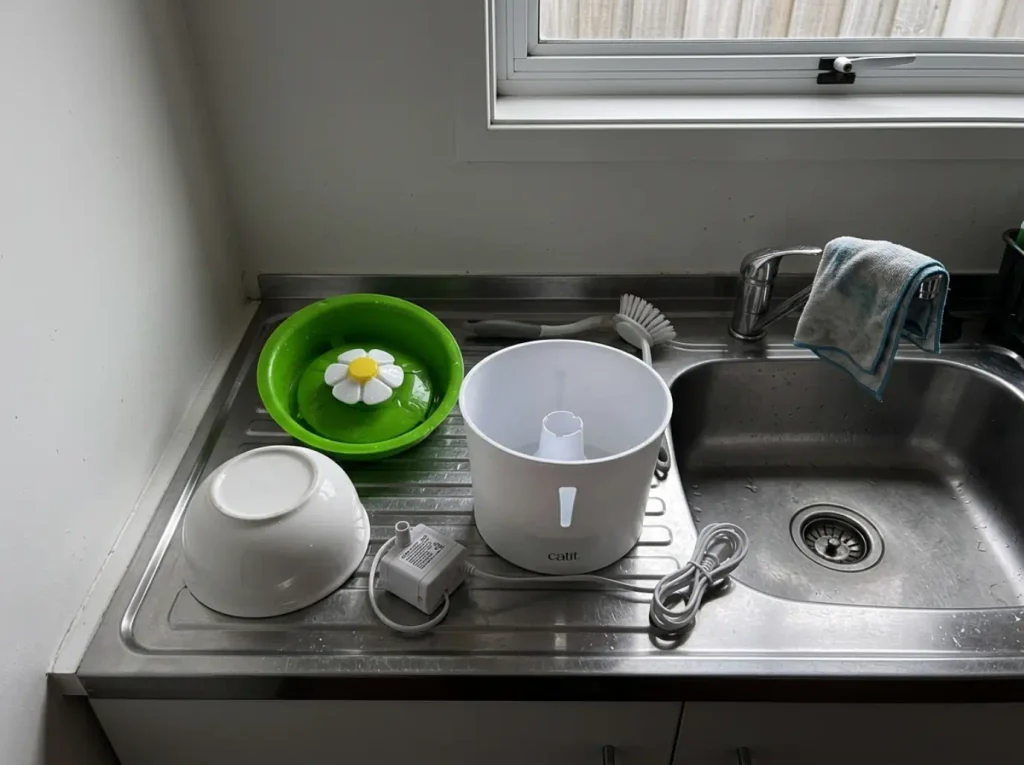
A narrow spout in a small cup asks something of a cat’s face that a wide open bowl does not, and the informal name for that objection is whisker stress, and if you own the narrow kind and your cat approaches and backs off, the shape is at least worth ruling out. The Catit Stainless Steel Flower Fountain (Amazon) is the open version of that idea, a 3 L steel reservoir feeding a wide shallow top that a cat drinks from without putting his head into anything. It has a real drawback: the flower design has small parts to disassemble every week, and steel shows water marks that plastic hides. It is a shape and a material, not a remedy for anything.
The Glug Is Not a Fault
The noise complaint is nearly always the same noise, and it is nearly always misread. A quiet fountain runs its pump at roughly 20 to 23 dB, which is below a refrigerator and effectively inaudible across a room.
The loud intermittent glugging people describe is air entering the reservoir as the water level drops. The fountain is not failing. It is telling you it is nearly empty, in the only way it can — which is why a water level indicator, on the models that have one, saves you the guesswork.
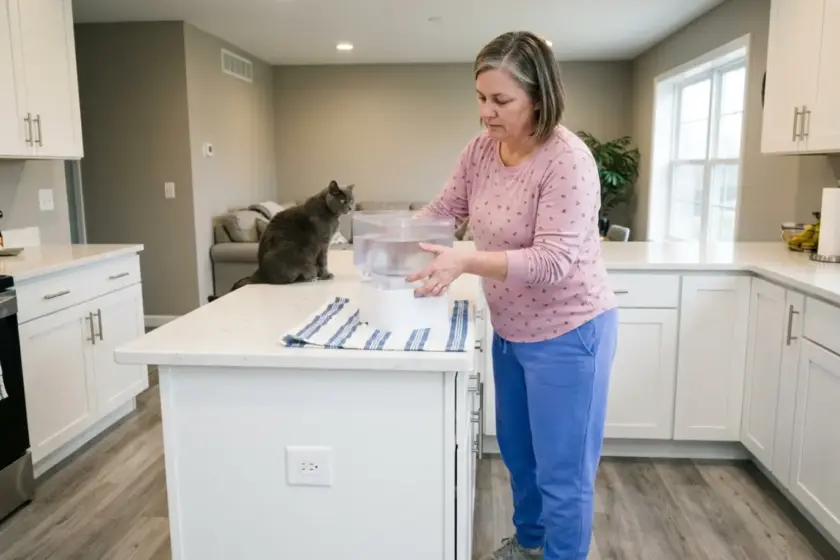
There is a separate question about vibration, which is not the same as sound. A pump sitting on a hard countertop transmits through the surface, and that is the motor noise a cat can feel through the counter rather than hear. A folded dish towel underneath costs nothing and rules it out in an afternoon.
Or the Vessel Was Never the Variable
And then there is the answer nobody wants to write down.
Eleven of the fourteen cats in that trial showed no preference at all between still, circulating, and free-falling water. Four out of five. If your cat is one of those, there is nothing to fix, because nothing is broken. He will drink what he needs from whatever is clean and reachable, and the machine on your counter is for you.
That is not a consolation prize. It is a genuine finding, and it is the one that saves people from buying a third fountain to solve a problem the second one never had.
What the Study Did Not Test
Any article that leans this hard on one study owes you the boundaries of it. Fourteen cats is a small trial, and the reviewing vet named the limitations plainly. There are four, and the last one is where you live.
No Ceramic in the Trial
Steel, plastic, and free-falling. Ceramic was not in the trial at all, so the finding says nothing about it in either direction. Anyone telling you the study proves ceramic fountains do not work is telling you something the study cannot support. What is not measured is not claimed.
Healthy Cats Only
All fourteen cats were healthy. Whatever happens with a cat who has an ongoing medical problem sits outside this result entirely, and outside this article too. That case belongs to a vet who has seen your cat, and a fountain is not part of that conversation.
A Lab Is Not Your Kitchen
This is the limitation that changes the most in practice. Those cats drank in a research facility: no second cat waiting at the doorway, no food bowl eighteen inches away, no washing machine starting up on the other side of the wall. Your kitchen has all of that, and Cornell lists territorial conflict and poor access to water as causes of reduced intake in their own right, independent of what the water is sitting in.
Which is where the multi-cat household mechanics come in, resource guarding and all, and where a spec sheet quietly lies to you. Water fountain capacity is not access. A 4 L reservoir is still one drinking point, and one drinking point in a house with a cat who guards things is a queue. Two smaller vessels in two rooms beat one large one in a corridor every time, and no listing on any site will tell you that because the listing is selling liters.
Material belongs to the same list of things the trial did not measure.
A plastic fountain, even a BPA-free one, is porous, and porous plastic accumulates biofilm in the scratches and is the material associated with chin acne; steel is non-porous and goes in the dishwasher. That is a hygiene and maintenance difference, not an intake difference, and if you want the product-level version of that argument, the sibling piece on which steel fountains are actually worth it owns it. The cheap counterpart makes the tradeoff visible: the Catit Flower Fountain in green plastic (Amazon) is the same 3 L design and the same shape as the steel one, and it does identical hydraulic work for a fraction of the outlay. It is also the one you will need to replace sooner and scrub harder, because plastic scratches and scratches hold film.
How to Find Out in Your Own House
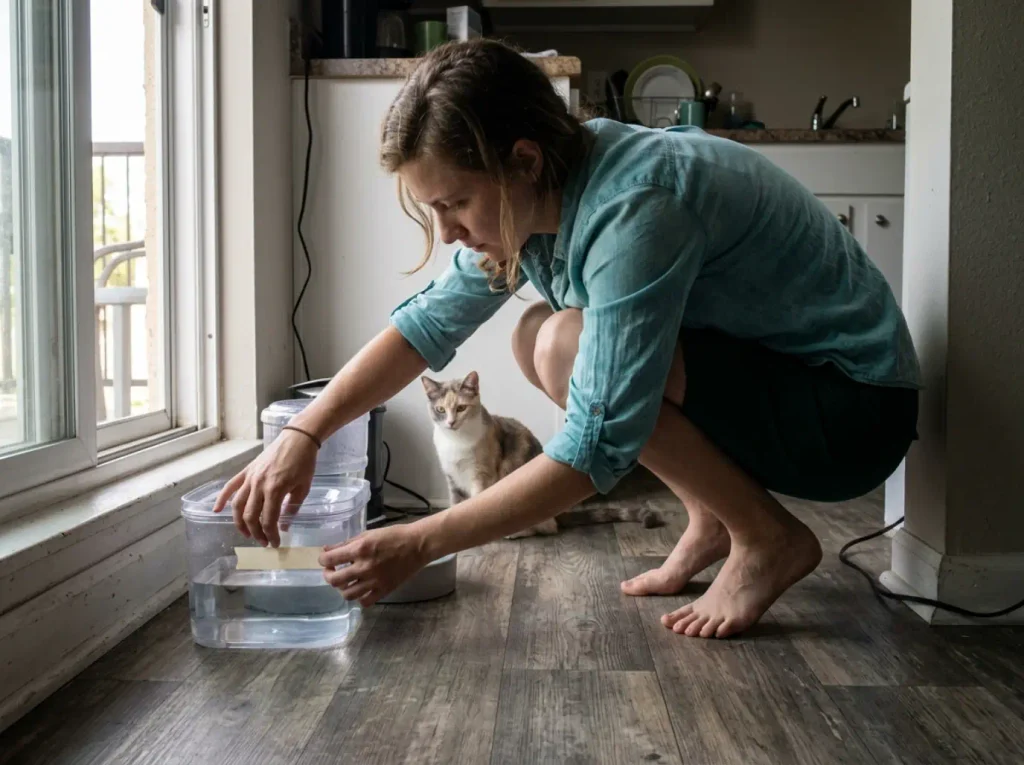
Four sections of “it depends on the cat” is unsatisfying, so here is the part that gives you the answer for your cat rather than for cats. It is the 2018 methodology shrunk to one kitchen, and it takes two weeks and nothing you do not already own.
One Week Before, One Week After
Week one: leave everything exactly as it is, whatever your cat drinks from now. Week two: introduce the change, one variable only. Measure the same thing at the same time every day in both weeks. That is the whole protocol, and the discipline in it is the “one variable” part, because changing the vessel and its location in the same week tells you nothing about either.
- Mark the level. Fill the reservoir to a fixed point and put a strip of tape at the line. No scale, no measuring jug.
- Read it once a day, same hour. Morning is easiest because nothing has happened yet. Write the number down; do not hold it in your head.
- Account for evaporation. Stand an identical glass of water nearby where the cat cannot reach it, or skip the glass and compare whole weeks instead of individual days.
- Change one thing in week two. The vessel, or the location, or the material. Not two.
- Compare week against week. Add up seven days on each side. Single days are noise.
Marking the Reservoir Instead of Buying a Scale
The tape-line method exists because the alternative is weighing a fountain twice a day, which nobody sustains past Thursday. A fixed mark and a fixed hour gets you within a useful margin, and the margin does not matter because you are comparing two weeks measured the same sloppy way rather than chasing a true figure.
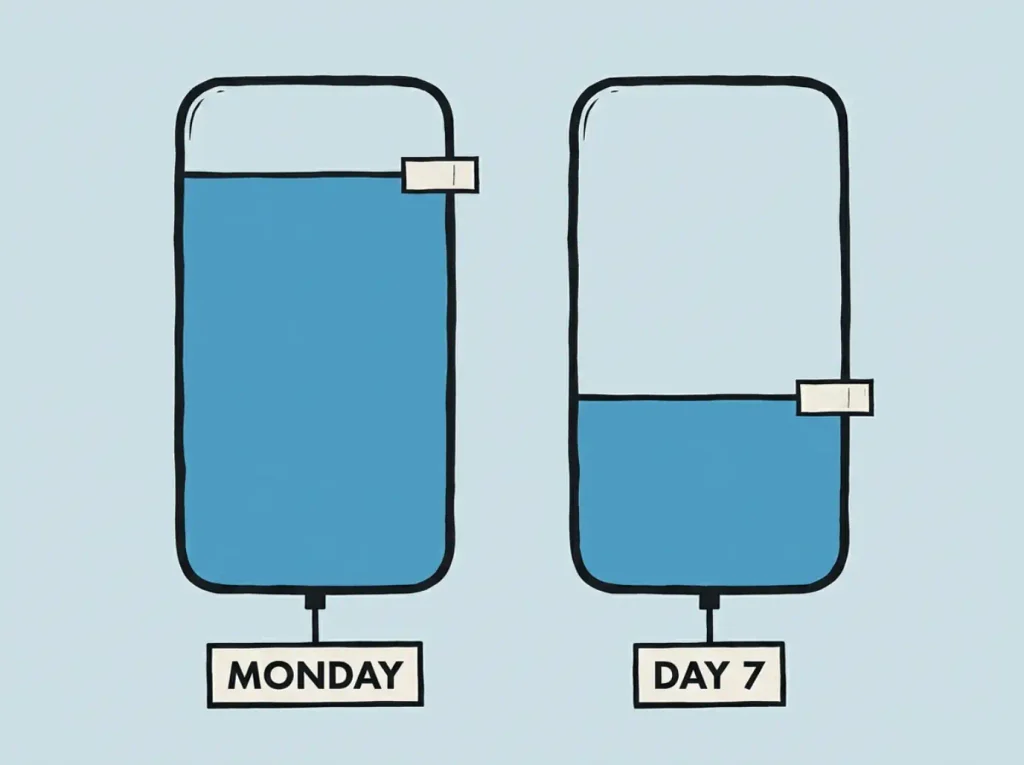
Read the level at the same hour every day, and compare whole weeks rather than days. A cat drinks differently on a hot Tuesday than on a wet Sunday, and a single day of data will tell you whatever you were already hoping it would. Seven days against seven days is the smallest comparison that survives the weather.
Compare the result against the Cornell figure from earlier, and remember to count the food. A wet-food cat hitting a fraction of that number at the bowl is not failing the test; he is eating most of it — wet food runs to roughly eighty percent moisture content.
And if you want the honest reason to bother measuring at all: owners are certain their cats drink more with a fountain, and the trial measured that on average they do not. The owner’s eye is not an instrument. That is not a criticism of owners, it is what makes the tape worth the ten seconds.
Two Cats Break the Measurement
With two cats sharing one fountain, the reservoir level tells you what the household drank and nothing about who drank it. There is no fixing that with tape. What you can still learn is whether both cats are drinking at all, and roughly when, which is worth more than a number: watch for a week and note who you see at it. If one of them never appears, you have a different problem than the one you started with, and it is not a hydration problem, it is a territory one.
If you want a real individual reading, separate the water points for the test period, one per room, and measure them separately. It is more work for two weeks and it is the only version that produces a per-cat answer.
The Fountain Is a Supply Problem, Not a Thirst Problem
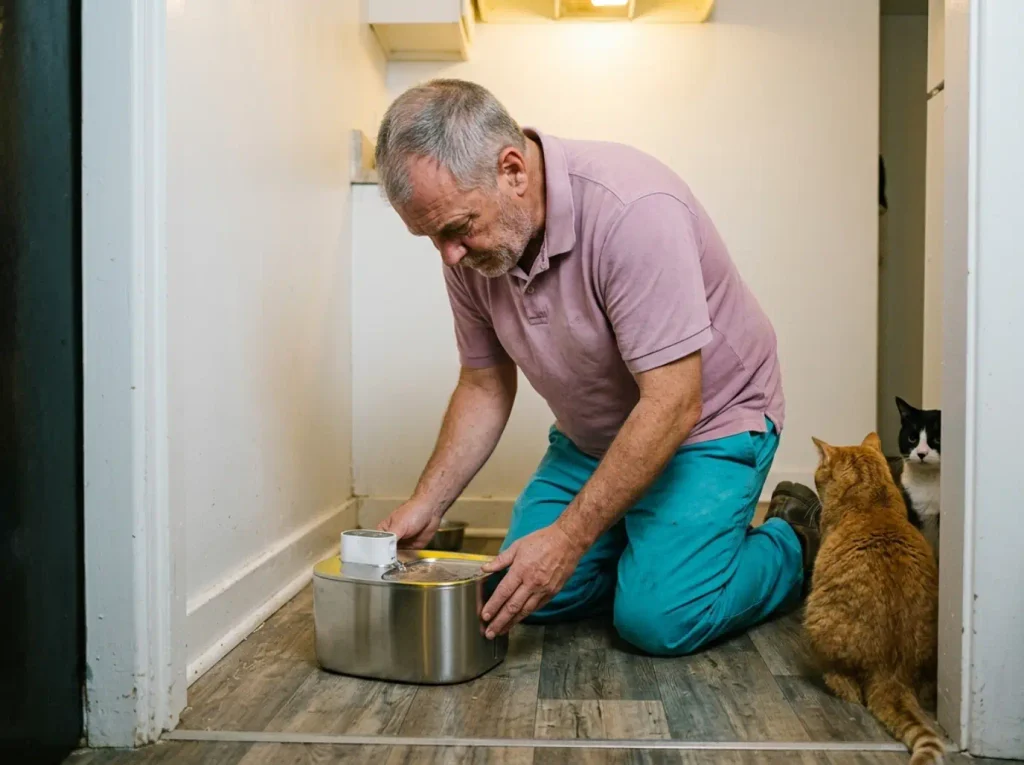
So if it does not make your cat drink more, what did you buy? Something real, but not the thing on the box. The category has been sold on the wrong promise for years, and the right one is smaller and holds up better.
Availability Is Not the Same as Intake
There are two different questions hiding inside “do fountains work,” and everyone answers the first one and bills it as the second. Does it raise how much my cat drinks? was tested, and the answer is no on average. Does it keep clean water available at all times without depending on me remembering? was never tested, and the answer is obviously yes. That second question is the one a fountain wins.
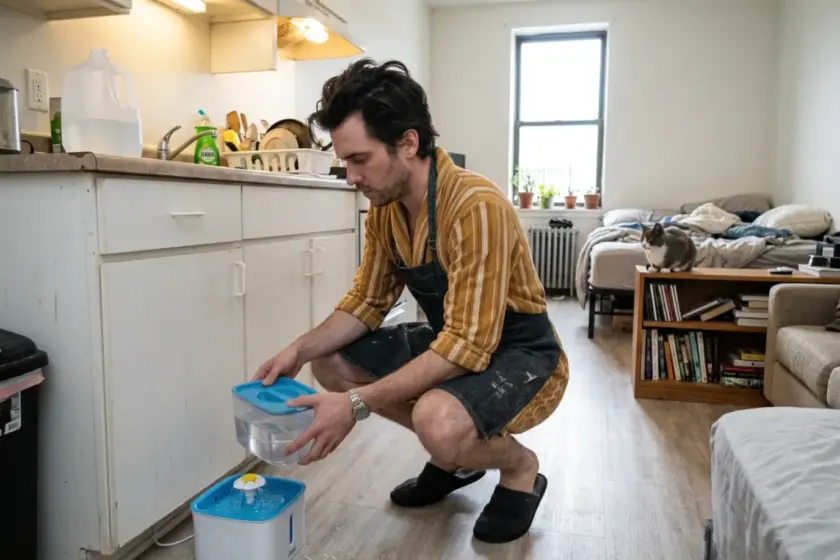
A bowl goes empty. It collects hair and dust by lunchtime, it goes stale, and it gets skipped on a Saturday when the routine falls apart. A 3 or 4 L reservoir does not go empty in a day, and that is a genuine change in your cat’s environment even though the amount he drinks stays flat.
| The Question | What the Evidence Says | Who It Wins For |
|---|---|---|
| Does it raise how much my cat drinks? | Tested in 2018 across 14 cats. No measurable difference between still, circulating and free-falling water. | Nobody, on average |
| Does my individual cat prefer it? | 3 of 14 cats had a clear preference, each for a different vessel. Unpredictable in advance. | One cat in five |
| Does it keep water clean and available? | Never tested, never in doubt. A 3-4 L reservoir does not run dry or go stale in a day. | Anyone who travels or forgets |
| Does it reduce the work? | No. It trades a daily refill for a weekly strip-down clean, and the filter catches debris, not bacteria. | Nobody |
The Filter Does Not Sterilize Anything
The foam pre-filter and the activated carbon filter behind it trap hair, grit and food debris, and filtered water in this context means exactly that and nothing more. It does not filter bacteria and it does not make the water safe indefinitely, which means owning a fountain buys you exactly zero permission to clean less often. The water gets changed on its own schedule regardless of what the filter is doing, and the two sibling pieces on how often the water actually has to be changed and on cleaning the filter on the schedule the manufacturer actually means carry the cadence. What matters here is only the correction: a fountain is a commitment to a weekly job, not an escape from a daily one.
It reads like a footnote until you go through the one-star reviews, where the same story keeps surfacing: a fountain nobody stripped down for two months, and a slick that formed inside the pump housing. The maintenance is the purchase.
Who Is Actually Buying Reliability
Here is the plain version. If you travel, work twelve-hour days, or simply lose track and find the bowl dry at nine in the evening, the fountain is buying you something you do not currently have. If you refill a clean bowl twice a day without fail, you are paying for a machine to do a job you were already doing, and the study says it will not do it better.
Then there is the constraint nobody in this search result mentions: the fountain is an appliance with a cord, and the cord decides where it can live.
In an apartment kitchen with two outlets, both behind the counter, outlet access decides the question before anything else does. Food bowl separation, the standard advice to put the water away from the food, is then something you physically cannot follow, and the answer is not to move the cat.
Cordless designs remove the constraint, and that is the renter-friendly answer. The Wireless Cat Water Fountain Cordless (Amazon) runs on a battery with a 108 oz reservoir and a motion sensor that only runs the pump when a cat approaches, which is also what makes the battery last. The tradeoff is honest: you are now charging a water bowl, and a motion sensor means the water is still most of the time, which is the opposite of what you bought a fountain for.
For two or more cats with the same outlet problem, the reservoir needs to be bigger before anything else changes. The APD APETDOLA Wireless Stainless Steel Fountain (Amazon) is the largest cordless option worth naming at 135 fl oz, about 4 L, in steel rather than plastic. It is the premium end of this list and it carries the same caution as the rest: four liters is capacity, not access. If one of your cats sits between the other one and the water, a bigger reservoir changes nothing at all.
The Short Version
For most cats, a fountain does not increase how much they drink. Somebody measured that properly and it came out flat, so buying one expecting more water going in is buying the wrong object for the right worry.
About one cat in five does have a genuine preference, and it is unpredictable which vessel wins. The only way to find out about your cat is to run the two-week test in your own kitchen and read a tape line.
What a fountain does guarantee is clean water, available, all the time, without depending on you. That is a smaller promise than the marketing makes, and for plenty of people it is worth the appliance on its own.
Come back to it in three weeks. Three things to look at: whether the reservoir is dropping at the same rate it did in week one, whether your cat will now drink with you standing there, and whether the weekly clean is still happening or has quietly become a fortnightly one. The last one goes first, and it goes without announcing itself.
Before any of that, do the free thing. Move the fountain you already own well away from the food bowl, fill it to the top, and leave it alone for two weeks. If he starts drinking, you have just saved yourself a purchase. And if he does not, you have ruled out placement for free, which is worth knowing before you spend anything.
Amazon’s Audible — free for 30 days
Your cat won’t let you read. Let someone read to you.
Audible is Amazon’s audiobook library — thousands of titles, read out loud, on your phone. Free for a month, plus one audiobook to keep forever.
Frequently Asked Questions
01Do vets recommend water fountains for cats?
Some do and some don’t, and the honest version is that it depends on the cat rather than on the vet. The Cornell Feline Health Center’s own wording is that some cats increase their intake with a fountain but that individual preferences vary, which is the same conclusion the 2018 trial reached. Where vets agree is the part that isn’t about the vessel at all: a cat should always have clean water within easy reach.
02What are the disadvantages of a cat water fountain?
It’s a machine, so it can stop without telling you, and a stopped fountain is worse than a bowl because nobody notices for a day. It also commits you to a weekly clean, since the filter catches hair and grit rather than bacteria, and it needs an outlet within reach of wherever your cat actually drinks. Plastic models are cheaper but porous, which makes them harder to keep genuinely clean.
03Do cats actually need a water fountain?
No cat needs one. A cat needs clean water he can get to without crossing another cat’s path, and a bowl you refill reliably does that. A fountain is insurance against the days you forget, which is a real thing to buy. It just isn’t the same thing as making your cat drink more.
04Can I leave my cat’s water fountain on all the time?
Yes, and that’s how they’re designed to run: the pump is built for continuous use and switching it off defeats the point. What it does need is a reservoir that never runs low, because a fountain running dry is how pumps die. If yours has started making a loud glugging noise, that’s usually air getting in as the level drops rather than a fault.
Leave a comment