How Long Should a Litter Box Smell Bad? 2 to 4 Hours
Ammonia starts in 20-30 min + a nose registers it at 2-4 hours. Above 75F it runs 3-5x faster, and a plastic box quits resetting after 1-2 years.

Alfredo RamsesFounder · August 23, 2026 · 16 min read

On this page8 sections
- 1What "Normal" Smells Like on a Clock
- 2Why the Smell Comes Back Faster Than It Should
- 3What Changes the Clock: Litter, Depth, and Box Size
- 4How Long It Should Smell After a Deep Clean
- 5When the Smell Stops Going Away at All
- 6Two Cats, Small Apartments, and the Smell You Stopped Noticing
- 7The Answer, on a Clock
- 8Frequently Asked Questions
You scooped at eight in the morning. It’s six in the evening, you walk past the hallway, and the apartment smells like a litter box. Most people read that as neglect, and it usually isn’t. Ammonia starts forming inside half an hour of the pee, and it crosses a human nose somewhere around the two-to-four hour mark, in every house, on every schedule.
The AAFP and ISFM behavior guidelines pin down the parts nobody quotes, the box size and the deposit count and the wash interval, while the cat blogs keep answering the question with “clean it more often.” Here is the whole litter box smell timeline, or how long a litter box should smell bad on four different clocks: after a scoop, across a day, after a deep clean, and the one where the clock stops resetting at all.
| Timeline | What’s normal | What it means if it’s worse |
|---|---|---|
| 0–30 min after the pee | Nothing a human nose picks up yet | A sharp smell this fast means the litter bed is saturated underneath |
| 2–4 hours | A faint smell standing close to the box | Noticeable from the doorway means the box is undersized for the cat |
| End of day, once-daily scoop | Mild smell at the box, not in the room | Smell in the next room means twice-daily scooping, not a new product |
| 24–48 hours after a full wash | Should smell of nothing | Smell already back means the box itself, not the routine |
What “Normal” Smells Like on a Clock
Nobody has ever given you a number. That’s the actual problem with this question, and it’s why you’re standing next to the box at six in the evening wondering whether you’re a slob or whether this is just what a litter box does. Every article you’ve read answers with a verb: scoop more, clean better, try this. None of them answer with hours.
So here are the hours. Ammonia starts forming within 20 to 30 minutes of the pee, when urease bacteria get to work breaking down the urea. There is nothing to fix inside that window. It is not your litter, it is not your schedule, it is urea breakdown running on a timer that started the moment the cat covered it up.
A human nose usually registers that ammonia smell somewhere past 5 ppm, which lands around the two-to-four hour mark under normal room conditions. That gap between deposit and detection is the whole answer, and it’s the number the top results leave out.
Then multiply it. The average cat eliminates three to five times a day, per the AAFP and ISFM guidelines on litter box management, which means what you’re smelling is never one event. It’s a stack of overlapping clocks, each one a couple of hours behind the last.
The eight a.m. deposit is at its peak by noon. The noon one peaks at four. By six you are smelling the sum of everything since the last scoop, and the arithmetic works out the same in a spotless apartment as it does in a messy one.
Which makes a once-a-day scoop cadence a decision, not a failure. Scooping in the morning and getting a mild smell at the box by evening is the expected outcome of that schedule. It is doing exactly what it is supposed to do. If that outcome bothers you, the fix is a second scoop, not a stronger product, and it’s worth knowing that before you spend anything on why litter box odor comes back after you clean.
The two-hour rule of thumb: if you can smell the box from the doorway less than two hours after a scoop, the problem is under the surface, not on top of it. You cleared the clumps and left a saturated litter bed underneath them. Scooping harder won’t reach it. That one needs the litter changed out and the tray washed.
Why the Smell Comes Back Faster Than It Should
Two people can run the identical scooping schedule and get different results, and the one with the worse result assumes they’re doing it wrong. They aren’t. Their apartment is warmer.
Heat is the single biggest multiplier on this whole timeline. Above roughly 75°F, a box left a full day reaches three to five times the ammonia concentration of the same box in a cool room. Same litter, same cat, same routine, worse outcome, because the bacterial enzyme reaction runs faster when it’s warm. A south-facing apartment in August is running a different clock than a basement in March, and no amount of discipline closes that gap.
The worst version of it is a warm bathroom with the door shut: humidity, concentration, and no ventilation, all working together against you.
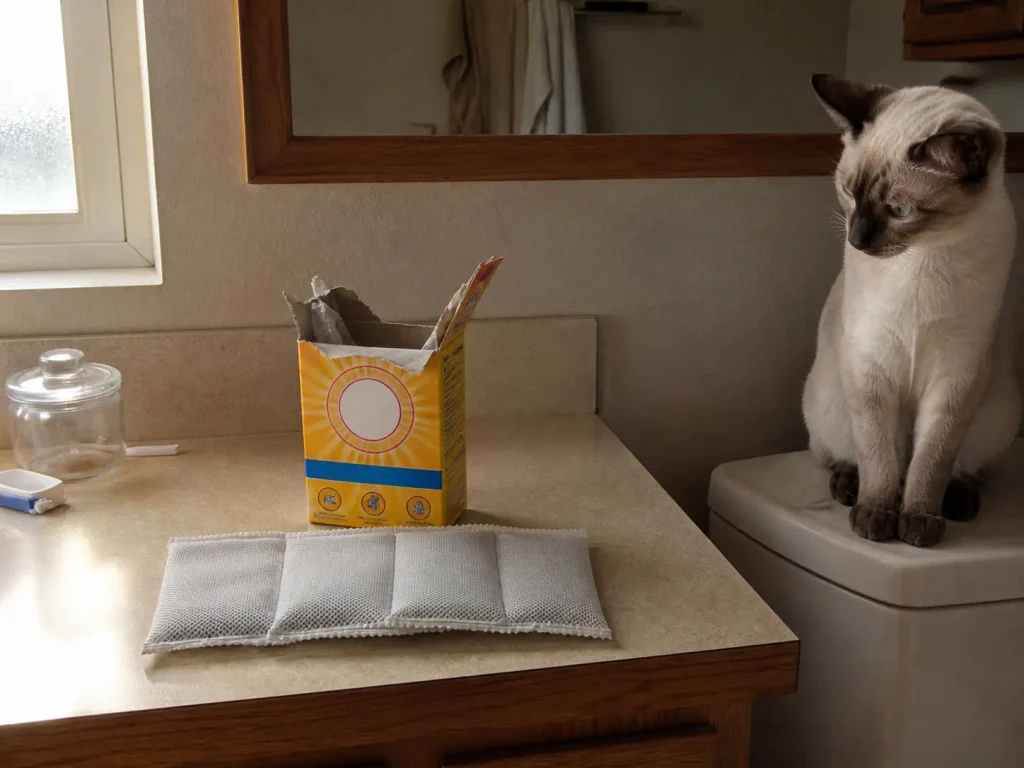
And then there’s the thing almost everybody tries first. Baking soda gets sprinkled into the box because it works in the refrigerator, so people assume it works here. It doesn’t, and the reason is chemistry rather than effort.
Baking soda neutralizes acids. Cat urine ammonia is alkaline. It’s the wrong tool aimed at the wrong molecule.
That is why the pattern in odor threads is always the same shape: sprinkle, notice an improvement for a day, watch it come back, conclude that nothing works.
A 90-day comparison put activated charcoal at roughly 94% ammonia reduction against about 61% for baking soda, and that gap is the difference between adsorbing a molecule and trying to neutralize a pH it doesn’t have.
Before you buy any additive, though, open the door. Moving the box out of the smallest room in the apartment, or just leaving that door cracked, does more for the smell than anything you can sprinkle. It costs nothing and takes about four seconds, and it is the most renter-friendly fix on this page.
If airflow is genuinely not available, which is the real situation in a lot of rentals, charcoal is the additive that matches the chemistry. The PurifyLogix Activated Charcoal Litter Box Pouches come six to a pack in coconut shell carbon and sit in or beside the box, adsorbing ammonia instead of arguing with its pH.
The caveat, and it matters: pouches saturate. A charcoal pouch that’s been in a warm bathroom for three months is a piece of cardboard, and a saturated one buys you nothing, which is the same trap what to put near a litter box for smell walks through in more detail. It also doesn’t replace a scoop. Nothing does.
What Changes the Clock: Litter, Depth, and Box Size
Everyone gets told to use a good litter. Almost nobody gets told that a box too small for the cat hits its odor ceiling faster no matter what’s in it.
Start with the litter, since that’s the variable people actually change. Clumping litter lifts the urine out whole, which physically removes the ammonia source from the tray. Non-clumping leaves the urine spread through the bed to keep off-gassing between scoops, which is why an identical schedule smells worse on it. Crystal litter sits in between: it absorbs rather than clumps, so the urine stops off-gassing but stays in the tray until the full change.
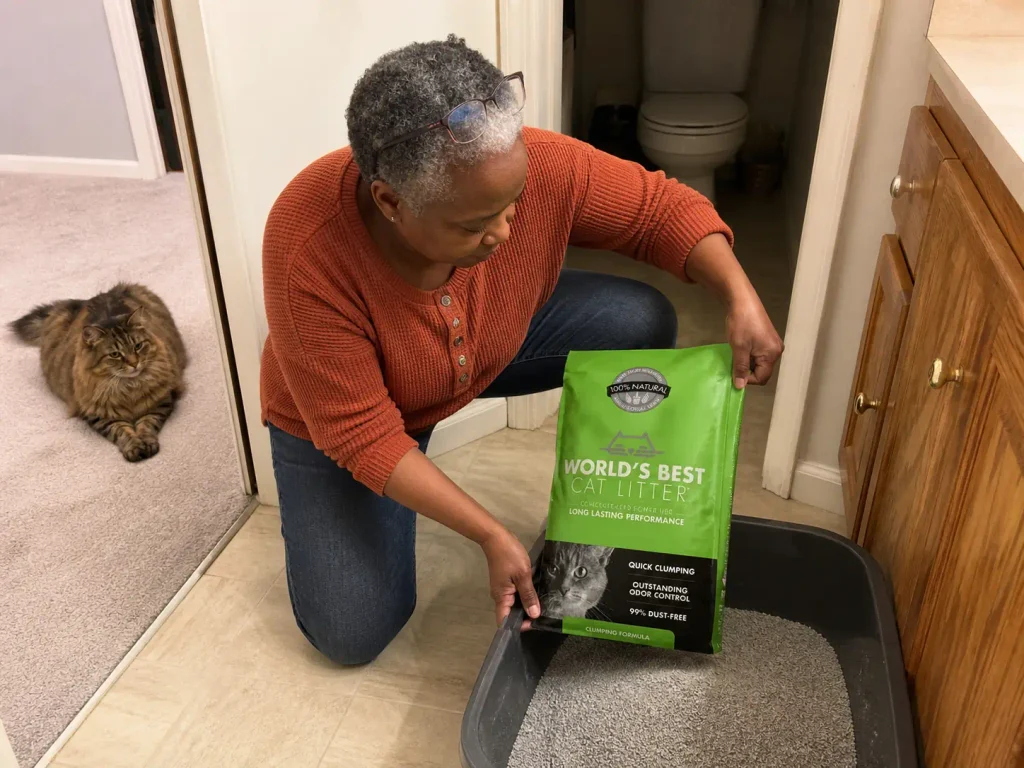
That’s not a brand argument, it’s a mechanical one, and it’s the reason the clock resets properly after a scoop with one and only partially with the other. World’s Best Cat Litter Original Series in the 14 lb bag is the corn-based clumping option this blog keeps coming back to for exactly that reason, and its limitation is worth saying out loud: it’s lighter than clay, so it tracks, and if your cat is an enthusiastic digger you’ll be sweeping.
Litter depth is the other half of it, and it matters more than brand. Too shallow and the urine goes straight through to the plastic floor, which is where the permanent problem in the next section starts.
Then there’s the variable nobody connects to smell at all. The AAFP and ISFM guidelines recommend a box one and a half times the cat’s length measured nose to base of tail, and one study they cite found adult cats preferring a 34 x 15 inch box over a smaller one. Most boxes sold as “large” are nowhere near that. Measure your cat stretched out (asleep on his side is easiest, and he will not cooperate awake), multiply by 1.5, and go look at what’s on the shelf.
Here’s why that’s an odor number and not just a comfort number. An undersized box concentrates the same volume of waste into less litter surface area. Less surface means less material between the urine and the air, and less buffer between deposits, so the box crosses the smell threshold earlier on an identical scooping schedule.
The AAFP framing is blunter than mine. Unless soiled litter comes out roughly every two hours, most commercial boxes are simply too small to stay ahead of the odor they’re holding. Two hours. That’s the ceiling they’re describing, and it’s a ceiling almost nobody is anywhere near.
Your cat isn’t dirty. He was handed a container that was never big enough to do the job for eight hours, and he’s been using it anyway.
Measure the cat, not the box aisle. Nose to the base of the tail, times 1.5, and that’s your floor. A large Maine Coon at full length puts that number somewhere most brands don’t manufacture, which is why so many people end up buying a plastic storage tub with one side cut down. That works, and it’s cheaper than anything sold as a litter box.
How Long It Should Smell After a Deep Clean
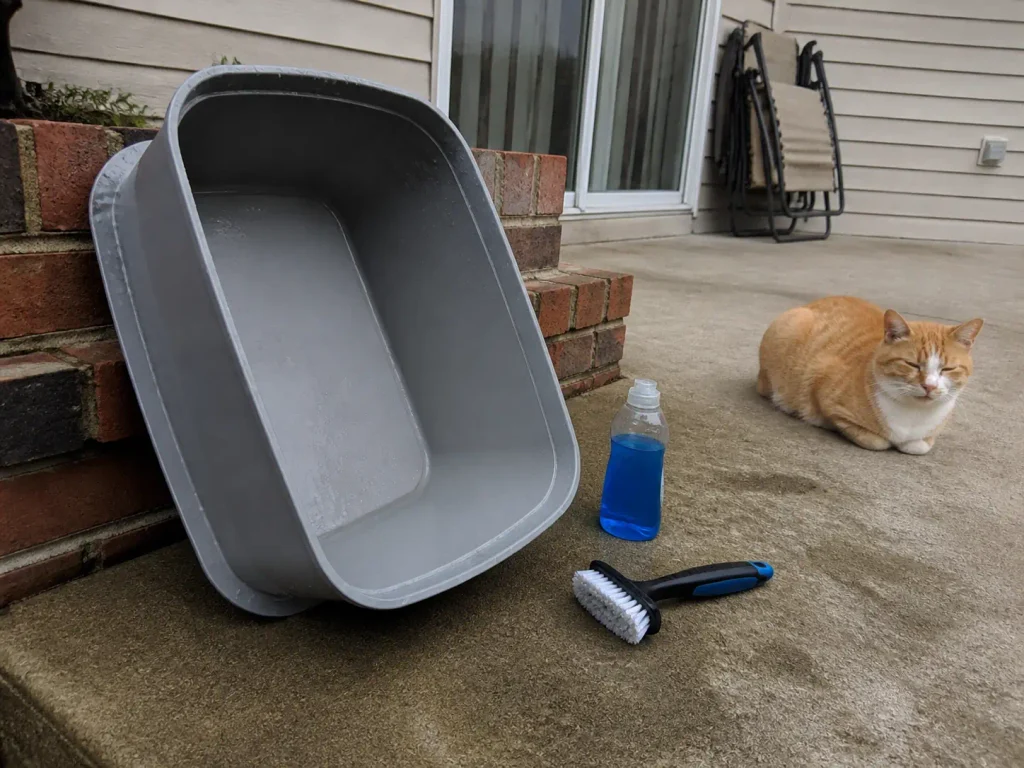
You washed the thing properly. Soap, hot water, the whole job. The next evening it smelled again, and you assumed you washed it wrong.
You didn’t. A properly washed box smells of nothing for a few hours and then picks up smell again as the day’s deposits stack, because the clock from the first section restarted the second the cat used it. That’s not a failed clean, that’s the clean working and then time passing.
The mistake is expecting a wash to buy you a smell-free week. A full litter change and a wash buy you a reset, and the reset lasts exactly as long as your scooping schedule says it should.
What makes this section worth timing is that the rebound speed is data. Wash the box with soap and hot water, keep the scooping honest for the next two days, and watch the clock. If the full smell is back within 24 to 48 hours on a genuinely clean routine, the box is holding it, not you. That’s the single most useful test in this article, and it costs nothing but attention.
The AAFP litter box maintenance schedule, for reference, puts the deep clean every one to four weeks, soap and hot water only. Multi-cat homes sit at the short end of that, single-cat homes can usually live at the long end, and how to make litter box smell go away and keep it gone ranks the rest of the fixes by what they cost you.
One hard no on the cleaner. Never use anything ammonia-based. It smells like urine to the cat, and a cat who decides the box smells like someone else’s territory has a very simple response available to him, which is to stop using it. You’d be trading an odor problem for a much more expensive one, and he’d be right to make the trade.
There’s also a mismatch worth naming, because it runs for years in some apartments. People replace litter on schedule, faithfully, and never once wash the plastic underneath it. Fresh litter goes on top of a tray that has been absorbing for eighteen months. From the outside it looks like a clean box, and it smells like a box that has never been cleaned, because functionally it hasn’t.
Do the wash on a day you’ll be home. The useful information isn’t how the box smells when you finish scrubbing it, because it always smells fine right then. It’s what time tomorrow the smell comes back. Note the hour. That number is the diagnosis.
When the Smell Stops Going Away at All
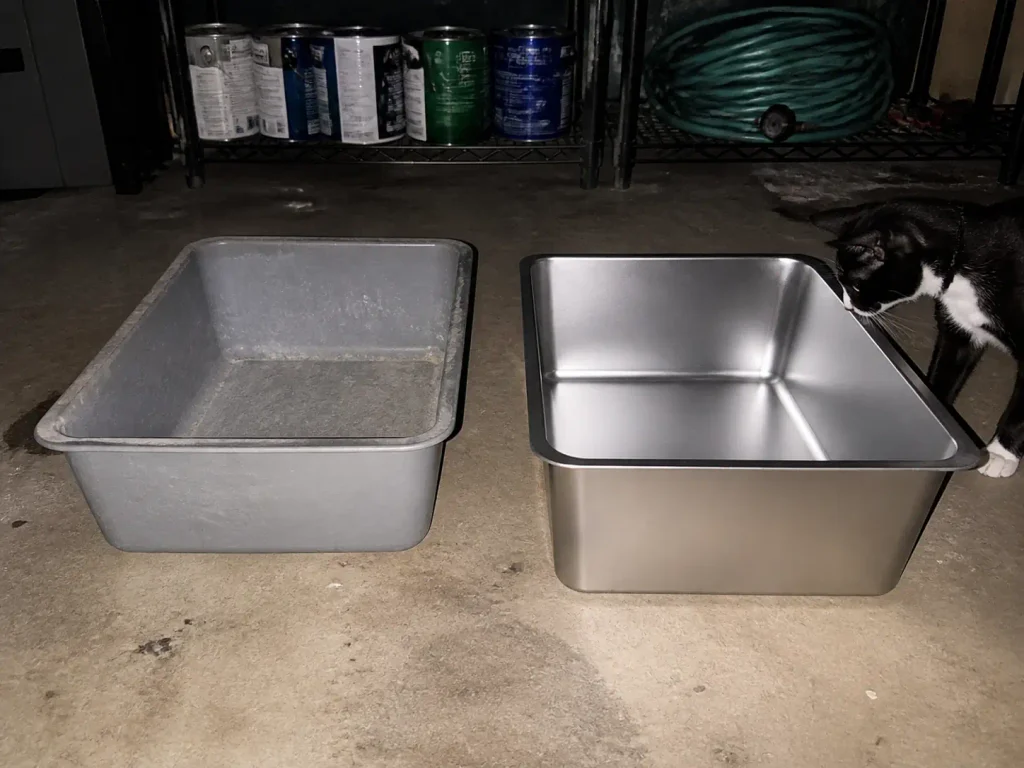
The box isn’t cracked, so it isn’t broken, so why would you replace it? Because plastic wears in a way that doesn’t show up as damage.
A plastic litter box holds roughly one to two years of real service before microscopic scratches and surface porosity start trapping odor molecules and the bacteria that produce them. Those bacteria survive a full wash, because they aren’t sitting on the surface anymore, they’re sitting inside it. That is odor retention in the material itself, and past that point cleaning cannot reset the clock, because the scratched litter box has quietly become the source instead of the container. Odor threads call it the “ghost smell”, a base-note funk that stays in the material after the box is visibly and chemically clean, and once you have the term you start noticing how many people describe it without knowing it has a name.
I used to think a stubborn smell in an old box meant the wash wasn’t thorough enough. It’s the opposite.
The part people miss is that the scratches are the reason, which makes the instinctive response exactly backwards. The smell won’t come out, so you scrub harder, so you cut more scratches into the plastic, so next month is worse than this month. Scrubbing is what’s causing it.
Why scratched plastic holds odor the way steel doesn’t walks the porosity mechanism through properly, and it’s the one piece of this article that changes what you do with your hands.
Before you commit to a box replacement, though, re-run the test from the last section. If the box is under a year old and the smell rebounds fast, a missed wash interval looks absolutely identical from the outside to a worn box, and one of those two costs nothing to fix. Wash it, time it, then decide (two data points, not one). If it fails the test twice, the permanent odor is in the material and the material is the answer.
And on that: stainless steel isn’t a smell-neutralizer, which is how it usually gets sold. It’s non-porous, so it never accumulates the residue plastic does.
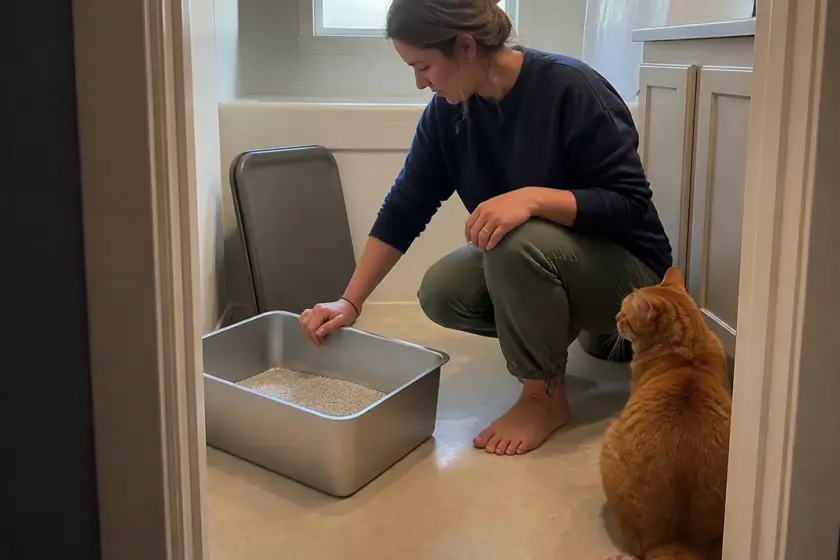
There’s nothing to scratch into and nothing to hold, so a steel box resets fully every time you wash it, and its answer to “how long does clean stay clean” is capped by your scooping schedule instead of by the material’s age. The Kirecoo Large High Sided Stainless Steel Cat Litter Box runs 23.6 x 15.7 x 11.8 inches, which clears the 1.5x rule for most adult cats and puts it well past what the “large” plastic bins offer. Its real drawback isn’t cost, it’s noise: metal amplifies scratching and digging, and in a studio apartment at four in the morning you will hear about it. Whether metal litter boxes actually smell less takes the material question further, including which grade of steel is worth the money.
Two Cats, Small Apartments, and the Smell You Stopped Noticing
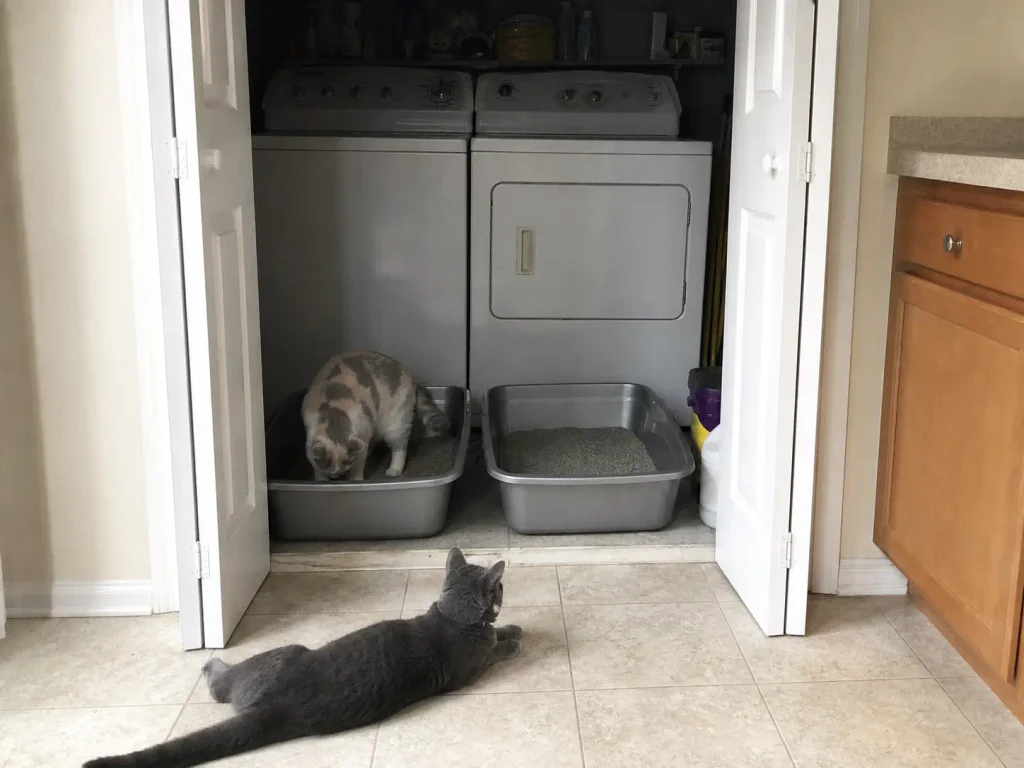
Everything above assumed one cat and a home with a hallway. Plenty of readers have neither.
A multi-cat household doesn’t double the smell. They compress the clock. Two cats at three to five deposits each means the two-to-four hour window is effectively halved, and the box crosses its threshold before lunch instead of before dinner.
That’s the actual reason behind the one litter box per cat rule, plus one, which gets repeated as a hygiene guideline and is really a math one: more boxes means more litter surface area sharing the same daily volume, which pushes the ceiling back out. Two boxes for two cats isn’t wrong, exactly. It’s just running the same total load through less material, and it’ll show up in the evening.
Litter box placement in a rental has a different bottleneck. A bathroom with the door shut is the apartment default because it has no carpet and a drain nearby, and it’s also the worst room for this, since a closed door concentrates the odor at full strength instead of letting it disperse, and the humidity works against the litter on top of that. A utility closet with real airflow beats a sealed cabinet every time, which is the reverse of what the furniture aisle sells you. And a fully sealed cabinet, the kind sold as furniture that hides the box, makes the problem worse rather than better. Enclosing a smell doesn’t remove it, it stores it, and then releases it every time your cat walks in.
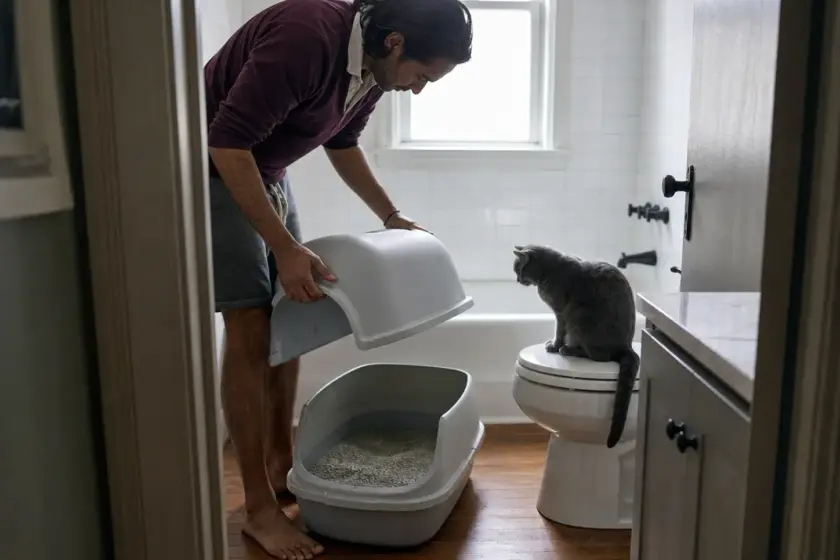
Along the same lines, going from a covered box to an open one is the zero-cost change people report as the single biggest difference they’ve ever made. The cover was never hiding the smell, it was concentrating it at nose height, and the nose it was concentrating it under belonged to the cat. He was living inside your solution. Take the lid off and the smell disperses instead of pooling, which reads as less smell to you and is a genuinely different room for him.
One more thing about your own nose, because it’s the reason the whole clock matters. Nose-blind is real. You stop registering your own apartment within days, which is why the yardstick has to be a number and not a feeling. Use the hours, or use a guest, or use the walk back in after two hours out, which is free and about as honest as it gets.
A smell that changes suddenly, though, sharper or stronger than usual, or arriving alongside a change in how your cat is using the box, is a vet question before it’s a cleaning question, and a litter box that suddenly smells like ammonia is where that one belongs. Everything on this page assumes the vet has already cleared him.
The Answer, on a Clock
Two to four hours after a deposit is normal, and a mild smell at the box by evening on a once-daily scoop is normal too. Measure against that, not against the guest bathroom of somebody who owns one cat and a very large house.
If the smell is back within 24 to 48 hours of a proper wash and your routine is genuinely honest, the box has stopped resetting. That’s a materials problem, not a discipline problem, and no amount of scrubbing fixes it. Two cats halve the window and a closed door concentrates what’s left, and both of those are free to fix before anything gets bought.
Give it three weeks. Scoop twice a day, leave the door open, and time the evening smell again at the end of it. If it moved, the schedule was always the answer. If it didn’t budge, run the wash test and note the hour it comes back.
Open the door and scoop twice for three weeks. It costs nothing, and it tells you whether you ever needed to buy anything at all.
Amazon’s Audible — free for 30 days
Your cat won’t let you read. Let someone read to you.
Audible is Amazon’s audiobook library — thousands of titles, read out loud, on your phone. Free for a month, plus one audiobook to keep forever.
Frequently Asked Questions
01How long should a litter box smell bad after cleaning?
A properly washed box should smell of nothing for a few hours, then pick up a mild smell again as the day’s deposits stack up. If the full smell is back within 24 to 48 hours and your scooping is honest, the box itself is holding the odor.
02Why does my litter box still smell after I change the litter?
Changing litter and washing the box are two different jobs. Fresh litter in a tray that has never been washed puts clean material on top of the actual source, and the plastic underneath keeps releasing odor regardless of what you pour over it.
03Is it normal for a litter box to smell every day?
A mild smell close to the box by the end of the day is normal on a once-daily scoop. A smell you notice from another room is not, and that usually means twice-daily scooping, a bigger box, or better airflow, in that order.
04How long does cat pee take to smell like ammonia?
Ammonia starts forming within 20 to 30 minutes as bacteria break down urea, but it usually takes two to four hours to reach a concentration a human nose registers. Heat speeds that up considerably, so a warm apartment shortens the window.
05Does a covered litter box smell less?
It smells less to you from across the room and more to the cat standing inside it, because the cover concentrates odor instead of letting it disperse. Switching to an open box is the most common zero-cost improvement people report.
Leave a comment