Why a Cat Gets Jealous of a New Kitten Once It Grows
Cat jealous of a new kitten? Seattle Humane's age bands (7-14 weeks, 3-6 months, 6-18 months) show why she reacts again, plus a 54-inch tree.

Alfredo RamsesFounder · November 3, 2026 · 15 min read

On this page7 sections
- 1A Cat Jealous of a New Kitten Is Losing Something the Kitten Keeps Growing Into
- 2A Sudden Change in the Resident Goes to the Vet Before Anything in the Home
- 3What the Kitten Wants Changes at Each Stage, and So Does What the Resident Puts Up With
- 4A Calm First Month Is Not the Finish Line: Check the Lap, the Scent on You and the Box
- 5Free Moves First, Then a High Spot and Something to Do on Its Own
- 6Give Her Things Back Today, Then Look Again When the Kitten Turns Six Months
- 7Frequently Asked Questions
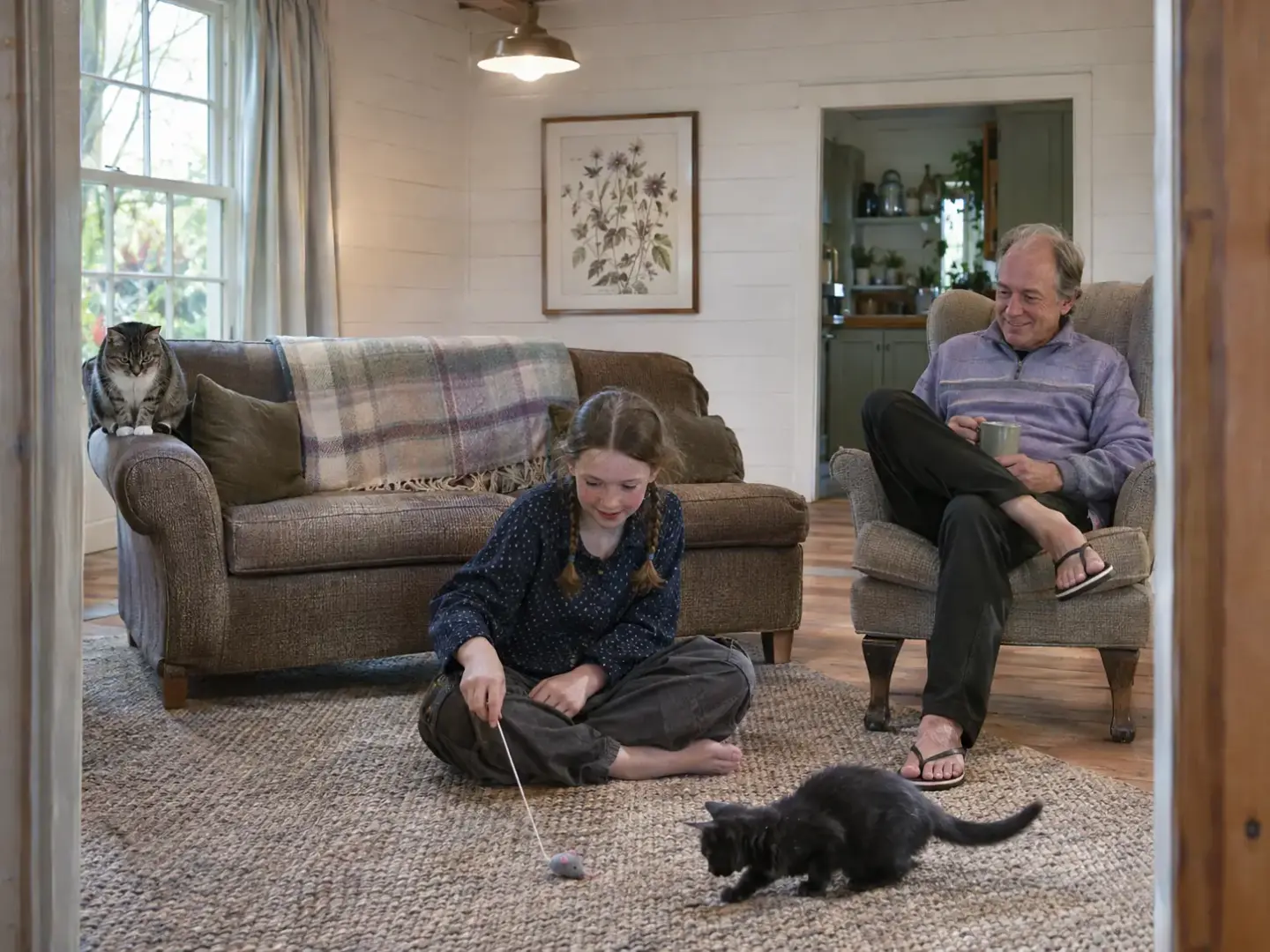
You lift the kitten onto the sofa and your older cat, who was on that cushion a minute ago, hops down and leaves the room. A cat jealous of a new kitten looks like hurt feelings, but what she is doing is describing a spot, a share or a moment that is going to the kitten, and the kitten in your house today is bigger and pushier than the one she met at the door. In a home with one older cat and one young one, the quarrel is usually about a particular place or a particular half hour, and those are things you can move. This article reads her reactions against the kitten’s age, says when a change in her goes to the vet before anything in the house, and then walks through what to check and what to move, the free moves first.
Quick Answer
Yes, a resident cat can look jealous of a kitten, and underneath it is usually a spot, a share or a moment the growing kitten takes over: the lap, the bowl, the high place. A sudden change in eating, hiding or the box goes to a vet first. Then give her things back before buying anything.
A Cat Jealous of a New Kitten Is Losing Something the Kitten Keeps Growing Into
Picture the afternoon it starts. The kitten is about five months old, your older cat spent the first quiet stretch with her paws tucked under her, and today she hissed when the kitten trotted past her cushion and then walked out of the room. It looks like a change of heart. It is a change of kitten: the animal she met at the door is a different size, a different speed and a different kind of playmate now, and she noticed every one of those changes before you did.
What the resident says with a hiss
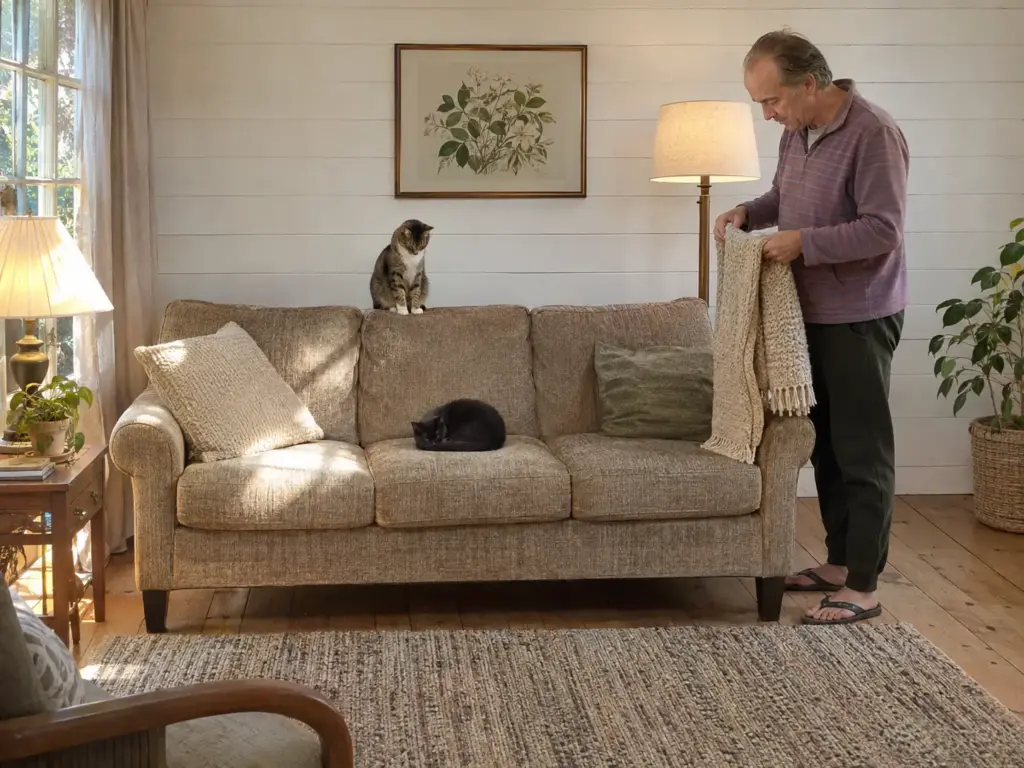
A hiss, a swat or a walk out of the room is a statement about one specific thing: this cushion, that bowl, this stretch of hallway, the half hour on your lap. Call it jealousy if the word helps, or resource guarding if you want the behavior term, as long as it points at a resource and a moment, because those are the two things you can actually change. According to the AAFP and ISFM feline environmental needs guidelines, “A cat’s level of comfort with its environment is intrinsically linked to its physical health, emotional wellbeing and behavior.” So when she stops using a room, the room is part of the problem, and she is the one handing you the report.
The list of what a resident can lose to a kitten is short and unglamorous: her sleeping spot, her bowl, her box, the high place she watches from, and you. How a cat divides an apartment among those is laid out in how a cat claims each zone of the apartment, and what matters here is that every zone the kitten starts using comes out of her share.
Why week one and month four are different
In week one the kitten is a baby, and an adult cat tends to treat a baby as something to step around. By month four it has weight, speed and opinions: it jumps onto the cushion she is sitting on, follows her from room to room and plays at her with a force she never agreed to. Nothing about the house changed between those two dates. Kitten growth did, and her answer changed with it.
A calm opening stretch settles less than it seems to. A resident can go along peacefully and then start chasing the kitten, with a few light swats on the way. She may mean it as play. It lands on the kitten as a threat, and the kitten keeps its distance a little longer after every round.
One cat’s space is two cats’ space
With one resident the house was hers alone, and now she shares it with somebody who is still growing into it. Every zone the kitten starts using is subtracted from her side, and a kitten of five months or so claims zones fast: a sofa arm one week, the window seat the next, the doorway at the end of the hallway after that. (Two older cats would spread the friction across more animals. With a single resident, all of it lands on her.)
Take ten minutes and write down the five things she used most before the kitten came: her resting spot, where she ate, her box, the place she watched the room from, and her one-on-one time with you. Mark each one the kitten now uses. The marked ones are what to give back, and the unmarked ones are still hers. If she has already stopped using a room, note the day it started, because a room that has changed owners is usually the first thing she shows.
Before you call it jealousy, name one spot, one moment and one resource that the kitten has now and she used to have alone. If you can name them, you have found what to give back. If you cannot, watch which room she leaves and what is happening when she does.
A Sudden Change in the Resident Goes to the Vet Before Anything in the Home
The rest of this article is furniture, litter and territory. This part is not.
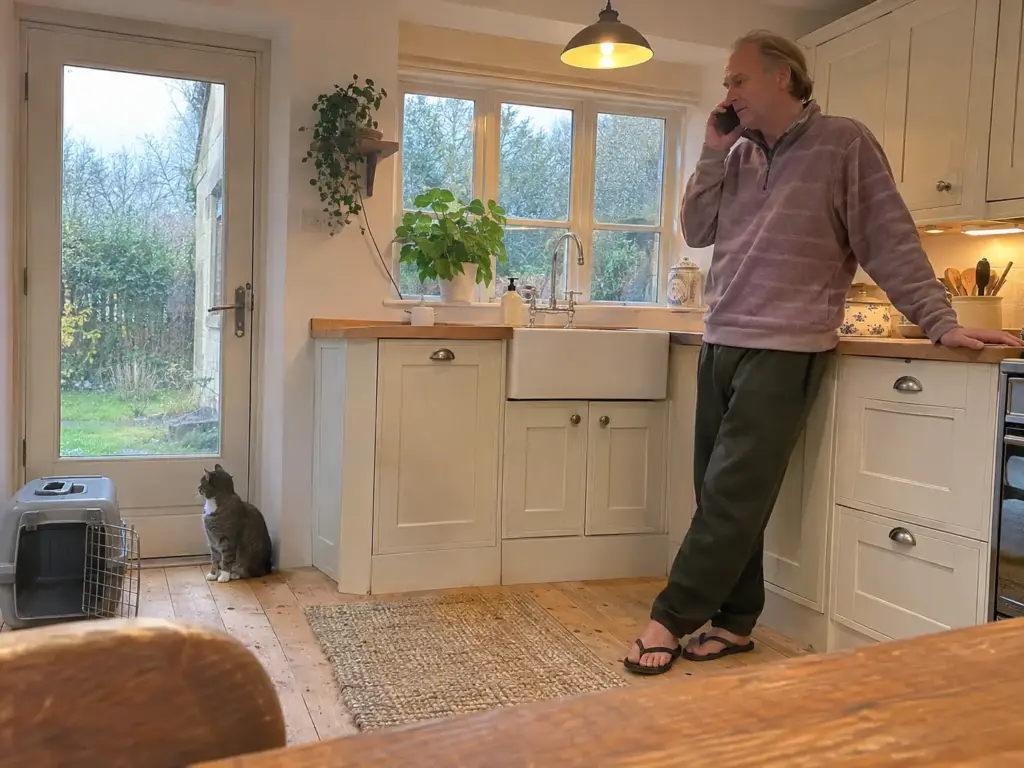
If your older cat is eating less or has stopped eating, hides for days, urinates outside the box or grooms herself until the fur thins, that goes to a vet before any change to the house, and I am not going to guess from here which one it is. Those signs are shared with medical problems, and a vet is the only person who can sort them out. When to call a vet has a short answer: when the change is sudden, book the vet visit before touching the furniture.
What belongs to the house is a pattern with a date and a place on it: it began the day the kitten arrived, after a routine change or the day a piece of furniture moved, and it repeats at the same moment or in the same spot. A change that is abrupt, or that has no fixed moment and no fixed place, gets the phone call first and the rearranging afterward. If the kitten has not been seen yet either, the order of events for a new arrival, with the vet check before the first meeting, is laid out in the check-up routine for a kitten that just came home.
What the Kitten Wants Changes at Each Stage, and So Does What the Resident Puts Up With
Put the kitten’s age next to the jealous cat’s reaction and a lot of “she was fine last month” starts to make sense, because the kitten is the one moving through stages and she is only meeting each of them in turn. If yours is around five months, it sits in the middle of one band and about a month from the next, and that is the position this section is written from.
The play months, when the chase is the kitten’s idea
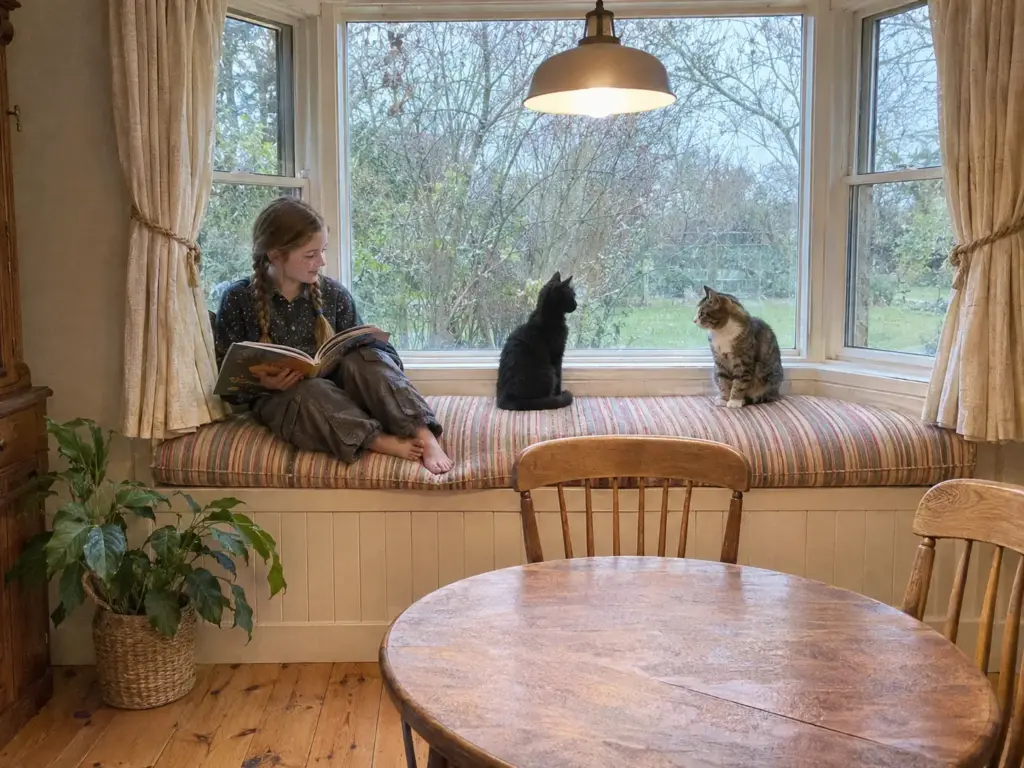
The Seattle Humane Society’s developmental chart gives four bands that matter here. Kittens play hardest from 7 to 14 weeks, with belly-ups, hugging, ambushing and licking. From 3 to 6 months a kitten begins to see and use rank within the household, humans included. From 6 to 18 months it explores dominance harder, and that includes challenging humans.
Seattle Humane sums up the length of all this plainly: “Most cats are still kittens, in mind and body, through the first two years.”
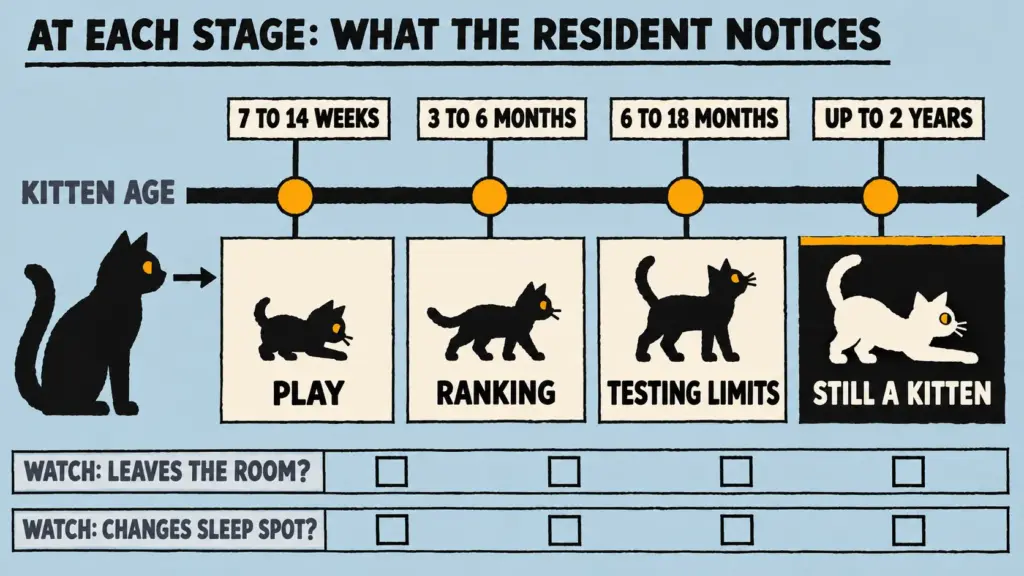
The 7-to-14-week stretch is the busiest stretch of kitten play and it is rough by design. A kitten of five months is past that peak, but the habit stays and the play chase is still its idea of a good time. That is why the resident cannot simply tell it to stop: she is dealing with a player who keeps coming back after a hiss. A pounce that ends in a hiss is an ordinary event at this stage, not a verdict on the pair.
When two cats first share rooms at all is a different question, answered in how the gates, not the days, decide when cats share a room, so this article starts after that point.
Around three months, when the kitten starts ranking
From three months the kitten starts testing where it stands in the house, and for the resident this is where she stops seeing a baby. The kitten takes the sofa arm, goes through the door first, sits where she sits. What to read in her is small and visible: whether she leaves the room when the kitten arrives, whether she has moved to a different place to sleep, whether she has stopped walking through a doorway she used every day. A doorway she avoids tells you more than a hiss, because a hiss is over in a second and a detour lasts all day.
The bands are ranges, not due dates. A five-month-old can still pounce like a ten-week-old on any afternoon, and the resident gets no notice when the kitten moves from one stage to the next. Treat the age as a direction, not a schedule.
Between six and eighteen months, when the kitten tests limits
The next band adds heightened exploration of dominance, and the chart is explicit that humans are among the things tested. For a resident this means a house that had gone quiet can get loud again, because the kitten has found a new set of limits and she is one of them. A resident who was easy in month two can be pushed again in month seven. A kitten at five months is about a month from the start of that band, so a resident who has settled by then should expect to be tested once more, and so should you.
None of that asks her to do anything wrong. The house’s job at that point is to have her places ready, and the rest of this article is about getting them ready.
A Calm First Month Is Not the Finish Line: Check the Lap, the Scent on You and the Box
A quiet stretch feels like the end of the introduction, and it is where a lot of households stop looking. The kitten, meanwhile, keeps reaching for the next thing she has, and it reaches for three in particular: your lap, your scent and her litter box.
The lap and the moment you hold the kitten
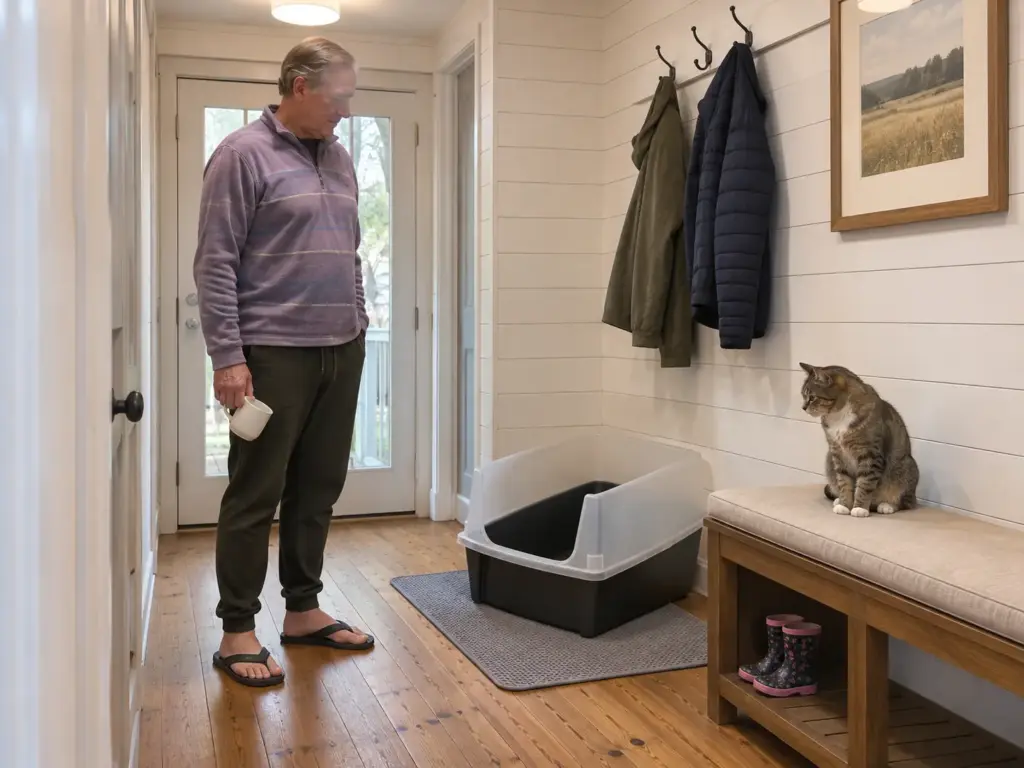
A resident can share a room with the kitten without a sound and still hiss the moment the kitten is on your lap. The lap is the one seat in the house with room for exactly one cat, and she was in it first. Run the test in your own living room: the kitten on the floor, then the kitten beside you on the sofa, then the kitten on you. The step where she starts hissing tells you which resource she is protecting, and that is the one to fix.
The kitten’s scent on you
Once you have held the kitten you carry it, and a resident can hiss or swat at the person who just put it down. That is not a verdict on you. Wash your hands, give it a few minutes and go back to her without the kitten in your arms. The longer story of the scent swap, and why it sometimes makes things worse, is in where the scent item goes and why it backfires.
The resident’s own box
A kitten of a few months starts using the resident’s box if the resident’s box is the one in the best spot, and she is left with a box that smells of someone else. The usual household count is one per cat plus one, which makes three boxes for a resident and a kitten, and how many litter boxes two cats need works that count through. The count only helps when the boxes are in different places: separate litter boxes mean separate spots, and a second box beside the first is a longer box, not a second place.
For a box the kitten has not claimed, the IRIS USA XX-Large High Sided Cat Litter Box is an open-top box with a scatter shield, 30 x 20 x 14 inches (76 x 51 x 36 cm), with walls 14 inches high. That is a lot of floor in a small apartment, so it earns its place only where the floor is free and the kitten does not pass on its way to something else.
Some homes end up running in shifts, one cat leaving as the other comes in. Once the turns settle they tend to hold, and the tension does not disappear, it just gets a timetable. If your house runs on shifts, the shifts are telling you which room each of them thinks is theirs.
Keep the resident’s box in the same place and let her find it the way she left it. Then keep the kitten off your lap at the hours she usually comes to ask for it, so the lap is not a contest anymore.
And if the chasing turns into real fighting, that is a separate problem, covered in when the chase turns into a fight.
Free Moves First, Then a High Spot and Something to Do on Its Own
Before any shopping, there are moves that need no purchase, and the order here is deliberate: her things back, then height, then something to do with her attention.
Give the resident its things back, out of the kitten’s reach
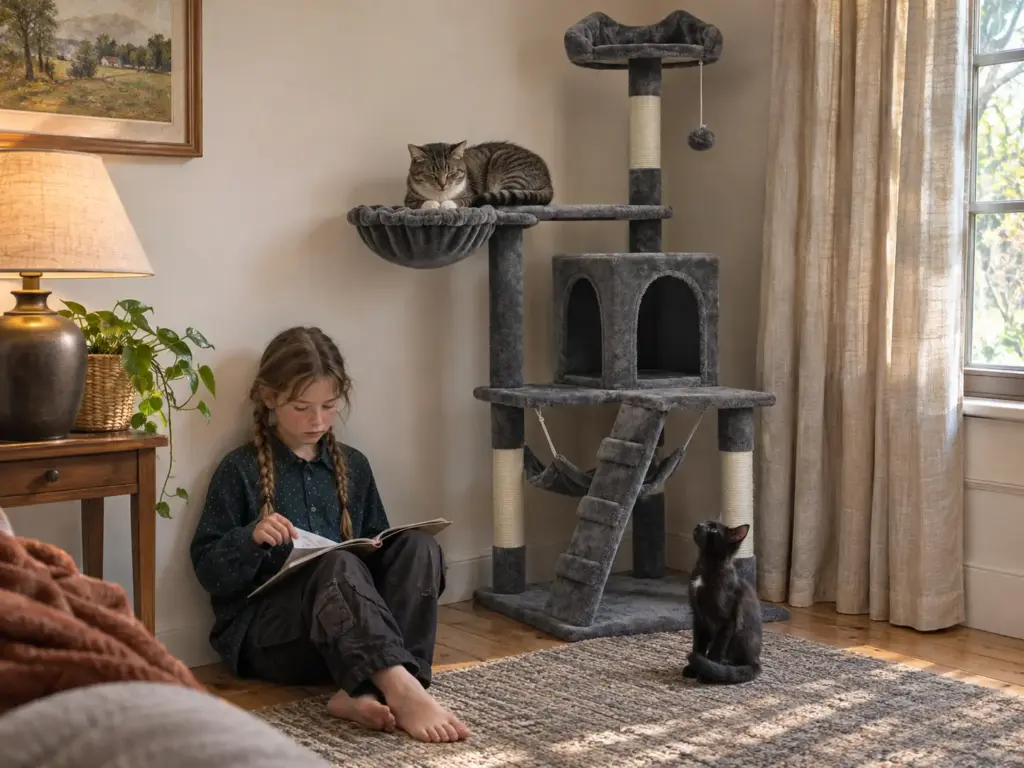
Take what she used before the kitten came, the blanket, the cushion, the sleeping spot, and put it where the kitten does not reach, or in a room the kitten does not enter. That is the first move, and it is the one I would make before looking at a single product. Then feed the two cats in the same room as far apart as the room allows, and give her a treat when she lies down within sight of the kitten. Separate bowls come with that arrangement, and why two cats do better with their own bowls explains the reasoning.
A high spot the kitten has to work for
Height is what a resident keeps when the kitten owns the floor, and a kitten of a few months has to work to get up there. The Yaheetech 54 inch Cat Tree is the budget-friendly route to it: the listing gives 54 inches, it stands on the floor so there is nothing to drill in a rental, and it takes floor space, so check the footprint on the page against your corner before ordering.
The obvious pick is the tallest tree you can find, and that pick fails in a low-ceilinged apartment. The Feandrea Cat Tree, 68.1 inch gives the highest point in the room and asks for headroom to match. With a low ceiling the 54-inch tree is the better call, and with an older resident the top of 68 inches is a long way up. If she has stopped going to places she used to reach, tell the vet before you reorder the furniture.
Look at the perch or cushion she already uses and move that first, before you order anything. If she goes back to it once the kitten cannot reach it, the tree is an extra and not a rescue.
Something the resident can do alone
A resident who has lost the sofa arm still has her attention, and it needs somewhere to go that the kitten is not part of. The Catit Play Cat Treat Puzzle (model 43010) is a board of 3.94 x 16.14 x 16.14 inches with six activities, built for treats to be found. Set it in a room the kitten does not enter so the game stays hers. It is a floor object about 16 inches square, so it wants a room where the kitten is not there to help.
Where a pheromone diffuser fits
A diffuser such as Feliway MultiCat or Comfort Zone’s multi-cat diffuser is one more item in an apartment, and it comes after the moves above, never instead of them and never as an answer to a change in eating or the box, which goes to the vet. The comparison for small apartments is in a pheromone diffuser for an introduction in an apartment.
Give Her Things Back Today, Then Look Again When the Kitten Turns Six Months
Start with what the resident lost, not with what the kitten did: the lap, the sofa arm, the box, the doorway. Give those back, out of the kitten’s reach, before anything gets bought, then add height, then something she can do alone. Anything sudden in her eating, her hiding, her coat or her box goes to the vet before any of that.
What to look at again is tied to the kitten, not to a calendar for her: the week it turns six months, when the chart’s next band opens, and again as it approaches eighteen months. Each time, look at whether she is using her rooms, sleeping in her usual place and walking through the doorway. If one of those has changed, go back to the list of things she used most.
Today, pick the one place she used most before the kitten, move her cushion or blanket to somewhere the kitten cannot follow, and notice whether she goes back to it.
Frequently Asked Questions
01Is it normal for a cat to be jealous of a new kitten?
It is common for a resident cat to hiss at a kitten or leave the room, and the cause is usually a spot or moment the kitten now takes. Name the resource before the feeling. A sudden change in eating, hiding or the box goes to a vet first.
02How long will it take for a cat to accept a new kitten?
There is no fixed number, because the kitten keeps changing stage and the resident can react again each time it moves to a new one. Watch her rooms and her sleeping spot, not a calendar. When cats share a room at all is covered in how the gates, not the days, decide when cats share a room.
03How do I know my cat is okay with the new kitten?
A resident who is okay with the kitten goes back to her usual rooms, lies down in sight of it and eats calmly from her own bowl. If she hides for days or stops eating, call the vet before you change anything in the house.
04Why does my cat hiss at me after I hold the kitten?
The kitten’s scent is on your hands and clothes after you hold it, and a resident can hiss at the person carrying it. She is not rejecting you. Wash your hands and wait a few minutes before you go back to her.
Leave a comment