Why Scent Swapping Cats Backfires and Where the Item Goes
Scent swapping cats without forcing the sniff: what to swap, where it lands, how to read the first answer & the pair rule for several cats.

Alfredo RamsesFounder · Updated October 30, 2026 · 13 min read
On this page7 sections
- 1Why a Scent Swap Backfires, and Where the Item Should Land
- 2Health Comes Before the First Sock
- 3What Goes in the Swap, and Which Way It Travels
- 4The Cat Sniffs First, and the Item Is Done When It Is Just an Item
- 5With Several Cats, Every Pair Gets Its Own Item
- 6A Sock From the Drawer Tonight, a Calm Resident in Three Weeks
- 7Frequently Asked Questions
You set the newcomer’s blanket down near the resident’s chair, and he detours around it to the far side of the room without a second look. Scent swapping cats goes sideways in exactly this way, and the resident has a point: a stranger’s smell just arrived inside his territory, and he is answering it. The American Association of Feline Practitioners lists “not going near the item” in the same stress list as growling and hissing, so a refused blanket is a reaction, not a non-event. Below: why a swap can backfire, the health check that comes before the first sock, what goes in the swap and which way it travels, how to read the first sniff, and the pair rule when more than one resident is involved.
Quick Answer
A scent swap is a channel for two cats to learn each other’s smell, not a fix, and the cat’s reaction to the item decides whether you keep going. Use something a cat has slept on, lay it on neutral ground, send one item each way, and stop that item if he avoids it or hisses.
Why a Scent Swap Backfires, and Where the Item Should Land
A swap looks harmless because nothing in it resembles a confrontation. Nobody is in the room, nobody is staring, there is only a sock on the floor.
To the resident, though, that sock is a message from a stranger, delivered inside the one place he is responsible for. Cats run a territory by scent marking, so he reads the sock as news about an intruder. That is a restriction of the house, and manners are not part of it.
The swap is also one move in a longer cat introduction, laid out in the stage-by-stage plan this swap belongs to, which owns the base camp, the meals, the gate and the first meeting, so this guide stays with the item itself.
What the Critics Get Right About the Ritual
A cat behavior consultant at CatProfiler argues against the classic version of the swap, and that version earns the criticism: the towel pressed into the other cat’s bed, the sock someone holds under a nose until the cat leans away. A bed is the one spot a cat has claimed outright, so a stranger’s smell planted in it cannot be avoided. A sock held to the nose removes the exit. Both versions take away the one tool the resident has, which is the distance he picks.
Whether a swap belongs in an introduction at all is a debate this article does not try to settle. The narrower question is easier to answer: where does the item land, and how does it get there?
The Item a Cat Slept On, Left on Neutral Ground, Is a Different Thing
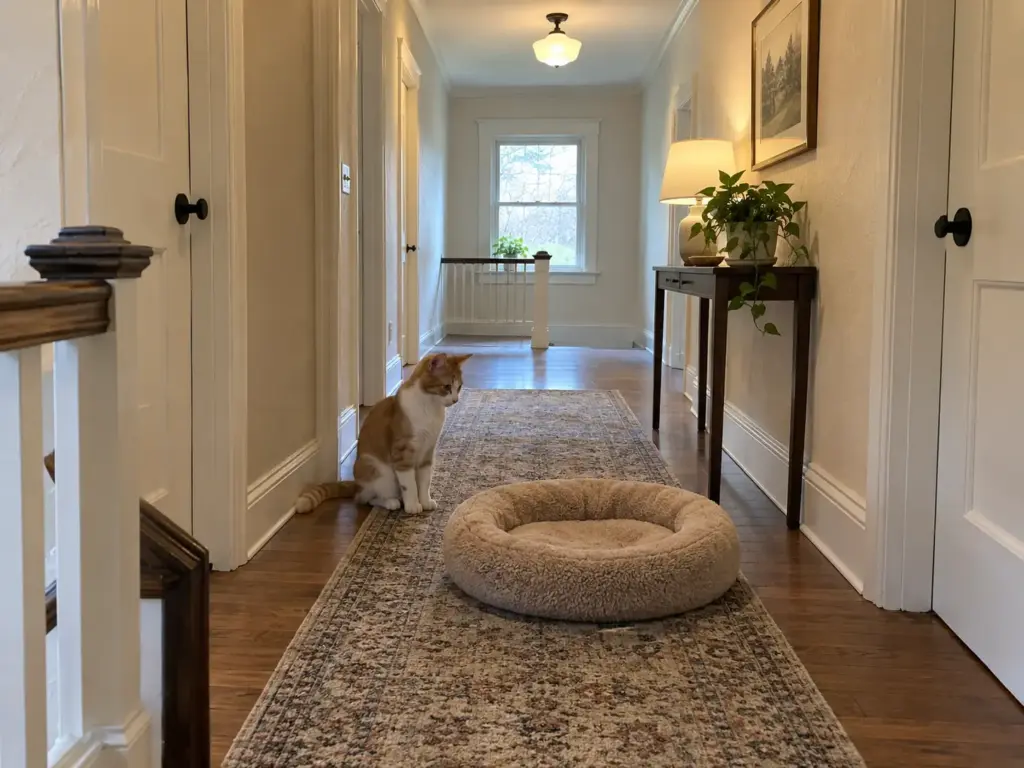
The same consultant allows a version of the swap: a blanket a cat slept on, left in a neutral zone after time has passed. That is a different object doing a different job. Neutral ground is a spot neither cat has claimed, a hallway runner or a doorway, and an item lying there is a smell the resident can approach, circle or walk past at the distance he chooses. Nobody pushes it on him, and it is not inside his bed.
The timing matters too. The AAFP’s 2024 intercat tension guidelines place tension most often at the moment a new cat is introduced to the home, which is also the moment the first sock appears.
The Test Is the Cat’s Answer Over the First Days, Not the Ritual
Because the same sock can go either way, nobody can grade it in advance. The cat grades it. Over the first days the answers you can see are an approach, a sniff, walking away, a hide and a hiss, and each one says something about that item at that spot.
The unwelcome kind turns up too: when the blankets are switched, an older cat may simply refuse to use the item. A refusal like that is a reason to look at the blanket and where it was put (before anyone blames the cat).
Write down which answer you saw on the first day, even if it is only a line on your phone. The second day’s answer means little without the first next to it.
Health Comes Before the First Sock
You may want to start tonight, and the first object is the point where the plan should wait for a vet’s yes. A swap moves scent between two animals and, on the same fabric, whatever else is riding along. A rescue society that handles introductions says to make sure everyone is healthy before swapping, so nobody passes along germs or parasites.
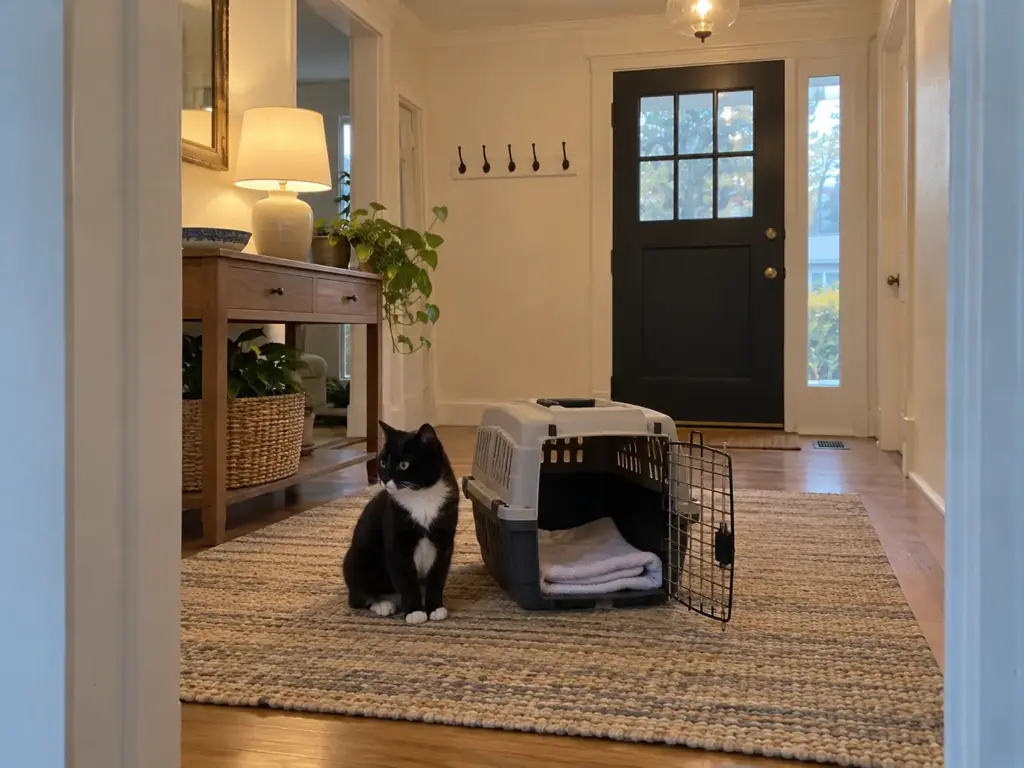
The AAFP asks for the same footing: every cat should have had a recent veterinary check-up and be in good health, and, according to the AAFP’s step-by-step guide to introducing a new cat, “The new cat should be tested by your veterinarian for common contagious diseases.” Which tests, and what else to do before the newcomer’s first day, is the vet’s decision.
Once the swap is running, keep two kinds of stall apart. A resident walking away from the sock is telling you about the sock, so you stop that item and keep the introduction going. Deciding when to stop an item is one call; stopping the whole introduction is another.
A cat who changes how he eats, how he uses the litter box or whether he comes out of hiding is a question for your vet, and it gets asked before anyone touches the item again. The list of signs that stop a whole introduction sits in What Goes to a Vet Before Any of This Starts, and this guide does not repeat it.
What Goes in the Swap, and Which Way It Travels
When you swap blankets between two cats, the first question is whose smell the blanket should carry and where it goes. In a studio or a one-bedroom the second question is harder. The scent soaker Jackson Galaxy describes is taken from the newcomer’s base camp and handed to the resident as a gift, and it assumes a base camp exists. Most small apartments don’t have a spare room for a cloth to wait in.
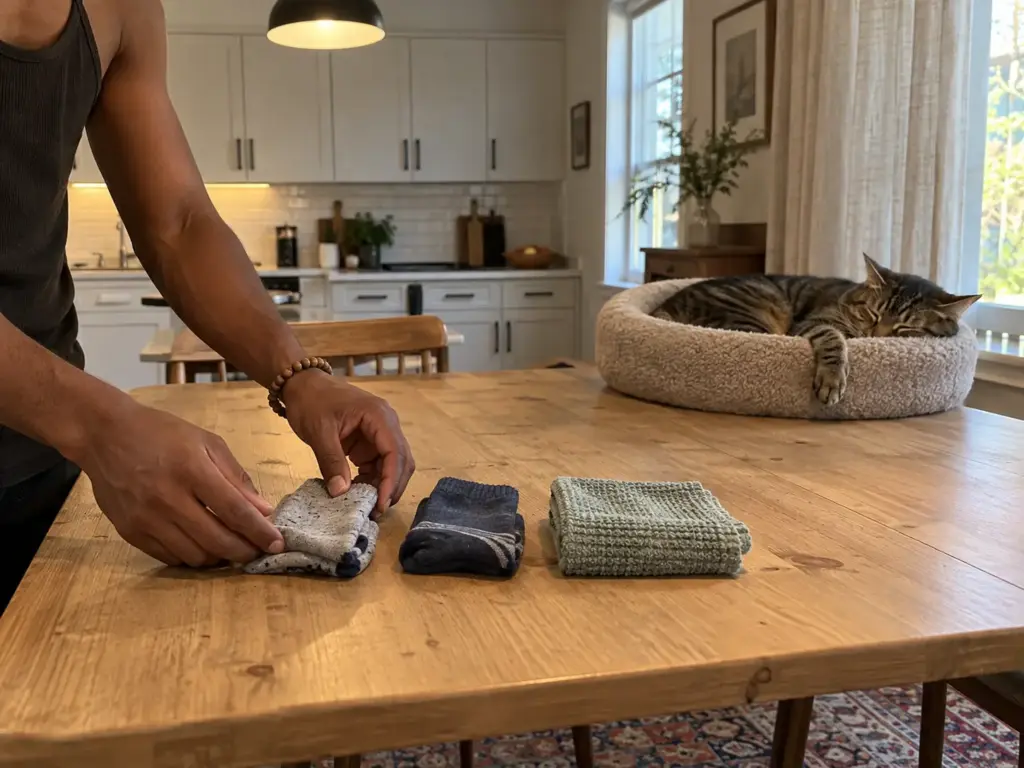
The Cat’s Own Bed or a Cloth Rubbed on Its Cheeks
Two kinds of item do the job. The first is something the cat already lies on: a blanket, a bed cover, a fleece square. It carries the cat’s whole smell without any effort from you. The second is a clean sock or washcloth rubbed gently over one cat’s cheeks, face and neck, the version a feline behavior practice describes.
The AAFP’s own step names bedding and other soft items such as toys. Size is a matter of function: big enough to carry the smell, small enough to lie flat under a door.
Order matters here. The AAFP starts with bedding and brings in cheek rubbing (the cheek and chin sock) only once the cats are comfortable with each other’s scent on items in their rooms. So the cheek sock is the second move, not the first. Both come from the drawer, and the method needs no product.
Two Items, One per Direction, Never One Passed Both Ways
Dr. Pamela J. Perry, a behavior resident at Cornell’s College of Veterinary Medicine, describes the exchange in a Cat Watch newsletter as a separate cloth for each cat, with each cloth given to the other cat to investigate.
That means two items: the newcomer’s goes to the resident, and the resident’s goes to the newcomer. Our reasoning for keeping them apart is simple. A blanket that travels both ways stops being either cat’s smell and turns into a blend nobody can read, while two items each say one clear thing.
Use whatever the cat already lies on and do not wash it first. The washing is what removes the one thing you are trying to move from one cat’s side of the apartment to the other’s.
A One-Room Apartment: Where the Item Can Land Without a Spare Room
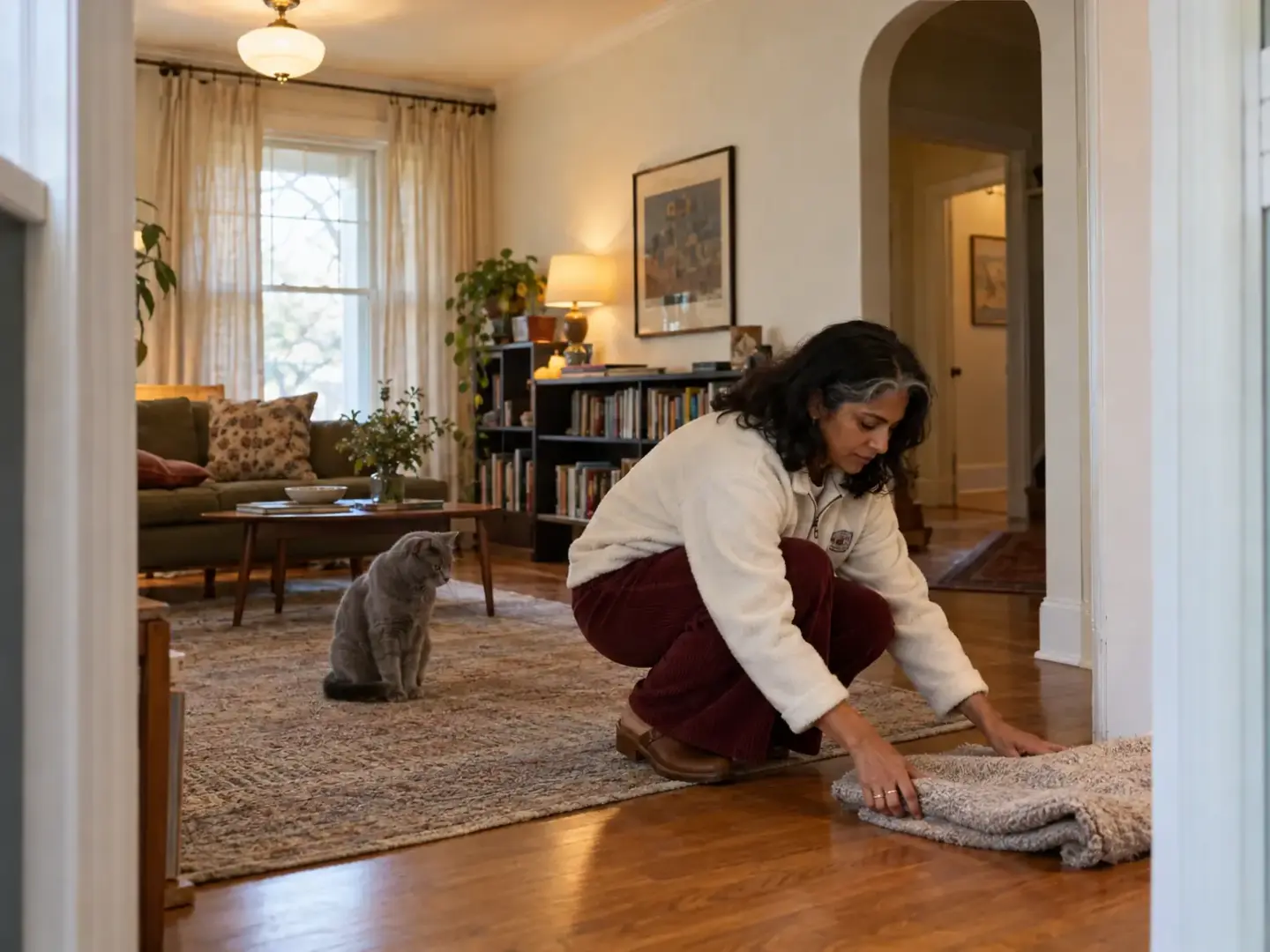
With no second room, the neutral ground in your apartment is the doorway, a hallway runner or a spot both cats already cross, never either cat’s bed. That placement is our inference from the consultant’s neutral-zone rule, not a measured setup, but it follows the same logic: the resident should meet the item on his usual route and be able to step around it. Lay it flat and leave it alone.
If the newcomer is shut in the bathroom or the bedroom, a flat cloth just inside that door and the resident’s item just outside it does the same job in the space you have.
The Cat Sniffs First, and the Item Is Done When It Is Just an Item
You are standing in the doorway with a sock in your hand, and you want him to sniff it now. He is not on your schedule. The person’s job is to watch a face, not to deliver a smell.
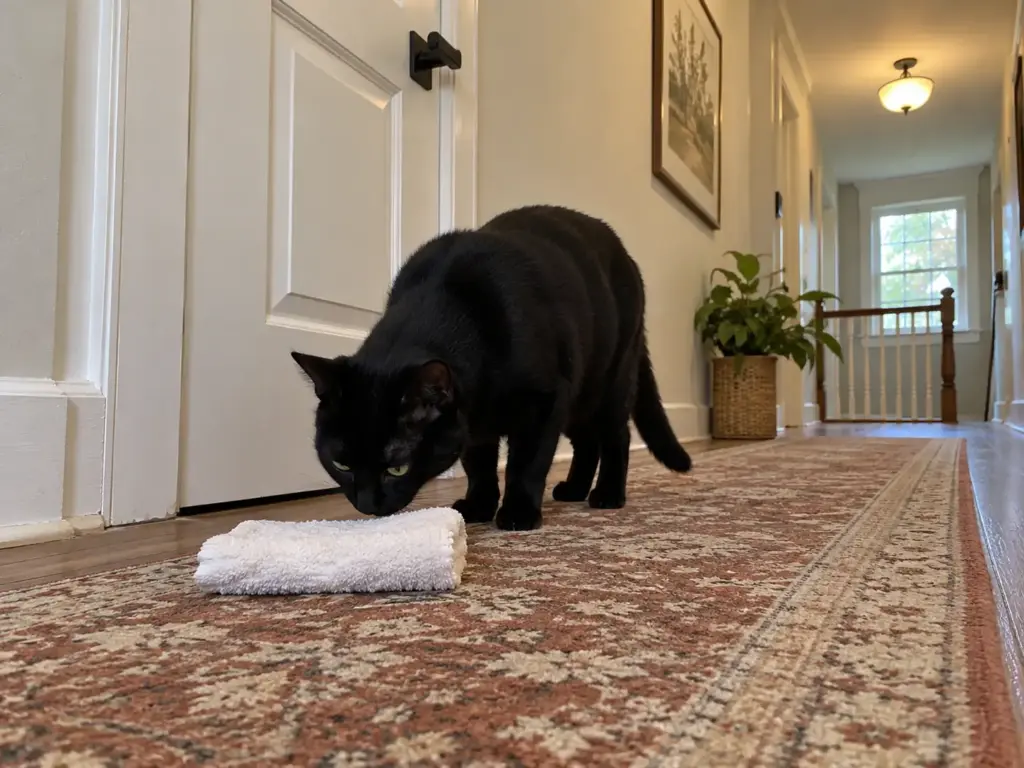
Leave It Out and Let the Cat Decide When to Sniff
Put the item down and step back. Do not carry it to the cat or hold it near his nose.
The Cornell behavior resident quoted above tells owners to watch for angry or frightened reactions during the exchange, and the watching goes best from a seat across the room, where the cat can see you are not part of it. The item stays out. The first look might come right away or after he has walked past it twice.
Reading the Answer: Approach, Sniff, Walk Away, Hide, Hiss
Each answer says something about the item at that spot. A cat that approaches, sniffs and goes back to his day is treating the item as news that is turning into old news.
A cat that detours around it or will not come within reach is also answering: the same AAFP step lists staying away from the item next to hissing and growling. Hissing at the item is a reaction to the item, so the item changes or leaves.
A cat who goes to ground is a separate matter. A line between hissing on one side and hiding or changes in eating and litter use on the other is a rule of thumb, not veterinary advice. The version for this article is shorter: if he hides, or his eating or litter habits change, ask your vet before the item changes.
One feline behavior practice puts the end of this step plainly: repeat the item until the sock is just a sock. That is a rule about one item. How often to repeat the swap across days has its own guide on this site.
Watch his face and tail, not the sock. And keep the same sock out until he stops reacting to it, because swapping in a fresh one resets the question you are trying to answer.
When the Resident Refuses the Item Altogether
Take two cats that eat on either side of a baby gate for about two weeks, with little more than a growl between them, while the older cat still refuses the swapped blanket. Calm meals did not buy that blanket. A refusal grades the item at that spot, not the cats.
So change one thing. Our reading is that the same item, set at a different point along his route and farther from where he sleeps, is a fair second try.
If he turns it down again, drop that item and let the rest of the introduction carry on. The cheek cloth waits for later. Not going near it was his answer, and an answer is not a stall.
With Several Cats, Every Pair Gets Its Own Item
Three cats, one blanket, and a reader hoping one swap covers everyone. That plan leaves out the relationship between the residents, which was never part of it and can still be rearranged by it.

Why a Shared Item Can Mix Residents Who Are Already at Odds
One feline behavior practice recommends a “group scent” for a multi-cat home: a single brush that carries the smell of every cat in the household. Its text does not say what happens when two of those residents are already at odds. Some households have two residents who get along, then see them start fighting with each other after the swap, which raises the question of whether to separate them during the swap.
Our reading, labeled as ours because no source states it: an item that sits where two residents pass picks up both smells, and when it reaches the newcomer, or comes back, each resident wears the other’s smell mixed with a stranger’s. Residents at odds did not ask for that.
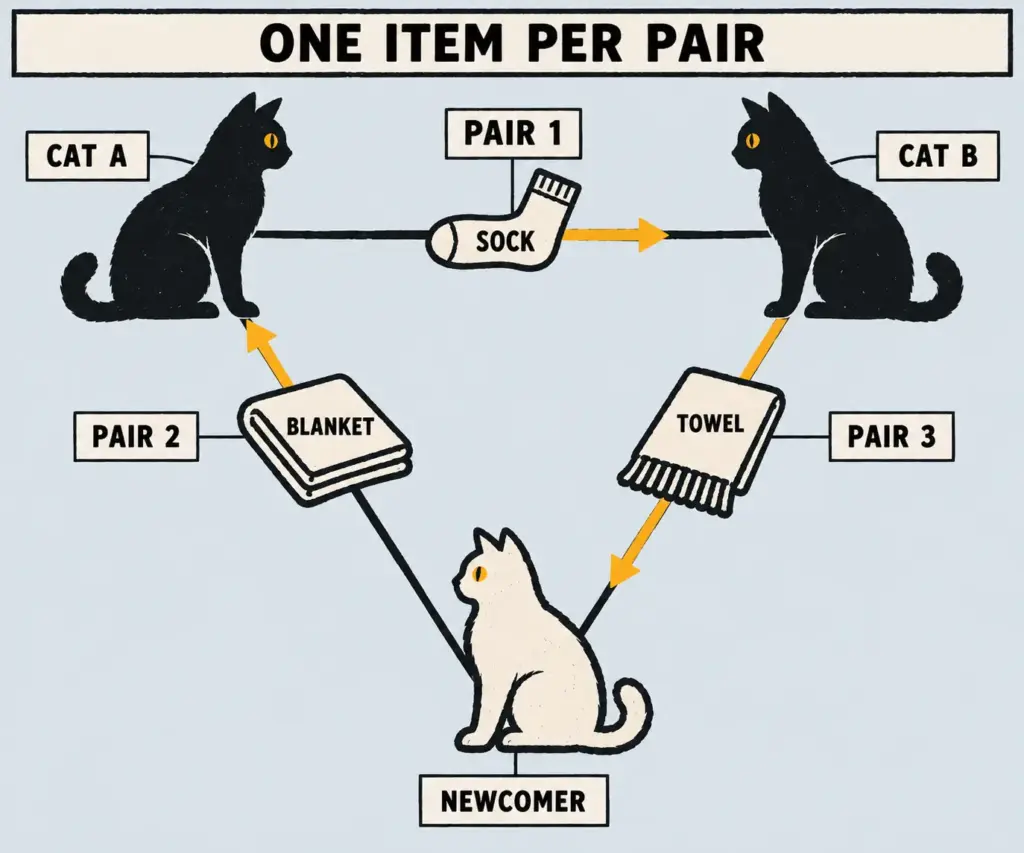
One Item and One Direction per Pair
The rule that follows is an inference too, not a sourced finding. Every newcomer-and-resident pair gets its own item from each side, and each item travels one direction. With two residents and one newcomer that is two pairs and four items.
Mark them: a knot in the newcomer’s sock, a different color of washcloth for each resident, so the cloths do not drift into the wrong room. Leave the residents’ relationship with each other out of the swap entirely.
The Resources Around the Swap: Boxes, Bowls and Water Stay Separate
A swapped item arrives among the things the cats already share, and shared resources are where residents’ tension tends to sit. Keep the litter box to one box per cat plus one, the food to two bowls, plus one, and, with three cats under the roof, the water to three cats, four water bowls. Those counts are resource logic, not scent evidence. They stop every object in the house from becoming a prize while the smell work is going on.
A reply on that same cats.com thread applies the logic to the newcomer’s room: keep the beds and blankets there, so the cats are not arguing over them.
Stock the newcomer’s room with its own beds and blankets before the first item travels. Then none of the swapped cloths is the only soft thing in the house, and nobody has a reason to fight over one.
A Sock From the Drawer Tonight, a Calm Resident in Three Weeks
Three things to take back to the doorway. The cat’s answer sets the pace, not the ritual: a refusal, a hiss or a detour tells you about that item at that spot. The item that works is one a cat slept on, laid on neutral ground, one per direction and one per pair. And the health check comes before the first object, with the vet deciding the rest.
In about three weeks, look at the one thing that shows whether the swap held: does the resident walk past the cloth, or over it, without a detour or a second look? If he still circles it, the item is still news, and the pace stays his. Today, pick the sock or washcloth from the drawer and the spot both cats already cross. Then sit across the room and watch what he does.
Frequently Asked Questions
01Does scent swapping work for cats?
Sometimes. A swap gives two cats a way to learn each other’s smell, and the resident’s reaction to the item tells you whether it is helping or backfiring. Where the item lands matters: neutral ground, never inside a bed.
02What should I use to swap scent between cats?
Use a soft item the cat already sleeps on, or a clean sock or washcloth rubbed gently over one cat’s cheeks, face and neck. The AAFP names bedding and other soft items such as toys. No product is needed.
03What if my resident cat refuses the swapped blanket?
A refused blanket is common, and the AAFP counts not going near the item among its stress signs, so treat it as an answer rather than a stall. Stop that item, not the whole introduction. If eating, litter use or hiding changes, call your vet before changing the item.
04How do I introduce the cats after scent swapping?
Once the swapped items stop being news, the next stages (meals on either side of a door, a gate, then the first meeting) continue in the full introductions plan.
05Can I swap scent between a newcomer and more than one resident?
Yes, but give each pair its own item and its own direction instead of passing one cloth around the house. This is our reasoning, not a sourced rule: a shared item can mix the scent of residents who are already at odds.
Leave a comment