How to Help a Cat Scared of the Vacuum, With a Stop Rule
Three rungs (off, 5-10 seconds of sound, slow move), a stop rule and a 3-week log for a cat scared of the vacuum. Hiding for hours? Vet first.

Alfredo RamsesFounder · Updated October 30, 2026 · 17 min read

On this page8 sections
- 1Why a Cat Scared of the Vacuum Starts Running at the Closet Door
- 2Reluctant or Fearful: Where the Ladder Stops and the Vet Starts
- 3The Ladder: Out and Off, Then Seconds of Sound, Then the Machine Moves
- 4The Stop Rule and a Three-Week Log You Can Count
- 5A Refuge the Machine Never Enters, Built From What a Renter Has
- 6The Robot Is a Different Fear: Movement and a Timer
- 7Open the Closet Today, Count the Rungs for Three Weeks
- 8Frequently Asked Questions
If your cat scared of the vacuum is already gone by the time you reach the outlet, he is not answering the noise yet. He is answering the closet door, or the sight of the machine out of the spot where it lives, because both have come to mean one thing. In a small apartment, where the sound reaches every room anyway, leaving early is the most sensible move he has. The fear was learned in a sequence, so it gets undone in a sequence: where it starts, the point where it stops being a house problem, a ladder with rungs you can count, a rule for when to stop, a refuge, and the robot, which turns out to be a different fear.
Quick Answer
Climb one rung at a time, and let the cat’s reaction decide when to climb.
- Call the vet first if he hides for hours, skips meals or changes habits.
- Leave the machine out and switched off in the room he uses.
- Run it for 5 to 10 seconds while he eats a treat from a distance.
- Move it slowly across the floor only after he tolerates those seconds.
- Stop at the first sign of fear and go back one rung.
- Give him a refuge the machine never enters.
Why a Cat Scared of the Vacuum Starts Running at the Closet Door
The vacuum noise is the part everyone already knows, and the full vacuuming guide covers it for what it is: a restriction the cat never chose. This section starts one step earlier, at the moment before the motor, because that is where most cats have already made up their minds.
What the cat hears and why a closed door does not help
PetMD’s veterinary guidance names three triggers: the machine is loud, it moves unpredictably, and it smells unfamiliar. Sensitive hearing carries most of the weight: PetMD describes a cat’s hearing as extremely sensitive, which is why a closed door between you and him changes very little.
The usual advice is a shut door and another room, and in a small apartment that advice runs into the floor plan. In a house small enough to hear the vacuum from any room, that alone can be enough to terrify a cat. There is no far room to send him to.
So he leaves, and leaving is the right first call. According to the AAFP and ISFM feline handling guidelines, written for the veterinary clinic rather than the living room, “Cats often respond to confrontation by avoidance or hiding, with fighting only occurring as a last resort.”
That is a clinic’s observation, not a vacuum study. It still explains the order of events at home: the exit comes first and everything else comes later, if at all. The plan below gives him an exit he can use instead of taking one away.
The cue that arrives before the sound
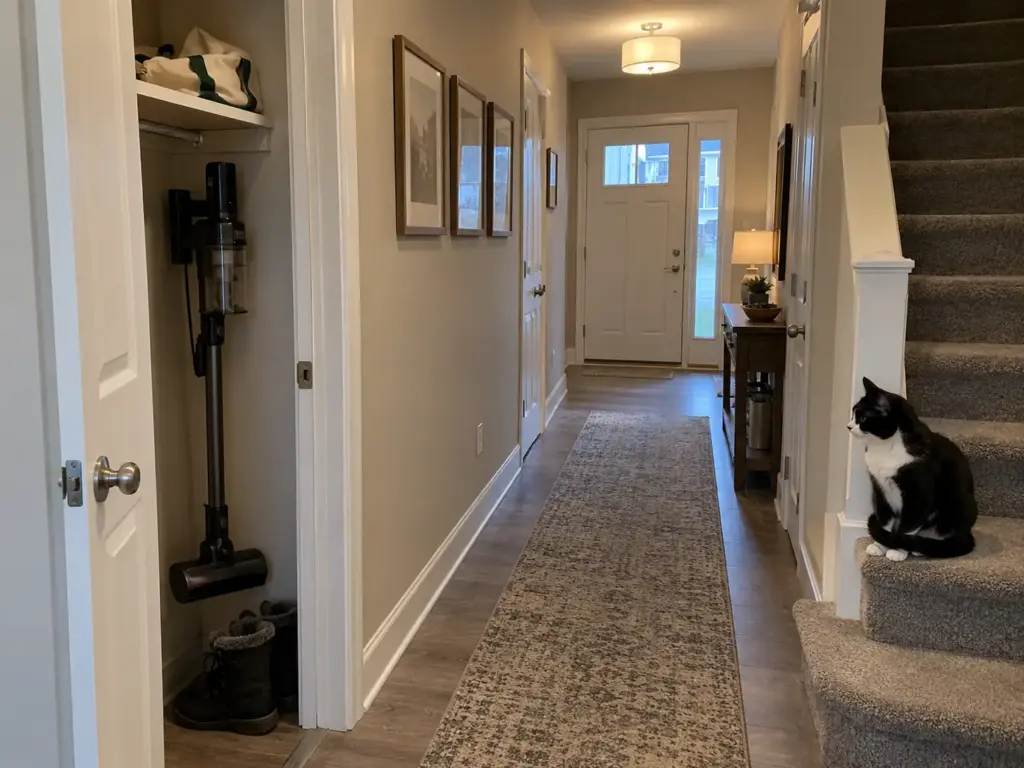
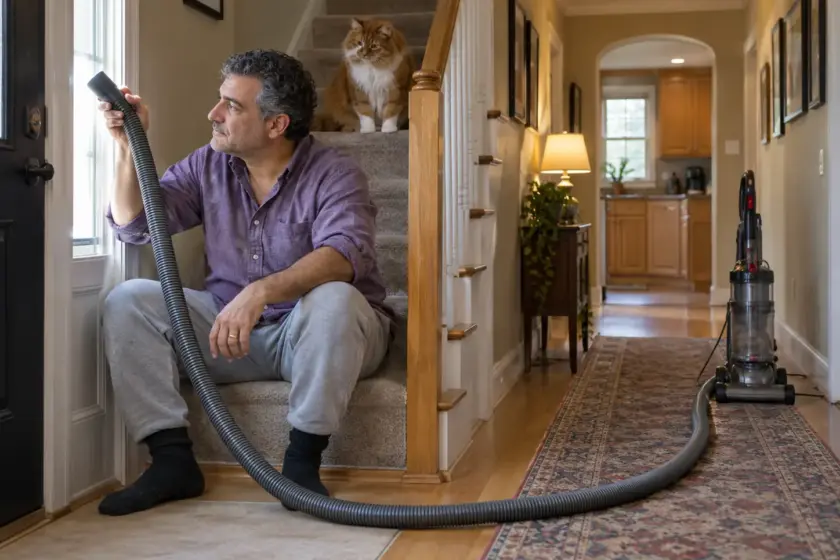
Watch where your cat is when the closet door opens. If he is already moving, the fear has gotten ahead of the noise. A machine kept in a closet and brought out suddenly teaches the sequence a cat gets to learn: door, machine, then noise. Cats pick up that a first event predicts a second one very quickly, and from then on they answer the first event.
None of this is measured. It is a pattern owners describe, and it matches what a cat does with any signal that reliably comes before something he dislikes.
Here are three things he can read before the motor ever starts:
- The closet or cabinet door opening, especially if it opens for nothing else in the house.
- The machine out of its usual place, on the floor with the cord trailing.
- Your own routine in the minute before: the same hour, the same path to the outlet, the same shoes.
You separate the signal from the machine by giving the signal other meanings. The cheapest version is a door that opens on days when nothing is going to be vacuumed.
Open the machine’s closet on a day you are not vacuuming and leave it open while you do something dull nearby. The door stops meaning “machine” and goes back to meaning “closet”, which takes a few repeats and no equipment.
Same volume, different machine: what a quieter one can and cannot fix
There is also a twist. A change of machine can matter more than the decibels: a cordless vacuum at a similar volume level to the corded one can make a problem go away, even when nobody can say why.
So decibels are not the whole trigger. A new machine arrives with a different shape, a different home and a different way of crossing the floor, and the cue changes with all of it. That is one owner’s account, not a test, and it is a reason to look past the volume rather than a promise that a cordless stick will cure anything.
A quieter machine lowers one of the three triggers and leaves the other two where they were; if the closet door still opens before it starts, the signal is still there. If you are choosing a machine anyway, what to look for in a cat hair vacuum for a rented apartment owns that decision. For a frightened cat, a quiet motor alone is not a plan.
Reluctant or Fearful: Where the Ladder Stops and the Vet Starts
This section sits before the first rung on purpose. Some cats are reluctant, and the ladder was built for them. Others are showing something a vet should look at before the house is touched, and adding a rung to those cats would be the wrong move.
Reluctant: the cat leaves the room and comes back
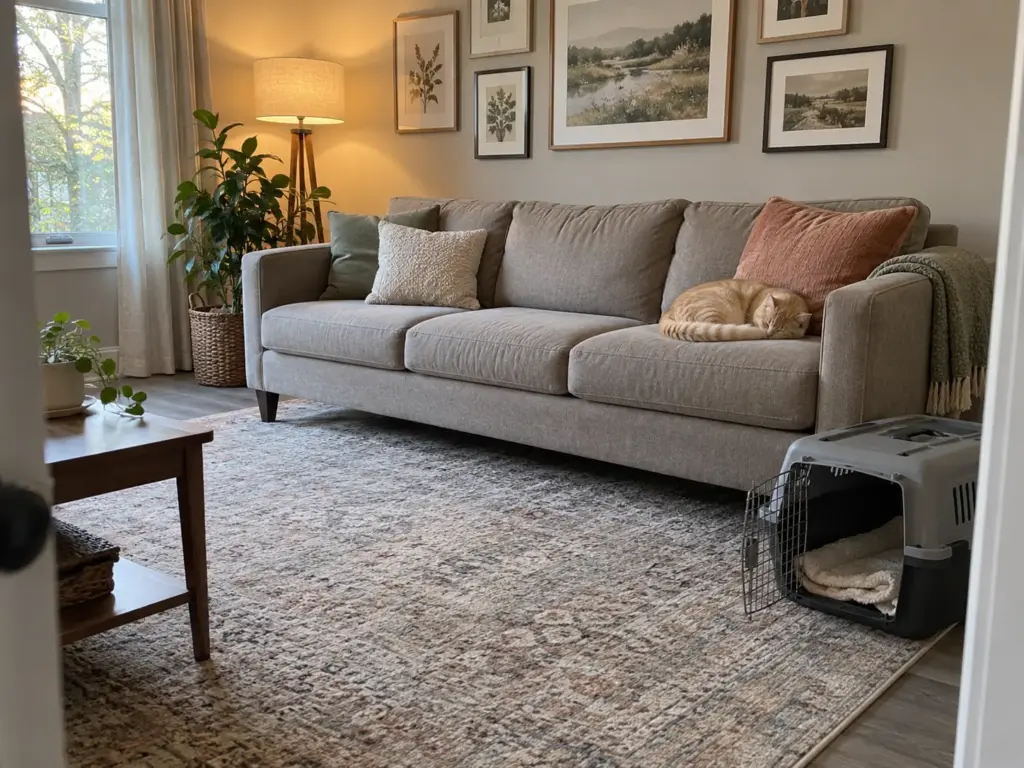
A reluctant cat gets up when the motor starts, goes to another room or a high spot, and walks back in once the machine is off. He eats that evening, uses his box as usual and treats you the same as he did yesterday. He is the cat this page is written for, and he can begin tomorrow.
When it goes beyond a house problem
PetMD’s veterinary guidance lists the signs that mean a call to the vet when fear of the vacuum is in the picture:
- Hiding for hours
- Overgrooming
- Changes in how he uses the litter box
- Decreased appetite, eating less than usual
- New bites or swats that come out of nowhere
A cat can disappear to the most hidden spot he can find, stay still for hours, not answer to his name or to food, and go slack when picked up. This page does not say what that is. It calls for a vet visit today, not a rung to try. A cat who is out of sight for an afternoon after every vacuuming belongs on the same list, and so does any of the signs above even if the vacuum is not the obvious cause.
If you cannot tell which cat you have, the doubt itself is the answer: ask.
What the ladder does not touch
The ladder works on a house: where the machine lives, how it appears, how long it runs. It is not a treatment for anything. Calming products, supplements and medication are a conversation for the vet, and this page will not guess at a cause or suggest any of them. (A vet who looks at the cat and finds nothing unusual is also useful information, because it tells you the rest is furniture and routine.)
So the rule of the house is short. The ladder starts the day the vet sees nothing unusual, or the day you recognize the reluctant cat above. And it stops, in the middle of any rung, the moment one of the signs in that list appears. A new sign on rung two is a phone call, not a step back.
When you are unsure whether you have a reluctant cat or a frightened one, another rung will not settle it. A short call to the vet will, and the answer costs less than a week of guessing.
The Ladder: Out and Off, Then Seconds of Sound, Then the Machine Moves
Everything here is free: the machine you own and a treat he likes. Three rungs, in order, none skipped, and behaviorists call the pairing of a sound with a treat counterconditioning.
Out and off, in the room he uses
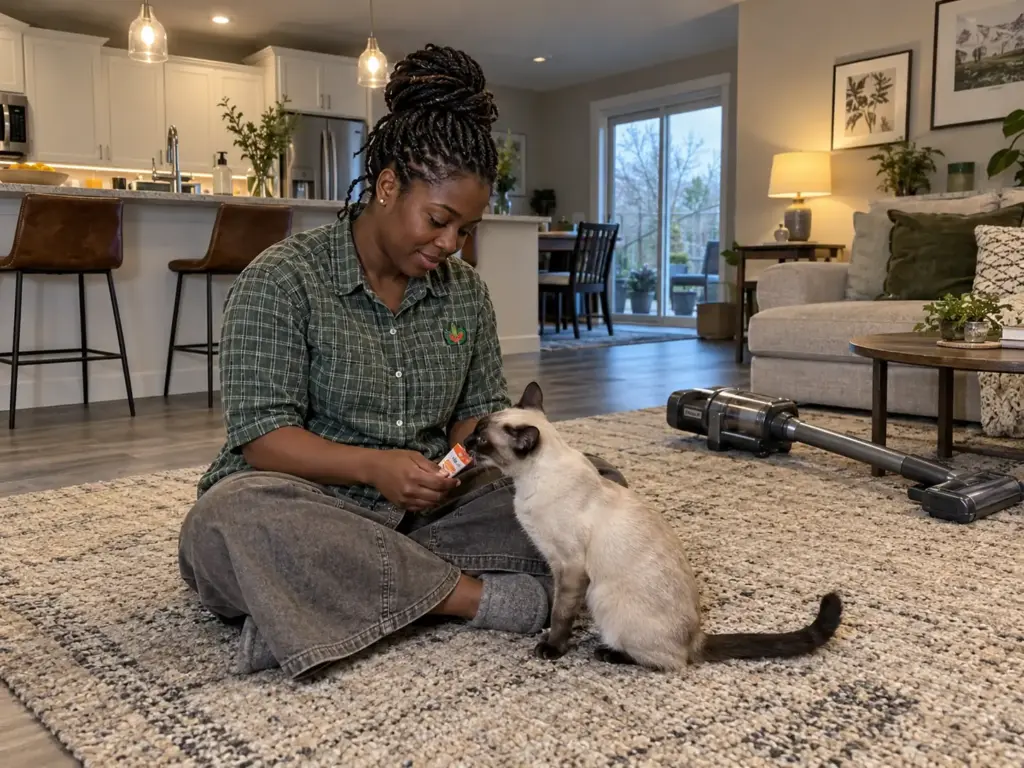
Take the machine out of the closet and set it on the floor, switched off, in the room where he spends his day. One rule of thumb gives this rung a day or two, and a few days to a week if the machine stays out in the room. Another rule of thumb puts the test in the cat’s behavior instead of the calendar: wait until he can walk by it confidently and without worrying before it goes on. Two small additions help: tapping or rustling the machine right before dinner and leaving a treat beside it. ### A short burst of sound while he eats
When he strolls past the silent machine without a glance, plug it in. Behaviorist Kristiina Wilson of Cattitude Adjustment describes the next rung as one quick burst with the cat at a distance, until he tolerates up to 5 to 10 seconds at a time. Put a lickable treat on the floor beside him, not beside the machine.
There is no correct number of feet. The right distance is the one at which he keeps eating, and if he stops licking, you are too close. The same goes for the seconds: 5 to 10 is the ceiling, not the target, and if he quits eating at two, two is today’s number. Cut the sound before the treat is gone, so the noise always ends on something he likes.
Start the treat first and the sound second, only once he is already eating. Then cut the machine a second or two before the lick runs out, so the last thing he hears is the treat’s end and not the motor’s.
The machine moves, slowly
Only when the bursts bore him does the machine move, and then slowly, across the floor, starting at the far end of the room from where he sits. Keep the ritual identical each time: same hour, same room, same route. One routine is a short run every day at the same time, so it is never a surprise, with his favorite treats afterward. A cat who can predict the machine is a cat who can stop watching it.
The Stop Rule and a Three-Week Log You Can Count
A ladder with no stop rule works for the cat who never needed one. This section turns the three rungs into something you can count: a rule that says when to stop, and a log that shows whether the ladder is working.
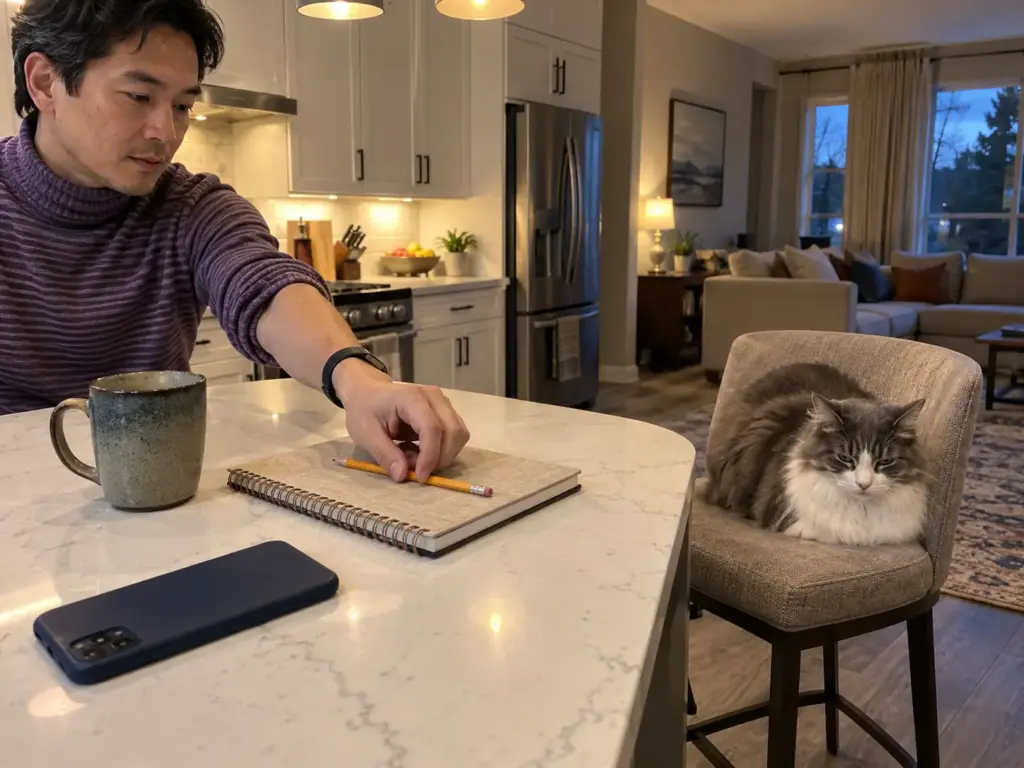
The rule: first sign of fear, one rung back
Decide the signs before the first session, because you will not decide well with the machine running. The ones to watch for: he leaves the room, he heads for a hiding spot, he stops taking the treat, or his body language changes (ears pinned back, wide pupils, fur standing up, tail low, crouching).
The rule has three branches, and only one of them is a step forward.
- He keeps eating through the whole session: repeat that rung tomorrow, or move up if he has done it several times in a row.
- He leaves, hides or stops taking the treat: the session ends at once, and the next one goes back one rung. Wilson’s version is that you can always go back a step if the cat becomes upset and needs to reset.
- Any sign from the vet list in the section above appears: the ladder stops, and you phone.
The step back feels like a loss and it is not. PetMD warns that going too fast adds stress and can make the behavior worse, so a step back is the cheaper of the two mistakes. Brushing ends the same way for some cats, and the same seconds-per-rung method for brushing has its own page.
What to write down each day
The clock comes in pieces. One rule of thumb is a day or two for the machine off and in view, a few days to a week once it is left out in the room, and then a minute or less of running time with the machine in another room. Another rule of thumb is to wait a week or so before turning it on, and clicker training can take weeks or even months.
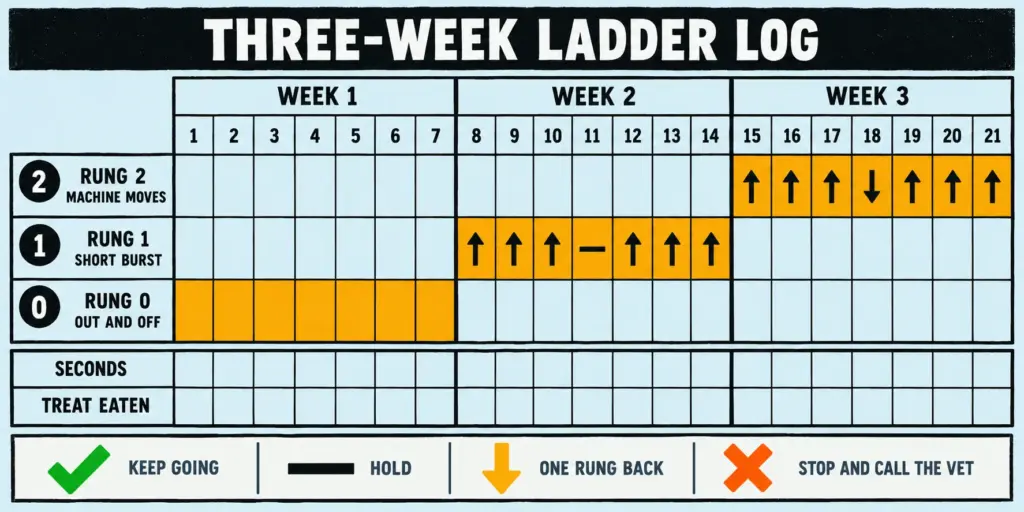
Laid end to end, those numbers fit in three weeks for an easy cat and in far more for a hard one, so treat what follows as a shape, not a promise. Week one is rung 0, with the first burst only once he walks by the silent machine. Week two is rung 1, up to 5 to 10 seconds at a time. Week three is rung 2, the slow move.
A week that ends with the cat still leaving repeats instead of advancing.
Write one line a day, and only four things go in it:
- The date.
- Which rung you tried.
- How long the machine ran, in seconds.
- Whether he ate the treat all the way through.
The log has to sit beside the cleaning rhythm, not fight it. How often the floors need doing is its own question, and how often to vacuum with a cat, by spot and by floor sets that. The practice sessions are short and run on top of it.
Keep the log on the inside of the door the machine lives behind. You cannot open the closet without reading yesterday’s line first, and yesterday’s line decides today’s rung.
Why a rushed ladder undoes itself
The day a session goes well is the riskiest day of the log, because it tempts you to skip a rung. Skip one and you have run a full scare in the middle of the training, and the machine is back in his memory as the thing it started as. A faster owner ends up with a slower cat.
The log catches that. If tomorrow’s line says “rung 2” and yesterday’s says “rung 0, he ate through”, the log is telling you to slow down before he does. And that matters most on the days you want to catch up on cleaning, because those are the days the ladder gets skipped.
A Refuge the Machine Never Enters, Built From What a Renter Has
The vacuuming guide plans the route he takes when the machine starts. This section is about where that route ends, because a closed door is not a refuge and a cat needs somewhere to arrive, not only somewhere to leave.
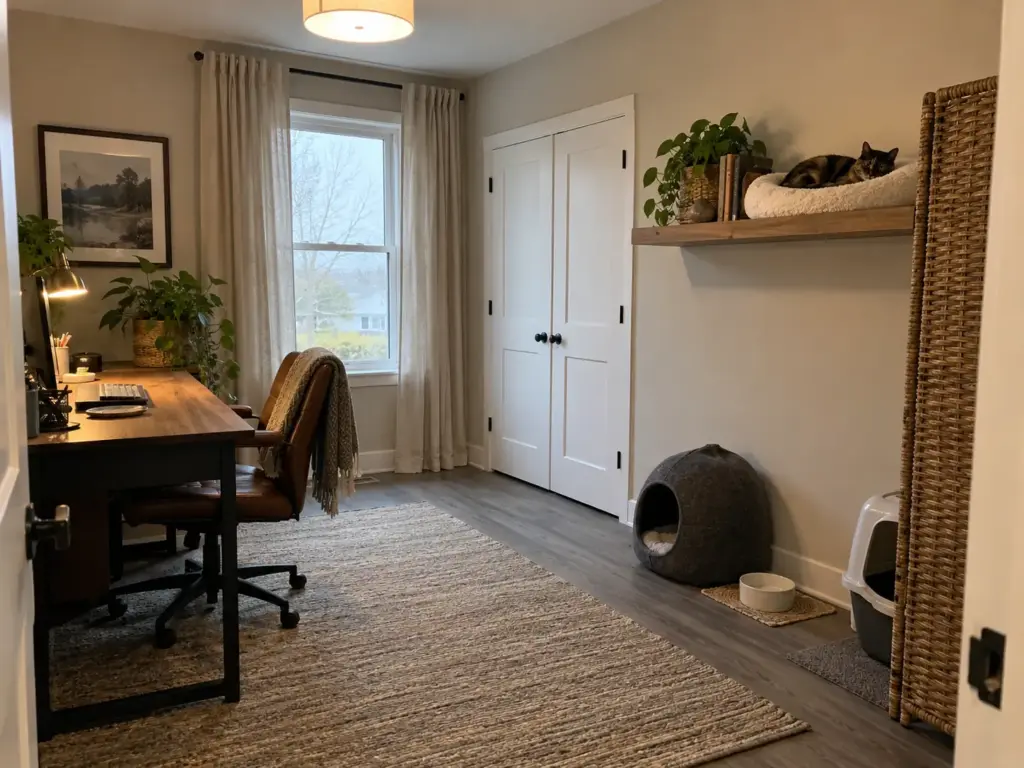
Litter, water and a bed in one place
PetMD describes the refuge as a litter box, fresh water and a comfortable bed or blanket. In a small apartment the box is where it already is, so the practical version is the bed and the water within a few steps of it. According to the AAFP and ISFM nursing care guidelines, also written for the clinic, “When cats do not feel safe and secure, they display behaviors associated with fear or aggression.” The refuge is the safe ground the ladder stands on.
Three rules keep it a refuge. The machine never goes in, nobody calls him out, and you do not stop mid-run to check on him. The last one is plain: do all the vacuuming in one go.
That is the one place the practice sessions and the real cleaning differ. Practice ends at the first sign of fear. A real cleaning runs straight through, with him already in his spot.
Put the refuge where he already sleeps, not in a new corner he would have to discover on cleaning day. A place he chose is a place he will go to when the motor starts.
A high perch that costs one shelf
Make sure he has somewhere high up to go, and for a renter that rarely needs a drill. A cleared shelf on a heavy bookcase works, and so does a wide windowsill, a bench under the window or a cat tree he already climbs. (A cat on a high shelf counts as having left the room.)
Make it a place he already uses. A perch he has to be coaxed onto is one more new object on the day of the scare, and a heavier or shorter-legged cat may prefer a low, covered spot, like the gap under a table, over any climb.
One cat, two cats, one refuge
In a multi-cat home, one refuge works only if the cats already share a bed. If one tends to block the other from the good spot, give each his own, and let the machine pass neither. The route they take to reach those spots is the vacuuming guide’s job; the destination is this page’s.
The Robot Is a Different Fear: Movement and a Timer
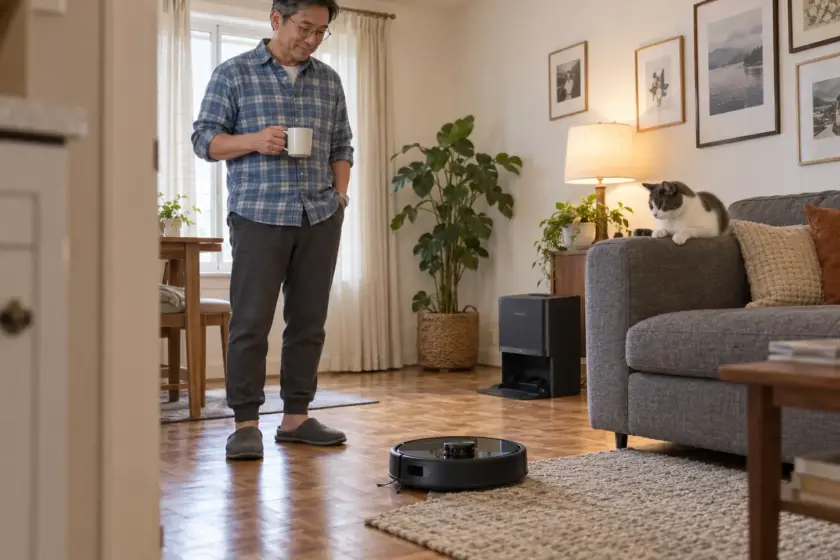
If you bought a robot to spare him the noise, or you are thinking about one, this is the section you need. A cat who is fine with a quieter machine may still not be fine with a machine that drives itself.
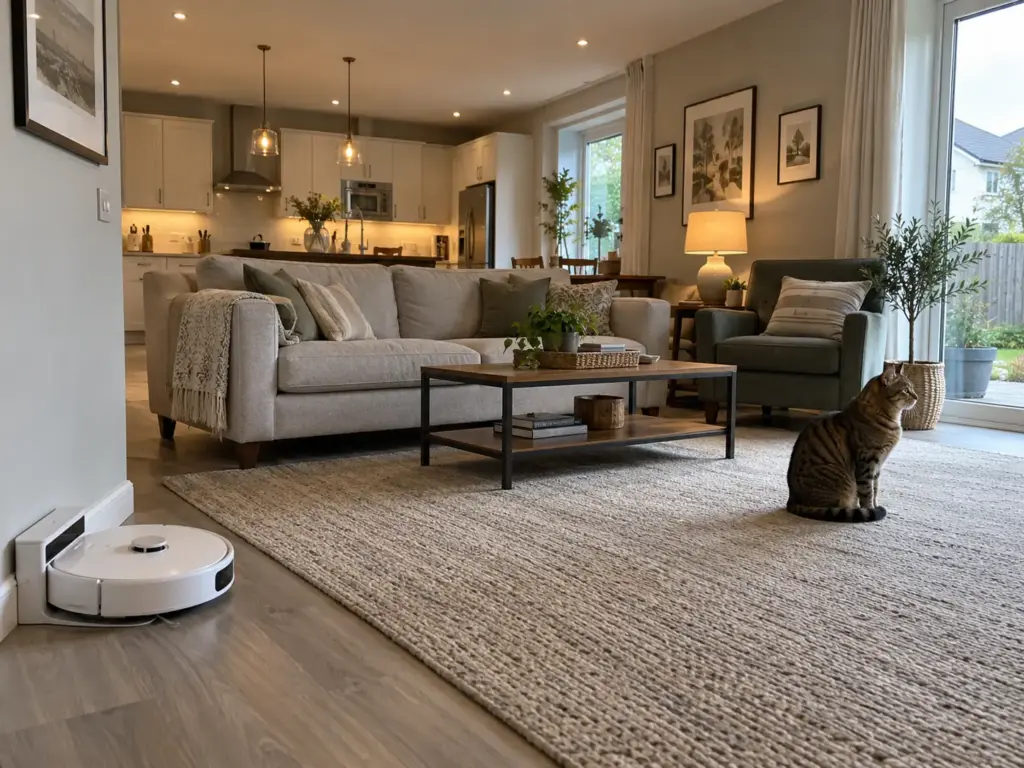
Why a quiet machine can still scare him
PetMD and Cattitude Adjustment disagree, and a cat can sit on either side. PetMD says a robot can be perceived as a round, self-moving animal lookalike roaming around the home like a predator. Cattitude Adjustment says cats tend to do much better with robots because they are quieter and slower. Neither is wrong for every cat, and no single rule reconciles them: it depends on the cat.
Of PetMD’s three triggers, a robot quiets at most one. It still moves unpredictably, and it does so with nobody walking behind it.
At one end of that range is a cat who stays on the far side of the house after the robot’s first round. The sound was not the problem there. What he met was a thing that moves around the floor with nobody pushing it.
The timer is the surprise
With the upright machine, the cue at least has a person in it: the door, the cord, you. A scheduled robot has none of that. It starts at an hour the cat cannot read, from a spot he may not have noticed, with no one behind it. That is my reading of the pattern and not a measurement, but it fits what the closet-door cats do: the sudden start is the problem, more than the volume.
So the surprise needs a replacement, which is a cue he can learn to read.
What changes on the ladder
The rungs stay the same and the order changes a little. Start with the robot parked on its base and switched off, where he can see it, for as long as rung 0 takes. Then one run that you watch from the sofa, with a short run and the same stop rule. The schedule comes last, and it goes at a time when he is eating or already in his refuge, never as a surprise.
Whether the robot is the right machine for your floors is another question, and whether robot vacuums handle cat hair answers it. The reaction is what this page owns.
Run the first scheduled rounds one at a time, with you at home and watching. If he leaves the room on the first one, that is rung 0 again, and the schedule can wait.
Open the Closet Today, Count the Rungs for Three Weeks
Three things are worth keeping from all this. The fear starts at the signal, so you separate the signal from the machine before you touch the volume. The ladder is only as good as its stop rule: first sign of fear, one rung back. And a cat who hides for hours, stops eating or changes his habits overnight goes to the vet before any rung is tried, however calm the plan looks.
Three weeks from the first day the machine sits out on the floor, read the log from the top. Look at which rung the last four entries sit on and whether any day has no line at all. A gap tells you more than the rung does.
Today, with the machine you already own, carry it out of the closet, set it on the floor in the room he sleeps in, leave it unplugged and put a treat beside it. Then notice whether he walks past it, around it, or not at all.
Frequently Asked Questions
01Why are cats scared of vacuums?
Cats are scared of vacuums because the machine is loud, moves unpredictably and smells unfamiliar, according to PetMD’s veterinary guidance. Add the signal that announces it, like the closet door, and many cats are gone before the sound starts.
02How long does it take for a cat scared of the vacuum to get used to it?
There is no fixed timeline: owners describe about a week or so before the machine can run for seconds, and behaviorists mention weeks or even months with clicker training. Count rungs in a log, not calendar days.
03Where do cats hide when the vacuum starts?
Most cats go under the bed, into a closet or onto something high, because leaving is their first move when something scares them. A fixed refuge with a bed and water lets you choose the spot. If he stays hidden for hours, call the vet.
04Will a robot vacuum scare my cat less?
A robot vacuum scares some cats less and others more, because it is quieter and slower but also moves around the home on its own. Start with it parked and switched off, then watch the first runs yourself.
05Should I call the vet if my cat hides for hours after the vacuum?
Yes, call the vet if your cat hides for hours after the vacuum, because hiding for hours is on the list of reasons to phone before any training. Eating less or changes at the litter box count too.
Leave a comment