Why Your Vacuum Keeps Clogging With Fur After You Clear It
Get a vacuum clogging with fur running again with a coin, a broom handle and a window, and find the stop that keeps failing [nothing to buy].

Alfredo RamsesFounder · Updated October 30, 2026 · 13 min read

On this page7 sections
- 1Vacuum Clogging With Fur in the Hose and Wand, Found With a Coin
- 2When the Roll Stops Spinning, the Belt Is the Suspect
- 3Clearing a Robot Vacuum's Roller, and Where Our Sources Stop at the Dock
- 4Why It Clears and Comes Back: the Stop You Did Not Check
- 5Cat Fur and Litter Grit in the Same Tube
- 6Test the Port First, and Look Again in Three Weeks
- 7Frequently Asked Questions
You emptied the bin, cut the wrapped hair off the roll, and by the weekend the machine is wheezing again with the bin half empty. That is vacuum clogging with fur in its most common form: the hair did not go away when you cleared the first stop, it moved on to the next one. A vacuum that clogs again after a clear was almost always cleared in the wrong place, and the cat who shed that hair along the stair runner has nothing to answer for. This article walks the stops in the order you can check them with a coin and a broom handle: the hose and wand, the belt, a robot’s roller and dock, the stop you skipped, and what changes when litter grit rides in the same tube.
Quick Answer
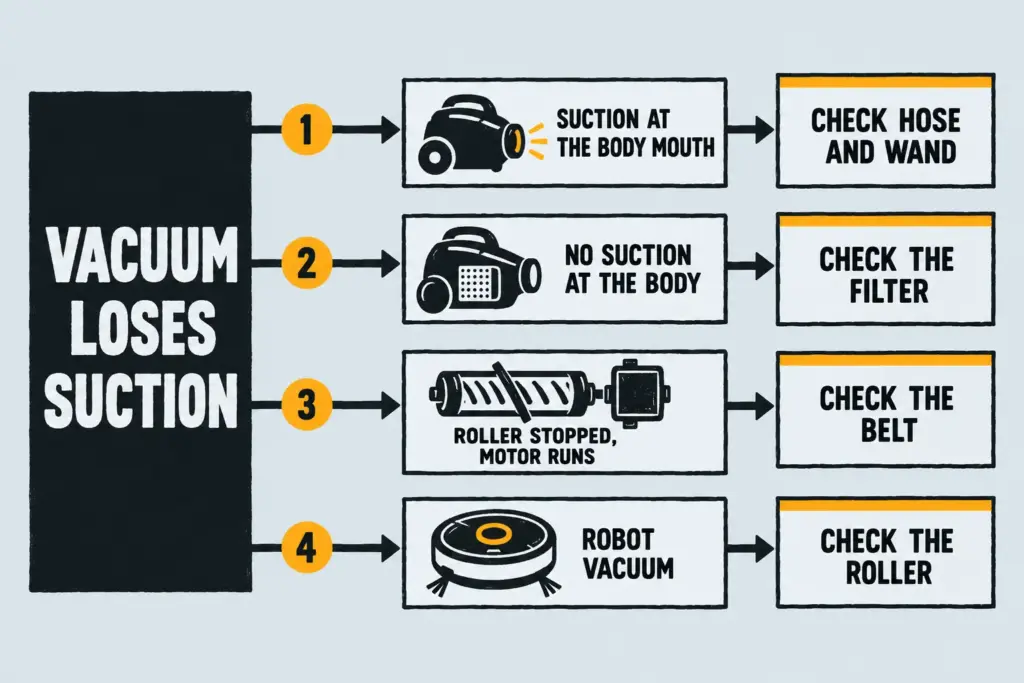
Work down this list and stop at the first check that fails.
- Remove the wand or handle, switch on, and feel the suction at the open end.
- Drop a coin through the wand when the pull is strong.
- Coin-test the hose and check the filter when the pull is weak.
- Flip the machine and check the belt when the roll will not spin.
- Cut a robot’s roller free with a blade; the dock follows its manual.
- Inspect the hose attachments and the main-unit socket if the clog returns.
Vacuum Clogging With Fur in the Hose and Wand, Found With a Coin
The order of events can run the other way: the machine loses suction because the filter went unwashed, and then it plugs up from hair because there is no air flow. The tube plug, in other words, is often the second problem, not the first. A vacuum hose blockage is not a spot, either. It is a stretch of tube, and with hair stuck in the vacuum hose you cannot tell which stretch until three free checks, made before you take anything apart, say so.
The roll, the bin and the filter already have their own home in the three places a vacuum fails with cat hair, in order, so they get a line here and no more. This section covers the part those fixes never reach: the tube between the floor head and the main unit.
Check the Suction at the Port Before Opening Anything
Take off the wand or the handle, switch the machine on and put your palm over the open end. Expert Reviews, quoting Shark’s Katya Carman, gives this as the first test, and it earns the spot because it splits the machine in two before you touch a screw.
A strong pull at the open end means air is moving through the hose and the main unit, so the plug sits in the part you just removed: a vacuum wand clog, or a plug in the floor head. A weak pull, or none, sends you to the hose itself and then to the filter. That reading of the test is mine, not Shark’s wording.
The Coin Test: Drop One in at One End and Watch the Other
Hoover’s support page for the short lower hose has you remove the belt cover plate and drop a large coin down that section. According to Hoover, “If it does not appear at the other end near to the brush roll there is something stuck in the hose.”
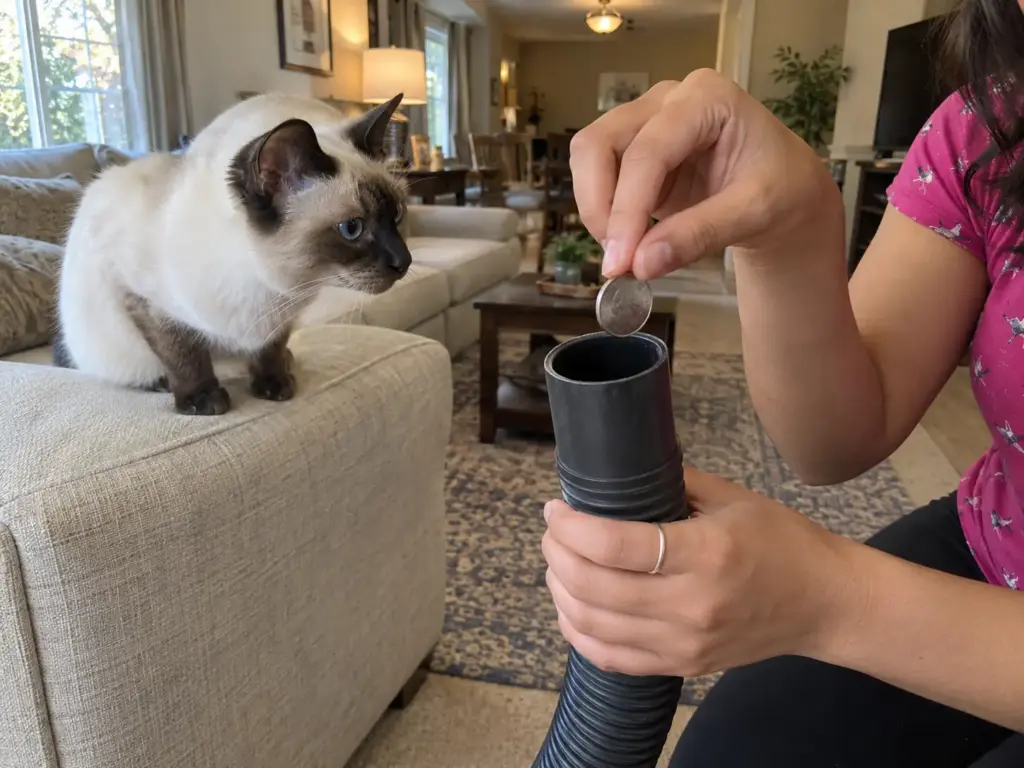
The same test works on the full-length hose. Ideal Home, quoting a vacuum service shop, uses a large coin at one end to see whether it comes out of the other. Hold one end up, let go, and listen: you will hear the coin tick down the ribs of the hose and then either land in your palm or go quiet partway along. Where it goes quiet is where you work.
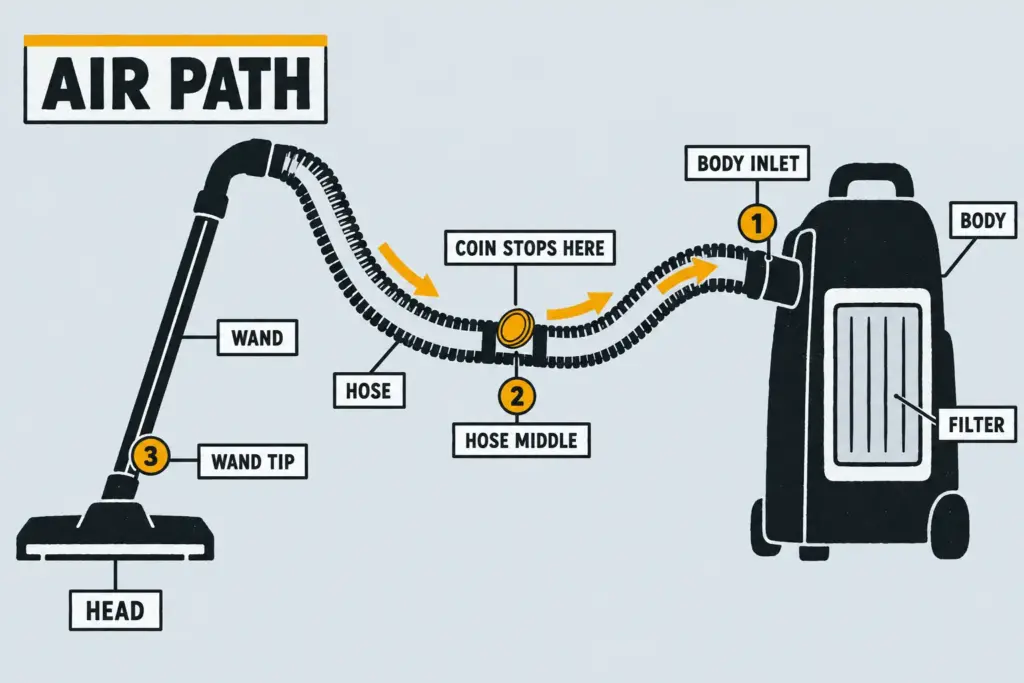
A coin only says pass or fail. It does not measure the bore, so a clean pass proves a coin fits, not that a matted clump of hair will.
Clear It With a Stick You Already Own
A broom handle, a mop handle or a garden cane will do; Expert Reviews lists all three, and Ideal Home adds a bamboo stake, which is not sharp enough to pierce the hose. Push from the end where the coin stopped, gently and in short strokes. Expert Reviews is blunt about the alternatives: nothing sharp and nothing metal, because a point goes through the hose wall and turns a quick job into a replacement.
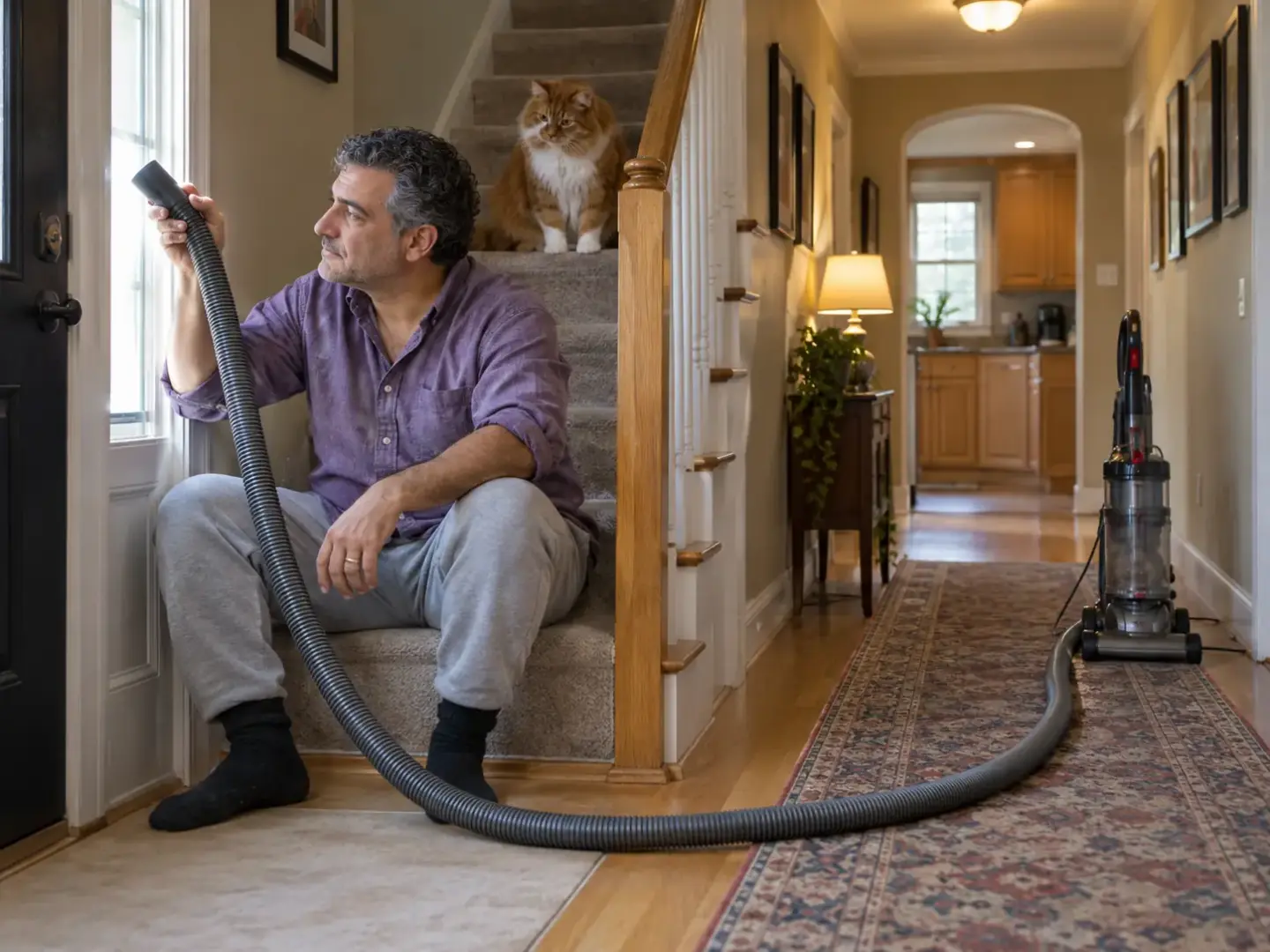
Then lay the hose out and look through it toward a window. Daylight at the far end is the proof, and a dark tube still has a plug somewhere along it.
Leave the broom handle beside the spot where the machine is parked. The check then happens the day the pull drops, not a week later when the hose is solid with hair.
When the Hose Is Spent, Not Blocked
Look for cracks, tears and splits, and for plugs the stick cannot move. Expert Reviews treats either one as the sign to replace the hose rather than work on it harder. Past that point you are deciding what comes next, and what to look for in a cat hair vacuum is where that decision starts. Replace the part before the machine, unless the free checks above have already ruled out everything else.
When the Roll Stops Spinning, the Belt Is the Suspect
The motor hums, the machine glides across the rug, and the roll underneath sits perfectly still. The reflex is to blame the whole machine. A roll that stops while the motor keeps running is more often one small part. A vacuum belt that has snapped or broken is, in iFixit’s description, usually a quick fix and a cheap part.
Tell a Stuck Roll From a Dead Belt
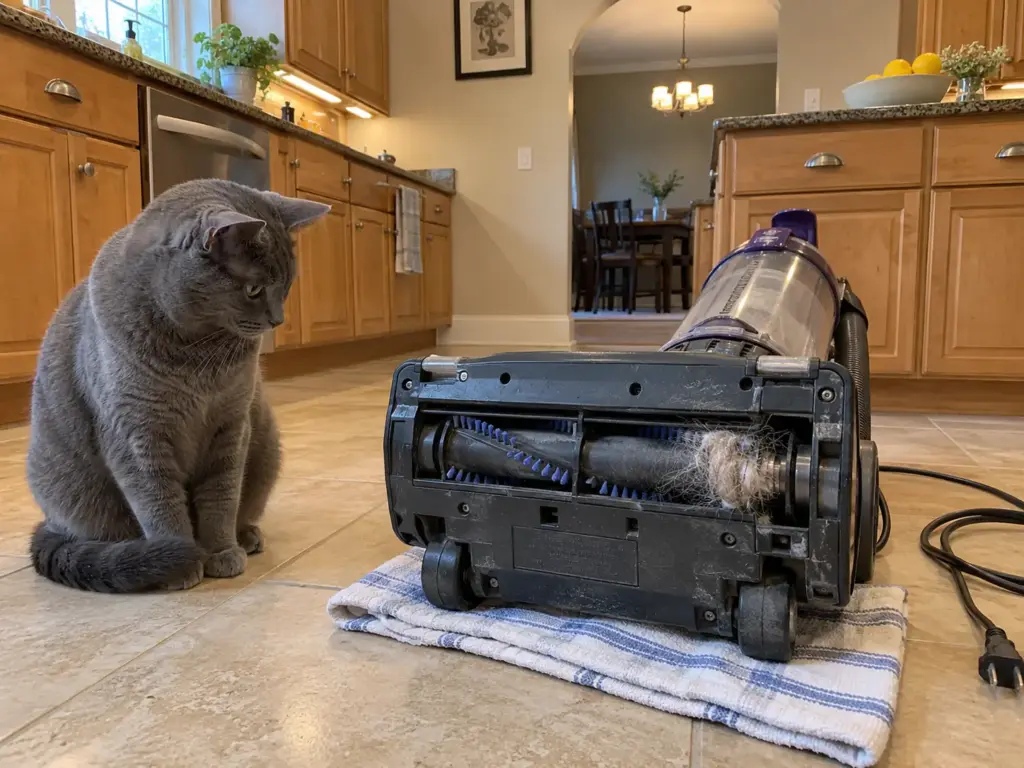
Unplug the machine first, then tip it over so the base plate faces you. iFixit’s rule for a machine that is hard to push is the same: stop, unplug, flip it and inspect.
With the roll in view, turn it by hand. If it spins freely under your fingers but sat still when the motor ran, the belt has let go. If it fights you, something is gripping it, usually brush roll tangled hair, and the wrapped-roll fix in the vacuuming guide is the one you want.
The swap itself varies by model, so your manual is the right guide and this article does not walk through it. Do not guess at the screws.
Why Hair Breaks Belts
Hair does more than stall the roll. iFixit warns that when hair is tangled on the rollers the belt can snap, so the flip-and-inspect habit it recommends, once a month or so, protects the belt as much as the roll.
Treat that month as a starting point. On some models, cutting the fur free means removing about six screws, and a roll that goes unchecked can end up with seized bearings. A roll that collects hair weekly needs a check weekly: the calendar follows the fur, not the other way around.
The more often the machine runs, the sooner the roll fills, and how often to vacuum with a cat sets the first half of that rhythm.
Tie the flip to a chore you never skip, such as the day the litter gets changed completely. If the roll has fur on it every time, shorten the gap; if it is clean twice in a row, you have found your interval.
Clearing a Robot Vacuum’s Roller, and Where Our Sources Stop at the Dock
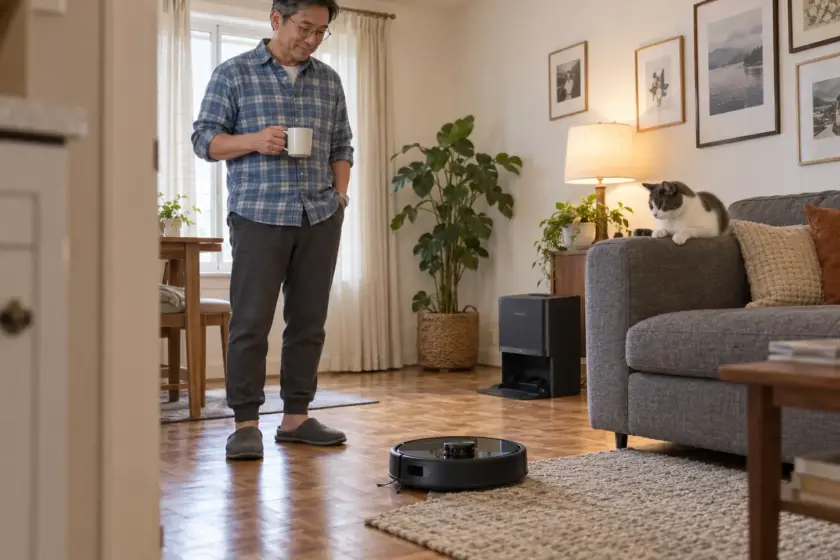
A robot’s clog never involves a hose you can lay out and look through. The part that stalls is the roller, and robot vacuum roller wrap is freed with a blade, not a stick. Whether a robot suits a cat house at all is its own question, covered in whether a robot vacuum can handle cat hair at all; this section deals only with the moment one has stopped on the rug and needs help. The bin-first habit from upright machines is the wrong first move here, so start underneath.
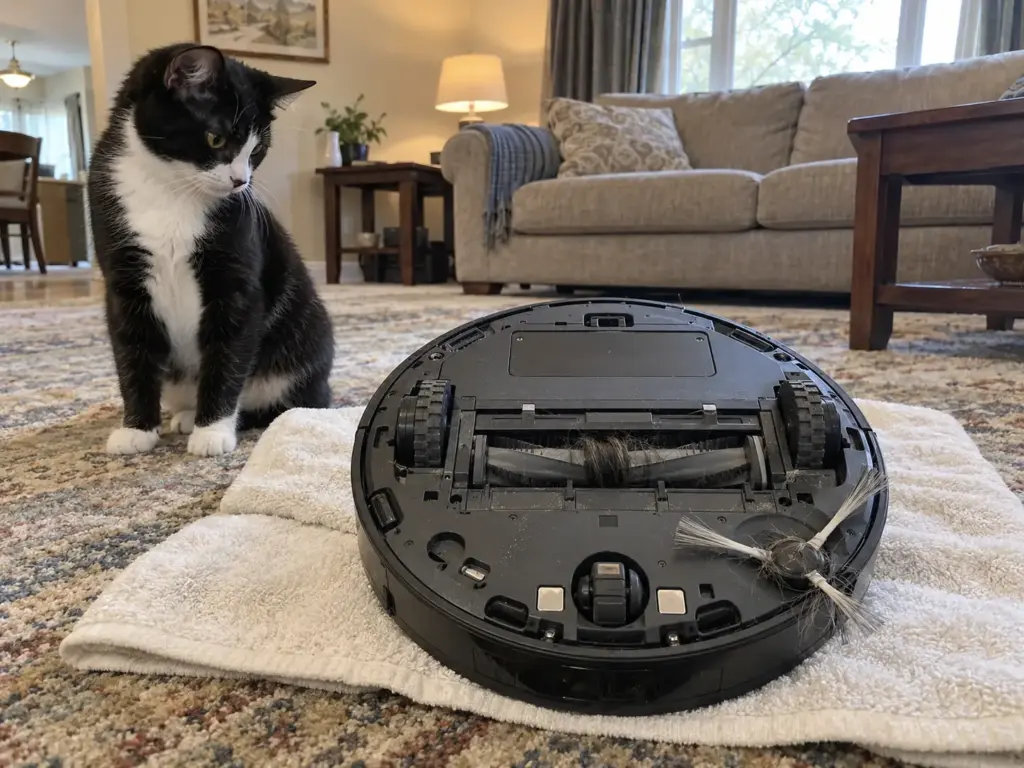
The Roller and Side Brush, in ECOVACS’s Own Order
The ECOVACS help page lays out the roller sequence, and the order matters because the side brush sits in the way:
- Power the robot off.
- Flip it over.
- Remove the side brush with a screwdriver.
- Open the main brush cover.
- Cut the wrapped hair free with a knife blade.
The same page mentions a special cleaning tool from ECOVACS’s own store. It is not on Amazon and the blade does the same job, so there is nothing to recommend. Cut with the edge pointed away from the roller and from your fingers. And expect an audience: an upturned robot on a towel is the most interesting object in the room, so keep the blade in your hand and not on the floor.
The Dock: What We Could Not Confirm
The roller has a written procedure. The dock’s emptying path does not, at least not in anything we could open from a maker. How hair collects on the way into the dock’s bin, and how to clear it, is therefore not described here. A guessed cause would read well and still be wrong.
The manual for your model is the document that covers the dock; find its section on the dock or the dust bin and follow that over any general tip. What you can do without it is rule out the cheap stop first: if the robot keeps halting partway across a rug, flip it and look at the roller before you suspect the dock.
Why It Clears and Comes Back: the Stop You Did Not Check
You clear the hose, the machine runs well for a week, and by the second week the verdict has formed: it is a bad machine. More often the tube you cleared was the right tube and the stop that failed was a different one. The hair did what the floor and the machine let it do, and where a cat sheds every day, that is a lot of hair.
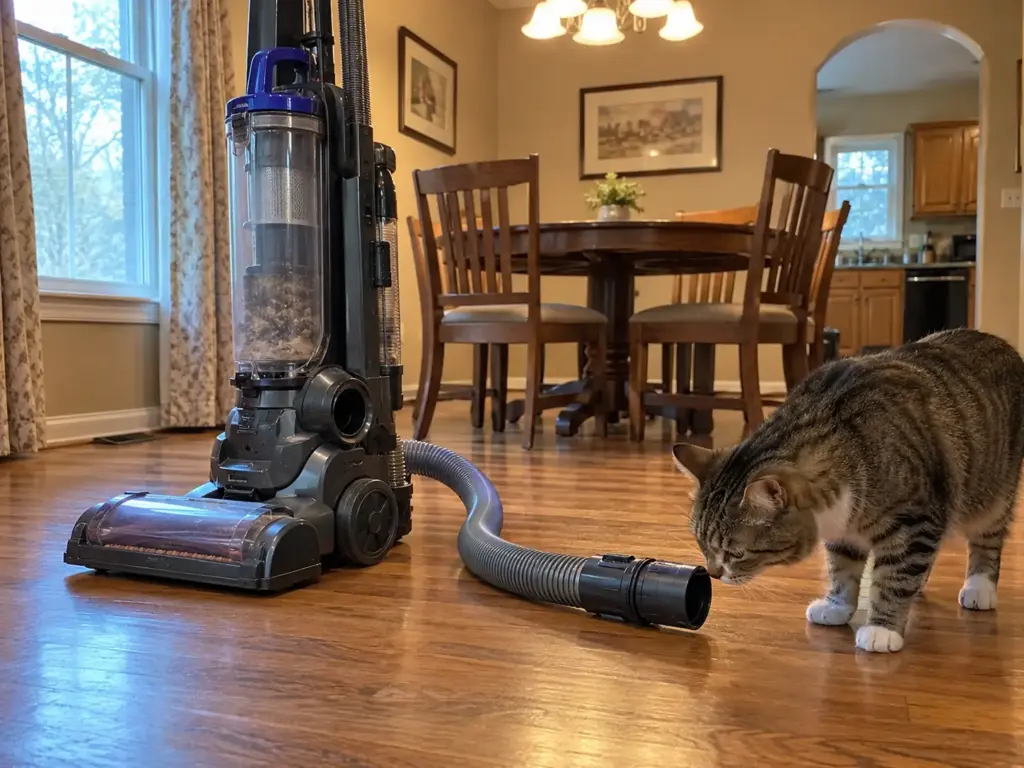
The Hose Attachments and the Socket on the Main Unit
Think of the route as four stops, in the order the air meets them: the open end you tested at the port, the filter, the joins where attachments click on, and the socket where the hose enters the main unit. That order is my reasoning from how the pieces connect, not a quote, and it explains the loop. A clog that returns is nearly always one of the three stops you did not open.
Expert Reviews makes the same point in its sixth step: if something still is not right once the hose is clear, check the hose attachments and the socket on the vacuum for blockages. Those joins are short and narrow, and easy to skip because the long tube got all the attention. With the machine unplugged, shine a light into the socket (your phone torch will do) and run a finger round each join before you push the hose back on.
A Dirty Filter Looks Exactly Like a Hose Clog
ECOVACS notes that a clogged filter blocks airflow and results in suction loss, and vacuum suction loss feels the same at the handle whether the filter or the tube is to blame. It also matches the order of events: the filter goes unwashed, suction drops, and the hair that used to ride through the hose slows down and stops. So when you clear a hose and the pull is still weak on the next run, look at the filter before you blame the hose a second time.
One Cat or Three: Set the Check to Your Fur Load
Some homes with five cats and a dog run the same vacuum for years and never see a clog. That proves nothing about your machine, but it sits badly with the idea that the machine is the whole story. Fur load changes the schedule, though. With one cat, a monthly flip may be generous; with three shedding along the same route, it is too slow, and the stops need checking sooner than the calendar says.
Write the date of each clear as a note on your phone. If the clog returns inside three weeks, the stop you did not check is still the same one, so work down the four stops instead of repeating the hose.
Less loose hair means less reaching any of the four stops, and fixing where the hair lands is the upstream half of this problem: the spot where he sleeps, the stair he climbs, the rug under the window.
Cat Fur and Litter Grit in the Same Tube
A small apartment puts the litter box and the vacuum in the same hallway, so the grit that tracks out of the box ends up under the same nozzle as the fur, and cat litter in the vacuum is where the advice gets specific. Catster is the clearest on it: “Wet, soiled litter is most likely to clog the filter and hoses of your vacuum cleaner.” Dry litter is the safer one to pick up, and wet clumps belong to the scoop. ECOVACS goes only as far as saying that vacuuming cat litter might risk clogging filters, and it names filters, not hoses.
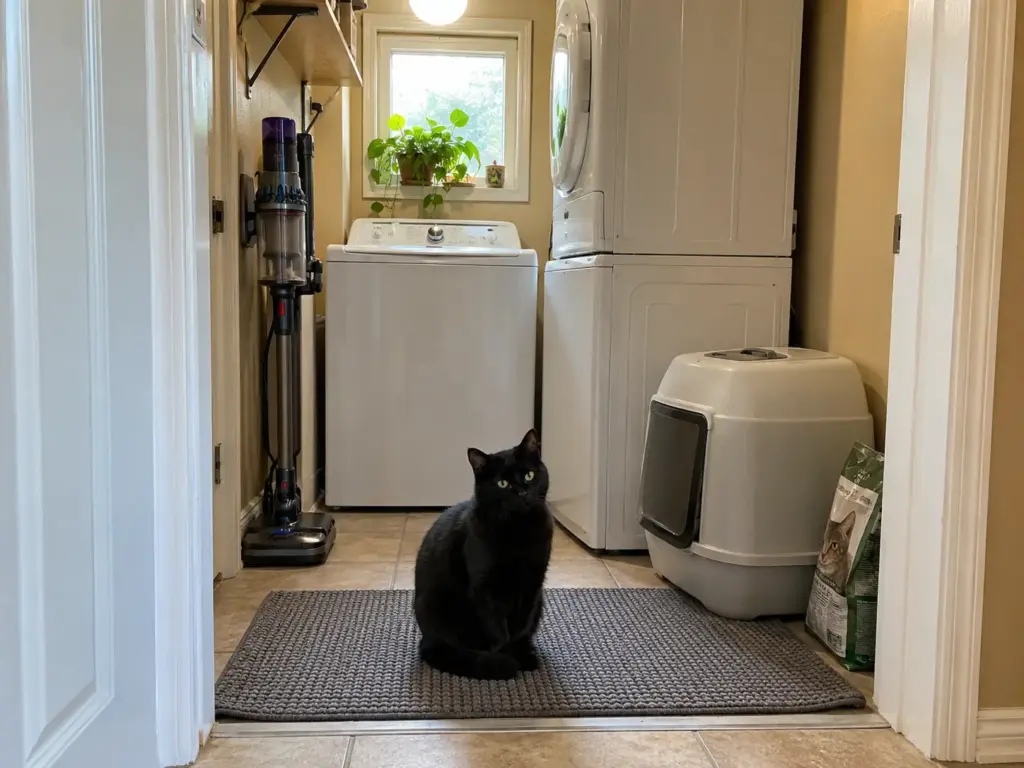
Whether fur and grit knit together in the neck of the tube is what people suspect, and it has not been measured anywhere we can point to, so this article does not claim it. The same goes for cat hair against dog hair: most of the clog stories come from dog households, and none measures a difference, so the checks above work the same for both.
The free move comes before the vacuum: less litter on the floor to begin with. Choosing from the low-dust clumping litters gives the filter less fine dust to hold, and litter that doesn’t track keeps grit out of the machine altogether. Scoop the clumps, catch the rest at the threshold, and then vacuum the fur.
Test the Port First, and Look Again in Three Weeks
Three things carry over from all of this. Take the wand off and feel the pull at the open end before you reach for anything else, because that single test points at the stop that is failing. On a robot, free the roller with a blade and leave the dock to your manual. And when the clog comes back, open the joins and the socket before you decide the machine is the problem.
Run the machine normally for three weeks after a clear. If the pull holds, the stop you cleared was the right one; if it fades sooner, it is the same stop again, and the date in your phone note will say so.
Today’s job needs a coin, a broom handle and a window: pull the wand, feel the port, drop the coin, look through the tube, write the date down. When the free fixes are done and the vacuum still leaves hair behind, the pet hair removers worth buying after the free fixes are the next stop.
Frequently Asked Questions
01Why does my vacuum keep clogging with cat fur?
Your vacuum keeps clogging with cat fur because the clear you did reached one stop on the route and the hair moved on to the next one. Test the suction at the open end first, then work through the hose, filter, joins and belt.
02How do I find a clog in a vacuum hose?
Drop a large coin in one end of the hose and watch the other end; if it does not come out, the plug sits somewhere along that length. Laying the hose toward a window narrows it down. Clear it gently with a broom handle, never anything sharp.
03Is there a vacuum that doesn’t get clogged by hair?
Nothing we found promises a vacuum that never clogs with hair, so the sensible plan is to know the stops where a clog forms and check them in order. The vacuuming guide covers the roll, bin and filter.
04Can I vacuum cat litter without clogging the machine?
Vacuum dry litter only, because Catster says wet, soiled litter is the kind most likely to clog the filter and hoses of a vacuum cleaner. ECOVACS adds that vacuuming cat litter might risk clogging filters. Scoop wet clumps instead.
05What is the best vacuum that won’t clog with pet hair?
The best pick is the one whose stops you can reach and check yourself, because nothing we found promises a clog-proof machine. A wand that comes off, a roll you can flip and a filter you can wash decide more than a name. What to look for in a cat hair vacuum covers it in detail.


Leave a comment