Can Whisker Fatigue Be Fixed Without Buying a Bowl?
Don't buy the whisker fatigue bowl yet. Test it free first with a flat plate (3 days) + the width number nobody publishes.

Alfredo RamsesFounder · September 7, 2026 · 16 min read

On this page7 sections
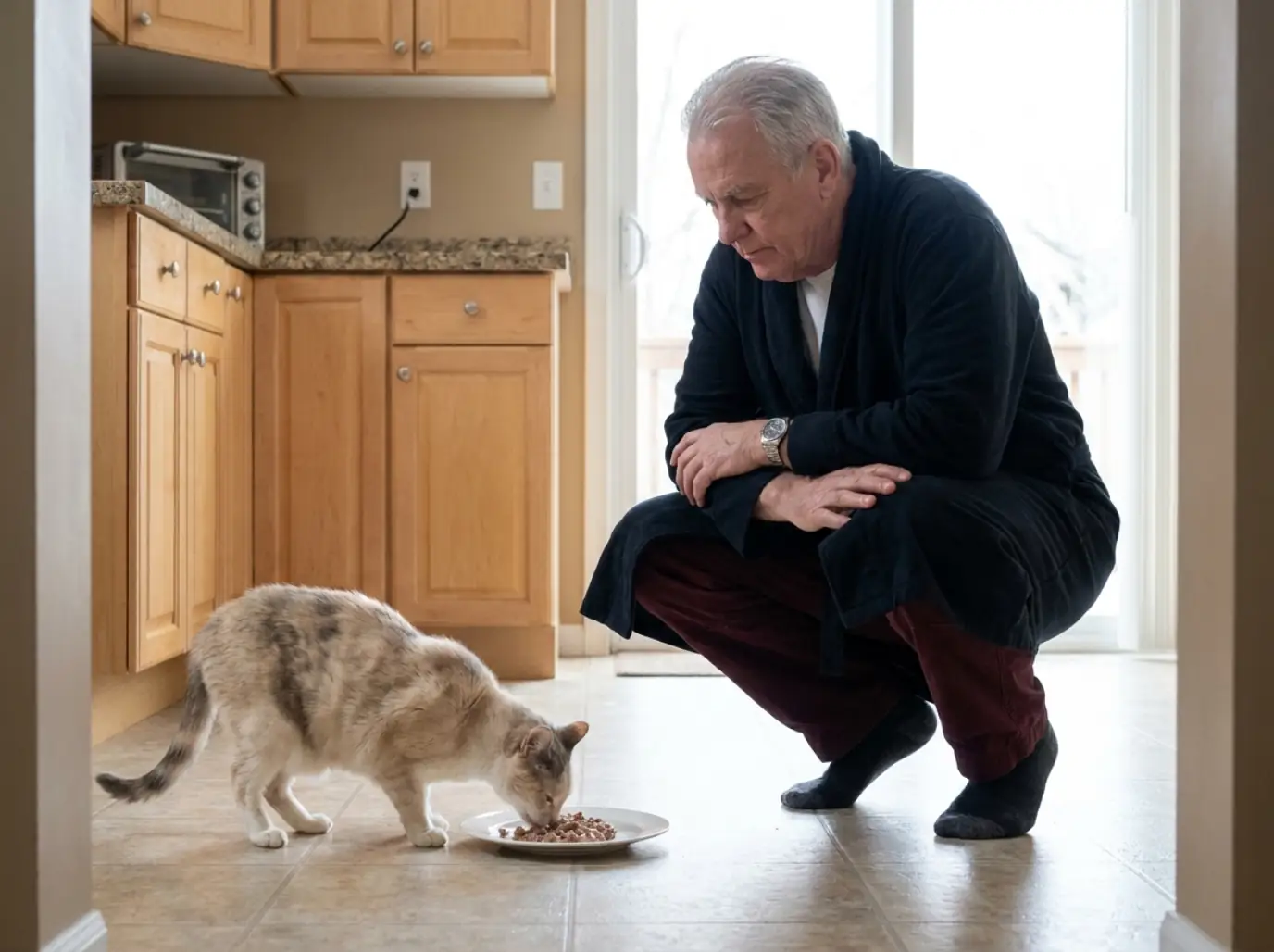
Your cat stands over a full bowl, wants the food, and eats it off the floor instead. You have probably already read four pages explaining why, and every one of them ended at a link to a bowl. So the honest version of the question is whether whisker fatigue can be fixed at all without opening your wallet.
The answer is sitting in your cabinet. The only controlled study ever run on this took the same food a cat was already eating and moved it to a wide shallow bowl. It didn’t buy anything new either.
Here is what the fix actually is, when this stops being a bowl question and becomes a vet question, how to run the free test so its result means something, the number that makes it honest, and what to do when nothing changes.
Quick Answer
Usually yes, and usually for free. Move the same food to a wide flat plate you already own, run it three or four days, and watch whether the pawing, floor-eating and pacing stop. If they stop, the shape was the problem. If nothing changes, it was never the whiskers.
What “Fixed” Actually Means Here
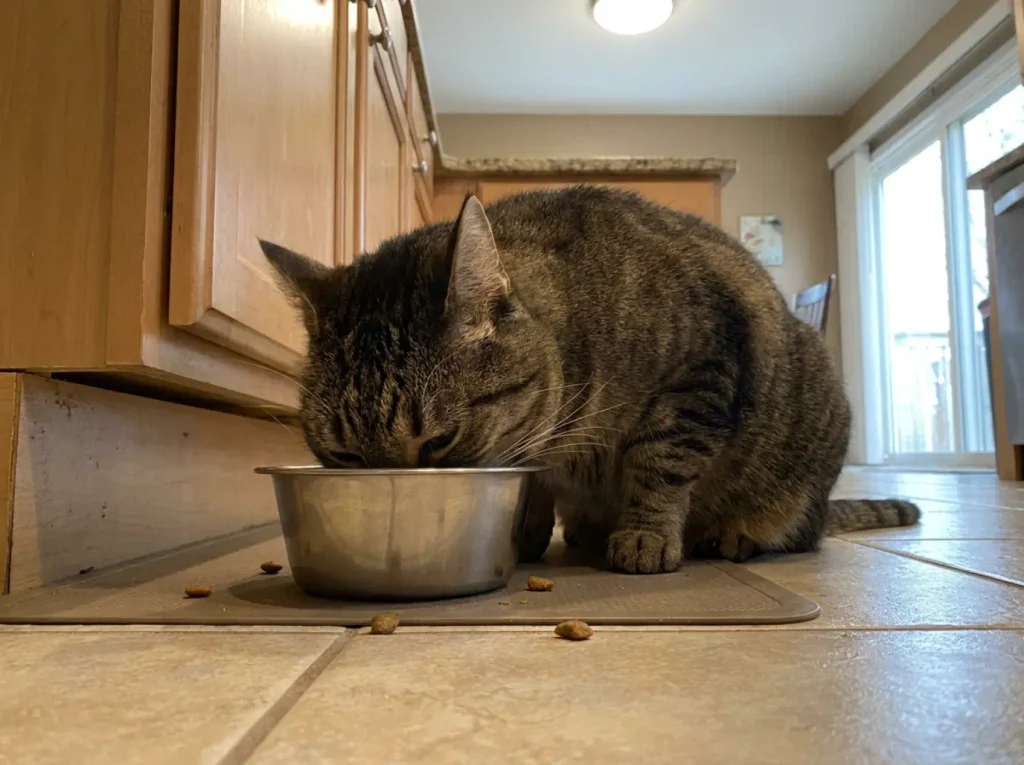
Before anything gets tested, the word needs pinning down, because whisker fatigue is not a condition anyone can cure. It is a proposed explanation for a set of behaviors, and what you are fixing is the behavior. That distinction sounds like hair-splitting until you are four days into an experiment wondering what counts as success.
What the Whisker Is Actually Doing (and Why the Visible Part Feels Nothing)
The part of the whisker you can see is dead hair. It has no nerves in it, which is why a whisker brushing a wall doesn’t register as touch the way your fingertip would. The sensation happens at the root: each vibrissae follicle is packed with sensory neurons, blood vessels and proprioceptors, buried in the skin, and it reads the shaft the way a lever reads pressure. Your cat has 24 of them on the face, two sets of 12 arranged in four rows per side, and they are wired to be exquisite at detecting small movements in air and small changes in contact.
That is the whole mechanism people are pointing at when they say a deep bowl bothers a cat, and it is why the other name for it, whisker stress, is the more accurate one: the proposed problem is overstimulation, not exhaustion. Not the tip of the whisker touching porcelain. The root, being pushed and released, twice a mouthful, forty mouthfuls a meal, twice a day.
It is also why cutting or trimming cat whiskers to solve this is a genuinely bad idea and not a shortcut. If you want the full background, including how the study got run and what it actually measured, the whole whisker fatigue picture, study included lives in the pillar this article sits under.
Why This Is a Preference, Not a Diagnosis
Here is the part the bowl marketing tends to skip. Cornell’s Feline Health Center puts it plainly — there’s no hard data to confirm a diagnosis, and plenty of veterinarians don’t consider whisker fatigue a valid one. That isn’t a reason to dismiss what you’re seeing at your own kitchen floor. It is a reason to be precise about what you are claiming.
I used to treat the skepticism as the end of the conversation. Then it stopped making sense: a thing can be unproven as a medical condition and still be a real preference a cat is expressing every single evening. Those are different claims with different burdens of proof, and the second one is easy to test at home.
You are not trying to confirm a diagnosis. You are trying to find out whether your cat eats more comfortably out of something else.
What “Fixed” Looks Like on the Kitchen Floor
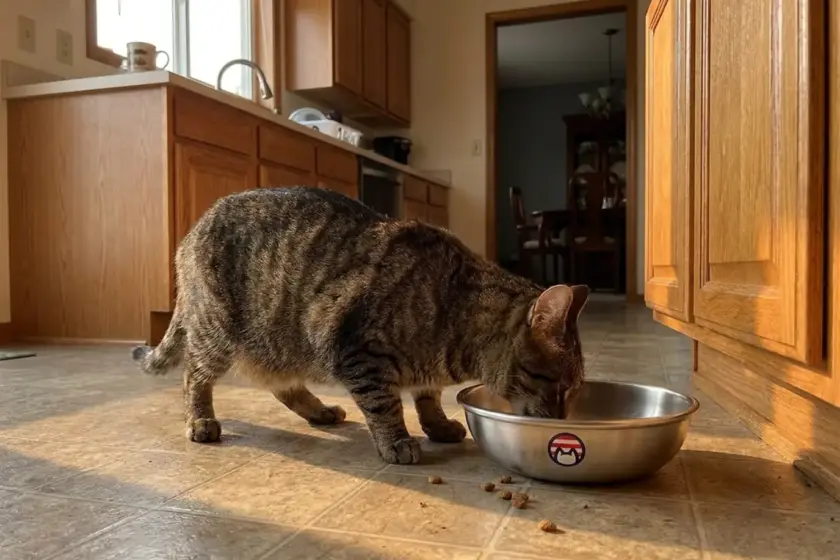
Concretely: the food gets eaten in the dish instead of beside it. The pawing stops. The cat stops walking away and coming back three times before committing. And the thing forums call the food ring disappears, which is the tell most people recognize before they have a name for it: food pushed out to the rim of a deep bowl and left there in a neat circle while the middle gets cleaned out and the cat still acts hungry.
That last one is the most useful because it takes ten seconds to check and requires you to diagnose exactly nothing. Look at the bowl after a meal. Either there’s a ring or there isn’t. It is also the difference between a cat with a container problem and a genuine picky eater, which is what most households write this off as and stop investigating.
When This Stops Being a Bowl Problem
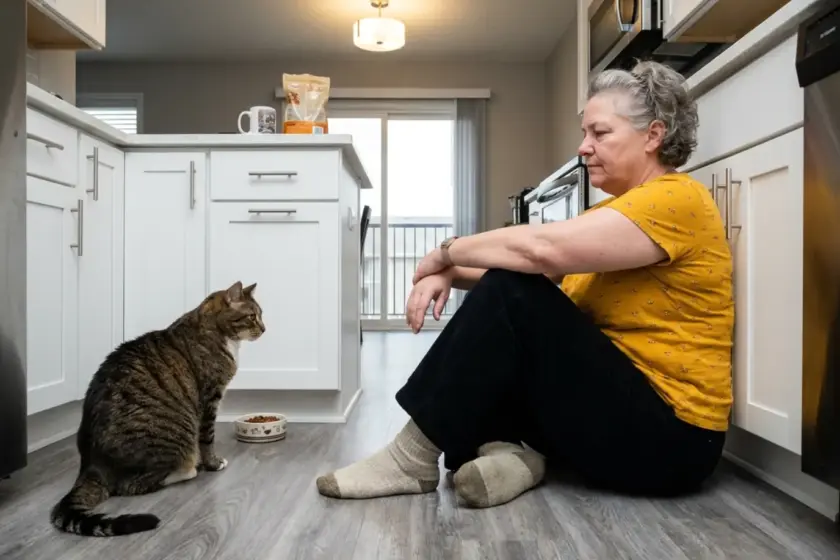
Somebody is reading this at eleven at night because their cat didn’t eat dinner, and they are hoping the answer is a dish. It might be. It also might not, and there are situations that do not belong anywhere near a four-day plate experiment.
The Line That Does Not Move
A cat that has not eaten at all for 24 hours needs a vet the same day. That threshold is not a whisker question, it is not affected by bowl shape, and it does not get a trial period. Every veterinary source that covers this topic states it the same way, and this article is not going to be the one that suggests waiting to see if a saucer helps.
The same goes for anything that arrived suddenly, and anything arriving with company: vomiting, diarrhea, drooling, low energy, weight visibly coming off, obvious discomfort while chewing. Those are things a vet needs to hear about, and this article is not equipped to sort them. Everything below assumes a healthy cat who wants dinner.
Selective Versus Stopped, and Why the Difference Matters
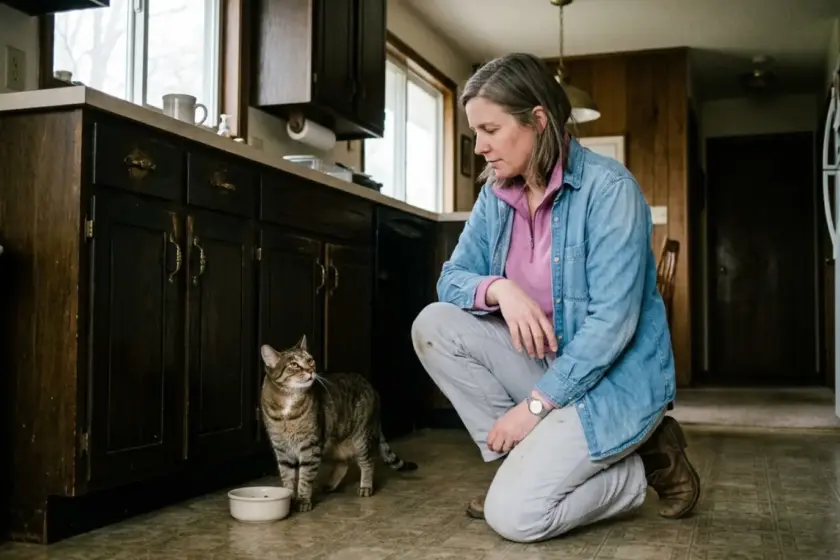
The behavior that fits the whisker explanation is selective, and that word is doing real work. The cat wants the food. It approaches, it engages, it works around the dish: paws food out, eats the middle, walks off, comes back, eats off the floor. It is solving a problem you handed it.
A cat that has stopped wanting food is describing something else entirely, and no dish fixes that. If you want the fuller version of that boundary, the five signs that separate this from ordinary fussiness covers the observation layer this section only summarizes. The failure that shows up most often in this topic isn’t people ignoring a sick cat. It’s the reverse: three weeks and two purchases spent on bowls when the bowl was never the variable.
Before you change anything, write down what your cat did at two meals: where it stood, what got left, whether the food ended up on the floor. Four days from now you will be comparing against a memory, and memory is generous about whatever you were hoping for.
The Free Test, and How to Run It So It Means Something
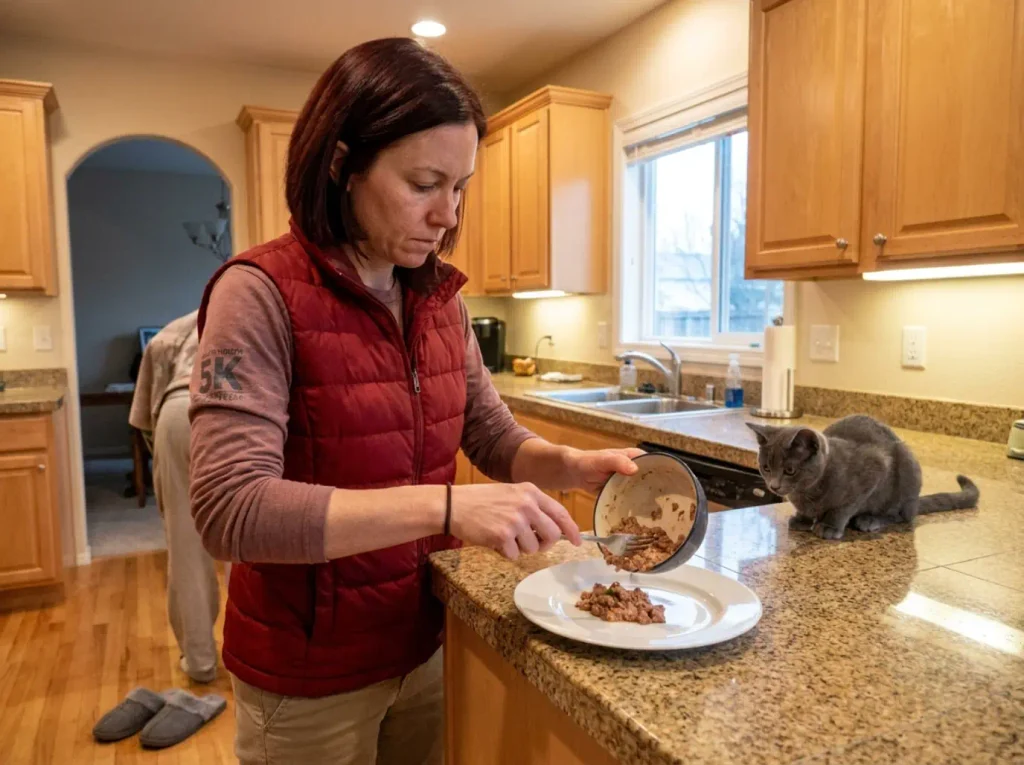
This is the part nobody publishes, and it is not complicated enough to justify that. You already own the equipment.
What to Swap, and What Not to Touch
Take the same food, unchanged, and put it on a flat plate or a wide saucer from your own cabinet. A side plate works. A small serving dish works. Run it every meal for three or four days.
Now the harder half: change nothing else. Not the food, not the brand, not the wet-to-dry ratio, not the room, not the time, not the spot on the floor. One variable. This is where most home tests die, because it feels productive to fix three things at once and then you have a result that explains nothing.
If you switch the dish and the food together and the cat starts eating, you have learned that something worked. You have not learned what, and you will be running the whole thing again in a month.
There is precedent for exactly this design. The only controlled study on whisker fatigue took 40 cats, fed them from their normal bowl, filmed it.
A week later they fed them the same way from a shallower dish of the same material. Same food. Same cats. One thing different.
Your kitchen version is the same experiment with a smaller sample and a much lower budget.
What to Watch For at Each Meal
Five things, and they are all visible from where you’re standing:
- Food pawed or scooped out of the dish onto the floor
- Eating off the floor beside a dish that still has food in it
- Pacing up to the dish, walking away, coming back
- Eating only from the center and leaving the outside
- The food ring left at the rim after the cat has walked off full
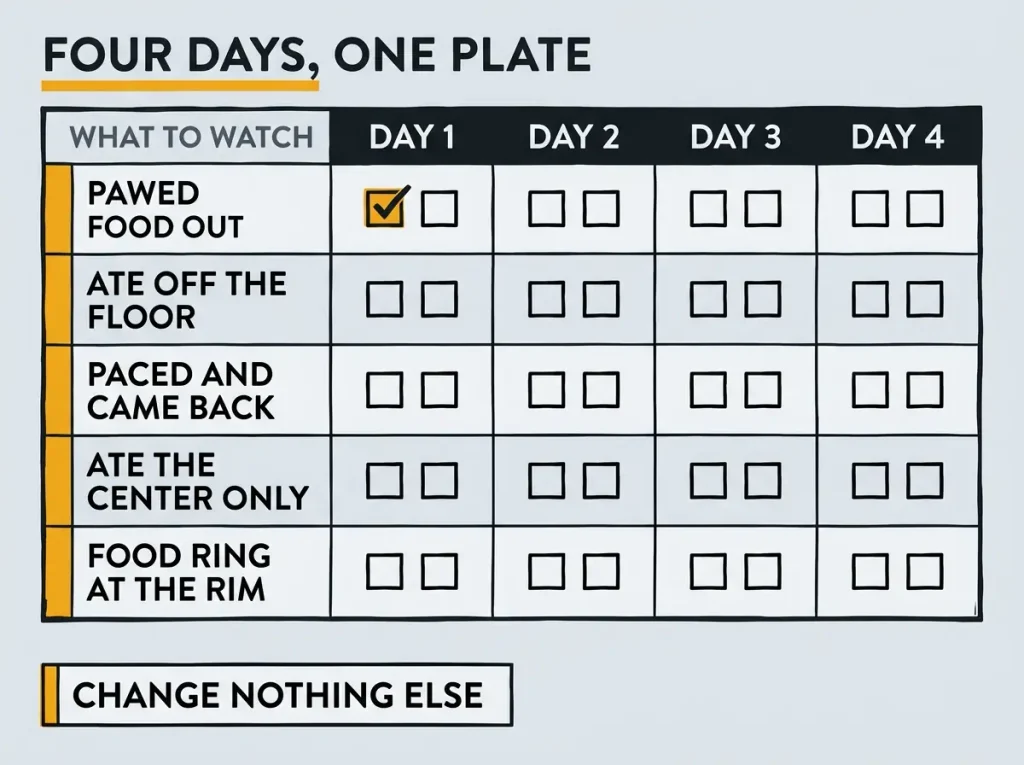
Those receding is your positive result. Not vanishing, necessarily. Receding. A cat that pawed food out at every meal and now does it once on day three has told you something.
Run the test at the meal your cat actually cares about. A cat that is only mildly interested at breakfast will put up with a bad dish without complaining, and the signal you are looking for disappears into the noise.
Reading the Result, Including the “Nothing Happened” One
If the behaviors recede, the shape was the problem, and you now know that for the cost of washing a plate. That is a real answer, arrived at honestly, and it cost nothing.
But the negative result is worth just as much, and this is where every other article leaves you standing. If four days go by and the cat paws food out of a flat plate exactly the way it pawed food out of the bowl, then whisker contact was never the mechanism. You have not failed.
You have eliminated the most-recommended explanation on the internet for free, and you have saved yourself buying a dish that was never going to change anything. That is a better outcome than a purchase that quietly does nothing while you tell yourself it helped.
Wide Enough, in Inches
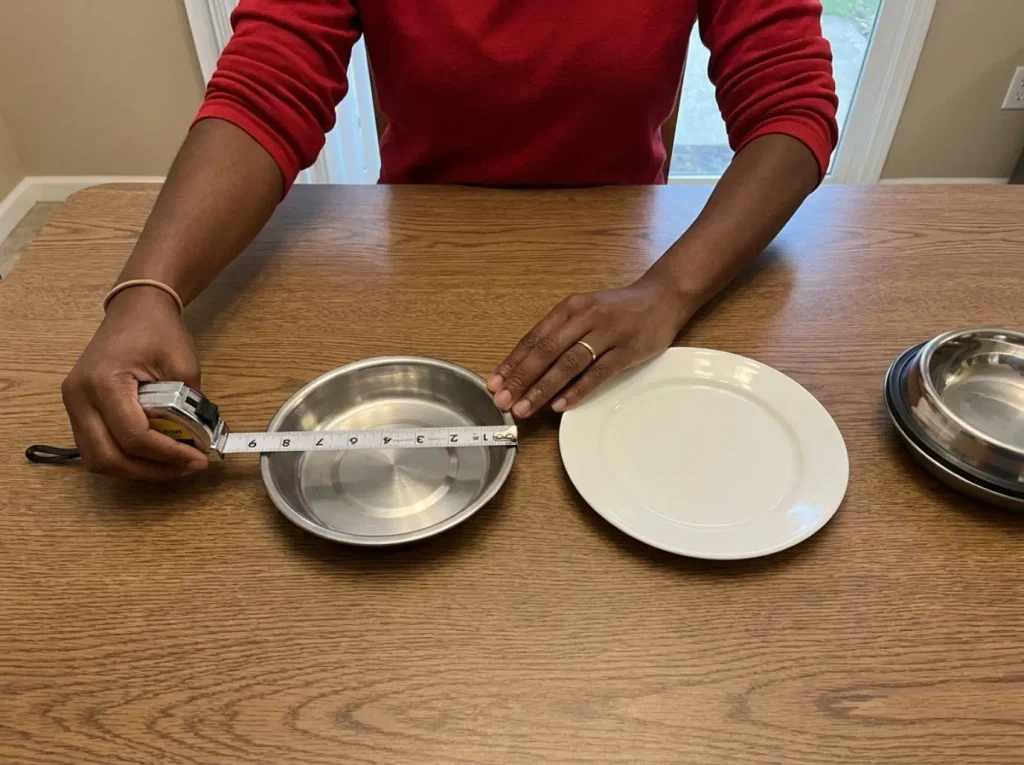
“Wide and shallow” is not a specification, it’s a vibe, and a test run against a vibe produces a result you can’t trust. If the plate you grabbed isn’t actually wide enough, your cat’s whiskers touch the rim of the test dish too and you record a negative result that was never a fair trial. So here is the number nobody publishes.
The Number, and What in Your Cabinet Already Clears It
Roughly 5.5 to 6.5 inches across, and under 1.5 inches deep, with 1 to 1.3 inches being the comfortable range. A standard side plate usually clears both without trying. A cereal bowl never does, no matter how generous it looks when it’s empty.
Go measure the thing you grabbed before you trust anything it tells you. Water bowls and food bowls also don’t want the same numbers, and food and water bowls do not want the same size covers why the answer changes when you cross the kitchen.
Why Depth Beats Width
Width gets all the attention and depth does most of the damage. Think about the geometry of a mouthful: the head goes down into the dish and comes back out. A tall rim makes contact on the way in and again on the way out, so a deep narrow bowl fails twice per bite, every bite. A wide dish with a 2-inch wall is still a wall.
This is also why swapping a plastic bowl for a ceramic or a stainless steel one on its own tends to change nothing. The study held material constant on purpose, 19 cats on ceramic and 19 on stainless, and varied the shape. Shape is the variable. Material is a durability and hygiene question, which matters, but it is a different question.
What the Study Measured, and What It Did Not
Worth stating plainly, because the marketing rounds this up considerably. The trial found no statistical difference in time spent eating (P=0.8), in food dropped (P=0.9), or in amount eaten (P=0.7). Switching to the whisker-friendly dish did not measurably change how fast or how much those cats ate.
What it did find was a preference. Offered both dishes side by side, 63% of the cats chose the wider, shallower one; 24% went for the regular bowl. That is a much smaller claim than “your cat is suffering,” and it is the claim the evidence actually supports: given the choice, most cats lean one way, and yours is allowed to be one of them.
Once the free test has passed and you would rather not keep serving dinner on the good plates, a permanent dish becomes a convenience purchase instead of a fix. The 4 Pcs Stainless Steel Cat Bowls sit right at the 5.5-inch bar and come four to a pack, which matters in a house with more than one cat and more than one feeding spot. The trade-off is that stainless slides on a hard floor unless it has a rubber ring underneath, and a dish that skates across the tile while a cat is eating creates its own version of the problem you just solved.
Measure the plate you already grabbed before you decide the test failed. A saucer that looks generous is often under five inches across, and a too-small test dish produces a negative result that means nothing at all.
When the Test Comes Back Negative
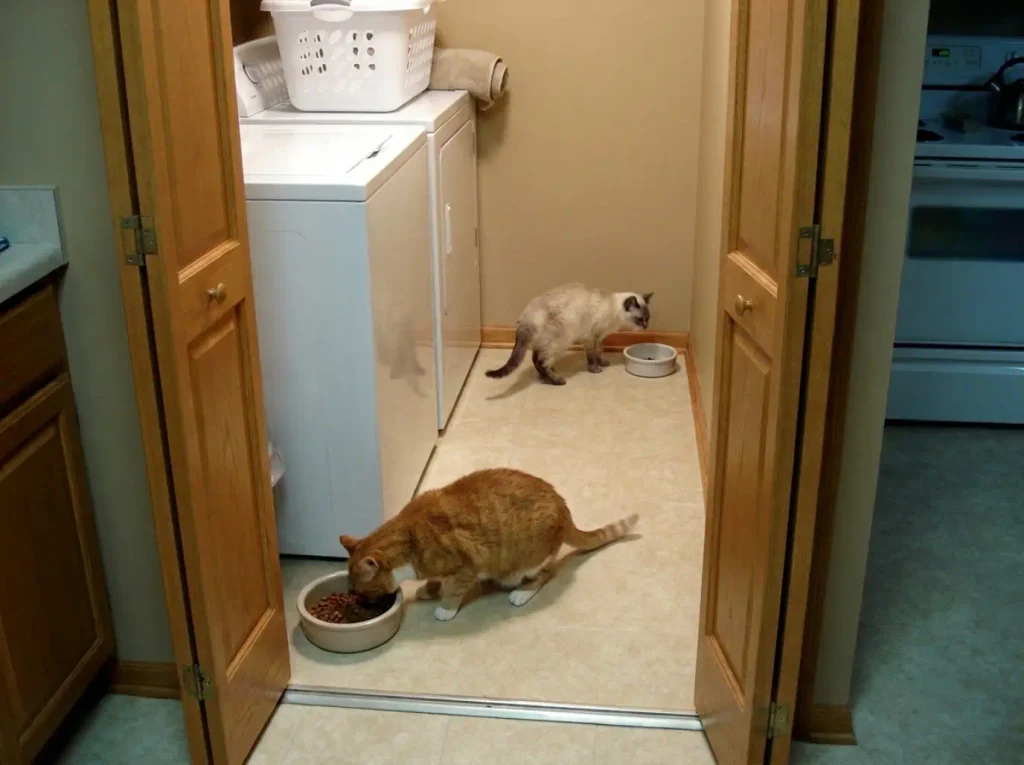
Four days, a flat plate, and the same behavior. This is where the rest of the internet stops writing, and it is where a lot of readers actually are. You are not out of options. You are out of bowl options, which is different, and the next things to move are also free.
Two Cats, and Why the Signs Look Identical
If there is more than one cat in the house, this is the first place to look, and almost nobody says so. Resource guarding at a shared feeding spot produces the exact same picture: food left behind, floor-eating, pacing, meals abandoned halfway. No whiskers involved. One cat is simply not comfortable eating in that spot while the other one exists nearby, and it eats fast, badly, or somewhere else.
Telling them apart is a second free test, and it isolates a different variable. Instead of changing the dish shape, change the distance: put each cat’s food in a different room and leave the dishes exactly as they were. If the behavior changes with distance and not with shape, it was social, not sensory.
The classic wasted purchase in this niche is a three-cat household buying three wide dishes and lining them up in the same corner, which changes nothing, because the corner was the problem. Two cats and one bowl is its own problem, with its own separation protocol.
The Other Free Things to Move First
Assuming one cat, or a multi-cat test that came back clean, there are still four variables that cost nothing:
- Foot traffic. A dish in a doorway or a walkway means eating with interruptions. Cats eat in short visits and don’t like being walked past mid-bite.
- Distance from the litter box. Same room is too close, and this is the one people most often get wrong in a small apartment because there aren’t many walls to work with.
- What the cat can see. A dish facing a wall means eating with your back to the room. Turn it so the room is visible and some cats settle immediately.
- Whether the dish slides. A bowl that skids on tile is a moving target, and a cat that gets tired of chasing it takes the food to the floor where it stays put.
Any of those is free, takes a minute, and each one is worth a couple of days on its own. Same rule as before: one at a time, or you learn nothing.
There’s one exception worth naming, because it isn’t a whisker problem at all and gets confused for one constantly. An older cat, or one that’s stiff in the shoulders, may be avoiding the crouch rather than the dish. Head down to floor level is a posture, and some cats stop wanting to hold it.
If that’s the picture, the CEEFU Extra Wide Elevated Ceramic Bowl sits at 6.2 inches across, the top of the useful range, and raises the whole thing off the floor so the cat isn’t reaching down for it. The caveat is that elevation solves a joint-comfort complaint, not a sensory one, so if your cat is young and springy this is the wrong lever.
The Water Bowl Nobody Tests
Here is the one that almost never gets mentioned. If a deep narrow food bowl causes rim contact, a deep narrow water bowl does exactly the same thing, and water dishes tend to be deeper than food dishes because we fill them less often.
Before a fountain gets bought, put water in a wide shallow dish for a few days and see whether your cat drinks more, or drinks there instead of out of the bathroom faucet. Fountains get recommended everywhere, and they do work for a lot of cats. But a fountain solves a moving water preference, and if the actual objection was the shape of the container, you’ll have bought a machine with a filter to change every four weeks to fix a problem a saucer would have handled. Test the cheap thing first.
What to Do Tonight
The answer to whether whisker fatigue can be fixed is usually yes, and usually free: one plate you already own, three or four days, one variable changed, and nothing else touched.
What you’re fixing is a preference your cat is expressing, not a condition it has. That’s a smaller claim than the bowl marketing makes, and it’s the one the evidence actually supports. Your cat isn’t being fussy about dinner. It’s telling you the container is wrong for its face, and on the balance of what we know, it is probably right.
And a negative test is a result, not a failure. It tells you the shape was never the issue and it points you at the room instead of at the checkout.
Come back to it in three weeks. A cat that accepted a new dish on day two sometimes drifts back, and three weeks is about when a household routine quietly loosens and the dish that was supposed to be temporary becomes permanent by accident. Move the food to a plate you already own. If it works, you just found out what a bowl is worth.
Amazon’s Audible — free for 30 days
Your cat won’t let you read. Let someone read to you.
Audible is Amazon’s audiobook library — thousands of titles, read out loud, on your phone. Free for a month, plus one audiobook to keep forever.
Frequently Asked Questions
01Do Cats Really Get Whisker Fatigue?
Not as a recognized medical diagnosis. Cornell’s Feline Health Center says there is no hard data to confirm one. What the single controlled study did find is a preference: given the choice, 63% of cats picked the wider, shallower dish. That is enough to be worth testing and not enough to be worth worrying about.
02How Do I Help a Cat That Seems Bothered by Its Bowl?
Move the same food to a flat plate you already own and leave everything else alone for three or four days. If the pawing, floor-eating and pacing settle down, the shape was the issue. If nothing changes, the next things to check are where the dish sits and who else eats near it.
03Does the Bowl Material Matter, or Just the Shape?
Shape. The study held material constant, half the cats on ceramic and half on stainless steel, and varied width and depth, which is where the effect showed up. Roughly 5.5 to 6.5 inches across and under 1.5 inches deep is the bar, in whatever material you already have.
04At What Age Do Cats Start Losing Their Whiskers?
Cats shed individual whiskers throughout life the way they shed fur, at any age, and they grow back. What is not normal is several going at once or breaking off short, and that is a vet question rather than a bowl one.
Leave a comment