5 Signs of Whisker Fatigue That Aren’t Picky Eating
5 signs of whisker fatigue, split into 2 groups [still eating vs. stopped]. Plus the food-ring check and a 3-day flat-plate test that costs nothing.

Alfredo RamsesFounder · September 7, 2026 · 17 min read

On this page7 sections
- 1What People Call Picky Eating, and What the Cat Is Actually Doing
- 2The Line Where This Stops Being About the Bowl
- 3The Five Signs, Split Into the Two That Matter
- 4The Two Signs That Usually Aren't the Bowl at All
- 5The Three-Day Test, and What to Switch To if It Works
- 6What to Do Tomorrow
- 7Frequently Asked Questions
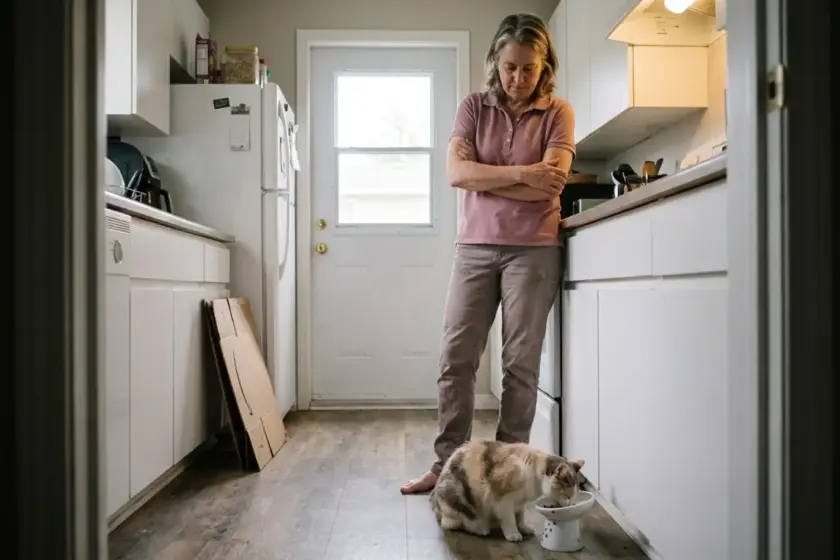
He walks up to the bowl, stops, looks at the food, and walks away. Five minutes later he is back in the kitchen asking for dinner again, with a full bowl sitting exactly where he left it.
Most people file that under “he’s gotten fussy” and stop thinking about it, which is the one conclusion that leads nowhere, because a personality is not something you can adjust. There is a thirty-second check that settles it instead, and it costs nothing. What follows is five signs of whisker fatigue, sorted by how much each one is actually worth watching, plus the line where this stops being a bowl question and becomes a phone call.
Quick Answer
Five signs point at the bowl rather than the food, and all five share one condition: the cat still wants to eat.
- Pacing in front of a full bowl without lowering his head
- Pawing food onto the floor and eating it there
- Eating the center clean and leaving a ring at the rim
- Acting hungry, approaching, then disengaging without eating
- Getting tense with another animal at mealtimes
A cat who has stopped approaching food at all, or who is losing weight, is describing something else, and that one is a vet visit rather than a bowl swap.
What People Call Picky Eating, and What the Cat Is Actually Doing
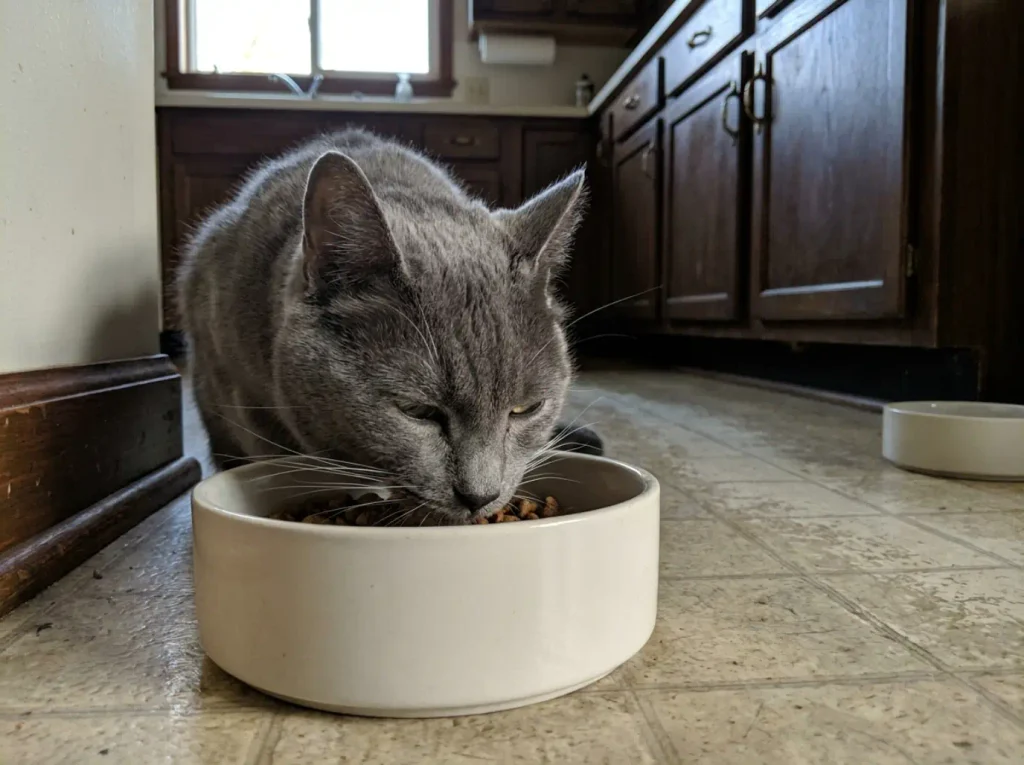
“He’s just fussy” is a verdict on the cat’s character, and that is exactly why it goes nowhere. Character is not adjustable. Nobody has ever fixed a mealtime by deciding harder that their cat is difficult, and yet that label is the most common thing said about this whole set of behaviors.
Swap it for a question about geography and the problem changes shape immediately. A genuinely picky eating cat rejects the food: he sniffs it, decides against it, and leaves without much interest in coming back.
A cat with a bowl problem does the opposite. He wants the food badly enough to return three times an hour. What he is turning down is the container.
That distinction has a physical basis, and it is worth knowing because it explains why the signs cluster where they do. Every whisker (a vibrissa, to use the anatomical name) sits in a follicle-sinus complex, a follicle packed with mechanoreceptors, versus the two or three nerves running to an ordinary hair.
A cat carries roughly twelve of them in four rows per cheek, and whisker-linked touch data occupies close to 40% of the sensory area of a cat’s brain. Whiskers also feed proprioception, the sense of where his own edges are in space, which is why they matter at a bowl and barely register anywhere else.
He walks through a narrow doorway once. He puts his face into that dish four times a day, every day, for years. Repetition is the whole mechanism behind the sensory overload the theory describes, and as VCA Animal Hospitals puts it, whiskers should have a flatter dish so they don’t touch the sides every time your cat eats.
Here is where I’d rather be honest than persuasive. The one controlled trial on this, from 2020, found no measurable difference in eating time, amount eaten, or food dropped between a whisker-friendly dish and a regular one. It did find a clear preference for the flatter dish when cats had the choice.
So whisker stress, the overstimulation name people reach for, is a comfort question, not a nutrition emergency, and any article that tells you your cat is going hungry because of his bowl has oversold it. If you want the whole question of whisker fatigue, and the one study everybody skips, the pillar takes that argument apart properly.
The failure that keeps repeating in cat forums follows from exactly that oversell. Someone reads a sign list, buys a whisker-friendly bowl on faith, watches for two days, sees nothing conclusive, and decides the whole idea is invented.
Nobody told them a preference test needs several days and something to compare against. Two days with one bowl and no control is not a test. It is a purchase followed by hope.
One question sorts this before any of the five signs matter. Does he still come to the bowl? If he approaches, looks, and backs off, everything below applies to you. If he has stopped coming to the food at all, skip straight to the next section, because that is a different conversation.
The Line Where This Stops Being About the Bowl
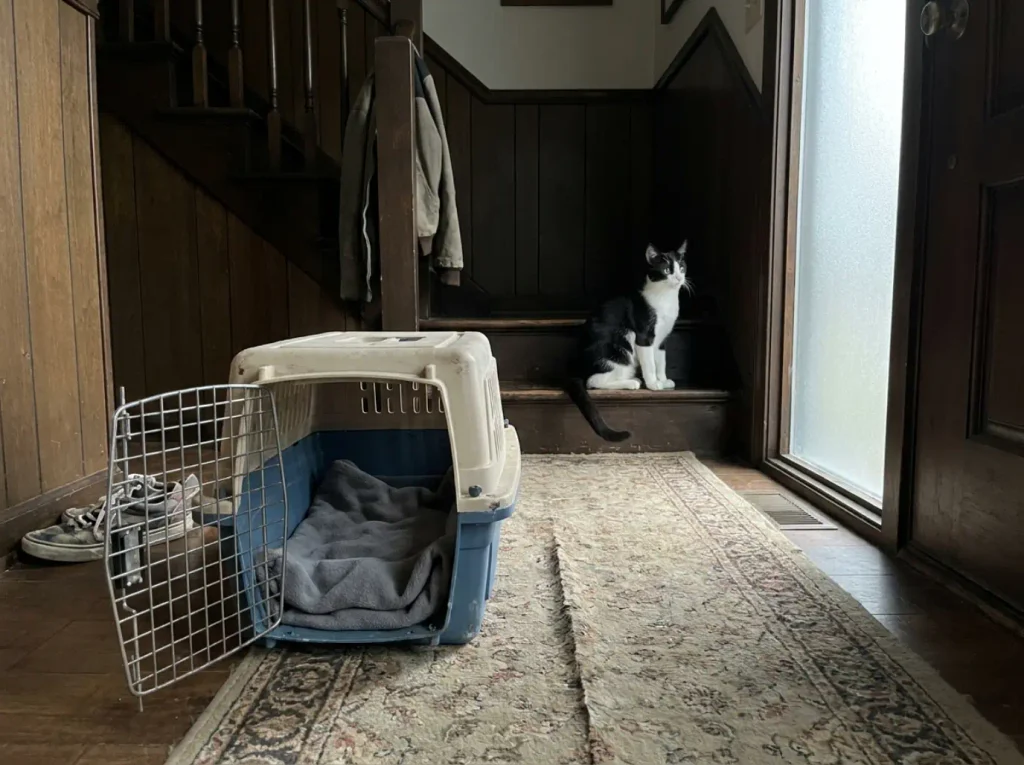
This section is second on purpose. Someone watching their cat get thinner should not have to read four sections about dishes before reaching the one paragraph that helps, and burying it at the bottom as a closing disclaimer is how most of the internet handles it.
Everything else on this page is about a cat who still wants to eat. That is the entire scope. Once a cat stops coming to food, or eats visibly less than he did a week ago, or drops weight, the bowl is no longer the interesting variable and no dish you buy will change the outcome.
The bar veterinarians use is refreshingly plain: get prompt attention if eating behavior changes significantly, or if the cat is losing weight. Not “monitor for a while.” Not “try a few things first.”
Still approaching the bowl and eating, just awkwardly, keep reading. Stopped approaching, eating noticeably less than last week, or losing weight, call the vet today. That is the whole rule, and it does not need the rest of this section to work.
The reason to take that seriously is that several unrelated conditions produce very similar scenes in the kitchen. Dental disease, oral tumors, kidney disease and gastrointestinal illness can all look like hesitation at a bowl to someone standing in a doorway watching. Which one, what it means, and what to do about it are all questions for someone who can examine the cat. This article names that they exist and stops there, because guessing between them from a description of mealtime is not something anyone should do, including me.
There is also a practical reason the order matters here rather than at the end. The test in the last section runs three days.
Three days is free if your cat is eating. Three days is not free if he is not. That is the only justification this section needs for sitting where it sits.
And the thirty-second thing worth doing while you decide: write down, on your phone, the date you first noticed the change. It is the first question you will be asked, it is the one nobody remembers accurately under pressure, and a cat’s habits blur together at about the two-week mark.
The Five Signs, Split Into the Two That Matter
Every list of these signs on the internet presents five bullets in a row, evenly weighted, as though they all point the same direction. They do not. Two of them describe a cat who is eating and has invented a workaround. Three of them need a second look before you trust them, and one of those three usually turns out to be about a completely different problem.
The sorting rule is the one from the last section, applied per sign: does this behavior describe a cat who still wants the food?
- Sign 1 — Pacing in front of the bowl. He approaches, stops, doesn’t lower his head, circles, comes back. Group: still eating.
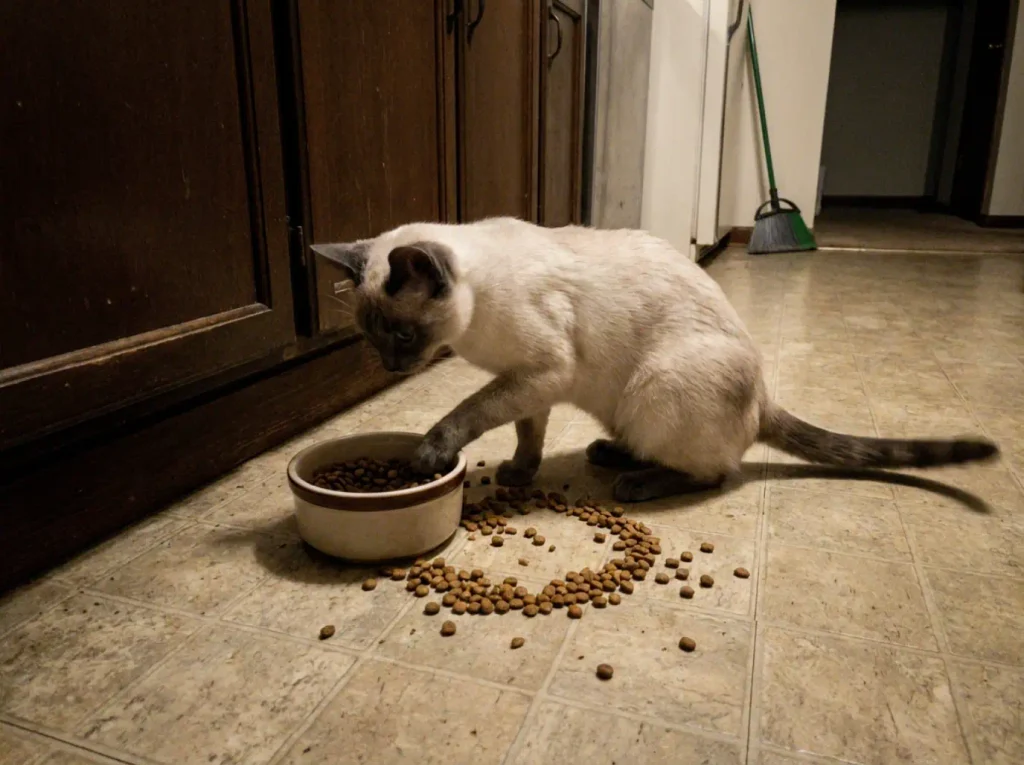
- Sign 2 — Pawing food out and eating it off the floor. The most telling of the five, because he has already solved it himself. Group: still eating.
- Sign 3 — Eating the center and leaving the rim. The one nobody checks, and the only one you can verify without the cat present. Group: needs a second look.
- Sign 4 — Acting hungry but not eating. He asks, arrives, shows interest, disengages. Group: needs a second look.
- Sign 5 — Tension with another animal at mealtimes. Listed everywhere as a whisker sign. It usually isn’t one. Group: needs a second look.
The Two Signs That Say He Still Wants the Food
Pacing is the one people describe first, and it is genuinely useful as long as you watch what his head does rather than his feet. A cat who is deciding whether he likes the food sniffs from a short distance and leaves. A cat who is deciding whether he can reach the food gets close, lowers his head toward the dish, lifts it back out without taking anything, and repeats. The second version is a cat running into a wall he cannot describe to you.
Sign 2 is the strongest evidence on this list and the most misread. Pawing food out of the bowl and eating it off the floor gets treated as a mess to be corrected, when it is a cat solving a geometry problem in front of you. He has moved the food to a surface where nothing touches his face while he eats.
That is not a bad habit. That is a workaround, and it tells you more about the dish than any other single thing he does. Worth separating from cats who shove the whole bowl across the floor before they eat, which is a related behavior with its own set of causes.
Both of these describe an animal who has not lost interest in dinner. He is negotiating access to it. That is a very different animal from one who has gone quiet about food altogether.
The Three That Need a Second Look
Sign 3, eating from the center of the bowl and leaving the ring of food at the rim, is the most checkable thing in this entire article and gets a section of its own below, because it is the one observation nobody publishes and everybody can run tonight.
Sign 4 is where the language matters. Acting hungry but not eating is the phrase that circulates, and it describes a specific sequence: he asks, he arrives, he engages, he disengages. Every step of that requires him to want the food.
Real appetite loss looks nothing like it, because the cat never starts the sequence. He does not come.
Those two get written down identically by worried owners at eleven at night, and they are not the same observation at all.
Sign 5 is the intruder. Getting tense or pushy with another animal at the bowl appears on every whisker-fatigue list, inherited from list to list without anybody stopping to ask what whiskers have to do with a second cat. The honest answer is usually nothing, which is why it gets its own section next.
Ranked by how much work each one saves you: signs 2 and 3 confirm themselves and need no interpretation. Signs 1 and 4 want three or four separate viewings before you trust the pattern, because a cat who is simply not hungry yet looks identical once. Sign 5 usually leads somewhere else entirely.
The Two Signs That Usually Aren’t the Bowl at All
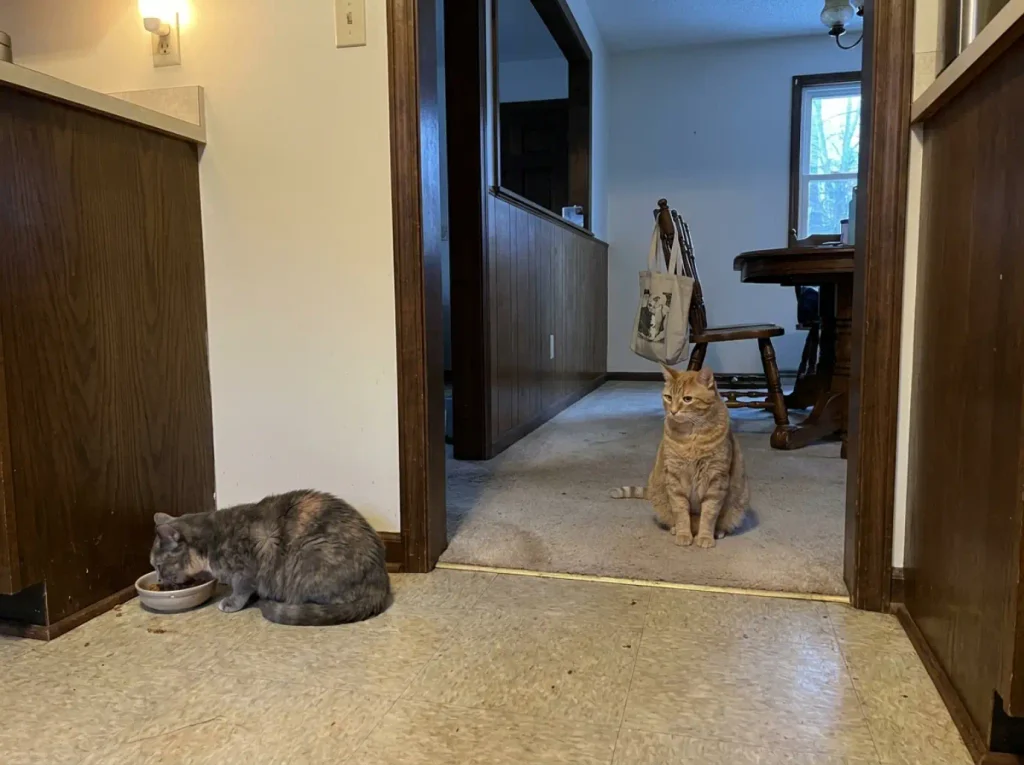
This is where the whole thing breaks for most people. Three bowls into the project, nothing has changed, and the reason is that the problem was never on the table. It was in the room, sitting in the doorway, watching.
The Food Ring, and How to Read It
The trick with sign 3 is that you stop watching the cat. Wait until he walks away from a meal, then go look at the dish itself, within a minute or so before anything settles.
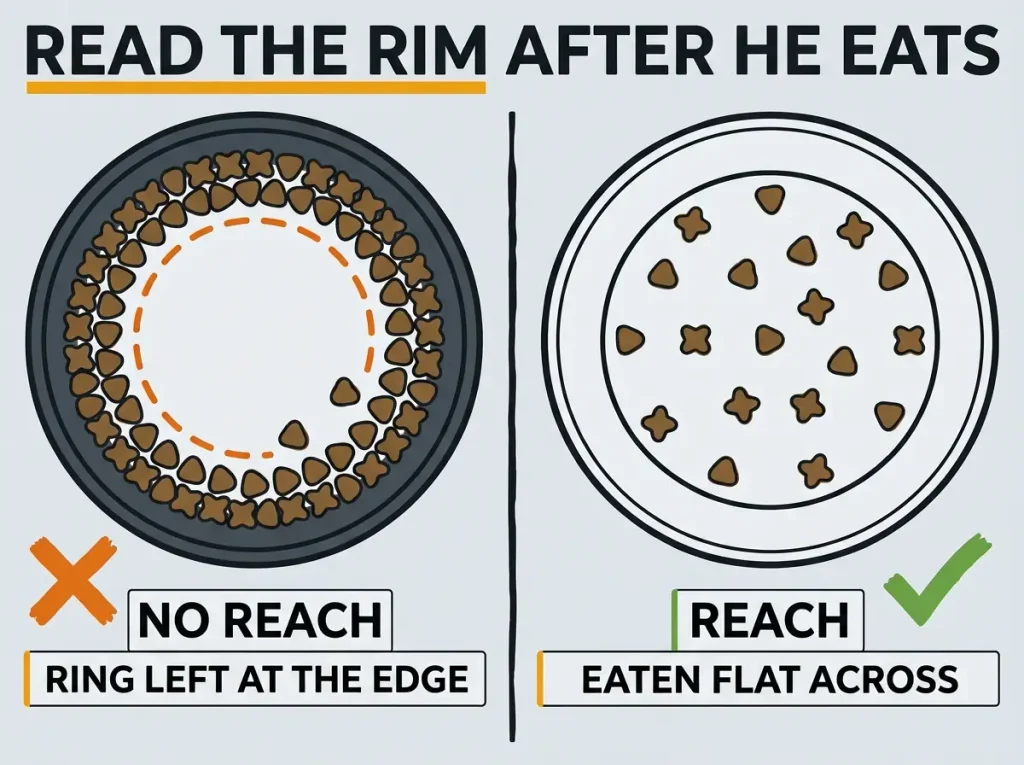
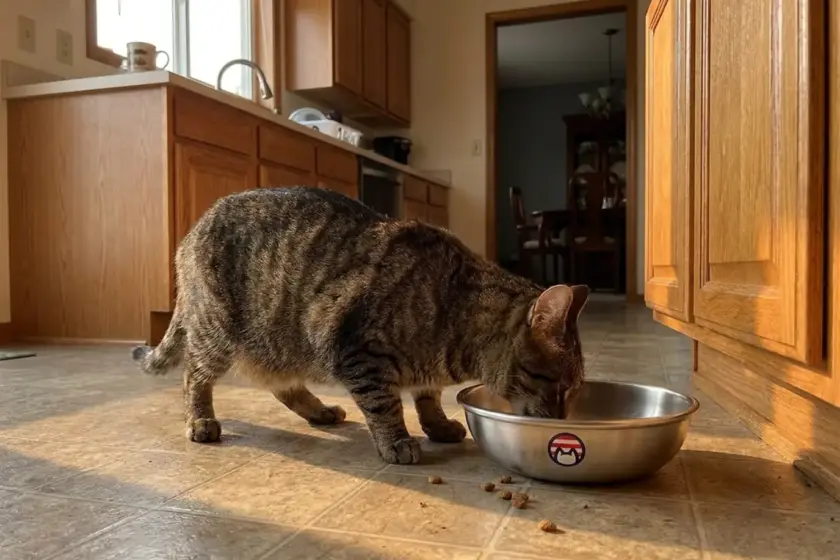
A clean center with an intact ring of food around the perimeter tells you where his face stopped. He ate to the limit of where his head could go without his whiskers pressing the wall, and then he was finished, regardless of how much food was left. Food eaten evenly across the whole dish, or eaten right down to the edges, means width is not what is stopping him and you can drop that hypothesis and move on.
The food ring is not a perfect instrument. A cat who eats half his portion and comes back later leaves something that looks similar, so run it three or four meals rather than once. But it is free, it takes half a minute, and it is the only sign on the list you can read after the fact, without standing in the kitchen hoping to catch the moment.
Tonight, after he walks away from dinner, go look at the bowl before you touch it. Clean middle, ring at the edge, that is a width problem. Eaten flat across, or eaten to the rim, the dish is not what is stopping him. Same portion, same bowl, four meals running, and you have your answer without buying anything.
When the Second Cat Is the Whole Answer
Sign 5 gets filed under whiskers and it belongs somewhere else. Resource guarding at the bowl is a problem of access rather than aggression, and that phrasing does a lot of work: one cat can control a feeding spot with position and eye contact alone, without a single scuffle happening. Nothing to see, nothing to hear, and a person standing five feet away sees only that their other cat keeps approaching the bowl and backing off.
Which is exactly what a bowl problem looks like. Same pacing, same hesitation, same untouched food, same cat who seems hungry an hour later. The difference is that the cause is standing in the hallway, and no dish on Amazon addresses it.
Bowl articles file this as a footnote, and the cat forums explain why it should not be one: the threads that end well are full of people who bought a third dish, watched the pacing carry on unchanged, and found the answer was a doorway. In a multi-cat household, this hypothesis gets tested first, before the bowl, because it costs nothing and resolves in one meal. Feed them in separate rooms, out of each other’s line of sight, and watch whether the pacing simply does not happen.
This is not a fringe opinion. The AAFP and ISFM’s feline environmental needs guidelines recommend a separate feeding station for every cat in the household, with food and water kept apart from one another, and each cat given a choice of at least two places to eat. Not a preference. A published veterinary consensus on what cats need from their environment, which the full one feeding station per cat, plus a spare rule builds on properly.
And in a small apartment this does not require space. It requires line of sight. Opposite walls in one room, or two rooms with a corner between them, does the same job as a house with more square footage. What you are removing is the ability to watch, not the distance.
The Three-Day Test, and What to Switch To if It Works
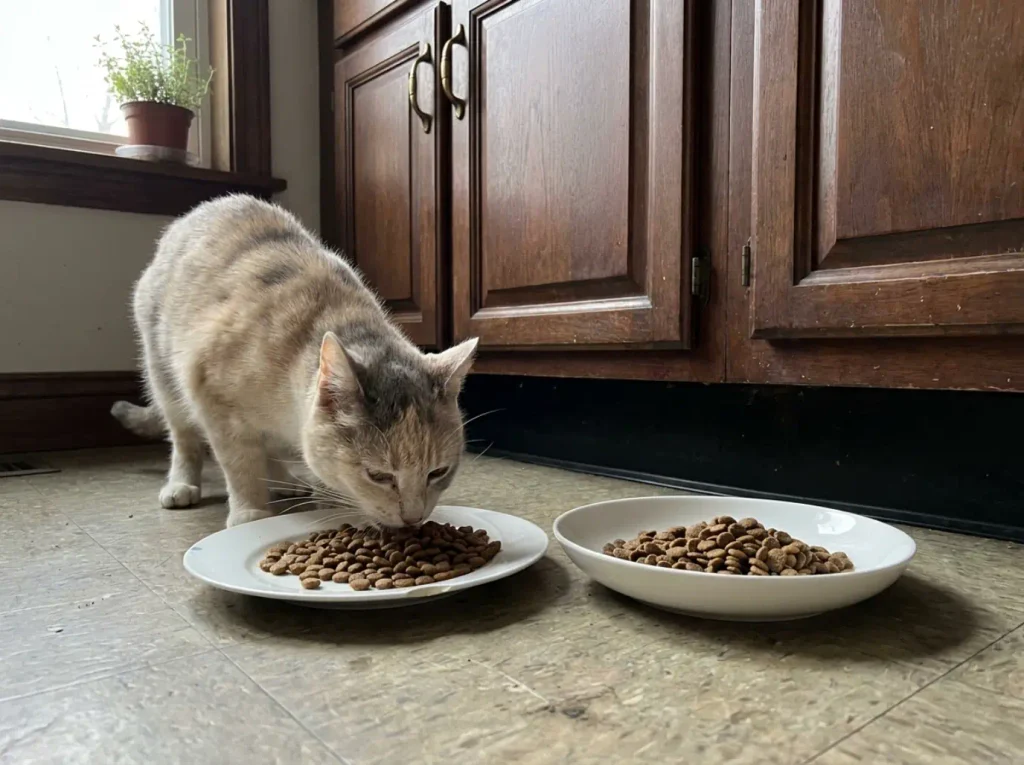
Every source on this subject lands on the same closing advice: try a whisker-friendly bowl and see how it goes. No duration, nothing to compare against, no definition of what “it worked” would even look like. That is not a test, it is a purchase with a good feeling attached.
Three Days, One Plate, Same Time Each Day
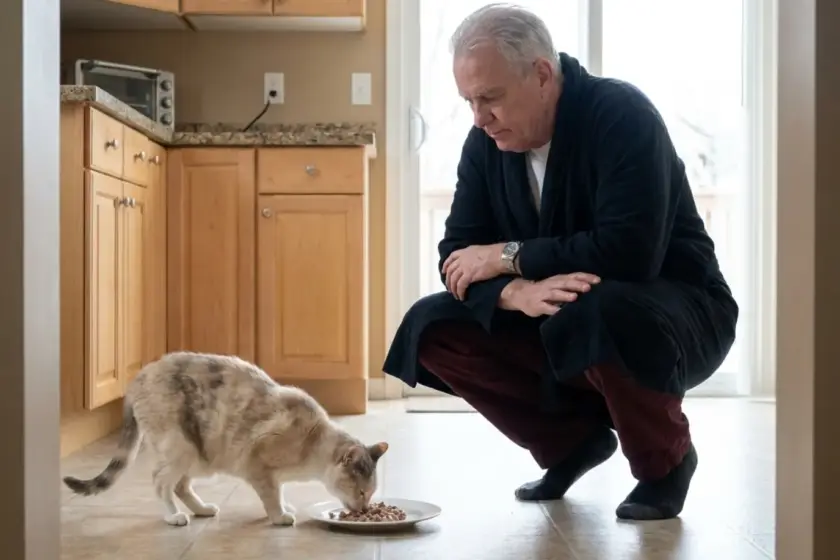
Take a flat plate or a saucer from your own kitchen. A side plate works. Put it next to the current bowl, both with the same food, at the same meal, and let him pick.
Three days, not one meal. A cat will try the new thing on day one purely because it is new, and that first-day result tells you nothing at all. What you are reading is day three, once novelty has worn off and he is choosing on the merits. Run it at the same meal each day too, because a cat’s appetite at seven in the morning is not the same animal as at nine at night, and comparing across times will hand you noise instead of a result.
The read-out is simple. Consistent choice of the plate across all three days is a real signal. Alternating, plate one day and bowl the next, is not a result. It is a cat with something else on his mind, and if you have a second cat, that is your cue to go back to the previous section, because this is what the guarding pattern looks like from the kitchen.
That’s it. No purchase, three days, an actual answer.
What to Switch To if the Plate Wins
If the plate wins consistently, what changed is the shape, not the brand or the food. You are trading a deep bowl for a wide bowl, so his face goes in without the sides touching. The exact width and where that number comes from lives in the width a bowl actually needs, and why the food bowl and the water bowl don’t match, which does the derivation properly rather than repeating it here.
The honest thing to say first is that if the plate from your own cabinet is working, you are already done. A dessert plate has the correct geometry, cost you nothing, and goes in the dishwasher. Everything below is the tidier version of a thing that already works, not a requirement.
For the tidier version, the Ceramic Cat Food Bowl Set is four wide, shallow food-grade dishes, which is the same shape your plate test just validated with a rim low enough to stay out of the way. Four is more than anyone needs at once, though that stops being a downside the moment one chips, and ceramic will crack if it goes onto a tile floor from counter height.
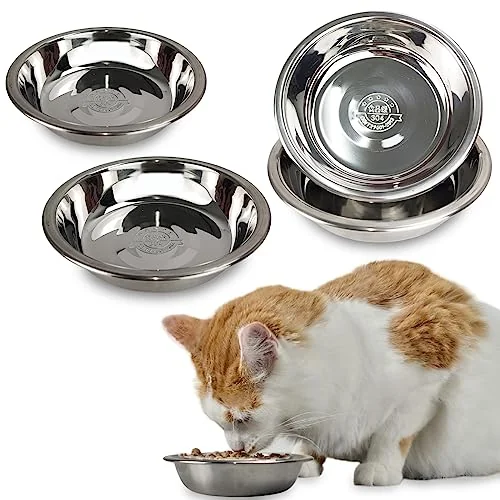
If you would rather not have ceramic near the floor, steel does the same job. The 4 Pcs Stainless Steel Cat Bowls run 5.5 inches across and shallow, which is the minimum width this blog’s own bowls guidance sets, and steel sidesteps the surface-crazing question ceramic eventually raises. They are light, so an enthusiastic eater can push one around a smooth floor.
One separate case, and it has nothing to do with whiskers. The CEEFU Extra Wide Elevated Ceramic bowl is 6.2 inches and shallow like the others, but raised, which matters for an older cat or one who finds bending to the floor uncomfortable. That is a neck and shoulder benefit, not a whisker one, and it is worth knowing only if that describes your cat.
Swap the dish the way you would change anything else he has an opinion about, which is slowly and with the old one still available for a few days. The full week-long version of this swap, done slowly has the calendar for it.
What to Do Tomorrow
Look at the rim of the bowl after his next meal. It is the cheapest check in this article, the only one that works without the cat in the room, and it either points at the dish or clears it in under a minute.
If you have two cats, feed them separately for one meal before you change any bowl. Different rooms, or opposite walls with no line of sight between them. It costs nothing and it rules out the single most confused cause on the whole list.
And if he has stopped coming to his food, or he is losing weight, none of this is about a bowl. That call is for today.
Three weeks out, check whether the pacing is gone or just quieter. This is a behavior, not a piece of equipment wearing down, so three weeks is long enough for a real change to show and short enough that you are not living with the problem while you wait. Gone entirely means you found it. Reduced but still there means go back to the section about the other cat, because something is still watching him eat.
If the flat plate from your own cabinet wins three days running, you just answered the question for free, and you know exactly what to buy if you ever want the tidier version.
Amazon’s Audible — free for 30 days
Your cat won’t let you read. Let someone read to you.
Audible is Amazon’s audiobook library — thousands of titles, read out loud, on your phone. Free for a month, plus one audiobook to keep forever.
Frequently Asked Questions
01Can you fix whisker fatigue?
There is nothing to treat, because the change is to the dish rather than to the cat. A wider, shallower bowl or a flat plate removes the contact, and cats who were pacing usually stop within a few days. If your cat has stopped eating rather than eating awkwardly, that is a vet visit, not a bowl swap.
02How can I tell if my cat is stressed at mealtimes?
Watch the thirty seconds before he eats, not while he eats. A cat who approaches, stops short, and looks around the room is reading the situation, often another cat. A cat who lowers his head and then lifts it away is reading the bowl.
03Can a cat get over this on their own?
Not while the bowl stays the same, because the cause is still there at every meal. What cats do instead is work around it, pawing food onto the floor, eating only the middle, or eating less often. Those workarounds are the signs, which is why they are worth reading rather than correcting.
04Do whiskers grow back if they break?
Yes, whiskers shed and regrow like other hairs, and finding one on the floor is normal. They should never be trimmed, because they are how a cat measures the space in front of its face, and cutting them takes that away for weeks.
05My cat only does this with dry food. Does that mean anything?
It usually means the shape of the dish, not the food. Dry food sits in a deeper layer and pushes the cat’s face further into the bowl to reach it, so the same dish that is fine for a wet-food smear is not fine for kibble. Run the same flat-plate test with the food he actually refuses.

Leave a comment