Best Quiet Automatic Litter Box for Thin Apartment Walls
Tested quiet automatic litter boxes span 34 to 41 dB (PETKIT, Litter-Robot 4, Neakasa M1) — here's what each number means through a thin apartment wall.

Alfredo RamsesFounder · August 25, 2026 · 24 min read

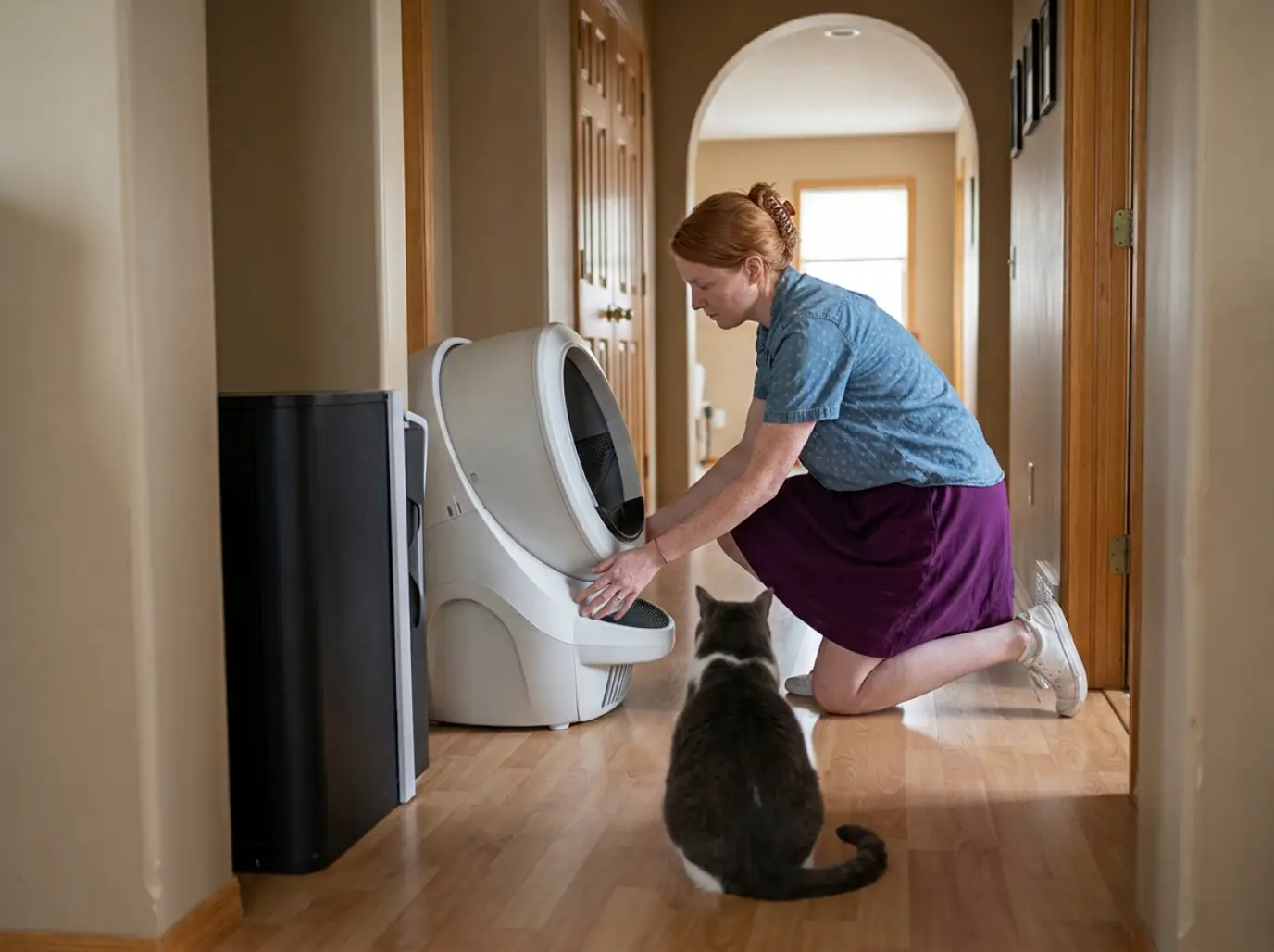
On this page9 sections
- 1What "Quiet" Actually Means in Decibels
- 2The Two Different Kinds of Quiet
- 3Fix the Box You Already Own First
- 4The Quiet Picks, and What Each One Gives Up
- 5The Two Settings That Do More Than the Decibel Rating
- 6Where the Box Goes in an Apartment With Thin Walls
- 7Why Two Cats Change the Answer
- 8Conclusion
- 9Frequently Asked Questions
The box did exactly what you paid it to do. At 3:04 a.m. the motor spins up on the other side of the bedroom wall, and now you are awake, doing the math on whether you can go back to sleep before the cycle finishes. Or the other version of the same night: you sleep straight through it and the cat doesn’t, and a week later he is going next to the box instead of in it.
The models people call quiet cover a real spread, roughly 34 to 41 decibels on the same test, and in a small apartment that gap is much bigger than seven numbers make it sound. Here is what the best quiet automatic litter box actually needs to hit as a number, the free fixes that come before any purchase, which units hold up, and why a second cat changes the answer completely.
Quick Answer
Four things decide whether you hear the box at night.
- Under 40 dB is the bedroom-safe line. Above it, you will hear the cycle.
- Enclosed-drum designs test lowest; open-rake designs test highest.
- A rubber mat and fine clumping clay fix a real share of the noise for almost nothing.
- With two or more cats, how OFTEN it runs beats how loud one cycle is.
What “Quiet” Actually Means in Decibels
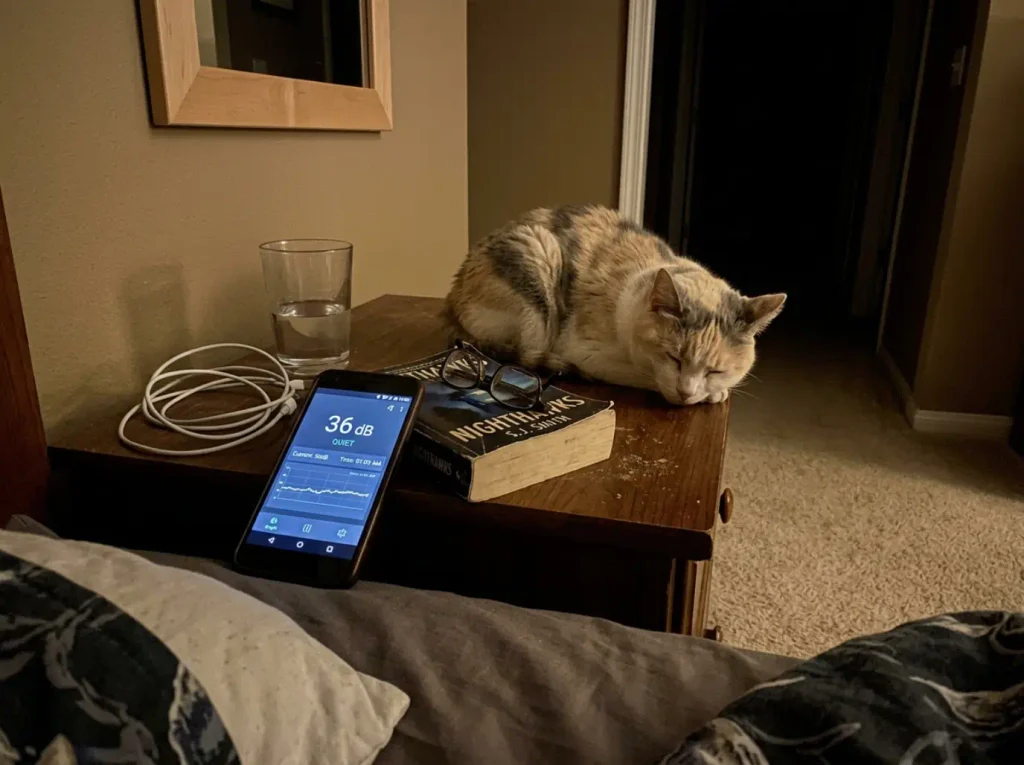
Every listing on the market says quiet. Nobody who has bought one of these twice still believes the word. The useful move is to stop reading adjectives and start looking for a number, because there is a real threshold underneath all of it, and once you know it you can sort the entire category in about four seconds.
Three bands, and they are worth anchoring to sounds you already know. Under 40 dB reads as quiet: a whisper sits around 30, a decent air purifier on low around 35. 40 to 48 dB is moderate, the range where a fridge compressor kicking on registers as a thing you noticed. 48 to 60 dB and up is loud, with a normal conversation sitting at 60. An automatic box at the top of that third band is not a background appliance. It is an event.
If you are still deciding whether an automatic box is the right call for your household at all, that decision comes before this one, because a manual box is silent and costs nothing to keep silent.
The Three Noise Bands, and Where a Bedroom Sits
A bedroom needs the first band. Not the top of it, either. The reason is that the room already has a noise floor of its own, and a cycle only wakes you when it rises meaningfully above that floor. A box that measures 36 dB in a room whose baseline is 35 disappears. The same box in a very quiet room with a sleeping person in it does not.
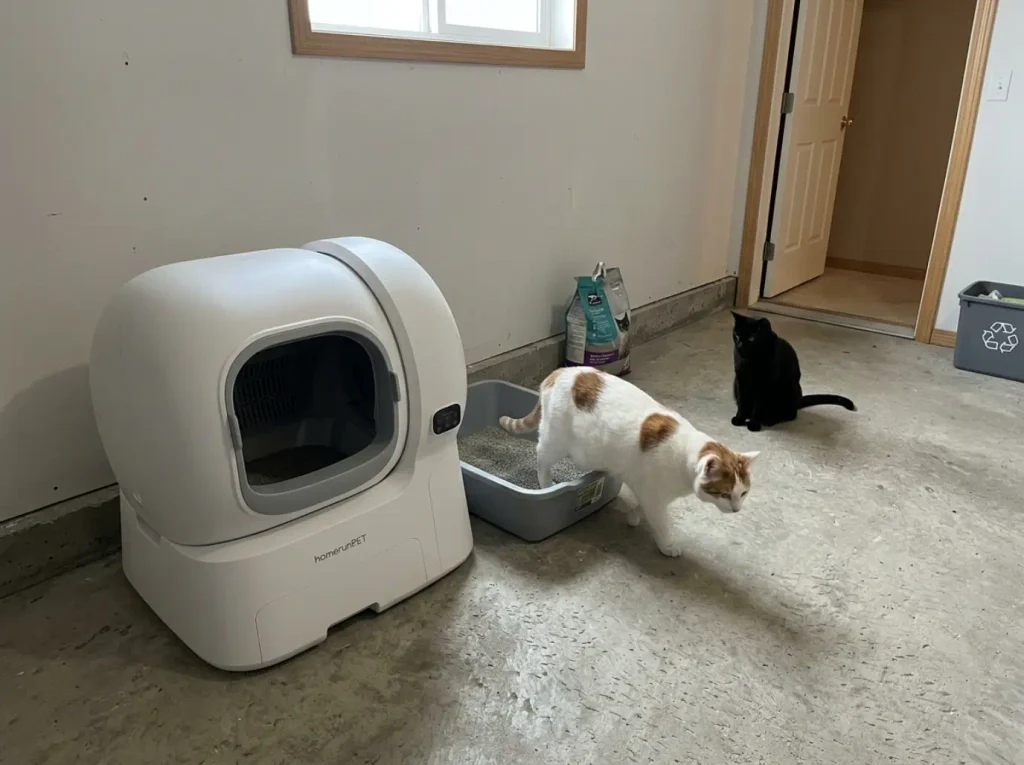
Here is where the actual measured units land. PETKIT‘s Pura Max 2 line tests around 34 dB. The Litter-Robot 4 comes in around 36. homerunPET‘s large-chamber CS106 measures roughly 38.8 dB. The Neakasa M1 sits at about 41, which puts it just over the line into moderate. All four readings come from tests at one meter on a hard floor, which is the harshest surface you can measure on.
One thing worth flagging before you shop on that first number. The 34 dB figure belongs to the Pura Max 2, a sibling of the Purobot Max Pro 2 recommended further down. Same motor family, same soft-start behavior, but it is not that exact SKU, and nobody should pretend otherwise. That is the difference between a spec and an inference, and this article does not blur the two.
Why the Same Box Measures Differently in Two Apartments
A decibel number without a test distance attached is not data. It is copywriting. Noise measured at two meters reads noticeably lower than the same cycle measured at one, and there is no rule saying a manufacturer has to tell you which one they used. When a page gives you a number with no distance and no ambient condition, you have been handed a marketing figure wearing a lab coat.
The floor does the rest of the damage. Hard floors amplify the resonance of a motor housing, tile especially. Carpet absorbs it. A box on bare tile against a bedroom wall is a drum with a timer; the same unit on a rug is a different machine, and the spec sheet is identical in both cases. Two people can own the same box, both be honest, and disagree completely about whether it is quiet.
Measure your own room before you shop, not after. A free phone sound-meter app, held where your head goes at night, gives you the floor you are starting from. If the room already sits at 38 dB with the fridge running and the window cracked, a 36 dB box is inaudible in it and you can stop optimizing. If the room reads 28, you need the top of the quiet band and you need the delay timer too.
The Number a Spec Sheet Leaves Out
The listing that gives no number at all has told you something, and it is not flattering. Sellers publish the specs that help them. A dB figure is cheap to measure and easy to print, so when it is missing from a page that uses the word “whisper-quiet” three times, the most economical explanation is that the number would not have helped.
What almost no listing publishes is the peak. Every quoted figure is an average across the cycle, and the complaint that shows up over and over in owner threads is never that the box is loud in the afternoon. It is the brief spike at 3 a.m. An average smooths that spike out of existence. Your sleep does not.
The Two Different Kinds of Quiet
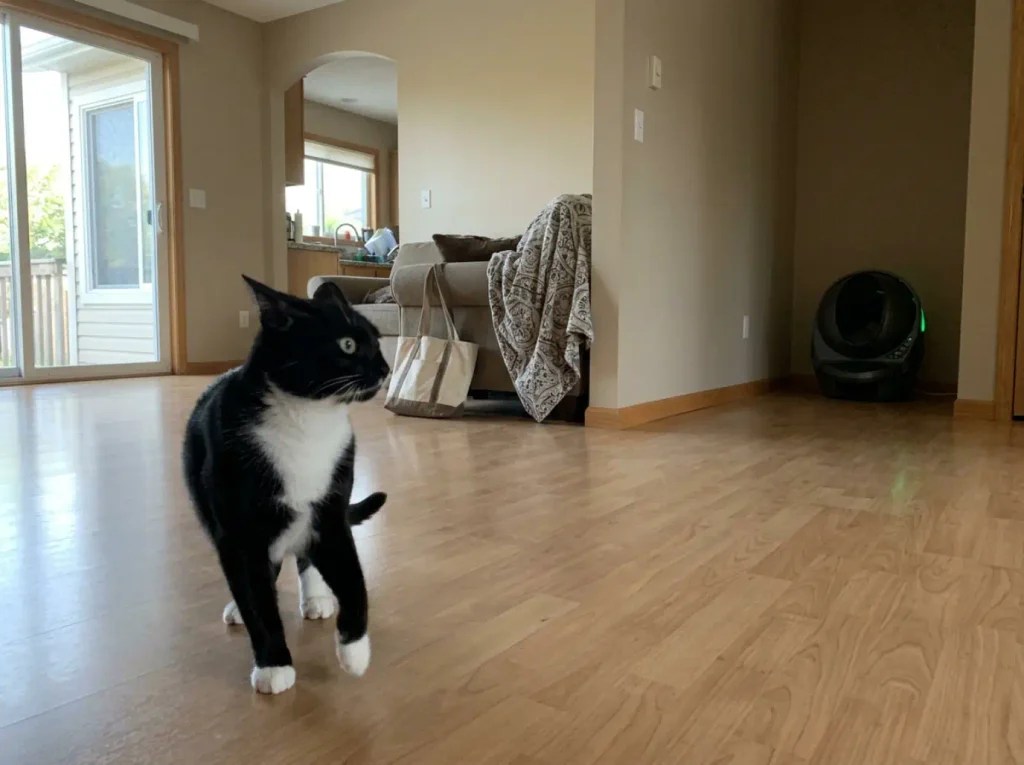
Your neighbor swears by the box your cat abandoned. Both of you are telling the truth. You were measuring different things, and no single dB number measures both of them, which is why this section exists and why almost nobody writes it.
There is quiet enough that you sleep through it, and there is quiet enough that the cat keeps using the box. The first is about volume. The second is about onset, and onset is the part the average throws away.
Why the Average Hides the Sound That Matters
A cat does not respond to a mean. It responds to something starting suddenly, close by, while it is squatting in the one place in the apartment where it is least able to run. A unit that ramps up smoothly at 38 dB is calmer to a cat than one that snaps on at 36, even though the second one wins the spec comparison. Timid and older cats specifically refuse boxes that produce sudden sounds, and units with slow-start motors and a consistent low hum show better adoption among nervous cats.
So the two bars can point in opposite directions. The quieter box on paper can be the worse box in the apartment, and you would never catch it by comparing numbers.
What Makes a Cat Quit a Box It Was Already Using
The failure story is not the cat refusing on day one. That version is easy, obvious, and you fix it by slowing down. The version that actually happens goes like this: the box works beautifully for a week or two, the cat is completely at ease with it, and then one time the cycle fires while he is still standing there or has just stepped out. That is one event. After it, he stops.
He is not being fussy about it either. A machine that moves without warning, in the exact spot where he is most exposed, is a real reason to stop trusting that spot. That is a constraint he is describing, not a preference he is expressing, and the constraint is not the negotiable half. Your preference about where the box lives is what gets negotiated.
Manufacturers know this, which is why Litter-Robot’s own onboarding tells you to run the first cycle with the cat present and nearby rather than letting him discover the sound alone. Skipping that step is one of the more reliable ways to end up with a cat who has opinions about your new appliance, and a young or skittish cat needs a longer adjustment period than the manual suggests.
One boundary worth naming here. A cat that suddenly stops using a box he was perfectly happy with, with no startling event you can point to, is a vet visit before it is a machine problem. Everything in this article assumes that has already been ruled out. Back to the machine.
Soft-Start Motors, and How to Spot One
Nobody labels a motor “soft-start” on the box. What you can look for is the motor class, because it correlates. Brushless sealed motors run roughly 10 to 15 dB quieter than open gear-driven ones, and the reason is physical: carbon brushes create friction, friction creates a high-frequency whine, and a sealed housing contains what is left. If a listing does not say brushless, assume gear-driven and assume it grinds.
That single spec predicts noise better than price does. Which is a strange thing to be able to say about a category where the price spread is enormous, and it is the most useful sentence in this section.
Fix the Box You Already Own First
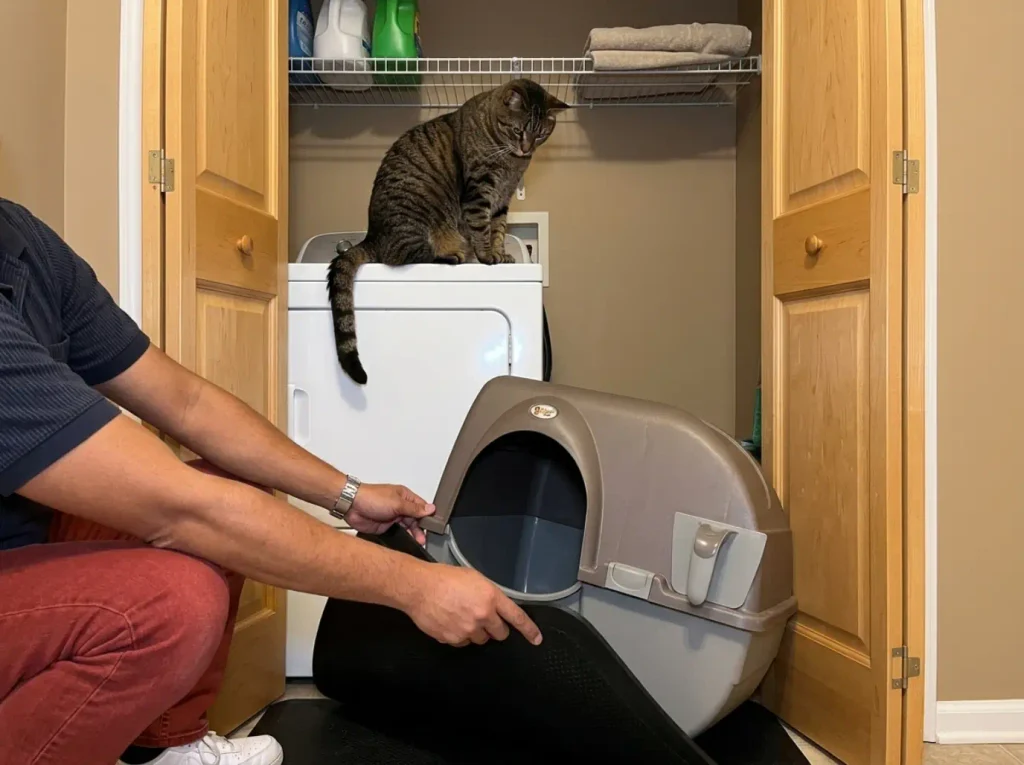
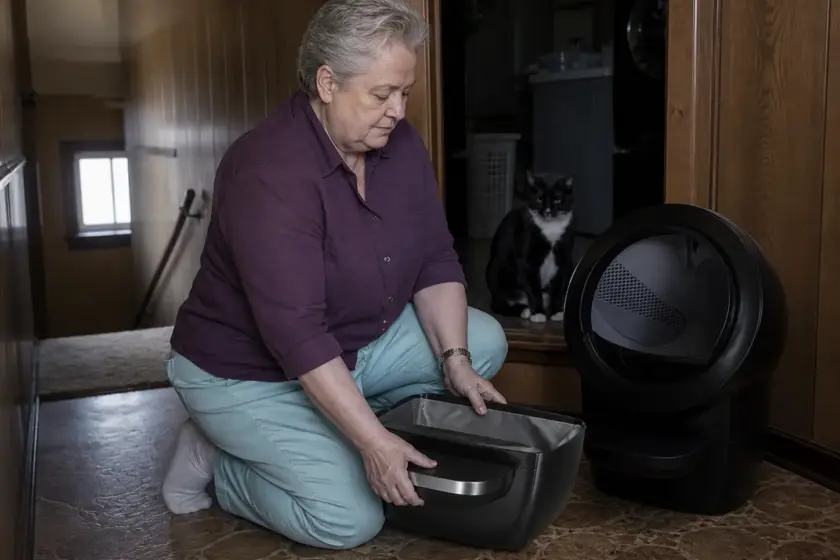
Nobody wants to hear “buy a second one” when the first one cost what it cost. So before any of that: there are four things you can do this weekend, three of them free or nearly, and for a real share of readers they are the entire fix. The box is fine. The setup is the problem.
The Mat, the Litter, the Fill Line
In order of payoff. A rubber anti-vibration mat underneath the unit is first, and it is not close. On hard floors it reportedly cuts perceived rumble by 20 to 60 percent, because most of what you hear through a wall at night is not the motor itself but the motor’s vibration transmitting into the floor and coming back as low-frequency rumble. Break the coupling and you remove most of the transmission.
Switch to fine clumping clay second. A meaningful share of cycle noise is litter moving, not machinery moving, and coarse crystal, tofu and pellet litters rattle and scrape their way through a sifting mechanism in a way that fine clay simply does not. It is a same-day fix with a product sold in every grocery store. Litter type gets treated as an odor-and-tracking decision almost everywhere. Enough owners describe a box that got quieter after a litter change, with nothing else altered, that it belongs on the noise list too.
Then the fill line. Litter piled above the max mark forces the mechanism to push more mass on every cycle, and a motor working harder is a motor working louder. Tighten the side panels monthly while you are in there, because loose clips amplify vibration in a way that is invisible until you have fixed it. That’s the whole list.
What the Floor Under It Is Doing
Hard floor versus carpet is the single biggest free variable in this entire article, and it costs a rug. Tile against a shared bedroom wall is the worst case available to you: the surface amplifies, the wall transmits, and the box has done nothing wrong. Carpet, or a rug with a mat on top of it, changes the sound the box makes before the sound ever reaches the wall.
The mat goes under the whole footprint, not just the front. A mat that catches litter is a litter mat and it does nothing for sound. A mat that stops rumble is a solid rubber slab the box sits on completely, all four corners on it, nothing bridging to bare floor. If one corner is off the mat, that corner is still a speaker.
When the Noise Is the Machine and Not the Setup
Some noise is maintenance. Owners describe the moment the sound changed, and it usually follows a deep clean or a litter switch, which means drift is a symptom before it is a design flaw. Sensors get dusty, a rake picks up a crust, a panel gets reseated slightly wrong. Knowing the parts that need washing on a schedule is what keeps a quiet box quiet in month eight.
But none of this fixes a worn gearbox or a design whose rake grinds by nature. If you have done the mat, the litter, the fill line and the panels and the box is still waking you, the box is the problem and no amount of setup will talk it out of that.
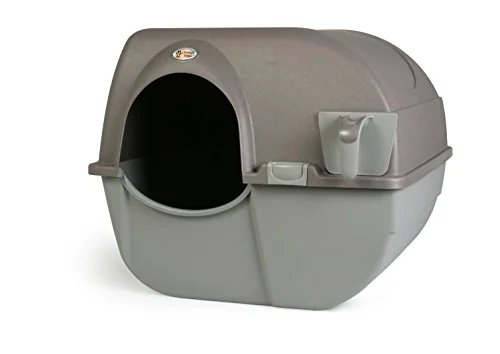
Which leaves one option most roundups skip entirely, and it deserves saying plainly: a manual roll-mechanism box has no motor at all. It is not automatic. It is also silent by construction, because there is nothing in it that can make a sound. If your real problem is a loud box in a studio rather than a scooping problem, that trade is worth putting on the table before you spend on another motor.
The Quiet Picks, and What Each One Gives Up
Everyone ranks. Almost nobody says what you lose. So every pick below gets its number and its catch in the same breath, and where a number does not exist, the cell says so instead of inventing one.
| Box | Tested noise | Mechanism | Best for | The catch |
|---|---|---|---|---|
| PETKIT Purobot Max Pro 2 | ~34 dB on the Pura Max 2 sibling | Enclosed drum, sealed gearbox | A bedroom wall you cannot move away from | Most machine in the room; camera adds parts |
| Litter-Robot 4 with Step & Fence | ~36 dB at 1m | Enclosed drum, brushless | Both timing controls in one unit | Footprint is furniture-sized, 27 x 22 x 29.5 in |
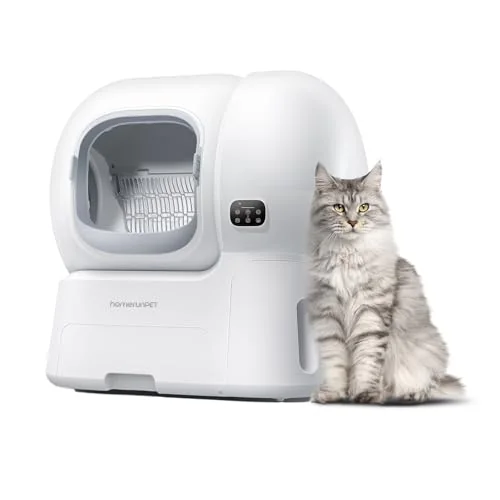
| homerunPET 106L | ~38.8 dB at 1m | Large 106L chamber | Multi-cat homes counting cycles | Big, and stock runs thin |
| Neakasa M1 Plus | ~41 dB at 1m | Open-top gravity sift, no rake | A box that does not share a wall | Audible through a thin wall at night |
| CATLINK Open-X | Not independently verified | Enclosed compact class | Illustrating the compact-enclosed band | No published dB figure to check |
| PETLIBRO Luma | Not independently verified | Open-top class | Illustrating the open-mechanism band | No published dB figure to check |
The last two rows are there to show you the design bands, not to be ranked on a number they do not have. Mechanism sorts these boxes into noise tiers before motor quality enters the conversation: enclosed drums with a large chamber land in the 33 to 40 band, compact enclosed units in 36 to 45, open rake mechanisms in 40 to 50. If you know the shape, you know the neighborhood.
The Quietest of the Tested Units
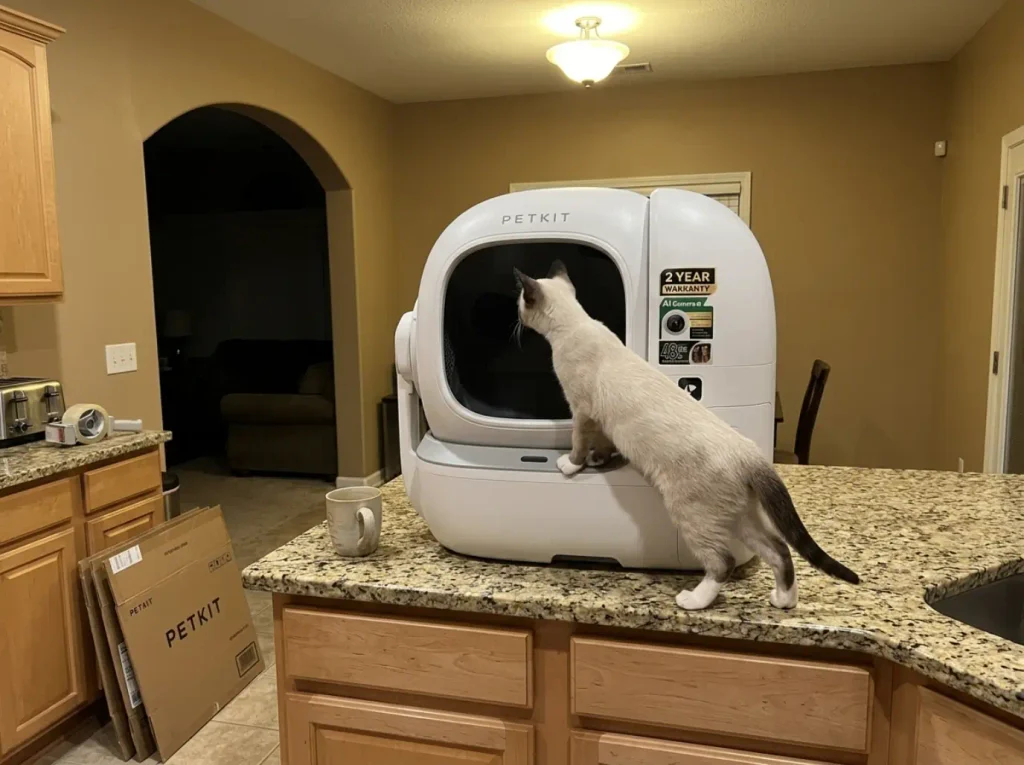
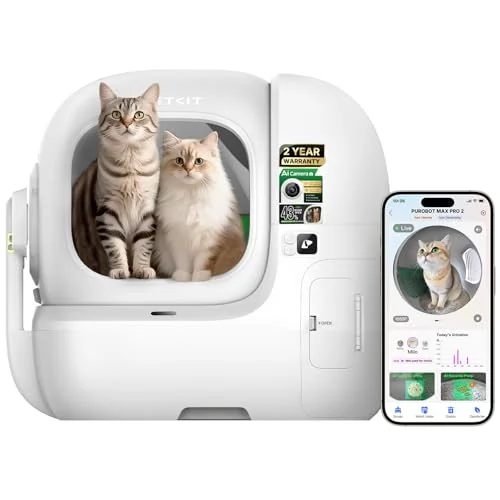
The lowest-testing motor family is the soft-start, sealed-gearbox line, and the PETKIT Purobot Max Pro 2 is the currently available member of it. Both halves of the quiet problem get addressed by the same design choice: the sealed housing contains the motor sound, and the soft start means the cat gets a ramp instead of a snap. For someone whose bedroom shares a wall with the only viable box location, that combination is the one to shop for.
Say the caveat plainly, though. The 34 dB reading belongs to the Pura Max 2, its sibling, and not to this exact unit. Same motor family and same behavior, but that is an inference and not a measurement.
The Reliable Middle, and Its Footprint
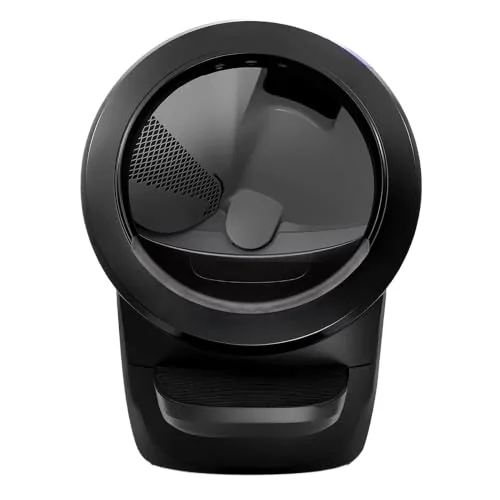
The Litter-Robot 4 tests around 36 dB, sits inside the quiet band with room to spare, and matters mostly because it carries both timing controls that the next section argues are more important than the last two decibels. Sleep Mode is an eight-hour window during which the unit will not cycle at all, and it is a distinct control from Cycle Delay, which is worth reading in the manufacturer’s own description of how the sleep window works rather than from a feature bullet on a listing.
Its catch is physical and there is no talking around it. At 27 by 22 by 29.5 inches this is a piece of furniture, not an appliance you tuck behind a door. In a one-bedroom that footprint is a genuine constraint, and it competes for the same wall your reading chair wanted.
The Budget Option, and What 41 Decibels Sounds Like Through a Wall
The Neakasa M1 Plus is the cheapest of the three benchmarked units, and its design has a genuine advantage that has nothing to do with price: it sifts by gravity, so there is no rake dragging across litter. That removes an entire noise source that the rake-based designs have to engineer around.
And then it tests at about 41 dB, which is over the line. Not dramatically, but honestly over it. Through a thin apartment wall at 3 a.m., 41 dB is a thing you can hear.
The conventional wisdom that the cheap ones are always the loud ones is not quite what is happening here either. Price and quiet do not move together in a straight line: a gravity-sift budget unit can beat a mid-priced open-rake one. It is the mechanism doing the work, not the invoice. Buy this one if the box is going somewhere that does not share a wall with your bed, and skip it if it does.
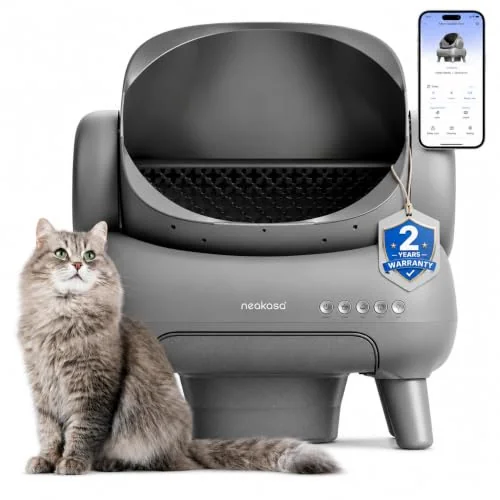
Noise is one axis and it is the one you came for, but it is not the only one that should decide this purchase. Before you order any of them, it is worth reading the two safety risks worth knowing before you buy any of them, because a quiet box that your cat cannot safely use is not a solved problem.
The Two Settings That Do More Than the Decibel Rating
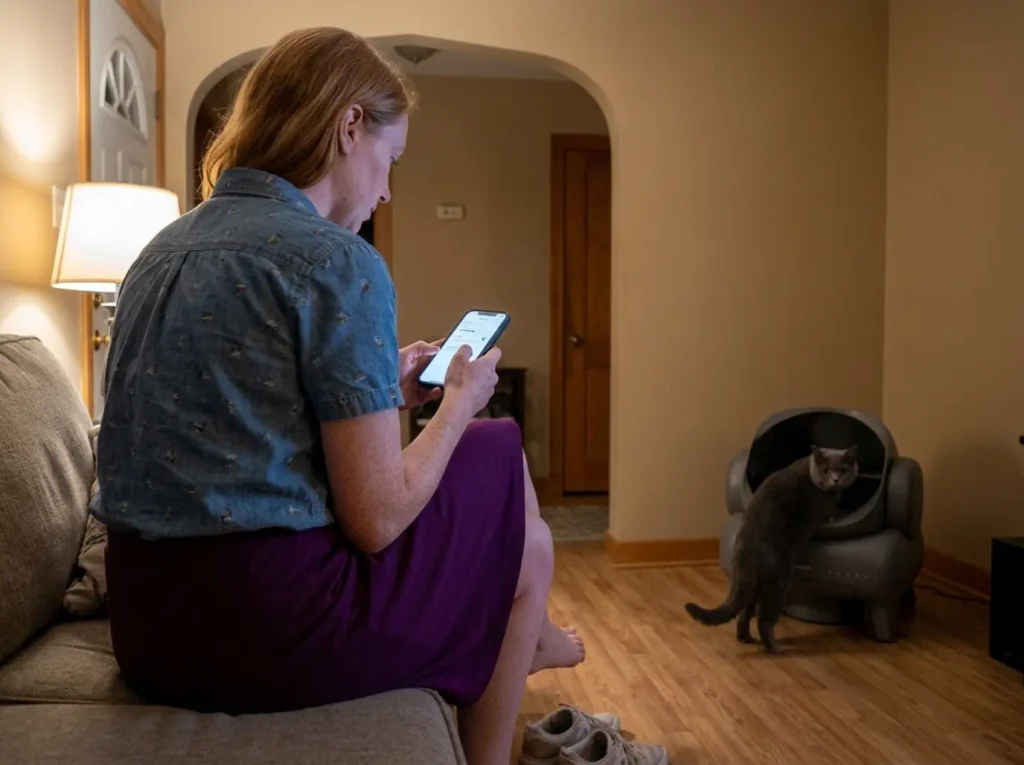
Here is the buying advice that saves you from optimizing the wrong number. A cycle you never hear is quieter than a quiet cycle at 3 a.m., and that is not wordplay. It means a slightly louder box with both timing controls beats a quieter box with neither, every time, and the listings blur the two controls badly enough that most buyers never learn there are two.
Sleep Mode Is a Window, Not a Volume Control
Sleep Mode deactivates the sensor for a set window, typically eight hours, repeating every 24. During that window the box does not cycle at all. It is not a quiet mode and it does not make the motor softer. It is an off switch on a timer.
Cycle Delay is the other one, and it does something completely different: it sets how long the unit waits after the cat leaves before it starts cleaning, usually adjustable somewhere between about 3 and 30 minutes. A box can have one, both, or neither, and a listing that lists “sleep mode” under features tells you nothing about which.
The rule that falls out of this is short. A box without either control is a worse buy than a slightly louder box that has both. You can schedule your way out of 41 dB. You cannot schedule your way out of a box that fires whenever it wants.
What Cycle Delay Does for the Cat
The delay is not only a human feature, and this is the part the listings never explain. A long cycle delay keeps the box still while the cat is still standing nearby, which is the exact event described earlier as the thing that makes a cat quit a box he was already using. Set the delay long and that event stops being possible.
So the setting that protects your sleep and the setting that protects the cat’s trust in the box are the same setting. That is a rare piece of luck in this category, where most trade-offs run in opposite directions.
Set the delay longer than the default, on day one, before the cat has formed an opinion. The factory setting is tuned for a fast clean and a good demo, not for a nervous cat, and the cat’s tolerance is the constraint that decides whether this box gets used at all. You can always shorten it later. Winning back a cat who has already decided the box moves without warning is much harder work.
What You Give Up by Scheduling Around the Night
Sleep mode costs you something, and it is not noise. Waste sits in the chamber for the whole window instead of being cycled away, so an eight-hour overnight block means eight hours of accumulation in a room you sleep near. That is an odor question rather than a noise one, and waste sitting overnight is an odor problem with its own fixes rather than a reason to abandon the schedule.
Worth noticing what that pattern implies. People who solve the night noise permanently usually solved it with a schedule rather than a purchase, which means the setting was always more powerful than the spec.
Where the Box Goes in an Apartment With Thin Walls
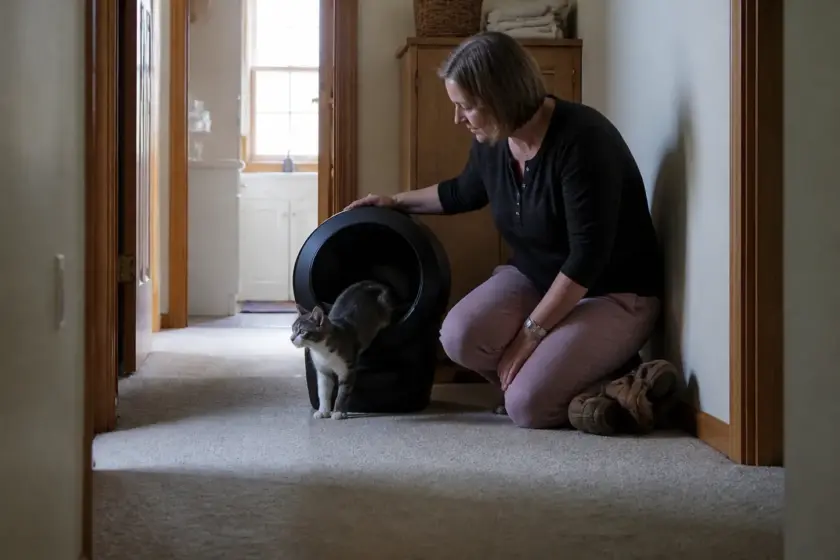
In a one-bedroom there are maybe three places a litter box can physically go, one of them shares a wall with your bed, and one of the other two is wrong for reasons the cat will explain to you later. This is a geometry problem before it is a shopping problem, and the geometry is free.
Distance First, Everything Else Second
Distance beats every other lever here, and it beats them by a lot. Every meter you can put between the box and your pillow does more for your sleep than a two-decibel difference between two models, because sound falls off with distance far faster than manufacturers improve motors. Move the box across the room and you have out-engineered the entire premium tier for free.
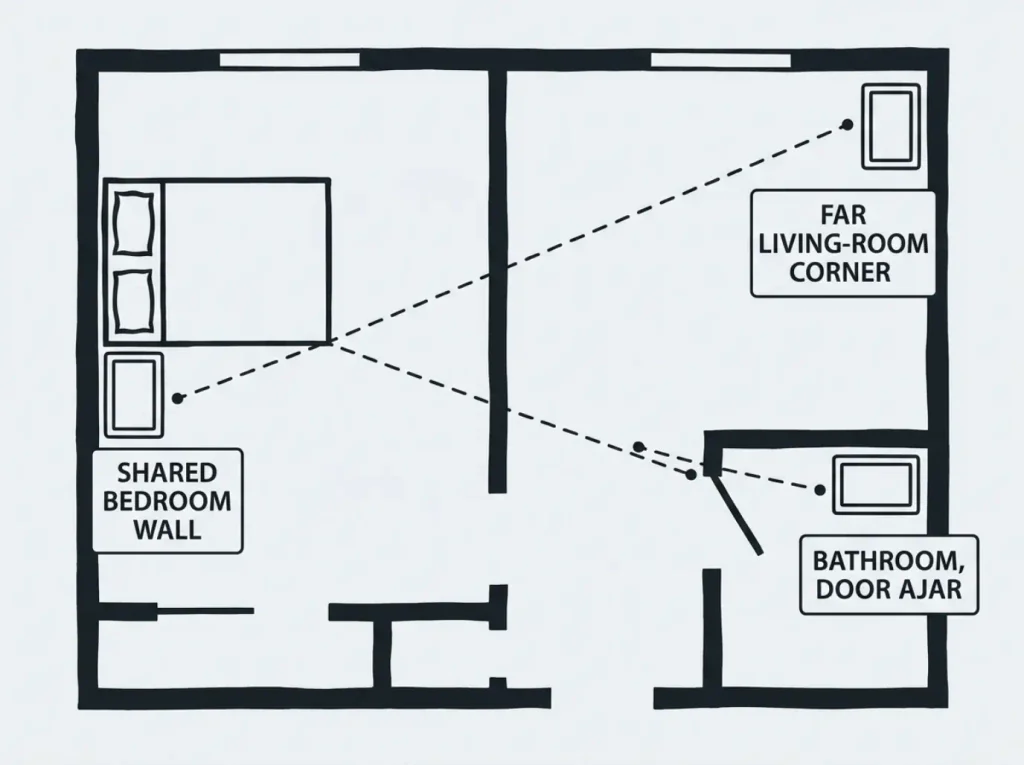
Then the surface, which was covered above and applies double here: carpet or a rug with a mat under it, never bare tile against a shared wall. As for which wall, the sensible general logic is to keep the box off walls your bedroom is on the other side of, and to prefer a corner that backs onto a hallway or a closet instead. Anyone claiming a sourced interior-versus-exterior wall rule for this is going further than the evidence does.
The Closed Door, and Why It Needs a Flap
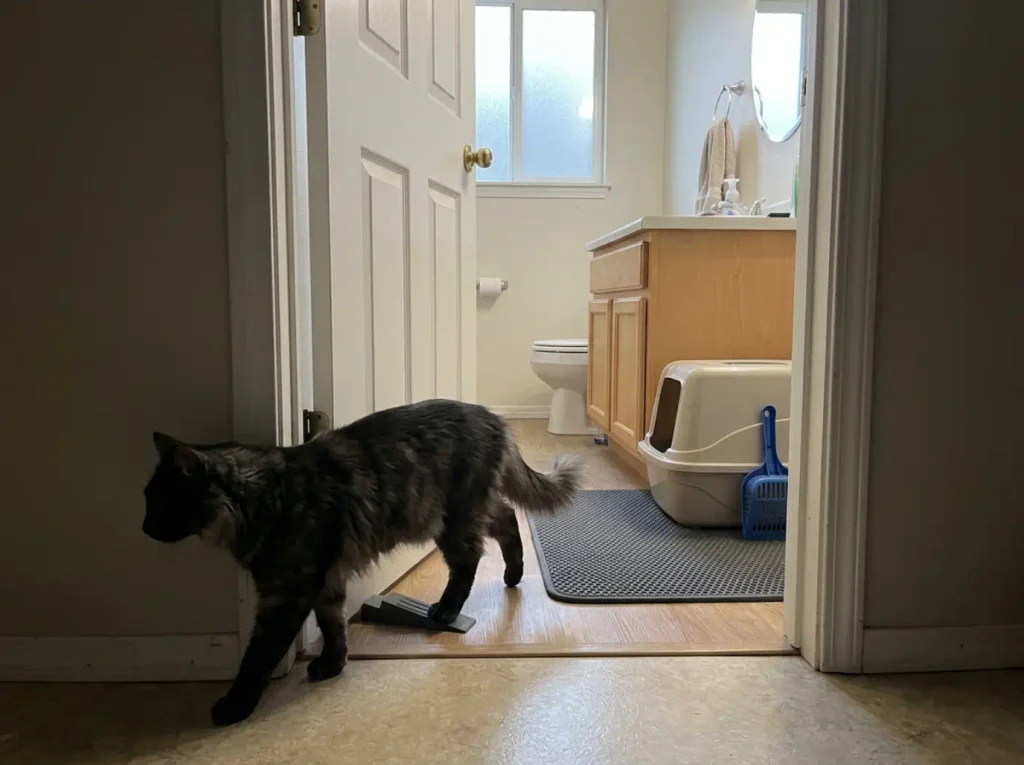
A bathroom or a laundry closet with the door shut contains a genuinely useful amount of sound, and it is the strongest placement fix available to a renter who cannot modify anything. Putting it in the bathroom turns a hollow door and a few feet of air into real attenuation, no drilling and no permission required.
There is one condition and it is not negotiable. The door needs a pet flap or a propped gap, because a cat who cannot reach his box is a much larger problem than a box you can occasionally hear. Shutting a cat out of the litter box to buy quiet is trading a noise complaint for a floor complaint, and the floor complaint always wins.
The Studio Case, Where There Is Only One Spot
If there is no separate room, say so honestly: nothing makes a motorized box inaudible in a single-room apartment, and any article that tells you otherwise is selling something. What you have left is the stack of small things, and stacked they are worth more than they look. The mat, the surface under it, the corner furthest from the bed, a long cycle delay and an overnight sleep window. Together those can move a box from waking you to not waking you, and the layout that works when there is no spare room is mostly this list applied with discipline.
For what it’s worth, this is the case where the manual roll-mechanism box mentioned earlier stops looking like a downgrade. Zero decibels in a room you sleep in is a real feature, and in a studio it may simply be the correct answer.
Why Two Cats Change the Answer
Everyone with two cats reads these roundups as though they were written for them. They were not. Almost every dB comparison in this category quietly assumes one cat, and with a second one in the apartment the number that matters stops being how loud a cycle is and becomes how often a cycle happens.
Cycle Frequency Is the Number That Matters Now
Here is the figure that reframes it. The same large-chamber unit runs roughly 20 days between empties with one cat and about 7 days with three. That is close to three times the cycle frequency, which means three times as many chances to land at an hour you would rather it didn’t.
Three quiet cycles beat one loud cycle right up until they land at 2 a.m., 4 a.m. and 6 a.m. Then the quiet box has woken you three times and the loud one woke you once. This is where a spec-sheet comparison stops describing your apartment, and it is also where an automatic box breaks down with three cats in ways that go well past noise.
Capacity as a Noise Feature
Which turns chamber size and waste-bin capacity into noise features rather than convenience features, and nobody sells them that way. A bigger waste bin does not make a cycle quieter. It makes cycles rarer, and rarer is what you actually wanted. The mechanism is the same reason large-chamber units test low in the first place: sound has room to dissipate inside the box before it exits.
One Automatic Box Plus One Plain One
The 1+1 rule still applies with two cats, and it collides head-on with this article’s premise, so let’s resolve it. Two cats want three boxes, and in a small apartment the answer is almost never two automatic boxes. It is one automatic box plus one plain open box, which is what how many boxes two cats actually need works through properly.
The reason is arithmetic. Multi-cat owners describe adding a second box and having the noise problem solve itself, because the plain box absorbed a share of the traffic and the automatic one stopped cycling as often. A silent box that takes half the visits is a noise fix disguised as a litter box, and it costs a fraction of a second machine.
The obvious answer for a two-cat apartment looks like the quietest unit you can afford. The cheaper answer is one good unit and one plastic tray.
For the picks above, this changes the weighting. If you have more than one cat, buy capacity before you buy the last two decibels.
Conclusion
Three things to carry out of this. Under 40 dB is the line worth shopping to, and a listing with no number and no test distance has already told you what it is. Try the mat, the fine clumping clay and a longer cycle delay before you replace anything, because for a real share of readers that is the whole fix and it costs almost nothing. And with more than one cat, buy capacity before you buy the last two decibels, since how often it runs is what wakes you, not how loud one cycle is.
Check back in three weeks, and check two specific things. Is the cat still using the box after dark, and have you woken up to it once since you lengthened the delay timer? Three weeks is long enough for a cat to have formed a settled opinion and long enough for a new routine of yours to have slipped if it was going to.
This weekend, move the box to the far corner and put a rubber mat under the whole footprint. If you sleep through the night, you just saved yourself the price of a new one.
Amazon’s Audible — free for 30 days
Your cat won’t let you read. Let someone read to you.
Audible is Amazon’s audiobook library — thousands of titles, read out loud, on your phone. Free for a month, plus one audiobook to keep forever.
Frequently Asked Questions
01Do all automatic litter boxes make noise?
Yes. Every one has a motor and a moving mechanism, so there is no silent automatic box. The useful question is how much: the quiet tier sits under 40 decibels, roughly a quiet fan, and the loud end reaches conversation volume.
02What noise level should I look for if the box goes in a bedroom?
Under 40 decibels, measured at about a meter. Below that threshold the cycle tends to disappear into the background noise a bedroom already has. A hard floor can push a compliant box back above the line, so the surface matters as much as the spec.
03Does litter type change how loud an automatic litter box is?
It does. Fine clumping clay moves through a sifting mechanism most quietly, while coarse crystal and pellet litters rattle audibly as they fall. Swapping litter is the cheapest noise fix available and it takes an afternoon.
04Are cheap automatic litter boxes always louder than the expensive ones?
Not always, but the correlation is real and the reason is the motor. Brushless sealed motors run roughly 10 to 15 decibels quieter than open gearbox ones and cost more to build. A budget unit with a gravity-sift design can still beat a mid-priced one with an open rake.
05My cat stopped using the automatic box after it startled her. What now?
Put a plain open box back beside it so she has somewhere she trusts while you extend the cycle delay, and let her choose. If she is avoiding both boxes, or anything else about her habits has changed, that is a vet visit before it is a machine problem.
Leave a comment