Two Cats Home Alone, and the Hours the Litter Box Allows
Healthy adults can stay 24 to 48 hours, kittens 4. Two cats home alone need 3 boxes in 2 zones & 2 water points [plus a one-day camera dry run]

Alfredo RamsesFounder · November 10, 2026 · 21 min read

On this page11 sections
- 1Two Cats Home Alone: The 24-Hour Line and the Two-Night Line
- 2Kittens, Seniors and Any Cat With a Health History Sit Outside These Hours
- 3The Unscooped Box Sets the Clock, Not the Food
- 4Where the Extra Boxes Go When There Is No Spare Room
- 5Food Left Out for Two Cats Disappears Early, and a Timer Spreads It Out
- 6Company Is Not Supervision, and the Quiet Cat Pays for It
- 7Doors, Blinds and the Room Nobody Should Get Shut In
- 8Who Puts Eyes on Both Cats, and What the Return Tells You
- 9The Dry Run: One Ordinary Weekday With a Camera
- 10Rehearse on a Weekday, Double Every Station, Then Book
- 11Frequently Asked Questions
You have a trip on the calendar, and the question is how long two cats home alone can go before somebody has to come through the door. The instinct is to count food bowls, and the bowl is the easy part. The limit is set by a litter box that has gone a day and a half without a scoop, and by whether both cats can still reach every station when the apartment is empty. Merck Animal Health puts a healthy adult on dry food at 24 to 48 hours, and International Cat Care’s rule of one resource per cat plus one was written for a multi-cat household where someone is home to scoop.
What follows covers the hours by age, who falls outside them, the arithmetic of a pair’s box, where the extra boxes fit, food and water, the doors, who looks in, and a one-day rehearsal with a camera.
Quick Answer
The hours for a pair depend on age, on the litter box and on whether every station exists twice.
- Limit kittens under four months to four hours, and six-month-olds to an eight-hour day.
- Allow a healthy adult 24 to 48 hours; treat two nights as the edge.
- Expect the litter box and the water to give out before the food does.
- Set one station per cat plus one, in different places.
- Book a person to look at both cats every day.
- Call the vet first if a cat is senior, medicated or changed a habit.
Two Cats Home Alone: The 24-Hour Line and the Two-Night Line
The usual answer to leaving two cats alone comes in two sizes, 24 hours and two nights, and neither is wrong. The space between them is where the litter box and the water decide how the trip goes.
The Tiers by Age, in Hours and Days
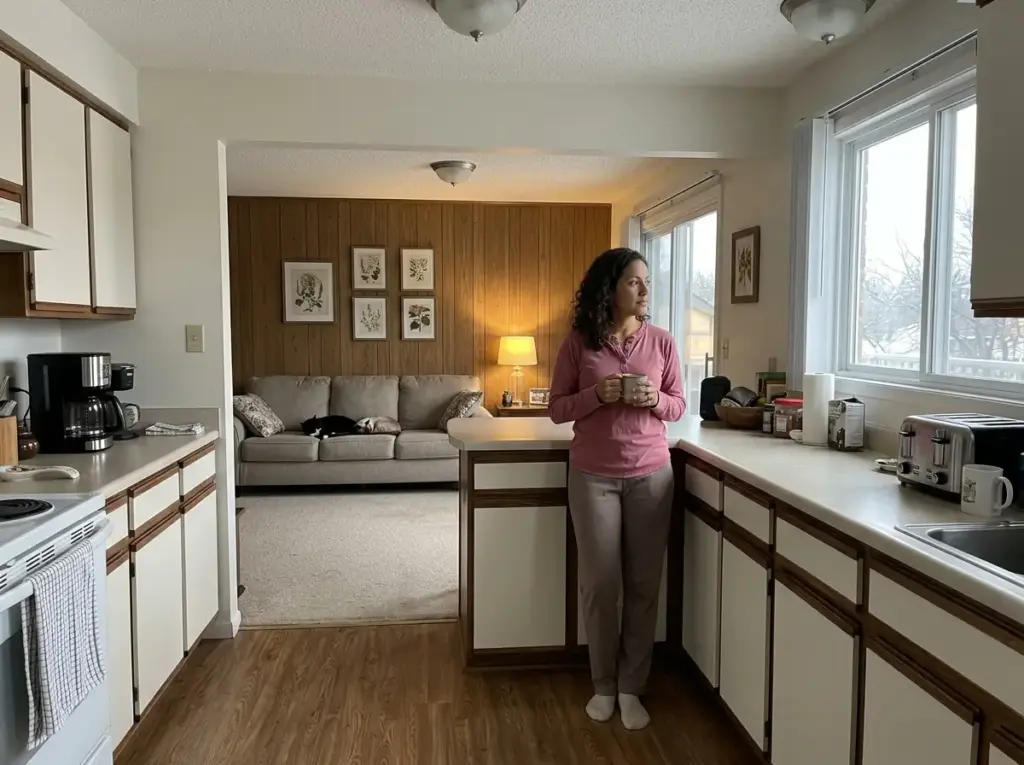
Merck Animal Health sets the tiers by age. A kitten under four months should not be alone for more than four hours, and at six months an eight-hour workday is the outer limit. A kitten is not a small cat with a big battery: five hours alone is already a puddle on the floor and a chewed cable.
A healthy adult on dry food can stay 24 to 48 hours as long as fresh water is within reach. Past that, Merck’s own text names what gives out, and it is not the food: the water gets too dirty to drink and the litter box fills.
Why the Two Numbers Disagree
Read the range as two lines. At 24 hours a healthy adult is comfortable with almost any setup that has food, water and a box. At 48 hours the same cat is leaning on how well the setup was built, and a pair is leaning on it twice.
Treat Merck’s figures as a one-cat range. For a pair of cats, the water and the box, the two things that expire, expire roughly twice as fast.
So the number that looks round and safe, two nights, is the wrong number for a pair with one box and one bowl of water, where 24 hours is closer to the truth. It becomes the right number only when each station is doubled and someone looks in each day. A trip of three days or four days sits past the two-night line, so it needs a visitor every day, not a bigger bowl. That is the same arithmetic as how many cats a home can serve, counted in stations rather than square feet: a second cat doubles the stations, not the number of square feet.
What Expires First Is Not the Food
Dry kibble at the end of day two is still kibble. The water bowl, by then, has hair, dust and crumbs in it, and a pair that drinks a little all day has drunk it low. The litter is the other half: two cats have used it for two days and nobody has lifted a clump. Food is the one item on the list that barely changes between the first morning and the last, which is why a trip is judged on the other two.
Food is also the easiest to fix, since a timer or a second bowl settles it. Water and the box take more thought, and they get it below.
Kittens, Seniors and Any Cat With a Health History Sit Outside These Hours
Everything above assumes a healthy adult. Some cats are not on that chart, and for them the question does not get answered with another box.
Who the Hours Don’t Cover
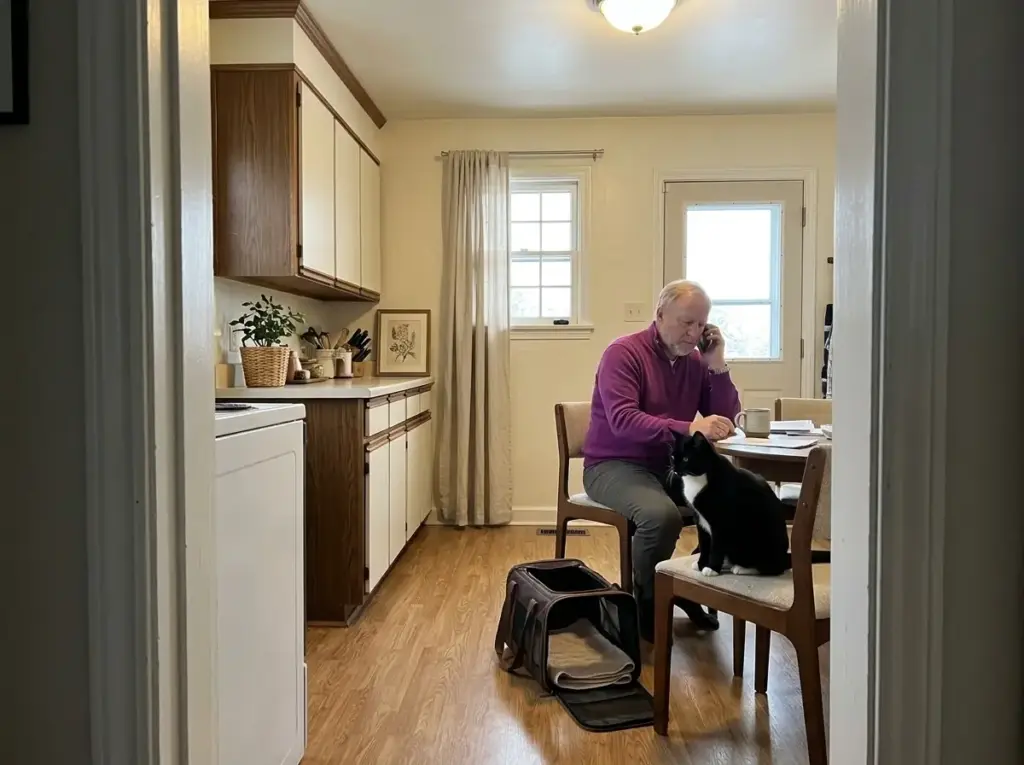
A kitten, an older cat, any cat with a known condition or a prescription, and either of the two who has changed a habit this week (eating differently, using the box differently, hiding) all sit outside the 24-to-48-hour range. For those cats the answer is an appointment with the vet before anything is booked, and what the vet says outranks every table in this article.
The Contact Sheet the Visitor Needs
Put one sheet of paper where the visitor will look first. It carries:
- the number of your regular vet and of an emergency clinic that is open overnight
- the name and dose of any medication a vet has already prescribed, copied from the label
- who holds a key, and how to reach you
That is logistics for the house, and it takes ten minutes to write.
A Change Before You Leave Is a Call, Not a Setup Problem
If either cat eats, drinks or uses the box differently this week, the clinic gets the first call. A new box or a new feeder cannot answer that, and neither can a camera. With that handled, what is left is what this blog does know: the boxes, the water, the bowls, the doors, the visit and the rehearsal.
The Unscooped Box Sets the Clock, Not the Food
Think about the unscooped litter box at hour thirty-six. Two cats have used it for a day and a half, nobody has lifted a single clump, and the cat that is particular about that surface has to decide, with no one watching, where else to go. That decision sets the length of the trip, not the kibble.
What a Pair Leaves in a Day and a Half
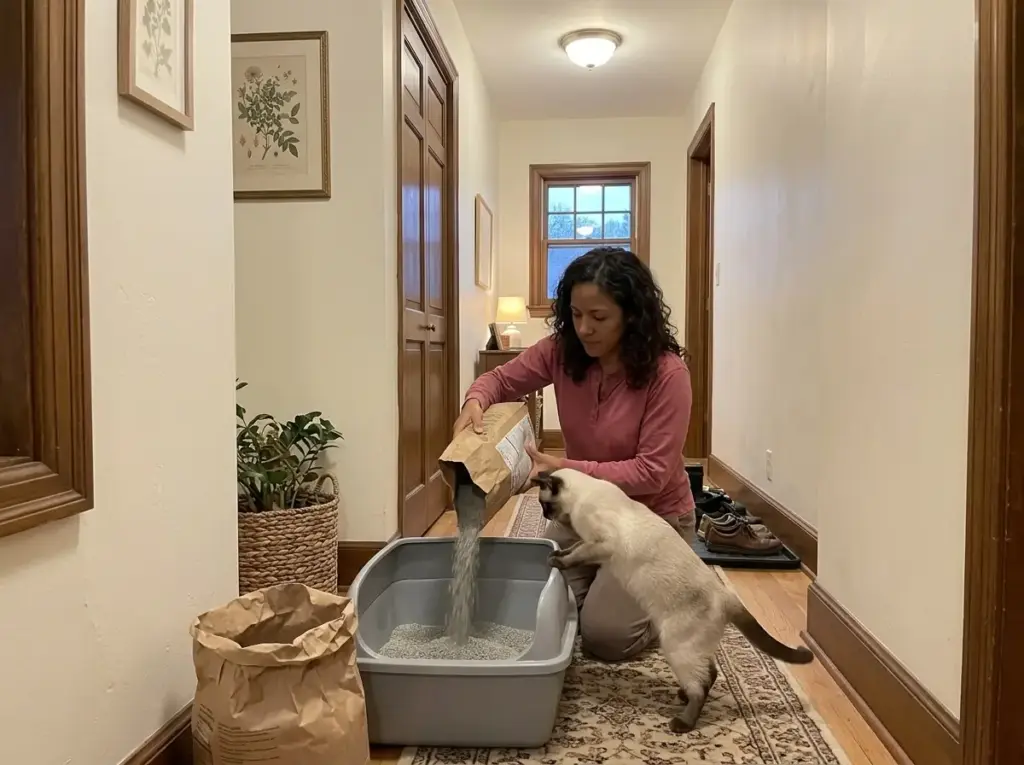
The arithmetic is short. International Cat Care puts the minimum for a normal household at two scoopings a day; count that for each cat and a pair means four a day. A day and a half with nobody home is six scoopings that never happen, and 48 hours is eight, all on the same surface. The cadence an absence breaks is laid out in how often a box needs scooping for each cat in the house.
Some cats will use a box once before it needs cleaning. For that cat a box is used up long before the scoop that was due, and the spare capacity of a big pan buys less than it looks like it buys.
The Box Is Where the Quiet Cat Gives Up
Two cats do not use a shared box in turns the way a person assumes. According to the ASPCA’s list of litter box problems, “Sometimes one or more cats in a household control access to litter boxes and prevent the other cats from using them.” In an occupied home that shows: a cat waits, a cat watches, you move something. In an empty one nobody sees which cat has been blocked, and the blocked cat has one move left, which is to find another surface.
A cat that gives way does it without a sound. There is no yowl and no scene, just a corner of the bedroom. The litter box rule of one box per cat plus one was written for a box that gets scooped every day; with no one home, two cats load a single surface, and the one that stops using it makes no noise.
Why the Rug Is a Preference, Not Spite
The ASPCA puts the share of cats that develop elimination problems at no fewer than one in ten, and notes that once a cat avoids the box he can settle on a surface or a location he prefers. That is how a rug becomes the new box. The preference forms in the days nobody is scooping, and it outlives the trip.
Leaving is not what the cat is answering. A soiled box stopped working as a surface, and the rug is the nearest one that still does. That is a constraint, and the cat is right about it.
The free fix comes before any purchase. A large plastic storage tub or a kiddie pool makes an open pan of generous size, and the box you already use can move into a second zone of the home. Products come after that.
Wash and dry every box the day before you leave, not on departure morning. A pan that is still damp or smells of cleaner is a surface a particular cat may refuse, and with nobody home you learn that two days late.
Where the Extra Boxes Go When There Is No Spare Room
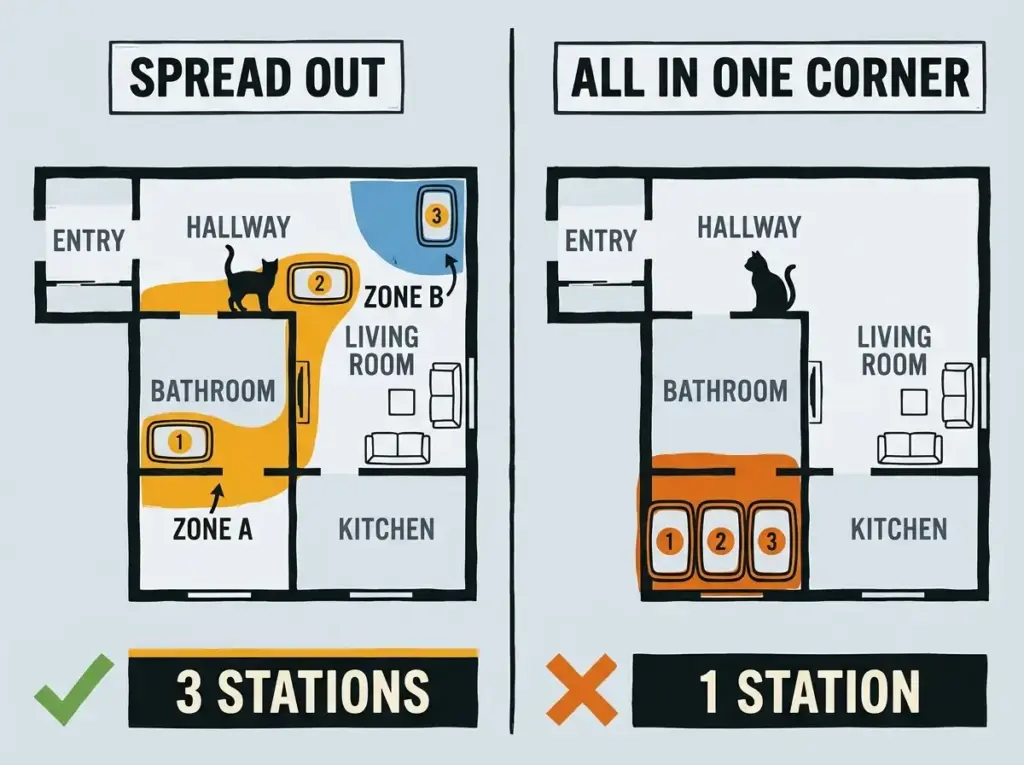
Three boxes jammed into one bathroom corner are one box with three pans. The cats count them that way even if you do not.
Three Boxes in One Corner Count as One
The formula is short. International Cat Care’s rule for a multi-cat home reads: “In terms of appropriate numbers of resources, a commonly used formula is one resource per cat plus one extra, positioned in different locations.” The last three words do the work. Boxes grouped in one place get read as a single resource, so a cat that has been kept from the first has been kept from all three.
For two cats that means three boxes in at least two zones, each reachable without walking past the other cat. The count, and the one exception for a bonded pair, is laid out in why two cats usually need three boxes.
The Hallway, the Bathroom and the Landing
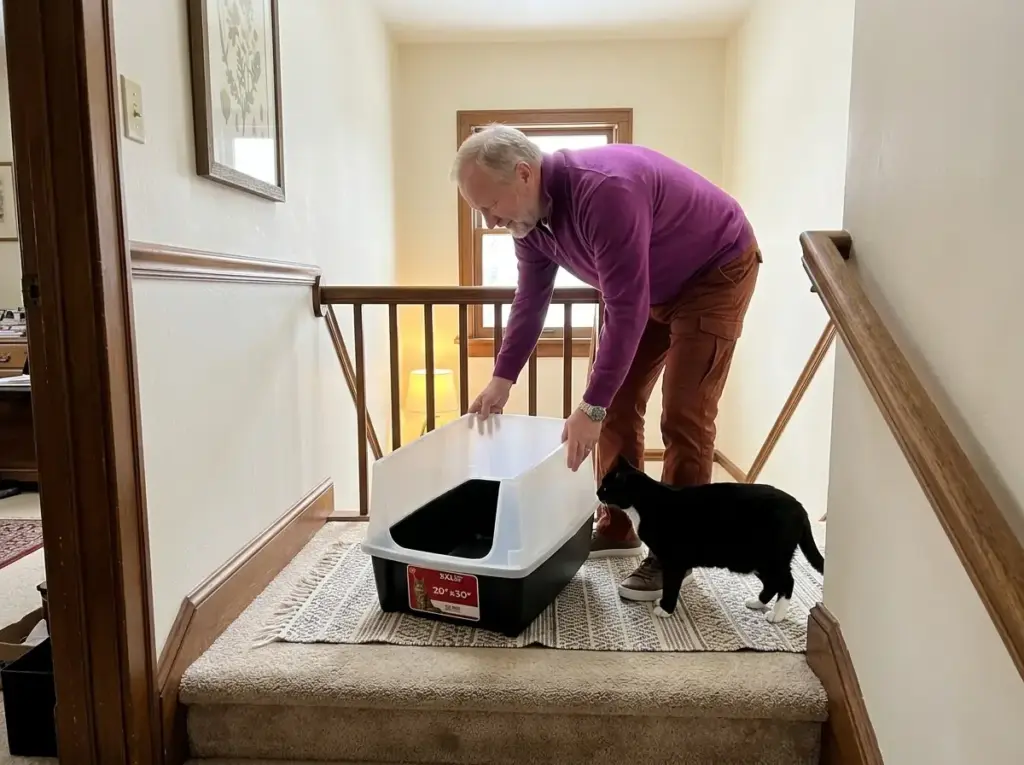
In a home with no spare room the candidates are few: the hallway, the bathroom, the landing of a two-level house. Keep boxes away from the food and water, away from a loud appliance and from an exterior door, and never in a spot with one way out, because a cat will not walk into a dead end while the other one is near the entrance. A hallway with two exits works as a box spot because neither cat can be cornered in it.
The pair’s own routes beat the room you would pick. Put the second box where a cat already passes, not where you prefer not to see it. In a small apartment the second zone carries the most weight, and where a litter box actually fits in a small apartment walks through the real options.
Open Pans Win When Nobody Is Scooping
In a small apartment the covered box looks like the tidy pick. When nobody scoops, the hood holds the smell at the height of the cat’s nose and keeps it for the person who lifts the lid on the way home. An open, high-sided box is the shape a cat keeps using after a day and a half without a scoop. Size it by the cat: about 1.5 times the length from the nose to the base of the tail, with room to turn.
Free options first. Move the box you have into the second zone, and use a large plastic tub or a kiddie pool as the spare open pan. If you would rather buy an extra large litter box, the IRIS USA XX-Large High Sided Cat Litter Box measures 30 x 20 x 14 inches with a curved 6.5-inch entrance and an open top, which clears the 1.5 times rule for a cat up to about 20 inches long. The plastic is on the thin side, and wet clumped litter sticks to the floor of the pan.
Steel earns its place for another reason: it does not hold smell the way plastic does, and a box that sits unscooped for a day and a half is where that shows. The KITCATY XXL Stainless Steel Litter Box is 28 x 20 x 12 inches with 12-inch walls, which suits a cat up to roughly 19 inches. Durability is uneven, with scratches showing on the bottom of some units. Either pan wants a deep fill of litter, so buy that before the trip.
Put the second box where the hallway has two exits instead of at the back of a room. A cat checks the way out before he commits to a box, and a spot with a single exit is one the other cat can block from the doorway.
Food Left Out for Two Cats Disappears Early, and a Timer Spreads It Out
You tuck a bowl in the bedroom, one behind the sofa and one on a shelf in the hall closet, and the cats will find them as they need them. It sounds like a plan.
Why Bowls Hidden Around the Home Backfire
It sounds like rationing and it rations nothing. A cat that eats by smell finds every bowl within hours, and a food-driven pair can clear what was meant for two nights in half a day. The cats are not greedy. They were handed food with no schedule, and a schedule is what the trick never supplied.
The trick can work for a single slow eater. For a pair where one cat eats the moment food exists, it fails in exactly the way it was meant to succeed. The free version is better: two separate bowls, filled by whoever visits, with the day’s ration measured out. What goes in the bowl for the weekend is a decision about logistics, not about generosity.
A Timer Spreads the Day Across Both Cats
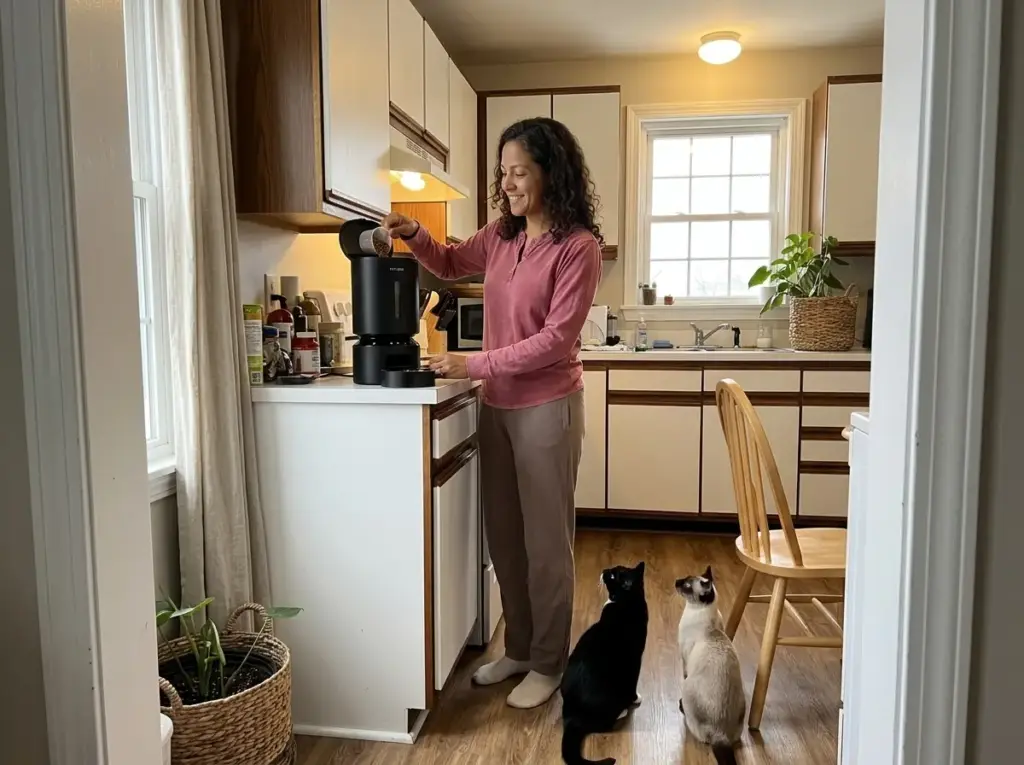
A timer turns food that is left out into meals at set hours. A plain gravity self-feeder cannot do that, since it keeps the bowl topped up for whichever cat eats on sight, and that is the cat a pair needs slowed down. Which automatic feeder matches how long you will be gone sorts the options by hours away.
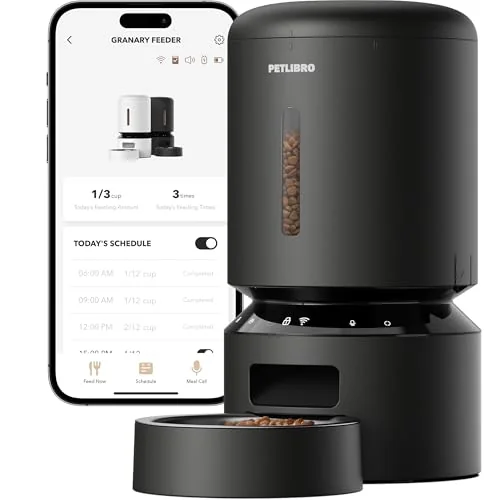
The version that does not depend on the router is the PetSafe 5-Meal Automatic Feeder: five sealed 1-cup compartments on a quartz timer, 12.6 x 4.4 x 16 inches, with no app and no account. For two nights, five meals and no Wi-Fi may be the better answer, and an app feeder earns its place only when the router is reliable. Some units give out inside a year, and the tray is loud when it turns.
Two cats that should not share a ration need two feeders of the same type. A single feeder dispenses without controlling which cat eats what.
Dry Food Only, and Why
A timed feeder here means dry food. Wet food has a clock of about two hours once it is out of the refrigerator, and the two-hour clock on wet food in an automatic feeder explains why a schedule built around cans does not survive a trip.
Run the feeder for a weekend before the trip and weigh each cat’s ration. A portion that looked right on the label is often the wrong one once you watch the bowl empty across a full day.
Company Is Not Supervision, and the Quiet Cat Pays for It
Two cats asleep in one heap look like a household that takes care of itself. Company is real, but supervision it is not: nobody in that heap is noticing who ate.
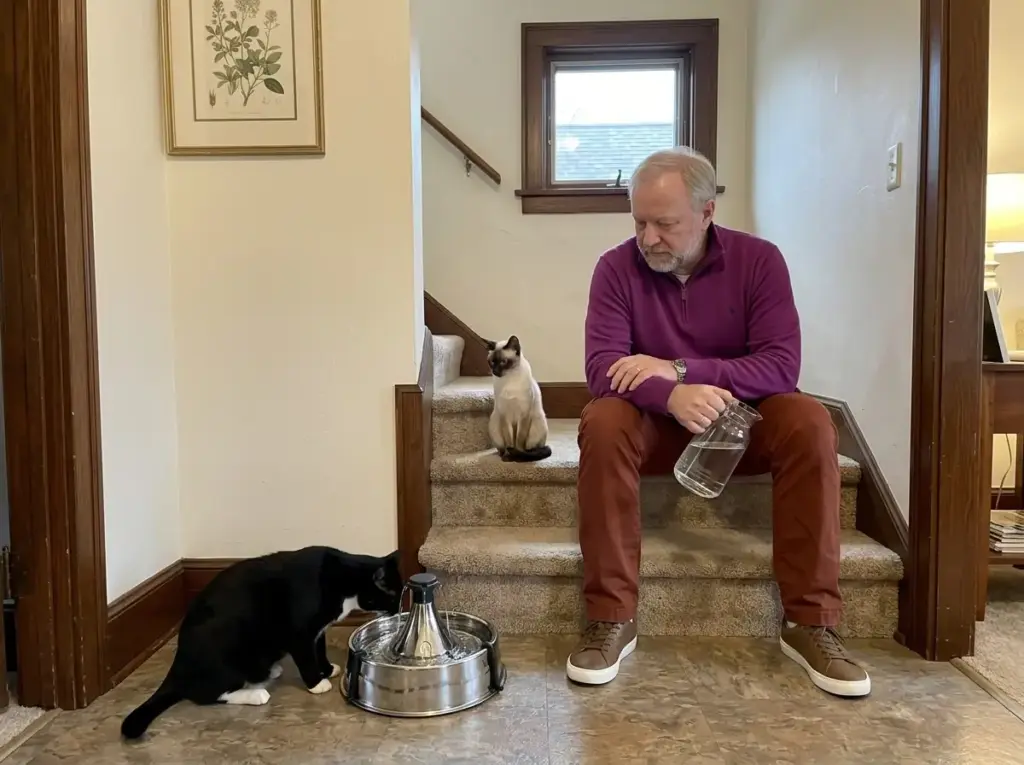
A Bonded Pair Still Needs Every Station Doubled
International Cat Care notes that cats do not share important resources, and a pair that sleeps in a pile is no exception. The bed is shared; the bowl, the water and the box are different kinds of property. So the stations are doubled, and doubled where the cats cannot see both from the same spot, because why a spare resource fails when the cats can see it from the same spot shows that a spare in plain view is a spare one cat controls.
The Fountain the Confident Cat Owns
International Cat Care also notes that a cat can stop drinking altogether when another cat challenges him at the water. One water fountain, however large, is one station. The confident cat takes it and the other drinks less, with nobody there to see.
A second spill-proof bowl, stainless and filled to the brim, in another room, is the free answer, and it works. For a short trip the PetSafe Drinkwell Stainless 360 Multi-Pet Fountain is a stainless steel fountain that holds a gallon (128 ounces) and offers one to five adjustable streams around a 360-degree ring, so the cat at the back is not drinking from the same inch of water as the one at the front. It is hard to keep clean, because the film builds in the ring and the pump housing. A fountain buys hours, not weeks, and what the pump, the filter and the water each need on their own schedule is what the visitor has to do for it.
The Bowl the Other Cat Waits Behind
When one cat camps the bowl, the other one eats last or not at all. The free fix is two bowls in separate spots, served by hand by whoever visits.
If the same cat still waits behind the other, the SureFeed Microchip Pet Feeder is the mechanical answer: a 13.5-ounce bowl, 12.86 x 7.75 x 10.24 inches, under a lid that opens only for the right microchip. The lid does not close fast enough for a determined cat, and it is expensive. What to know about a microchip feeder when one cat waits behind the lid goes through the trade-offs.
If the rehearsal described below shows a cat that never gets to the bowl at all, that goes to the clinic, not to a shopping cart.
Put the two water sources in different rooms. Two bowls on one mat read as a single water point to a cat that guards it.
Doors, Blinds and the Room Nobody Should Get Shut In
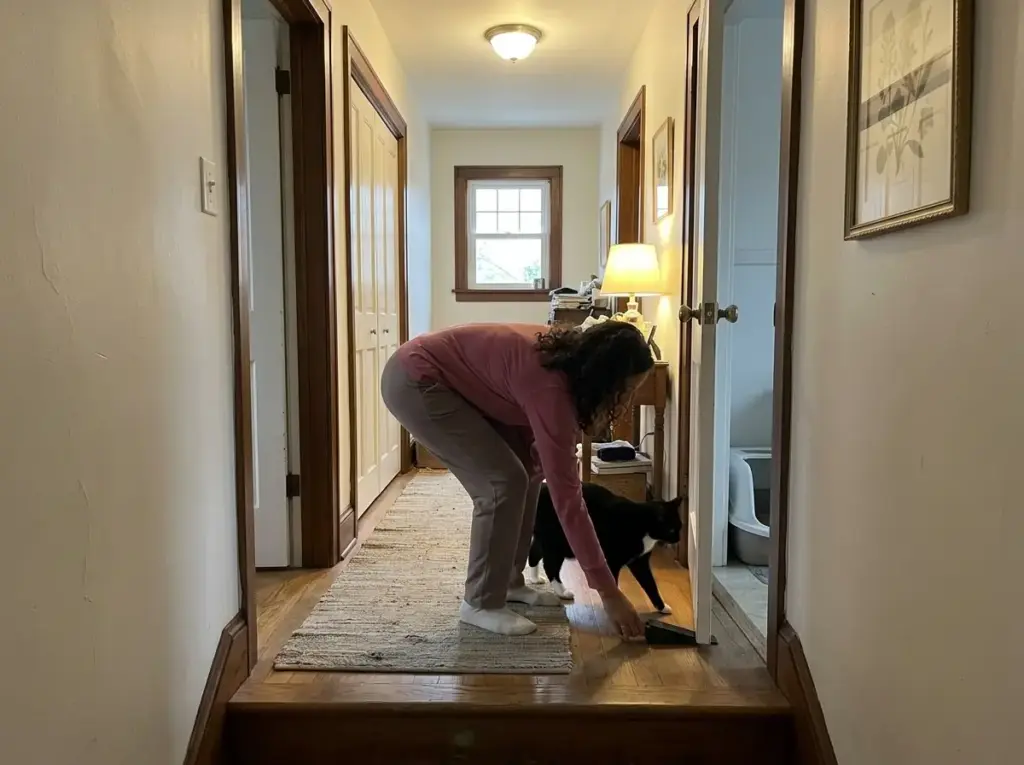
Close the Bedrooms, Prop the Box Room Open
Make the box room the home base room: close the bedrooms and any room the cats have no reason to be in, and prop its door open with something heavy so it can never swing shut. A propped door stays open; a door that closes by itself is the quickest route to a cat with no water and no box for nine hours. Where a door cannot be propped, a pet gate stands in for it, though a cat that jumps will clear a low one. No cat should be left with a single way out either, and why territory in a small apartment comes down to exits covers that.
Cat-proofing for the trip is short and mostly free. Raise the window blinds or open the slats, and tie up the cords. A cat that climbs to watch the street can hang a claw in closed slats, and a cord at cat height is a toy that never stops. Tuck away cables at the same height.
Toxic plants leave the room, and the washer and dryer in the laundry room, the garage and the boiler closet stay shut. Windows and balconies get a screen or stay closed.
Leave a radio or the television on low as background noise so the home does not sound empty, and drop a worn shirt on the sofa and another on the bed, since the pair sleeps on the smell of whoever left. Both are free.
Crouch in every room the evening before and look at it from cat height. Cords, closed slats and doors that swing shut show up from your knees, and each takes minutes to fix.
Who Puts Eyes on Both Cats, and What the Return Tells You
A full bowl and a camera say that food is out and a cat is present. Neither says whether the quieter cat is eating.
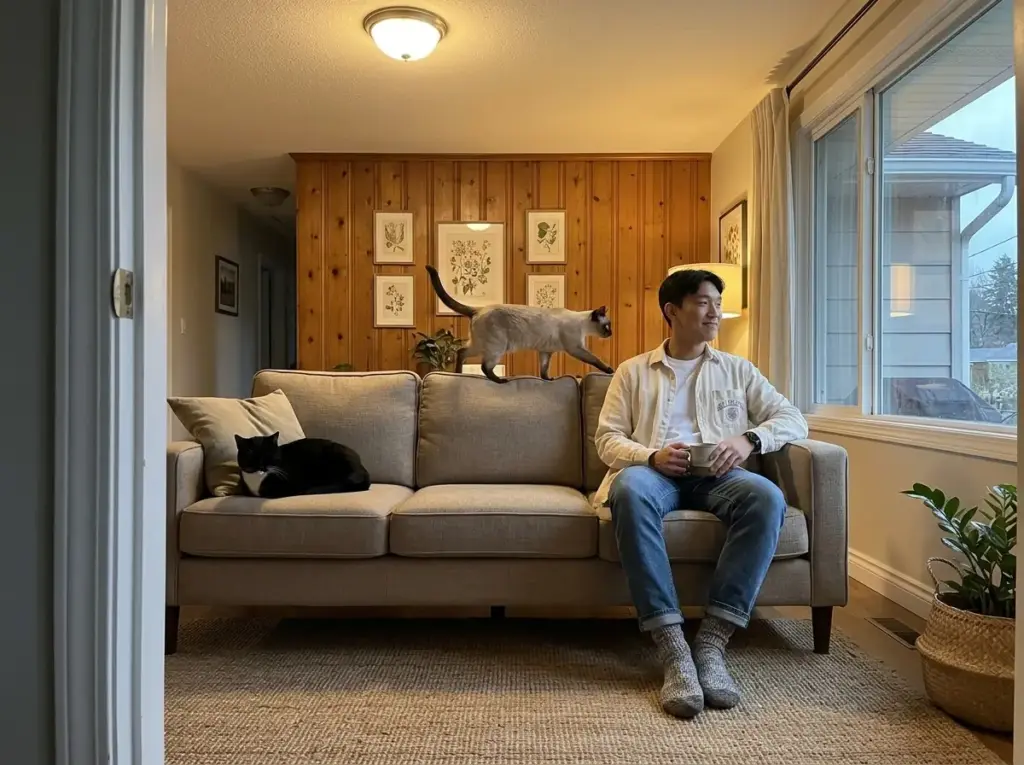
A Daily Visit Beats a Full Bowl
The visit that works takes about twenty minutes: put down the food, refresh the water, scoop, and then sit on the sofa and ignore the shy cat for half an hour, which is when he comes out. The point is that a person looks at both cats, not only at the bowls. Past two nights, make it two visits a day.
The best visitor is a pet sitter who also works in a vet clinic, because that person notices when a cat looks off. A neighbor with a key does the job too, as long as the contact sheet from earlier is on the counter.
Boarding, Weighed Against Staying Home
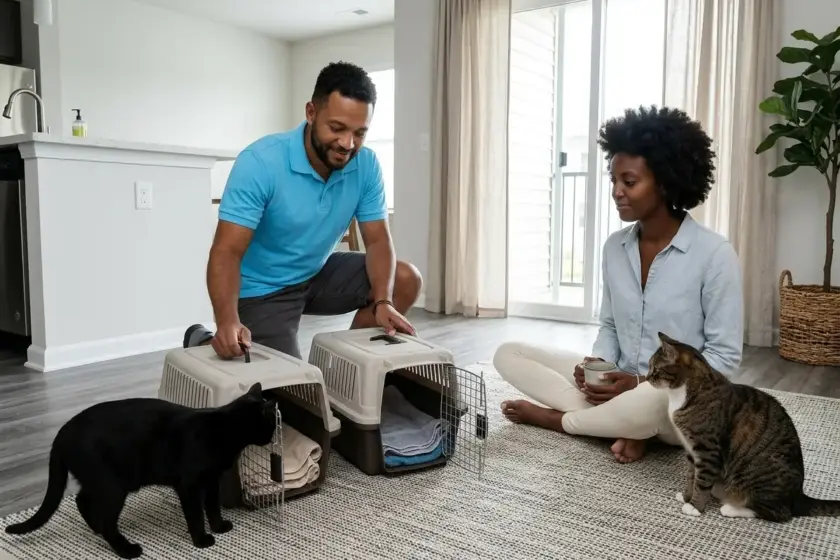
A cat condo puts someone in front of the cats at all hours, and it costs a carrier ride and a strange room full of strange smells. Staying home avoids both and trades them for hours when no one is looking in. Neither wins for every pair. The question is whether these two handle a carrier ride and a new room better than an empty apartment.
What the Apartment Tells You When You Walk In
Look at the boxes, the bowls and the water before you take your coat off. The first job is a full wash of the boxes, and how often a box needs a full wash, and what waiting does sets the interval.
Some cats come back to a stranger’s house: hiding, shadowing you from room to room, or using a box in the wrong place. Write down what you see, scrub the box, and give it a day. A change that lasts past a day or two goes to the vet. Your own routine and the worn shirt help the home smell like itself again.
The Dry Run: One Ordinary Weekday With a Camera
A table of hours cannot tell you what these two cats do in this home. One ordinary weekday and a camera can, and it costs you a day.
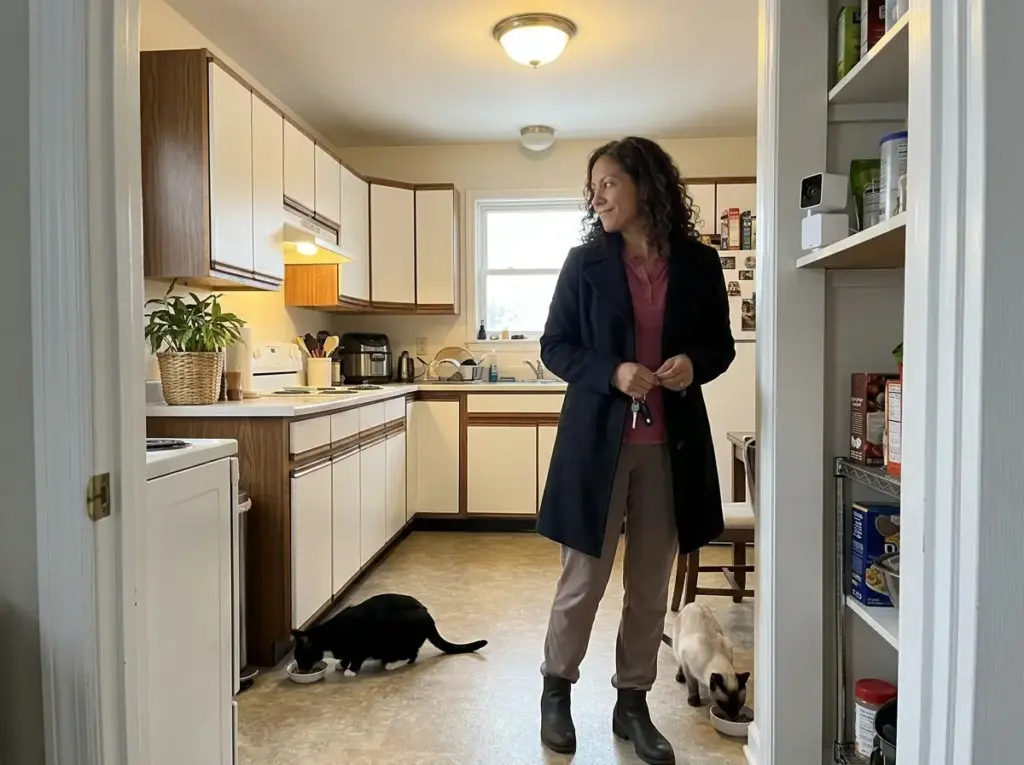
Run the Leaving Routine and Go to Work
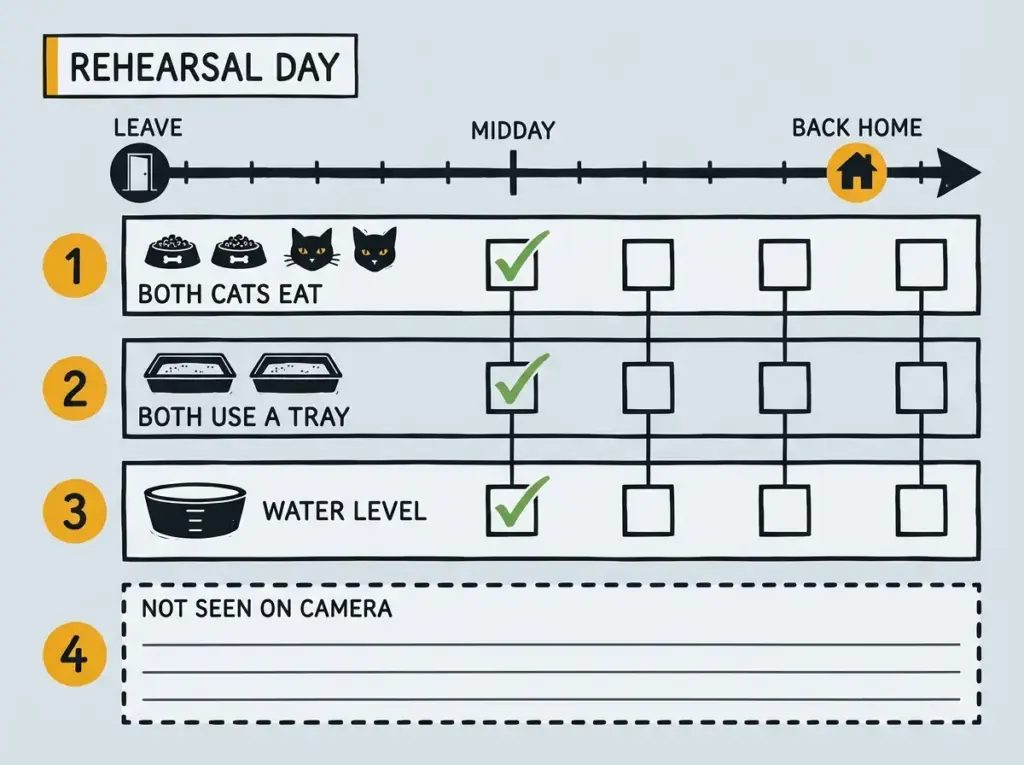
Repeat the routine you would use on the day of the trip: the same hour, the same door, the same radio. Then go to work. Keep the phone nearby and read the alerts as they arrive.
The Three Things the Footage Has to Show
The footage has to show the two cats eating (two bowls, movement at both), the two cats using a box (and which one), and the water level going down. That turns the hours from the top of this article into numbers for your home.
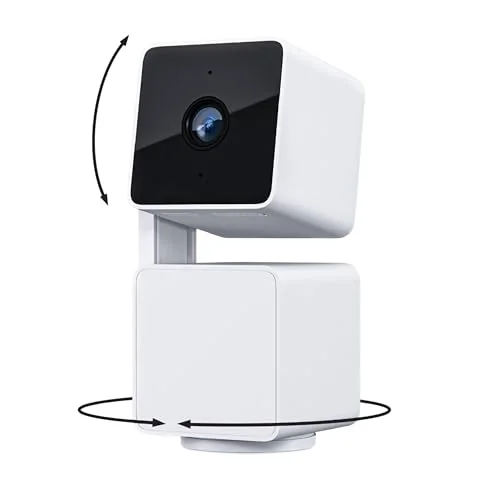
The free camera comes first: a phone propped on a shelf with a video call open to the person who will visit. If you want a dedicated pet camera, one that pans covers the food and the water, while the box usually wants a second angle.
What a Missing Cat on the Footage Means
A cat that does not appear on the footage may simply be asleep in a spot the camera cannot see. A cat that appears but never reaches the bowl or the box across the whole day is a different matter, and that one gets a call to the clinic before anyone books anything.
Run the rehearsal on a weekday and again on a weekend, then compare the two. The cats read an empty home differently when the street outside is quiet.
Rehearse on a Weekday, Double Every Station, Then Book
The hours for a pair are set by the box and the water, so double those first and let the kibble schedule follow. Two cats keep each other company only when each station exists twice; the one that gives way does it silently. A cat with a health history, or a cat whose habits changed this week, leaves the chart and goes to the vet before anything is booked. A person who sees both cats each day is worth more than any feeder, and a normal weekday with a camera answers the question with evidence from your own home.
Repeat the rehearsal a few days after the second litter zone goes in, once both cats have had time to use it, and when you return, watch the boxes and the bowls for the next several days. Today, move the box you already have into a second zone and set a bowl of water in another room. If the rehearsal does not come out clean, the trip can wait, and that is an answer too.
Frequently Asked Questions
01How long can you leave two cats at home alone?
Two healthy adult cats on dry food and fresh water can stay alone for 24 to 48 hours, and two nights is the edge. That edge assumes doubled stations and a person looking in, and the litter box and water give out before the food does. Kittens, seniors and cats with a health history call the vet first.
02Can I leave two cats alone for a weekend?
Yes for two healthy adult cats, provided there are three boxes, two water points, food on a timer and someone who sees both cats at least once a day. A rehearsal day with a camera shows how your two cats actually handle it, which no chart can promise.
03Do two cats keep each other company when you are out?
Sometimes, but company is not supervision: the more confident cat can take the only fountain or box while the other gives way without a sound. Double every station and check that both cats eat and drink. If one stops, call the vet.
04How many litter boxes do two cats need when nobody is home?
Three, placed in at least two separate zones of the home, because the one-per-cat-plus-one rule assumes a box that someone scoops every day. For a trip past one night, a full wash the day before and open, high-sided pans beat a covered box.
05Is a camera enough instead of a sitter?
No: a camera shows what is happening, but it cannot refill water, scoop a box or notice that a cat looks off. For an absence of more than a night, use it to rehearse beforehand and to check in, and keep a short daily visit from someone who sees both cats.
Leave a comment