How Much Litter to Use, and Why Depth Beats Volume
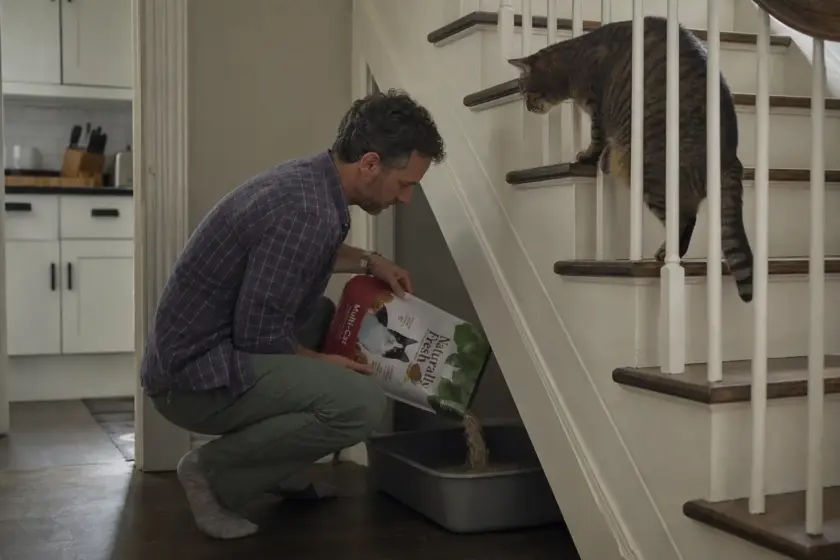
Don't pour by the bag. How much litter to use is a depth (2-3 inches, 3-4 if it clumps), and the same bag lands shallow in a bigger box.

Alfredo RamsesFounder · August 23, 2026 · 17 min read

On this page8 sections
- 1The Number, and the Two Versions of It Nobody Separates
- 2Why the Same Bag Gives You the Wrong Depth in a Bigger Box
- 3What Too Little Litter Actually Does Down at the Tray Floor
- 4Depth Decays Between Full Changes, and Nobody Budgets for It
- 5Two Cats Do Not Change the Depth, They Change How Fast It Drops
- 6Self-Cleaning Boxes Measure by Line, Not by Inches
- 7Conclusion
- 8Frequently Asked Questions
You poured half the bag in, it looked about right, and four days later there is a clump welded to the tray floor that needs a scraper. So you pour more next time. Then the litter starts landing on the bathroom rug and you pour less again, and now you are running a small experiment you never agreed to.
The number you are missing exists, it is short, and almost nobody publishes the part that makes it work: how much litter to use is a depth answer, not a quantity answer, and the same bag lands at a different depth in a different box. Here is the figure, why the figure alone keeps failing you, and what to do with the box already sitting in your bathroom.
Quick Answer
Use two to three inches of litter for most types, three to four if it clumps, and about two for crystal or non-clumping. That figure is a depth, not a quantity: the same bag gives you a correct layer in one box and a shallow one in a bigger box.
The Number, and the Two Versions of It Nobody Separates
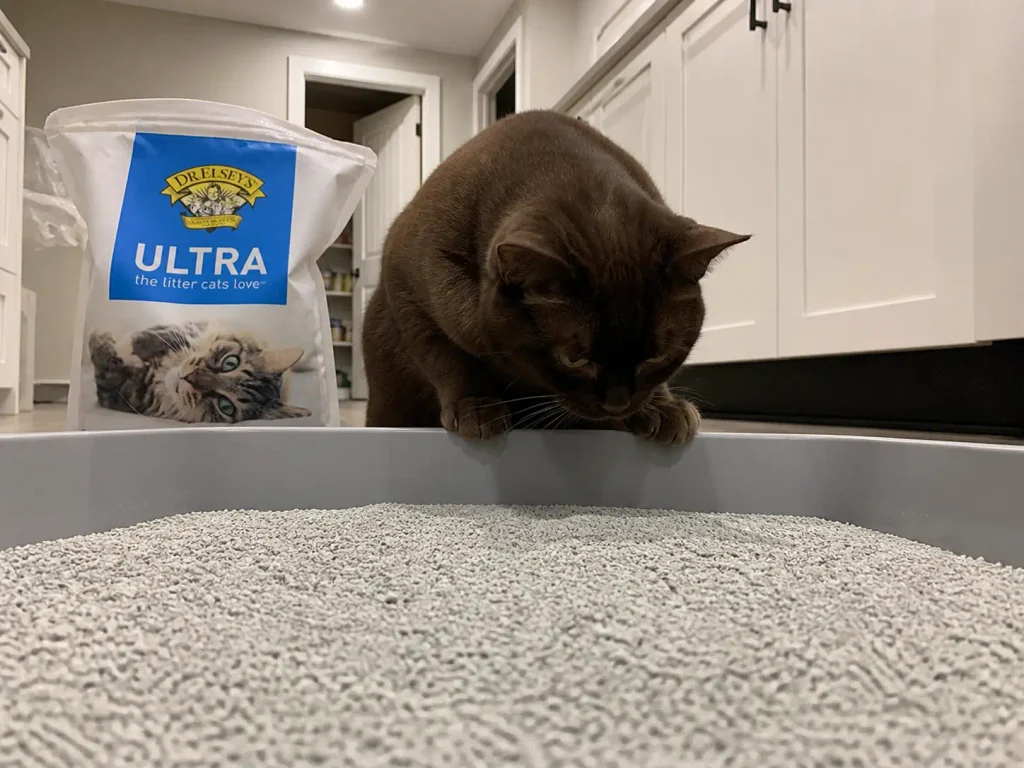
Two to three inches. That is the standard figure and it is the one you came for, so there it is before anything else. But it splits in two almost immediately, and which litter type you are working with changes the number more than any other variable in your bathroom. Pour to the same line with clumping clay and with crystal and one of those two is wrong.
The split matters because the two materials are doing different jobs. Clumping clay has to have material underneath the puddle to work with. Crystal and non-clumping are absorbing in place and do not need a reserve below. So the depth question is really two questions wearing one coat, and the bag will not separate them for you.
Clumping Wants More, and It Is Not About Absorbency
Clumping litter runs deeper: three to four inches. The instinct is that deeper means more absorbing surface, which sounds right and is not the reason. The clump needs room to form downward.
Urine travels down through the layer and the clay reacts around it as it goes, and the clump only comes out in one piece if it finishes forming before it reaches anything solid. Three inches is roughly where that stops being a gamble.
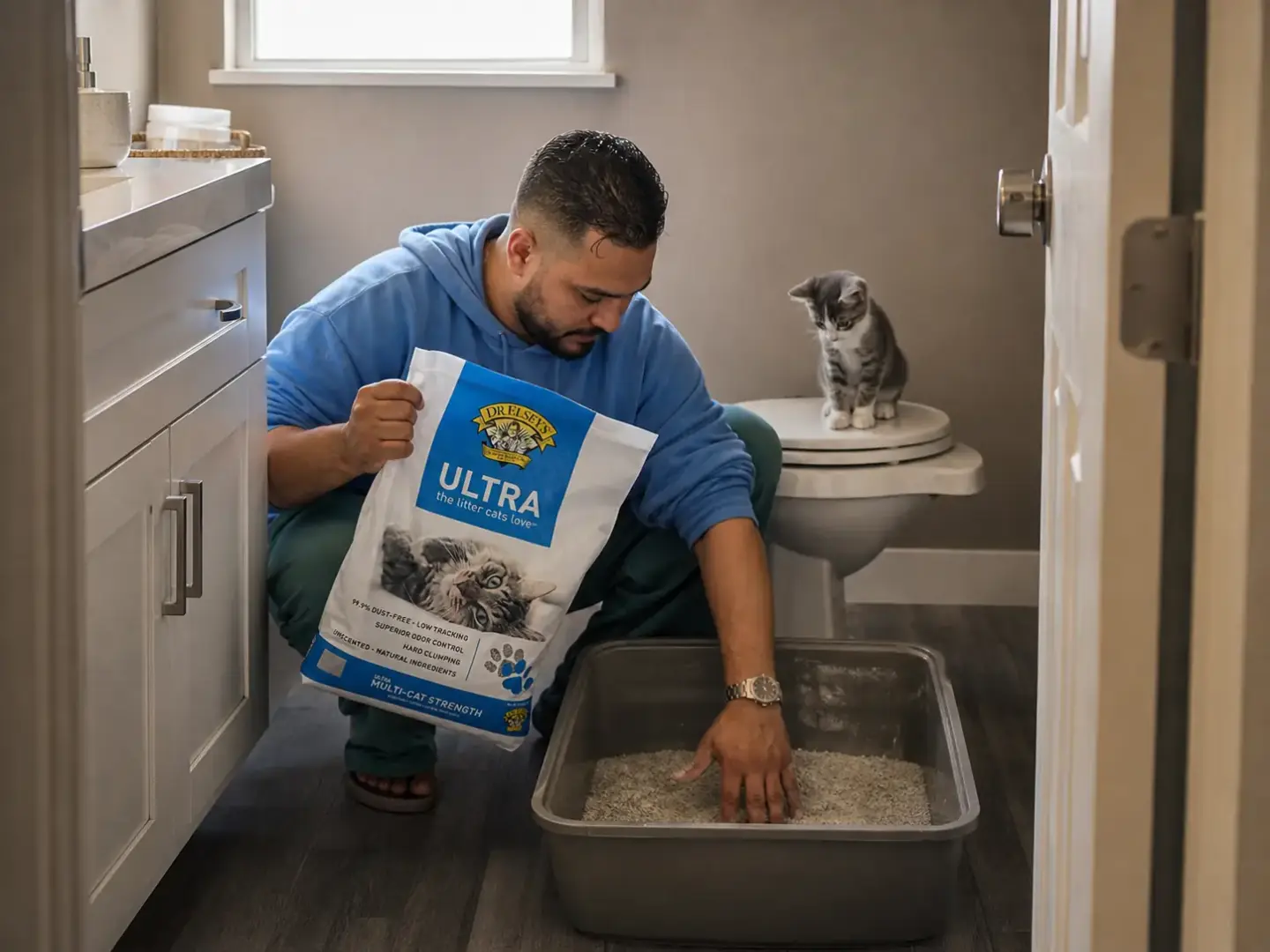
That is the depth most clumping clay is written for, and a plain heavy clay is the honest reference point for it. The Dr. Elsey’s Ultra Unscented clumping clay comes in a 40-pound bag and behaves the way the three-to-four inch figure assumes: dense, unscented, and heavy enough to hold a level surface instead of drifting. The 40 pounds is also the catch.
In a studio with one closet, a bag that size is furniture, and hauling it up three floors is a real consideration nobody puts in a review. Bulk buying litter assumes storage you may not have, and in a one-bedroom the smaller bag bought more often is usually the honest answer, the same way the litter box layout in a small apartment has to bend around the space that actually exists.
Crystal and Non-Clumping Want Less, and the Bag Will Not Tell You
Crystal litter, sometimes sold as silica litter, and non-clumping types work at about two inches, and going deeper adds cost without adding function. Nothing has to form down there. The layer absorbs, holds, and gets changed out whole, so the extra inch you added out of caution is an inch you are going to throw away on schedule.
This is where people quietly overbuy for months. You used clay litter for two years at three inches, you switched to crystal, and you kept pouring to the depth your hand already knew. Honestly, that is not carelessness, it is muscle memory, and the bag says nothing to interrupt it.
Too Much Is a Real Failure Too, Not Just Waste
There is a ceiling as well as a floor, and it fails in a completely different direction. A deep loose layer gives poor footing. A cat that has to brace in shifting litter digs harder and kicks more of it over the wall, which is how you end up sweeping a two-foot perimeter every morning. Buried clumps are the other cost: at four-plus inches, the scoop passes over things it should have caught, and what it misses stays in there aging.
So the failure at both ends looks like the same complaint from the doorway. The box smells and there is litter on the floor. The fix runs in opposite directions depending on which side of the range you are on.
Check the depth with a finger, not a ruler. Push straight down in a clean corner until you hit plastic. If the tray floor arrives before your second knuckle, you are under two inches and running shallow. It takes three seconds, it works in the dark, and unlike a ruler you will actually do it.
Why the Same Bag Gives You the Wrong Depth in a Bigger Box
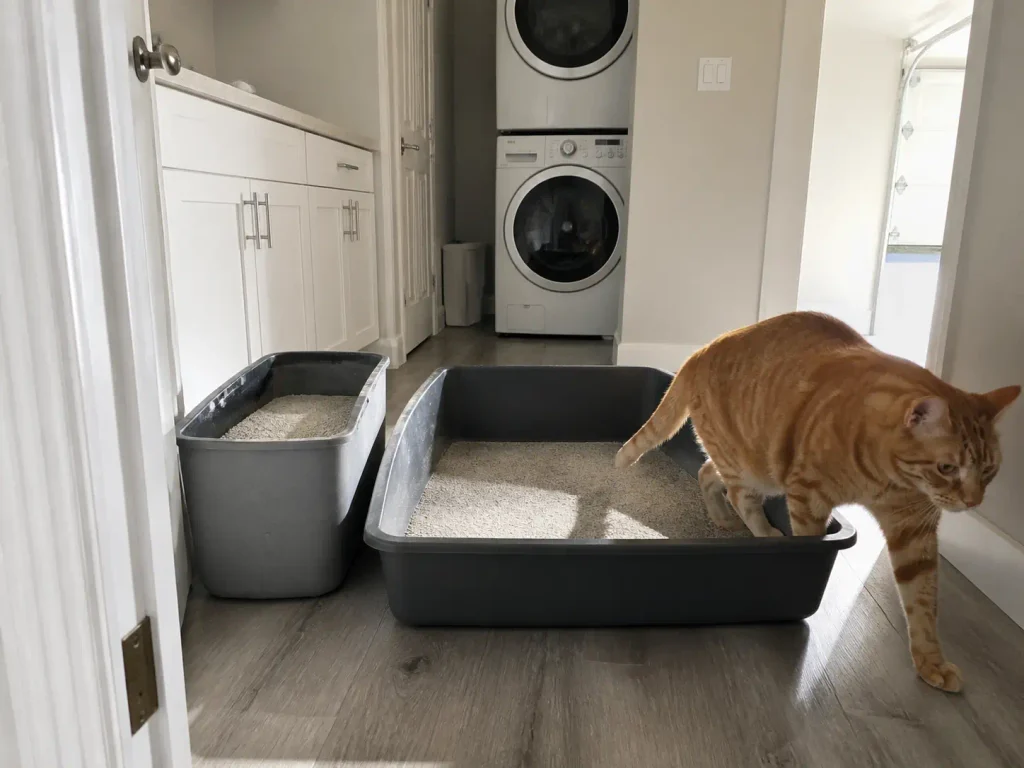
Here is the part that makes the number behave. Depth and volume are not the same measurement, and the divisor sitting between them is the floor area of your box. Spread a fixed amount of litter across more square inches and the layer gets shorter. That is arithmetic, and it is why half a bag has never once been a usable instruction.
It matters most at the exact moment you are least likely to notice. You upgraded the box because your cat was standing in it with his back end hanging over the rim, which was the right call: litter box size is the one thing worth getting wrong in the generous direction, because a box that is too small ends in box avoidance and a box that is too big only ends in a bigger pour. You poured your usual amount into it.
Now the clumps stick and you assume the litter went bad on you. Nothing went bad. You changed the denominator.
The 1.5x Rule, and What It Does to Your Litter Math
The size figure comes from the veterinary side and it is a measurement, not a diagnosis: the 2021 AAHA/AAFP Feline Life Stage Guidelines put the box at one and a half times the cat’s length, measured nose to the base of the tail. A sixteen-inch cat needs a twenty-four-inch box. An adult Maine Coon measuring eighteen to twenty inches needs twenty-seven to thirty, which quietly disqualifies most of what gets sold as large.
Now cross the two rules, which is something no source does, and the useful result falls out: the bigger the box you were correctly told to buy, the more litter it takes to reach the same depth. Go from a sixteen-inch tray to a twenty-four-inch one and the floor area roughly doubles. Your usual pour just became an inch and a half. You followed both pieces of standard advice and they combined into a failure, because the box has to clear one and a half times his body length and nobody mentioned what that does to the bag.
“Half a Bag” Is Not a Measurement
Weight and volume are how litter is sold, so weight and volume are how people think about it, and that is the whole trap. Eight pounds is a fact about a bag. It is not a fact about your box. The only number that describes what the cat is standing in is the height of the layer, and you cannot get there from the packaging without knowing the floor you are pouring onto.
Measure the depth once, on the day you set the box up, and note what the pour looked like. That is the number worth remembering.
Digging to the Bottom Means Two Different Things
“He digs all the way to the bottom” is one of the most repeated complaints in litter threads, and it has two completely different causes that need opposite fixes. The first is simple: there is not enough litter, he hits plastic, more litter solves it. The second is that the layer is fine and the box is too small for his dig radius, so he is scraping the same small patch over and over and clearing it down to the floor.
Telling them apart takes one look. If the bare spot is a wide area across the middle, add depth. If it is a small crater in one corner and the litter is piled against the far wall, depth is not your problem and another bag will not fix it. He is out of room, and he is right about that.
What Too Little Litter Actually Does Down at the Tray Floor
Most people arrive at this article believing they bought bad litter. Almost nobody did. The clump that had to be chipped off the plastic is not a quality problem, it is a quantity problem, and once you know the mechanism you can never misread it again.
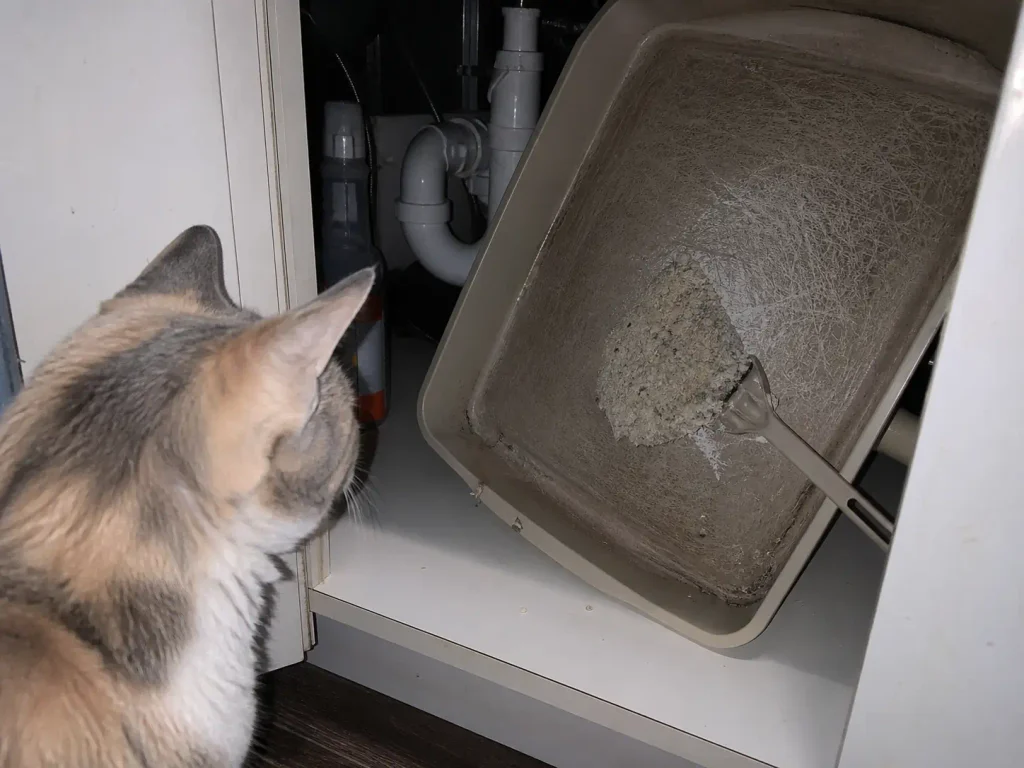
Urine drops through the layer and the clay starts reacting around it on the way down. At a healthy depth the reaction finishes mid-layer and the clump sets as a free object with litter on every side. At an inch and a half the liquid reaches the tray floor while the clay is still working, so the clump sets against the plastic and takes the surface as one of its faces. That is the welding.
The community even has words for it, cementing and welding, which is a reliable sign that a lot of people are living with the same thing.
The conventional read is that a litter which sticks is a litter to stop buying. And a genuinely bad clumper does exist. But when the same bag that gave you sticky clumps works fine for someone else, the variable that changed was not the clay.
Clumps That Weld Instead of Forming
The tell is specific, which is what makes it useful. A free-formed clump lifts out dry on all sides and holds its shape in the scoop. A welded one has one flat face, comes up in pieces, and leaves a dark patch behind that will still be dark tomorrow.
If you are chipping, you are shallow. That is nearly the whole diagnostic.
And the damp patch it leaves is where the smell lives. It is not the fresh waste sitting on top that turns an apartment sour by evening, it is the layer at the bottom you have been leaving behind for a week because it will not come up in one piece. Depth is the cheapest lever in the whole odor problem, which is why making a litter box smell go away starts with the layer before it ever gets to a product.
An Old Scratched Tray Makes the Same Depth Perform Worse
Two identical boxes at identical depth can perform differently, and the difference is the plastic. Smooth non-porous surfaces release clumps cleanly. A tray that has been scooped daily for three years is covered in fine scratches, and as catlittersupply.com explains, a scratched or textured box surface traps moisture and makes clump-welding worse regardless of depth. Every scratch is somewhere for the liquid to sit and grip, and a litter tray at that age tends to show wet spots in the same places every week, which is urine pooling in the scratches rather than anything the cat is doing differently.
Before you buy anything at all, do the free version: bring the depth up in the box you already own and scrape the floor clean at the next full change. If the clumps stop sticking, that was the entire problem and you just saved yourself a bag. It costs nothing and it works often enough to be worth doing first.
On a tray that is already scratched up, run the depth at the top of its range instead of the middle. The extra half inch keeps the urine off the scored plastic and buys you months. It is a patch, not a repair. The repair is a new box with a smooth floor, but it does not have to be today.
Depth Decays Between Full Changes, and Nobody Budgets for It
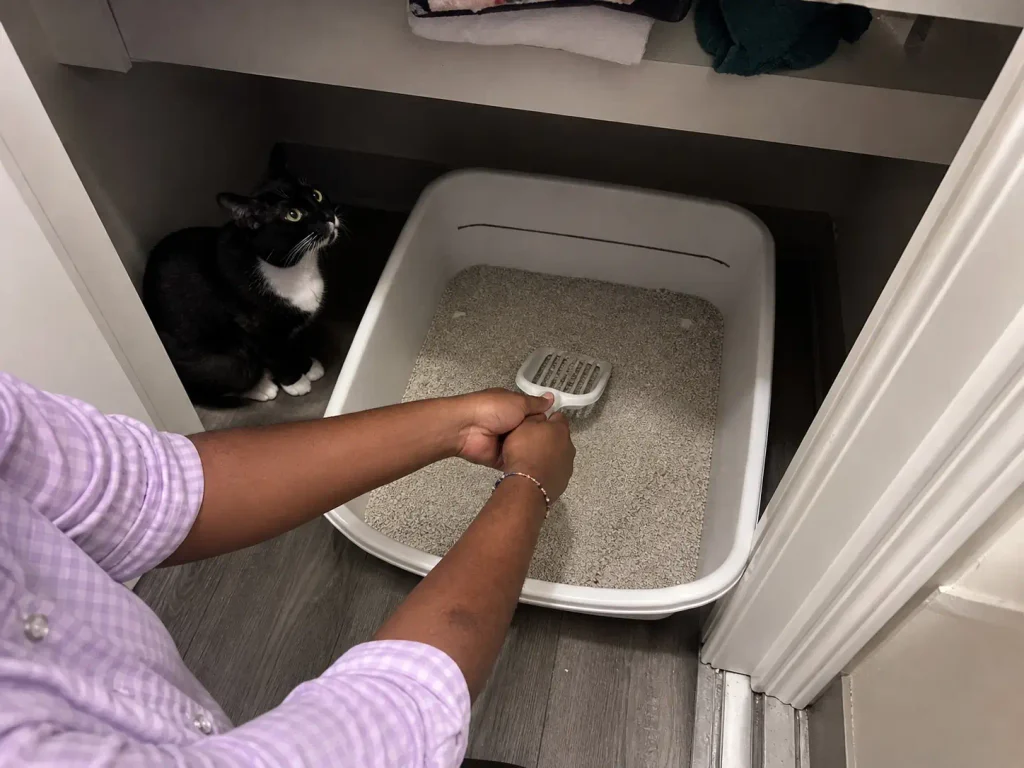
You measured properly on Sunday. By Thursday the clumps are sticking again and you are back to suspecting the litter. Nothing slipped. Every clump you removed left with litter attached to it, and after four days of that the layer is meaningfully shorter than the one you poured.
This is the single most useful thing in this article, and it is the thing every competitor leaves out. Two to three inches is a level you hold, not a level you reach. Every guide gives you the pour-day number as though it were permanent, then goes quiet about Thursday.
Every Scoop Takes Litter With It
The loss is invisible because it is gradual and because the surface still looks level. Nothing tips you off. A box poured to three inches on Sunday can be under two by the fourth day with one cat, and that is exactly the depth where welding starts, which is why the problem seems to come back on its own.
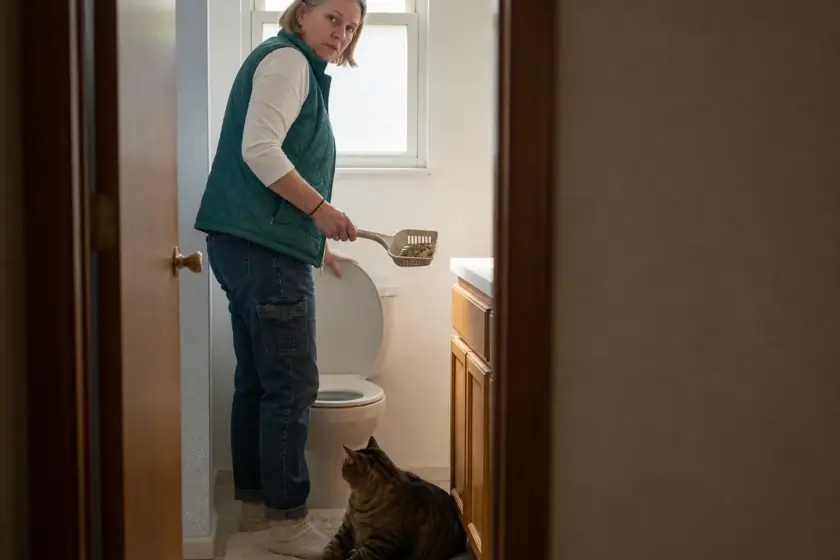
Top off every three or four days for a traditional box and do the full litter change every two to four weeks. A litter box liner does not change any of this, by the way: it protects the tray, it does not hold depth. Scoop daily to keep it usable; the refill cadence is what keeps the number true.
Top Off on a Schedule, Not When It Looks Low
By the time a layer looks low it has been too shallow for days, because the surface stays flat the whole way down. Eyeballing it is precisely the method that got most people here. Put the top-off on the calendar next to something you already do, and it stops being a judgment call.
Draw your depth on the inside wall of the box with a permanent marker on setup day. One line, one time. From then on refilling is pouring until the litter meets the line, with no measuring and no mental math, and anyone else in the apartment can do it correctly without being told the number.
Two Cats Do Not Change the Depth, They Change How Fast It Drops
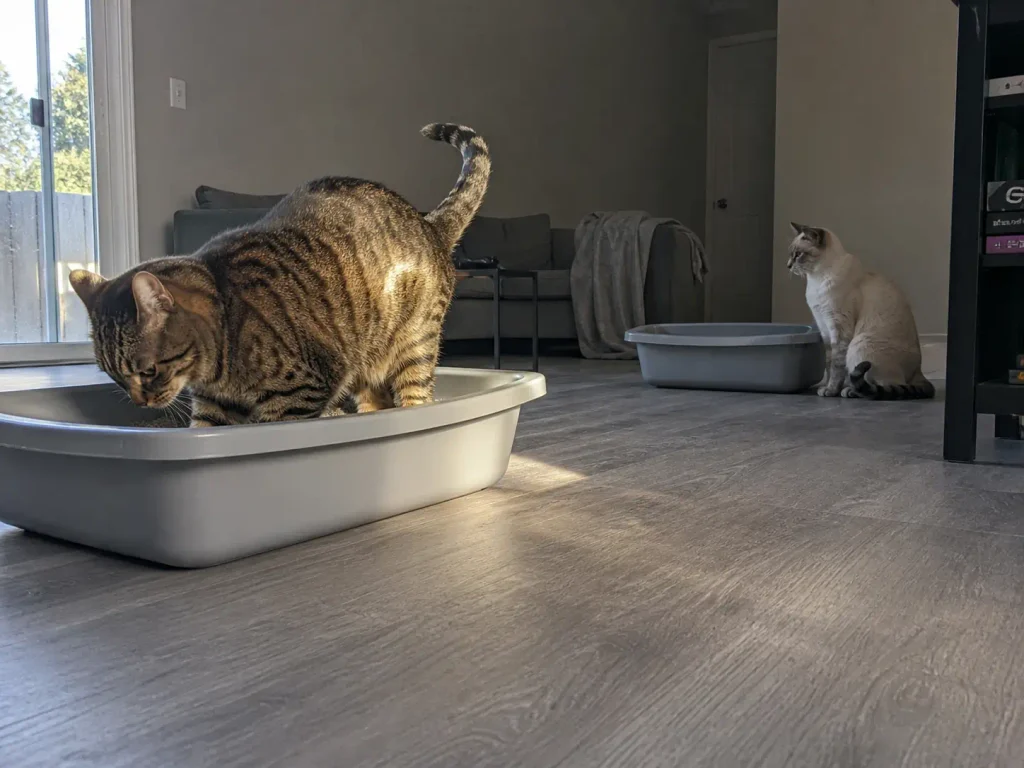
The reflex with a second cat is to pour more into the same box, on the theory that twice the traffic needs twice the litter. It does not work, and it is worth knowing why before you spend on it. The target depth is identical whether one cat uses that box or three. What doubles is the rate the layer disappears.
Same Depth, Twice the Decay
Budget roughly two to three extra pounds of litter per week for each cat beyond the first. That extra is not going into a deeper layer, it is going into holding the same layer against faster loss. With two cats the four-day top-off becomes a two-day top-off, and that is the whole adjustment.
There is a variable nobody publishes, so take it as reasoning rather than a sourced figure: a heavier cat compacts more litter per visit than a light one. An eleven-pound British Shorthair with short legs and a solid frame presses the layer down harder than a lanky eight-pound cat does, so two households running identical depths with identical litter can still need different top-off rhythms. Watch your own box for a week rather than trusting a per-cat table.
More Litter Is Not a Substitute for Another Box
Pouring five inches into a shared box does not buy you a spare litter box. The one cat one box rule, plus one, counts trays, and no amount of depth substitutes for a tray. It buys you unstable footing, more litter on the floor, and clumps buried too deep to find, which is the ceiling failure with extra steps. Two cats sharing one tray is a traffic problem and a territory problem, and no depth solves either.
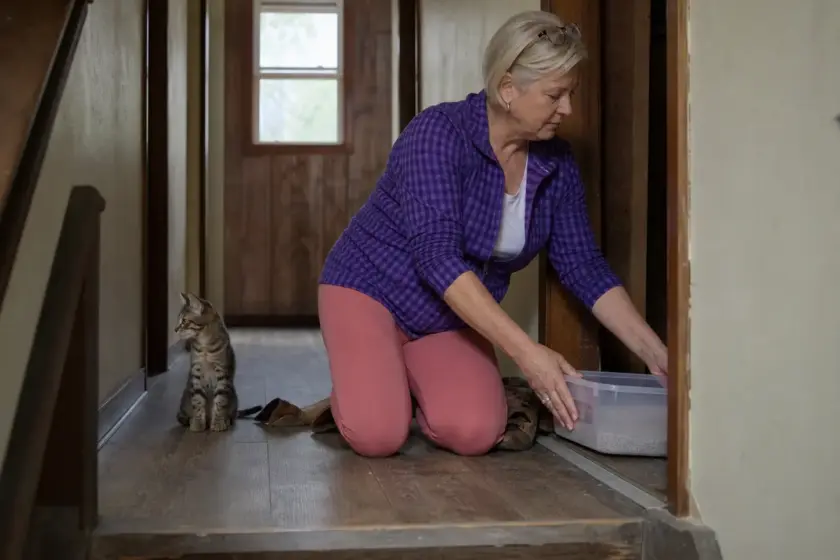
Move the boxes you already own to different rooms before you buy anything. Cats avoid a box where they can be cornered or met on the way out, and spreading them is free. The depth answer stops being the whole answer once there are two of them, and how many boxes two cats actually need is where that question gets settled properly.
Self-Cleaning Boxes Measure by Line, Not by Inches
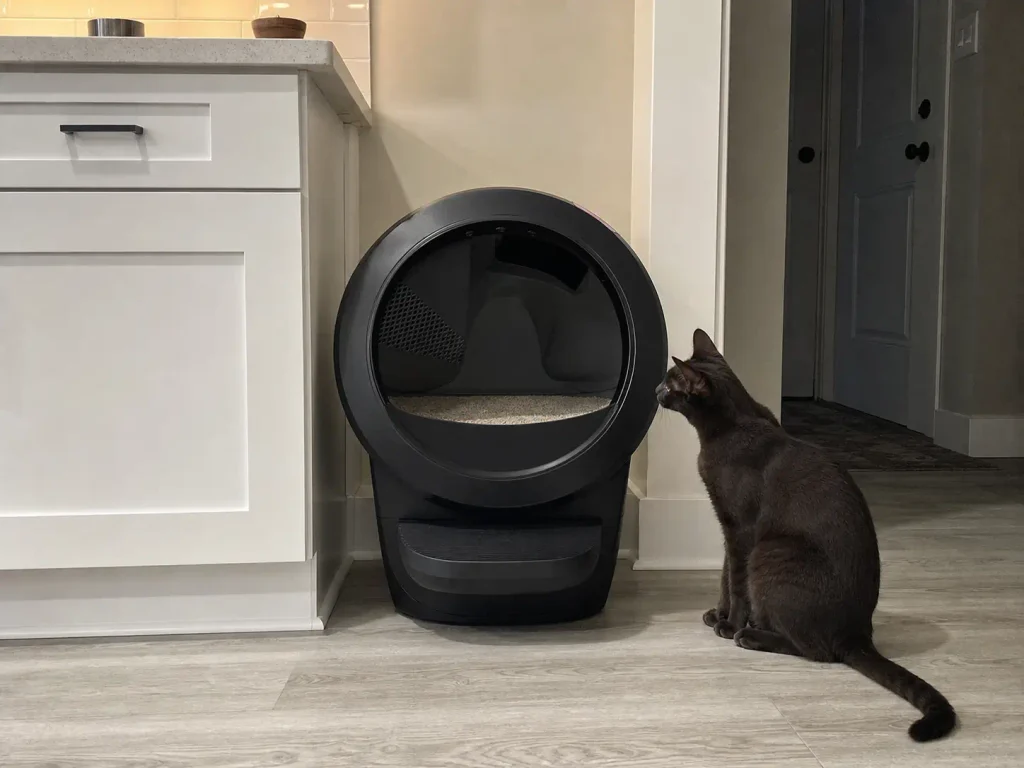
Everything above assumes a rectangular tray with a flat floor. Bring home an automatic unit and the ruler stops meaning anything, because a rotating globe has no flat floor to measure from. Two inches at the center is four at the side of a curve. If the unit came with a fill line, the line wins, and this is the one place in the article where you should ignore every number above it.
The Fill Line Replaces the Ruler
A self-cleaning litter box is specified by weight or volume, not depth, and the marking inside the drum is the whole instruction. On the Whisker Litter-Robot 4 that means filling to just below the raised fill line, which works out to roughly eight to ten pounds of clumping clay, or about a gallon by volume. It takes clumping litter only, which rules out the crystal you may have been using, and it needs floor space and an outlet in a room where the cat will actually go, which in a one-bedroom is a shorter list than it sounds.
The globe shape is doing the work here. Litter settles toward the bottom of the curve, so the depth at the center is naturally deeper than at the edges, and the sifting mechanism is engineered around that specific volume. A ruler is measuring the wrong thing in there.
Overfilling Is a Jam, Not a Buffer
Going past the line is not a safety margin. It is a service call. Extra litter above the marking can bind the cycle and stop the unit mid-rotation, and the fix is emptying the globe by hand, which is a job. More is not safer here, which is worth saying plainly because it is the opposite of the instinct that works everywhere else in litter box maintenance.
None of this changes what the material underneath wants, and the two ends of that range are worth keeping in view together. Clumping clay in a traditional tray runs three to four inches; a non-clumping crystal like PrettyLitter runs at about two in that same tray, in a bag small enough to store in an apartment without negotiating for the space. Same box, same cat, an inch and a half of difference. That is the article in one comparison.
Conclusion
Two to three inches for most litters, three to four if it clumps, two if it is crystal, and you check it with a finger in the corner rather than by looking at it. That first pour is the easy part.
The rest of it is the two things nobody says out loud. The figure is a height, not an amount, so a bigger box needs a bigger pour to land in the same place, and the box that fits your cat is bigger than the one you probably have. And the figure is something you hold rather than something you hit: every scoop leaves with litter attached, so a top-off every three or four days is what keeps Sunday’s depth true on Thursday.
Give it three weeks. Not because litter takes that long to work, but because a new refill habit is exactly what slips around week three, and that is when you find out whether the welded clumps come back. If they do, it was never the routine, it was the box or the layer.
Before you buy a single thing, go raise the depth in the box that is already in your bathroom and scrape the floor clean. Costs nothing, takes two minutes. If the clumps stop sticking, the litter was never the problem, and you just talked yourself out of a bag you did not need.
Amazon’s Audible — free for 30 days
Your cat won’t let you read. Let someone read to you.
Audible is Amazon’s audiobook library — thousands of titles, read out loud, on your phone. Free for a month, plus one audiobook to keep forever.
Frequently Asked Questions
01How Many Inches of Cat Litter Should Be in the Box?
Two to three inches for most litters, and three to four if it clumps. Crystal and non-clumping litters work at about two, so the litter depth you need depends on what is in the bag as much as on the box.
02Is It Bad to Put Too Much Litter in the Box?
Yes, and it fails in the opposite direction from too little. A deep, loose layer gives poor footing, gets kicked over the wall more easily, and buries clumps deep enough that the scoop passes right over them.
03How Often Should I Add More Litter?
Every three or four days in a traditional box, because every clump you scoop takes litter out with it. A full change runs every two to four weeks, sooner in a multi-cat household where the layer drops twice as fast.
04Why Do the Clumps Stick to the Bottom of the Litter Box?
Almost always because the layer is too shallow. Urine reaches the tray floor before the clay has finished reacting, so the clump welds to the plastic instead of forming free. An old scratched tray makes it worse at the same depth.
05How Much Litter Do You Put in a Litter-Robot?
Fill to just below the raised fill line, which is roughly eight to ten pounds or a gallon by volume. Inches do not apply inside a globe, and going past the line can jam the cycle.
Leave a comment