Why Cats Groom Each Other, and What the Spot Says
Learn why cats groom each other and read the session in your own home: affection, shared scent or a claim on one spot (+ the free second-cushion fix).

Alfredo RamsesFounder · November 17, 2026 · 20 min read

On this page10 sections
- 1Why Cats Groom Each Other Is a Sentence in Cat, and It Swaps Smell While It Says It
- 2Thin Fur on the Cat Being Licked Goes to the Vet Before It Goes to the Room
- 3The Reach Explanation Is Weaker Than It Sounds, and Where the Habit Starts
- 4One Cat Does Most of the Licking, and Who Gets Licked Is Information
- 5Tender or Tense Is Decided by How the Session Ends
- 6If They Only Groom in One Sunny Spot, the Apartment Has One Spot
- 7A Quick Self-Groom Mid-Session Means Enough, and Your Hand Can Take Some of the Work
- 8When the Grooming Has Not Started, or Stops After a Trip Out
- 9Count the Spots Tonight, Then Watch How the Next Sessions End
- 10Frequently Asked Questions
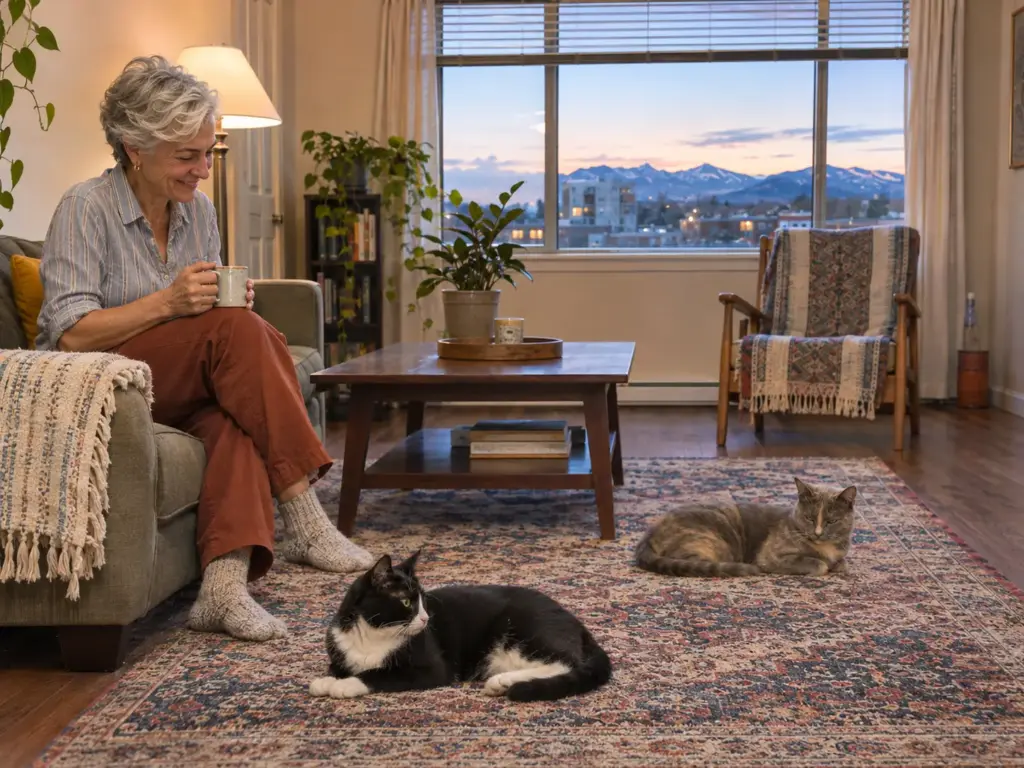
You come around the corner and one cat has her face pressed into the other’s neck, tongue working, while the cat underneath has gone slack with his eyes shut. A minute later a different pair does something that looks identical and ends with a dry nip and one cat walking off. Why cats groom each other has no single answer, because the same lick can be touch, a swap of smell or a claim on a warm spot, and the apartment tells you which.
International Cat Care counts mutual grooming among the ways cats communicate by touch, with scent exchanged along the way. What follows reads the lick the way the cats mean it: what it says, when the fur of the licked cat is a vet’s question, and where in your home it all happens.
Quick Answer
Cats groom each other because licking is touch that also blends the household’s smell into one, and it is more social than hygienic. How the session ends and where it happens tell you whether it is affection, shared scent or a claim on space. Thin fur on the cat being licked goes to the vet.
Why Cats Groom Each Other Is a Sentence in Cat, and It Swaps Smell While It Says It
Touch Is a Language, and Licking Is Its Longest Sentence
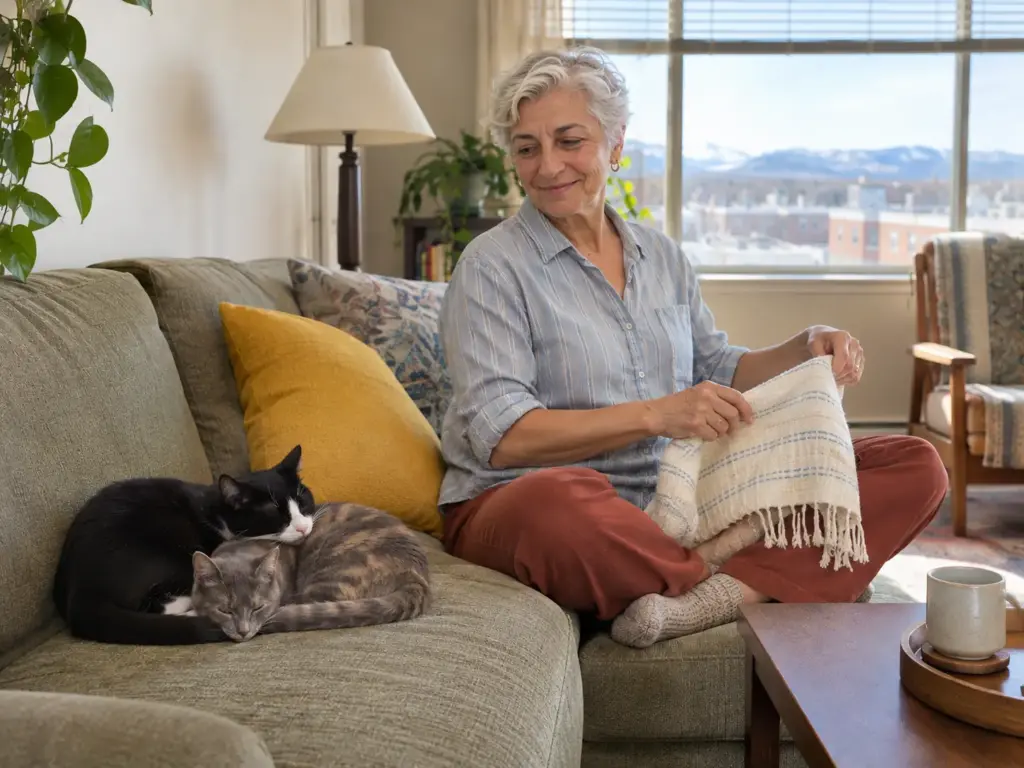
Cats talk with their skin as much as their voices: rubbing along a leg, touching noses, sleeping curled into each other, and mutual grooming. International Cat Care lists allogrooming among the ways cats touch to communicate, and on that same page it says that “Cats using each other as ‘pillows’ and backing up against each other and intertwining their tails is believed to be a form of social bonding.” A lick belongs to that family. It is simply the longest sentence in it, because it needs minutes, a receiver who holds still, and a licker who keeps choosing to continue.
So social grooming is not a chore someone is doing for the other cat’s coat. It is a statement written with the tongue, and the other cat is reading it as it goes. You can even see the reading: the session often stops the moment the receiver opens his eyes, and the licker is left with her tongue half out. That pause is part of the conversation, not a glitch in it.
One Shared Smell for the Whole House
Touch carries scent, and International Cat Care notes that many touch interactions come with an exchange of scent marking. Every grooming session therefore mixes the smell of the two cats a little more. Nobody has to understand how that works to see what it produces in a home: a pair that smells alike, and a group scent that makes the household read as one group instead of two strangers sharing floor space.
That shared smell is easy to break, and you notice it when it happens. A cat who returns from outside the home has lost the familiar scent of the house and smells like somewhere else, and the cat who stayed may meet him with a hiss instead of a lick (more on that in the last section). If you move smell between cats on purpose, why moving smell from one cat to another can backfire, and where the item goes is worth reading before you rub anything on anyone.
Where a Lick Sits Among the Other Signals
A single lick settles very little. International Cat Care reads social groups from five things at once: which cats spend time together, which groom each other, which sleep close, which play, and which touch noses when they greet. Grooming is one of five, so a pair that licks is not automatically a bonded pair, and a pair that never licks is not automatically cold. If you are still deciding whether two cats are a true pair, how to tell whether two cats are a real bonded pair or just housemates takes the whole picture; this article starts from one act.
Here the act matters for a plain, practical reason. In a two-cat apartment, whoever watches the grooming ends up watching the sofa, the bed and the windowsill, because that is where it takes place, and that line of thought runs all the way to the section on the sunny spot.
When you see the lick, look at the place too. A pair that always grooms on the same cushion is telling you something about that cushion.
Thin Fur on the Cat Being Licked Goes to the Vet Before It Goes to the Room
The lick itself does not hurt anyone. What you can see afterward is the report, so run a thumb over the nape and the top of the head of the cat who gets licked most. If the fur there feels thin, there is a bald patch, the skin looks broken or there is a sore, that cat needs a vet visit. What it is and why it is there belongs to the vet, and no change to the apartment stands in for that visit.
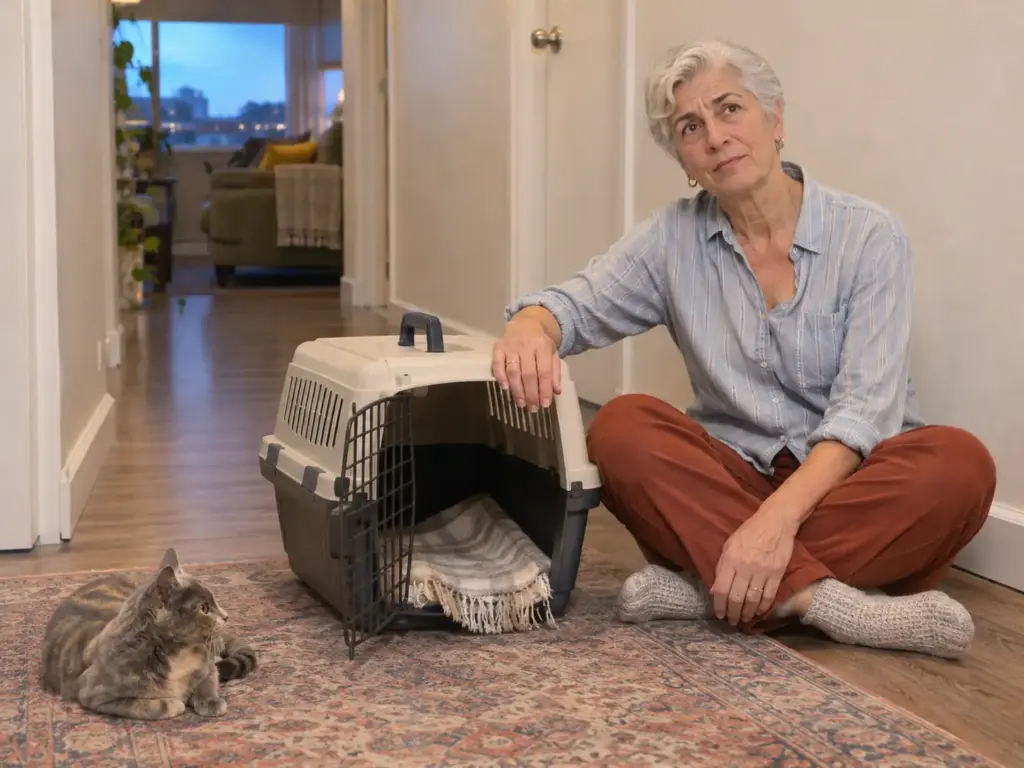
The other half of the pair is a house question. When one cat licks until fur thinning shows on the other, ask what the licker is short of at home. International Cat Care links tension and limited resources to chronic stress, and says that over-grooming can sit at the far end of that road. So the response is to look at how the multi-cat household is divided (the sunny-spot section below does exactly that) and not to scold the cat with the busy tongue.
If either cat goes outdoors, the two share more than affection, and that is a prevention question for the vet, for both of them, asked once and without guessing at remedies. A cat who washes himself without stopping is a phone call as well, not a reading. And don’t pull a pair apart by force or try to doctor anything at home before someone with a license has looked.
A nape that looks fine in a photo can feel thin under your fingers. Check by touch every so often, not only by eye.
The Reach Explanation Is Weaker Than It Sounds, and Where the Habit Starts
Why “They Can’t Reach” Does Not Hold Up
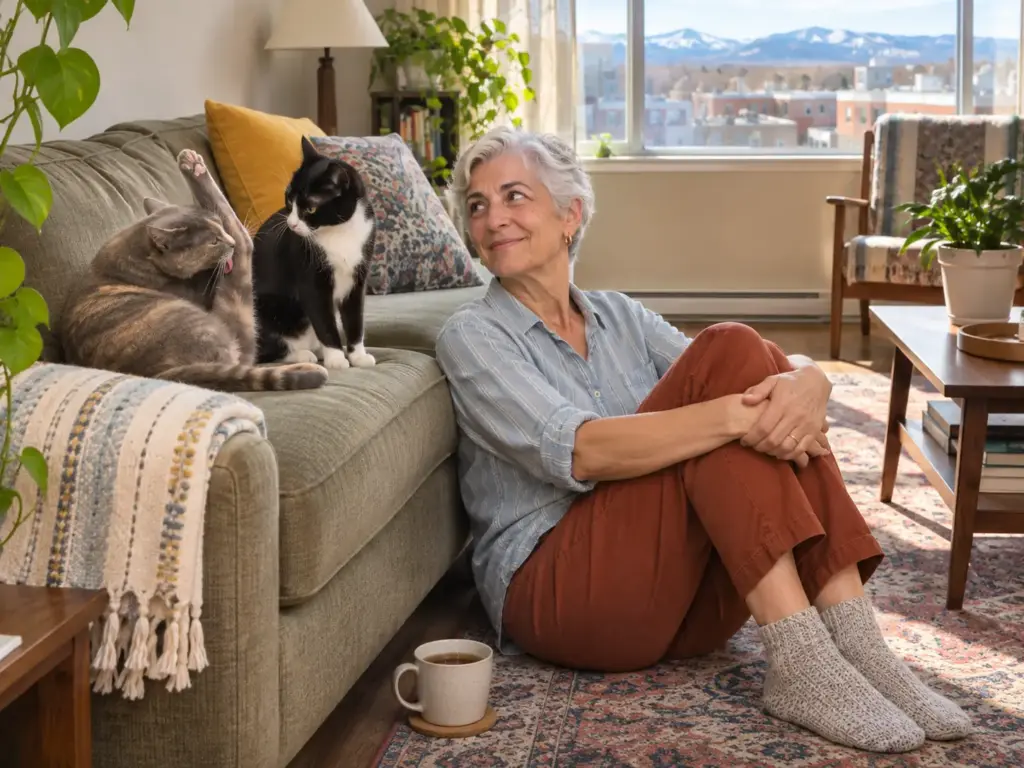
The tidy explanation says cats lick each other’s crown and nape because they cannot get there themselves. Watch a cat fold in half on the sofa and the story starts to wobble. International Cat Care’s guide to grooming a cat says the cat’s frame bends and flexes so that every part of it is within easy reach, and that grooming also does social work, keeping bonds strong when cats groom each other.
That leaves the social reading as the stronger one, and it matches what you see at home: a cat who can twist around and wash her own nape still spends minutes on the nape of her housemate. Grooming takes up a good part of a cat’s day. Who gets the licking, where and how it ends carries the information.
Where the Habit Starts: the Mother, the Litter and Growing Up Together
The habit begins in the litter, with the mother and the other kittens, and that is as far as this goes. How the mother’s licking works and what it is for is physiology, and none of it is needed to read what two adult cats are doing on your sofa. What matters is that a cat who grew up in a pile of cats arrived at the lick long before she arrived at your apartment.
Related Is Not the Same as Raised Together
The idea that related cats groom more has the cause backward. International Cat Care says littermates brought up together are more likely to get along, particularly if they were very sociable as kittens, and what counts there is the growing up, not the shared parent. Two littermates separated at eight weeks and reunited as adults are two strangers with the same mother, and they may sit through an introduction like any other pair.
One more detail you can check at home: the nape and the area behind the ears are where most of the licking lands, and it is nearly always the same cat doing it. That lopsidedness is worth a closer look.
Watch whether the cat doing the licking can twist around and reach her own nape with ease. If she can, reach is not why she is working on someone else’s.
One Cat Does Most of the Licking, and Who Gets Licked Is Information

The Designated Licker and the Cat Who Gets Licked
Nearly every home with two cats has one groomer, the cat who licks, and one receiver, and it almost never runs the other way. The receiver is the one who stays still. The licker is the one who decides when the session is over. Neither role is a verdict on how much they love each other, and the habit is no sign of a failing pair, because a single lick doesn’t settle who is bonded to whom; International Cat Care says to read it with the other signals.
Which cat begins and which cat ends is still worth knowing, because it is a fact about your house: who is comfortable approaching, who is comfortable being approached, and which spot the sessions keep choosing.
In a Trio, Count the Pairs, Not the Cats
Three cats are not one gang. They are three pairs, and each pair licks, or doesn’t, in its own way. The cat who never gets licked in a trio is not being punished; he may be in the stage before grooming with one of the others, which the last section covers. How three cats sort themselves into separate pairs follows that arithmetic through, including who ends up outside the licking.
The Cat That Has Nobody to Lick, and Licks You
A single cat who licks your hand or your hair is doing the same thing with a different recipient: touch, and a smell shared between the two of you. It reads like the cat-to-cat version, and it calls for no rule about letting it happen or stopping it.
One more case gets a short mention. A cat who goes deep into the other’s ears with his tongue is not something to interpret from the sofa, whether it cleans anything or simply gets him a taste. If the ear of the receiving cat shows anything unusual, it is a call to the clinic.
Keep a note for one week of who starts each session and who ends it. A pattern that holds is a fact about your house and says little about how much they like each other.
Tender or Tense Is Decided by How the Session Ends
A Long Session With Closed Eyes Versus a Short Repeated Lick at the Neck
Two sessions can start identically and end in different places. In the first, the licker works for several minutes on the crown and nape, the receiver’s eyes close, and both cats are settled at the finish; that is touch and shared smell at work. In the second, the licking comes in short repeated bursts at the neck or head, there is a pause, a dry nip, and one cat gets up and leaves. The Trojan-horse lick, the one that looks like acceptance and then turns on the resident, belongs in this second group.
How a session starts does not tell you which one you are watching. How it ends does, and so does what each cat does in the minutes afterward.
The Body Language That Says Enough, Cat to Cat
International Cat Care gives a list of signs that a cat is uncomfortable being stroked or brushed: skin rippling or twitching, the tip of the tail moving, the head turning sharply, freezing, ears rotating backward, swallowing or licking the lips, a short rapid burst of washing his own fur, a growl or a hiss. That list was written for a person with a hand on a cat. Between two cats the same body language is the one in use, so it is a sensible way to read a receiver, without turning it into a diagnosis.
The charity also says a cat should never be groomed or stroked by force without a way to leave. A receiver in your living room needs the same: an exit, which means more than one route out of the spot where the session is happening.
Licking, Then Biting, Then One Leaves: Play or Not
Two questions sort most of these scenes. Were both cats relaxed before the session and are both relaxed again soon after? If yes, you were watching play or the end of a session. If one stays stiff, hides or stops using a room, it was something else.
For the pair that licks and then wrestles, how to tell a wrestling match from a real fight by who comes back after the pause answers what happens next.
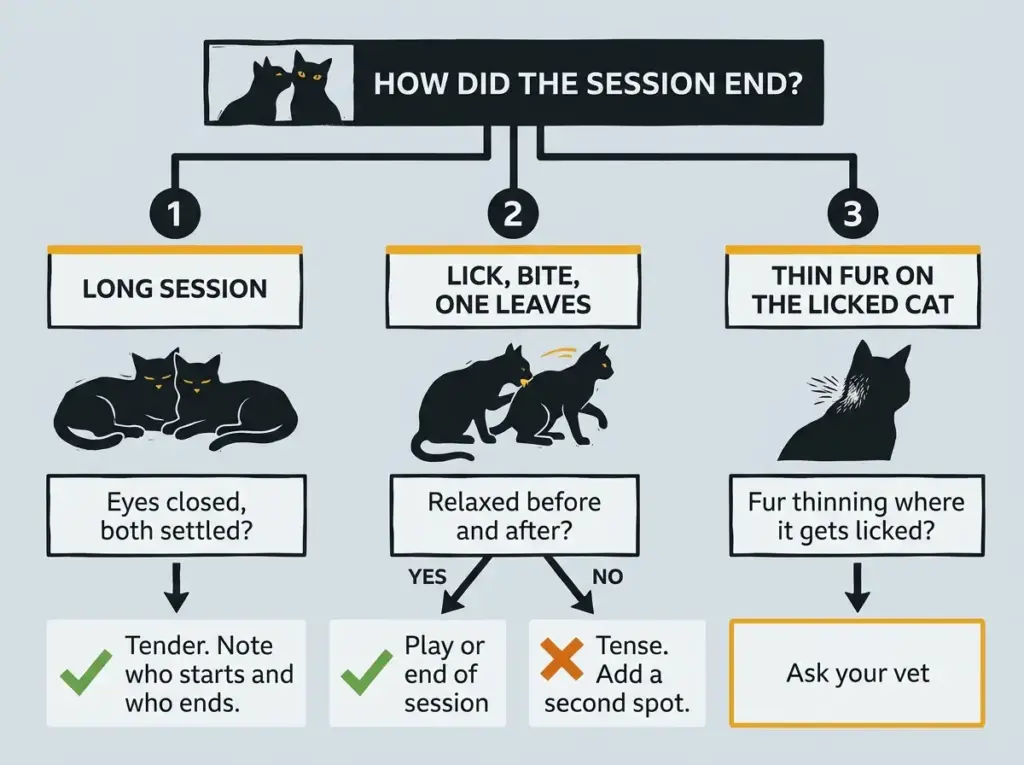
A dry nip at the end of a session is often one cat saying he has finished, or inviting a wrestle. It becomes a different matter only when the answers to those two questions turn.
What to Change When It Reads as Tense
If the session reads as social tension, resist separating the pair by force. Look at the spot where it happens and add a second one before spending anything (the sunny-spot section below shows how).
Watch the exit, not the start. A cat who stands, stretches and walks off at his own speed, then returns, is in a different story from one who leaves stiff and stays away all afternoon.
If They Only Groom in One Sunny Spot, the Apartment Has One Spot
Count Where the Pair Actually Grooms
Take two cats and one sunny windowsill, the standard arrangement of a small rental. If the pair grooms there and nowhere else, the apartment has a single spot, however many rooms it has. International Cat Care puts it in plain words: “Cats don’t share important resources with other social groups.” That covers beds, high resting places and exits, and International Cat Care’s guidance on multi-cat homes adds that cats may block a bed, or take one from another cat, to show who controls it.
Its formula for a multi-cat home is one resource per cat plus one extra, set in different places.
So the cat who always has the cushion is not lucky; he is holding it. Count the places where your pair really grooms: the sill, a shared blanket, the bed by the radiator. If the count comes to one, the one-per-cat-plus-one rule and why a spare in the same sightline does not count explains what a real second spot has to look like.
Two Cushions at the Same Window Beat a New Cat Tree
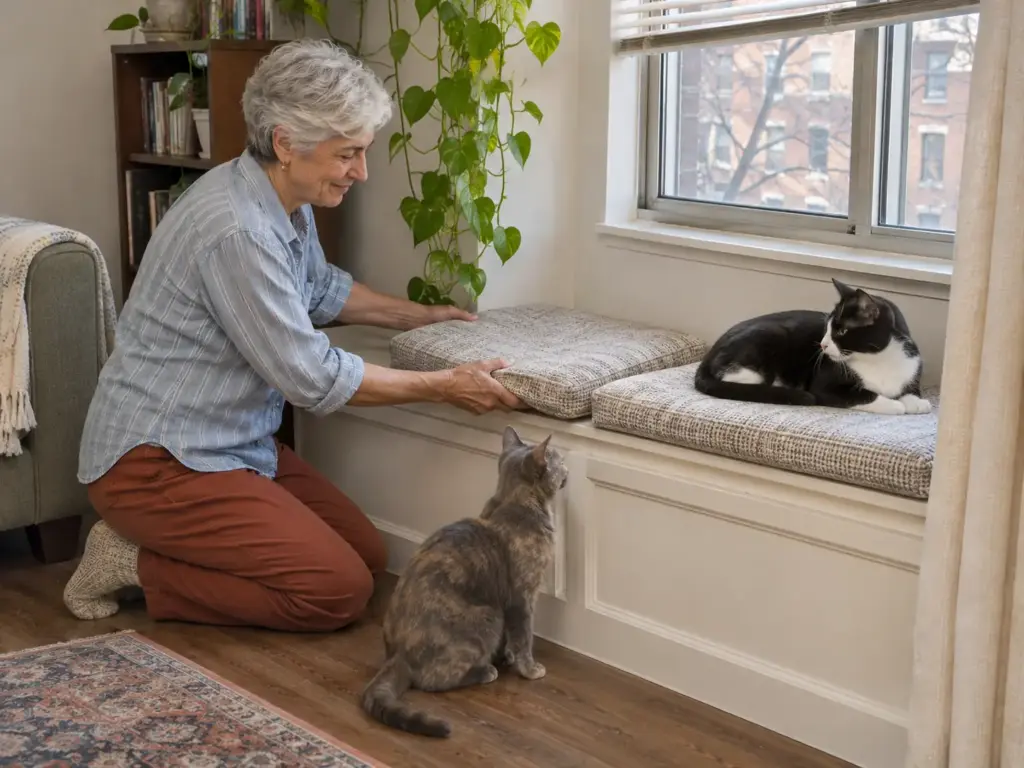
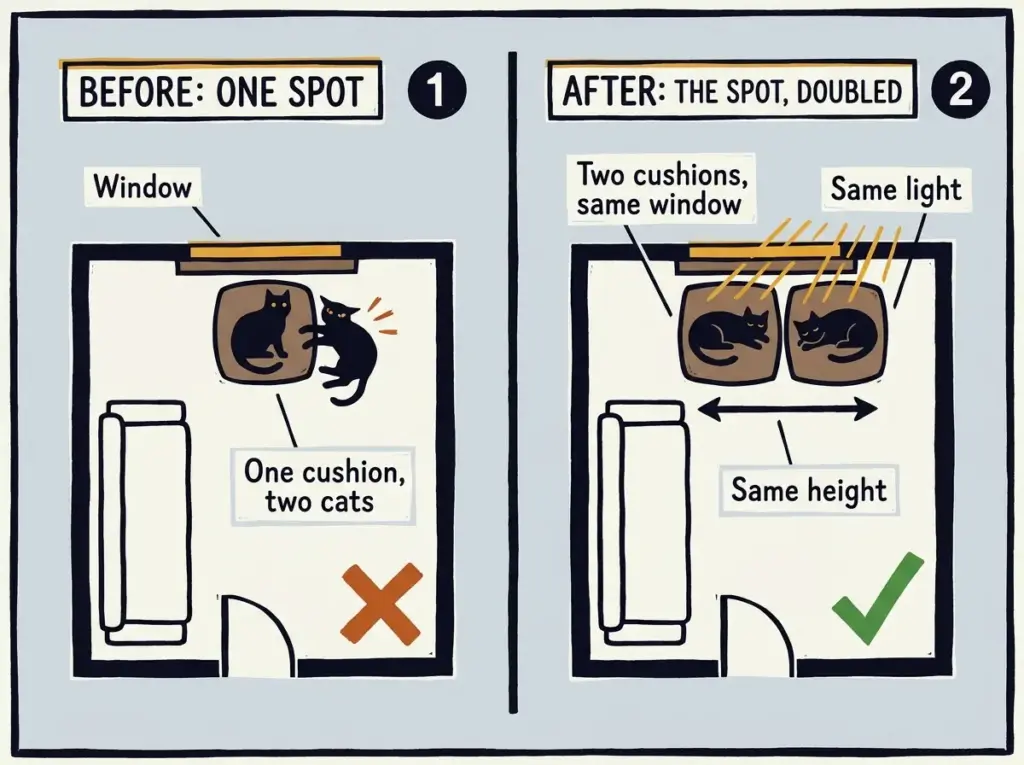
Copy the spot: a second cushion at the same window, at the same height and in the same light. Nothing needs to be bought beyond the cushion, and the arrangement does not depend on the size of the sofa. For a rental with no room to spare, how a small apartment gives two cats territory through exits, not square footage shows how far a copy of the spot can stretch.
After you put the second cushion down, watch for a couple of weeks. Does the cat who always held the first one stop blocking it, and do both cats use both? When tension rises or resources run short, cats tend to avoid each other or hold back normal behavior, and a cat who stops using a room, a bed or a route is saying the house is short of something. The thin-fur situation from earlier sits at the end of that same road, and the call to the clinic still stands.
A Diffuser Covers One Room, Not an Apartment
Free comes first, and the second cushion is free. If the tension persists after that, one plug-in is aimed at exactly this kind of friction between housemates: the FELIWAY MultiCat Cat Calming Pheromone Diffuser Kit (48 mL, a 30-day supply). It plugs into one outlet per room and needs about 4 feet of open space around it, away from furniture. FELIWAY itself puts the share of households that noticed an improvement at 84 percent, and that is the maker’s figure, not a trial.
Its limits matter more than its promise. The vial can run out before the 30 days it advertises, the oil can drip onto the floor, and some cats show no change at all. It also works on one room, so a closed door between the window and the bedroom is a boundary it will not cross. Which plug-in diffusers are worth trying in a multi-cat home, and what coverage to expect compares the options.
The second spot has to match the first on light and height. A cushion in a dim corner doesn’t count as a second resource.
A Quick Self-Groom Mid-Session Means Enough, and Your Hand Can Take Some of the Work
The Self-Groom in the Middle of a Session Is the Cat Saying Enough
Midway through a session, the receiving cat suddenly breaks into self-grooming on his own shoulder, a short, fast burst. That burst is on International Cat Care’s list of signs that a cat is not comfortable being stroked or brushed, and between two cats the careful reading is the same: a pause to reposition, which the licker will either respect or not. It is a way of saying enough, and it carries no diagnosis.
Self-washing that doesn’t stop, or that leaves thin fur or marked skin, is a different case and belongs to the vet, as the earlier section said. The chronic strain from short resources ends in that same place.
Weekly Coat Care by Hand Takes Load Off the Licker
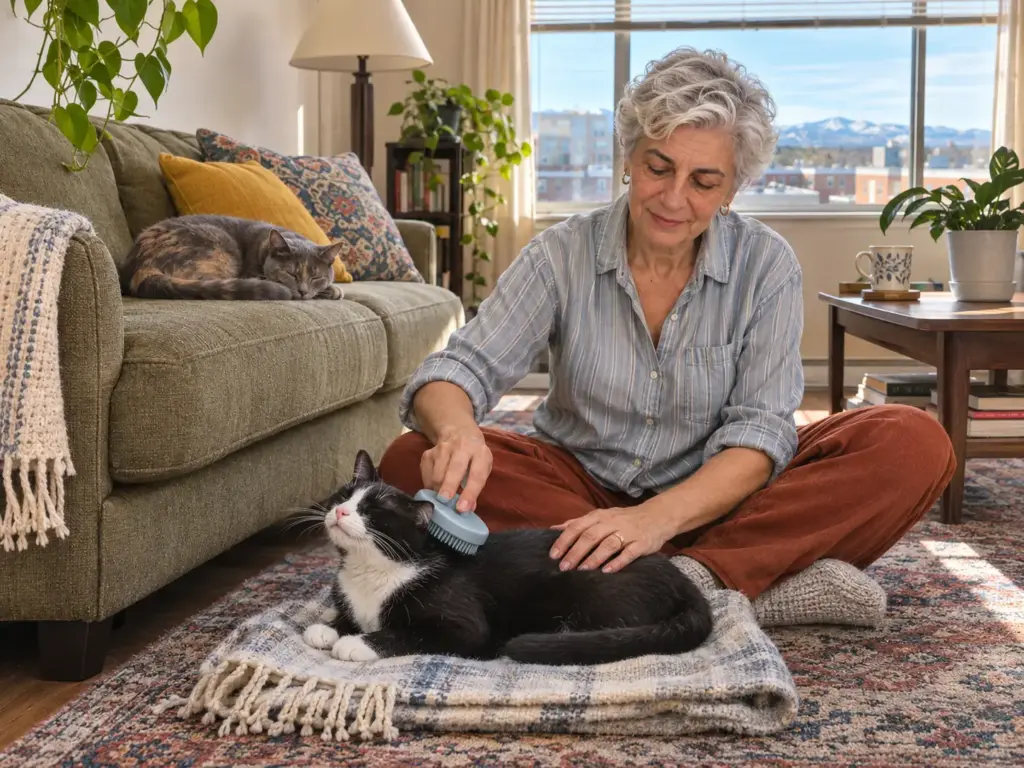
A short weekly brushing session by hand takes some of the load off the licker. International Cat Care suggests brief weekly sessions for a short-coated cat. This is upkeep of the coat and not a treatment of the spot the other cat licks, which is the clinic’s business. How often to brush a cat, by coat gives the weekly number.
Start with your own hand, then a damp rubber household glove; both do the job for nothing. A brush is the next step. The CeleMoon Cat Brush with Soft Rubber Pins, a washable silicone brush measuring 8 × 4.5 × 2.5 inches and weighing 2.3 ounces, is made for the cat who tolerates a handle.
The soft rubber pins are easy on skin, and it rinses clean. Hair clings to the pins and takes clearing between passes. Let the receiver walk away whenever he wants, as International Cat Care says a cat should always be able to.
The Cat That Will Not Take a Brush, and the Glove
Some cats refuse a handle altogether and still lean into a hand. For that cat the HandsOn Pet Grooming Gloves, five-finger and size Large, put the rubber nodules on your own palm. The pair measures 13.25 × 5.75 × 0.5 inches, so check it against your hand before you count on it, and it helps only a cat who accepts being touched by a hand at all. A damp rubber glove from the kitchen does the same job if the cat doesn’t mind it.
Brush the receiving cat in short sessions and let him walk away whenever he wants. The session he can end is the one he will agree to again.
When the Grooming Has Not Started, or Stops After a Trip Out
Eating Near Each Other Is a Step, and Grooming Is a Later One
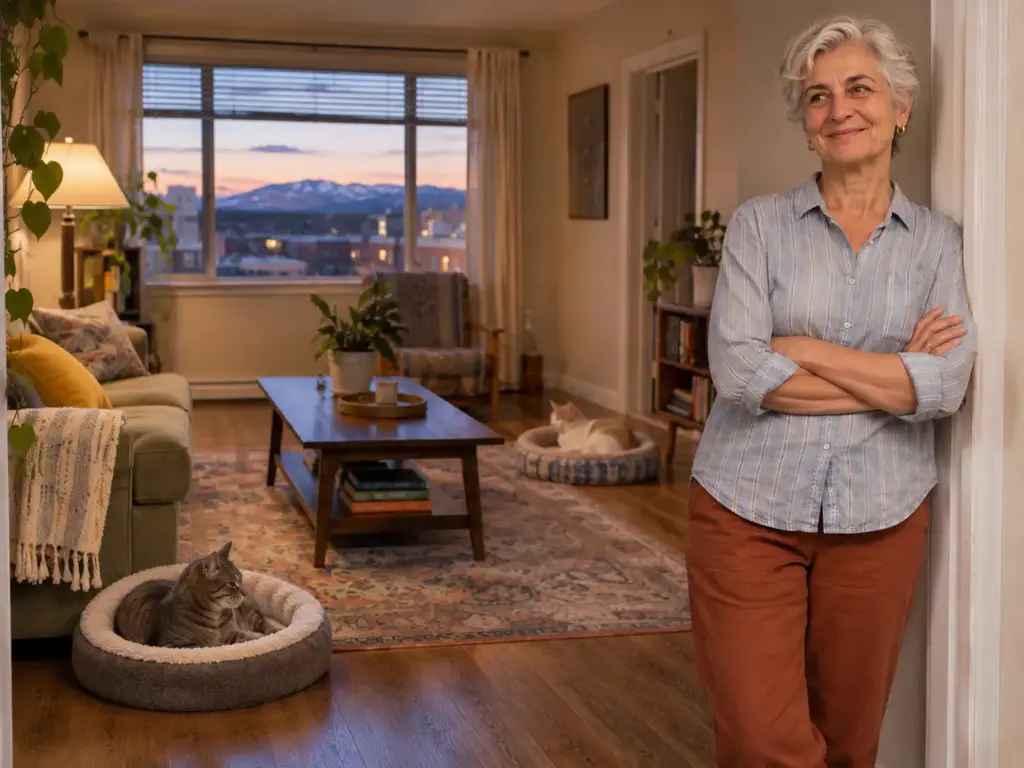
Two cats who eat in the same room and keep sleeping together on the same bed, but never lick, are not cold. They are at the stage before. Grooming is one of five signals, and in a new pair it tends to come after the others. The source gives no number of days, so don’t wait for a date; read the pair as a whole.
How to tell a slow introduction from one that is going wrong helps with exactly that call.
If one cat keeps avoiding the other and nothing in the house explains it, that is a question for the vet, not for the furniture.
What the House Can Do Before Any Licking: Beds, Bowls and One High Place Per Cat
You can set the house up so the lick has room to show up, without forcing contact. Two food bowls in different places, two beds, one high place for each cat: the same one-per-cat-plus-one idea from the sunny-spot section, applied before the behavior appears. No shared blankets thrust on a pair that hasn’t asked for them, and no pushing them together.
The Cat Who Comes Home Smelling of Somewhere Else
A cat back from a trip out smells wrong to the one who stayed, and the welcome can be a sniff and then a hiss from the cat who licks him every morning. That is the group smell broken, not a new fight. Why two cats that lived together for years start fighting after one has been out covers the cases where it does not blow over.
The free move goes first: leave the blanket of the cat who stayed and the blanket of the cat who returned where each can find them. If a small purchase would help the place where they meet, the FELIWAY Classic Cat Calming Spray comes in a 60 mL bottle with about 50 sprays, each lasting 4 to 5 hours.
It is for one spot and one moment, such as the carrier, the blanket or the bed the pair shares, and it doesn’t calm the cat; it is a resource for that place. It is expensive for what it is, the bottle runs out fast, some households see no effect, and some cats dislike the smell of the spray itself. Where a calming spray goes for two cats, and where it is wasted compares sprays and spots. The spray is the small, targeted option, and the room-wide diffuser from the sunny-spot section is the larger one.
The day one cat comes back from outside, leave the blankets of both cats where each can find them, and skip the staged reunion in the hallway.
Count the Spots Tonight, Then Watch How the Next Sessions End
Cats groom each other because the lick is touch that also keeps one scent in the house, and it is more social than hygienic. How a session ends and where it happens tell you whether it is tenderness, tension or a house that is missing a spot. A second spot with the same light and the same height comes before any new furniture or product. Thin fur on the cat being licked is for the vet to see.
Give a new cushion a few days before you judge it; the cat who always held the first one takes longer to let go of it. After a couple of weeks, look again: do the sessions end without the nip, and do both cats use both spots? With newly introduced cats, the check runs as long as the introduction does.
Tonight, note where your cats actually groom, and if the answer is one place, put a second cushion at that same window at that same height.
Frequently Asked Questions
01Why do cats groom each other?
Cats groom each other because licking is touch that also mixes the household’s smell into one, and it is more social than hygienic. A cat can reach every part of herself. How the session ends and where it happens show whether it is affection, shared scent or a claim on space.
02What does it mean when my cat grooms another cat?
It depends on how the session ends. A long one with both cats settled is touch and shared smell. A short, repeated lick at the neck with a dry nip and one cat leaving is a negotiation, not the end of a friendship. Thin fur on the licked cat is a call to the vet.
03Why do my cats lick each other and then bite?
Most often one cat has finished, or wants to play. If both are relaxed before and after and recover quickly, it is play or the end of a session. If one hides or stops using a room, look at the spot and add a second one.
04Do cats groom each other because they can’t reach certain spots?
International Cat Care says a cat’s frame bends and flexes enough to reach everywhere easily, so the reach explanation is the weakest one. The social reading is the stronger one: grooming is touch, shared scent and a way of keeping bonds.
05Why don’t my two cats groom each other?
A pair that eats and sleeps near each other without licking is usually at the stage before, since grooming tends to follow the other signals. Give them two bowls, two beds and one high place each, without forcing contact. If one avoids the other and the house doesn’t explain it, ask the vet.
Leave a comment