Play Fighting or Real Fighting? Seven Days Will Tell
Play fighting or real fighting? Read 4 signs after the pause, log 5 boxes for 7 days, and know when a wound means vet first [one-door homes]

Alfredo RamsesFounder · November 3, 2026 · 15 min read

On this page8 sections
- 1Play Fighting Is an Agreement; a Fight Is One Cat Ignoring the Other's No
- 2A Wound, Torn Fur or a Sudden Change Goes to the Vet First
- 3Watch the Break: Who Gets Followed and Who Comes Back
- 4Count One Week, Not One Minute
- 5Where Play Tips Over: The Steps Before a Fight
- 6The Cat That Keeps Going: Kittens and Adults in One Small Home
- 7Open One Exit Today, Write the First Line Tomorrow
- 8Frequently Asked Questions
You are rinsing a mug when a shriek comes from the hallway, and by the time you turn around one cat is sprinting past the sofa with the other close behind. One loud minute cannot tell you whether this is play fighting or real fighting, and the cat who bolted had a reason: in an apartment with a single door, running is the only way he has of saying no. Noise is the weakest evidence in the house, and the pause that follows it is the strongest. Below you will find what to watch once the chase stops, a week of notes that settles the question, and the signs that send you to a vet before you touch anything in the home.
Skip the noise and watch the first minute after the chase pauses. Each row is something you can see from the sofa.
| After the pause | If it is play | If it is a fight |
|---|---|---|
| Who follows whom | The chased cat leaves and the chaser finds something else to do | The chaser keeps coming, around the corner and across the room |
| How the chased cat returns | Wanders back by himself, loose and curious | Stays away, or shows up only once the other cat is out of sight |
| The cat that goes quiet | Flops, sits or grooms, then rejoins | Stays low and flat, ears back, and does not rejoin |
| Who gets to chase | The cats swap places within the session | The same cat is the chaser every time |
A wound, torn fur or a sudden change in either cat goes to the vet before anything else on this page.
Play Fighting Is an Agreement; a Fight Is One Cat Ignoring the Other’s No
A pair that got along for weeks can drift after a few days of rough play, and the drift has a recognizable shape: one cat does all the insisting, and the other quietly changes where he sleeps. Nobody decides that a game has become a fight. It happens one unanswered no at a time, and the cat who stops turning up on the bed is the one answering.
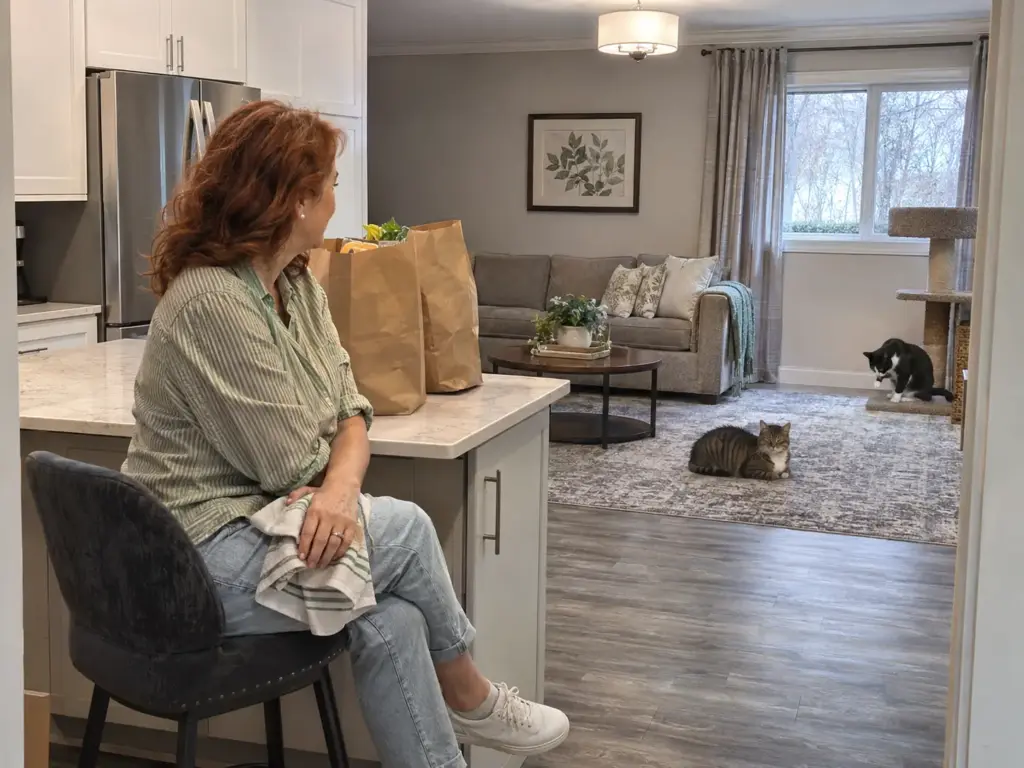
Play fighting is an agreement that both cats keep, with turns and a pause that either one can call. A fight begins when one cat stops honoring the other’s refusal. The quick read of sound, ears and tail belongs to the guide on stopping a fight while it is happening and sharing an apartment with no spare room, so this page stays with what the pattern looks like across hours and days.
Who Starts, Who Stops, and Who Swaps Places
Three things have to be true before a session counts as an agreement, and you can check all of them from the couch.
- Turn taking shows up as role reversal: the cat who chased last time is the one being chased now.
- A pause is respected: when either cat stops, the other does not press on.
- Either cat can end the session by leaving, and the one who leaves is not followed.
Miss one of the three and you are watching something lopsided, even when it is quiet.
A Cat That Does Not Run Is Not Agreeing
The easiest mistake is reading the cat who stays put as a cat who is fine with it. A recent study of viewer comments on 11 videos of people playing with cats (about 1,100 comments in all) found that 75 to 93 percent were positive, while the cats in those interactions often stayed put, held back or froze to keep their own risk low. The study is about people and cats, not two cats together, but a freeze response read as contentment is the mistake you are about to make from your sofa.
The posture to know is low and flat: crouched, legs folded underneath him, ears back, tail pulled in. A cat in that posture has agreed to nothing, and walking toward him or letting the other cat keep coming tends to tip the encounter into a fight. The cat who finally walks away is the one who ends it. If he has no room to walk away, he stays, and a staying cat looks to a person like a cat who is coping.
What One Cat Sees as Play and the Other Does Not
The same invitation can be a game to the cat sending it and a threat to the one receiving it, because play signals get misread between cats, most of all in a pair still learning each other.
You can watch for it. The sender’s version of the session is loose and bouncy; the receiver’s version has him taking the same route to the same hiding spot every time. The sender is having a game, the receiver is having something else, and the receiver gets the final say on which one it is. Once he starts planning his route around the other cat, it is no longer play from where he stands.
A Wound, Torn Fur or a Sudden Change Goes to the Vet First
What Goes to the Vet Before Anything Else
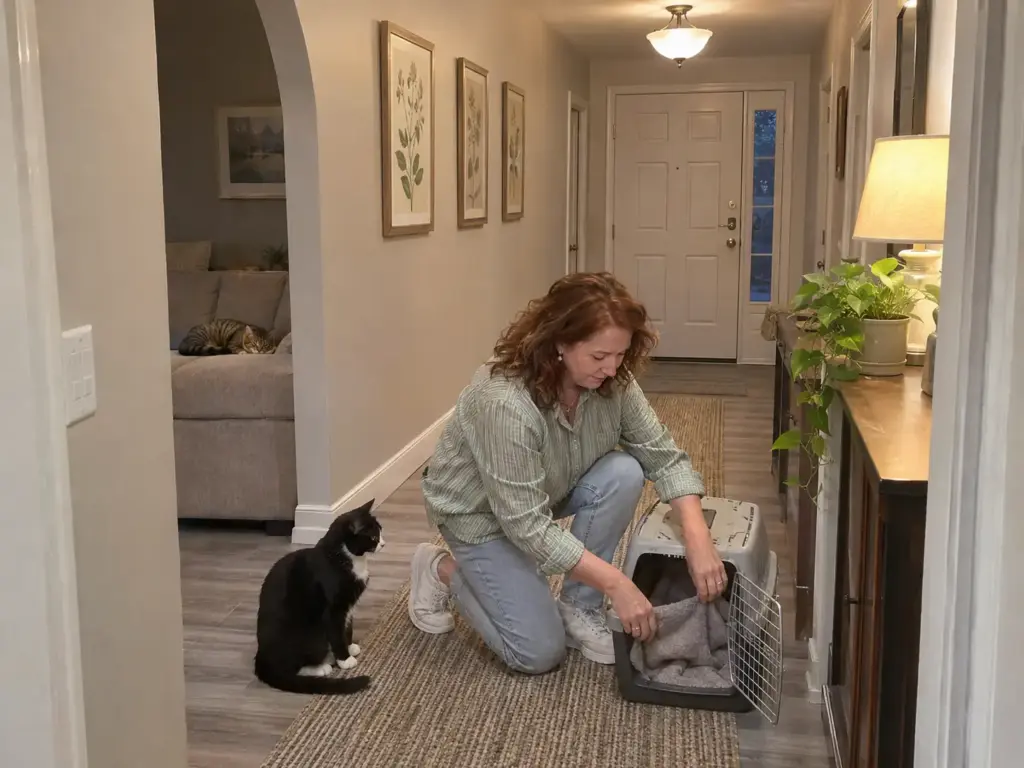
Three things skip the apartment and go straight to a vet: a wound on either cat, fur torn out in tufts, and a sudden change in a cat who tolerated the other for months. None of them is something to work out at home, so this page does not try.
A Pair That Got Along and Then Broke Down
A pair with a good start that then falls apart is the same kind of call. According to International Cat Care’s advice on introducing cats, “If you’re struggling with introducing your cats, or there’s been a breakdown after an initially good introduction, we recommend seeking professional help.” The wording covers introductions, but the logic carries to any pair that changes course after a good stretch: a professional comes before a plan.
What the Apartment Can Wait On
Make that call first. The exits, the sessions and the notebook in the sections that follow are all things a home can set up in the days before the appointment, and none of them changes why the appointment is needed. If neither cat has a wound and nothing changed overnight, the rest of the page is yours.
Watch the Break: Who Gets Followed and Who Comes Back
A chase is loud and fast, so everyone watching cats playing or fighting watches the chase. The useful part is the moments after it stops, when you can see whether the chased cat was a participant or a target, and that answers the play or fight question better than the noise did.
The Cat That Leaves and Comes Back on Its Own
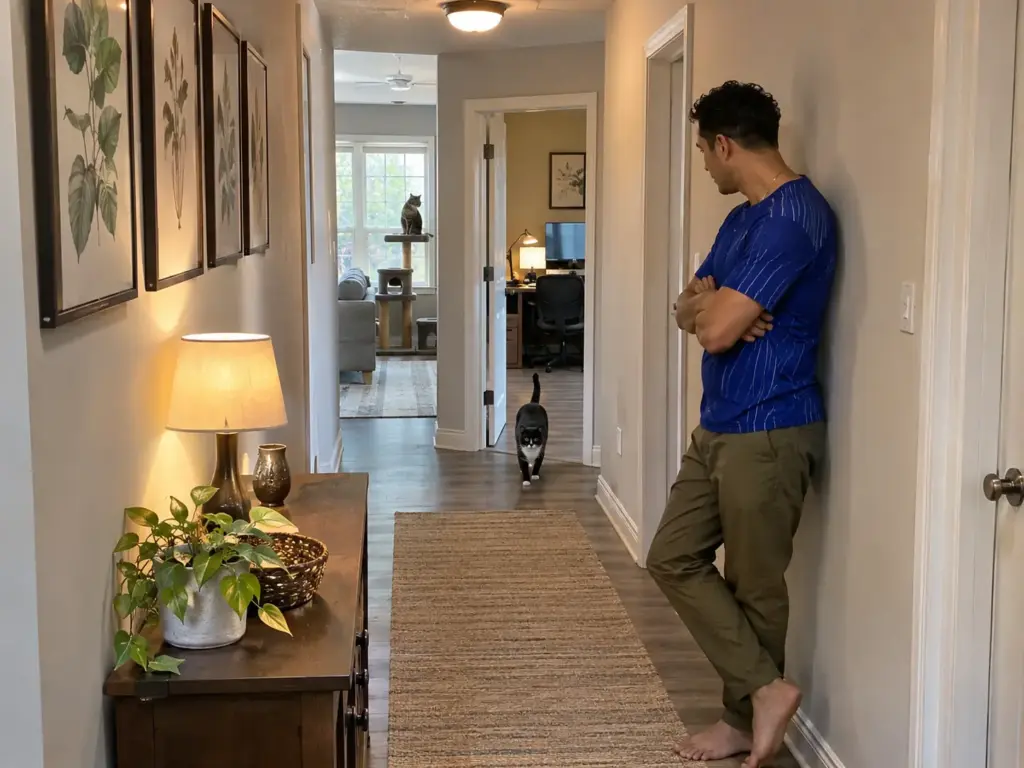
The test has three parts, and all three come after the pause. In play, the chased cat leaves, wanders back by himself and is not followed while he is gone. In a fight, the chaser keeps coming, or the chased cat stays rigid and out of sight. A tense encounter usually ends when one cat backs down and walks away, as the San Antonio Humane Society’s handout on aggression between family cats describes it, so the cat who is allowed to walk away is the one who ends it.
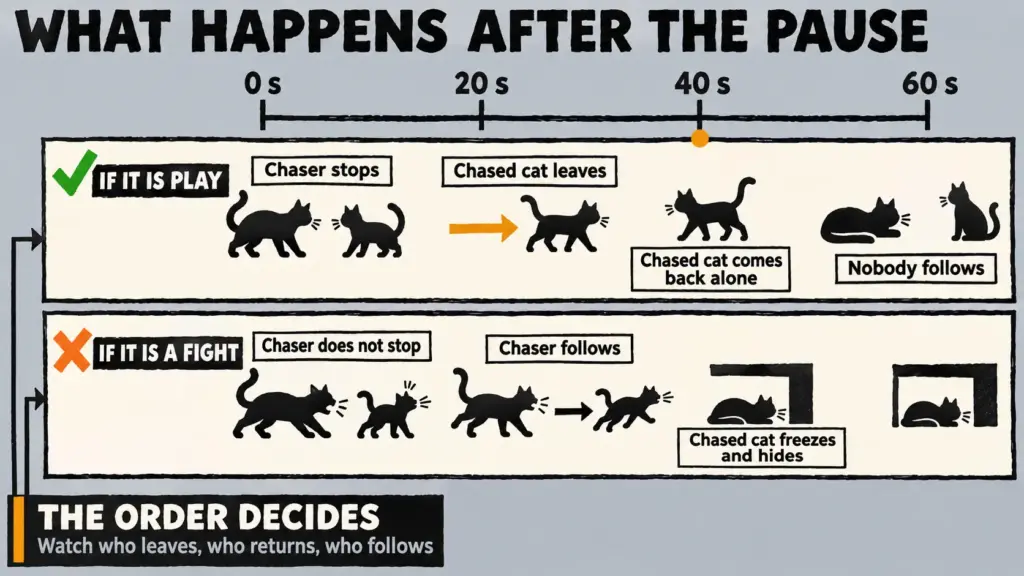
That first return tells you more than the chase did. A cat who comes back loose and curious was playing; a cat who comes back low, or only once the other is out of the room, was not. Three questions cover it:
- Does the chaser go after the chased cat, or find something else to do?
- Does the chased cat come back into the room by himself, or only once the other has left it?
- Later in the day, do the two end up within sight of each other, or in different rooms?
A real fight leaves a mark on the rest of the day, and a tense cat can take a couple of hours to settle.
The Cat That Goes Flat and Stays Put
Sometimes the chased cat does not leave. He drops low, lays his ears flat and stays where he is while the other cat circles or sits and stares.
This is the case that fools the eye, because nothing seems to be happening: no noise, no running, and often a tail that keeps flicking, as if the cat were still in the game. He is in the room because he has run out of options, and the other cat has not noticed. A puffed tail with raised fur along the spine is a louder version of the same message.
Reading the time between encounters instead of the encounter itself is the same habit that shows what changes between sessions when a cat introduction is going badly. When the chased cat stays down, look at the room instead of at him. Is there anywhere he could have gone?
Watch from a chair that is not between the cats and their exits. A person standing in the only doorway closes the chased cat’s way out, and then you never find out whether he would have come back.
A Hiss Is Judged by What the Other Cat Does Next
Hissing makes people want to stop everything. A short hiss in the middle of a game is common. A hiss that comes with a growl or a yowl is something else, and a real cat fight is loud in a way a game is not.
The sound alone does not settle it, but the next two seconds do. If the chaser slows, backs off or changes the subject, the hiss was a message and it landed, so the cats are still talking. If the hiss changes nothing and the chase carries on at the same speed, you are looking at the fight.
When the Chased Cat Has No Way Out of the Room
In a one-room apartment, or any home with one door, the chased cat’s options end at the doorway, and whichever cat stands in it decides how the session goes. A cat with no exit stays and takes whatever comes. The usual advice is to give him a hiding place, and under a bed in a small room that is a spot the chaser can sit at the edge of and watch. A route out beats a place to hide.
Start with what costs nothing, in this order. Pull one piece of furniture off a wall so the cats can circle the room instead of meeting head-on. Put a cardboard box or a low stool at the crossing where the chase tends to turn.
Then give the chased cat a high spot he can reach without passing the other cat, such as the back of the sofa, the top of a bookcase or a cat tree. None of it needs a drill, and all of it comes back out when the lease ends. Keep your hands out of any scuffle and let distance do the separating.
Count One Week, Not One Minute
A loud minute sticks in memory and a quiet good hour does not, so memory delivers the wrong verdict. Paper does not have that problem.
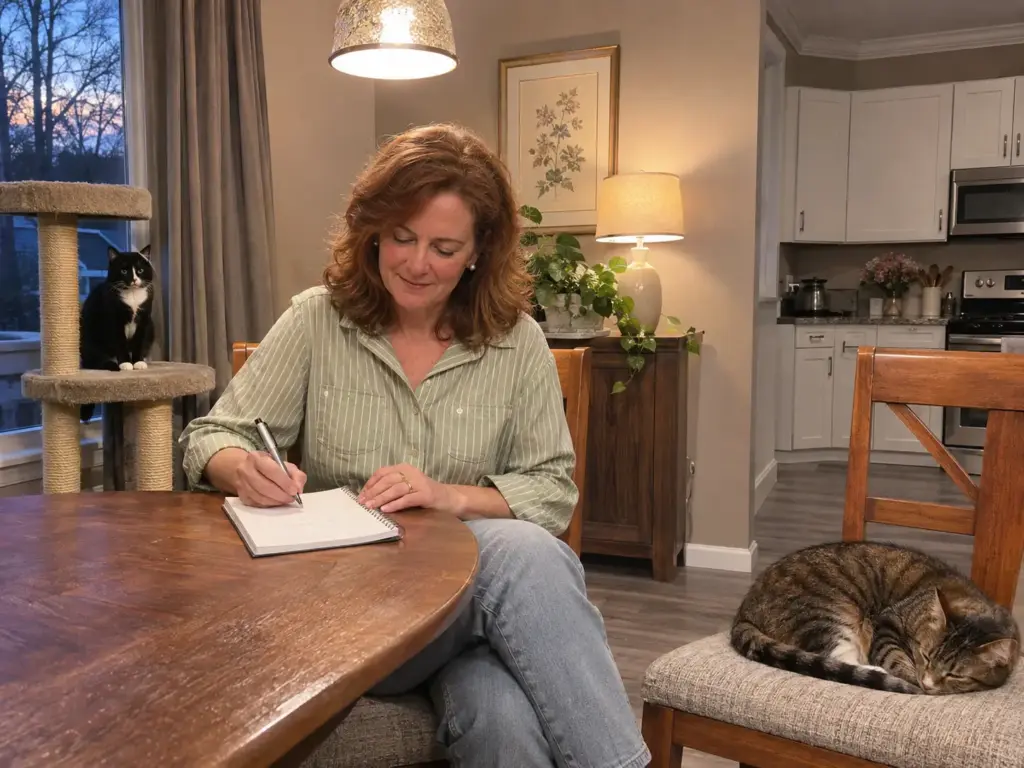
What to Write Down Each Day
Five boxes a day are enough, and the notebook can live in the drawer by the door (with the pen taped to it, or the pen will walk off).
- How many sessions happened.
- Who started each one.
- Who left, and whether anyone followed.
- Whether there was a hiss, and what the other cat did next.
- Whether either cat hid or moved his sleeping spot.
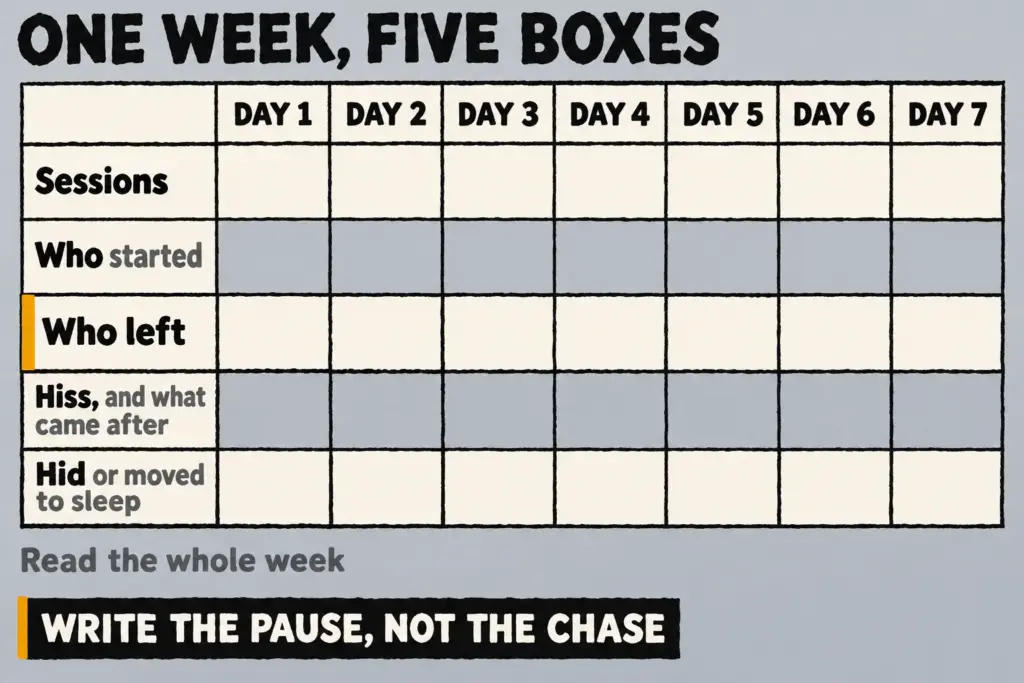
Write down the pause first and the chase second. By the time the chase is over you remember the noise, and the order in which the cats left and came back is the part that fades.
How to Read Seven Days of Notes
The count is this blog’s method, not a number from any study, so there is no magic total of incidents. Patterns weigh more than totals: the same cat starts every session, the same cat hides, the turns never swap, the hisses change nothing. One of those is a note. Two or three together are a pair that is drifting, and the more often cats fight, the worse the problem tends to get, which is why you count instead of trusting your recollection.
Read the week as one page. A good day does not save a bad week, and one ugly minute does not sink a good one. If the page looks like agreement, leave things as they are.
If it looks lopsided, you do not have to wait for day seven: change one thing in the apartment now and start a fresh week of notes. If a wound or a sudden change turns up in the middle of the week, stop counting and make the call described in the vet section above.
Where Play Tips Over: The Steps Before a Fight
Staring, Cornering and the Doorway Ambush
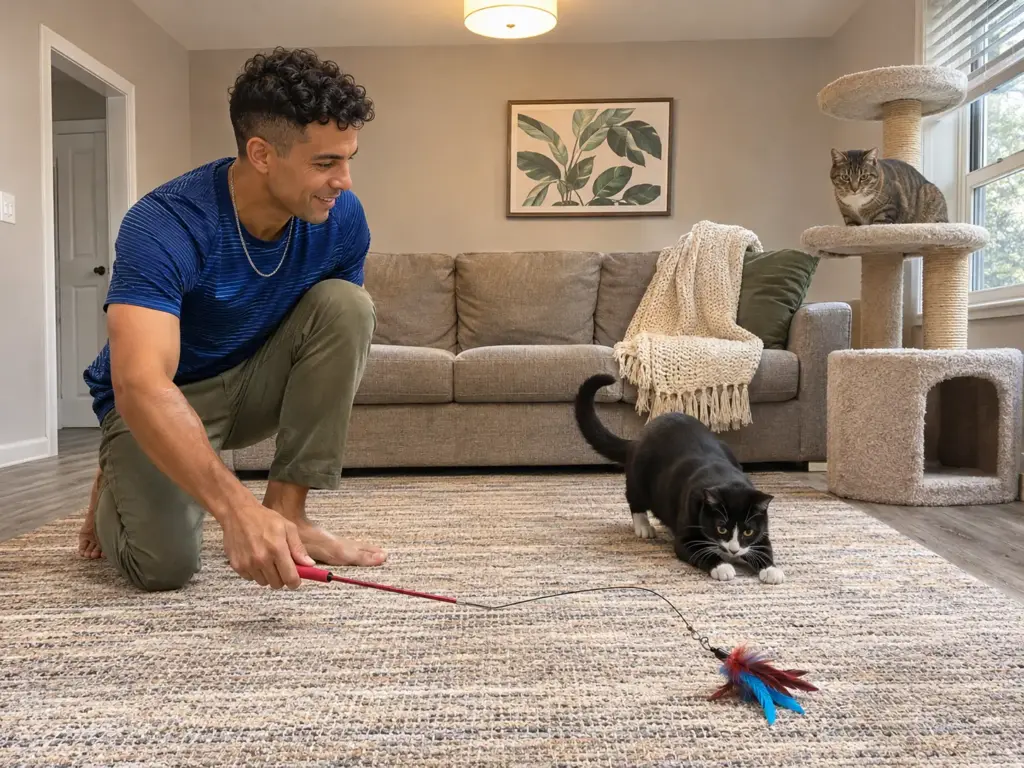
A session tips over in steps. First a fixed stare, then one cat closes the exit while the other ends up in a corner, and then the chase reverses, so the hunter turns into the prey. An overstimulated cat speeds the whole sequence up.
The places where this happens are predictable: the doorway, the hallway, and the corner by the feeding and litter areas, where one cat can easily block another. Two food stations placed out of each other’s line of sight remove one of those chokepoints, and feeding two cats in a small apartment, by floor plan shows how that works with the space you have. The staring cat has energy and one target, and a small apartment gives him nothing else to aim it at.
Cut the Session Before the Chase Starts
Free first: end the session earlier than feels necessary. Learn the cue (the stare, the low crouch at the doorway) and interrupt there with a soft toy tossed well past the chaser, or a noise made away from both cats, then stop.
More play is the usual answer to a cat with too much energy, and it only helps while the play is a hunt for a toy. A long, open-ended romp between the two cats just rehearses the chase. In a home with no spare door, split the day instead of the space: each cat gets the open areas for a block of time, and the sessions happen before the part of the day when the chases usually begin.
Run the wand session just before the hour when the chases usually start, and end it while the chaser still wants more. A cat who leaves a session hungry for it looks for the toy next time, not for the other cat.
A Wand Gives the Chaser Somewhere Else to Go
A shoelace tied to a stick is a homemade wand toy and does this job for the first few days. Once the chaser has shown that he needs a real outlet, the MeoHui retractable cat wand set is a tidy way to give him one. It comes as two wands that collapse to 15 inches for the drawer and extend to 38.9 inches, which keeps your hands and the toy well away from both cats.
The replacement feather and plush attachments give him a different prey when the first one gets old, and a stalk and a pounce that end on a toy are the whole point. Like any hand-held wand, it works only while someone is holding it, so it covers the evening session and not the hours you are out.
The Cat That Keeps Going: Kittens and Adults in One Small Home
A Cat That Misses the Other Cat’s Signals
Some cats keep going after the other cat has said stop, and the first cat is not the one to judge it.
The test belongs to the other cat. Does he still cross the living room, or has he started detouring around it? Does he eat in his usual spot and sleep where he always slept, or has he taken the sofa instead of the bed?
A cat who has moved his whole routine to the bedroom is answering, whatever the first cat thinks the session was. Why the first cat misses the signal does not matter for the test; the other cat’s response is the measurement.
A Kitten and a Resident Adult
A kitten’s social play peaks around 8 to 10 weeks, inside a socialization window of roughly 2 to 9 weeks. A kitten who missed that window may not read a resident adult cat’s signals, and the adult’s “enough” can go unnoticed. The full plan for bringing a kitten home is in adding a kitten without crowding the cat who already lives there, and what matters here is only the test: how the older cat responds.
Fewer Things to Share, Fewer Reasons to Chase
International Cat Care puts it plainly: “The less the cats feel they need to share, the more they are likely to get along.” In a small apartment that is a counting exercise. One more bowl, one more box and a second bed are each one less thing for the chaser to defend. How many litter boxes two cats need and whether cats share food bowls work through the counts, and spreading them around the apartment is the part that does the work.
Open One Exit Today, Write the First Line Tomorrow
Judge the pause and not the chase. The cat who leaves, returns by himself and is not followed was playing; the one who stays flat, hides or keeps getting followed was not. Seven days of five boxes will say what a loud minute cannot, and a wound, torn fur or a sudden change moves the vet call ahead of every note. Before anything is bought, a second route out of the room and a session cut short come first, which leaves the wand for the cat who still has energy to spare.
When the first week of notes is done, read it as one page, change one thing in the apartment and run a second week with the same five boxes. A second week of notes will show whether the pause changed, and the interval is days and not months because the cats decide it in days. Today, move one piece of furniture so the room has a second way out, and cut tonight’s session at the first stare. The first line in tomorrow’s notebook is who left after the pause.
Frequently Asked Questions
01Is it normal for cats to chase each other?
Yes, chasing is normal when the cats swap roles and the chased one leaves, returns by himself and is not followed afterward. If the same cat always chases, the pattern is lopsided even when it is quiet.
02Is hissing during play normal?
A short hiss in the middle of a game is common, and what matters is what the other cat does next: slowing down or backing off means the message landed. A hiss that changes nothing, or comes with growling, belongs to a fight.
03Should I let my cats work it out themselves?
Not when either cat has a wound, torn fur or a sudden change in behavior, because that goes to the vet first. Otherwise keep your hands out and let distance do the separating, then stop.
04Do cats like each other if they play fight?
Often yes, when they take turns and still nap within sight of each other afterward; play that is one-sided, with one cat hiding, says otherwise. Napping in different rooms after sessions is worth writing in the notebook.
05How long should I watch before deciding it is play fighting or real fighting?
Watch for seven days and record five things each day: sessions, who started, who left, any hiss and any hiding. A wound or a sudden change skips the wait and goes to the vet.
Leave a comment