Can Three Cats Be Bonded? Yes, as Three Separate Pairs
Can three cats be bonded? Yes, as 3 pairs. Count sleep contact over days, then add 4 litter boxes, 2 feeding stations & 3 high spots (not 1 sofa).

Alfredo RamsesFounder · November 17, 2026 · 19 min read

On this page10 sections
- 1Can Three Cats Be Bonded, and What the Word Means for a Trio
- 2A Change That Comes Overnight Is a Vet Question Before a Trio Question
- 3Three Pairs to Watch, and the Evidence Each One Gives
- 4Getting Along Is Not Bonding, and Cats Do Not Need the Cuddle Pile
- 5Three Littermates or a Third Added Later
- 6Why the Third Cat Ends Up With the Hallway
- 7Food and Water, Where the Third Cat Goes Unseen
- 8If a Third Cat Is Still Coming, One Resident at a Time
- 9Map the Three Pairs Tonight, Then Repeat the Count When the House Changes
- 10Frequently Asked Questions
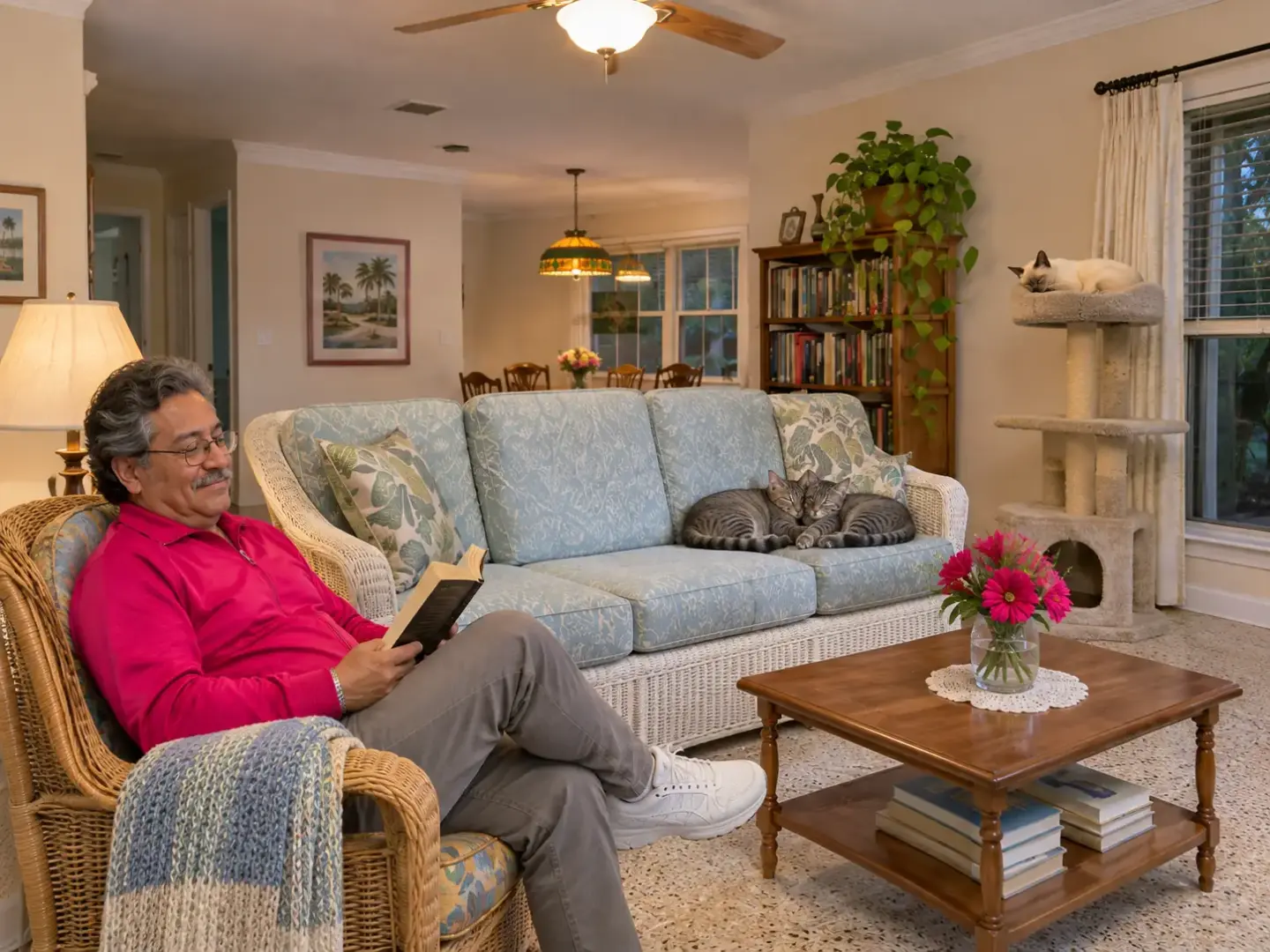
Two cats are asleep in one warm heap on the sofa and the third is up on the wardrobe, and you are wondering whether three cats can be bonded at all or whether the third one has simply been shut out. Nobody has shut him out.
A bond forms between two cats, never across a group, so the third cat is working out where he fits with each of the others separately, and the wardrobe is the one spot no pair walks past. In a multi-cat household, competition for resources, more than temperament, drives most friction between indoor cats, so the answer lives in boxes, bowls and heights as much as in affection. Below: what the word means with three cats, when a vet comes before the house, how to read your own trio, what changes with littermates or a latecomer, and how to introduce a third cat if one is still on the way.
Quick Answer
Yes, but a bond exists between two cats, so a trio is three pairs, each one bonded, tolerant or neutral. Watch who sleeps in contact, who yields a spot and where each cat eats, across days. Give the group four boxes and separate food stations. A habit that changes overnight is a vet call first.
Can Three Cats Be Bonded, and What the Word Means for a Trio
Yes, three cats can be bonded. But the word describes a relationship between two cats, so what you have at home is three relationships, and they do not have to match.
A Bond Is Between Two Cats, So a Trio Is Three Pairs
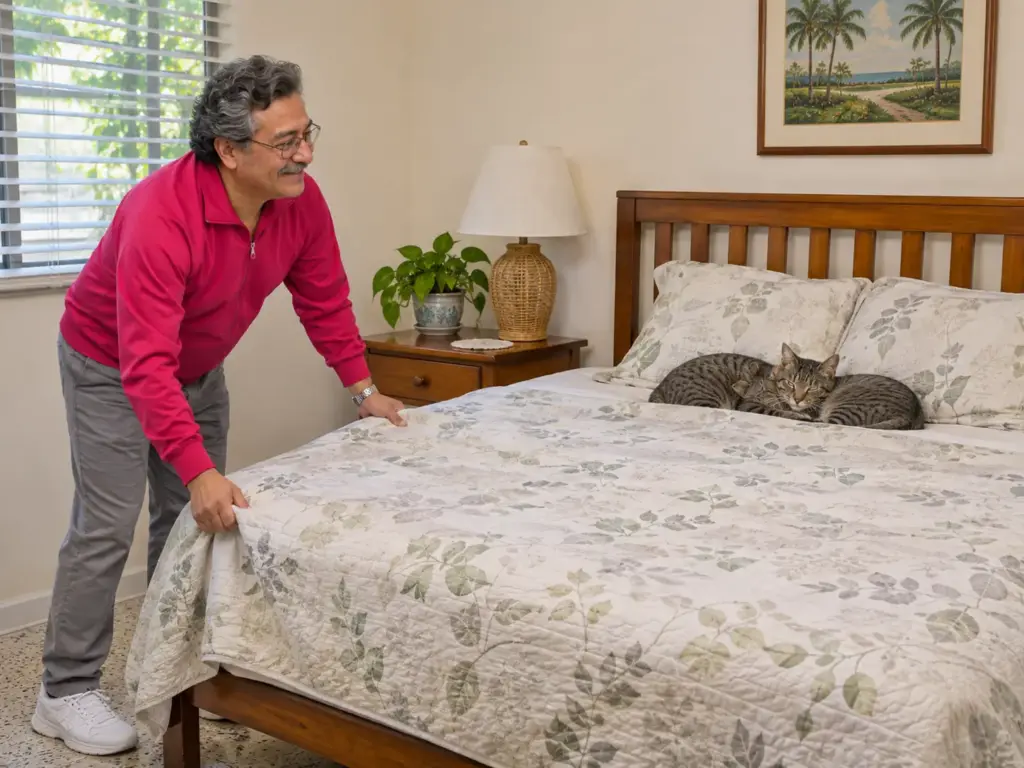
A bond shows in what two cats do together: resting in contact, grooming each other (allogrooming), touching noses, rubbing past. To check one pair against that list, use how to tell whether two cats are really bonded or only sharing a sofa. With three cats you ask the question three times, for A with B, A with C and B with C. Each pair can come out bonded, tolerant or neutral, and the three answers are allowed to disagree.
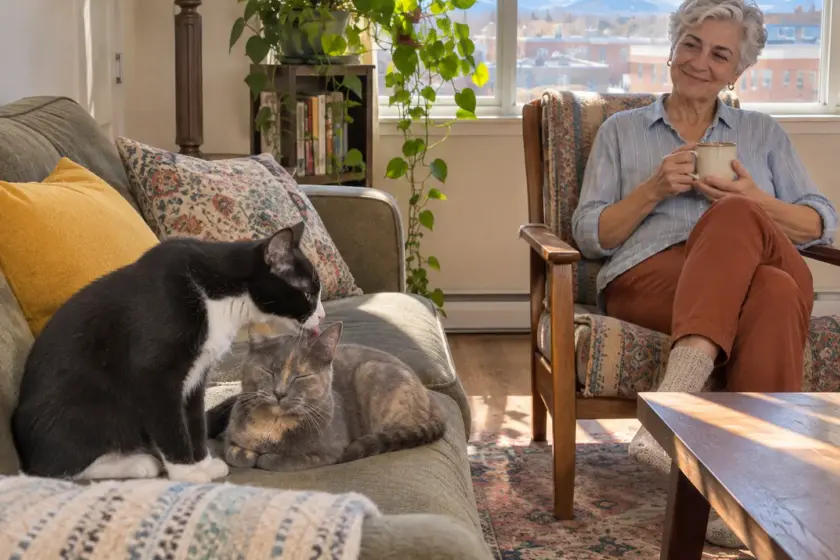
In many homes the picture is a pair plus one: two cats who sleep pressed together, social grooming included, and a third who sleeps somewhere else. Treat that as something you can see in a living room, not as a law of how cats organize themselves. All it tells you is that one of the three pairs is closer than the other two. The third cat still has a relationship with each of them, friendly with one and wary of the other, and that is a perfectly ordinary trio.
Write the three names on a sheet of paper and draw a line between each two of them. Every line is a separate question, not the same answer asked three times.
What a Shelter’s “Bonded Trio” Label Does and Does Not Promise
A bonded trio adoption listing usually means the three cats arrived together and someone saw closeness between them. It does not promise that the closeness runs through all three pairs. The third cat in that listing may be tied to one of the others and only put up with the second. Ask the shelter which cat was seen with which, because the shelter label is a summary and the detail sits with the person who watched them.
Alliances That Shift Are Normal and Are Not a Verdict
Shifting alliances are ordinary. International Cat Care says that relationships between cats can change over time, so any tally you take is a photograph of one season. The third cat who sleeps apart now may be on the pillow after a few months, and a pair that shared a bed can drift apart after a move or a new piece of furniture. Read the current arrangement as where things stand, and plan to look again.
A Change That Comes Overnight Is a Vet Question Before a Trio Question
Before anything gets measured, one boundary. Anything that hurts goes to a vet; furniture, litter, smell, noise and territory are the part this page can help with. The third cat who is hiding more this week might be crowded out by the pair, or he might be unwell, and from across the room the two can look alike. The house comes second.
Eating, Box Use and Hiding That Shift in a Day
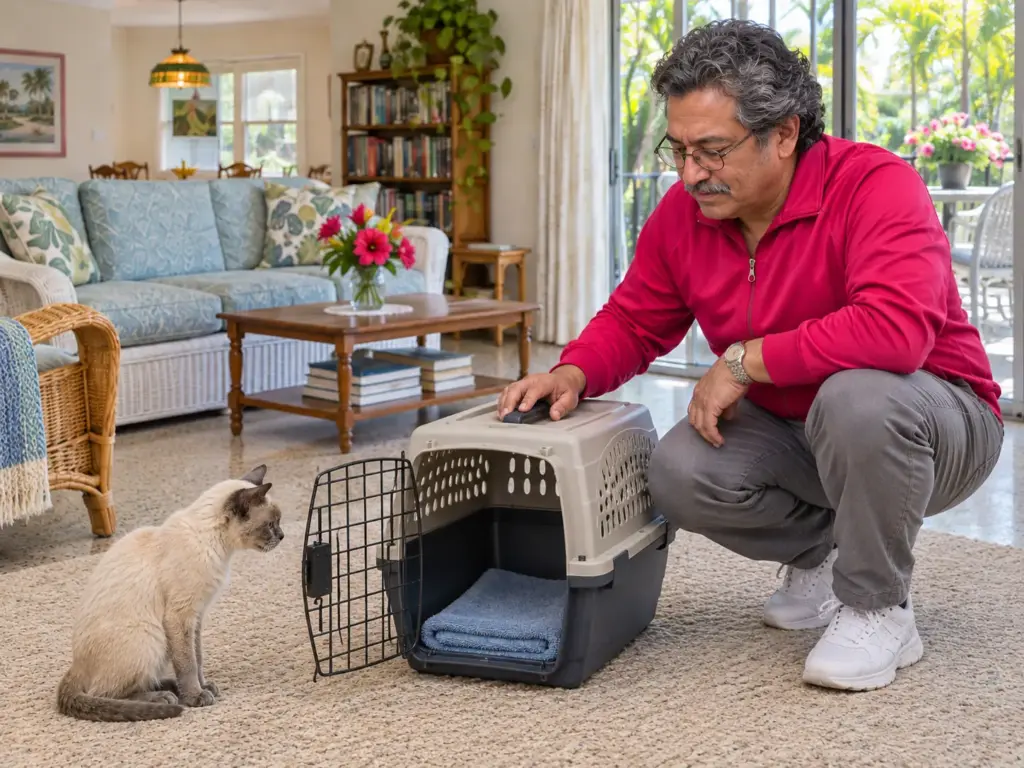
When a cat’s eating, box use, hiding or grooming changes from one day to the next, call the vet before moving a single bowl. Everything after that call is furniture, and none of it should wait on a guess about the cause.
Why a Cat Can Look Fine and Still Be Unwell
Cornell’s Feline Health Center points out that a cat with a medical condition does not always act sick. And the AAFP’s 2024 guidelines on tension between cats say tension is often subtle and often goes unrecognized, even in homes with only two cats. Put the two together and you cannot tell from the sofa whether a cat is stressed or ill. What you see from a distance belongs on the sheet in the next section; what changes abruptly is a phone call.
What the House Can Still Answer
If the third cat has been eating last or sleeping on the same high shelf for weeks, with everything else unchanged, that is a slow pattern, and a slow pattern is something you measure. The boxes, bowls and heights further down are for that case. A sudden pattern is something you call about.
Three Pairs to Watch, and the Evidence Each One Gives
A photo of three cats on one sofa is a single afternoon. What separates a bonded trio from a bonded pair with a tolerated third is a few observations, repeated over days, and kept pair by pair:
- Who sleeps in contact with whom: contact that shows up again and again points to a bond, while one shared sofa does not.
- Who gives way when two cats want the same spot: a cat that always leaves tells you who holds the spot.
- Who eats at what distance, and who eats last or unseen: a bowl that is empty by morning does not say who emptied it.
Who Sleeps in Contact With Whom, Counted Over Days
Write down who is sleeping in contact with whom, for each pair on a separate line, across several days and not once. The five-day count and the full list of signs live on the page about telling bonded cats from roommates, so this is the same method with three columns instead of one. A pair that is in contact on every sheet is a pair; a pair that shows up on one sheet is a good afternoon.
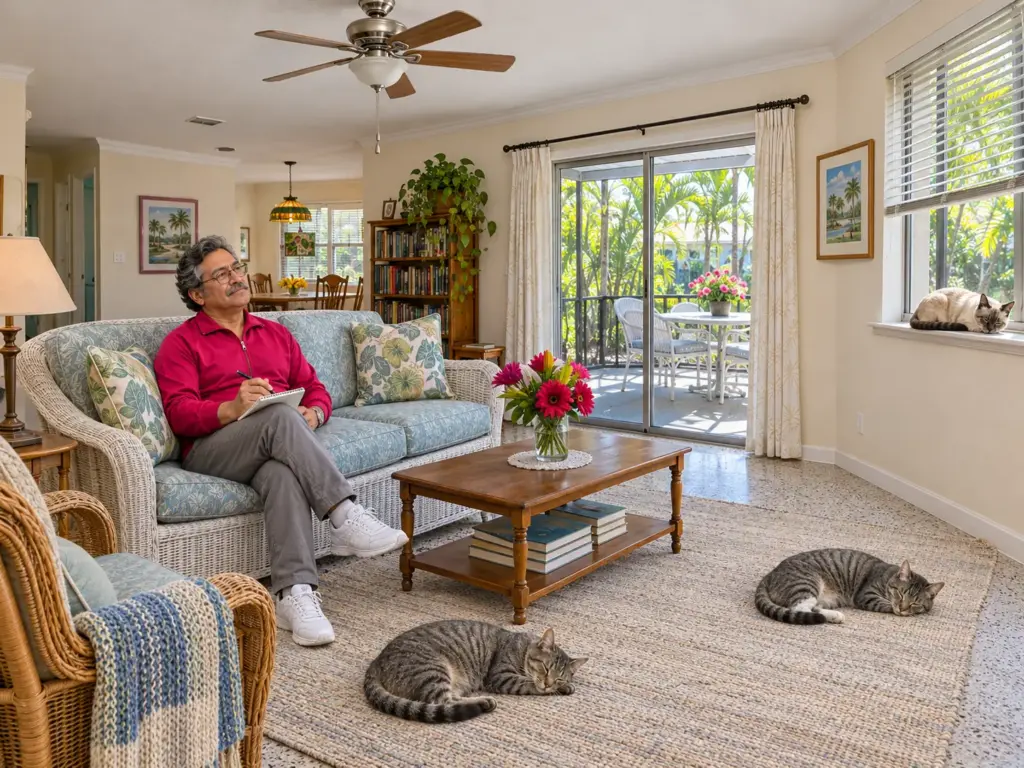
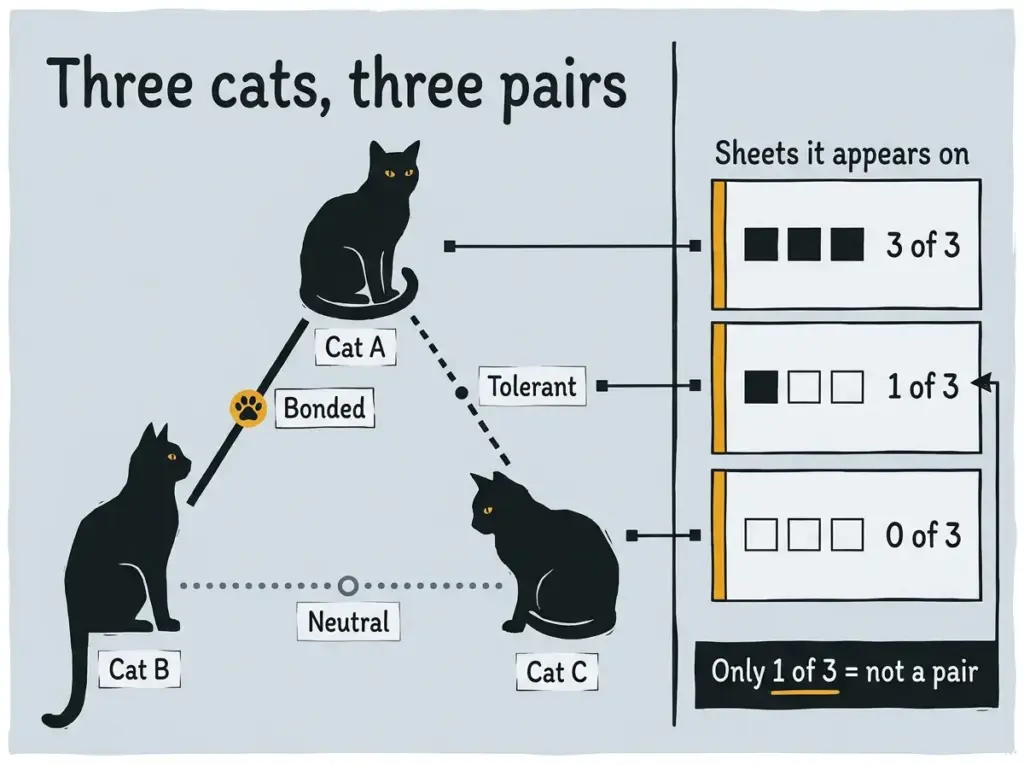
Write the time and the spot next to each name, and repeat the sheet at the same hour three days running. If a pair appears on only one of the three sheets, it does not count as a pair.
Who Gives Way When Two Want the Same Spot
The Ohio State Indoor Pet Initiative describes resource guarding (the cat that denies others access to a resource) and the threatened cat that hides, yields and avoids eye contact. According to the Indoor Pet Initiative, “The most common cause of conflict between indoor-housed cats is competition for resources.” So watch which cat leaves which spot when another one walks in, and note only where he goes, with no verdict on how he feels about it. A cat who always leaves the armchair, and is then found on the wardrobe, has told you where the armchair stands in that pair.
Eating Distance, and the Cat That Is Fed but Never Seen
Note who eats at what distance from whom, and whether anyone stares across the bowls. Then look for the cat who eats last or while the others are asleep, because nobody sees him do it. The same goes for the box: a box that is only used once the pair has gone to bed is a cat arranging the day around two others. Cornell adds that not every cat comes when called for dinner in a multi-cat home, so an empty bowl never tells you who ate.
Between Bonded and Hostile: Cats That Get Along
There is a state in the middle that gets lumped in with bonding. The cats coexist: they share the house, they rarely sleep in contact, nobody seeks anybody out and nobody fights. A group can live like that for years, and it is a valid result, not a bond that has not happened yet. A bonded pair, by contrast, stops looking the same when one of them is missing, and what changes for the cat left behind when one of a bonded pair goes away has a page of its own, written for exactly that case.
Give the sheet a week of notes, and repeat it after any change in the house, since relationships move. There is no count of observations that settles it; a pattern that holds across days and across changes is the closest thing to an answer.
Getting Along Is Not Bonding, and Cats Do Not Need the Cuddle Pile
Picture the three cats in one heap and you are picturing what you want. The cats want something smaller: to pass each other without crossing and to keep their territory. A preference can be negotiated. A constraint cannot.

The Pile of Three Is the Human’s Picture
Ohio State’s own measure of success is modest: cats in conflict may never become best friends, but they can usually live together without showing signs of conflict. That is the target for a trio too. The heap on the sofa is a nice photo, but it is not what the household needs in order to work.
Avoiding Each Other Is How Cats Keep the Peace
A cat who sleeps alone and high up is not necessarily sad. He may simply be a cat who prefers his spot, and a house with room to avoid each other is a house where nobody has to defend anything. If the solitary sleeping starts suddenly, or arrives with another change in habits, that goes back to the vet call above.
Affection From One Cat Is Not a Bond
One cat who follows the others around and is not followed back is showing affection, and affection from one side does not make a bond. On the sheet he counts as a neutral or tolerant pair. What you can give a trio that is not a cuddle pile is a spot per cat and enough exits that none of them depends on the mood of the other two.
Three Littermates or a Third Added Later
Three littermates and a pair plus a latecomer start from different places, though neither promises an easy house.
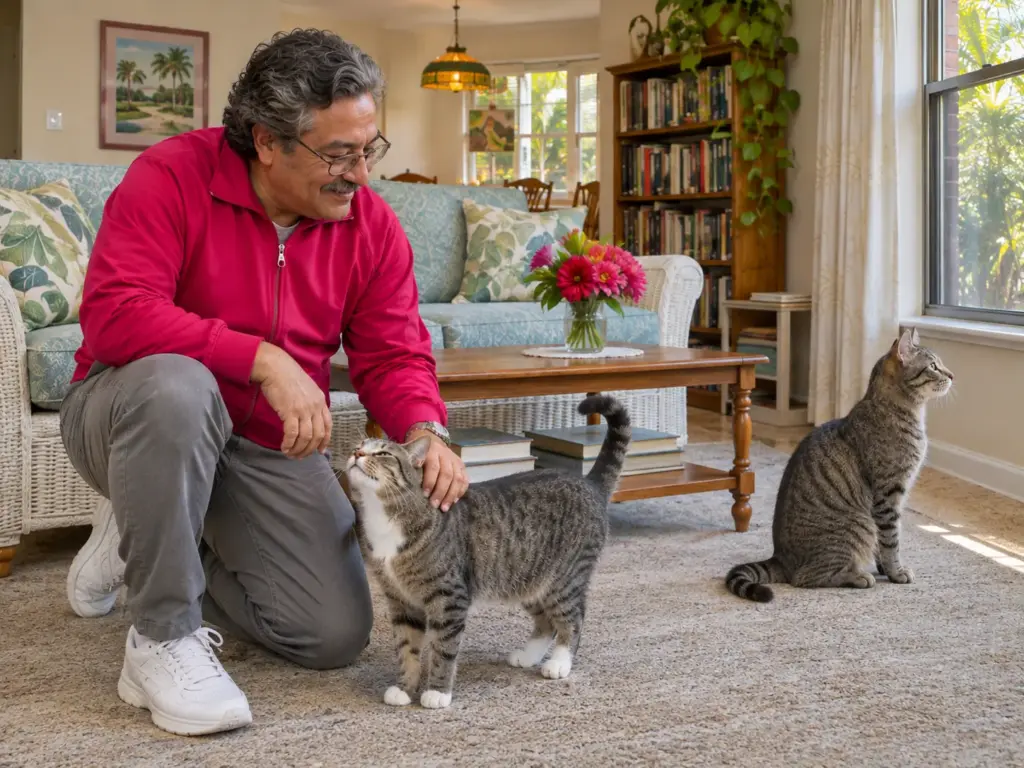
Littermates Can Drift at Social Maturity
Raising three littermates together does not guarantee they stay close. The Indoor Pet Initiative documents conflict that begins when cats who have known each other since kittenhood reach social maturity, anywhere between two and five years of age. Three siblings who slept in a heap at one year can start hissing at three. Nothing has changed in the apartment; the cats grew up, and the count on your sheet has to be repeated as they do.
A Third Cat Finds the Pair’s Distance Already Set
A pair has already worked out its distances before the third arrives. They can end up with the best spot of each resource without either cat deciding it, and the newcomer inherits what is left. Why three cats work in an apartment until one pair does not comes down to the same arithmetic.
Size matters here too: Cornell notes that larger cats need bigger boxes and that kittens and elderly cats need boxes with low sides, and the third cat may be the largest or the oldest. The box that suits the pair may not suit him.
When the Pair Was Together First and the Newcomer Is the Third
Sometimes a household splits around the third cat: the oldest tolerates both of the others, the other two do not tolerate him, and the house ends up running on whose turn it is to be shut in a room. That pattern calls for separating resources, not swapping the cat, and how to split a bonded pair for a trial before you decide anything permanent walks through the trial split when a pair really does have to be moved apart.
Why the Third Cat Ends Up With the Hallway
Watch where the third cat goes when the other two are asleep. If the only box he uses is the one nobody passes, or his bed is a stretch of hallway, he is doing what the layout allows. The pair holds the best spot of every resource, he gets what is left, and no cat rests where another one keeps walking by. What follows is resource distribution for three cats: how many of each thing, and where.
The Box With Two Exits, and the Fourth One
Three cats need four litter boxes. The Indoor Pet Initiative’s litter box rule is one per cat plus one, the n+1 rule, and Cornell’s guidance on litter boxes and house soiling says the same: “Provide as many boxes as there are cats in the house, plus one.” The fourth is the box nobody can guard, because each cat can hold one.
Stand in the hallway and count boxes with your finger. If you reach three, one cat has nowhere to go while the other two are using theirs, and four boxes in one corner count as one. The one-per-cat-plus-one rule and why a spare in the same sightline does not count explains the spacing, and where the count starts at two cats shows where the number for three comes from.
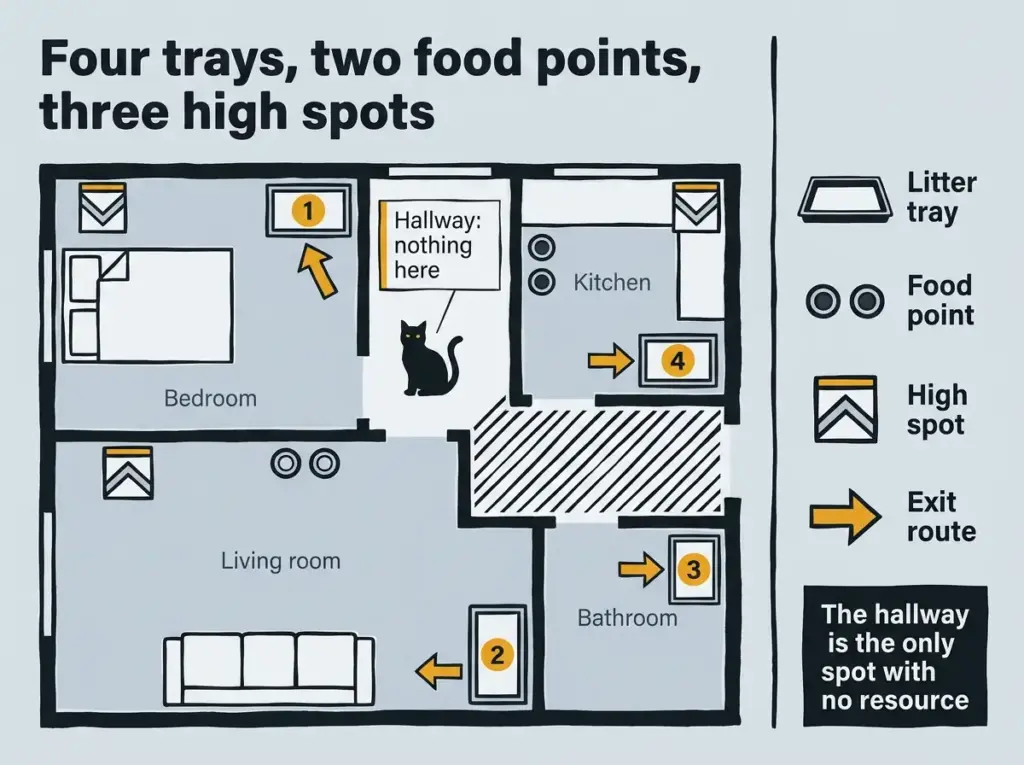
A box pushed into a corner has one escape route, and the cat knows it. Cornell asks you to position the box so the cat has more than one way out, not surrounded on three sides, and to give a cat that gets ambushed a 360-degree view. A box with two exits is a doorway; a box with one is a trap whenever another cat is waiting. How a small apartment’s exits shape what cats can use goes into the geometry.
Size counts too, and the standard is Ohio State’s: big enough for the cat to stand up on all fours and turn around.
Pull the boxes apart and give each one two exits before spending anything. If the third cat is large and turns badly in the boxes you have, the iPrimio Stainless Steel Cat Litter Box XL is 23.5 × 15.5 × 6 inches, long enough for him to turn inside it, and steel has no plastic to hold ammonia.
It comes with a detachable 6-inch enclosure, and the plastic enclosure is the part that breaks. Used uncovered it also gives the open view Cornell asks for. It is one of the pricier boxes you can buy, so the Tidy Cats Breeze kit is the cheaper route, but it is a pellet system and counts only as an extra box, never as a replacement for the others.
High Places That Do Not Share a Sightline
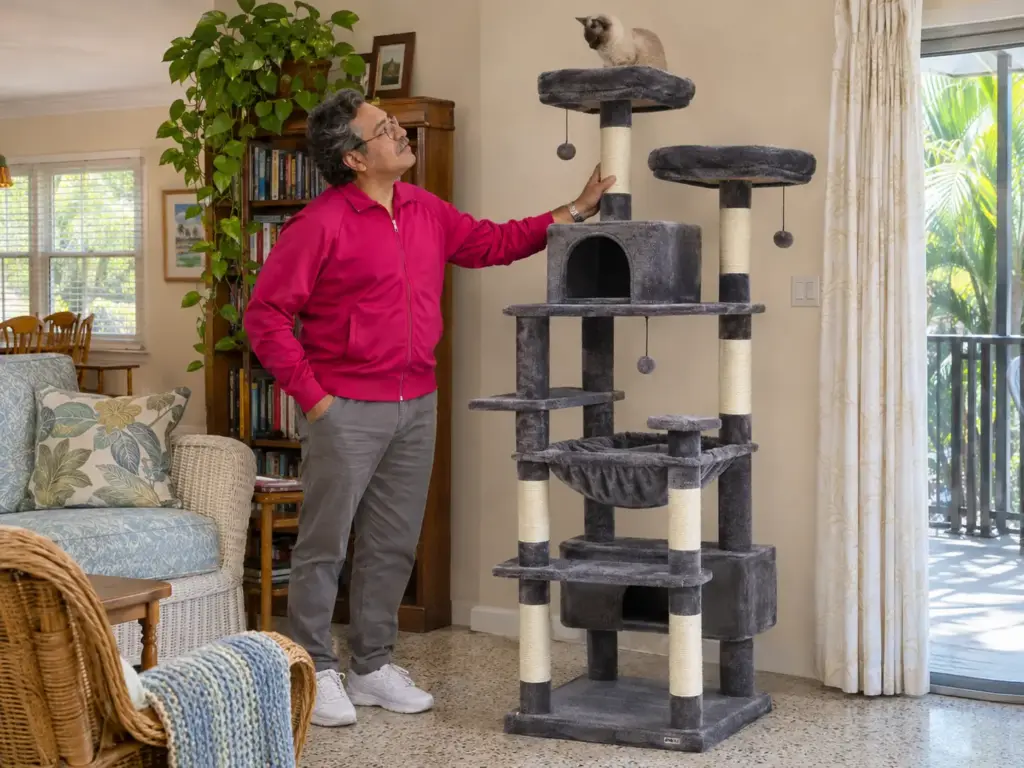
Three cats want three high perches, not the same one, because vertical territory is the cheapest territory a small home has. The Indoor Pet Initiative says cats need to get themselves up off the floor and that more than one perch lets them look out at different angles. The spot that returns territory to the third cat is one that no other cat can reach without being seen.
Give him a way up and down that does not run past the pair, because separate routes are what make a high spot usable. It is also the resource people forget most often, because nobody counts it.
Start with what the apartment already has: a shelf, the top of a wardrobe cleared of boxes, or a bookcase top on a wall the pair does not walk along. If you want something that adds height, the PAWZ Road 72 inch Cat Tree stands 72.4 inches tall on a 21.6 × 17.7 inch footprint, with eight levels, two perches at the top and a 21 × 12 × 10 inch condo. With two perches and a condo, the pair cannot hold all the height at once. The platforms are snug for a large cat, and some units work loose, so check the fastenings now and then.
Move What You Have Before You Buy Anything
The free moves come first, and they are the ones that usually decide the case:
- Pull the boxes apart so that no two share a sightline.
- Give every box two ways out.
- Move the sitting spot you already have to a wall the pair does not pass.
Then watch which box gets used at night. If the third cat starts using one in daylight, the layout was the problem.
Put the four boxes far from one another and out of view of the next one, and give each one two ways out.
Food and Water, Where the Third Cat Goes Unseen
An empty bowl every morning does not say who ate. The third cat may be eating last, or nothing, and you would not see it either way.

Two Stations Beat Four Bowls in a Row
International Cat Care asks for each cat’s resources plus one extra, spaced out around the house so the cats do not have to share or feel in competition. Two bowls next to each other are one feeding station with a queue. Keep each station about five feet from the next, as laid out in how far apart food stations have to be before cats stop sharing a queue. Cornell adds that not all cats come when called for dinner and that feeding cats separately or in different parts of the house may be needed.
The free version comes first: a second ordinary bowl five feet from the first, or cereal bowls from the kitchen cabinet set on a placemat. If you want two real stations, the 4 Pcs Stainless Steel Cat Bowls come as a pack of four, 5.5 inches across and 1.2 inches high, enough to build two stations apart without buying furniture. They slide, because there is no magnetic grip, and they weigh very little, so put something grippy under them.
The Bowl a Pair Cannot Empty
Sometimes the second bowl is not enough, because one cat is resource guarding the bowl and the third still does not get to eat. What it looks like when one cat guards the bowl lays out that pattern.
At that point the SureFeed Microchip Pet Feeder MPF001 is the one product that answers it: it opens only for a cat’s microchip, so the cat who eats last has a bowl of his own without anyone closing a door. It measures 12.86 × 7.75 × 10.24 inches with a 13.5 fl oz bowl.
The lid is the weak point, since it does not always close quickly enough and the wrong cat can get his head in, and battery life is the other soft spot. It is also the priciest thing in this article, so the plain second bowl goes first. Which microchip feeder suits a home where one cat waits behind the lid compares the options.
Put the new station where the third cat can see his own way out, not where the pair can. The cat who eats last needs to see the exit before he steps in.
Water Points Count Too
Water follows the same logic. More than one point, and not beside the food. How many water points three cats need gives the count, so it does not need repeating here.
If a Third Cat Is Still Coming, One Resident at a Time
If the third cat has not arrived yet, there is no promise to make, only an order to follow. A slow introduction is not a failure.
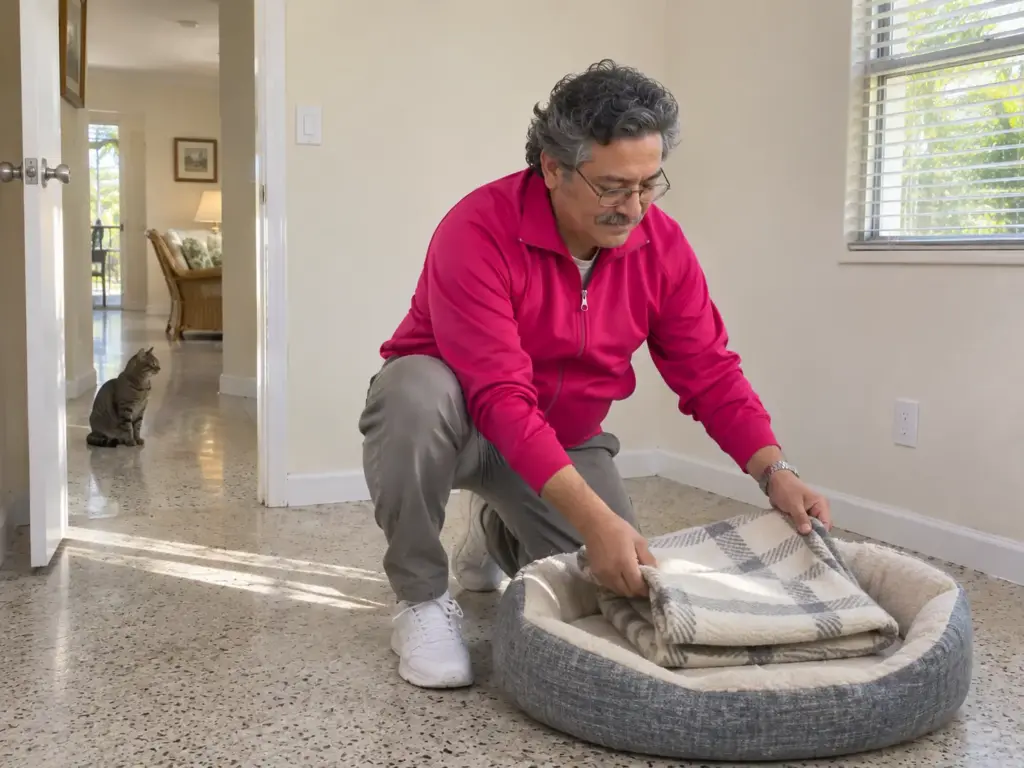
Scent First, Then a Barrier, Then Short Time Together
International Cat Care’s sequence has five steps: scent swapping, site swapping (each cat gets access to the other’s area), sight through a barrier such as a baby gate, supervised exposure, then short periods without supervision. The AAFP’s 2024 guidelines lay out the same steps. With more than one resident cat, introduce the newcomer to one resident at a time. How to introduce cats in a small apartment, stage by stage covers the whole sequence, and the first step carries a catch, set out in where the scent item goes, and why swapping can backfire.
The Newcomer’s Base Room, and Why the Pair Is Introduced One at a Time
One method gives the newcomer a base camp, a room with a closed door and resources of his own, and brings him out in gradually longer, closely supervised sessions. That is an option, not a rule. The pair is introduced one cat at a time because two bonded cats move as a unit, and the newcomer meets a wall instead of a cat. The pace is set by what the cats do, not by a calendar, which is the point of why the timing depends on gates and not on days.
Count and spread the boxes, bowls and high spots before the third cat arrives, not after.
Going Back to the Base Room When Chasing Starts
When chasing starts, the newcomer goes back to the base room and the next session is shorter. The risk is not always a fight. Sometimes a resident cat withdraws and stops going to his usual places, and the sheet from earlier shows it before anyone hears a hiss. A sudden change in habits goes back to the vet call, and how to tell a failing introduction from a slow one covers the rest.
Map the Three Pairs Tonight, Then Repeat the Count When the House Changes
A trio is three pairs, and you read it pair by pair, over days. A group that gets along without a bond is a valid result. What decides whether the third cat is in or out is how many spots there are of each resource and how far apart they sit, and a habit that changes overnight is a call to the vet before it is a question about the house.
Look again after a few weeks, or sooner if the house changes, or when a cat reaches two or three years of age: who sleeps in contact with whom, who yields the bowl, and which box gets used at night. Tonight, write the three names on a sheet and draw the three lines, pull the boxes apart and give each two ways out, and put an ordinary bowl five feet from the first one.
Frequently Asked Questions
01Can three cats be bonded?
Yes, but a bond forms between two cats, so a trio is three pairs, and each pair can be bonded, tolerant or neutral. Who sleeps in contact, who yields a spot and where each cat eats show which you have, watched across several days.
02Can three cats share one litter box?
No: Ohio State and Cornell both recommend one box per cat plus one, so four boxes for three cats, and the fourth is the one nobody can guard. If a cat suddenly stops using a box, call the vet before moving anything.
03Will three littermates stay bonded as adults?
Not necessarily: Ohio State documents conflict that starts when cats who have known each other since kittenhood reach social maturity, between 2 and 5 years of age. Repeat your count of who sleeps with whom as they grow.
04How do you know if two cats will never get along?
You cannot tell from one meeting: the AAFP says tension between cats is often subtle and goes unrecognized. Watch who gives way at a bowl or a doorway and who hides, across several days. A sudden change in eating or box habits is a vet call.
05Is three cats too many for an apartment?
It depends on the number of places, not the floor space, so a two-bedroom apartment can work if it holds four boxes, two food stations about five feet apart and three high spots. The page on three cats in an apartment walks through that count.


Leave a comment