How Often Are Hairballs Normal? Log What Changed at Home
Don't guess how often hairballs are normal: log the date, which cat and what changed at home [3 columns], and know exactly where the house stops.

Alfredo RamsesFounder · Updated October 30, 2026 · 12 min read


On this page5 sections
You find another tube of hair on the rug, the second one this month, and the question of how often hairballs are normal stops being abstract. Your cat is doing what cats do for about a quarter of their waking hours, licking his coat and swallowing a little of it with every pass. Cornell Feline Health Center and a review in the Journal of Feline Medicine and Surgery both start from that mechanism: hair goes in with every lick, and some of it stays. A number copied from someone else’s cat tells you very little, so this page puts a second column next to your own count (what changed in your apartment that week) and says where the house stops and the vet starts.
Quick Answer
No single count is normal for every cat, so the starting point is your cat’s own tally, written down by date with what changed in the apartment that week. A sudden change in habit, or retching that brings up nothing, goes to the vet before anything changes at home.
How Often Hairballs Are Normal Depends on How Much the Cat Grooms
The moment most people start counting is when a cat that had never yakked up a hairball before starts doing it often enough to ask about. What she described was a change, and a change is the thing worth writing down. The number on its own never was.
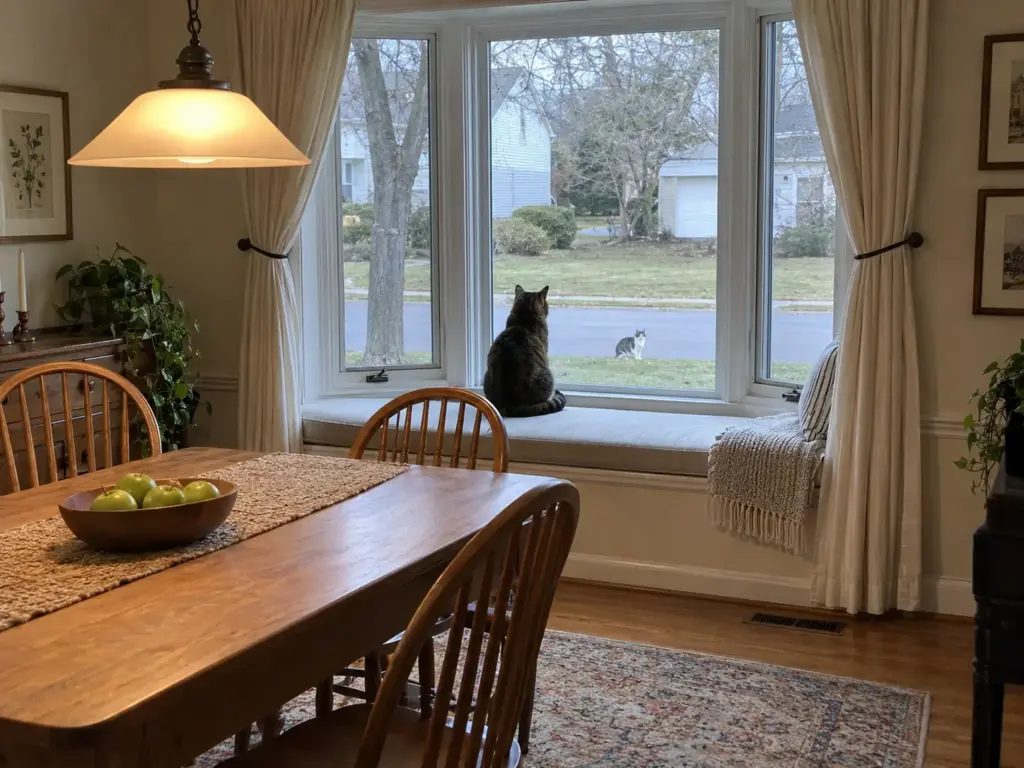
A hairball count is a grooming count
A cat hairball is hair the cat swallowed while grooming, and a review by Martha Cannon in the Journal of Feline Medicine and Surgery puts grooming at about 25 percent of a cat’s waking hours. The barbed tongue sweeps loose hair toward the throat, and keratin, the protein hair is made of, does not digest. Most of it leaves in the stool, according to Cornell. The little that stays behind builds into a damp clump, which is why the thing on your rug is usually a tube about an inch long and not a ball.
Cannon adds the part that sets the limit of what a home can do. Hairballs show up when a cat swallows more hair than the stomach can move along, or when the stomach’s own motility changes. The house can touch the first half of that sentence, how much loose hair goes in. The second half belongs to a vet, and no amount of apartment rearranging reaches it.
Coat length shifts the baseline too. Longhaired cats bring up hairballs about twice as often as shorthaired ones in the owner polls Cannon reviews, so a long-coated cat and a short-coated cat in the same apartment are not on the same chart, however similar their rugs look. Shedding season, fall and spring, pushes the count up for many cats, and an indoor cat’s coat keeps a calendar of its own: how the seasons move shedding and why an indoor cat has no off season cover both, so here the coat is just one more thing that moves.
Your cat’s own baseline comes before any chart
Look up the normal range and you get two answers. Cornell says it is not uncommon for a cat to regurgitate a hairball once every week or two; Purina’s UK site says cats should only get them occasionally, usually less than once a month. Both are describing real cats. Neither is describing yours.
The numbers Cannon reports come from owner polls at one cat-only clinic, which makes them a sketch of the population and not a verdict on any one animal.
So the number everybody quotes works as a rough frame and fails as a rule. The range Cornell gives, which the main hairball guide lays out is worth reading once, and then your cat’s last month or two of tallies takes over. A cat whose tally has changed is a different situation from a cat that has always sat at the same spot on someone else’s chart, and only your own record can tell them apart.
Keep one tally per cat. If several cats share one rug and you did not see which of them left the tube, write unknown instead of guessing a name: a guessed name quietly ruins two records at once. How several cats share one rug gets its own section in the main hairball guide.
House changes worth writing down
Purina’s Canadian site has a list that fits this log, though it is written about over-grooming, which it ties to stress grooming, and not about hairballs, so it is a list of things to note and never a list of causes. It names a move to a new home, a new partner, roommate or relative joining the household, and neighborhood cats seen through the window or heard yowling at night. Its advice for after any big household change is simply to watch the cat.
Add the smaller ones you will have forgotten by next month: a new sofa, a feeding time that moved, a work schedule that now keeps you home all day. If a neighbor’s cat started turning up on your fire escape three weeks ago, that belongs on the page even if it feels unrelated. None of these is a known cause of a hairball, and nothing here says any of them will move your cat’s count. The log is how you find out whether yours does.
Where the House Stops and the Vet Starts
The log helps with the first question you will have when the number rises: can I name what changed? It does nothing for the second question, why this particular cat is licking more than usual. Those two questions have different owners, and mixing them up is how a month passes.
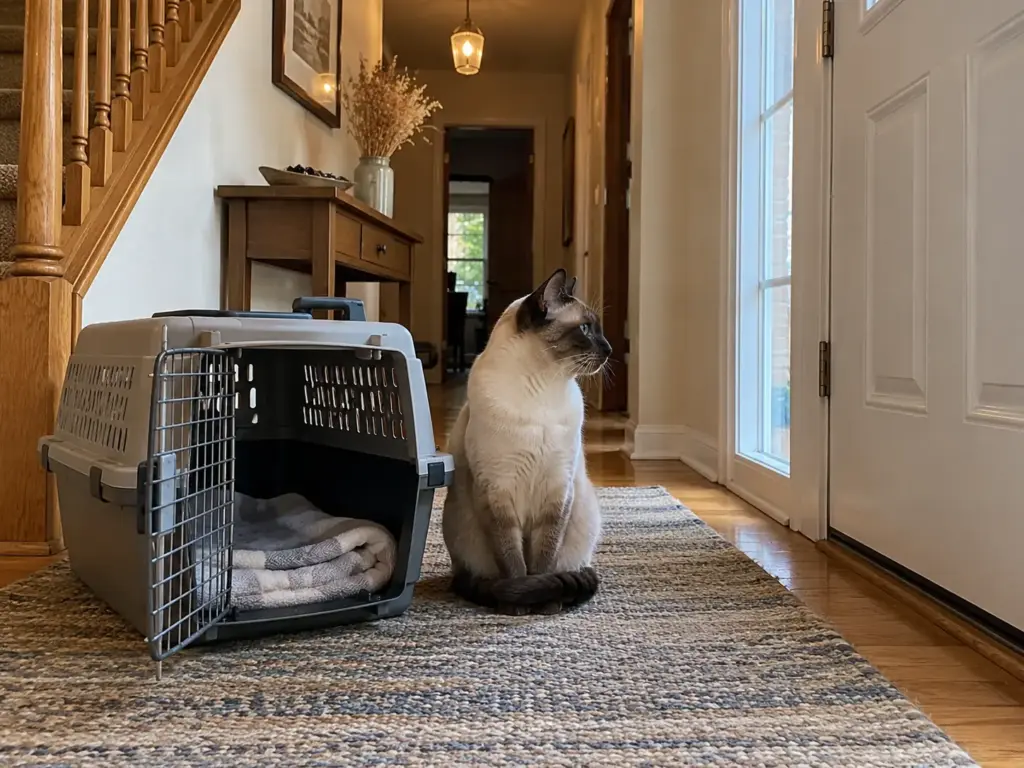
A rise you can name and a rise you can’t
The order this blog uses, stated once: a sudden change in how your cat behaves goes to the vet before anything changes in your home. That includes a count that jumps overnight. Any change in what you normally see should be looked into, and it is a better rule than any chart.
A gradual drift that lines up with something you wrote down, like a new roommate or a move, is the case where the house gets a say. The steps are small and one line long: more brushing, covered below. A rise you cannot name, or any change that arrives suddenly, skips the house steps and takes the log to the vet. Where the shedding guide draws its own vet line uses the same logic for loose hair.
The part of over-grooming only a vet can judge
Your house can judge three things: how much loose hair is lying around it, how often the cat gets brushed, and what changed. It cannot judge why a cat licks more than he used to. That question has a list of possible answers, and pain, skin trouble, parasites and anxiety are all on it, but which one applies to this cat is something no tally and no apartment can settle. An exam does.
This article will not tell you what a particular number means, whether a daily hairball has a cause, or what to give a cat that has them. Those are the vet’s questions, and a page like this one answers them badly.
The line that ends the log
Cornell Feline Health Center names the signs for when to call the vet without waiting: lethargy, refusing food, and retching that produces nothing. Its wording on the retching is blunt, saying repeated episodes of “unproductive retching or true vomiting should be examined by a veterinarian without delay.” The full list of signs sits in the main hairball guide, and it is the list to check against, not a guess from your own tally.
There is a second reason the log earns its place at that visit. Cornell notes that part of working out what is going on rests on the history of a cat’s hairball pattern.
A vet handed three weeks of dated lines starts further along than one handed a shrug and “a few a month.” The second column about the house does not replace any part of the exam. It completes the record the vet asks for.
Take the log to the appointment on your phone or on a printed page, and hand it over before you start describing anything. One line per entry, one name per cat, and the house change beside each date. Leave the interpretation to the person with the stethoscope.
Write the House Next to Every Count
Start the page before you need it. The common advice is to begin tracking once there is a problem, and that fails for a plain reason: without the quiet weeks, you have no baseline to compare the loud one against. The weeks when nothing happens are half of the data.
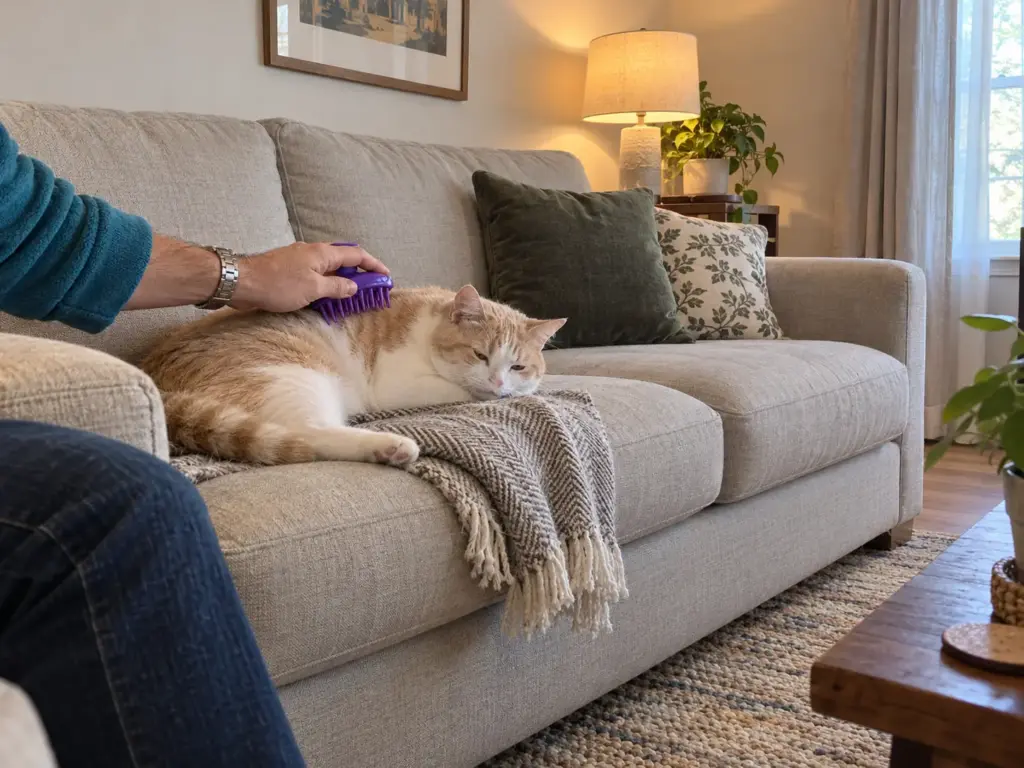
The second column: date, which cat, what changed that week
Keep the page where you will actually write on it, taped inside a cabinet door or as a note on your phone. Three columns are enough, and each entry gets written the day it happens, not the Sunday after. A change you do not record leaves the number orphaned: in a month nobody remembers which week the new sofa arrived.
- Date: the day you found the hairball, not the day you got around to writing it down.
- Which cat: one name per line, or unknown when you did not see which cat it was.
- What changed at home that week: a move, a new person, a cat at the window, a new piece of furniture, a different routine, or nothing.
The third column is the one the usual advice leaves out, and nothing needs to go in it on a quiet week except the word nothing. It is a short list you can show to another person, a roommate or a vet, without explaining it.
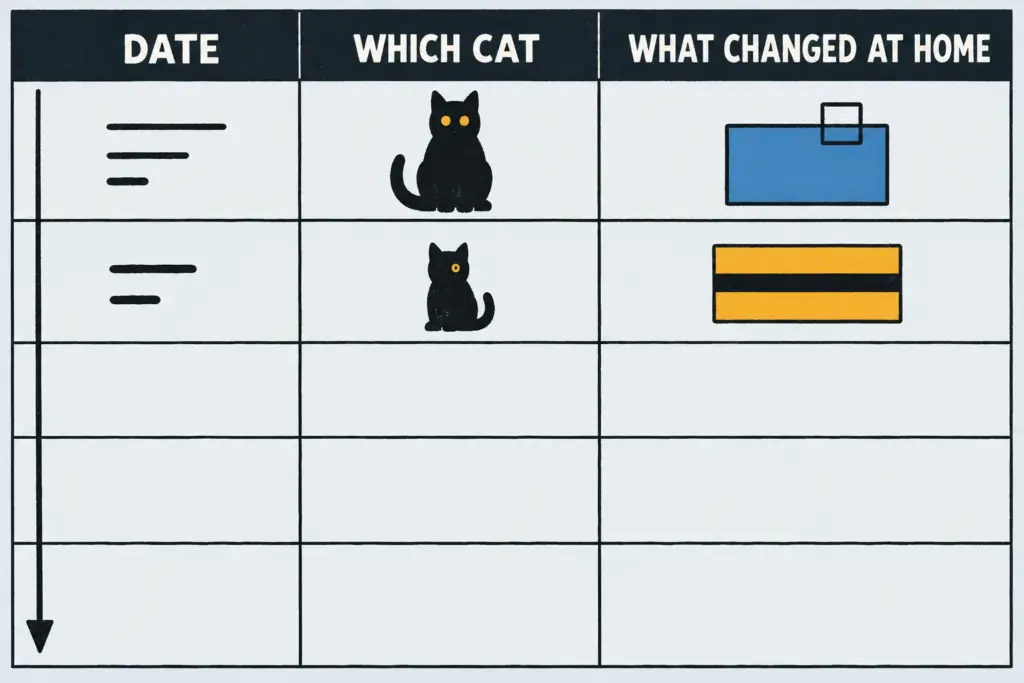
Write the entry in one line, the same day, in the same place. A row filled in on Sunday from memory loses the Wednesday the sofa arrived, and that Wednesday is the row that matters.
The free step first, then the brush
Free comes first: whatever comb, brush or grooming glove is already in the drawer, plus a damp towel wiped over the bedding and the sofa arm where he sleeps, which lifts loose hair before it ends up on his tongue. Brushing is also the one house step with a researcher behind it. In Martha Cannon’s review, “Daily grooming to remove as much loose hair as possible may help to reduce the amount of excess hair being ingested.” That is a may, and it is a line about hair, not a promise about any one cat’s count.
If you want a tool made for the daily pass, the CeleMoon silicone cat brush measures 8 by 4.5 by 2.5 inches, small enough to hold in one hand, with soft rubber pins. One Amazon reviewer’s complaint is worth knowing before you buy: the pins grip the hair and will not let go, and the brush is hard to clean afterward. Plan on pulling the hair off by hand after every use. A five-finger HandsOn grooming glove in Large does the same daily pass for less and leaves no pins to clean.
How often to brush depends on the coat, and how often to brush by coat has the breakdown. For the hair that is already out of the cat and on your floor, fixing where the hair lands is the other half of the job. Neither of these is treatment for a count. They reduce how much loose hair there is to swallow, and the log will tell you whether your cat’s tally cares.
What the page shows after three weeks
After three weeks, read the page from the top. Do the weeks with an entry in the third column also hold the tubes of hair, and do the quiet weeks stay quiet? If they line up, you have something concrete to brush against and something to show a vet. If they do not line up, that is information too: the house is not explaining the tally.
Neither result is a diagnosis. The page cannot tell you why this cat is licking more or less than before, and it is not trying to. What it gives you is a dated record and a clear view of when the house changed, and that is more than most owners can offer at the exam table.
Start the Page Today, Read It in Three Weeks
Three things to carry out of here. First, your cat’s own tally is the starting point, not a figure from another household’s cat. Second, a change you can name goes in the third column, while a sudden change in habit or retching that brings up nothing goes to the vet first, with the page in hand. Third, the house step is brushing, and the comb or glove you already own comes before anything you buy.
Three weeks from now, open the page and check whether the house changes and the tubes of hair fall in the same weeks. If the page explains nothing and your cat’s habits have changed, the next step is the appointment, not another week of watching. And today’s step needs no shopping: open your phone’s notes, write the date, and add the first row.
Frequently Asked Questions
01How often is it normal for a cat to throw up a hairball?
It depends on the cat, and sources disagree: Cornell calls one every week or two not uncommon, so your own cat’s recorded count is the better starting point. The main hairball guide lays out the full range.
02Is it normal for my cat to have hairballs every day?
Hairballs every day are a question for your vet, not something to explain or fix at home, so book the visit. Bring your dated log, since the history of a cat’s hairball pattern is part of what a vet works from.
03When should I be worried about my cat’s hairballs?
Retching that brings up nothing, lethargy, or refusing food should be examined by a vet without delay, according to Cornell Feline Health Center. The main hairball guide has the full list of signs.
04How big is a normal hairball?
A regurgitated hairball is usually about an inch long and an inch thick, can reach about five inches, and looks like a cigar, not a ball, according to Cornell. Size is not a way to judge your cat; that question belongs to your vet.



Leave a comment